Installer's safety alert
Olefin (polypropylene) softens at temperatures far below most synthetic fibers. A dropped space heater, a hot iron, or a heat-vent register touching the pile can fuse the fibers into hard plastic nubs within seconds. Polypropylene melts at roughly 320–340°F, and the fiber begins to soften and lose its heat-set twist well below that point. Follow the specific temperature limit printed in the product's care instructions before using any heated cleaning equipment. On stairs, felt-backed olefin has no structural rigidity. According to Carpet and Rug Institute (CRI 105) installation standards, tack strip alone cannot hold felt backing against repeated foot pressure on a stair nose, and slippage is a recognized fall hazard. Use latex-backed product on any stair installation.
Polypropylene carpet, sold in the US market as olefin, is marketed on two claims: stain resistance and durability. Those claims describe different properties, and only one of them survives field conditions. Olefin's hydrophobic, solution-dyed fiber chemistry does resist water-based staining. Its mechanical resilience under crushing loads is close to zero. The split explains why the fiber earns strong satisfaction scores in basements and sunrooms and consistent complaints in hallways, living rooms, and stairs.
What is olefin carpet, in practical construction terms
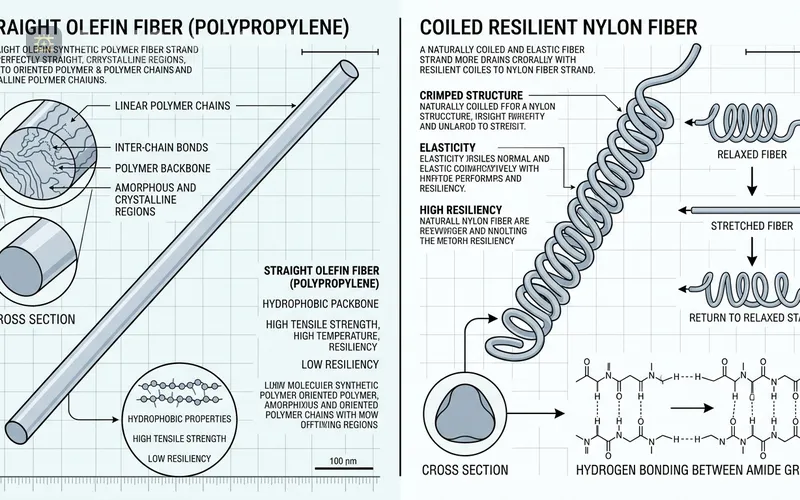
Olefin is the common carpet-industry name for polypropylene, a thermoplastic polymer built from repeating propylene (an alkene) units. The fiber is extruded as a straight thermoplastic strand. Nylon and wool fibers carry an inherent coil or crimp, and that geometric difference is the direct cause of olefin's low resilience: nylon can compress and spring back because its molecular chains have elastic memory, while olefin's chain structure does not recover the same way once crushed under sustained weight.
Two production facts distinguish olefin from other synthetic fibers. First, it is manufactured predominantly as solution-dyed fiber, which means the color pigment goes into the molten polymer before extrusion and is present through the full strand at the moment the fiber forms. Second, it is the lightest common carpet fiber by density (0.91 g/cm³). Olefin floats on water, a property with no bearing on carpet performance that does confirm how far its density sits below nylon, polyester, or wool.
Is olefin carpet toxic
Polypropylene is chemically inert and does not off-gas at the rate of some latex-backed or high-adhesive-content flooring products. Green Label Plus, the low-VOC certification program administered by the Carpet and Rug Institute (CRI), certifies individual finished carpet products, so emissions status has to be confirmed on the specific product line before it can be claimed for a purchase.
The health question that actually applies to olefin is biological. Because the fiber is hydrophobic, spilled liquids and pet accidents that are not extracted promptly sit at the backing instead of absorbing into the fiber, and moisture trapped against a subfloor supports mold growth over time. That risk is a function of the installation environment: moisture management, subfloor condition, and padding choice.
Face weight, twist count, and pile density: the numbers that predict performance
Face weight, pile density, and twist count are three distinct measurements, and treating them as interchangeable produces bad purchasing decisions. Face weight (measured in ounces per square yard) tells you how much fiber sits on top of the backing. Twist count (measured in turns per inch, or TPI) tells you how tightly the yarn is spun before heat-setting. Pile density measures how tightly that fiber is packed. All three have to be read together to predict how a carpet will look after eighteen months of foot traffic.
| Measurement | Unit | What it predicts | Typical residential olefin range |
|---|---|---|---|
| Face weight | oz/sq yd | Fiber volume, initial cushioning feel | 11–25 oz/sq yd across entry-level and mid-tier loop-pile olefin |
| Twist count | turns per inch (TPI) | Compression recovery, texture retention | below 5.0 TPI in most entry-level lines; 5.0 TPI and above in premium synthetic lines |
| Pile density | oz/cu ft | Resistance to matting from foot traffic | low-to-moderate in loop-pile olefin relative to cut-pile nylon |
A carpet that feels soft on a showroom swatch and has a low twist count will flatten faster than a firmer-feeling carpet with a high twist count, because loose yarn strands separate and lie flat under repeated compression. Firm, dense underlayment supports loop-pile retention, as outlined in this carpet padding thickness overview.
How olefin carpet performs under heavy foot traffic
Loop-pile olefin's traffic performance comes from geometric packing, and the fiber itself contributes almost no elasticity to the result. Manufacturers market loop-construction olefin for high-traffic areas because the dense loop geometry distributes body weight across more contact points at installation. That effect is real on day one. It does not alter what happens after compression: once an olefin fiber is crushed under a couch leg or along a repeated walking path, it stays crushed, because polypropylene lacks the elastic recovery of nylon or wool fiber chains.
Higher twist count increases pile resilience under repeated foot-traffic loads because a tighter twist angle resists fiber separation at the point where the yarn meets the backing. Under daily household traffic in a primary circulation path, fiber-separation matting in low-TPI olefin becomes visible early in the ownership period, while the same traffic load applied to a high-twist premium synthetic line produces slower matting because tighter twist geometry resists that separation longer. Synthetic fiber comparisons show how nylon's crimped molecular structure outperforms polypropylene in high-traffic pathways, detailed in our nylon vs polyester carpet technical breakdown.
The oily olefin soil trap: why the stains never fully lift
Polypropylene carries the trade nickname "oily olefin" in the flooring industry because the fiber is oleophilic and attracts oil. That chemical property is the root cause of the permanent gray discoloration reported in high-traffic olefin installations. Tracked-in asphalt residue, driveway sealer, vehicle fluid, and ordinary foot oils bond to the fiber surface on contact. Once that oily film is present, airborne grit and sand no longer fall through to the backing; the film holds the grit against the fiber, and each footstep grinds it deeper into the pile. The visible result is a graying "bloom" across walking paths that standard vacuuming cannot remove, because vacuum suction acts only on loose particles and this soil has bonded to the fiber surface.
Carpet wicking: why a professional cleaning can make olefin look worse
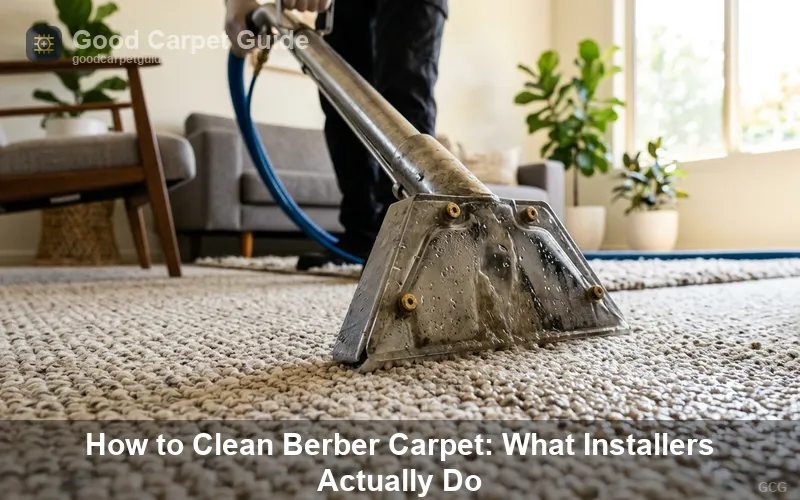
Wicking describes deep soil traveling back to the carpet surface as the pile dries, and olefin's hydrophobic chemistry makes it especially prone to the effect. During hot-water extraction cleaning, the water-based solution sinks past the hydrophobic fiber surface and reaches the backing, where it dissolves soil that had settled deep in the pad or primary backing over months. The fiber tips dry first and draw the dissolved, dirty water upward by capillary action, the same way a straw pulls liquid. Soil that was invisible below the surface reappears as a browned, blotchy pattern on the visible pile within hours of a cleaning.
- Pre-vacuum thoroughly. Removing dry surface grit before wet extraction reduces the volume of soil available to wick back up.
- Use low-moisture methods where possible. Very low moisture (VLM) encapsulation cleaning limits the water volume available to dissolve deep-set soil in the first place.
- Force rapid drying. Air movers positioned across the wet section shorten the window during which capillary wicking can pull soil to the surface.
- Re-extract if blotching appears. A second, shorter extraction pass after the initial dry-down removes soil that has already wicked up before it re-bonds to the fiber.
Friction melting and heat exposure limits
Polypropylene has a lower melting point than nylon or polyester. Wool chars under concentrated heat; olefin liquefies. That property governs most of olefin's heat-related damage reports. Dragging a heavy piece of furniture across olefin pile generates enough localized friction heat to fuse fiber tips into a flattened, shiny scuff mark, and higher-melting-point fibers do not fail this way under the same friction load. Direct contact with a hot object produces a more severe version of the same failure: a dropped work light or iron can fuse a cluster of olefin fibers into hardened plastic nubs within seconds. The fiber also begins softening and loses its heat-set twist well before it reaches its melting point, which is why manufacturers set a temperature ceiling of 140–160°F on cleaning equipment used over olefin.
Solution-dyed vs. batch-dyed olefin: the radish and carrot test
Solution-dyed olefin resists fading and staining better than batch-dyed olefin because the color pigment is embedded through the entire fiber cross-section. A produce analogy is common on the sales floor: batch-dyed fiber behaves like a radish, colored on the outside with an undyed core, which leaves the color vulnerable to bleaching, sun fading, and dye-lot mismatches between rolls. Solution-dyed fiber behaves like a carrot, colored uniformly through the entire strand, so a scratch, a bleach spill, or years of UV exposure cannot expose an undyed layer underneath.
Most mainstream residential olefin ships solution-dyed for this reason, including big-box loop lines such as TrafficMaster's Viking series. The property this buys the homeowner is colorfastness under moisture and light exposure. It has no effect on mechanical wear.
Where olefin carpet belongs, and where it fails
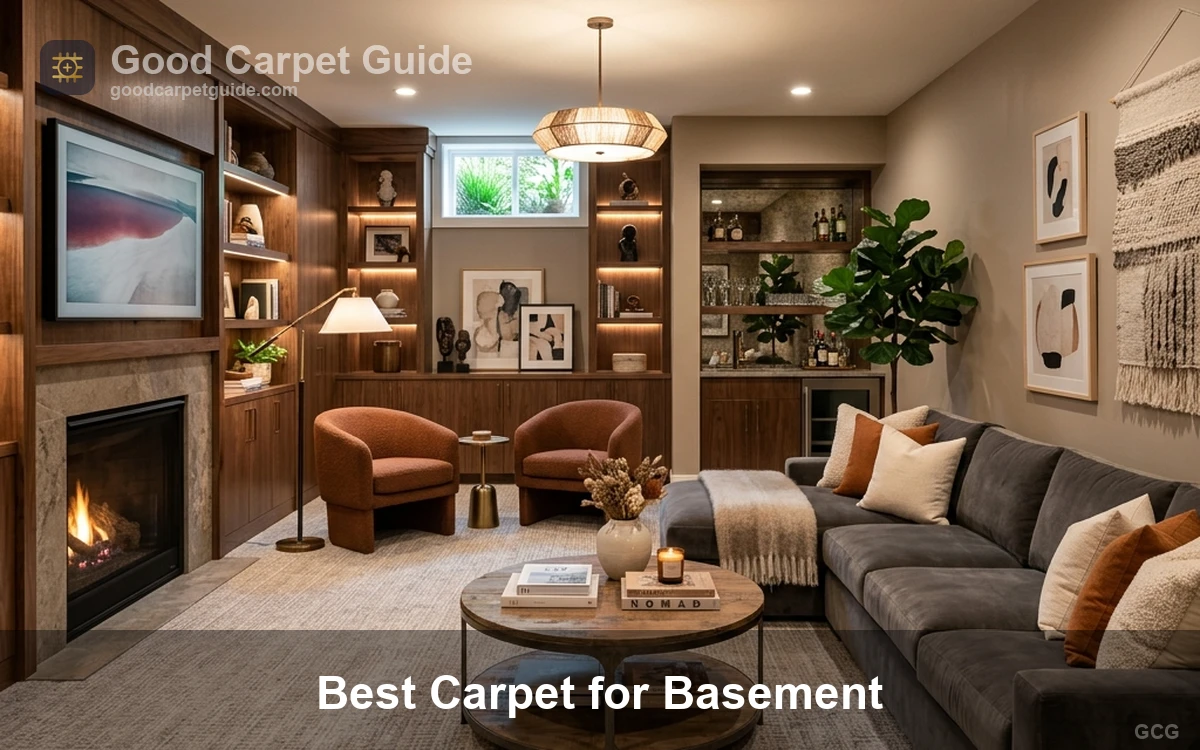
Olefin outperforms premium wool in below-grade basements. Organic wool fiber absorbs moisture and supports mold growth against a damp concrete slab, while polypropylene absorbs well under 1% of its weight in water. In this one application, the cheaper synthetic is the technically better material: it resists concrete-slab dampness and biological rot more reliably than wool, which makes it a deliberate specification choice for basements, sun porches, and outdoor transition zones. Flooring installers detail moisture barrier protocols in this best carpet for basement guide.
The same low-resilience fiber becomes a liability in the rooms where households walk the most. Main living rooms, hallways, and stairs combine the highest daily foot-traffic counts with the fiber's inability to recover from crushing, and flooring professionals advise against olefin in those spaces. Identical olefin product installed in a basement and in a hallway produces opposite outcomes, and the variable is traffic load.
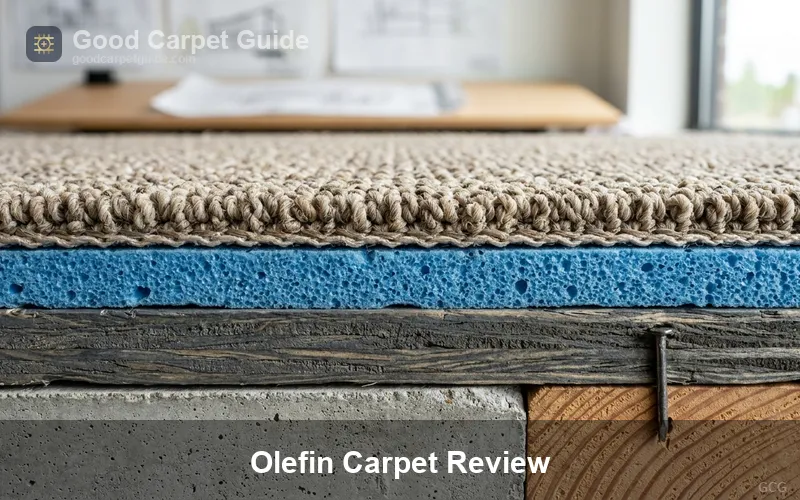
One padding detail applies to loop-pile olefin in any room. Loop and Berber-style constructions typically require firm, low-profile padding, commonly specified at no more than 3/8 inch thickness with a minimum 8-lb density rating, because a soft pad lets the backing flex excessively under each footstep and that flexing stretches and tears individual loops at the base. Check the padding specification in the warranty document for the specific product before ordering.
Olefin carpet cost per square foot
Pricing note: *Pricing below reflects US national averages surveyed for current market specifications.*
Cost is the dominant purchase driver for olefin, and the figures below separate material cost from fully installed cost, because the gap between the two is unusually wide for this fiber tier.
| Fiber tier | Material cost/sq ft | Installed cost/sq ft | Average traffic lifespan | Amortized cost/year (installed) |
|---|---|---|---|---|
| Olefin (polypropylene) | $0.50–$2.00 | $2.00–$5.50 | 5 years | $0.40–$1.10/sq ft |
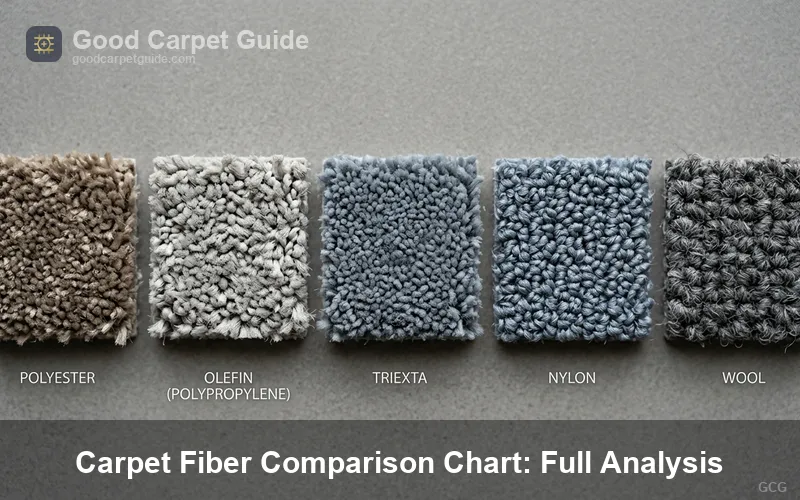
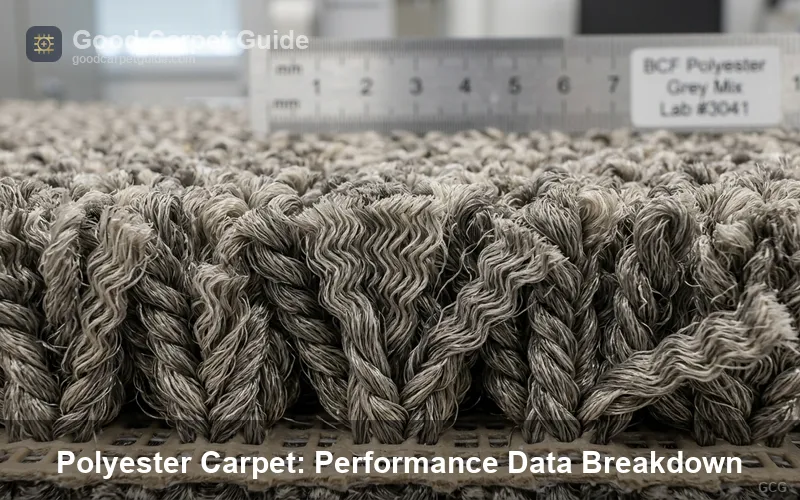
| Polyester (PET) | $1.00–$3.50 | $2.50–$6.50 | 7 years | $0.36–$0.93/sq ft |
| Triexta (SmartStrand) | $2.00–$5.00 | $3.50–$8.00 | 12 years | $0.29–$0.67/sq ft |
| Nylon (mid-grade) | $2.50–$7.00 | $4.00–$8.50 | 12 years | $0.33–$0.71/sq ft |
| Wool (premium) | $5.00–$15.00 | $9.00–$22.00 | 15 years | $0.60–$1.47/sq ft |
Home Depot's TrafficMaster Viking series has anchored the low end of the market at around $1.00 per sq ft (roughly $9.00 per square yard) for solution-dyed olefin loop, and that figure covers material only. Old-carpet removal and haul-away adds $0.50 to $1.75 per sq ft, and subfloor patching adds $1.00 to $2.00 per sq ft. Stair installation is billed per step at $15.00 to $60.00, depending on whether the job is a simple waterfall wrap or a contoured "Hollywood" stair job. Big-box "free installation" promotions generally fold labor cost into marked-up padding and carry a minimum purchase threshold, with carpet removal billed separately; confirm the terms before treating the offer as a discount.
Amortized over its 5-year average traffic lifespan, installed olefin costs $0.40 to $1.10 per square foot per year. Mid-grade nylon runs $0.33 to $0.71 per square foot per year despite its much higher sticker price, because nylon's 12-year lifespan spreads the cost over more than double the years. Olefin's per-year cost is competitive only at the bottom of its price range, and materially worse than nylon, triexta, or polyester at the top of it. Comparing engineered polymers like PTT against nylon demonstrates how fiber resiliency affects long-term ownership, as analyzed in our triexta vs nylon carpet comparison.
The ratio is the durable part of this comparison. Installed olefin costs roughly three-fifths of what mid-grade nylon costs per square foot and lasts about 40% as long. Those proportions hold as material prices move; only the dollar figures date.
Brands and products: what is actually on the shelf
TrafficMaster's Viking series is a loop carpet made from 100% solution-dyed olefin with a face weight in the 11–12 oz range, sold in neutral colorways at the roughly $1.00-per-sq-ft price point. Buyer complaints at this price tier concentrate on two issues: tack strips poking through the backing where subfloor prep was minimal, and thread-pulling at the loop edges during routine vacuuming. TrafficMaster's separate Elevations line is frequently mistaken for olefin by big-box shoppers and is a needle-punch indoor/outdoor carpet.
Shaw Floors offers commercial-grade olefin under its Alfresco broadloom series, positioned for high-moisture utility spaces. Mohawk Industries largely avoids broadloom olefin in its residential catalog, reserving the fiber for backing materials while promoting its SmartStrand triexta line, built on a PTT polymer derived partly from corn sugar, as its synthetic-fiber flagship. Dream Weaver, a brand under Engineered Floors, competes in the budget synthetic tier with PureColor solution-dyed polyester, priced from $2.00 to $5.00 per sq ft installed. Marquis Industries' Ultimate Beauty line sits at the premium end of the synthetic category, at $5.00-plus per sq ft for material alone; its higher face weight and tighter twist count are the specifications behind its stronger long-term appearance retention.
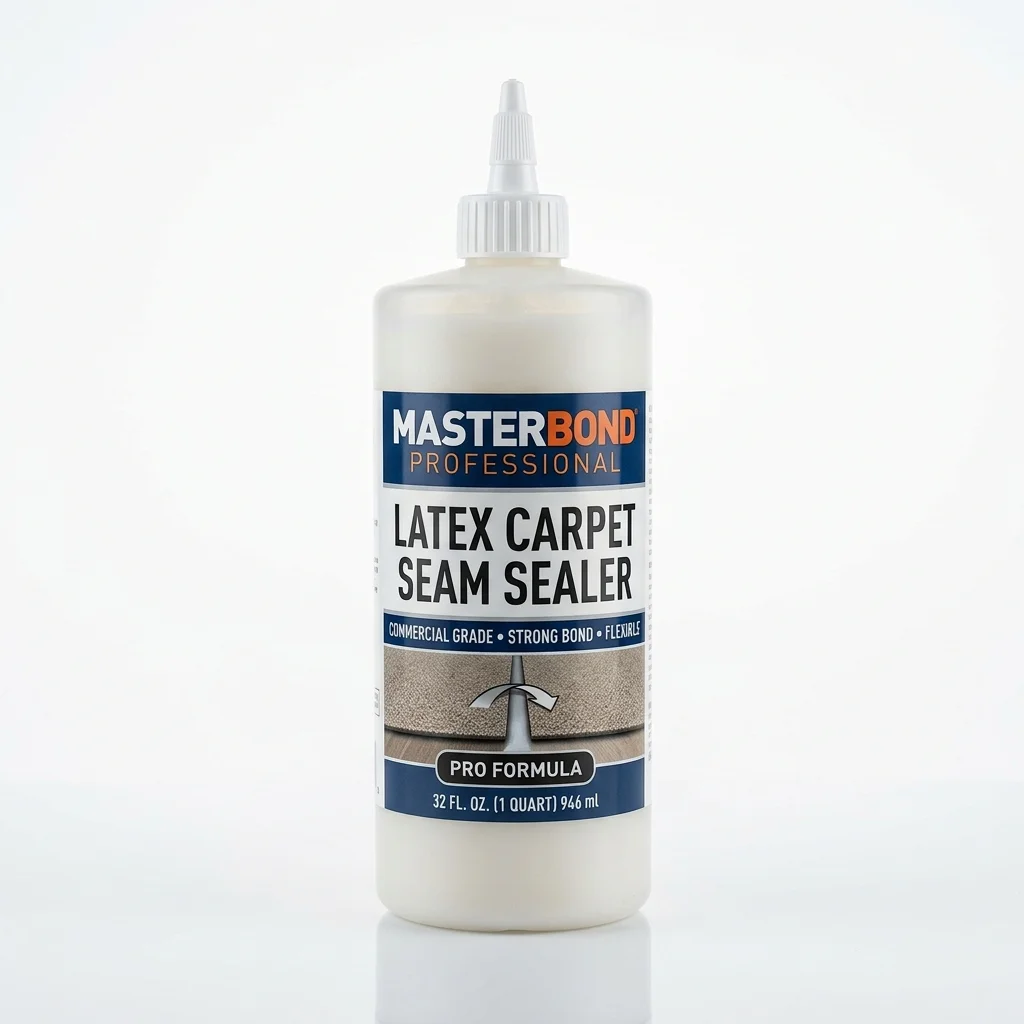
Carpet Seam Sealer, Latex-Based
Latex seam sealer for closing carpet seams before a seam iron pass, relevant for any olefin installation that requires joining two rolls.
Check Price on AmazonHow long does olefin carpet last
Olefin carpet averages a 5-year traffic lifespan in installed residential settings, less than half the 12-year average for mid-grade nylon and well under wool's 15-year average. That figure is a traffic-weighted average. A basement installation with light, occasional foot traffic and no direct sun exposure can outlast it by a wide margin, while the same product in a family hallway with heavy daily traffic shows visible matting far sooner. Homeowners who install olefin in high-traffic rooms and replace it on a 5-year cycle pay for tear-out, disposal, and reinstallation labor twice over a comparable 10-year ownership period, and that cost does not appear in the initial per-square-foot price comparison.
Can you install olefin carpet yourself
Olefin loop carpet is DIY-installable for a homeowner with basic stretch-in experience, though the thin, loosely woven backing common at entry-level price points raises the error rate compared with nylon broadloom. A standard stretch-in installation follows this sequence:
- Remove old flooring and inspect the subfloor for moisture, unevenness, or damage that needs patching before new carpet goes down.
- Install tackless strip around the room perimeter, leaving a gap slightly narrower than the carpet thickness between the strip and the wall.
- Lay 8-lb density padding no thicker than 3/8 inch for loop-pile product, stapled or glued per manufacturer spec, and trimmed flush to the tackless strip.
- Rough-cut and seam the carpet, using a seam iron and latex seam sealer to bond adjoining pieces along a straight, hidden seam line.
- Hook the carpet edge onto the tackless strip using a knee kicker to position it, then use a power stretcher to pull the carpet taut across the room before hooking the far edge.
- Trim excess material along the walls with a row runner and stair tool, then tuck the trimmed edge into the gap between the tackless strip and the baseboard.
Per CRI 105 installation standards, power-stretching is required for all stretch-in broadloom installations to prevent premature wrinkling.
Stair work is the step most DIY installers underestimate. Felt-backed olefin lacks the structural rigidity to hold tension over a stair nose, and stair installation on any fiber calls for latex backing plus a per-step labor allowance of $15 to $60. That is a practical reason to hire out the stair sections even on an otherwise DIY olefin project.
Real homeowner and installer experiences
Homeowner complaints about olefin loop carpet concentrate on two failure points. The first is early matting: pile that visibly flattens along traffic paths within the first year of installation, consistent with the low-twist-count matting mechanism above. The second is combined matting, staining, and seam separation on carpet three to five years old, a pattern that implicates both fiber resilience and seam construction at installation. Some big-box DIY buyers also report receiving pre-cut rolls with dry-rotted backing that shreds and separates on contact, which points to storage or manufacturing conditions.
Installers push back on the resilience claim specifically: loop-pile olefin's high-traffic marketing rests on the loop's geometric weight distribution at time of installation and not on any elastic recovery in the fiber, and a chemically clean olefin carpet can still be visibly matted immediately after professional cleaning. Geometry versus elasticity is the correction that comes up most often against manufacturer marketing language for this fiber.
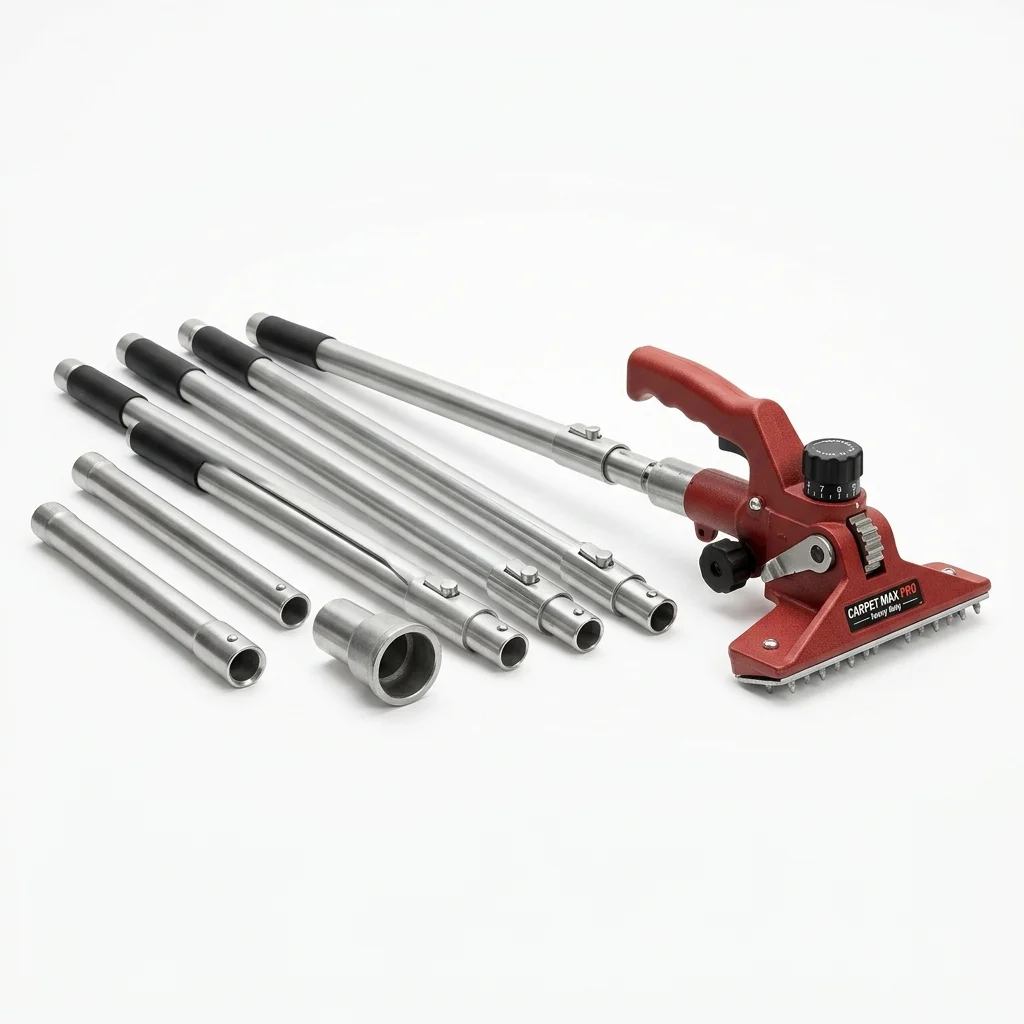
Carpet Power Stretcher
Power stretcher for pulling carpet taut across a room during a stretch-in installation, referenced in the DIY installation steps above.
Check Price on AmazonIs olefin carpet worth it
Olefin carpet is worth its price in below-grade basements, sunrooms, and outdoor transition zones, where its hydrophobic chemistry and low acquisition cost carry the decision. In those spaces the low-resilience fiber never encounters the traffic load that would expose its weakness, so moisture resistance becomes the only property that matters, and a higher-priced fiber buys no functional advantage.
In main living rooms, hallways, and stairs the calculation reverses. A 5-year average lifespan against $2.00 to $5.50 installed per sq ft pushes olefin's amortized cost toward $1.10 per sq ft per year, above mid-grade nylon's $0.33 to $0.71 despite nylon's higher sticker price.
Which brand makes the best olefin carpet
Marquis Industries' Ultimate Beauty line sits at the top of the synthetic tier on construction specifications, combining a high face weight with twist count above the 5.0 TPI threshold associated with compression recovery, at a material cost starting around $5.00 per sq ft. For buyers prioritizing acquisition cost over longevity, TrafficMaster's Viking series is the highest-volume budget olefin line at roughly $1.00 per sq ft, with an 11–12 oz face weight and the tack-strip and thread-pulling complaints reported at that price tier. Shaw's Alfresco series is the commercial-grade option engineered for moisture-heavy utility spaces. Brand selection here is a function of the intended room.
How to choose an olefin carpet for your project
Match the room's moisture exposure and traffic volume to the fiber before comparing individual product lines. A below-grade basement, sunroom, or covered outdoor transition space favors olefin regardless of brand, because hydrophobic resistance to concrete-slab moisture is the deciding property there. A hallway, staircase, or main living room calls for a higher-resilience fiber such as nylon or triexta, because those spaces load the fiber exactly where olefin is weakest.
Within the olefin category, prioritize twist count over face weight when comparing product lines for anything above light traffic; twist count above 5.0 TPI is the measurement most directly tied to compression recovery. Confirm the backing type before ordering: felt-backed product should never go on stairs, and loop-pile product needs a firm, low-profile pad under 3/8 inch to stay inside the manufacturer warranty.
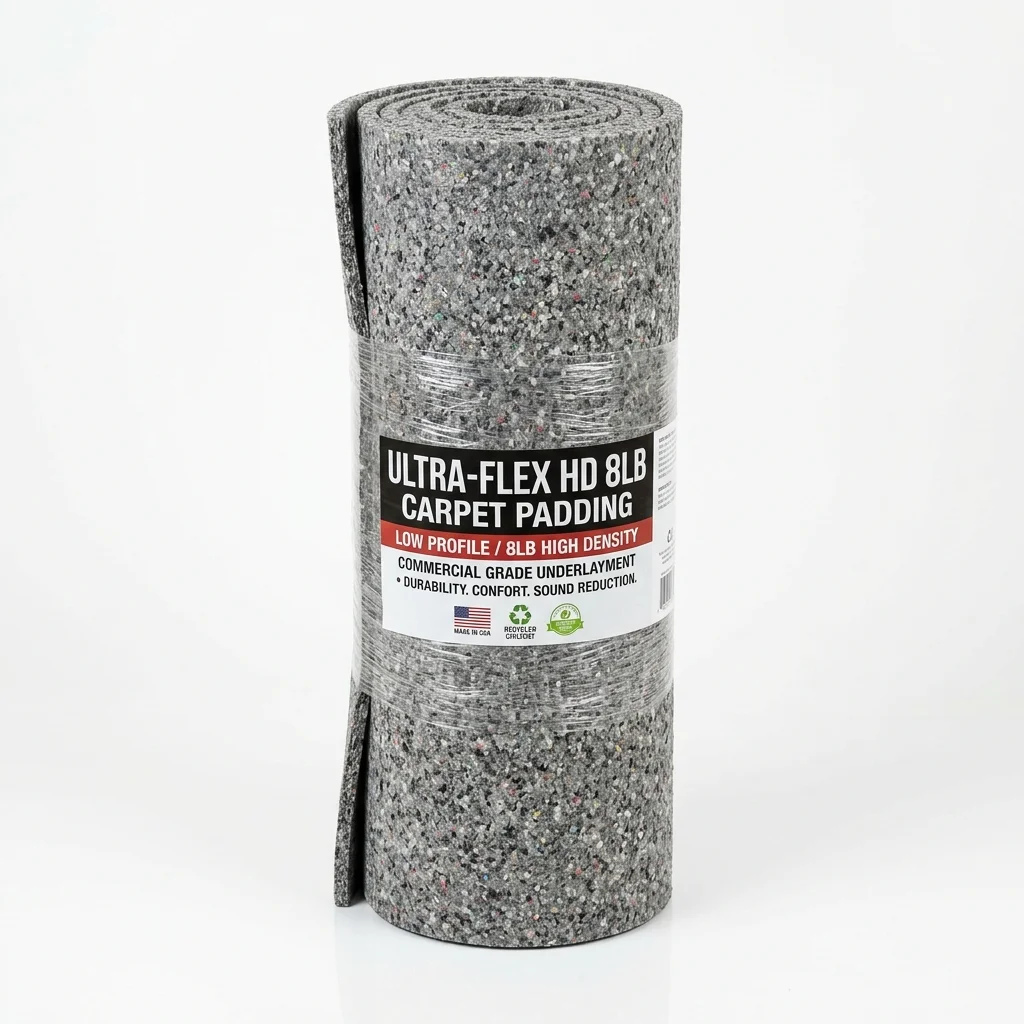
Low-Profile 8lb Density Carpet Padding
Firm, low-profile padding rated for loop-pile carpet, matching the 3/8 inch and 8-lb density spec referenced in the placement and installation sections above.
Check Price on AmazonOlefin performs as well as its two governing properties allow: strong in moisture, weak under sustained crushing. The manufacturer claim that fails most often in the field is the "durable, high-traffic" label applied to loop-pile olefin in main living spaces. The stain- and moisture-resistance rating holds up, provided the installation stays in a basement, sunroom, or comparable low-traffic, moisture-prone room where that property is what actually gets tested.