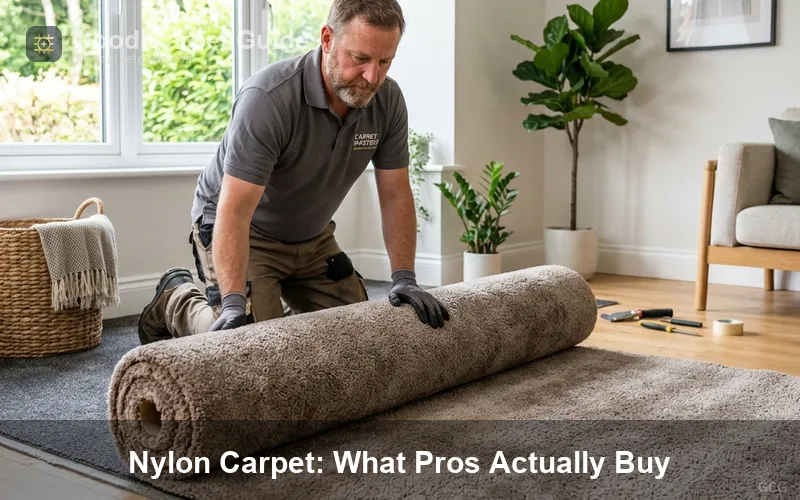
A carpet fiber comparison chart converts marketing language into measurable data: fiber chemistry, density, twist rate, and lifespan ratings verified under Carpet and Rug Institute (CRI) testing protocols. Showroom hand-feel tells a buyer almost nothing about how a fiber holds up under foot traffic, which is why this chart matters more than any sample swatch. A two-year-old living room carpet inspected in a rental property last spring makes the point directly: a plush polyester (PET) product, chosen for its low price and soft showroom feel, had crushed flat in the traffic lane between the hallway and kitchen, and vacuum marks disappeared within an hour because the pile had lost its ability to spring back. The numbers below come from installer reports, manufacturer specification sheets, and CRI and IICRC industry standards, not marketing copy.
Quick verdict: For heavy foot traffic (hallways, stairs, living rooms), solution-dyed nylon 6,6 or dense Triexta outperforms polyester and standard olefin by a wide margin. For low-traffic bedrooms, budget polyester remains a reasonable choice. The carpet pad underneath the fiber affects long-term performance as much as the fiber itself.
what is a carpet fiber comparison chart and why does it matter
A carpet fiber comparison chart lists the mechanical and chemical properties of the five residential fiber categories: polyester (PET), olefin (polypropylene), Triexta, nylon, and wool. The chart typically covers price per square foot, expected lifespan, resilience after crushing, stain chemistry, and moisture behavior. Homeowners rely on showroom hand-feel to judge quality, but hand-feel measures filament diameter, not structural recovery. A carpet fiber comparison chart separates those two variables so buyers can match a fiber's actual mechanical profile to the traffic load in a specific room.
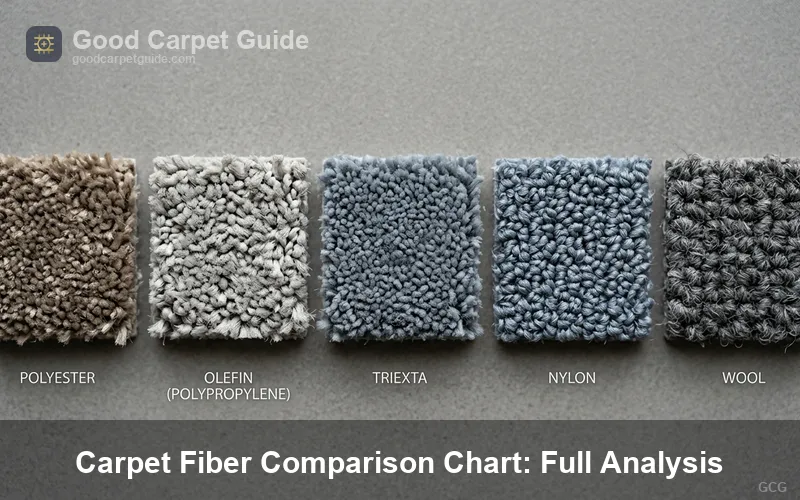
Five fiber types produce nearly identical visual softness in a showroom setting, yet their resilience under crush testing differs by a factor of three or more.
carpet fiber comparison chart: material specifications by fiber type
| Fiber type | Price per sq. ft. (material) | Expected lifespan | Resilience profile | Stain chemistry |
|---|---|---|---|---|
| Polyester (PET), builder grade | $0.50 - $1.50 | 3 to 5 years | Low elastic recovery, crushes under repeated load | Hydrophobic, stains bead on surface |
| Polyester (PET), mid-to-high | $1.50 - $6.00 | 5 to 8 years | Moderate recovery at higher density | Hydrophobic |
| Olefin (polypropylene) | $0.70 - $5.00 | 3 to 10 years | Low resilience, prone to matting outside loop-pile constructions | Resists water-based stains, degrades under UV and heat |
| Triexta (SmartStrand, Sorona) | $1.50 - $7.00 | 10 to 15 years | High resilience in dense constructions, fine-denier styles snag | Hydrophobic but oleophilic, attracts oil-based soils |
| Nylon 6,6 | $0.75 - $9.00 | 12 to 20 years | Highest elastic recovery among synthetics | Requires topical stain treatment, absorbs water-based stains without treatment |
| Nylon 6.0 | $0.75 - $9.00 | 12 to 18 years | Slightly lower recovery than 6,6 | Requires topical stain treatment |
| Wool (100% natural) | $3.00 - $21.00 | 15 to 20+ years | Highest natural crush recovery | Absorbs moisture, resists soil due to lanolin content |
Face weight alone does not predict how a carpet in this chart performs on stairs or in a hallway. Carpet and Rug Institute testing (CRI 104) and manufacturer twist-rate data show that yarn twist per inch and tuft density carry more predictive weight than raw ounce count. A 40 oz carpet built with a high twist rate and dense tufting can outperform an 80 oz carpet built with a loose, low-density construction. Olefin is most commonly utilized in looped constructions; see our analysis of Berber carpet pros and cons .
what carpet fiber wears best under traffic load
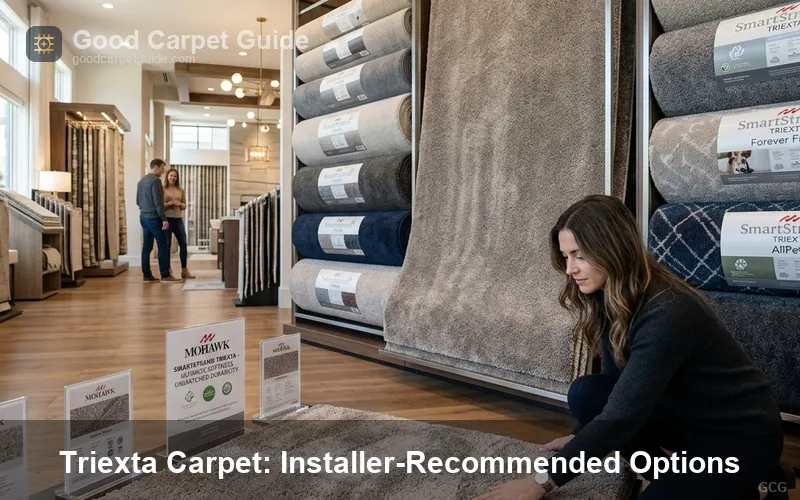
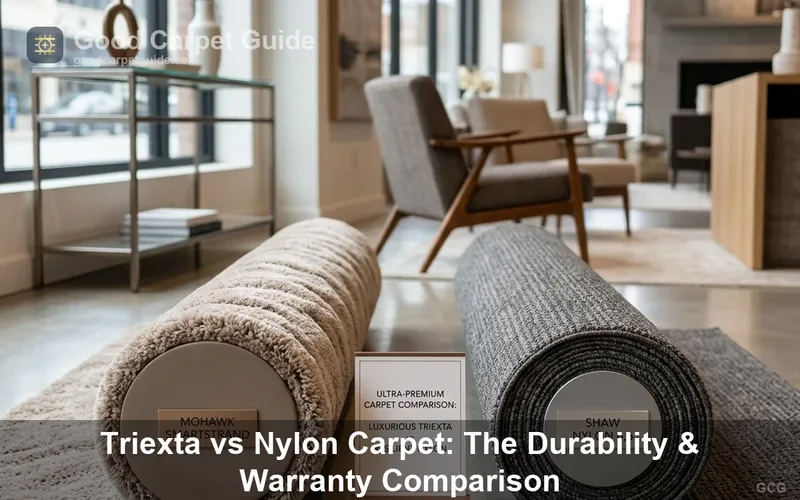
CRI 104 texture retention testing and installer reports across Shaw Floors and Dixie Home product lines show nylon 6,6 wearing best under sustained traffic load among synthetic fibers. Nylon 6,6 carries a symmetrical molecular structure with dense hydrogen bonding between polymer chains. That structure allows the fiber to compress under foot traffic and return to its original height at a higher rate than PET, olefin, or nylon 6.0. Triexta ranks second in traffic-lane durability when manufactured at high density, though Mohawk Industries fine-denier SmartStrand Silk styles trade some of that resilience for a softer hand-feel. For a direct performance comparison between PTT and polyamide, see our Triexta vs nylon carpet breakdown .
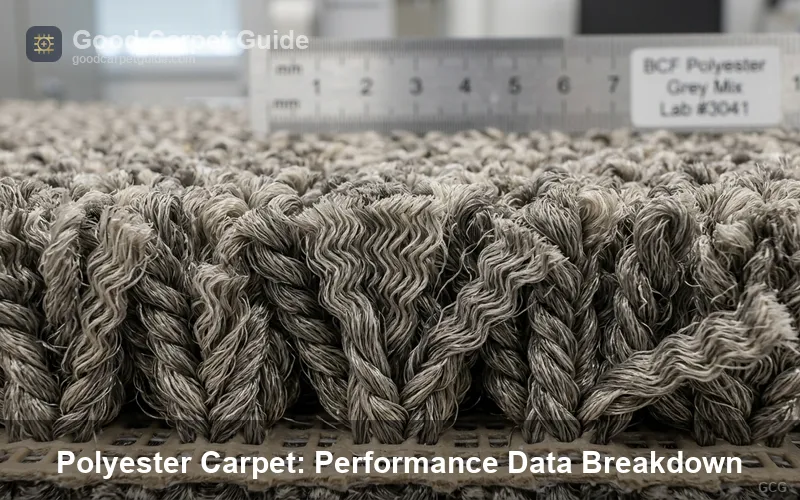
Polyester and standard olefin rank lowest for traffic-lane recovery. Repeated compression affects the fiber the way a plastic bottle behaves once it's been crushed enough times: it stops springing back to its original shape. Homeowners evaluating polyester against nylon can review our nylon vs polyester carpet guide for traffic wear testing. That comparison explains the matted "paths" homeowners report in polyester carpets between six and twenty-four months after installation.
nylon 6,6 vs nylon 6.0: why the numbers matter
Nylon 6,6 and nylon 6.0 differ at the molecular level, not just in name. Nylon 6,6 forms through a condensation reaction between two six-carbon monomers, producing a symmetrical polymer chain with dense, evenly spaced hydrogen bonds. Nylon 6.0 forms through ring-opening polymerization of a single monomer, producing a chain with less uniform bonding. The practical result: nylon 6,6 recovers pile height faster after crushing and resists heat-set distortion at a higher threshold than nylon 6.0.
Nylon 6.0 costs less to manufacture and is more readily recyclable, which explains its continued use in mid-tier product lines. For hallways and stairs specifically, the gap in mechanical resilience between the two nylon types becomes measurable within 12 to 18 months of moderate to heavy foot traffic. Fiber selection plays the primary role in long-term floor performance; see our breakdown of the most durable carpet fiber .
Dixie Home markets its nylon 6,6 line under the name Envision 6,6 rather than the Stainmaster brand. Lowe's now holds exclusive rights to the Stainmaster name and applies it to low-cost polyester products, a shift that has caused confusion among buyers who associate the Stainmaster label with the 15-to-20-year nylon 6,6 installs it historically represented. Buyers comparing products under this name should confirm fiber content directly on the product specification sheet rather than relying on the brand name alone.
comfort, acoustics and thermal performance across fiber types
| Fiber type | Underfoot softness | Sound absorption (NRC range) | Thermal insulation (R-value contribution) |
|---|---|---|---|
| Polyester (PET) | High in plush constructions | 0.20 - 0.35 | 1.0 - 2.0 |
| Olefin (polypropylene) | Moderate, coarser hand-feel | 0.15 - 0.30 | 0.8 - 1.5 |
| Triexta | High, especially fine-denier styles | 0.20 - 0.35 | 1.0 - 2.0 |
| Nylon | Moderate to high depending on construction | 0.20 - 0.35 | 1.0 - 2.0 |
| Wool | High, denser fiber structure | 0.25 - 0.40 | 1.5 - 2.5 |
Manufacturer testing summarized by the Carpet and Rug Institute puts wool's sound absorption and thermal insulation values highest among these fiber types. Wool also carries the highest material cost, which limits its use to bedrooms and formal living areas in most residential budgets.
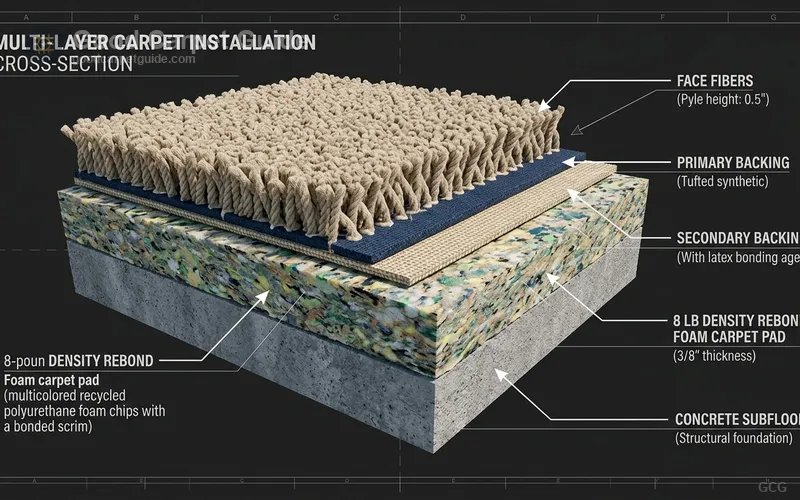
Acoustic and thermal performance depends on the full carpet system, not the face fiber in isolation. The carpet padding layer beneath the fiber absorbs a measurable share of impact sound.
room-by-room suitability
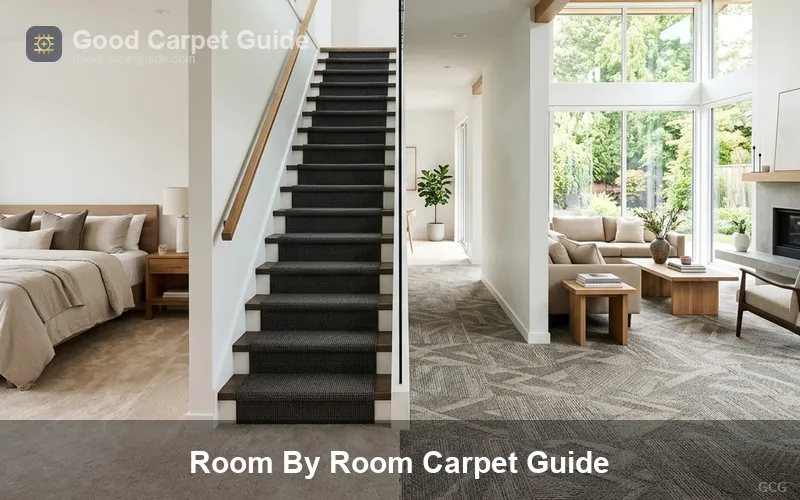
Room choice determines foot-traffic density, spill frequency, and moisture exposure. Matching fiber properties to specific room demands prevents premature wear and backing failure.
bedrooms
Bedrooms carry the lowest foot-traffic load in a residence, which makes polyester and softer Triexta constructions a reasonable fit. Wool performs well here too, given its natural moisture regulation and lower exposure to spills compared to living areas.
living room
Living rooms combine moderate-to-heavy traffic with visible sight lines, which raises the cost of a matting failure. Solution-dyed nylon 6,6 or a dense Triexta construction paired with an 8 lb/ft³ rebond cushion holds pile height longer than polyester under these conditions.
hallways and stairs
Hallways and stairs concentrate foot traffic into a narrow path, and polyester is not recommended in either location, since a compressed pile in a narrow traffic path has nowhere to recover. Stairs also require commercial power-stretching rather than a knee-kicker, since a knee-kicked installation on a vertical stair riser fails faster than the same method on an open floor.
kitchen and dining
Carpet in kitchen and dining areas faces frequent liquid exposure. Olefin resists water-based staining well but degrades under prolonged heat and UV exposure near windows or radiant flooring. Nylon requires a topical stain treatment to match the spill resistance of Triexta or PET in this room.
bathroom and laundry
Standard broadloom carpet is not recommended in bathrooms or laundry rooms due to sustained moisture exposure and mold risk in the pad and subfloor. Where carpet tile is used, olefin's water resistance makes it the more common choice among the fiber types covered here.
basement
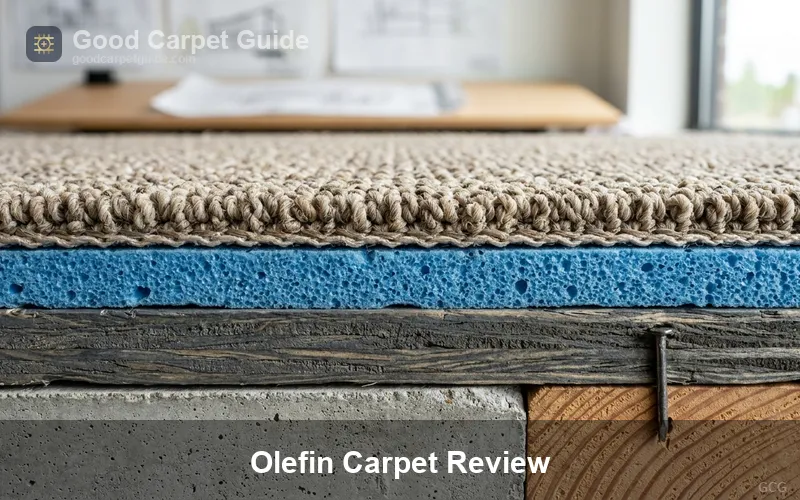
Basement installations over concrete slabs require attention to the pad, not just the fiber. An impermeable moisture-barrier pad placed directly on concrete traps rising slab vapor beneath the cushion, which leads to mold and adhesive failure. IICRC S100 standards call for either a breathable pad system or an independent vapor retarder installed beneath the pad on below-grade concrete.
rental properties
Rental properties favor durability and stain resistance over softness, since turnover between tenants raises cleaning frequency. Solution-dyed nylon 6,6 or high-density Triexta reduces the frequency of full carpet replacement between tenancies compared to builder-grade polyester.
how much does carpet cost installed by fiber type
Installed carpet cost breaks into three components: material, pad, and labor. Complete installed pricing across the fiber types in this chart falls into three tiers.
| Pricing tier | Cost per sq. ft. | Cost per sq. yd. |
|---|---|---|
| Budget tier | $2.00 - $4.75 | $18 - $43 |
| Mid / better tier | $4.75 - $7.50 | $43 - $67.50 |
| High-end tier | $7.50 - $14.50+ | $67.50 - $130.50+ |
Itemized labor and material add-ons include standard installation labor at $0.50 to $1.50 per square foot, standard rebond cushion at $0.25 to $1.00 per square foot, and premium moisture or visco cushion at $0.75 to $2.00 per square foot. Tear-out and disposal of old carpet runs $0.50 to $1.50 per square foot, and subfloor prep or leveling work adds $1.00 to $3.00 per square foot. Stairs carry a separate labor charge of $3.50 to $12.00 per square foot, or a flat rate of $10 to $20 per step, since each step requires individual tackless strip placement and pattern matching.
Big-box retailers typically subcontract installation labor and mark up padding options. Independent local dealers more often quote transparent line-item pricing and follow CRI 105 stretch-in standards, which specify power-stretching over the knee-kick method some subcontractors use to save time.
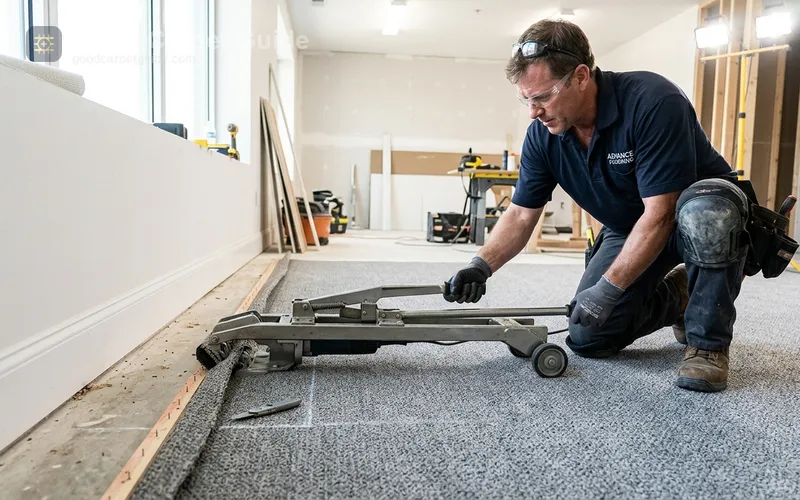
CRI 105 installation standards call for power-stretching across the full width of a room. A knee-kicked installation tensions only the section directly in front of the tool, which causes the buckling and rippling reported 12 to 24 months after installation.
can you install carpet yourself or does it require a professional
DIY carpet installation is possible on small, simple rooms but frequently costs more than professional labor once tool rental and material waste are counted. Power stretchers, knee kickers, and seam irons each carry daily rental fees, and manufacturer warranties under CRI 105 standards require professional installation to remain valid. Homeowners who install carpet themselves without a power stretcher report wrinkling and buckling within a year, which then requires a paid re-stretch that erases the original labor savings.
how long does carpet last based on lifespan data
Carpet lifespan ranges from 3 years for builder-grade polyester to 20 or more years for wool and nylon 6,6, per the material specifications in the comparison chart above. Actual lifespan within that range depends on traffic load, cleaning frequency, and pad quality. IICRC S100 maintenance standards recommend professional hot-water extraction cleaning every 12 to 18 months to preserve manufacturer warranty coverage across all fiber types. Manufacturer warranties commonly define wear as a 10 percent or greater loss of face weight, a threshold that matted carpet frequently does not meet even when visual crushing is severe.
which brand makes the best carpet by fiber category
Shaw Floors leads in nylon fiber systems through its Anso Nylon yarn and Pet Perfect product lines. Mohawk Industries holds the dominant position in Triexta through its SmartStrand and SmartStrand Forever Clean collections, and produces polyester under the EverStrand name. Anderson Tuftex, a Shaw subsidiary, focuses on premium nylon cut-and-loop patterns for higher-end residential projects. Dixie Home, Masland, and Fabrica manufacture high-performance nylon 6,6 lines including Envision 6,6 and Endura 6,6.
For underlayment, Leggett & Platt's Memory Step visco rebond and Monterey closed-cell urethane pads pair well with nylon 6,6 and Triexta face fibers. Carpenter's Golden Spillguard Ultimate rebond cushion is a comparable option at a similar density range.

Leggett & Platt Memory Step Carpet Cushion
8 lb/ft³ visco rebond cushion recommended for nylon 6,6 and Triexta installations over standard subfloors
Check Price on Amazonreal homeowner and installer experiences
Fine-denier Triexta styles show strand pulling and fibrillation along claw-contact points in homes with active pets, a recurring issue in SmartStrand Silk installations specifically. Karastan discontinued its SmartStrand area rug line after reports of strand loss within 18 months of installation. Polyester carpets in high-traffic corridors show visible matting between 6 and 24 months, consistent with the fiber's low elastic recovery profile described earlier in this chart.
Plush Triexta and high-density microfiber constructions commonly cause vacuum compatibility issues. The airtight seal these fibers form with standard vacuum baseplates can trigger thermal shut-off on non-adjustable machines, and using an aggressive, non-adjustable vacuum on these constructions can fray fibers and void manufacturer wear warranties. A vacuum with adjustable pile-height settings and a suction-bypass vent avoids this failure mode.
Pet urine exposure that reaches the subfloor through a porous pad creates a separate odor problem. Bacteria in an unsealed concrete or plywood subfloor continue emitting odor after the visible carpet surface has been cleaned, which typically requires tearing up both carpet and pad to seal the subfloor with a shellac-based primer.
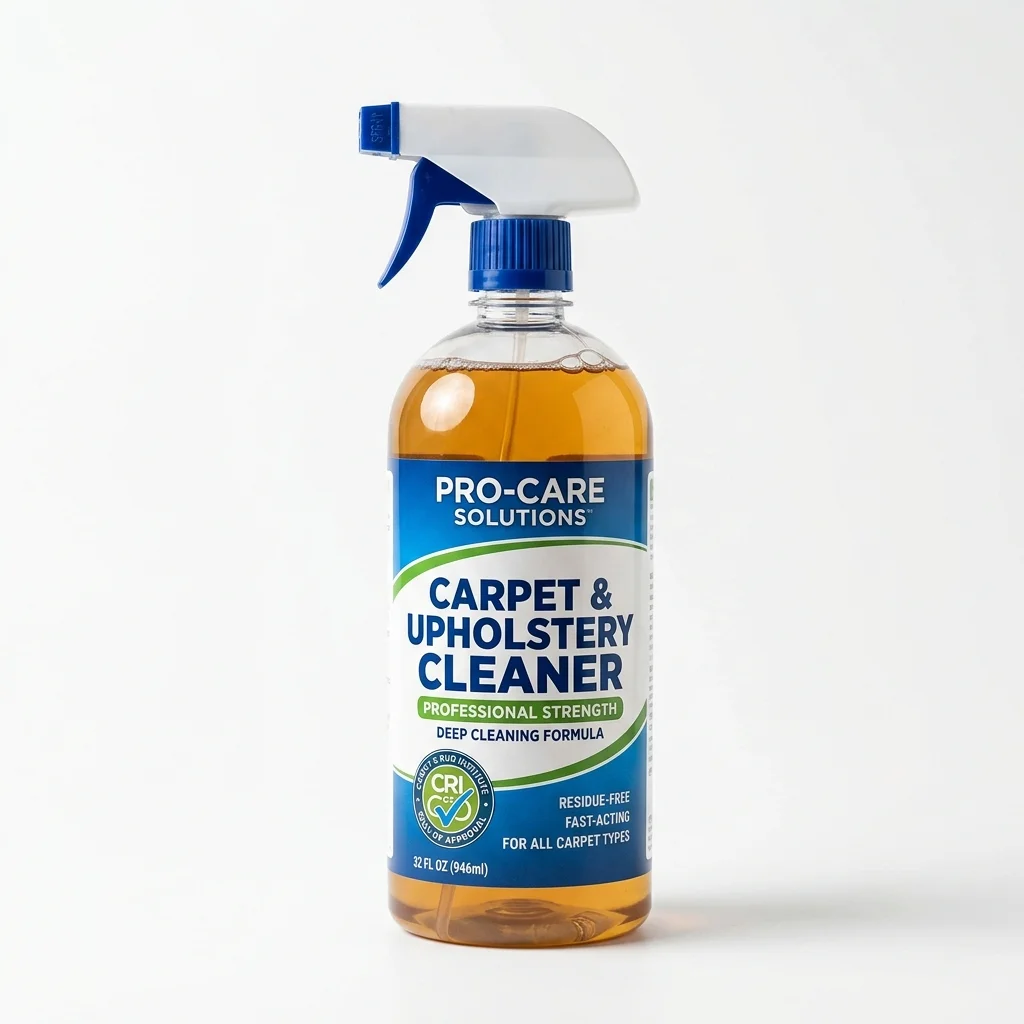
Pet Enzyme Carpet & Subfloor Odor Eliminator
Enzyme treatment formulated to break down urine residue that has penetrated carpet pad and subfloor, addressing odor at the source rather than the surface
Check Price on Amazonis a premium fiber worth the cost
The lifespan and resilience data above show a premium fiber earning back its added cost in rooms with moderate to heavy foot traffic. Nylon 6,6 costs more per square foot than builder-grade polyester, but its 12-to-20-year lifespan spreads that cost over roughly three to four times the service life of a 3-to-5-year polyester product. In low-traffic bedrooms, the cost gap between fiber tiers matters less, since polyester's shorter lifespan still exceeds typical homeowner renovation cycles in that room.
The carpet pad affects this calculation directly. A mid-grade carpet paired with an 8 to 10 lb/ft³ high-density cushion outperforms a premium carpet placed over a 4-to-6 lb/ft³ budget pad, since the pad absorbs foot-traffic shock and prevents the carpet backing from stretching and delaminating.
when should you replace carpet based on wear indicators
Replace carpet when pile height loss becomes visible in traffic lanes and no longer responds to steam extraction cleaning, when the backing shows delamination or seam separation, or when subfloor odor persists after a professional cleaning under IICRC S100 protocol. Buckling or rippling that returns after a professional re-stretch indicates backing failure rather than a stretching problem and typically signals the end of the carpet's service life regardless of surface fiber condition.
how to choose the right carpet fiber for your project step by step
- Identify the traffic load for the specific room using the room-by-room suitability data above.
- Match fiber type to that traffic load using the comparison chart: nylon 6,6 or dense Triexta for hallways, stairs, and living rooms; polyester or wool for bedrooms.
- Select a pad density of 8 to 10 lb/ft³ for high-traffic rooms, and confirm moisture-barrier compatibility for basement or below-grade installations.
- Confirm the installer stretches carpet with a power stretcher under CRI 105 standards instead of a knee-kicker.
- Review manufacturer warranty terms for the 10 percent face-weight loss threshold and the required professional cleaning interval before purchase.
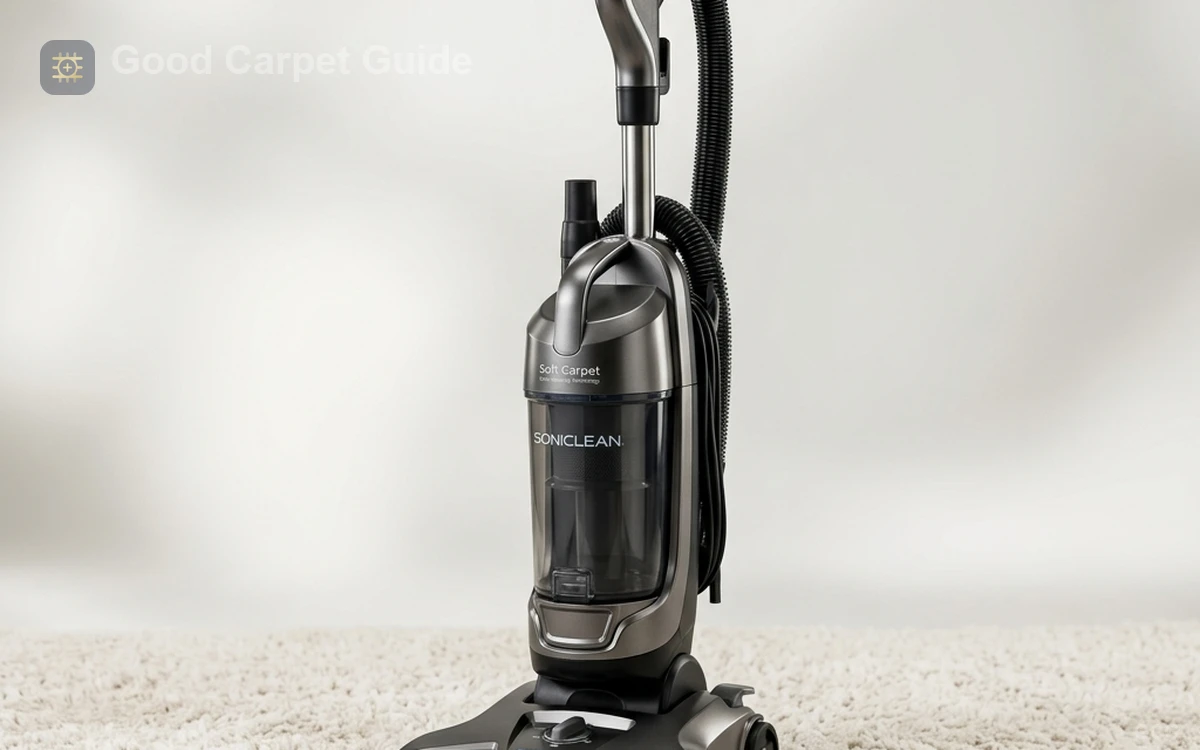
Adjustable Pile Height Carpet Vacuum
Vacuum with adjustable pile-height settings and suction-bypass venting, suited to dense Triexta and high-pile nylon constructions that stall standard vacuum baseplates
Check Price on Amazonconclusion
The fiber tables above point to one practical rule: match the fiber to the traffic load, not the showroom feel. Solution-dyed nylon 6,6 with an 8 to 10 lb/ft³ rebond cushion holds up longest in hallways, stairs, and living rooms; builder-grade polyester or wool are fine choices for bedrooms and low-traffic spaces. Households with pets do better with dense Triexta than fine-denier styles, which are more prone to strand pulling. Basement installs live or die on the pad's moisture-barrier rating as much as the fiber itself. A knee-kicked installation instead of proper power-stretching under CRI 105 is what usually turns a good spec sheet into a carpet that buckles within two years.