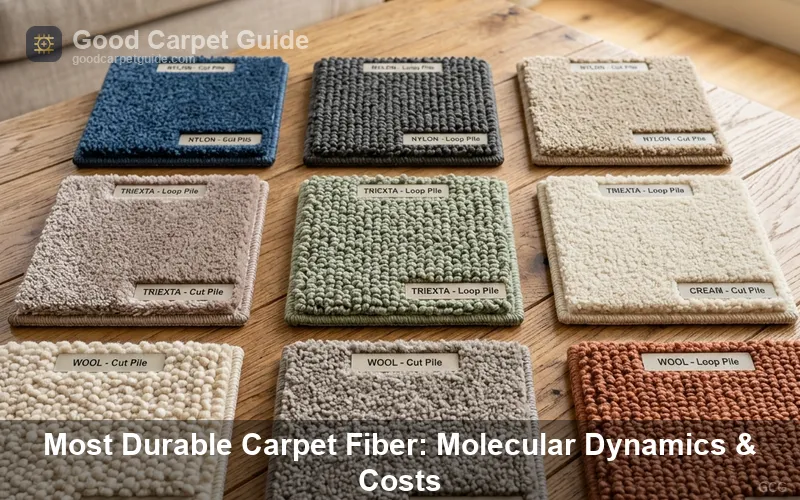
The Durability Hierarchy: Molecular Dynamics & Fiber Performance
The performance of residential carpet in the current US market is dictated by how face fiber polymers react to mechanical stress and soil at a molecular level.
[Most Resilient / High-Traffic]                                              [Budget / Low-Traffic]
Nylon 6,6  ========>  Nylon 6  ========>  Triexta (PTT)  ========>  Wool  ========>  Polyester (PET)
1. Nylon (Polyamide): The Elasticity Leader
- Molecular Mechanism: Nylon is a hydrogen-bonded fiber, which grants it a unique "molecular memory". When feet or furniture compress the fibers, these hydrogen bonds deform and then spring back to their original upright state (known as flex fatigue resistance). This prevents the carpet from flatting out in heavy-use zones.
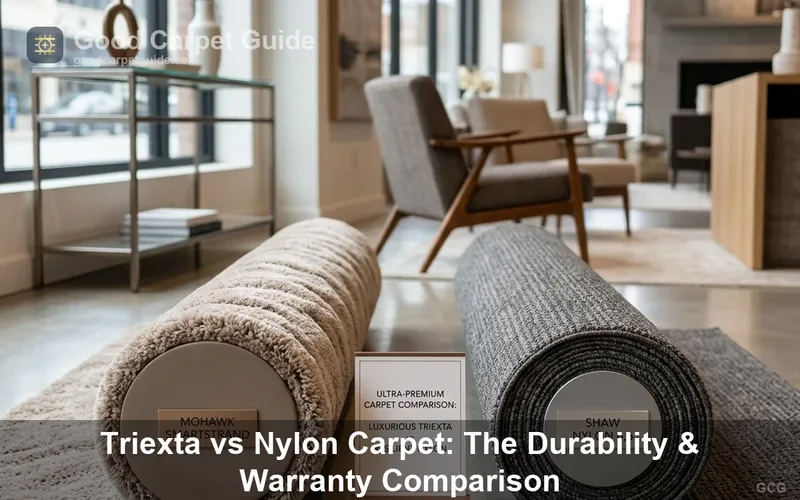
- Nylon 6,6 vs. Nylon 6: Nylon 6,6 (found in branded lines like *Stainmaster*) features a more tightly packed molecular chain than Nylon 6. This density results in higher tensile strength, lower permeability, and superior crush resistance. While Nylon 6 (e.g., *Mohawk Ultrastrand*) is highly durable and easier to recycle, Nylon 6,6 is the technical benchmark for concentrated impact zones like stair treads .
- Lifespan: Properly maintained Nylon 6,6 carpets realistically last 12 to 15 years in high-traffic residential areas before looking tired.
2. Triexta / PTT (Polytrimethylene Terephthalate)
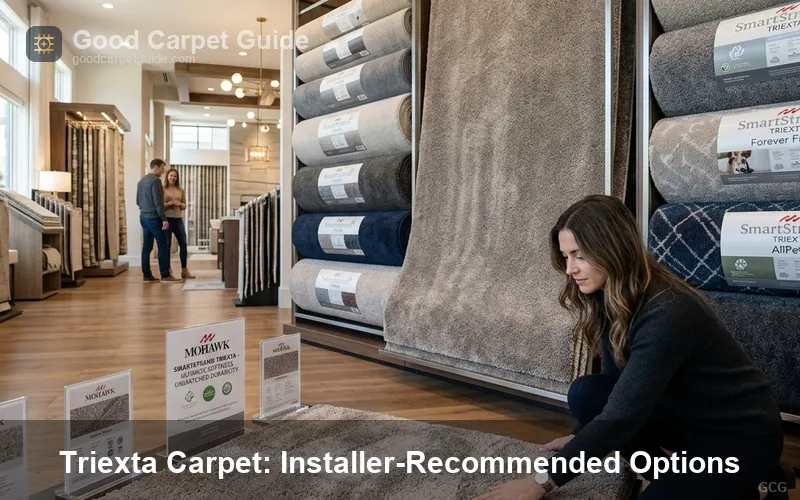
- Molecular Mechanism: Marketed by Mohawk under the *SmartStrand* brand, Triexta possesses a spring-like molecular structure that provides strong resilience, bridging the gap between nylon's durability and polyester's stain resistance.
- Inherent Stain Resistance: Nylon has external "dye sites" that absorb liquids, requiring topical chemical treatments (like *Scotchgard* or *R2X*) to resist stains. Triexta is chemically non-porous and lacks dye sites, meaning stain protection is built directly into the molecular structure of the polymer itself. It will never wash or wear off.
- Lifespan: Low-pile, high-density Triexta installations consistently perform well over 10 to 15 years.
3. Polyester / PET (Polyethylene Terephthalate)
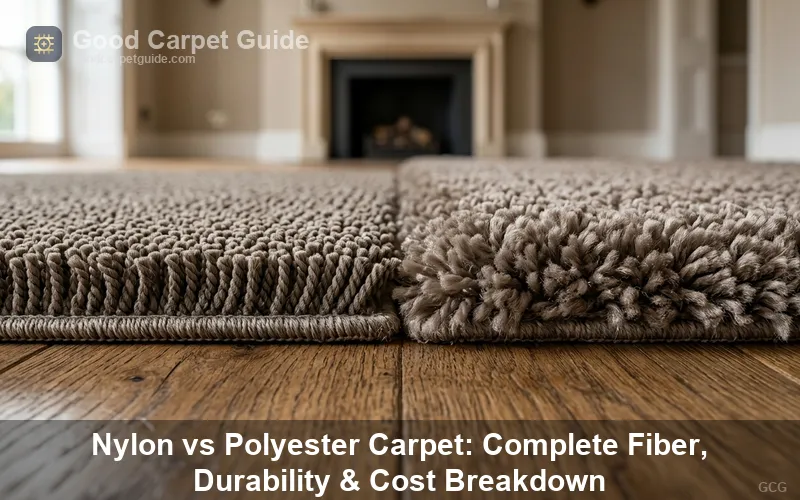
- Molecular Mechanism: Typically derived from recycled PET bottles, polyester is a "closed-cell" hydrophobic fiber. It is highly effective at shedding water-based spills but completely lacks molecular memory.
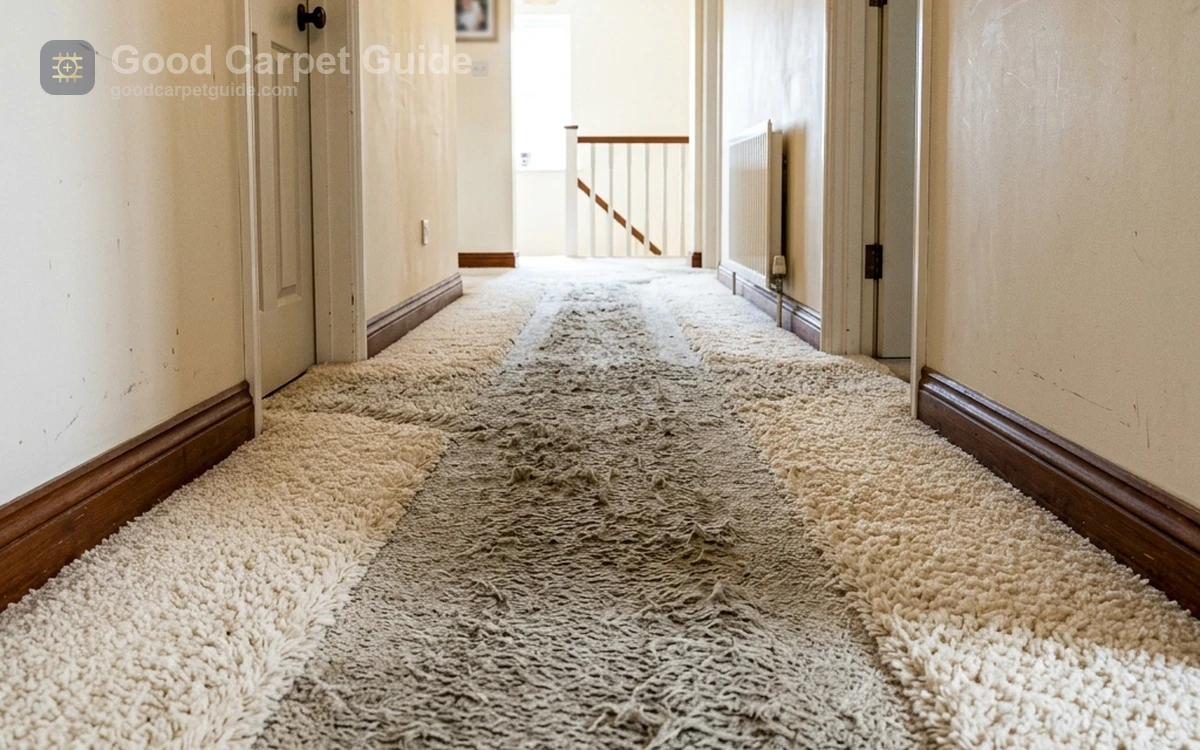
- The Matting Problem: Because polyester has no hydrogen bonding or spring-like resilience, once crushed by foot traffic, the fibers remain flattened. This leads to the early emergence of dull "traffic lanes" where the crushed yarn reflects light differently.
- Lifespan: Commonly referred to in the installer community as a 5-to-7-year carpet, polyester will often begin flatting within 6 to 12 months if installed in heavy-traffic living areas. It is recommended strictly for low-traffic bedrooms .
4. Wool (Natural Fiber)
- Molecular Mechanism: Wool possesses a natural three-dimensional crimp structure that acts like a miniature physical spring, providing exceptional natural elasticity and soil-hiding capabilities. Its fibers are coated in natural lanolin, providing a non-chemical stain shield.
- Lifespan: If properly maintained (and protected from high moisture and moth infestations), a wool carpet can easily endure 20+ years of residential use. Because wool is extremely soft and slip-resistant underfoot, it is also a popular choice for seniors looking for high-quality carpet .
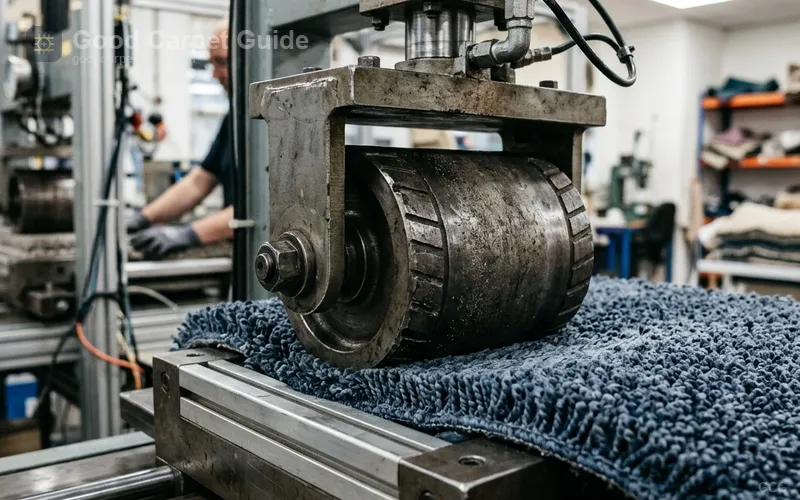
Testing carpet fibers under mechanical pressure simulates years of real-world foot traffic to measure resilience and crush resistance.
Economic Reality: Material & Installed Cost Breakdowns
Pricing in the residential market is strictly tiered based on polymer class and performance. The "all-in" pricing below represents US market averages, showing that choosing budget fibers often results in shorter replacement cycles.
Table 1: Comparative Materials & Installation Costs (Per Sq. Ft.)
| Fiber Material | Material Only (per sq. ft.) | All-In Installed (per sq. ft.) | 1,000 sq. ft. Total Project Cost | Estimated Lifespan |
|---|---|---|---|---|
| Polyester (PET) | $0.50 – $3.00 | $2.00 – $6.00 | $2,000 – $6,000 | 5 – 7 Years |
| Nylon (Basic / 6) | $1.50 – $4.00 | $4.00 – $8.00 | $4,000 – $8,000 | 10 – 12 Years |
| Triexta (PTT) | $2.00 – $5.00 | $4.50 – $8.50 | $4,500 – $8,500 | 10 – 15 Years |
| Nylon (Premium/Anso 6,6) | $5.00 – $9.00 | $7.00 – $13.00 | $7,000 – $13,000 | 12 – 15 Years |
| Wool (Premium) | $5.00 – $21.00 | $10.00 – $25.00 | $10,000 – $25,000 | 15 – 20+ Years |
Regional Labor Pressures & Metro Premiums
While national average labor rates sit at $1.00 to $1.75 per sq. ft., high-demand and highly regulated markets command massive regional premiums. In California, the average installed cost spans $3.50 to $8.50 per sq. ft., with labor alone running $1.50 to $3.50 per sq. ft.. Installers in these markets also charge a $200 to $500 minimum job fee for single rooms to cover setup and travel overhead.
Table 2: Metro Installer Labor Premium
| Metropolitan Area | Installer Mean Hourly Wage | Regional Labor Premium | Average Independent Labor Rate (Per Sq. Ft.) |
|---|---|---|---|
| Seattle-Tacoma, WA | $44.33 | High (+30%) | $2.50 – $4.00 |
| Las Vegas, NV | $33.62 | High (+30%) | $2.50 – $4.00 |
| San Francisco-Oakland, CA | $29.80 | Moderate-High (+12%) | $2.00 – $3.50 |
| New York City, NY | $28.22 | Moderate-High (+12%) | $2.00 – $3.50 |
| Chicago, IL | $27.85 | Moderate (+8%) | $1.50 – $2.50 |
The "Underlayment Factor": Padding Impact & Specific Models
Installers universally agree that a carpet’s durability is ultimately dictated by the quality of the padding beneath it. Soft, low-density padding allows the carpet's primary backing to flex excessively under footfalls, causing delamination (separation of the primary and secondary backings) and crushing the face fibers.
Recommended Pad Density by Space
- Active Living Areas / Hallways: 8-lb density rebond at 7/16-inch thickness is considered the "sweet spot" for balancing underfoot comfort with structural support.
- Stairs: Requires 8-lb to 10-lb density rebond or flat felt padding. Thicker or softer pads on vertical steps cause the carpet to flex over the nose, producing an early, crushed "picture frame" look.
- Bedrooms: Prioritizes comfort; 6-lb to 8-lb density at 1/2-inch thickness is acceptable.
Specific Padding Models Favored by Professionals & Users
- Leggett & Platt Napa (Duraplush Foam): A high-density prime polyurethane pad. Installers favor it over rebond because it delivers a "spongier" luxurious feel without the excessive weight of the heavy adhesives used to bind recycled rebond pieces together. It features an integrated moisture barrier that shields the subfloor.
- Leggett & Platt Monterey: A premium closed-cell prime foam featuring dual moisture-resistant barriers. It is highly praised for basement concrete installations but is not recommended for stairs due to its soft tactile response ("mushy walk").
- Shaw Courage: A solid high-density foam padding. Flooring stores frequently bundle this because Shaw extends their carpet warranty by 10 years if installed over it.
- Carpenter Relentless: Highly recommended on *r/Flooring* as a heavy-duty, high-performance rebond pad. It utilizes dense, high-grade recycled foam containing memory foam elements that maintain loft under intense pressure.
- Mohawk SmartCushion: An 8-lb memory foam rebond pad equivalent to premium models, noted for its strong underfoot support and moisture-barrier skin.
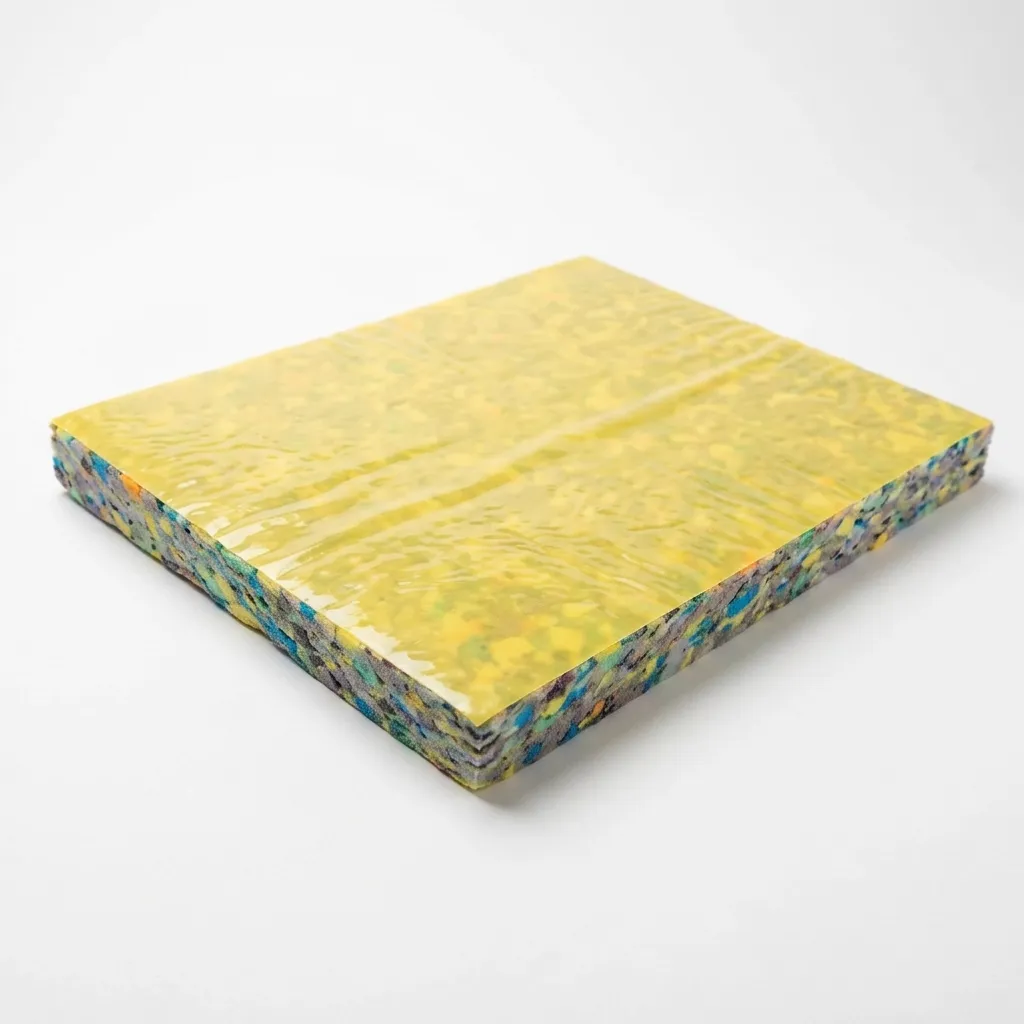
Mohawk SmartCushion Premium Carpet Padding
Mohawk SmartCushion is a premium 8-lb memory foam rebond pad with an integrated moisture barrier that protects subfloors and provides the high-density support required to maximize nylon and triexta carpet durability.
Check Price on AmazonThe Warranty Paradox: Deconstructing the Fine Print
Carpet warranties are highly exclusionary and often misunderstood by homeowners. The legal definitions of "wear" and "stain" in warranty brochures are structured to minimize manufacturer liability.
┌────────────────────────────────────────────────────────────────────────┐
│                        THE 3-STEP CLAIM OBSTACLE                       │
│                                                                        │
│  1. Identify flattening in hallway.                                    │
│  2. Read fine print: "Crushing is not wear." Claim denied.             │
│  3. If claiming a stain: Must pay for professional cleaning (HWE)      │
│     out-of-pocket within 30 days BEFORE filing claim.                  │
└────────────────────────────────────────────────────────────────────────┘
1. The Legal Definition of "Wear"
In standard warranties, "wear" is strictly defined as the actual loss of fiber weight by 10% or more. It specifically excludes matting, crushing, blooming, or general flattening. If a bedroom or hallway carpet is completely flattened, but still retains 91% of its original fiber weight, the claim is legally denied.
2. The Annual Hot Water Extraction (HWE) Mandate
To maintain any major residential warranty (including Mohawk, Shaw, and Tarkett), the homeowner must have the carpet professionally steam cleaned (HWE) every 12 to 18 months. The cleaning must be performed by an IICRC-certified technician using Carpet and Rug Institute (CRI) approved solutions. Homeowners must retain dated, itemized receipts; failing to produce these records immediately voids the warranty during a claim.
3. The 30-Day Pre-Claim Cleaning Rule
A major loophole in Lowe's (Stainmaster) and Home Depot (LifeProof) warranties is the pre-claim cleaning requirement. If a covered stain occurs, the homeowner must have the carpet professionally cleaned using hot water extraction at their own expense within 30 days prior to filing the claim. Only if the stain remains *after* this professional cleaning will the manufacturer initiate the claim review. This acts as a logistical and financial barrier that deters many homeowners from pursuing claims.
4. The "No Mat / No Crush" Exception
Shaw’s premium *Anything Goes!* Elite line is one of the rare exceptions in the industry, offering a 20-Year No Mat / No Crush Warranty that explicitly includes stairs and hallways. Unlike standard texture retention clauses, it carries no requirement for a specific branded padding model and features no subjective terminology like "significant loss".
Installer vs. Manufacturer Conflicts: Real-World "Premature Flatting"
There is a documented conflict between corporate marketing and the physical realities observed by flooring installers.
1. The "Rhino Challenge" vs. Cumulative Soil Abrasion
Mohawk’s famous campaign letting a rhinoceros live on *SmartStrand* for weeks to show it could be cleaned to "like-new" condition is heavily criticized by installers on *r/Flooring*.
- The Conflict: The rhino test represents a single, severe soil-and-wash cycle. Real-world foot traffic introduces fine silica sand and grit that acts like sandpaper against the base of the carpet filaments over several years.
- The Reality: If a homeowner fails to vacuum 2 to 3 times weekly to remove this grit, the abrasive particles permanently scratch and degrade the polymer. This strips the fiber of its light-reflective properties, causing permanent structural dulling and flatting that no professional extraction can restore.
2. The Columnar Failure of "Silk" / Fine Denier Fibers
To satisfy consumer demand for ultra-soft carpets, manufacturers introduced "Silk" or "Fine Denier" variants of nylon and triexta.
- The Failure: To make these carpets feel exceptionally soft, individual yarn filaments are extruded much thinner than traditional fibers. Installers warn that these ultra-thin strands completely lack columnar strength.
- The Consequence: Because the thin fibers cannot support vertical weight, they tracking (show visible footprints and vacuum lines) instantly and mat down under normal foot pressure far faster than coarser fibers of the exact same face weight.
3. The "Oily Feel" and Oleophilic Soiling of Triexta
While Triexta is hydrophobic (resists water-based stains), it is highly oleophilic (it has a strong chemical affinity for oils).
- The Performance Gap: Homeowners who have lived with Triexta for 2+ years report that areas frequented by bare feet, pet bodies, or adjacent to kitchens develop a permanent "oily feel". Skin and cooking oils bond tightly to the fiber, attracting airborne dust and particulate soil. If these zones are not professionally extracted with specialized alkaline degreasers annually, the soil becomes permanently bonded, creating dark, un-cleanable traffic lanes.
Retail Dynamics: Big Box Stores vs. Local Specialty Dealers
US homeowners must choose between two distinct retail environments, directly affecting installation quality and carpet lifespan.
Table 3: Retail Channel Head-to-Head
| Feature | Big-Box Retailer (Lowe's, Home Depot) | Local Specialty Flooring Dealer |
|---|---|---|
| Pricing Structure | All-in per sq. ft. (Simplified / Material-centric) | Itemized (Carpet, Pad, Labor, Prep detailed) |
| Installation Crew | Subcontracted to high-volume labor brokers | Dedicated internal or long-term local crews |
| Key Risk | Lack of power-stretching. Crew speed prioritized over tensioning. | Higher upfront cost; less aggressive financing |
| Brands Carried | Exclusive lines: Stainmaster (Lowe's), LifeProof (HD) | Premium/Designer: Karastan, Fabrica, Masland, Shaw Anso |
| Warranty Claims | Rigid, automated corporate portal | Direct dealer advocacy and intervention with mills |
The "Power-Stretching" Crucial Gap
Carpet is manufactured with a flexible backing that expands over time. Professional standards (CRI-104) mandate that all broadloom carpet be tensioned wall-to-wall using a mechanical power stretcher.
Installers working for big-box subcontracting networks are paid flat rates at high volumes, incentivizing them to install using only hand-held knee kickers to save time. Without mechanical power-stretching, the carpet backing will relax within 12 to 24 months, leading to deep wrinkles and ripples. Walking over these ripples rapidly shears the backing latex and destroys the face fibers at the fold points, immediately voiding the wear warranty.
Regional Durability Recommendations
┌────────────────────────────────────────────────────────────────────────┐
│                        REGIONAL RECOMMENDATIONS                        │
│                                                                        │
│  SUN BELT (FL, TX, SoCal)             SNOW BELT / NORTHEAST (NY, New Eng)│
│  • High UV & Humidity                 • Slush, Mud, and Road Salt      │
│  • Solution-Dyed Nylon 6,6            • Low-Pile, Dense Cut-and-Loop   │
│  • Shaw LifeGuard backing             • Multi-tonal colors (Oatmeal)   │
└────────────────────────────────────────────────────────────────────────┘
1. Sun Belt States (Florida, Southern California, Texas)
- Environmental Stresses: Intense UV exposure, high coastal salt air, and 80%+ summer humidity.
- Technical Specification: Traditional space-dyed nylon fades rapidly under solar radiation. Sun Belt installations require Solution-Dyed Nylon 6,6 (where the pigment is integrated during the liquid polymer stage, making it UV-proof).
- Backing Requirement: Homeowners should demand a waterproof backing system like *Shaw’s LifeGuard*. This prevents high indoor humidity and pet accidents from seeping into the padding, stopping subfloor moisture wicking and mold growth beneath the carpet.
2. Snow Belt / Northeast / Midwest (New York, New England, Minnesota)
- Environmental Stresses: Severe tracking of wet slush, mud, winter road salt, and abrasive sand.
- Technical Specification: Cut-pile plush carpets show abrasive wear and salt tracking instantly. Homeowners require low-pile, dense cut-and-loop patterns or structured loops. The multi-dimensional surface physically braces the individual fibers, stopping them from collapsing under boots.
- Aesthetic Strategy: Avoid uniform solid colors. Homeowners should specify multi-tonal, flecked warm earthy neutrals (such as Oatmeal, Biscotti, or Warm Stone). These heathered combinations naturally camouflage grey salt rings and winter dirt between vacuum cleanings.
Summary Checklist for Durability
If you are carpeting a high-traffic staircase, hallway, or active family room and want a product that will easily endure 10 to 15 years of real-world use, ensure your final specification ticks these industry boxes:
- [ ] Fiber Type: Solution-Dyed Nylon 6,6 or 100% PTT Triexta (avoid PET/PTT blends).
- [ ] Padding: 8-lb density, 7/16-inch rebond or prime polyurethane with a moisture barrier (e.g., *Leggett & Platt Napa* or *Carpenter Relentless*).
- [ ] Retailer/Crew: Local specialty dealer using dedicated crews who explicitly put "Power-Stretching" on the work order.
- [ ] Aesthetic: Textured cut-and-loop or low-profile multi-tonal flecked colors.
- [ ] Maintenance Plan: Consistent vacuuming 2-3 times weekly and dated, saved invoices of professional hot water extraction every 12 to 18 months.