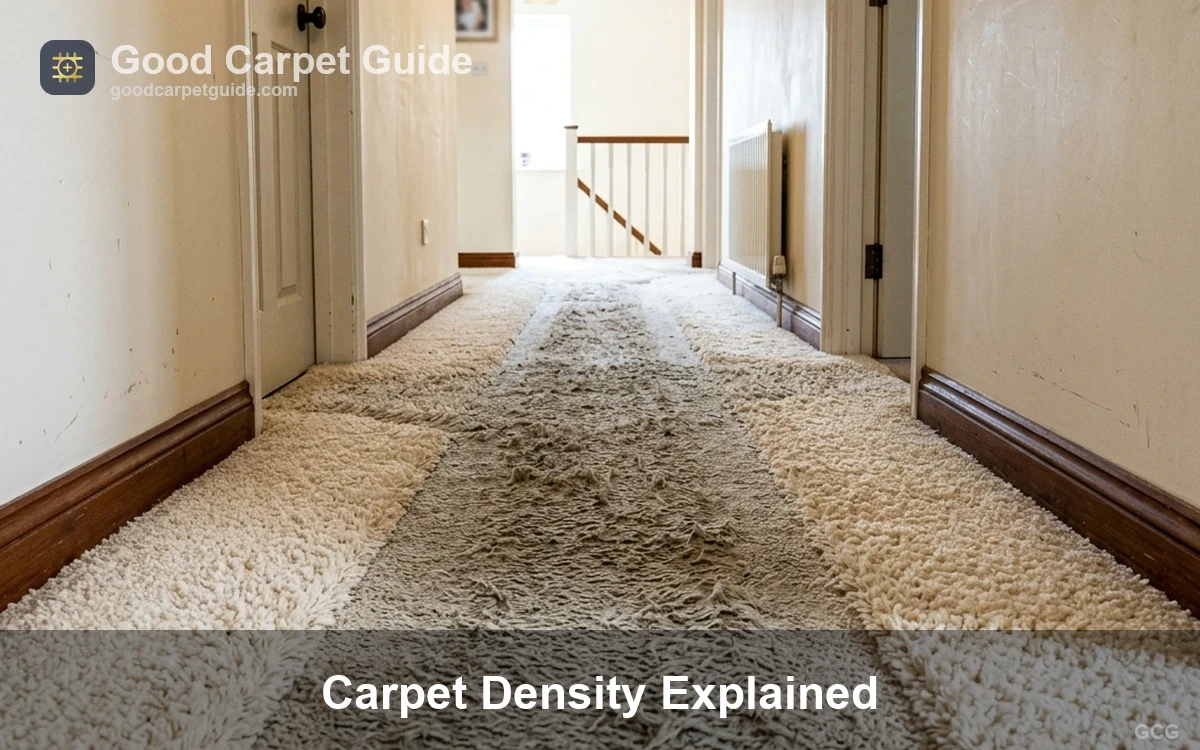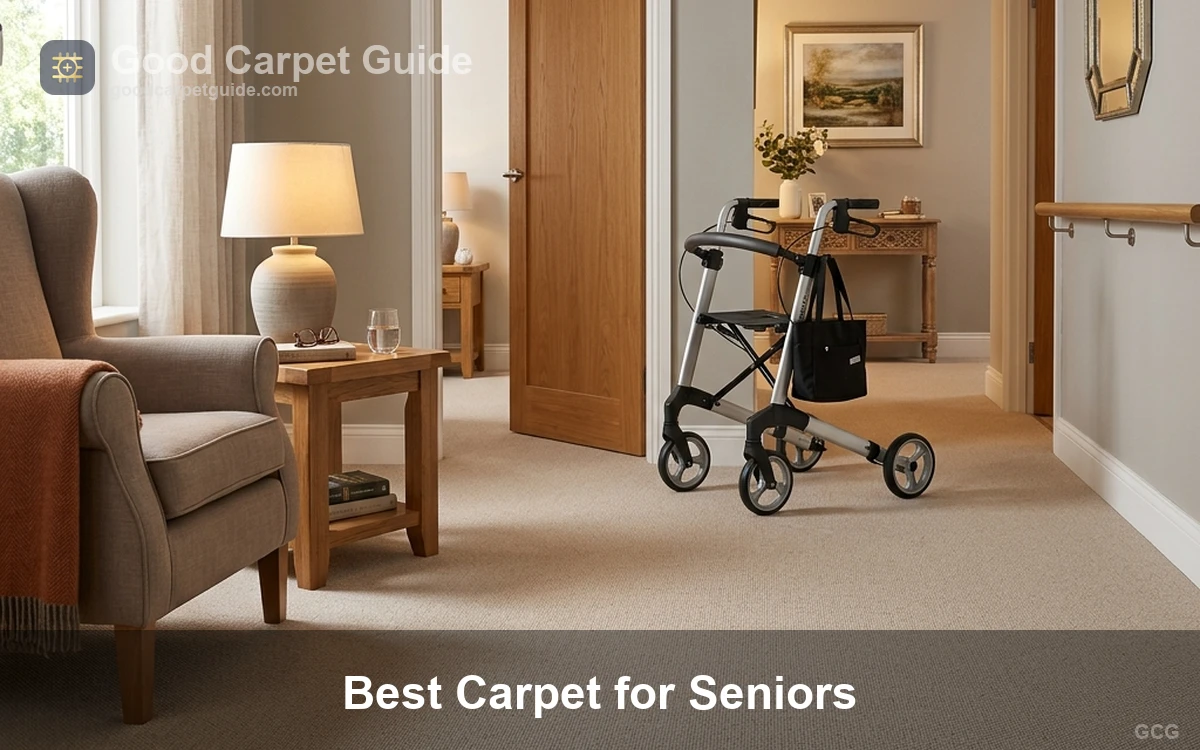
A flooring inspector in Phoenix received a call after an 81-year-old homeowner fell while turning a walker in a hallway. The hallway carpet looked soft and expensive under showroom lights. The plush polyester pile measured nearly 3/4 inch high, and the installer used a thick rebond cushion to create a “luxury feel.” The walker wheels sank into the carpet surface, twisted the backing during turns, and created ripples near the doorway within 11 months. The homeowner later injured an elbow trying to push a vacuum across the same carpet.
The failed carpet exposed three senior-safety mistakes at once. The plush carpet increased rolling resistance. The thick carpet cushion destabilized mobility aids. The loose installation created wrinkles that caught shuffling feet. Senior-friendly carpet requires low pile height, dense fiber construction, rigid support, and predictable traction instead of showroom softness.
Retail carpet stores frequently market softness as luxury. Softness creates labor for seniors with walkers, wheelchairs, canes, and upright vacuums. Senior-safe carpet prioritizes stability, low rolling resistance, controlled cushioning, stain isolation, and visual clarity under residential lighting.
What Type of Carpet Is Best for Seniors?
The best carpet for seniors uses dense low-pile nylon fiber with firm cushioning and a mechanically stretched installation. Dense low-pile nylon carpet reduces walker drag, prevents wheelchair sinkage, improves vacuum mobility, and maintains surface consistency over years of foot traffic.
Senior carpet fails when manufacturers optimize for showroom hand-feel instead of structural resilience. Structural resilience determines whether carpet fibers rebound after compression from wheelchairs, recliners, walkers, and concentrated heel pressure.
Nylon Carpet vs. Polyester and Triexta Fibers
Nylon carpet delivers superior resilience under repeated compression. Nylon carpet springs back after foot traffic because nylon polymer chains possess higher elastic recovery than polyester and triexta fibers.
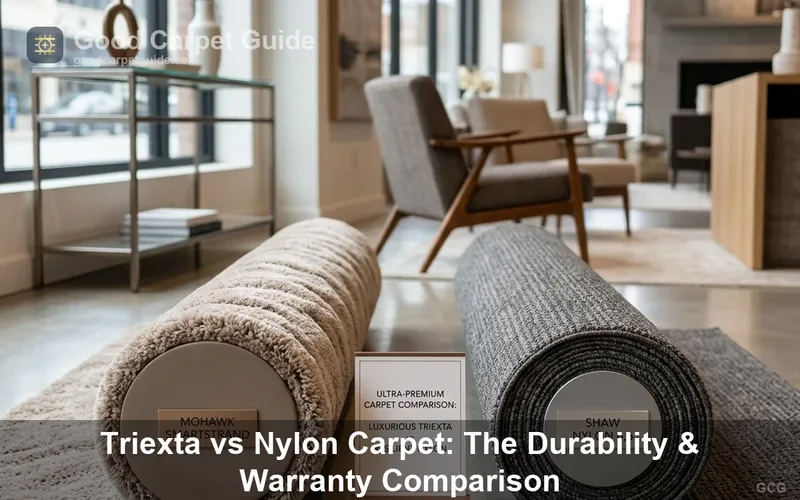
Seniors evaluating nylon resilience against Triexta softness should review the Shaw and Mohawk brand comparison by installers for fiber-specific durability benchmarks.
Triexta carpet brands such as Mohawk SmartStrand heavily market softness and stain resistance. Professional installers consistently criticize ultra-soft triexta products for seniors because triexta fibers flatten permanently under rolling loads and concentrated body weight.
Real-world users describe rapid matting within months:
“It wasn't even 9 months after the carpet was installed that it started matting down and looking like it was about 10 years old.”
Matting creates more than cosmetic aging. Matting changes traction consistency between pathways and surrounding carpet. Seniors using walkers rely on predictable rolling resistance across the floor surface. Flattened traffic lanes create directional drag changes that destabilize gait transitions.
Polyester carpet also suffers from low resilience. Polyester fibers resist stains but collapse faster under concentrated furniture loads and wheelchair traffic. Polyester carpet frequently develops “ugly out,” an industry term describing severe appearance deterioration before actual fiber wear occurs.
Use nylon carpet instead of polyester or triexta if the household includes:
- Uses a walker daily.
- Uses a wheelchair indoors.
- Vacuums without self-propelled equipment.
- Requires predictable traction transitions.
- Needs long-term appearance retention.
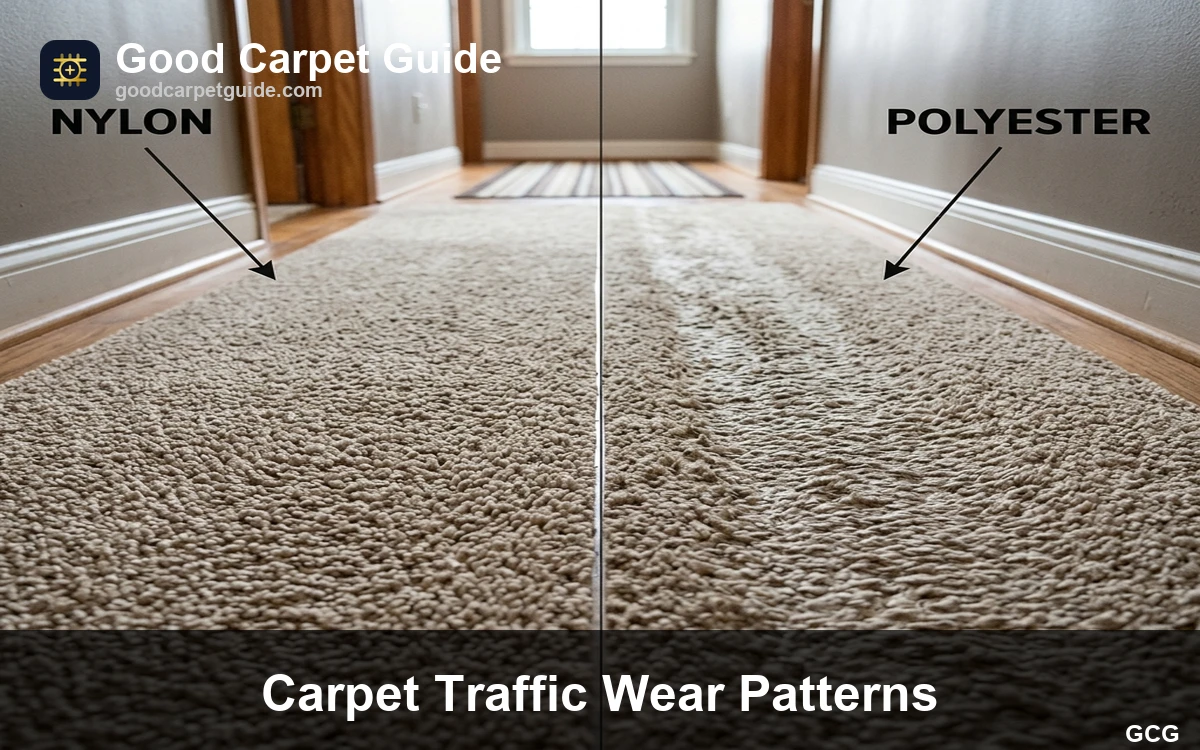
Dense low-pile nylon carpet maintains fiber recovery and rolling consistency while plush triexta carpet develops compressed traffic lanes that increase walker instability and directional drag.
The difference between resilience and softness becomes obvious after installation. Plush triexta carpet feels luxurious during a 30-second showroom test. Dense nylon carpet maintains mobility performance after thousands of wheelchair turns and vacuum passes.
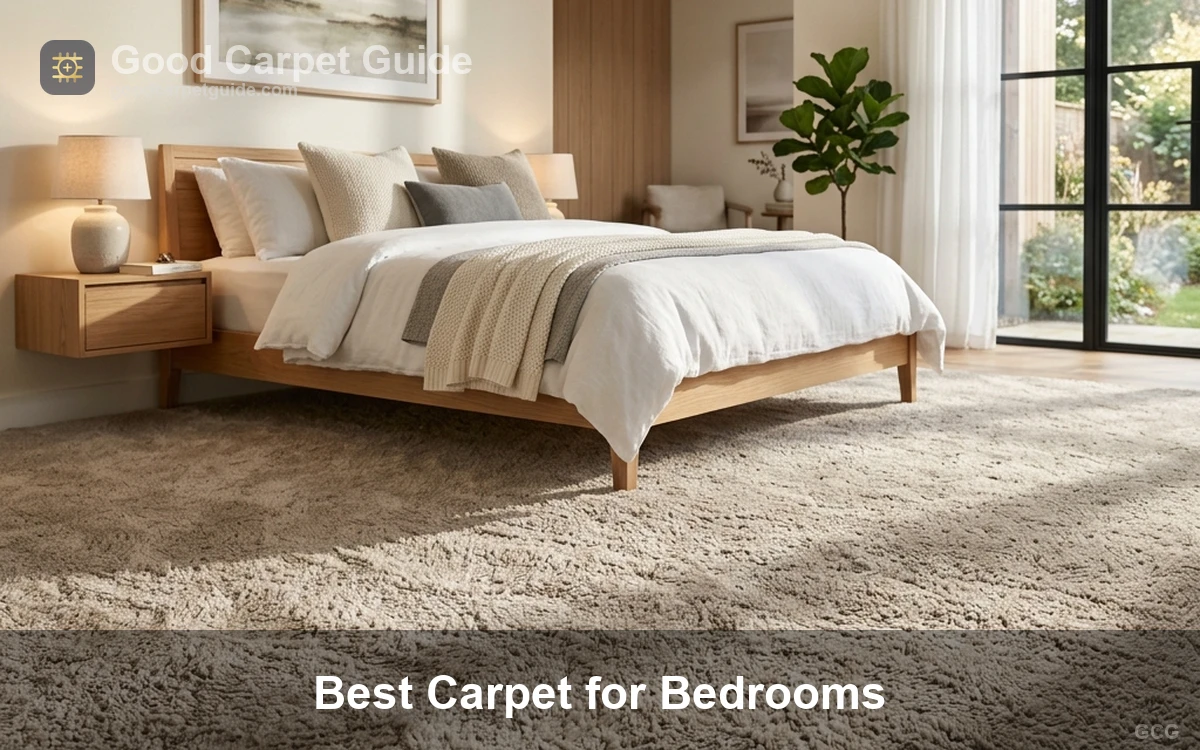
Readers comparing low-pile constructions should also review the best carpet for bedrooms guide because bedroom softness standards frequently conflict with senior mobility requirements.
Solution-Dyed Nylon Type 6,6: The Installer's Durability Benchmark
Solution-dyed nylon Type 6,6 represents the commercial benchmark for resilient residential carpet. Solution-dyed nylon Type 6,6 embeds pigment directly into the fiber during manufacturing, creating fade-resistant color and bleach resistance.
Commercial installers favor solution-dyed nylon because the fiber rebounds after compression instead of permanently folding. Fiber rebound matters for seniors because wheelchairs, recliners, and walkers generate concentrated static loads every day.
A standard wheelchair concentrates up to 700 pounds across four narrow wheel contact points. The wheel pressure compresses plush fibers deep into the backing structure. Low-resilience fibers remain crushed after repeated loading cycles.
Solution-dyed nylon also improves maintenance predictability. Predictable maintenance matters because seniors frequently struggle with vacuum resistance on ultra-soft carpets. One homeowner described the issue clearly:
“I can barely move my central vac over the rug. I can drag the vacuum backwards but cannot push it forward.”
Another user reported:
“I actually think I hurt my elbow pushing so hard on the vacuum.”
Vacuum resistance develops when dense plush fibers create suction lock against modern vacuum heads. Solution-dyed nylon low-pile carpet prevents excessive suction sealing because the carpet surface remains firmer and flatter.
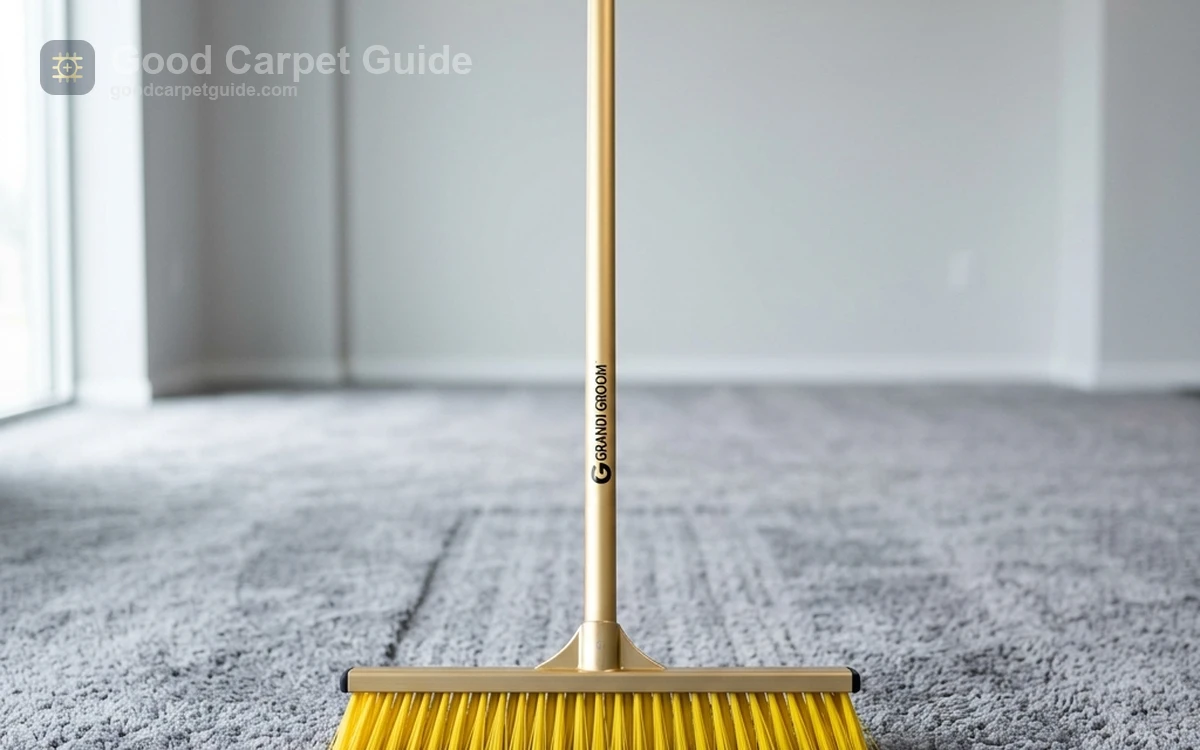
Grandi Groom Carpet Rake
The professional tool to combat senior carpet matting and pile crushing. Specially designed nylon bristles lift flattened low-pile fibers, restoring the original texture and fluffiness without physical vacuum strain.
Check Price on AmazonIs Carpet or Hardwood Better for Elderly Safety?
Carpet provides superior impact attenuation compared to hardwood flooring. Carpet absorbs kinetic energy during falls and reduces peak force transfer into hips, elbows, wrists, and shoulders.
Hardwood flooring creates a rigid impact surface. Rigid impact surfaces increase fracture severity during lateral falls. Senior-safe flooring systems prioritize controlled cushioning without excessive softness.
Low-pile carpet over dense cushioning creates the safest balance between traction and fall protection. Thick plush carpet creates instability even though the surface feels soft underfoot.
The Subfloor Secret: Concrete vs. Wood and Hip Fracture Risks
Subfloor composition changes injury outcomes during falls. Concrete subfloors transfer substantially higher impact energy into the body compared to suspended wooden subfloors.
Clinical drop-testing demonstrates that carpeted wooden subfloors reduce hip fracture risk by up to 80% compared to uncarpeted concrete surfaces. Wooden subfloors flex slightly during impact and distribute force across a wider area.
Senior apartments built over concrete slabs require extra caution during flooring selection. Plush carpet alone does not compensate for rigid concrete beneath the cushion.
Use dense low-profile carpet systems over concrete if the home includes:
- Long hallways.
- Walker turning zones.
- Frequent nighttime bathroom trips.
- Reduced balance stability.
- Osteoporosis risk.
When comparing durable brands for aging-in-place safety, review our comprehensive Stainmaster carpet review to evaluate cushioning, texture retention, and Lowe's warranties.
The Mobility Dilemma: Walkers, Wheelchairs, and Rolling Resistance
Rolling resistance determines how much force a senior expends while moving across carpet. Rolling resistance increases dramatically when carpet pile height and cushion thickness increase.
Soft plush carpet traps walker tips and wheelchair wheels inside the fiber field. The trapped wheels create push fatigue, steering instability, and abrupt directional resistance.
One installer summarized the issue directly:
“Thick, plush carpet feels luxurious, but try pushing a walker through it sometime. It's exhausting.”
Senior-safe carpet minimizes energy expenditure during movement. Reduced energy expenditure improves indoor independence and decreases fatigue accumulation during daily mobility.
How Wheelchairs Cause Lateral Carpet Delamination
Wheelchair movement destroys poorly installed carpet through lateral shear stress. Lateral shear stress develops during turning motions when wheelchair wheels rotate against anchored carpet fibers.
A wheelchair turning in place behaves similarly to a tank tread. The turning motion drags carpet fibers sideways while the backing remains partially anchored beneath furniture and tack strips. Plush carpet amplifies the problem because deeper pile allows greater fiber displacement before resistance engages.
Loose installation dramatically worsens the damage. Some subcontractors skip mechanical power stretching and rely only on knee kickers to save time. Knee kicker installation leaves microscopic slack inside the carpet backing.
Humidity expansion then enlarges the slack. The enlarged slack develops into visible bubbles, ripples, and waves within 6 to 18 months.
Wrinkled carpet becomes a direct fall hazard for seniors using shuffling gait patterns or mobility aids. Walker wheels catch the raised ridges. Slippers drag across the loose folds. Wheelchair turning stress eventually tears seams and separates backing layers.
The carpet delamination guide explains seam failure, backing separation, and moisture-driven adhesive breakdown in greater technical detail.
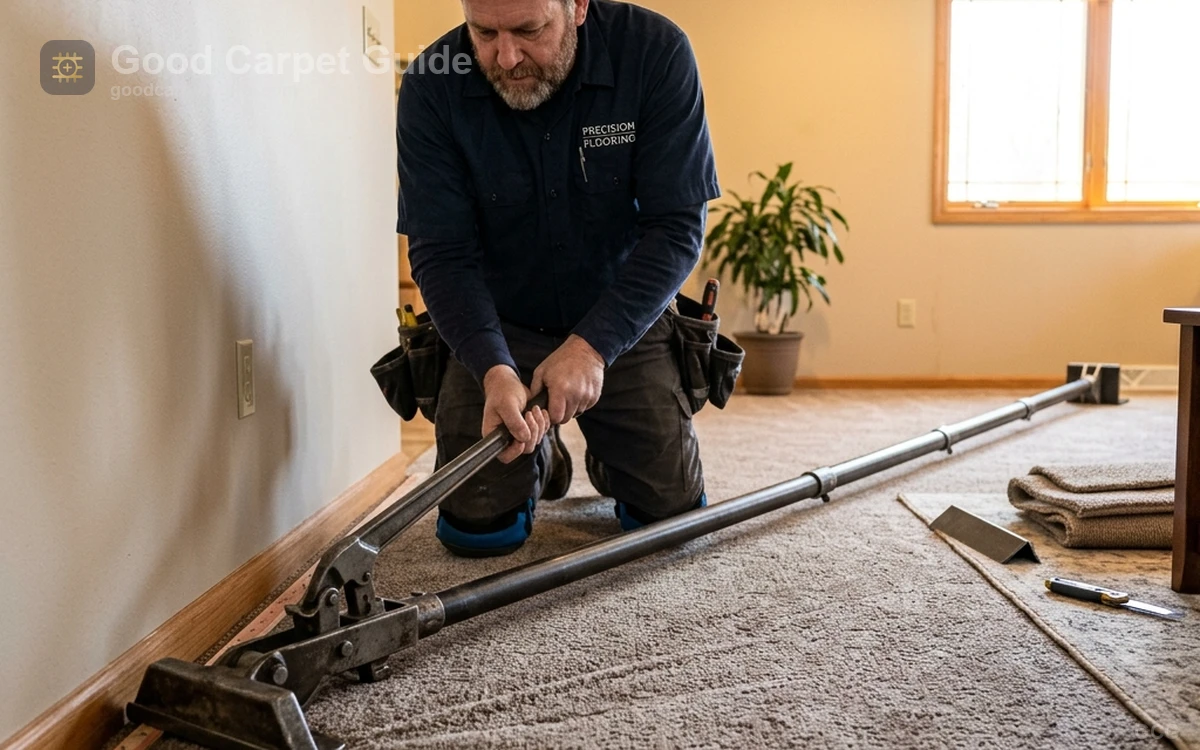
Wheelchair turning creates lateral shear forces that pull loose carpet backing sideways, generating wrinkles and delamination that increase trip hazards for seniors using walkers or shuffling gait patterns.
Require these installation standards for senior-safe carpet:
- Require mechanical power stretching.
- Require seam sealing adhesive.
- Require dense low-profile construction.
- Require moisture testing on concrete slabs.
- Require written cushion density specifications.
Padding Thickness Danger: The 3/8-Inch Cushion Limit
Carpet cushion thickness directly affects mobility stability. Thick cushion compresses under body weight and creates a floating sensation beneath walkers and wheelchairs.
Professional installers recommend maximum cushion thickness of 3/8 inch for senior households. Dense 8-pound to 10-pound cushion provides structural support without excessive compression.
Thick padding damages carpet backing under wheelchair traffic. The wheel pressure pushes carpet downward into the soft underlayment, stretching the backing repeatedly during movement. Repeated stretching accelerates seam failure and delamination.
Dense rubber cushion and dense synthetic fiber cushion outperform thick rebond foam for seniors because dense cushion materials resist deep compression.
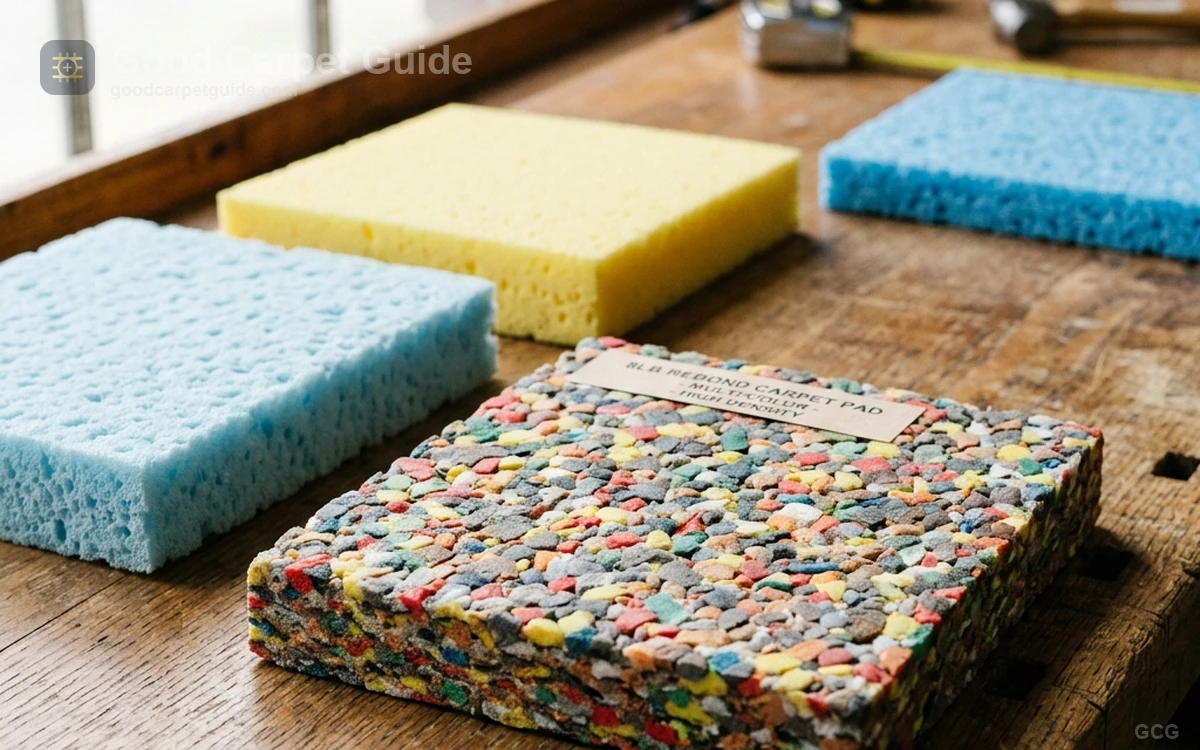
M-D Building Products 7/16-inch Rebond Underlayment (8lb)
Premium 8lb density underlayment. Crucial for senior-friendly houses to restrict excessive walker wheel sinkage while providing excellent safety protection.
Check Price on AmazonThe carpet padding guide explains density ratings, cushion rebound, and compression resistance across foam, fiber, and rubber underlayments.
Vacuum Incompatibility and the Soft Carpet Trap
Ultra-soft carpet frequently becomes impossible for seniors to vacuum. Ultra-soft carpet creates excessive suction lock between the vacuum head and carpet surface.
Retail showrooms rarely explain vacuum compatibility before purchase. Many consumers discover the issue only after installation. One carpet dealer eventually displayed a warning sign beside ultra-soft products stating that existing vacuums might not function properly.
Vacuum incompatibility creates physical strain injuries for seniors with arthritis, reduced grip strength, shoulder degeneration, or elbow pain. Pushing resistance compounds rapidly during whole-home cleaning.
Dense low-pile loop carpet reduces vacuum drag because airflow channels remain open beneath the vacuum head. Plush cut-pile carpet seals against the vacuum opening and creates a near-vacuum chamber effect.
Avoid these carpet characteristics if vacuum mobility matters:
- Avoid ultra-soft silk-style fibers.
- Avoid pile heights above 1/2 inch.
- Avoid dense plush Saxony constructions.
- Avoid thick memory-foam cushions.
- Avoid high-suction upright vacuums without height adjustment.
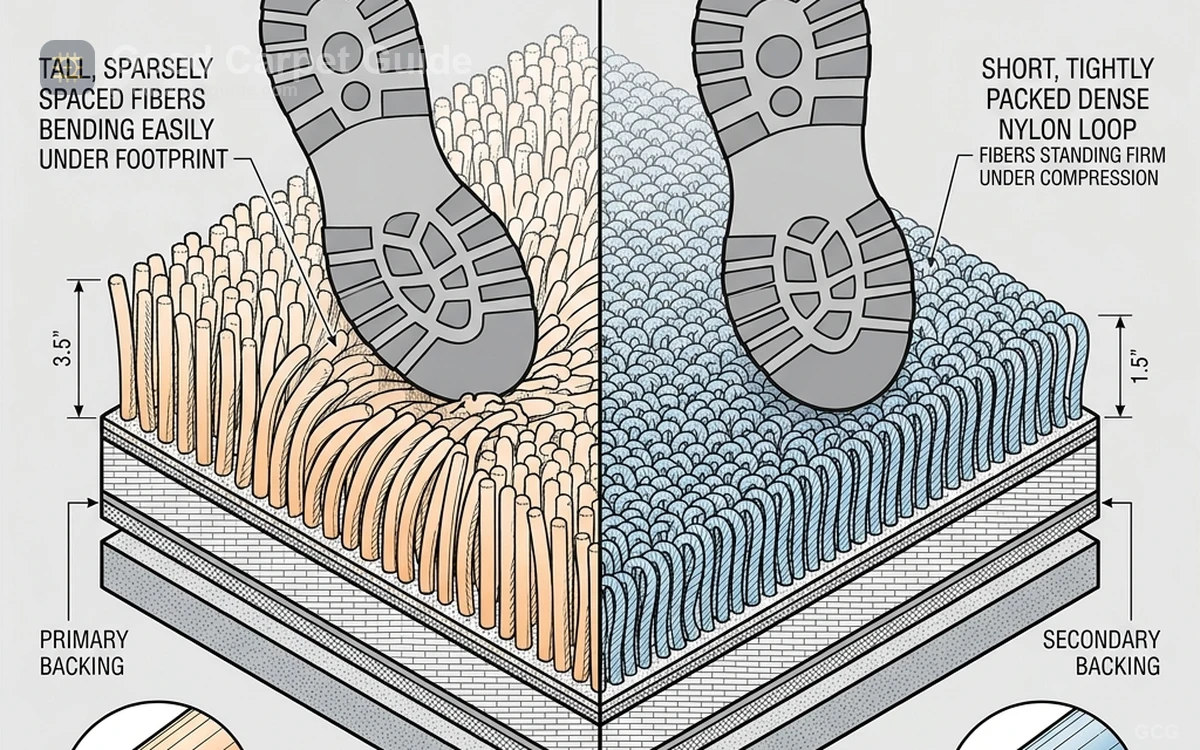
Ultra-soft plush carpet seals against vacuum heads and creates excessive push resistance, while low-profile nylon loop carpet maintains airflow clearance and manageable cleaning force.
The vacuum issue becomes especially dangerous on stairs because resistance changes destabilize body posture during ascent and descent. The best carpet for stairs guide explains traction-oriented carpet construction for stair safety.
The "Wear vs. Appearance" Warranty Trap Exposed
Carpet warranties protect manufacturers more effectively than consumers. Carpet warranties define “wear” using technical fiber-loss measurements rather than visible appearance deterioration.
Most major carpet warranties classify wear as more than 10% physical fiber loss. Flattened carpet does not qualify as wear if the fiber technically remains attached to the backing.
The distinction between physical fiber loss and appearance matting traps many senior homeowners. Appearance matting creates severe pathway visibility changes and traction inconsistency long before measurable fiber loss occurs.
A matted hallway path creates a visible lane depression through the home. The depressed lane changes walker wheel behavior and increases toe-catching risk during gait transitions.
Manufacturers deny many appearance-retention claims because compressed fibers still exist physically. The warranty language excludes “texture change,” “shading,” “pooling,” and “crushing” in many cases.
Consumer-focused buyers should prioritize engineering specifications instead of warranty length. Fiber resilience, face weight, backing integrity, and installation quality matter more than marketing promises.
Visual Hazards: Repetitive Patterns, Macular Degeneration, and Lighting Contrast
Visual processing changes significantly with age. Seniors with macular degeneration rely more heavily on peripheral vision and contrast detection for balance orientation.
High-contrast patterned carpet interferes with depth perception. Repetitive geometric patterns create false edge signals inside peripheral vision.
Senior-safe carpet uses consistent low-contrast coloration and simple texture transitions. Visual simplicity improves floor recognition and reduces neurological confusion during movement.
How Carpet Patterns Induce Vertigo and Balance Issues
Patterned carpet triggers neurological stress responses in sensitive seniors. High-contrast repeating designs create visual vibration effects that the brain misinterprets as movement or elevation change.
Neurological symptoms include:
- Trigger dizziness during walking.
- Trigger nausea during directional changes.
- Trigger vertigo during peripheral scanning.
- Trigger hesitation near thresholds.
- Trigger false obstacle perception.
Macular degeneration worsens the effect because damaged central vision shifts reliance toward peripheral interpretation. Peripheral vision processes broad contrast patterns poorly compared to stable solid-color flooring.
Busy hotel-style carpet patterns create especially dangerous environments for seniors with walkers. Repetitive motifs appear like raised objects or holes under low lighting conditions.
Use these visual standards instead:
- Use low-contrast coloration.
- Use solid or lightly textured surfaces.
- Use matte finishes instead of reflective fibers.
- Use clear transition strips between rooms.
- Use medium-tone neutrals with visible edge contrast.
Showroom 4000K vs. In-Home 2700K Color Shifts
Lighting temperature changes carpet appearance dramatically. Most retail showrooms use approximately 4000K lighting, which produces cooler and brighter color rendering.
Most homes use warmer 2700K lighting. Warm residential lighting suppresses cool undertones and reduces contrast visibility between carpet edges and surrounding surfaces.
Gray carpet selected under cool showroom lighting frequently appears beige or muddy under warm home lighting. Reduced tonal contrast makes room transitions harder to identify for seniors with impaired depth perception.
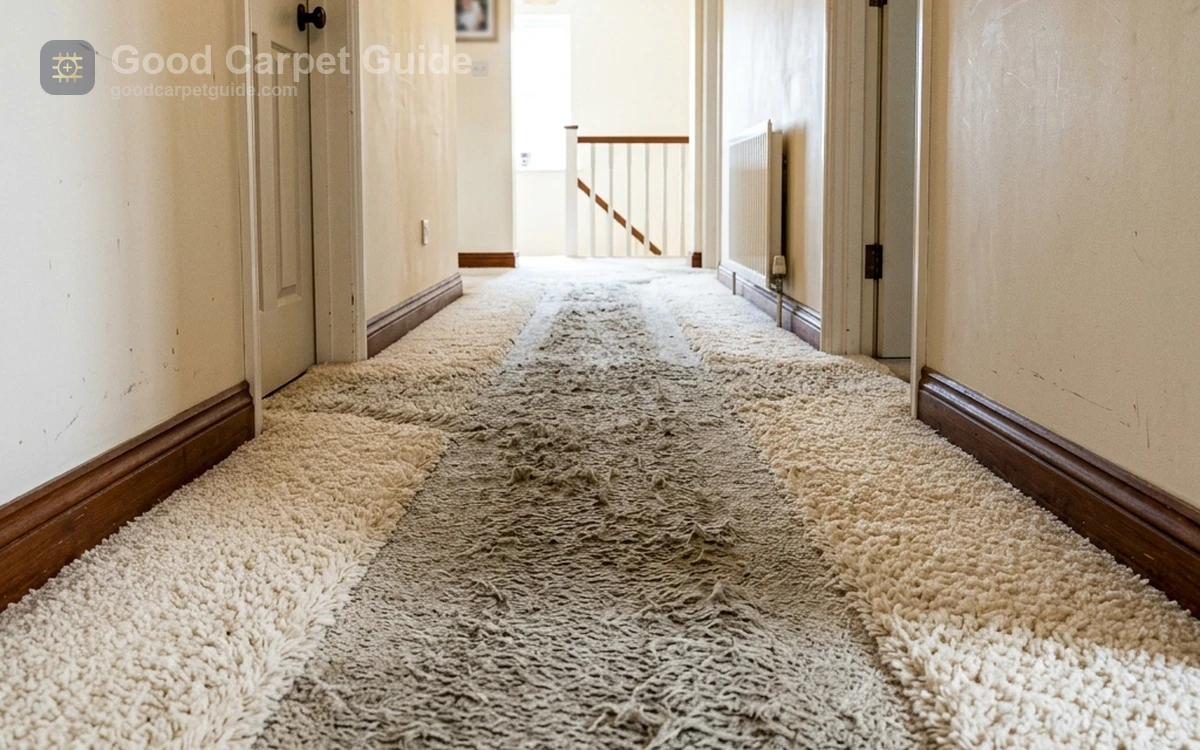
Cool showroom lighting exaggerates contrast and clarity while warm residential lighting softens undertones and reduces edge visibility that seniors rely on for depth perception.
Bring carpet samples home before purchase. Evaluate carpet samples beside baseboards, hallway thresholds, and nighttime lighting conditions.
Specialized and Alternative Senior-Friendly Flooring Systems
Specialized flooring systems outperform residential plush carpet in many senior households. Specialized flooring systems prioritize mobility, sanitation, and maintenance instead of softness marketing.
Flotex Flocked Nylon: Warmth with Near-Zero Rolling Resistance
Forbo Flotex uses upright flocked nylon fibers embedded into a waterproof vinyl backing. The flooring structure contains approximately 70 million fibers per square meter.
Flotex behaves differently from traditional broadloom carpet. The dense upright fiber field creates warmth and acoustic absorption without deep pile compression.
Wheelchairs and walkers roll smoothly across Flotex because the surface remains firm and dimensionally stable. The waterproof backing prevents biological fluids from soaking into cushion layers.
Flotex also tolerates bleach cleaning. Bleach resistance matters for senior households managing incontinence, medical sanitation, and odor prevention.
Traditional carpet backing absorbs urine rapidly. Biological fluids migrate through porous backing into absorbent cushion layers beneath the carpet surface. Trapped organic waste decomposes bacterially and generates persistent ammonia odors.
Flotex blocks the fluid migration pathway entirely because the vinyl backing remains impermeable.
Commercial Modular Carpet Tiles: Incontinence and Segmented Maintenance
Commercial carpet tile systems from brands such as Interface, FLOR, and Milliken provide modular maintenance advantages.
Commercial carpet tiles use rigid backing and low-profile loop construction. Low-profile loop carpet resists rolling resistance problems and minimizes edge curl.
Modular replacement changes the economics of incontinence damage. Homeowners replace individual stained tiles instead of replacing entire rooms.
Commercial carpet tile also reduces installation risk because individual tiles resist large-scale wrinkling and stretching failures.
Cost & Budgeting: Realistic Pricing for Safe Carpeting
Senior-safe carpet costs more initially than builder-grade plush polyester. Senior-safe carpet lowers long-term replacement frequency and reduces mobility-related maintenance problems.
Current market pricing for synthetic residential carpet with pad and installation ranges from approximately $4.00 to $5.30 per square foot.
Real installation examples include:
- Mohawk triexta carpet installed near $4.82 per square foot.
- Mohawk SmartStrand with SmartCushion installed near $5.16 per square foot.
- Full 1,086-square-foot installation totaling roughly $5,762.
- Bedroom installation packages totaling roughly $1,732.
Low-cost plush carpet frequently becomes expensive through premature replacement, difficult cleaning, and mobility-related safety hazards.
Allocate budget toward these performance factors first:
- Allocate budget toward dense nylon fiber.
- Allocate budget toward premium installation crews.
- Allocate budget toward dense cushion instead of thick cushion.
- Allocate budget toward waterproof backing systems.
- Allocate budget toward low-pattern visual design.
Avoid spending extra money on ultra-soft branding, oversized warranties, or thick memory-foam underlayment.
Frequently Asked Questions About Carpet for Seniors
What carpet pile height works best for seniors?
Low-pile carpet below 1/2 inch works best for seniors. Low-pile carpet reduces walker drag, improves wheelchair mobility, and minimizes vacuum resistance.
Is thick carpet padding safer for elderly people?
Thick carpet padding reduces stability for elderly users. Dense carpet cushion under 3/8 inch thickness provides safer support and lower rolling resistance.
Which carpet fiber lasts longest under walker traffic?
Solution-dyed nylon Type 6,6 lasts longest under walker traffic. Nylon fiber maintains elasticity and resists permanent crushing better than polyester and triexta.
Why does plush carpet wrinkle faster under wheelchairs?
Wheelchairs create intense lateral shear force during turning. Plush carpet allows deeper fiber displacement, which stretches backing layers and accelerates delamination.
Is patterned carpet dangerous for seniors?
High-contrast patterned carpet increases fall risk for seniors with macular degeneration and balance disorders. Repetitive patterns create false depth perception signals and trigger vertigo symptoms.
What flooring handles incontinence best?
Flotex flocked nylon and commercial modular carpet tile handle incontinence best. Waterproof backing systems prevent biological fluids from saturating carpet cushion layers.
Should seniors avoid ultra-soft carpet?
Seniors should avoid ultra-soft carpet if vacuum mobility, walker stability, or wheelchair access matter. Ultra-soft carpet creates excessive rolling resistance and severe vacuum drag.
Does carpet reduce injury severity during falls?
Carpet reduces impact severity during falls compared to hardwood flooring. Carpet over wooden subfloors provides significantly better shock absorption than bare concrete surfaces.