a job-site stain failure that changed the entire cleaning plan
A homeowner called after spending an entire weekend removing a dark coffee stain from a light beige living room carpet. The visible mark disappeared after repeated shampooing, yet the same brown outline returned two days later. The homeowner believed the carpet cleaner had failed. The carpet backing and rebond padding still contained contaminated moisture, which pulled dissolved soil back to the fiber tips through capillary action during drying.
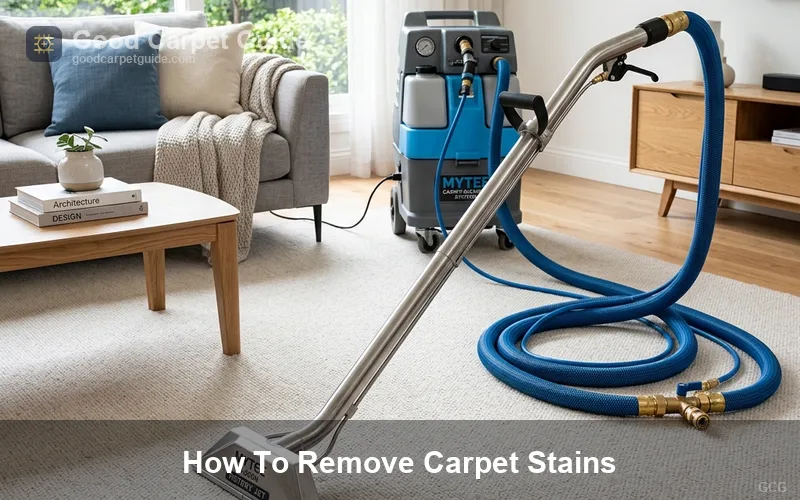
The same pattern appears repeatedly across residential service calls. Depending on the soil type and fiber chemistry, consulting our technical breakdown of carpet cleaning methods compared helps prevent structural fiber damage during spot treatment. Homeowners scrub aggressively, flood the carpet with water, rent underpowered extraction machines, or apply internet “heat hacks” that permanently bond pigments into nylon fibers. Learning how to remove carpet stains requires understanding stain chemistry, fiber construction, moisture control, and extraction rather than relying on stronger chemicals alone.
The most reliable method for how to remove carpet stains starts with identifying the contaminant, selecting chemistry that matches the contaminant, limiting moisture penetration into the backing, extracting residue completely, and drying the carpet rapidly. Food spills, grease, coffee, pet accidents, rust, mold, and synthetic drink dyes each require different treatment protocols because each stain interacts differently with carpet fibers and carpet padding.
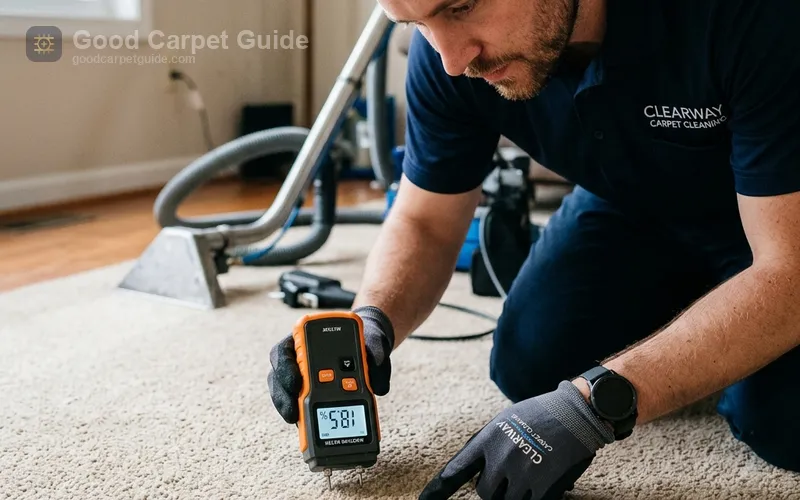
Moisture trapped beneath the visible surface creates stain wicking that returns after drying even when the carpet face initially appears clean.
how to remove carpet stains without making the damage worse
Remove carpet stains by stopping contamination before it penetrates deeper into the backing and cushion.
Many permanent failures occur during the first five minutes after a spill because homeowners rub fibers sideways or saturate the area with excessive water. Composite field reports from installers and restoration technicians consistently identify overwetting as a leading cause of recurring stains and mildew odors.
The basic decision process follows a predictable sequence:
For set-in stains that pre-treatment cannot fully lift, homeowners often escalate to a rental machine — understanding do carpet shampooers work for stain removal specifically helps calibrate whether a shampooer or a professional extraction appointment is the right escalation path.
- Blot excess material without rubbing.
- Select chemistry appropriate for the contaminant.
- Apply cleaner sparingly.
- Agitate gently from the outside inward.
- Extract residue completely.
- Dry the carpet rapidly with airflow.
Following the sequence reduces pigment migration, adhesive damage, and contamination of the underlying carpet cushion.
why some carpet stains come back after cleaning
Recurring carpet stains return because dissolved contaminants remain below the visible pile.
Recurring carpet stains develop through a process known as wicking. Moisture trapped inside the backing or padding moves upward during evaporation and deposits soil on the fiber tips. Homeowners frequently mistake wicking for a brand-new stain even though the original contamination never left the carpet system.
Composite installer reports describe rental extraction machines removing visibly brown water through multiple cleaning cycles because saturation extends well below the face yarn into the cushion layer.
For lease-compliant hot water extraction temperatures and safety standards that protect tenant security deposits, refer to our apartment carpet guide .
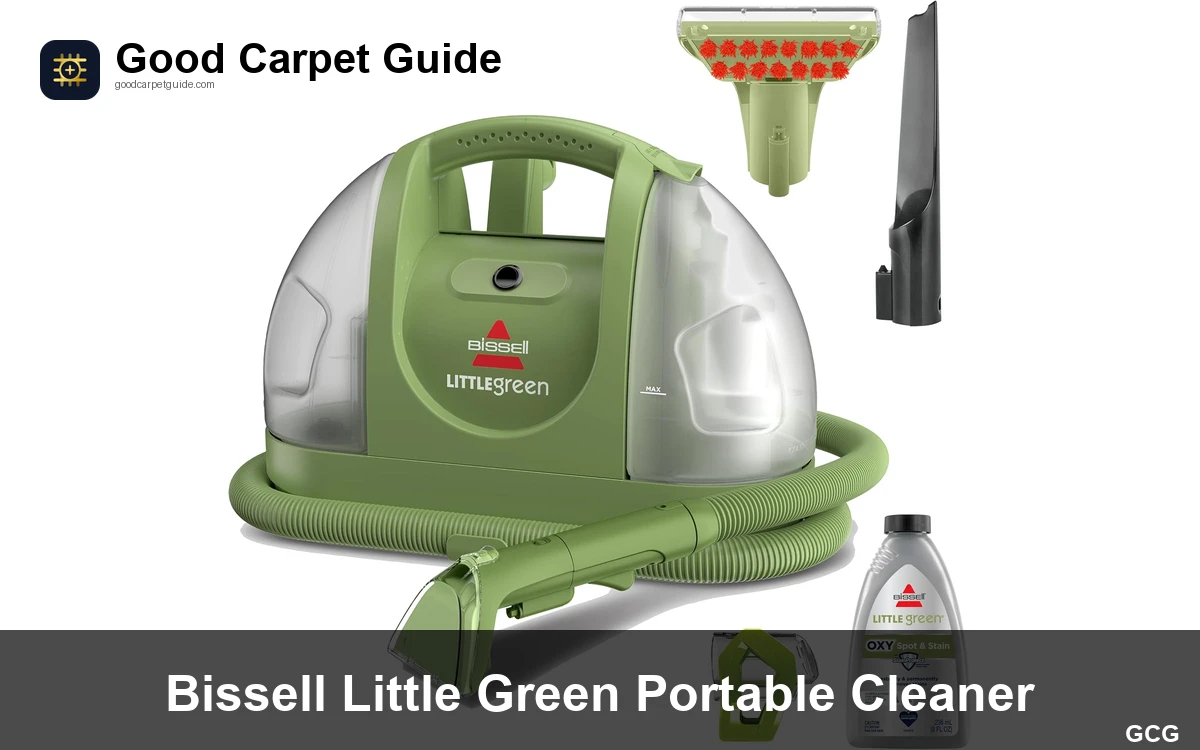
Bissell Little Green Portable Carpet Cleaner
Compact and powerful spot extraction machine. Crucial for flushing and extracting liquid spills, pet accidents, and embedded soil from deep within the backing and cushion padding.
Check Price on Amazon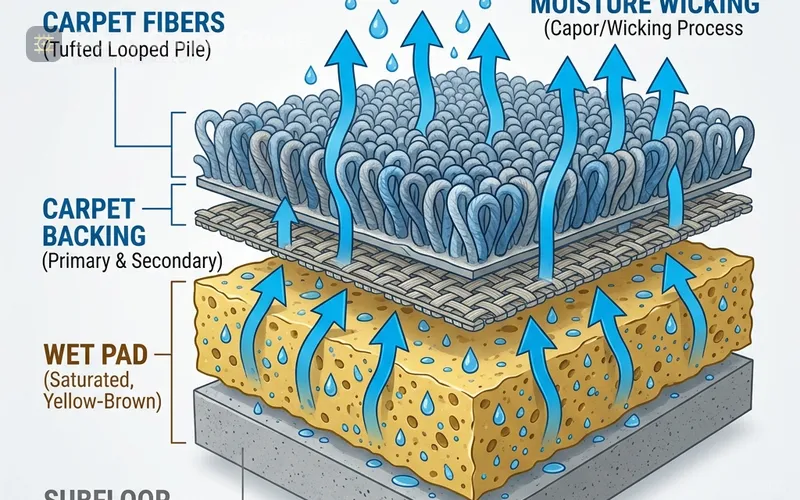
Moisture remaining inside carpet padding migrates upward during drying and recreates visible discoloration on the surface fibers.
which carpet stain remover works best for different stain types
Different contaminants require different cleaning chemistry because water-soluble compounds and oil-based compounds behave differently inside synthetic fibers.
The following table organizes practical stain-removal choices according to field experience and contaminant chemistry.
| Stain Type | Primary Cleaner | Reason |
|---|---|---|
| Coffee | Mild detergent followed by extraction | Removes tannins before oxidation |
| Grease | Surfactant degreaser such as Dawn Powerwash | Emulsifies hydrophobic oils |
| Tomato sauce | Surfactant before water | Prevents oils from driving pigments deeper |
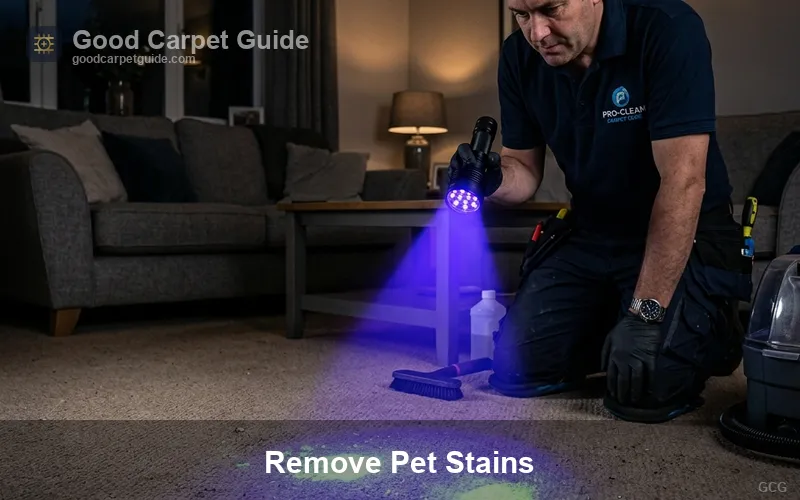
| Pet urine | Enzymatic cleaner | Breaks down biological residue |
| Kool-Aid | Dye remover formulated for synthetic dyes | Targets artificial coloring agents |
| Rust | Oxalic-acid-based rust remover | Dissolves iron oxide deposits |
| Mold staining | Concrobium Mold Control or Benefect Decon 30 | Addresses microbial contamination |
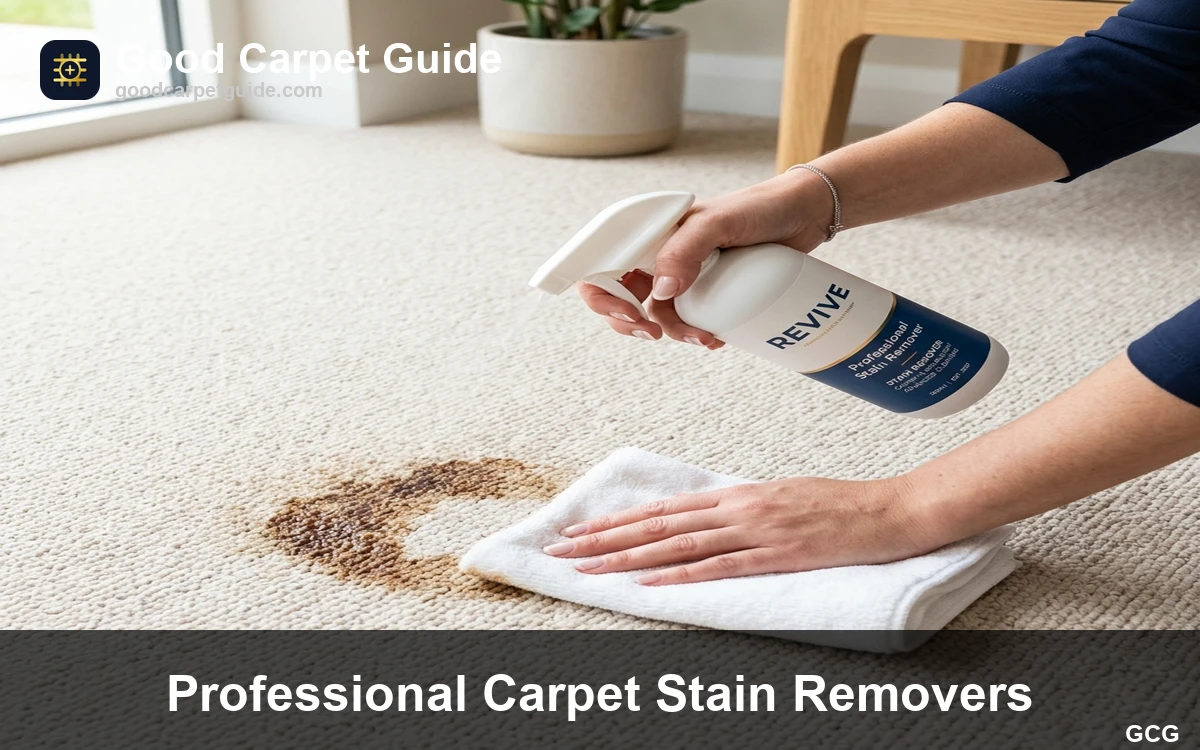
| General spot | Folex Instant Carpet Spot Remover | Effective consumer spot treatment |
The table demonstrates that cleaner selection depends on stain composition rather than stain color.
how to remove coffee stains from carpet naturally
Remove coffee stains by absorbing liquid immediately and limiting oxidation.
Coffee contains tannins that darken as oxidation progresses. Fresh coffee responds well to blotting followed by controlled application of warm water and mild detergent. White vinegar diluted with water may assist after detergent removal by balancing residue, although detergent remains the primary cleaning agent.
Avoid pouring large volumes of liquid onto the carpet because saturation increases the risk of wicking.
how to remove old grease stains from carpet
Remove old grease stains by emulsifying oil before introducing additional water.
Composite installer experience identifies immediate water application as a common homeowner error. Oil repels water and pushes greasy contamination deeper into synthetic fibers. Direct surfactant application breaks apart hydrophobic deposits before extraction.
Dawn Powerwash receives repeated positive field references because concentrated surfactants separate cooking oils efficiently from nylon and polyester pile surfaces.
how to remove lasagna stains from carpet
Remove lasagna stains by treating grease before tomato pigments.
Lasagna combines protein, dairy fat, cooking oil, tomato pigment, and carbohydrates into one complex contaminant. Composite field reports emphasize that homeowners frequently attack the visible red color first while ignoring embedded oils.
An effective workflow follows these steps:
- Lift food solids carefully.
- Apply surfactant directly to greasy residue.
- Agitate lightly.
- Blot suspended contamination.
- Rinse minimally.
- Extract remaining moisture.
- Dry rapidly.
The sequence prevents carotenoid pigments from penetrating deeper into the carpet structure.
how to remove kool-aid stains from carpet
Remove Kool-Aid stains with specialized dye-removal chemistry rather than excessive heat.
Artificial beverage dyes chemically bind to carpet fibers during heating. Restoration professionals repeatedly caution against internet demonstrations involving household irons because uncontrolled heat permanently sets synthetic colorants into nylon fibers.
Heat belongs only in professional dye-removal systems using compatible chemistry and controlled procedures.
how to remove carpet stains with white vinegar
White vinegar removes selected mineral residue and detergent buildup but does not replace dedicated stain removers.
White vinegar functions as a mild acidic rinse. White vinegar does not dissolve grease efficiently, does not digest biological waste, and does not remove synthetic beverage dyes independently.
Use white vinegar only after identifying stain chemistry instead of applying white vinegar universally to every spill.
how to remove carpet stains in car
Remove carpet stains in a car by using dry foam surfactants and low-moisture extraction methods.
Automotive carpeting uses thin synthetic fibers bonded to dense rubber backings that trap moisture. Homeowners must avoid pouring liquid cleaner onto car carpets because saturated padding cannot dry efficiently in an enclosed cabin. Saturated car carpets breed mildew and rust the underlying steel floorboards.
Vacuum the car carpet thoroughly to remove loose dry soil before applying a dry foam spotter. Agitate the foam using a soft nylon brush, allow the cleaning agents to suspend the grime, and blot the surface using a dry microfiber towel.
how to remove mildew stains from carpet
Remove mildew stains from carpet by applying EPA-registered fungicides and eliminating the subfloor moisture source.
Mildew develops when a carpet remains wet for more than 24 hours. Homeowners must avoid using chlorine bleach on nylon and polyester carpets because bleach strip colors and weakens the polymer structure. Use a specialized solution such as Concrobium Mold Control or Benefect Decon 30 to kill fungal spores safely.
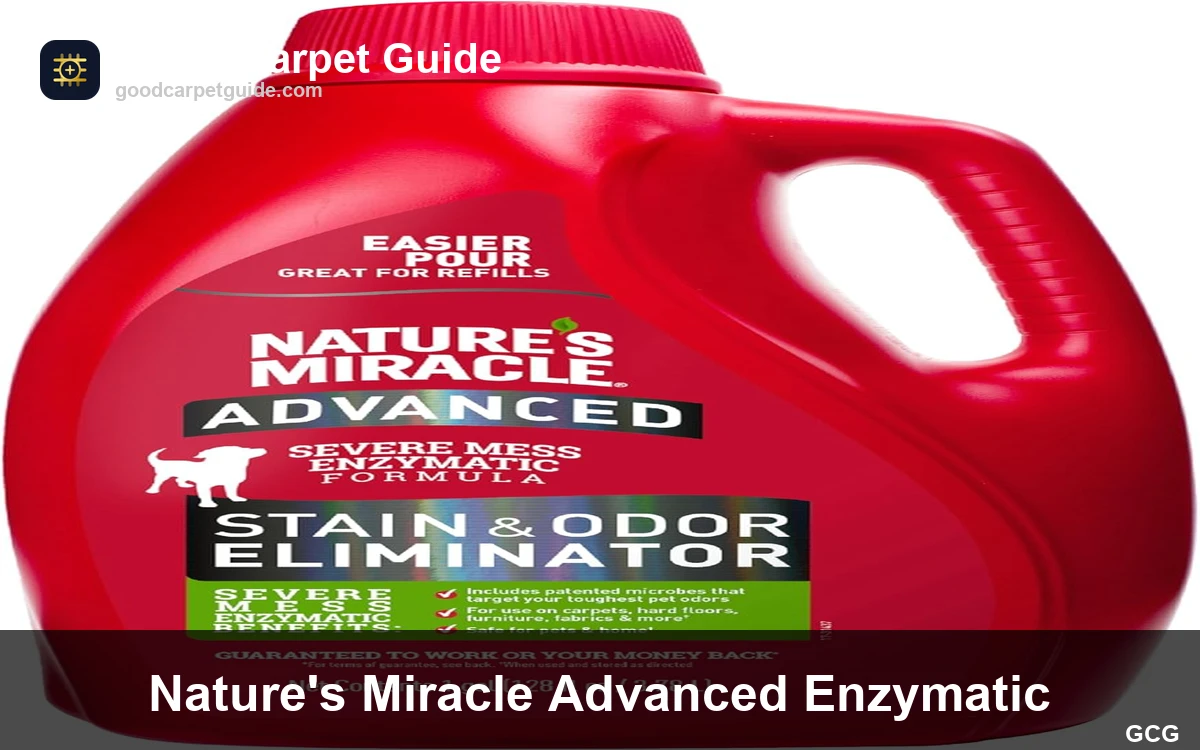
Nature's Miracle Advanced Stain & Odor Eliminator
Professional-grade enzymatic digester. Designed to break down organic proteins, pet accidents, urine, and biological molecules in carpet fibers and padding.
Check Price on AmazonSpray the fungicide directly onto the dry mold spores and let it dwell for 10 minutes. Extract the residue using a hot water extraction machine. For homes with moisture-prone concrete subfloors, review our best carpet for basement guide to select mildew-resistant carpet systems.
how to remove bad carpet stains
Remove bad carpet stains by applying targeted spotters and extracting the suspended pigment using high-vacuum extraction.
Bad carpet stains consist of multi-component colorants, tannins, and biological waste. Homeowners must treat bad carpet stains using specialized spotters matching each chemical class rather than scrubbing the fibers. Scrubbing distorts the yarn tips and ruins the carpet texture permanently.
In low-traffic zones, read our best carpet for bedrooms guide to learn how different fibers handle cosmetic spills. Apply the cleaner, dwell for 5 minutes, and blot with a clean cloth.
how to remove carpet stains reddit
Reddit homeowners recommend using Folex Instant Carpet Spot Remover as the most effective general spot treatment.
Forum participants on r/HomeImprovement and r/Flooring explain that Folex leaves zero sticky residue after drying. Residues left by cheap shampoos act as dirt magnets, which cause the carpet to get soiled faster. Reddit users also praise Dawn Powerwash for grease stains and caution against renting cheap steam cleaners.
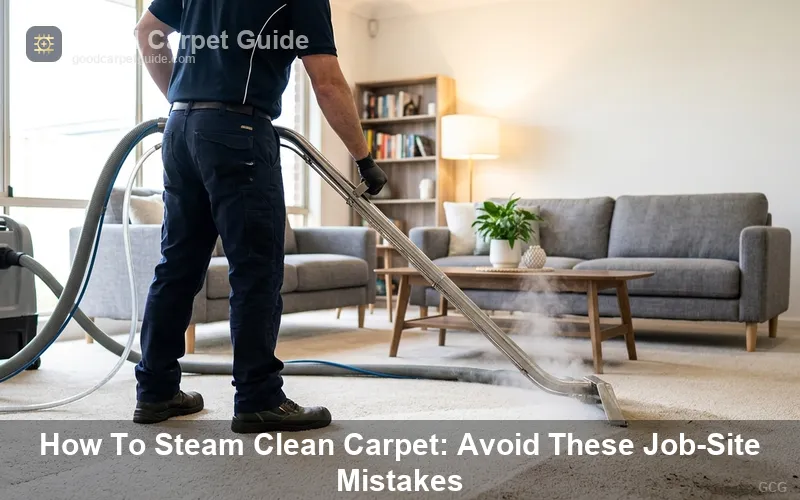
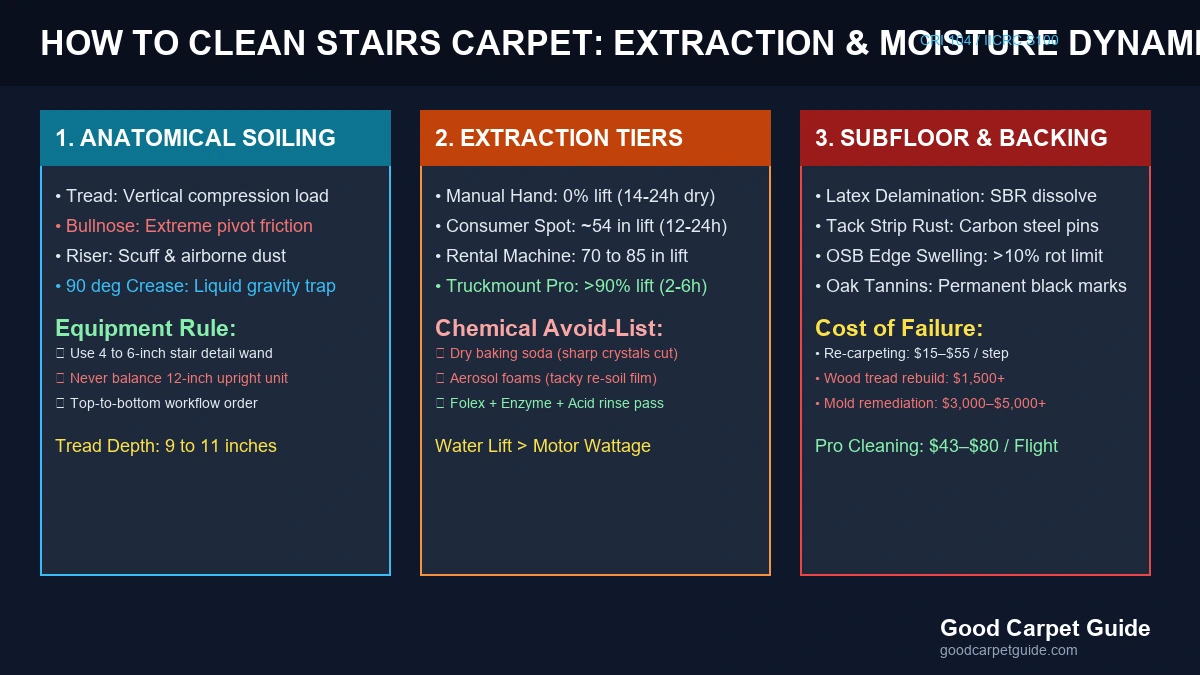
DIY rental machines lack the vacuum power of commercial truck-mounted extraction systems, leaving carpets damp for days.
how to remove carpet stains with an iron
Remove carpet stains with an iron by placing a damp white cotton towel over the spot and applying low heat to transfer the pigment.
Heat transfer must only be used on durable synthetic fibers after applying an appropriate surfactant. Homeowners must never apply a dry iron directly to carpet fibers because nylon and polyester melt at high temperatures. Melting ruins the fibers and causes permanent plastic distortion.
Dampen a white cotton towel, lay the towel over the spot, and press the iron on its lowest steam setting for 10 seconds. Check the towel frequently to verify pigment transfer and prevent overheating.
how to remove hard carpet stains
Remove hard carpet stains by applying a concentrated surfactant to soften the dried crust before scraping.
Hard carpet stains include dried mud, paint, glue, and food spills that have solidified. Homeowners must avoid pulling the dried crust directly from the pile because force pulls fibers out of the backing. This causes fiber loss and carpet damage.
Saturate the hard spot with a mild cleaning solution to dissolve the binding agent. Use a dull spoon to scrape the softened residue gently from the fiber tips before extracting the liquid.
how to remove rust stains carpet
Remove rust stains from carpet by applying an acidic spotter containing oxalic acid to dissolve the iron oxide.
Rust stains form when metal furniture legs contact wet carpet backing. Homeowners must avoid using standard alkaline soaps on rust because alkalinity sets iron oxide permanently. Acidic spotters break the chemical bond between the iron particles and the synthetic fibers.
Apply a dedicated rust remover, wait for the orange stain to disappear, and rinse the spot using clean water. Extract all remaining water immediately to prevent the rust from wicking back from the subfloor.
how to remove red juice stains from carpet
Remove red juice stains from carpet using reducing agents specifically formulated to break down synthetic food dyes.
Red fruit punch and Kool-Aid contain artificial colorants that chemically bind to synthetic carpet fibers. Homeowners must blot the fresh spill immediately using a dry towel to remove the liquid before it sets. Reducing agents work by breaking the molecular structure of the red dye.
Spray the dye spotter on the red stain, allow it to react, and blot with a clean white cloth. Avoid using heat unless a professional technician supervises the process.
how long does carpet last according to real users
Carpet lasts between 5 and 15 years depending on the fiber type, pile density, and routine maintenance.
Real-world homeowner experiences show that fiber chemistry determines long-term carpet durability more than the brand name. Polyester carpets often crush and mat down rapidly, with some users reporting severe wear after only 6 months of use. Nylon carpets retain their polymer memory and structural integrity under heavy traffic lanes.
Read our best carpet for stairs guide to learn more about selecting durable fibers for high-traffic paths. Routine professional hot water extraction extends carpet life by removing abrasive grit that cuts fibers.
do carpet manufacturers and installers agree on lifespan
Carpet manufacturers and installers disagree on carpet lifespan due to the wear warranty loophole and showroom softness marketing.
Carpet manufacturers define wear strictly as the loss of fiber mass, which excludes matting, crushing, and loss of pile height. Installers warn that modern synthetic carpets rarely lose mass but still look old and crushed within 2 to 5 years. Showroom softness trends lead buyers to purchase high-pile polyester or thick memory foam padding.
This combination allows excessive movement, contributing to wrinkles and carpet delamination guide issues that void warranties. Select an 8-pound density rebond pad with a moisture barrier scrim to protect the installation.
carpet stain removal cost and budget considerations
Carpet stain removal costs vary depending on the cleaning method, room layout, and professional service scope.
Homeowners must balance initial savings against long-term maintenance costs when planning carpet care. The following table details the cost structures for various cleaning methods and materials.
| Cleaning Method / Material | Average Cost | Coverage / Detail |
|---|---|---|
| Professional Spot Cleaning | $75 - $150 | Per visit for minor spot treatments |
| Professional Empty Room Cleaning | $0.55 per sq ft | Empty rooms without furniture |
| Professional Furnished Cleaning | $0.61 per sq ft | Rooms requiring furniture moving |
| Professional Stair Cleaning | $5.50 per step | Cleaning per individual carpeted step |
| DIY Rental Machine | $35 for 48 hours | Machine rental fee excluding shampoo |
| DIY Cleaning Shampoo | $20 per bottle | Concentrated surfactant solution |
| Folex Spot Remover | $10 per bottle | Spot treatment spray bottle |
| 8-Pound Rebond Padding | $0.66 per sq ft | Premium moisture-barrier underlayment |
Professional hot water extraction every 12 to 18 months is required to maintain manufacturer warranties. DIY machines often leave carpets oversaturated, increasing wicking risks.
carpet stain removal frequently asked questions
Carpet stain removal frequently asked questions cover stain wicking, DIY solutions, and professional maintenance requirements.
How do I stop carpet wicking? Stop carpet wicking by extracting all moisture from the padding and using high-velocity fans to dry the fibers within 24 hours.
Can vinegar ruin carpet? Vinegar can damage wool and some natural fibers if applied in high concentrations, but it is safe for nylon and polyester when diluted.
Why does my carpet smell after cleaning? Carpets smell after cleaning because cheap rebond padding absorbs water, spreads the liquid, and breeds mildew.
Does steam cleaning void carpet warranties? DIY steam cleaning with consumer rental machines can void warranties if it leaves the carpet wet or skips the required IICRC-certified extraction.