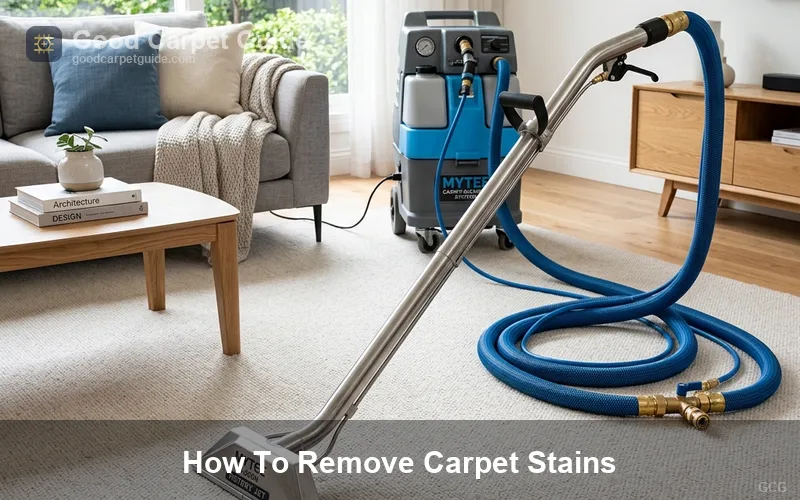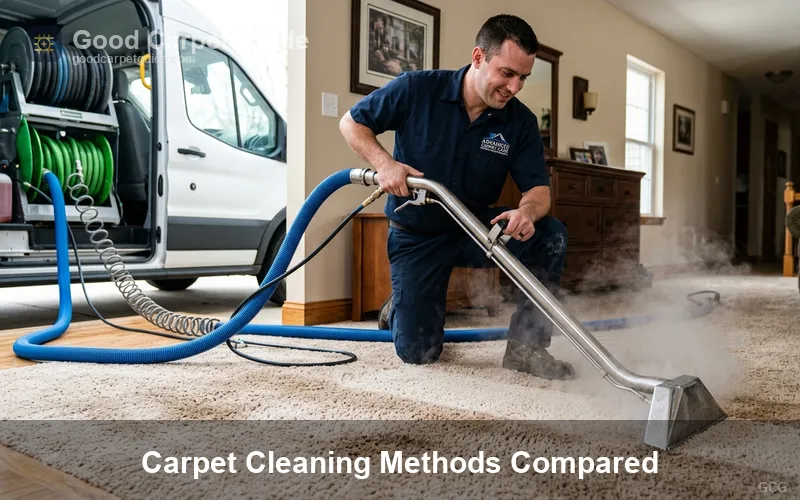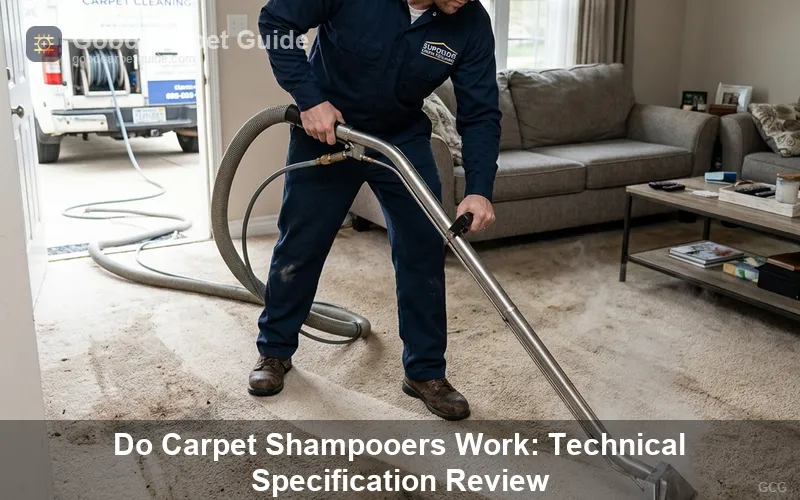
A tri-level home in a red-clay suburb of Atlanta failed a pre-listing flooring inspection on a hallway runner that had been "deep cleaned" three times in eighteen months using a rented upright shampooer, showing permanent tip distortion across the traffic lane and a delaminated seam nearest the stairwell where repeated wet passes soaked into the jute backing. Do carpet shampooers work as a cleaning method, or do they accelerate the exact wear patterns homeowners are trying to prevent? The inspection report on that Atlanta hallway answers the question conditionally: carpet shampooers work within a narrow mechanical envelope, and outside that envelope they contribute directly to fiber breakdown, backing degradation, and warranty forfeiture. This review walks through the mechanical process consumer shampooers use, compares that process against IICRC-certified hot water extraction, documents real hardware failure patterns reported by users, and closes with a cost breakdown so the decision between renting, buying, or hiring a professional rests on verifiable numbers rather than marketing claims.
how do carpet shampooers work
Carpet shampooers work by combining a rotating or oscillating brush head with a pressurized detergent-and-water solution that is applied and extracted in a single mechanical pass. The shampooer unit stores clean solution in a forward tank, dispenses it through a spray nozzle onto the carpet pile, agitates the pile with a brush or bristle roller, and immediately vacuums the resulting slurry into a separate recovery tank. Consumer shampooers rely on a wet vacuum motor generating roughly 50 to 80 inches of water lift, a figure substantially lower than the suction rating used in truck-mounted extraction systems.
The mechanical sequence explains why shampooers underperform on deeply embedded soil. Because agitation, chemical application, and extraction occur in the same pass, the brush head does not get a dwell period to let detergent break down bonded soil before removal begins. Installers routinely encounter carpets where this simultaneous-pass design leaves a visible detergent film on the fiber tips, since the extraction stroke removes surface moisture faster than it removes dissolved residue from lower in the pile.
Rotating brush shampooers and oscillating brush shampooers represent the two dominant consumer mechanisms:
- Rotating brush units spin a cylindrical bristle roller against the pile, generating high mechanical friction concentrated on high-traffic lanes.
- Oscillating brush units move bristles side to side across the pile, distributing friction more evenly but covering less surface area per pass.
- Dual-tank units separate clean solution from recovered wastewater to prevent redepositing dirty water onto the carpet.
- Heated units warm the tap water supply to roughly 130°F to 150°F, well below the temperature range used in commercial extraction.
These four configurations cover most units sold under the Bissell, Hoover, and Tineco product lines, and the brush mechanism selected directly affects how much mechanical stress the pile absorbs during a single cleaning session.
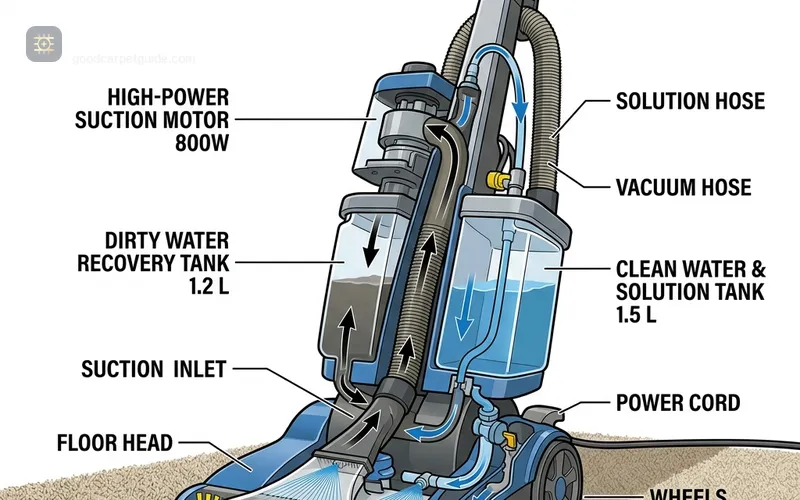
The dual-tank recovery system separates clean detergent from extracted wastewater, but the same-pass agitation cycle limits dwell time for soil breakdown.
how well do carpet shampooers work
Carpet shampooers work effectively on surface-level soil and fresh spills, and work poorly on deeply embedded soil, oil-based staining, and backing-level contamination. Performance splits cleanly along three variables: soil depth, pile density, and pre-treatment quality. A shampooer removing loose surface soil from a low-traffic bedroom performs close to its marketed capability, while the same unit run over a matted hallway with compacted red clay or desert sand grit removes only a fraction of the embedded particulate.
Published installation data shows that roughly 80% of carpet soil by volume is dry particulate matter, not wet or oily residue. Dry soil that has not been removed by thorough vacuuming before shampooing gets pushed deeper into the pile base rather than extracted, since wet brush agitation compacts loose dry particles against the backing instead of lifting them free. This sequencing failure is the single most common reason homeowners report that a freshly shampooed carpet "looks worse" within days.
diagnostic checklist: is a shampooer suitable for this carpet
- Confirm pile height does not exceed the manufacturer's rated brush clearance, since high-pile carpet requires wider bristle spacing to avoid crushing.
- Vacuum the full area at least twice using a high-suction upright before introducing any liquid.
- Test a discreet corner with the shampooer's detergent solution and observe drying time before treating the full room.
- Check subfloor type; carpet installed directly over concrete slabs retains moisture longer than carpet over wood subfloor with adequate ventilation.
- Verify the carpet is not under an active manufacturer warranty requiring professional hot water extraction.
Skipping any of these five checks increases the likelihood of wicking, mold odor, or fiber distortion, and installers reviewing failed DIY cleaning jobs consistently trace the damage back to one of these five omitted steps.
how do professional carpet cleaners work
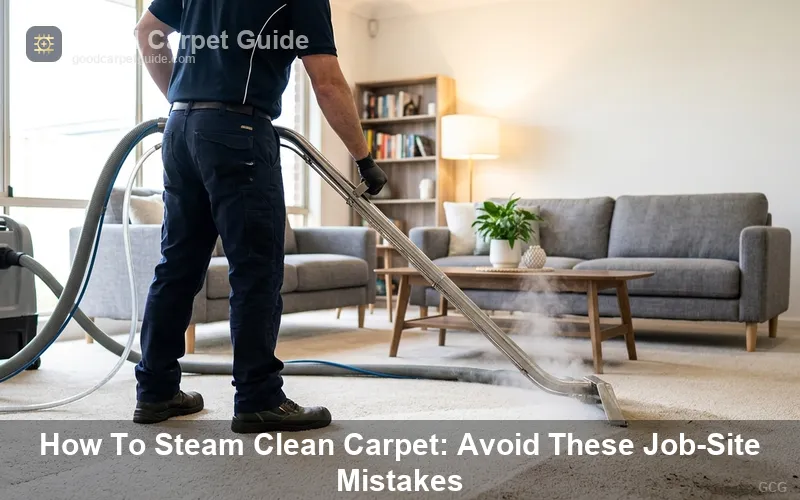
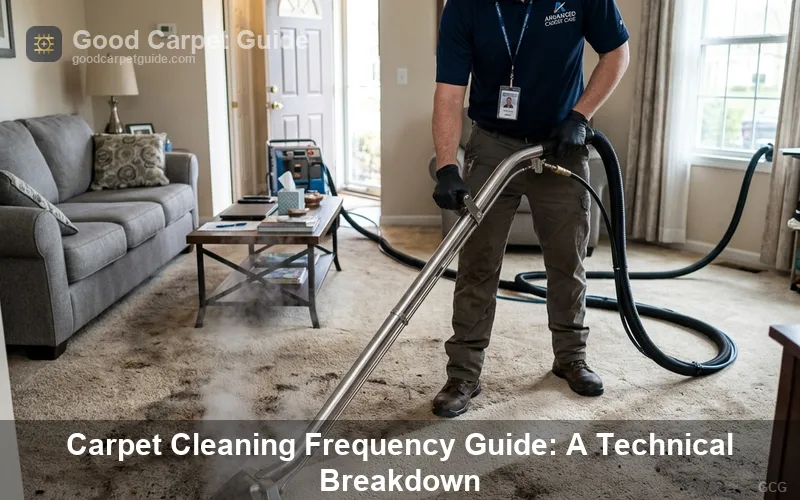
Professional carpet cleaners work through a multi-stage hot water extraction process delivered by truck-mounted equipment rather than a portable upright unit. The truck-mounted system draws water into an onboard heater, raises it to a controlled temperature, injects it into the carpet under high pressure, and immediately extracts the solution through a wand connected by hose to the truck's vacuum unit. This separation of pressure delivery from suction recovery is the core mechanical difference from consumer shampooers.
| Performance Variable | Consumer Shampooer | Truck-Mounted Professional Extraction |
|---|---|---|
| Water temperature | Ambient tap water to ~150°F | 200°F to 240°F |
| Suction (water lift) | 50 to 80 inches | 150 to 200+ inches |
| Extraction pressure | 15 to 50 PSI | 1000+ PSI |
| Process sequencing | Simultaneous spray/agitate/extract | Separate pre-treatment, extraction, and rinse passes |
| Drying time (typical) | 24 to 48 hours | 4 to 8 hours |
The temperature and pressure gap in this table explains most of the performance difference homeowners report between rental machines and hired professionals. Higher water temperature breaks down grease-based and oil-based soil that ambient or lightly heated water does not dissolve, and the pressure differential determines how thoroughly the rinse solution is pulled back out of the carpet backing rather than left to evaporate or wick upward later.
IICRC S100 cleaning standards outline the recommended sequence for professional technicians: dry soil removal, chemical pre-treatment with a defined dwell time, agitation, hot water extraction, and a neutralizing rinse. Professionals do not compress these stages into a single pass the way consumer shampooers do, and the separation of dwell time from extraction is what allows pre-treatment chemicals to fully break down bonded stains before removal begins.
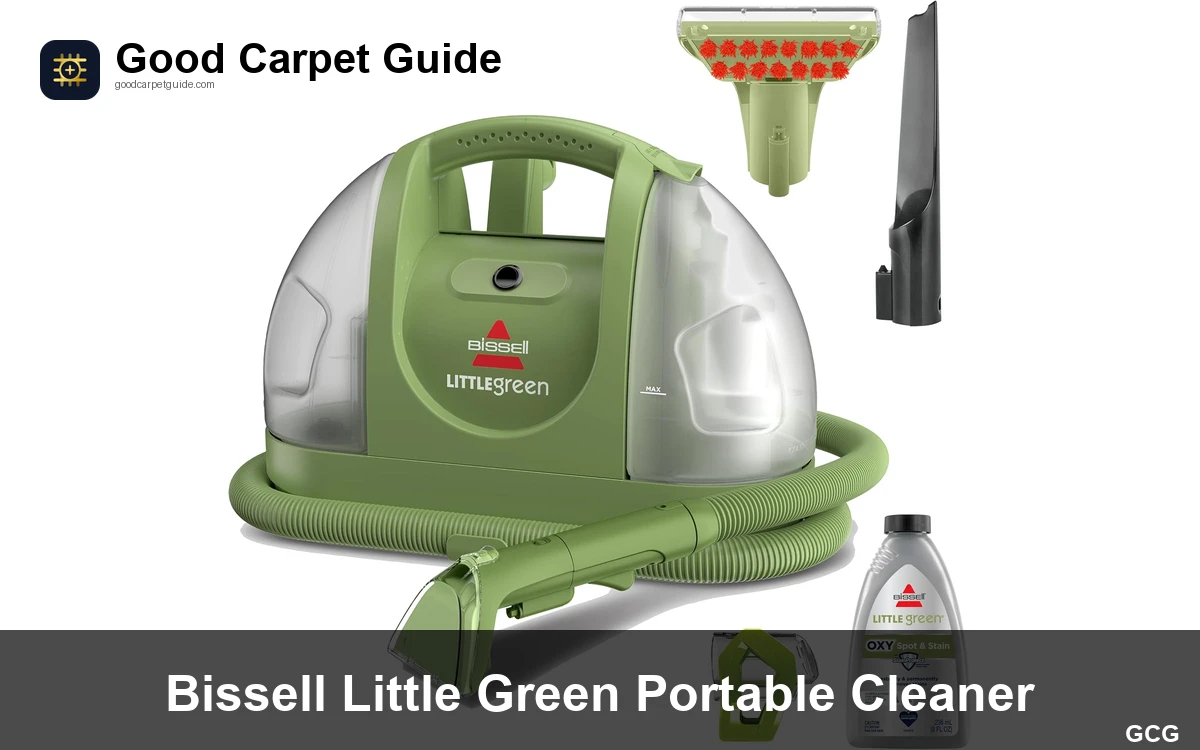
Bissell Little Green Portable Carpet Cleaner
Recommended for spot treatment of fresh spills between professional hot water extraction visits, rather than full-room cleaning.
Check Price on Amazonhow well do carpet cleaners work on hardwood, tile, and car seats
Carpet cleaner performance on hardwood floors, tile, and car seats depends entirely on whether the surface is porous and whether the equipment used is a full carpet shampooer or a spot extractor.
Does carpet cleaner work on hardwood floors? Carpet shampooers are not suitable for hardwood or laminate flooring under standard use conditions. Installers are close to unanimous that saturating hardwood seams with the water volume a shampooer dispenses causes swelling, warping, and finish delamination over time, and the stiff nylon bristles on most brush heads scratch polyurethane topcoats, producing a permanently dull surface.
Does carpet cleaner work on tile? Tile flooring tolerates surface moisture far better than hardwood because ceramic and porcelain tile are non-porous, though grout lines absorb detergent residue if not rinsed thoroughly, which can leave grout looking discolored after repeated shampoo passes.
Does carpet cleaner work for car seats? Portable spot extractors work on fabric car seats when used with restrained water volume, though technicians warn against saturating seats equipped with side-impact airbag sensors or passenger occupancy weight sensors. Water intrusion into these sensor housings can trigger sensor failure, disabling safety systems that depend on accurate seat-weight readings.
Technical warning: Never apply a full-saturation carpet shampooer cycle to vehicle seating without first identifying sensor locations in the seat base and bolster. Use a low-moisture portable extractor and multiple dry vacuum passes instead of a single heavy wet pass.
does carpet cleaning actually work on stains that keep reappearing
Carpet cleaning does remove visible surface staining in most residential applications, but stains that reappear days after a successful cleaning are typically explained by a phenomenon called wicking, not by an ineffective cleaning pass. Wicking occurs when a liquid spill has saturated deep into the carpet backing or the padding beneath it. As the carpet pile dries from the top down, residual moisture in the backing travels upward through the fiber tips via capillary action, carrying dissolved soil particles back to the visible surface.
Homeowners frequently mistake a wicking stain for a failed cleaning job and re-shampoo the same spot, which reintroduces additional moisture into the backing and restarts the capillary cycle. Breaking the wicking cycle requires extracting moisture from the padding layer itself, not just the visible pile, which is a depth of extraction consumer shampooers with 50 to 80 inches of water lift rarely achieve on the first pass.
list: conditions that increase wicking risk
- Increases with spill volume that exceeds the pile's absorption capacity before blotting begins.
- Increases with foam padding that has already absorbed a prior spill and remains partially saturated.
- Increases with humid indoor conditions that slow evaporation from the backing layer.
- Decreases with prompt blotting using absorbent cloth immediately after a spill occurs.
- Decreases with felt padding, which tends to wick moisture less aggressively than foam padding under equivalent saturation.
Addressing wicking at the source, meaning extracting the padding-level moisture rather than repeating a surface pass, resolves the majority of "stain came back" complaints documented across homeowner forums.
what real users report about carpet shampooer hardware failures
Real user reports collected from consumer forums document a consistent pattern of hardware failure across major shampooer brands within 12 to 24 months of purchase, frequently tied to non-serviceable components rather than user error. A purchaser of a $700 Shark pet-package unit described the reel mechanism failing after a single year of use, and forum threads note that Shark does not sell individual replacement rollers, meaning a failed motor or clogged hose requires replacing the entire lower head assembly near the cost of a new unit.
Tineco units draw a separate cluster of complaints centered on battery degradation and software glitches appearing between 21 and 24 months of ownership. Users describe the manufacturer's two-year warranty process as difficult to invoke, with support representatives declining to inspect reported defects. Bissell's ProHeat Revolution line draws complaints of insufficient suction that leaves carpet damp for multiple days, a symptom consistent with the 50 to 80 inch water lift ceiling common across consumer-grade units, and some owners have added physical weights to the unit front in an attempt to compensate, a modification that frequently burns out the roller motor.
By contrast, the Bissell Big Green Professional commercial-grade model (86T3/BG10) draws a markedly different pattern of long-term owner reports, with mechanical longevity frequently exceeding ten years and a tank capacity of 1.75 gallons that reduces refill interruptions during full-room cleaning sessions. The gap between the Big Green's reported lifespan and the 21-to-24-month failure window reported for lighter consumer units illustrates how build quality varies sharply within the same product category.
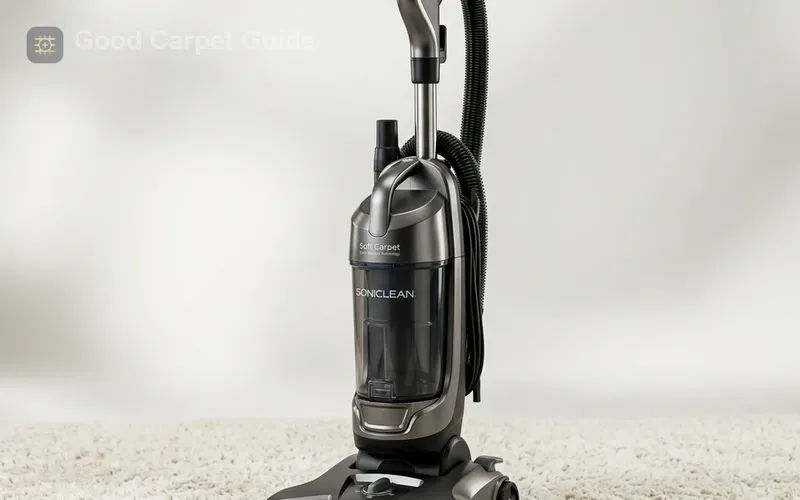
Soniclean Soft Carpet Upright Vacuum Cleaner
Recommended as the dry-soil-removal pass that should precede any shampooer cycle, since roughly 80% of carpet soil is dry particulate that wet agitation alone cannot fully extract.
Check Price on Amazondo carpet manufacturers and installers agree on shampooer use and warranty terms
Carpet manufacturers and flooring installers do not fully agree on how frequently consumer shampooers can be used without risking warranty coverage, though both groups converge on the same underlying concern: excess moisture retention in the padding and backing layers. Premium residential carpet warranties, including lines comparable to Shaw's "Anything Goes!" and Mohawk's SmartStrand programs, commonly require professional hot water extraction performed by an IICRC-certified technician at intervals of roughly every 18 months. Relying exclusively on a home shampooer instead of scheduled professional extraction voids stain and structural warranty coverage under these programs, since the carpet received cleaning that meets IICRC S100 standards.
Homeowners are commonly unaware that this documentation requirement exists until a warranty claim is denied. Keeping physical receipts from professional cleaning visits is the only reliable method for validating a future structural or stain claim, since verbal confirmation of DIY cleaning frequency carries no weight with a manufacturer's claims department.
warranty compliance checklist
- Locate the specific warranty document issued at purchase and identify the required cleaning interval.
- Schedule professional hot water extraction from an IICRC-certified provider within the specified interval, commonly every 12 to 18 months.
- Retain itemized receipts listing the cleaning date, method used, and technician certification.
- Avoid substituting rented or owned consumer shampooers for the required professional visit, since the equipment and process differ from the IICRC S100 standard the warranty references.
- File retained receipts alongside the original warranty paperwork for the full coverage period.
Warranty compliance failures documented across flooring forums typically stem from homeowners treating DIY shampooing as an equivalent substitute for the professional visit their warranty requires, rather than as a supplementary maintenance step between scheduled professional cleanings.
cost and budget considerations for carpet shampooing
Cost comparisons between DIY shampooing, equipment rental, and professional hot water extraction reveal that the cheapest option per session is not always the cheapest option across a carpet's full service life. Standard professional hot water extraction for a synthetic residential carpet runs $0.20 to $0.35 per square foot, translating to roughly $160 to $280 for a typical 800 square foot area. Premium or high-pile wool carpet runs higher, at $0.30 to $0.45 per square foot, and heavy soil or pet-contamination restoration jobs run $0.35 to $0.50 per square foot.
Renting a commercial-grade machine, such as a Rug Doctor unit, costs $30 to $40 per day plus $15 to $50 for cleaning solution, producing an effective cost of $0.11 to $0.16 per square foot, meaningfully below the professional rate on a single-session basis. Purchasing a consumer-grade shampooer outright runs $300 to $600, a cost that only becomes competitive with rental or professional pricing across many repeated uses, and that calculation assumes the unit survives past the 21-to-24-month failure window documented for several major brands.
| Cleaning Method | Cost Range | Notes |
|---|---|---|
| DIY rental (Rug Doctor-class) | $0.11–$0.16 per sq ft | Excludes labor time and drying-related mold risk |
| Owned consumer shampooer | $300–$600 upfront | Amortized cost depends on unit lifespan, often 21–24 months per user reports |
| Professional standard clean | $0.20–$0.35 per sq ft | Meets IICRC S100 and most warranty documentation requirements |
| Professional premium/wool clean | $0.30–$0.45 per sq ft | Required for higher-pile or specialty fiber carpets |
| Professional pet/heavy soil restoration | $0.35–$0.50 per sq ft | Addresses backing-level contamination DIY units cannot reach |
Regional soil conditions shift the calculus further. Homes in red-clay regions of the Southeast face detergent bonding issues that require acidic pre-treatment with white vinegar before extraction, while homes in the Southwest dealing with desert sand grit benefit more from high-suction dry vacuuming than from any wet shampooing method, since added water turns fine sand into an abrasive slurry. Midwest homes with silt and loam soils typically require heavier mechanical agitation to lift fine particles to the surface before extraction. Replacing carpet outright, by comparison, runs $3 to $8 per square foot installed, or roughly $4,500 to $12,000 for a 1,500 square foot home, a figure that frames scheduled professional cleaning as the lower-cost option across the carpet's service life even when DIY rental appears cheaper per session.
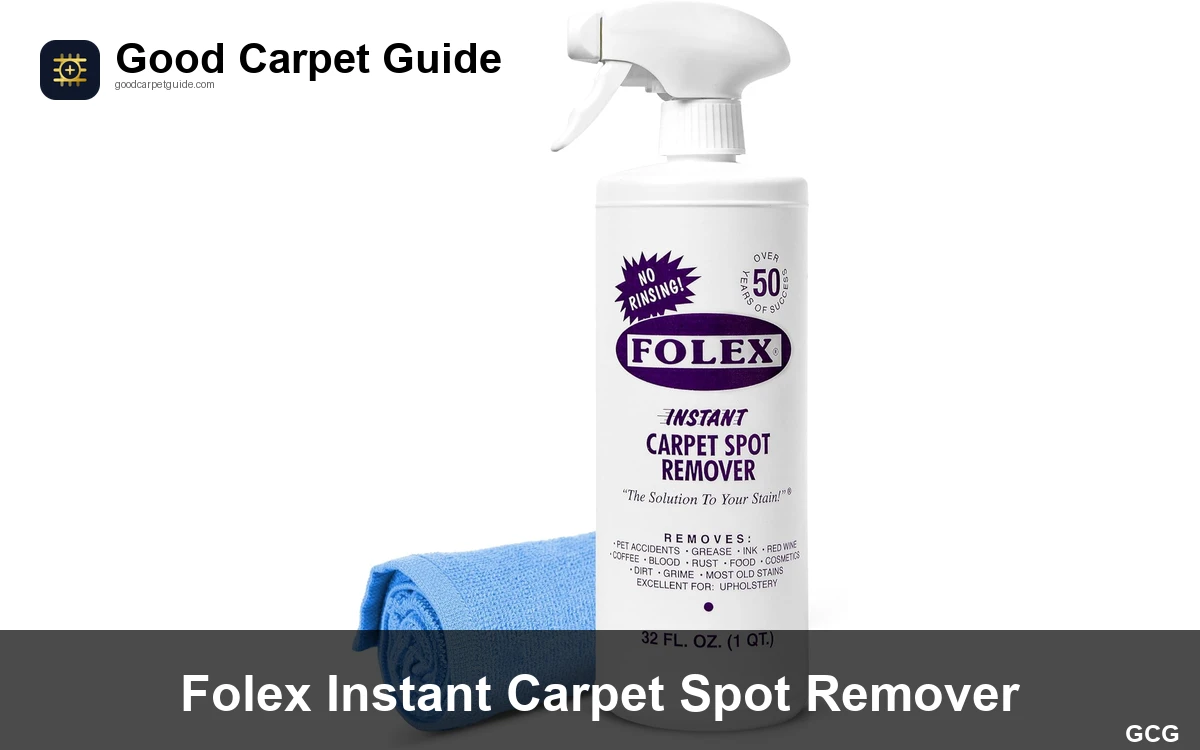
Folex Instant Carpet Spot Remover
Recommended as a pre-treatment for isolated stains between scheduled professional extractions, since it lifts staining without leaving the sticky residue that attracts new dry soil.
Check Price on AmazonChoosing carpet shampooer options for interim maintenance, while reserving how to steam clean carpet methods and professional extraction for the warranty-required interval, balances the lower per-session cost of DIY cleaning against the backing-level cleaning depth only commercial equipment reliably reaches.
frequently asked questions
Does carpet cleaning really work for removing pet odor?
Carpet cleaning removes pet odor when the contamination is limited to the pile surface, though odor rooted in the padding or subfloor commonly requires padding replacement rather than repeated surface cleaning, since urine saturation below the visible pile is not fully reachable by standard extraction wands.
Does carpet cleaner work on beds and mattresses?
Portable spot extractors work on mattress fabric using restrained moisture volumes, though full-saturation shampooer cycles are not appropriate for mattresses due to slow internal drying and elevated mold risk inside foam or coil layers.
What shampooers do professionals recommend for interim home use?
Professional cleaners commonly point homeowners toward commercial-grade consumer units, such as the Bissell Big Green Professional line, over lighter consumer models, citing documented longevity differences and stronger suction ratings closer to professional equipment.
How do carpet cleaning services work on a scheduling basis?
Carpet cleaning services typically schedule residential visits on a 12-to-18-month cycle aligned with manufacturer warranty requirements, supplementing that scheduled visit with homeowner-performed spot treatment and dry vacuuming between appointments.
Field reports document that pairing a scheduled professional extraction with carpet cleaning frequency guidelines for interim dry vacuuming produces measurably better long-term pile appearance than relying on either method alone. Homeowners weighing how to remove carpet stains between professional visits should also review best carpet stain removers to avoid alkaline formulations that bleach carpet dye, since several widely available spot cleaners are documented to cause permanent dye loss on darker fiber colors. Carpet shampooers work reliably within the narrow envelope of surface-level, low-to-moderate soil conditions, and their limitations at the backing and padding level are the direct reason IICRC-certified hot water extraction remains the documented standard behind most manufacturer warranty programs.
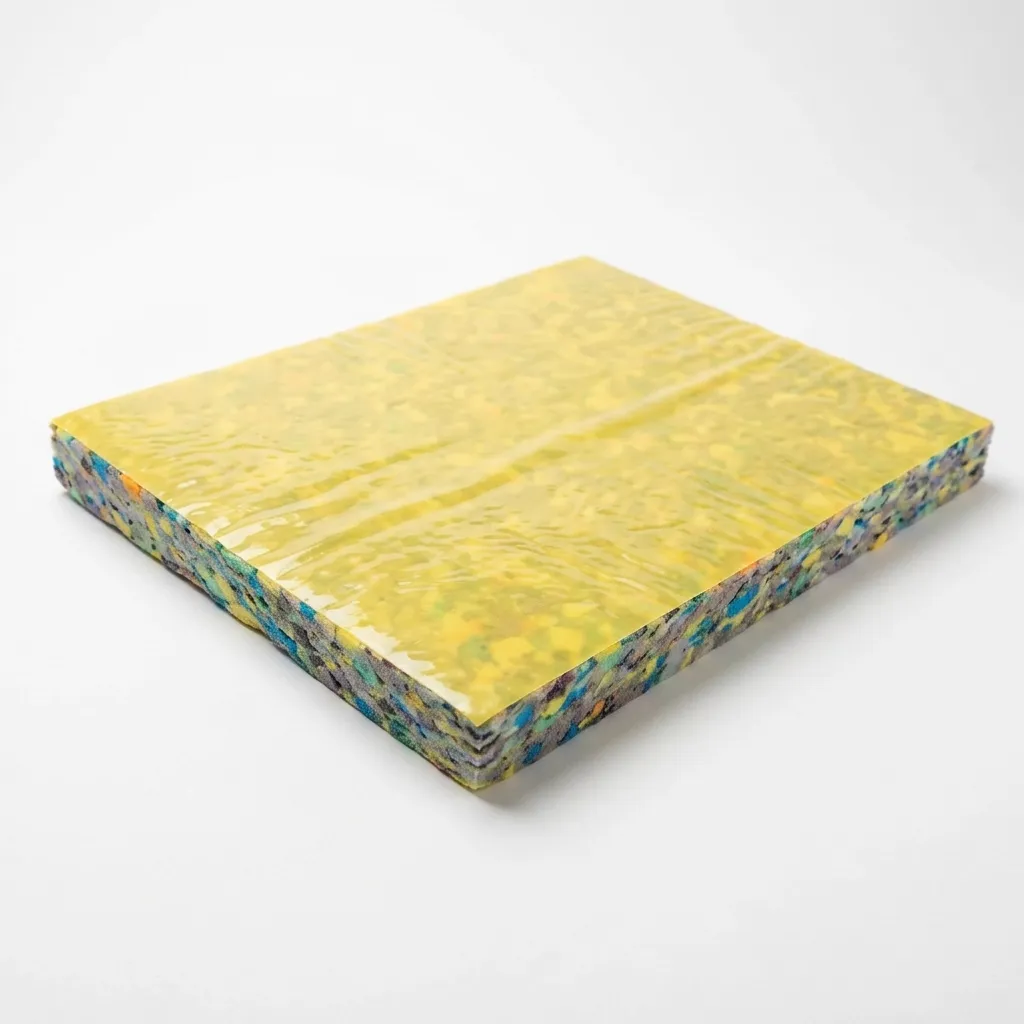
Mohawk SmartCushion Premium Carpet Padding
Recommended when replacing padding that has failed a wicking or odor diagnosis, since upgraded padding density reduces future moisture retention during routine shampooing.
Check Price on Amazon