carpet cleaning frequency guide: tl;dr recommendation matrix
Carpet cleaning frequency depends on household traffic, pet presence, and manufacturer warranty terms rather than a single fixed calendar date. This carpet cleaning frequency guide translates Carpet and Rug Institute (CRI) standards, IICRC S100 cleaning protocols, and manufacturer warranty language into a decision matrix that homeowners can apply directly to their own square footage and household composition.
| Household Profile | Recommended Interval | Method Required | Primary Risk If Skipped |
|---|---|---|---|
| Low-traffic, no pets/kids | 18–24 months | Hot Water Extraction (HWE) | Warranty lapse, silica abrasion |
| Homes with children | 6–12 months | HWE with enzyme pre-treatment | Organic staining, wicking |
| Homes with pets | 3–6 months | HWE with enzyme + carbonating rinse | Bacterial odor, UV-detected urine spots |
| Allergy/asthma sufferers | 3–6 months | HEPA vacuum + HWE | Allergen saturation in pad |
| Humid coastal climates | 6–9 months | HWE with dehumidification | Mildew colonization, fiber degradation |
| Arid/desert climates | 6–12 months | HWE with dust-flushing rinse | Silica abrasion, grey traffic lanes |
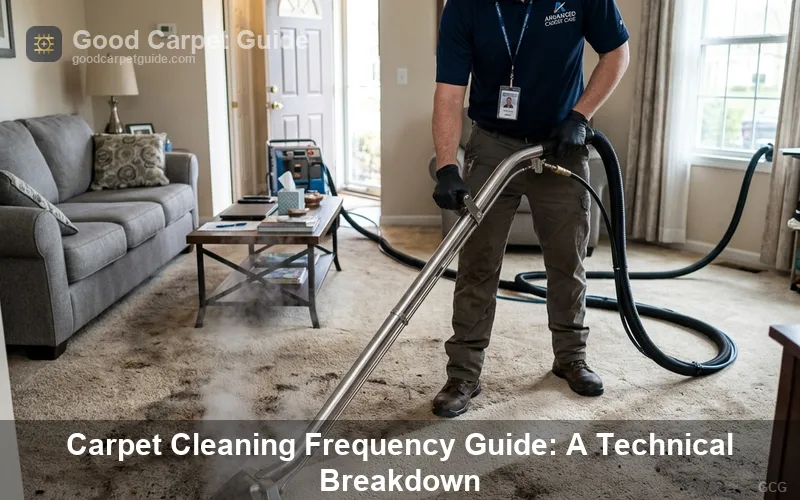
Hot water extraction frequency varies by traffic load, and the interval documented above forms the baseline for the warranty and soil-mechanics sections that follow.
how often should you clean carpet
Carpet cleaning frequency is governed primarily by soil accumulation rate, not by a fixed twelve-month calendar rule. Soil accumulation compounds through three separate mechanisms: tracked-in silica particles, organic biological residue, and airborne particulate settling into the pile. Carpet fibers absorb these three soil types at different rates depending on household traffic and pet presence, which is why manufacturers publish a range rather than a single number.
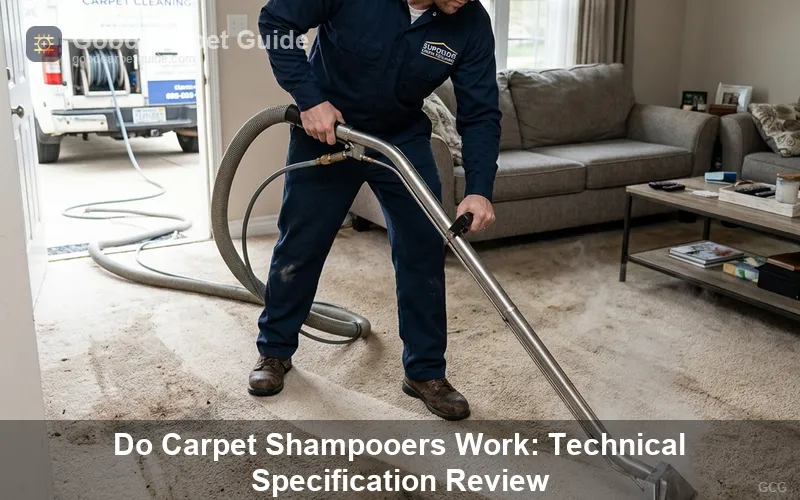
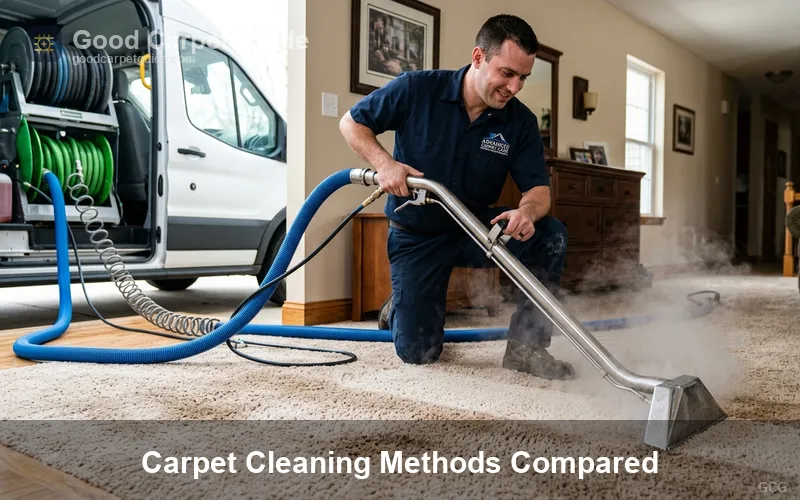
Cleaning frequency recommendations assume professional-grade extraction, as detailed in our detailed breakdown of carpet cleaning methods compared , ensuring optimal soil removal without backing delamination., so homeowners asking do carpet shampooers work for interim sessions should treat those passes as supplemental maintenance, not as a substitute for the annual deep-clean cycle.
Pet-owning households require Hot Water Extraction every 3 to 6 months. Pet hair, dander, and outdoor mud embed deep into the pile base, while biological accidents introduce bacteria that multiply rapidly in the humid subfloor layer. Allergy and asthma sufferers require the same 3-to-6-month interval, using HEPA-filtration vacuum passes combined with deep HWE, because carpet functions as a physical allergen filter that reaches saturation without regular extraction.
The following checklist identifies the specific triggers that shorten the standard manufacturer interval:
- Shortens the interval to 3–6 months when pets shed hair or track outdoor debris indoors.
- Shortens the interval to 6–12 months when children introduce organic spills on a weekly basis.
- Shortens the interval to 6–9 months when coastal humidity exceeds 60% indoor relative humidity.
- Extends the interval toward 18–24 months only in single-occupant, low-traffic homes with no pets.
is professional carpet cleaning worth it
Professional carpet cleaning is worth the cost when warranty compliance, documented certification, and physical labor savings are calculated against DIY rental expenses. The comparison below separates the two paths by time, physical strain, and warranty validity rather than sticker price alone.
| Factor | Professional HWE Service | DIY Rental Extraction |
|---|---|---|
| Labor time (3-bedroom home) | 1–2 hours | 4–6 hours including pickup/return |
| Equipment weight | Not applicable (technician-operated) | 18–47 lbs dry, heavier when water-filled |
| Certification | IICRC-certified technician | None |
| Warranty documentation | CRI Seal of Approval receipt provided | Not accepted by Shaw or Mohawk |
| True cost (labor-adjusted) | $60–$90 per room | $180–$230 when physical labor is valued |
Field reports document that DIY hot water extraction voids manufacturer warranties in a specific, documented way: Shaw Industries and Mohawk Flooring require written, certified proof that an IICRC-certified technician performed the cleaning using CRI Seal of Approval (SOA) gold-level equipment. A grocery-store rental receipt does not satisfy this documentation requirement, regardless of the equipment's actual cleaning performance.
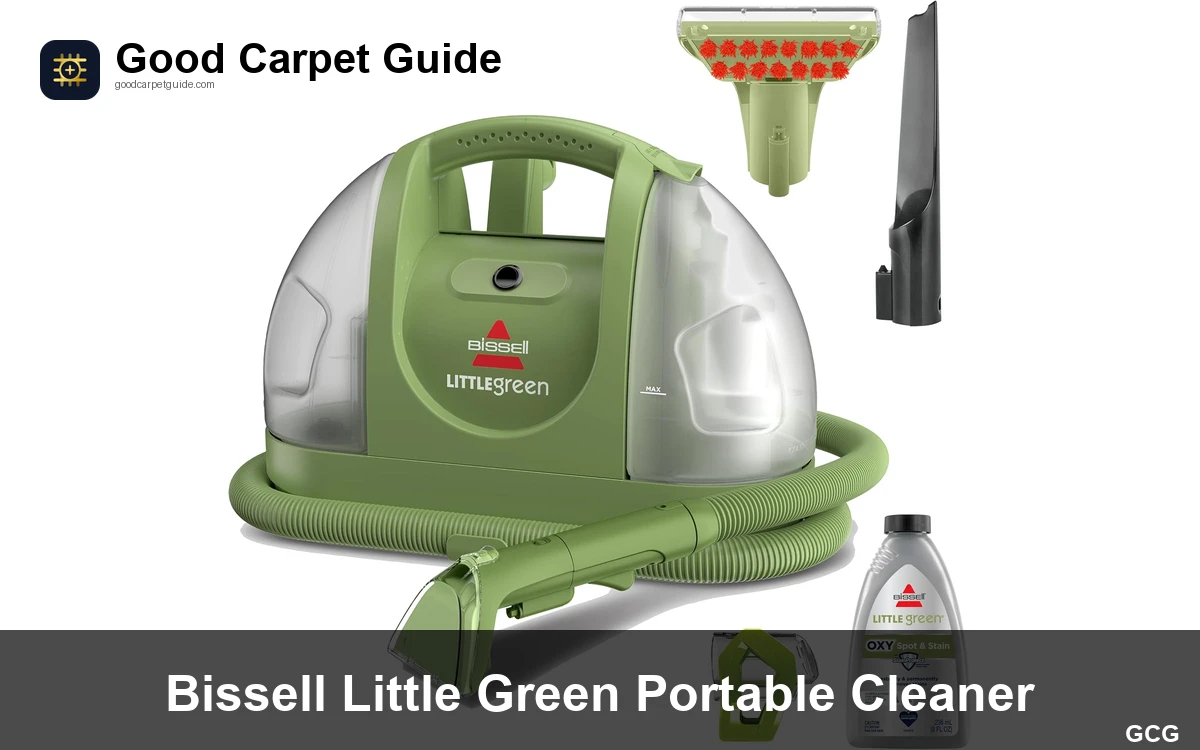
Bissell Little Green Portable Carpet Cleaner
Recommended for isolated pet or spill spots between professional Hot Water Extraction visits, since calling a professional for a single stain is economically unfeasible.
Check Price on AmazonManufacturers also deploy UV detection during warranty inspections to identify pet urine contamination. Multiple UV-detected spots void the entire warranty, including unrelated claims such as premature fiber wear, which makes documented pet accident treatment a priority rather than a cosmetic afterthought.
how much does professional carpet cleaning cost
Professional carpet cleaning cost ranges from $40 to $90 per room, or $0.20 to $0.50 per square foot, according to industry rate surveys. Minimum service fees between $100 and $150 apply regardless of square footage, which affects the per-room economics for smaller homes disproportionately.
National providers price services differently based on their extraction chemistry:
- Stanley Steemer charges $60 to $80 per room using standard truckmount HWE, with rooms capped at 300 square feet.
- Chem-Dry uses low-moisture Hot Carbonating Extraction (HCE) with a detergent-free solution branded "The Natural®."
- Zerorez uses a chemical-free electrolyzed alkaline Zr™ Water process delivered through a proprietary Zr™ wand, charging a separate $13.99 environmental fee.
Bundled home pricing follows square footage tiers rather than strict per-room math. Small homes with 2 to 3 rooms cost $120 to $200 total. Medium homes with 4 to 6 rooms cost $180 to $350. Large homes with 7 or more rooms cost $300 to $600 or higher.
These bundled rates typically exclude add-on services, which technicians price separately at $20 to $50 per room for Scotchgard or Teflon re-application and $30 to $75 for pet enzyme treatment.
can you steam clean carpet yourself
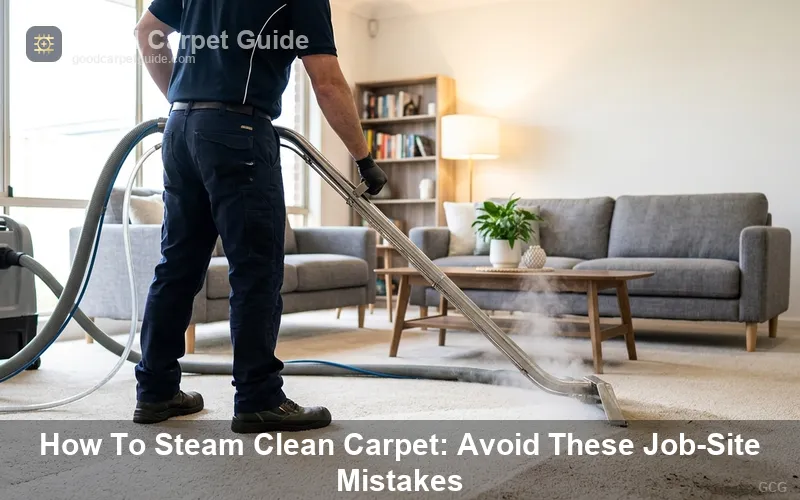
Steam cleaning carpet yourself is possible only with specialized equipment, since most consumer and rental machines marketed as "steam cleaners" are actually high-pressure hot water extractors rather than true vapor-steam systems. True steam cleaning requires specialized machines like the Bissell Revolution HydroSteam, which produces actual high-heat vapor rather than pressurized hot water.
Technical Warning: Consumer machines that exceed 180°F to 200°F water temperature permanently melt and strip factory-applied protective polymer finishes such as Teflon or Scotchgard. This heat damage voids the manufacturer's stain warranty independently of the moisture-related damage discussed below.
Excessive water application during self-cleaning creates a second, more severe risk. Saturated carpet with un-extracted water wrinkles the fiber backing and, in extreme cases, causes delamination. Delamination occurs when high moisture dissolves the latex adhesive bonding the carpet face fibers to the backing layer, and the backing then separates while tufts pull out with minimal force. Over-wetting also creates 24-to-48-hour damp periods that generate musty odors from volatile organic compounds released by bacteria thriving in the wet fiber base.
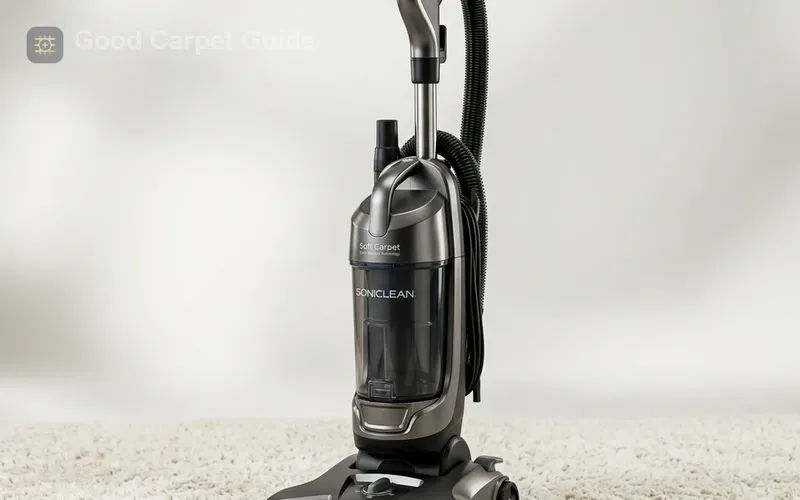
Soniclean Soft Carpet Upright Vacuum Cleaner
Recommended for routine dry-soil removal between deep extractions, reducing the silica abrasion load described in the regional performance section below.
Check Price on Amazonhow often should you clean carpet according to real users
Homeowner forum reports document a specific rapid re-soiling complaint after DIY cleaning: carpets feel sticky and attract dirt faster within days of a self-cleaning session. Technicians attribute this to surfactant-rich over-the-counter detergents. Soapy detergent residue remains embedded in the fiber after incomplete extraction, and the residue continues attracting dirt and oils long after the visible cleaning session ends.
Stain reappearance generates a second recurring forum complaint, described technically as wicking. A deep-seated spill that reaches the padding or subfloor travels back up through the damp fibers as the carpet dries, causing a stain to resurface days after the original cleaning appeared successful. Homeowners frequently misattribute this resurfacing to incomplete initial cleaning rather than the wicking mechanism itself.
Rental equipment hygiene generates the most severe documented anxiety among forum users. Reported concerns include rental machines carrying cigarette odor, prior use on blood or biological contamination, and pest introduction from previously infested carpets. These reports reflect a documented pattern in consumer forums rather than isolated incidents, and they factor directly into the professional-versus-DIY decision alongside the carpet delamination issues discussed above.
regional performance differences in carpet cleaning frequency
Regional climate conditions alter carpet cleaning frequency independently of household traffic or pet presence. Two climate categories create opposite soil mechanisms that require distinct cleaning protocols.
| Region Type | Example Locations | Recommended Interval | Primary Mechanism | Required Protocol |
|---|---|---|---|---|
| Humid coastline | South Florida, Maryland, coastal San Diego | 6–9 months | Salt air accelerates fiber degradation and mildew colonization | Deep HWE with indoor humidity held below 60% |
| Arid/desert | Arizona, Colorado | 6–12 months | Silica sand settles deep into pile base | HWE with high-flow dust-flushing rinse |
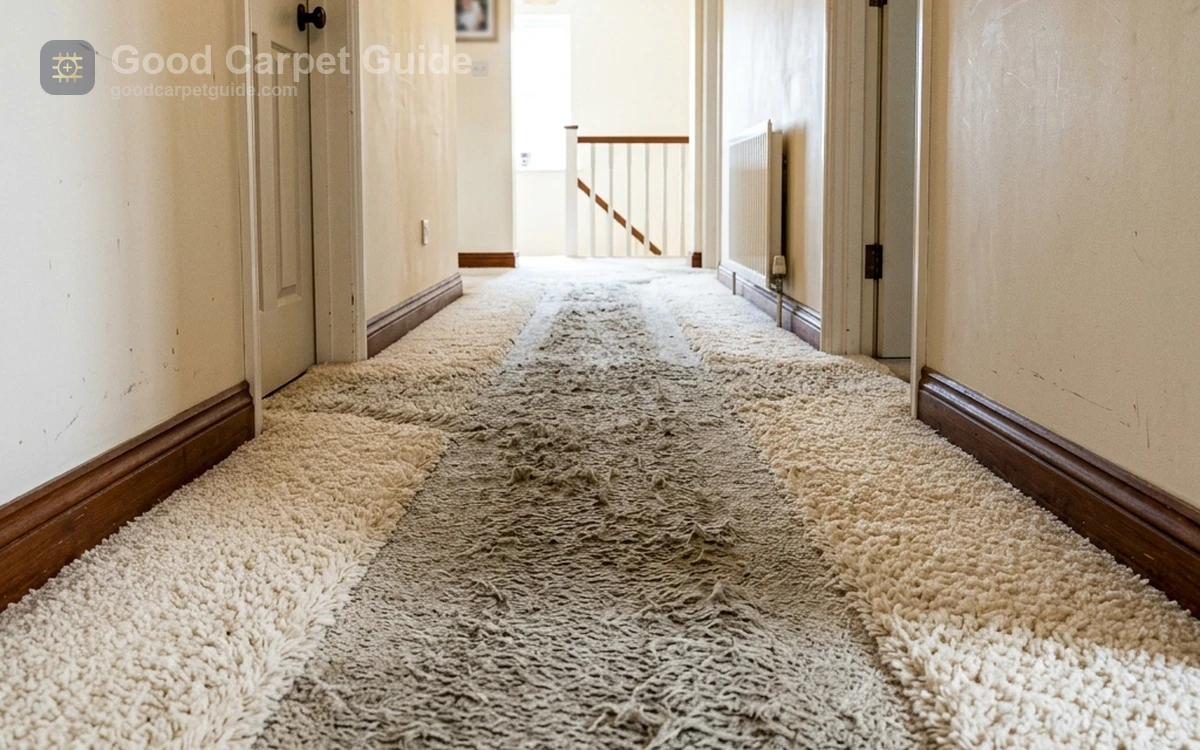
Dry, tracked-in sand behaves as a mechanical abrasive rather than a purely cosmetic soil. Silica particles carry razor-sharp mineral edges, and normal foot traffic presses these particles against the yarn's polymer filaments. This pressure functions as a microscopic saw that progressively cuts individual fibers. Once the pile surface is scratched at this level, the fiber can no longer reflect light evenly, producing a permanent grey traffic lane that no subsequent cleaning removes.
Winter months provide the most favorable drying conditions for Hot Water Extraction in most climates. Forced-air heating lowers indoor relative humidity, which shortens carpet drying time and reduces mold risk after extraction. Winter cleaning also extracts corrosive sodium chloride road salt that embrittles nylon fiber, an added benefit specific to the cold-weather season.
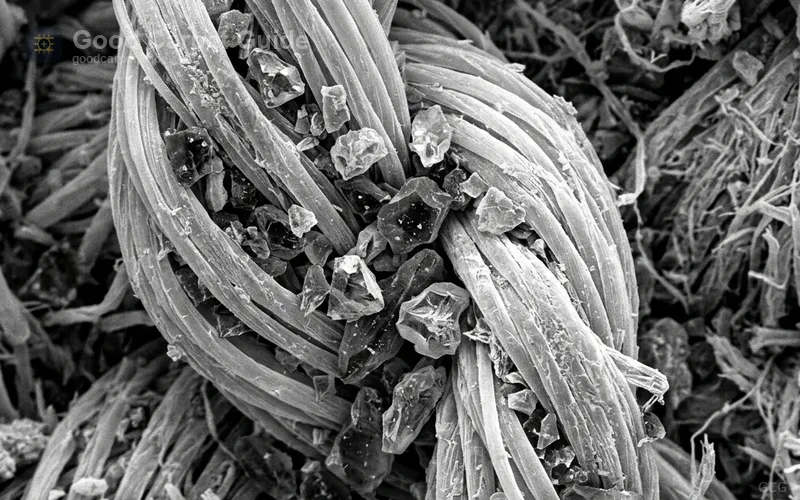
Silica abrasion produces the grey traffic lane pattern discussed above, distinct from the sticky surfactant residue covered in the DIY cleaning section.
how much does professional carpet cleaning cost by home size
Home size and existing add-on services change the total invoice beyond the baseline per-room rate discussed earlier. A carpet tack strip guide inspection often accompanies larger cleaning jobs when technicians identify separated edges during furniture-moving, adding a documented line item that homeowners frequently do not anticipate.
Homeowners frequently overestimate DIY savings due to what technicians describe as the rental cost illusion. A single-day rental at $50 combined with specialized cleaning chemistry at $30 totals approximately $80 in direct costs. When physical labor is assigned a dollar value, the true cost of the DIY session climbs to $180–$230, a range that erases most of the financial gap against professional per-room rates of $60–$90.
For pet owners and parents of toddlers, recurring spot cleaning needs (urine, juice, isolated stains) drive the purchase of a compact home extractor rather than repeated professional visits, since calling a professional technician for a single isolated spot is not economically justified relative to the $100–$150 minimum service fee.
frequently asked questions
When should you deep clean your carpet?
Deep clean carpet on the manufacturer-mandated 12-to-18-month cycle at minimum, shortened to 3–6 months for pet-owning or allergy-affected households as detailed in the frequency section above.
How long does carpet cleaning last?
Hot Water Extraction results last 6 to 18 months depending on traffic load, since soil accumulation resumes immediately after cleaning and compounds according to the same three mechanisms described earlier: silica tracking, organic residue, and airborne particulate settling.
What is the difference between steam cleaning and dry chemical cleaning?
Hot Water Extraction rinses the fiber base and subfloor with heated water under pressure, while dry chemical methods such as Chem-Dry's Hot Carbonating Extraction use minimal moisture and a carbonating agent that lifts soil to the surface for immediate vacuum removal, reducing dry time significantly compared to HWE.
What carpet cleaning method do professionals recommend?
IICRC-certified technicians recommend Hot Water Extraction as the primary method for CRI Seal of Approval compliance, reserving Very Low Moisture (VLM) systems such as Zerorez's Zr™ Water process for households requiring faster dry times.
Which brand makes the best carpet cleaning machine?
The Bissell Big Green Professional is certified with a 12-amp motor, 74 inches of sealed water lift, a 1.75-gallon tank, and a 42-lb weight, positioning it as the top-rated consumer-grade extractor according to Vacuum Wars test metrics.
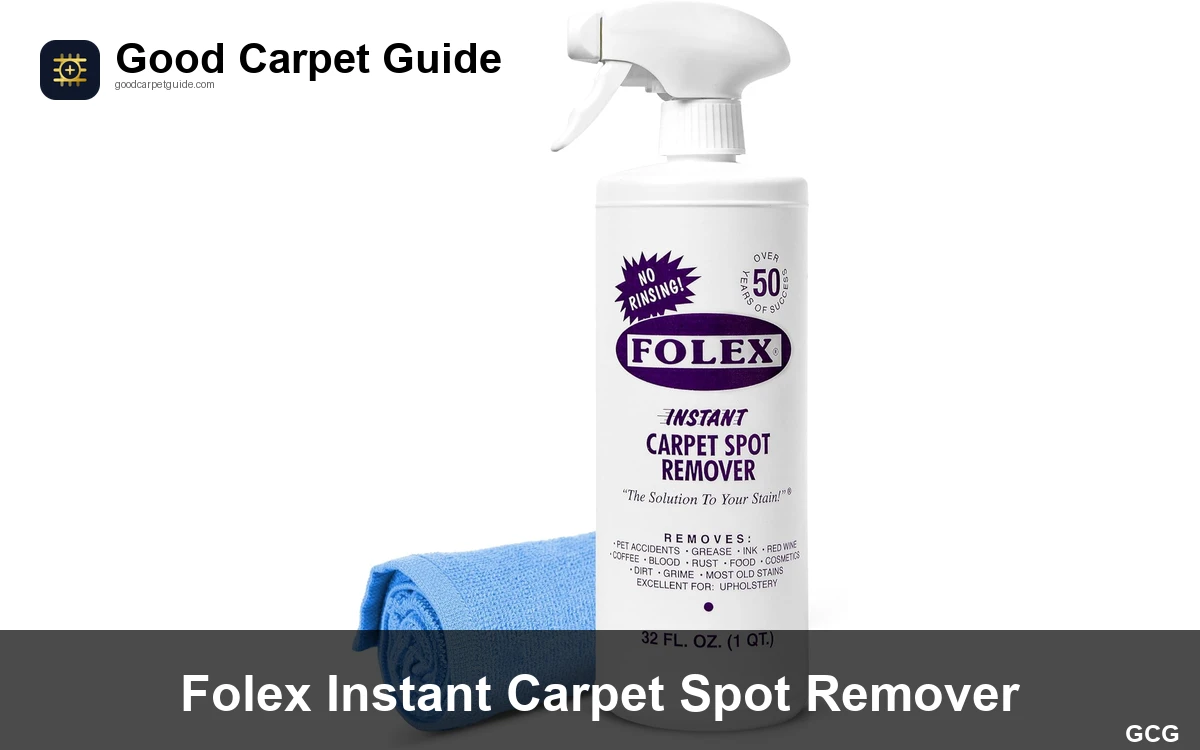
Folex Instant Carpet Spot Remover
Recommended for immediate organic spill treatment in households with children, preventing the wicking effect described in the real-user experience section above.
Check Price on AmazonIs there a carpet cleaning discount for seniors?
Senior discounts for carpet cleaning services vary by regional provider and are not standardized across Stanley Steemer, Chem-Dry, or Zerorez franchise locations, so homeowners should confirm discount eligibility directly with the local franchise before booking.
Does carpet for high-traffic areas and pets need a different cleaning interval?
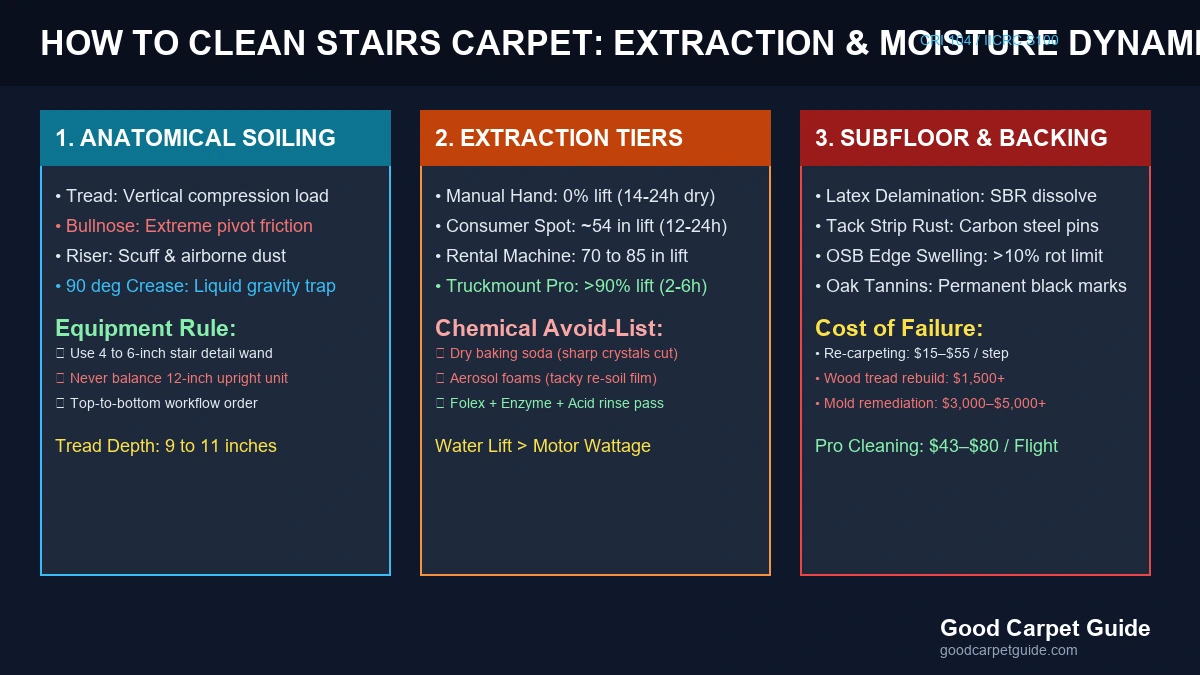
Carpet installed in high-traffic areas with pet exposure requires the shortened 3-to-6-month interval outlined in the frequency section, paired with enzyme pre-treatment that sits for 15 to 20 minutes before extraction to allow full protein and ammonia digestion, a standard technicians apply regardless of visible staining. For stairs and other high-wear zones, the best carpet for stairs guide addresses fiber selection alongside this cleaning interval, and the broader business economics of extraction services are addressed in the are carpet cleaning businesses profitable guide .
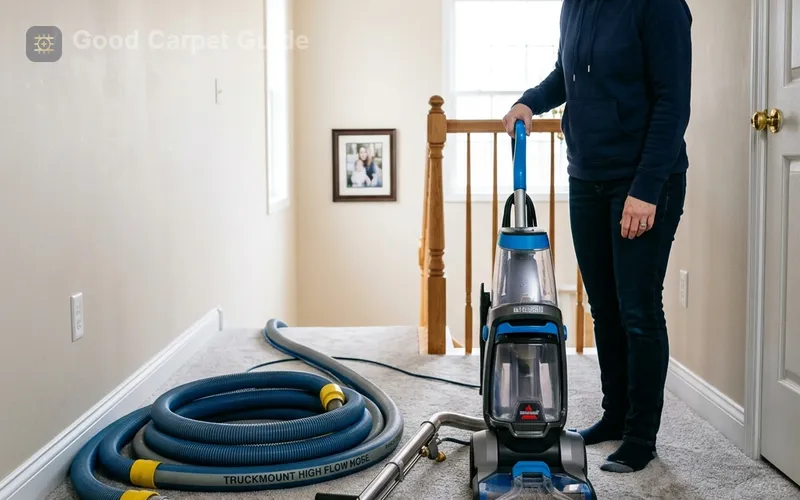
The DIY-versus-professional comparison shown here summarizes the labor, certification, and warranty documentation differences covered throughout this carpet cleaning frequency guide.
Carpet cleaning frequency ultimately follows household composition rather than a single manufacturer number. Low-traffic homes without pets satisfy warranty terms at the 18-to-24-month maximum interval. Households with children require the 6-to-12-month cycle to manage organic spill residue. Pet owners, allergy sufferers, and residents of humid coastal or arid desert climates require the shortened 3-to-9-month interval documented across this guide, applied with IICRC-certified Hot Water Extraction and retained documentation to preserve manufacturer warranty coverage.