High pile carpet is a floor covering with fibers extending 0.5 inches or taller above the backing, and high pile carpet is the category most responsible for both showroom sales and post-installation regret. This guide breaks down high pile carpet performance using field inspection data, manufacturer warranty language, and real installation reports rather than marketing copy. The sections below cover fiber selection, pile height classification, maintenance routines, warranty fine print, and installed cost so a buyer can match a specific product to a specific room instead of a showroom feeling.
| Scenario | Recommended Fiber | Avoid | Why |
|---|---|---|---|
| Stairs & high-traffic hallways | Solution-dyed nylon 6,6 (e.g., Shaw Anso) | Basic PET polyester | Polyester shows traffic patterns within 6 months per installer field reports |
| Forever-home living room | Nylon or high-density Triexta | Loose-twist plush polyester | Twist retention (CRI 105) governs long-term crush resistance |
| Rental / resale flip (3-5 yr hold) | Solution-dyed polyester | Wool | Low upfront cost offsets short expected service life |
| Homes with pets | Nylon with built-in stain resist (e.g., Shaw Emerald Bay II) | Untreated wool | Wool absorbs pet odor and stains without a topical treatment |
| Damp basements / PNW climate | Low-pile nylon over synthetic pad | Deep wool high pile | High pile fiber mass traps ambient moisture against the backing |
| Desert / low-humidity regions | Nylon or Triexta | Wool | Low humidity dries wool fiber, increasing breakage and UV fade |
The matrix above reflects field conditions rather than list price alone, and the sections that follow explain the technical reasoning behind each recommendation, starting with how "high pile" is actually classified.
what is considered a high pile carpet
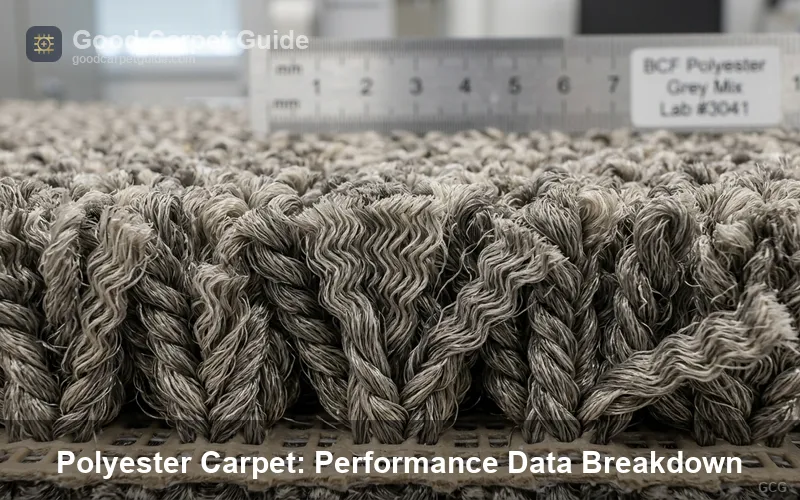
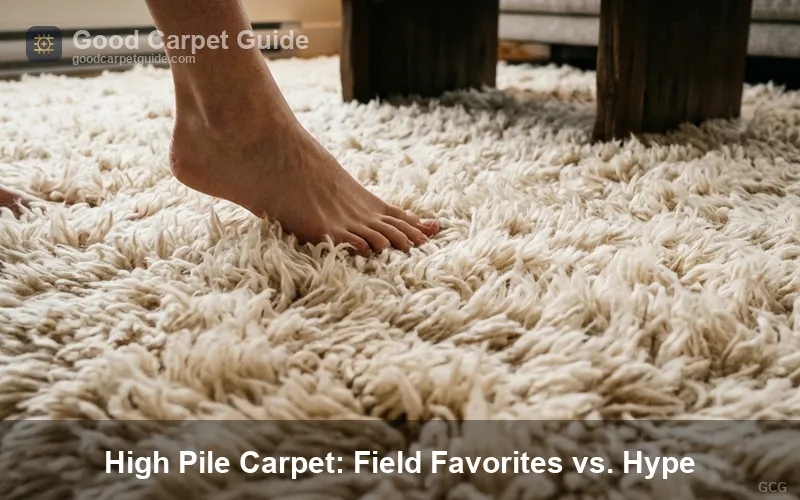
High pile carpet is any carpet construction with a pile height of 0.5 inches or greater measured from the backing to the tip of the fiber. The Carpet and Rug Institute (CRI) does not publish a single universal cutoff, but manufacturer spec sheets and flooring retailers commonly draw the line at 0.5 inches, with anything above 0.75 inches classified as "plush" or "shag." Pile height interacts directly with face weight (measured in ounces per square yard) and density, meaning a tall pile with low face weight still crushes faster than a shorter pile with a high face weight. Karastan's Modern Portfolio line, for example, pairs a 0.73-inch pile height with a 65 oz face weight and a 5.50 twist rating, which is why it holds shape better than many taller, lighter-weight competitors.
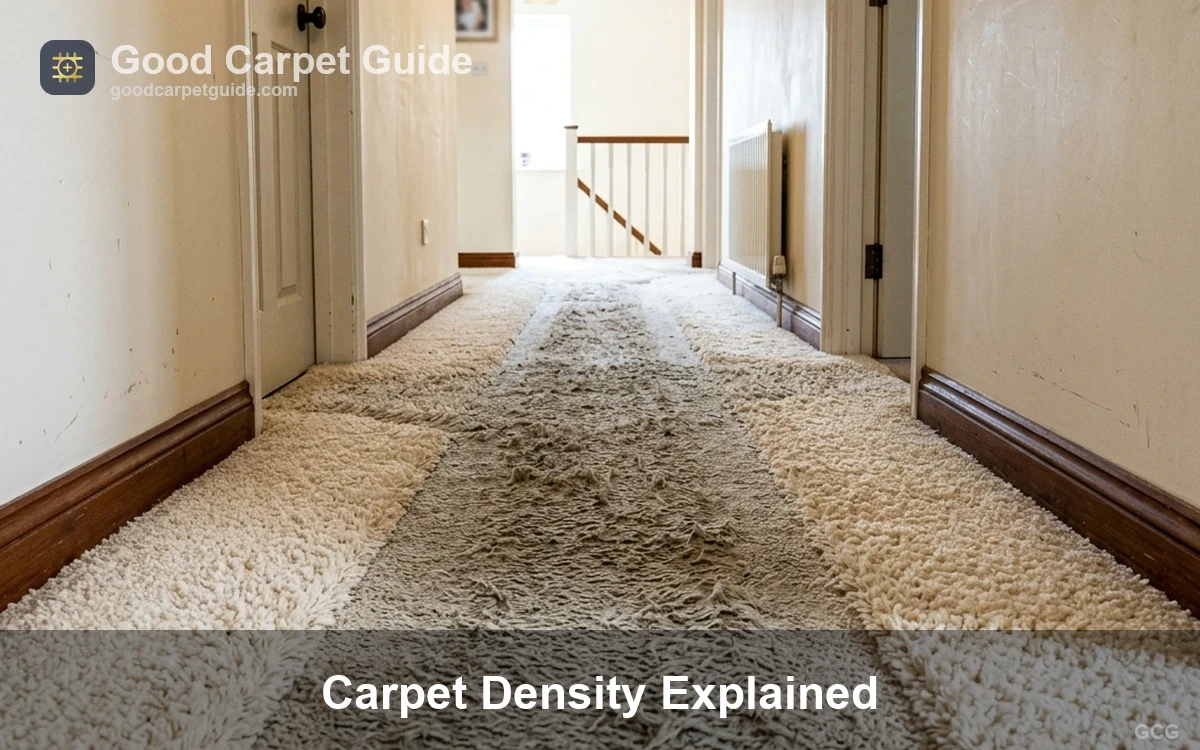
Pile height alone never predicts durability without density and twist data attached to it. A carpet sample that feels deep and soft in a showroom can still be a low-density, loosely twisted construction that mats within a season under normal foot traffic. Buyers should ask a dealer for the density rating (fibers per square inch) alongside the pile height figure, since density determines how much resistance the pile offers against crushing.
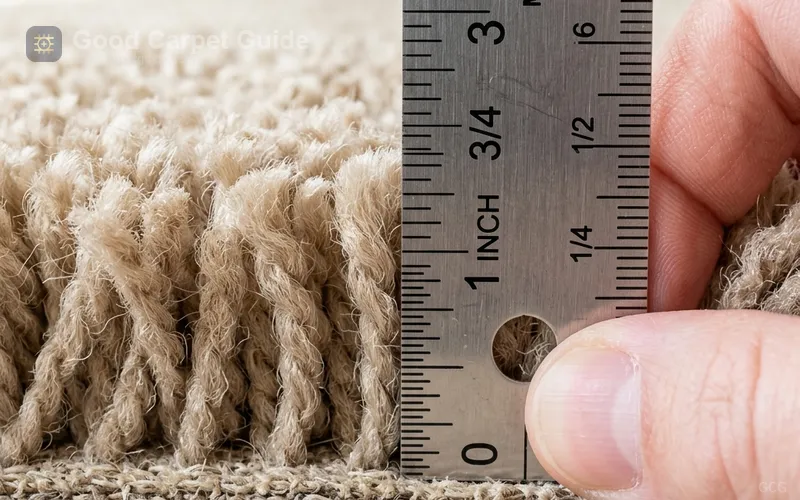
Pile height is measured from the carpet backing to the fiber tip, and this same backing-to-tip distance determines how the carpet is classified in the low, medium, and high pile system covered next.
what is low medium and high pile carpet
Low, medium, and high pile carpet are classified by fiber height above the backing, with low pile carpet under 0.25 inches, medium pile carpet between 0.25 and 0.5 inches, and high pile carpet at 0.5 inches or taller. Low pile carpet, including most level loop and berber constructions, resists crushing best because shorter fibers have less leverage to bend under foot pressure. Medium pile carpet balances softness and durability, and it is the most common construction sold for general living rooms and bedrooms. High pile carpet, including cut pile, plush, and shag constructions, offers the deepest underfoot cushioning but requires denser fiber packing and tighter twist to resist matting.
- Low pile carpet (under 0.25 in.): resists matting and vacuum tracking on stairs and high-traffic hallways.
- Medium pile carpet (0.25-0.5 in.): balances comfort and appearance retention for general living spaces.
- High pile carpet (0.5 in. and above): maximizes underfoot softness in bedrooms and low-traffic formal rooms.
- Shag and frieze carpet (0.75 in. and above): delivers the deepest texture but demands the highest twist rating to avoid a "dead" look within a year.
Each pile category trades appearance retention for comfort as fiber height increases, which is why installers pair pile category with room traffic level before recommending a product rather than defaulting to the tallest, softest sample on the showroom floor.
how to maintain high pile carpet
High pile carpet maintenance requires more frequent vacuuming and professional hot water extraction than low pile carpet because the taller fiber structure traps soil deeper in the pile bed. Homeowners running a standard beater-bar vacuum on a dense high pile construction often describe the process as physically demanding; one homeowner reported it as a "cardio workout" because the vacuum intake plate creates a suction seal against the deep pile. Certain premium high pile lines explicitly warn against beater-bar vacuums, since the rotating brush can strip or fuzz the longer fibers and void the manufacturer warranty.
- Vacuum high-traffic lanes two to three times weekly using a vacuum rated for high pile (soft-bristle or adjustable-height models avoid fiber fuzzing).
- Rotate furniture every 60 to 90 days to redistribute crush points and prevent permanent indentation.
- Schedule professional hot water extraction cleaning every 12 to 18 months following IICRC S100 cleaning standards, since most manufacturer warranties require this exact service interval with a retained receipt.
- Blot spills immediately with a clean cloth rather than rubbing, since rubbing forces the stain deeper into the fiber base and backing.
- Use a carpet rake or pile brush on matted traffic lanes between deep cleanings to lift crushed fibers before they set permanently.
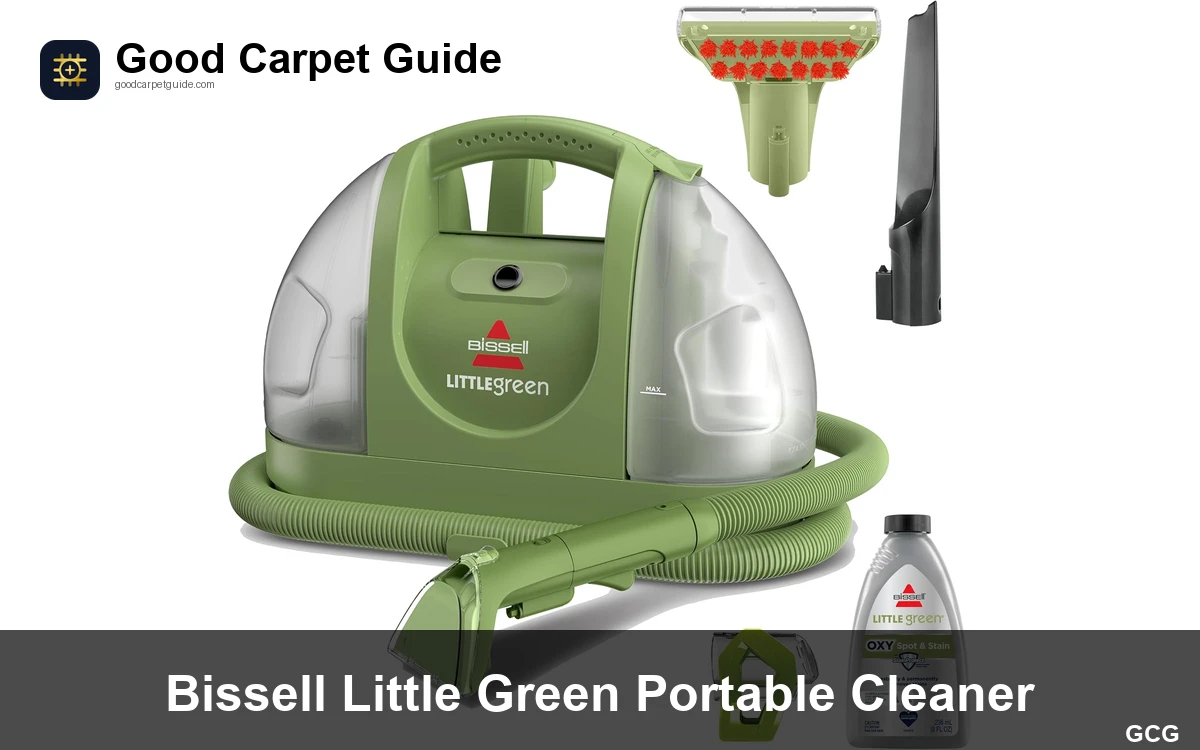
Bissell Little Green Portable Carpet Cleaner
Recommended for spot-treating traffic lanes and pet accidents between scheduled professional hot water extractions, which keeps warranty-required maintenance receipts consistent without waiting for a full room cleaning.
Check Price on AmazonSkipping the professional cleaning interval is the single most common reason warranty claims get denied, which leads directly into how manufacturers actually define matting and crushing in the fine print.
do carpet manufacturers and installers agree on lifespan
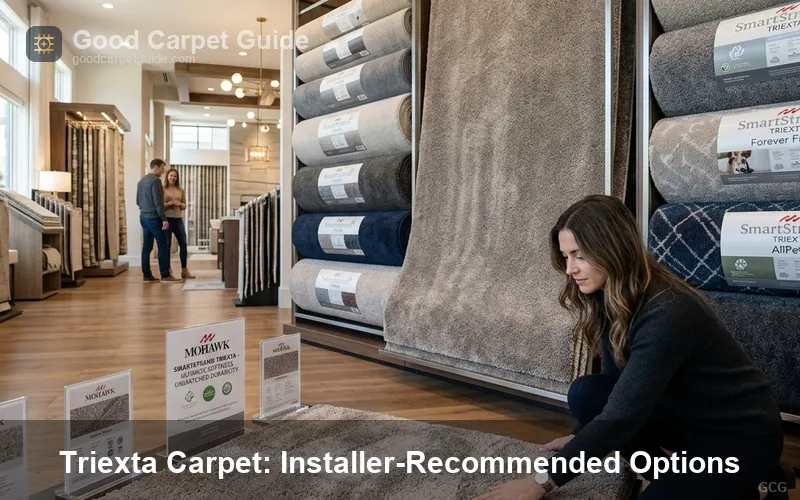
Carpet manufacturers and professional installers frequently disagree on high pile carpet lifespan, particularly regarding Triexta (marketed by Mohawk as SmartStrand) and standard PET polyester fiber. Mohawk markets Triexta as an exceptionally resilient fiber, running campaigns demonstrating its resistance to soiling and matting. Professional carpet cleaners who service Triexta and nylon carpets on a recurring basis report a different pattern in the field: nylon fiber consistently outlasts Triexta in high-traffic zones, with some technicians noting they still service 30-year-old nylon installations while Triexta installations are frequently replaced well before that age.
Nylon vs. Triexta vs. Polyester Field Performance
| Fiber | Typical Installed Cost (per sq. ft.) | Field-Observed Wear Onset | Best Suited Rooms |
|---|---|---|---|
| Nylon 6,6 (solution-dyed) | $9.50 - $18.00+ | 5-10+ years under standard residential traffic | Stairs, hallways, high-traffic living rooms |
| Triexta (SmartStrand) | $5.50 - $8.50 | 2-4 years in high-traffic lanes per cleaner reports | Moderate-traffic bedrooms, family rooms |
| PET Polyester | $2.50 - $4.75 | 6 months - 2 years in high-traffic lanes | Low-traffic guest rooms, short-hold rental units |
The wear-onset figures above come from recurring carpet cleaning technician reports rather than laboratory tumble testing, and they explain why installers routinely steer clients away from polyester for stairs regardless of the discount pricing at big box retailers. A carpet cleaner quoted in industry forum discussions summarized the pattern directly: polyester carpet shows traffic patterns within six months while comparable nylon shows none for years, concluding that the extra 25 percent spent on nylon is recovered in avoided replacement cost.
how long does carpet last according to real users
Real homeowner reports collected from flooring and home improvement forums show high pile carpet degrading far faster than warranty language implies, particularly on stairs and in entryway traffic lanes. One homeowner described stair carpet as looking "like garbage" within roughly two years despite following the recommended annual professional cleaning schedule, eventually replacing it with luxury vinyl plank. A second homeowner reported that a mid-grade carpet paired with premium padding was worn down to the backing in isolated traffic spots at just over two years of age, despite purchasing what the retailer described as a durable residential grade.
Footprint mapping, sometimes called "tracking," represents a separate complaint category distinct from crushing. Buyers of ultra-soft SmartStrand Silk and similar plush Triexta lines report that footprints and vacuum lines remain visible across the entire surface regardless of cleaning frequency, with one buyer describing a ten-thousand-dollar installation as a source of ongoing regret purely due to visible tracking rather than actual fiber damage. This distinction matters because tracking is a light-reflection effect on the fiber surface, not a structural failure, and it typically shows more severely on lighter, single-color, high-luster fibers than on multi-tone or textured constructions.
Field note: Visual dirt shading is frequently mistaken for staining. When bent fibers reflect light differently than upright fibers, indented areas appear dark or "dirty" even on a freshly cleaned carpet. This effect is more pronounced on light-colored, smooth nylon and polyester than on textured or multi-color yarns, and no cleaning solution corrects it since the cause is optical, not chemical.
warranty fine print analysis
Standard high pile carpet warranties exclude matting and crushing by default, classifying visible pile flattening as a "normal appearance retention characteristic" rather than a covered manufacturing defect. This distinction surprises most buyers who assume a 20-year wear warranty protects against the carpet going visibly flat. Coverage against matting and crushing requires a specific texture retention warranty, such as the Shaw Anything Goes! collection's stated 20-year "no mat, no crush" guarantee, which is a materially different and narrower product category than a standard wear warranty.
- States that matting and crushing fall outside standard wear coverage unless a texture retention clause is explicitly named on the warranty document.
- Requires documented proof of professional hot water extraction cleaning, typically every 12 to 24 months, performed by a certified IICRC-affiliated technician.
- Voids fiber and backing coverage automatically if cleaning receipts cannot be produced at the time of a claim.
- Excludes damage caused by improper padding density, since manufacturers specify a minimum pad density and firmness for warranty validity.
- Excludes wrinkling or rippling caused by rigid Z-bar transitions that restrict the carpet's ability to move during the stretching process required at installation.
The consistent pattern across major manufacturer warranty documents is a shift of maintenance burden onto the homeowner, with the paperwork trail (dated receipts, certified technician names, service intervals) functioning as the actual determinant of whether a claim gets paid rather than the observed condition of the carpet itself.
is high pile carpet good for stairs
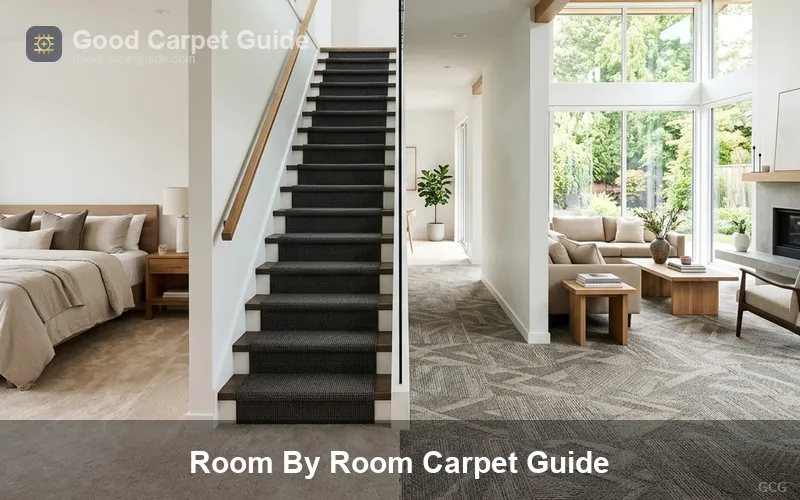
High pile carpet is not well suited for stairs under standard residential traffic because stair treads and nosings concentrate foot pressure into a narrow repeated path, accelerating crushing compared to open floor areas. Installers who track long-term outcomes report that stair carpet in cheap PET polyester frequently shows visible wear within the first year, while a dense, tightly twisted nylon construction with a twist rating of 5.0 or higher on the same stairs resists visible matting for several years longer under identical traffic. Buyers planning a short-term hold on a property are often advised by installers to replace stair treads immediately before listing the home for sale, since stairs typically show wear well before adjoining rooms.
Selecting stair carpet independently from the rest of the home, using a lower pile height and higher density construction specifically for stair treads, addresses the traffic concentration problem directly without forcing a full-home fiber downgrade.
what vacuum for high pile carpet
A vacuum rated specifically for high pile carpet, with an adjustable height setting and either a soft-bristle brush roll or a suction-only mode, prevents fiber fuzzing and warranty complications that standard beater-bar vacuums cause on deep pile constructions. Standard rotating beater bars are engineered for low pile, level-loop carpet and can catch, stretch, or fray the longer fibers in a cut pile or shag construction. Several premium manufacturer warranty documents specifically list beater-bar vacuum damage as an exclusion, meaning fiber fuzzing from the wrong vacuum type can void coverage entirely.
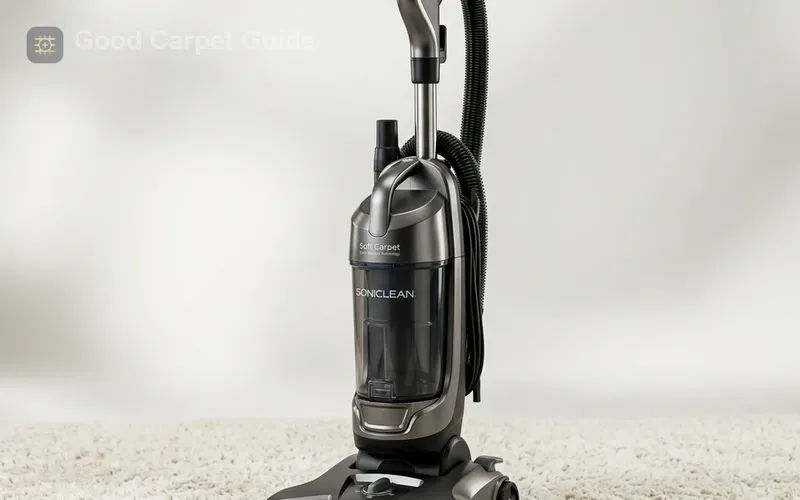
Soniclean Soft Carpet Upright Vacuum Cleaner
Built with adjustable height settings suited to deep pile and plush carpet constructions, reducing the fiber fuzzing risk that standard beater-bar vacuums cause on high pile fibers.
Check Price on Amazonhow to unmat high pile carpet
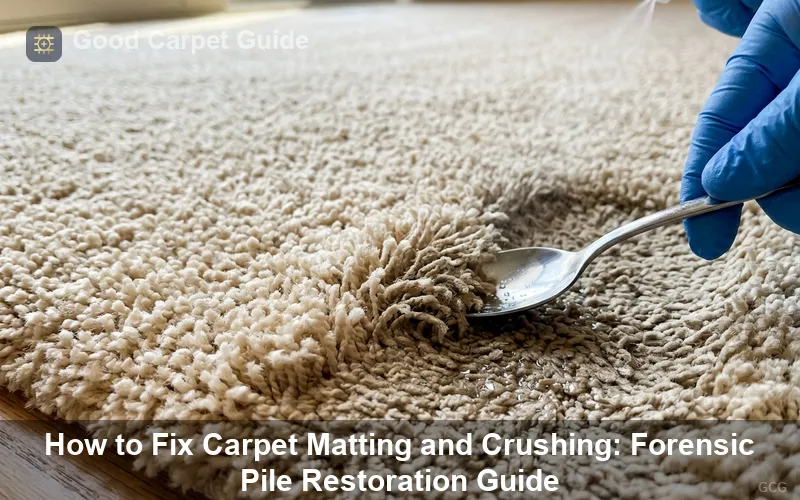
Unmatting high pile carpet starts with a stiff-bristle carpet rake or a specialized pile brush worked against the direction of the flattened fibers to lift them mechanically before any moisture is applied. Steam from a handheld garment steamer, held several inches above the matted section without direct fiber contact, softens the fiber base and allows the raking motion to restore loft more effectively than raking alone. Working small sections at a time, roughly one square foot per pass, prevents overworking a single area and keeps the fiber wear even across the treated zone.
- Vacuum the matted area thoroughly to remove loose soil before applying any moisture or mechanical agitation.
- Rake the flattened fibers using a stiff-bristle carpet rake, working against the crush direction in short, repeated strokes.
- Apply light steam from a handheld steamer held 3-4 inches above the fiber surface, avoiding fiber saturation.
- Re-rake the section immediately while the fiber base is still warm and pliable.
- Allow the treated area to air dry fully before walking on it, typically 1-2 hours depending on room humidity.
Severe matting caused by low-density padding or years of untreated crushing does not always respond fully to raking and steam, and in those cases a professional hot water extraction service with a texture-restoration additive produces a more complete result than a homeowner DIY pass.
how to make high pile carpet fluffy again
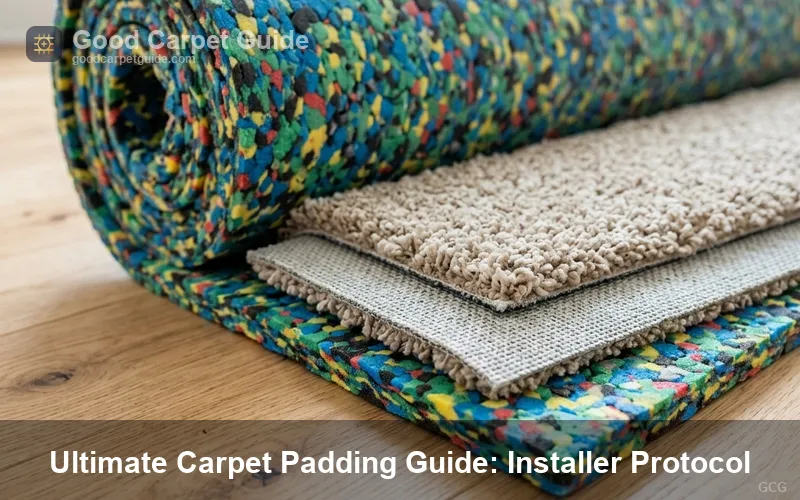
Restoring loft to high pile carpet combines the raking and steam method described above with a firmer replacement pad underneath, since a compressed or degraded pad is frequently the root cause of recurring flatness rather than the carpet fiber itself. Industry experience consistently shows that firm, high-density padding, in the 8 to 10 lb per cubic foot range, preserves carpet loft longer than soft, squishy padding marketed as premium "memory foam" carpet cushion. This finding runs counter to consumer assumption, since buyers frequently equate a softer-feeling pad with a more luxurious, protective product.
Padding Density and Its Effect on Pile Recovery
| Pad Type | Density | Effect on High Pile Carpet |
|---|---|---|
| Low-density poured urethane ("memory foam" marketing) | ~4 lb/cu ft | Compresses quickly, contributes to premature backing delamination |
| Standard rebond pad | 6-8 lb/cu ft | Adequate support for medium-traffic rooms |
| High-density rebond or firm foam blend | 8-10 lb/cu ft | Absorbs foot impact without flexing, extends pile recovery capacity |
Many big-box "memory foam" carpet pads use low-density poured urethane construction around 4 lb per cubic foot, which compresses under sustained weight and cannot support the secondary backing the way a firm, high-density pad does. Replacing a degraded low-density pad during the next reinstallation cycle addresses the structural cause of chronic flatness rather than only treating the symptom on the carpet surface.
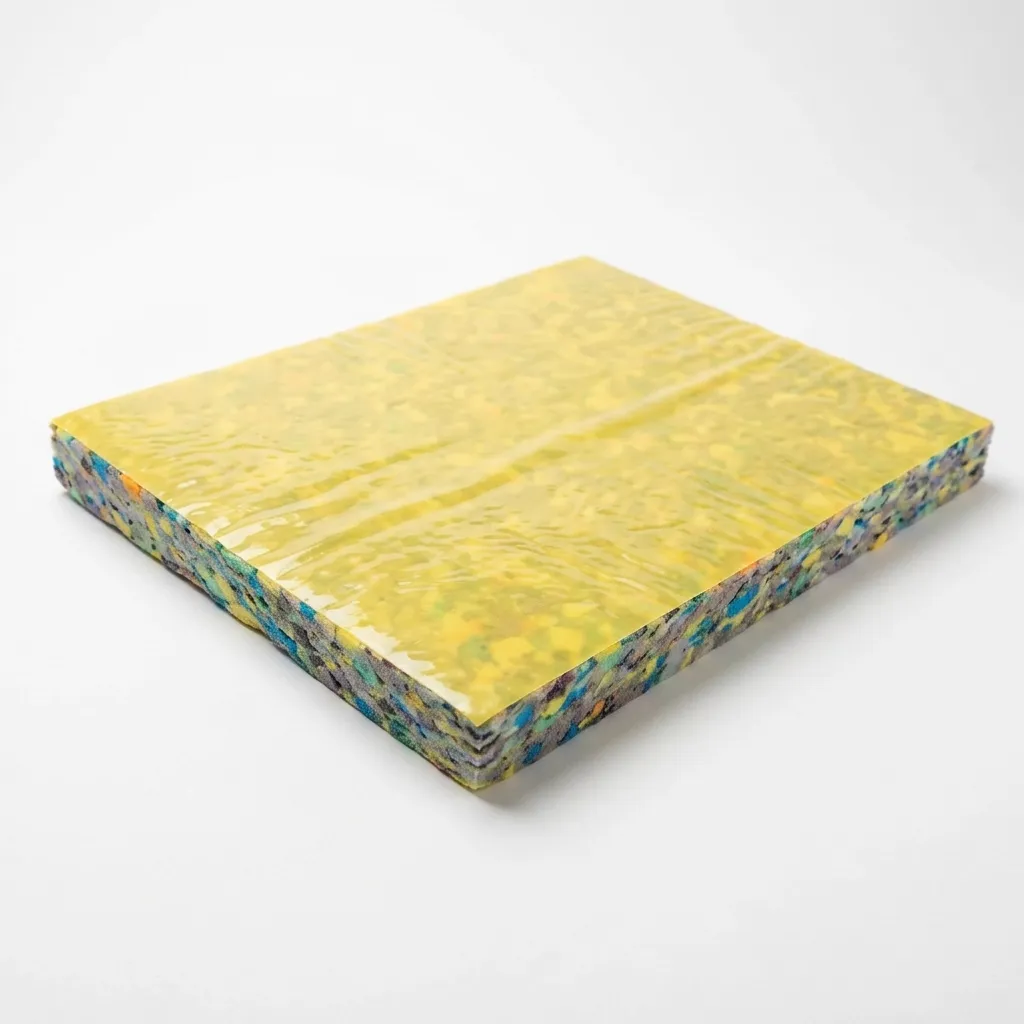
Mohawk SmartCushion Premium Carpet Padding
A firm, higher-density pad option suited to supporting high pile carpet fiber and reducing the backing flex that contributes to premature matting.
Check Price on Amazonregional performance differences
High pile carpet performance varies by regional climate, with atmospheric moisture and fiber type interacting in ways that generic care instructions typically overlook. In damp coastal climates such as the Pacific Northwest, high pile carpet fiber mass traps ambient moisture against the backing, and homeowners commonly report the carpet feeling cold or damp underfoot during winter months. This effect is more pronounced over concrete slab subfloors with elevated alkaline moisture emissions, which is why installers test slab moisture before installation in these regions rather than relying on visual inspection alone.
Desert and arid climates create the opposite failure mode for wool carpet specifically. Wool is widely regarded as the top-performing natural carpet fiber for resilience and appearance retention, but low ambient humidity in regions like the Southwest United States pulls moisture from wool fiber, leaving it brittle, prone to cracking, and susceptible to accelerated color fading under intense UV exposure. Nylon and Triexta fiber, being synthetic and non-hygroscopic in the same way wool is, do not exhibit this moisture-dependent brittleness, making them the more conditionally appropriate choice for high pile installations in low-humidity desert markets, as detailed in our most durable carpet fiber recommendations .
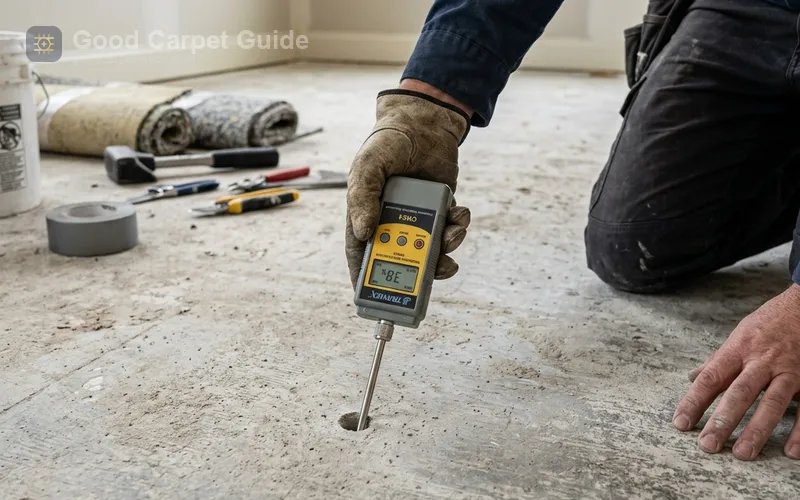
Testing slab moisture before installation identifies the alkaline emission and dampness conditions that later cause the cold, clammy carpet complaints common in humid coastal climates and informs the padding choice discussed in the next section.
big box store vs local dealer comparison
Big box retailers and local independent flooring dealers structure carpet pricing differently, and the difference frequently offsets the "free installation" promotions that draw buyers into big box stores in the first place. Big box retailers advertise heavily discounted or free labor on qualifying orders, but former employees have explained that padding is marked up substantially to recover the labor margin lost on the promotion, meaning the total project cost lands close to what a local dealer would charge for a comparable good-carpet, good-pad combination.
- Big box installation is typically subcontracted to third-party crews paid a flat rate per job, creating an incentive to complete jobs quickly rather than thoroughly.
- Local independent dealers more commonly employ dedicated, long-term installers who use professional power stretchers rather than knee-kicker-only stretching, reducing early wrinkling.
- Big box padding upcharges frequently offset the advertised free-labor discount, bringing total project cost close to local dealer pricing.
- Local dealers typically run 10 to 20 percent higher sticker prices but provide more direct accountability if a seam, stretch, or transition fails during the warranty period.
- Subcontracted big box crews more frequently skip power stretching in favor of faster knee-kicker-only installation, a leading cause of post-installation rippling.
A power stretcher engages the carpet across the full width of a room and locks it onto tackless strip under consistent tension, while a knee kicker alone only stretches a small localized section, which is why installations relying solely on knee kickers ripple sooner under furniture load and temperature-driven expansion.
cost & budget considerations
High pile carpet installed cost in the US residential market splits into three clear pricing tiers based on fiber type, and each tier includes material, padding, and labor as distinct line items rather than a single bundled number.
High Pile Carpet Installed Cost Breakdown (per sq. ft., USD)
| Tier | Material | Padding | Labor | Total Installed |
|---|---|---|---|---|
| Basic (PET Polyester) | $1.00 - $2.50 | $0.50 - $0.75 | $1.00 - $1.50 | $2.50 - $4.75 |
| Mid-Grade (Triexta) | $3.00 - $5.00 | $1.00 - $1.50 | $1.50 - $2.00 | $5.50 - $8.50 |
| Luxury (Nylon / Wool) | $6.00 - $12.00+ | $1.50 - $2.50 | $2.00 - $3.50 | $9.50 - $18.00+ |
Mohawk's flagship SmartStrand Silk lines, including Natural Refinement II and Glamorous Style, retail in the $4.15 to $4.49 per square foot range for material alone before padding and labor, placing them at the upper end of the mid-grade tier despite marketing positioning that suggests a luxury-tier product. Buyers comparing quotes should request material, padding, and labor as three separate line items from any dealer, since bundled "whole house" pricing at big box retailers frequently conceals a padding markup that offsets a discounted labor rate, producing a similar total cost to a transparent local dealer quote for the equivalent product tier.
Seam quality also affects long-term cost even when material and labor pricing match across dealers. A seam sealed with proper latex seam sealer along a correctly trimmed edge resists separation for the life of the installation, while a rushed seam job on a subcontracted big box installation is a common source of the visible seam lines and edge fraying that trigger early replacement.
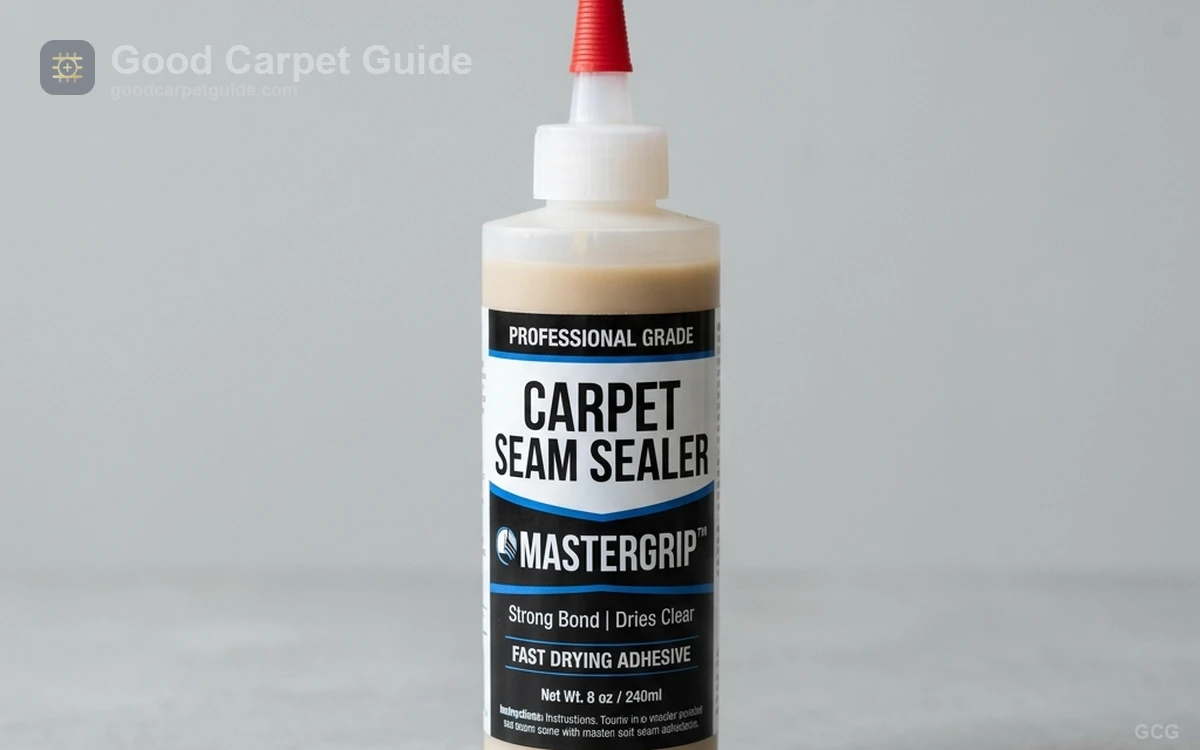
Roberts 8015 Universal Carpet Seam Sealer
A standard latex seam sealer installers use to prevent the seam separation and fraying that shortens the effective service life of an otherwise well-chosen carpet.
Check Price on Amazonfrequently asked questions
What does high pile carpet mean?
High pile carpet means a carpet construction with fiber extending 0.5 inches or taller above the backing, offering deeper underfoot cushioning than low or medium pile constructions.
What is low vs. high pile carpet?
Low pile carpet measures under 0.25 inches from backing to fiber tip and resists crushing better, while high pile carpet measures 0.5 inches or taller and prioritizes underfoot softness over appearance retention.
How high is medium pile carpet?
Medium pile carpet measures between 0.25 and 0.5 inches from the backing to the fiber tip, positioned between low pile and high pile in the standard classification range.
How high is high pile carpet?
High pile carpet measures 0.5 inches or taller from the backing to the fiber tip, with shag and frieze constructions frequently exceeding 0.75 inches.
How to deep clean high pile carpet?
Deep cleaning high pile carpet requires professional hot water extraction following IICRC S100 standards every 12 to 18 months, since home-use extraction units typically lack the suction and heat needed to fully rinse soil from a dense high pile fiber bed.
For carpet installations where transition points, delamination risk, or seam integrity are a specific concern, addressing carpet delamination issues alongside pad and fiber selection produces a more complete installation plan than evaluating pile height in isolation.
High pile carpet rewards buyers who match fiber type, density, and padding firmness to the specific room's traffic level rather than buyers who select purely on showroom hand-feel. Nylon remains the field-proven choice for stairs, hallways, and forever-home living rooms under standard residential traffic, while solution-dyed polyester serves short-hold rental and resale scenarios where a 2 to 3 year service life is an acceptable tradeoff for lower upfront cost. Triexta occupies a middle tier that performs adequately in moderate-traffic bedrooms but underperforms nylon in the high-traffic zones where its marketing claims are most heavily promoted. Pairing any high pile selection with a firm, 8 to 10 lb density pad and a documented professional cleaning schedule protects both the carpet's appearance retention and the manufacturer warranty that depends on it.