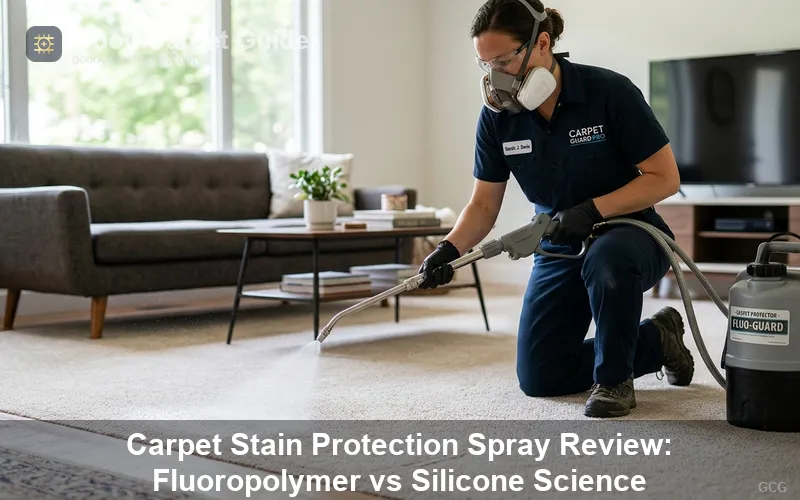
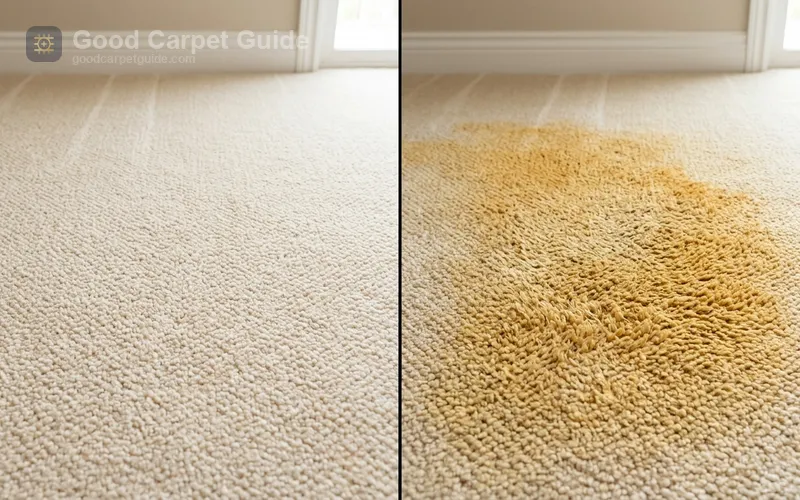
A homeowner in a nylon-carpeted rental unit sprayed a silicone-based protector straight from a hardware store can onto a light beige living room, following the label instructions exactly. Within three weeks the traffic lane by the sofa had a faint yellow cast that never washed out, and the carpet mill declined the stain claim that followed because the warranty excluded damage traced to aftermarket topical treatments. The same pattern shows up in warranty-claim denials the industry documents: the product worked as designed, but the wrong chemistry met the wrong fiber. A carpet stain protection spray review has to separate marketing claims from fiber chemistry before it can tell a reader which can, if any, belongs in their closet.
what carpet stain protection spray do professionals recommend?
Professionals recommend matching the fluoropolymer or silicone chemistry to the specific fiber. Brand recognition is a poor guide on its own. Anionic fluorochemical formulas, sold under names like Scotchgard and Maxim Advanced, lower fiber surface energy far enough to repel both water-based and oil-based liquids. That dual repellency matters because coffee, wine, and soda are water-based while cooking grease and lotion are oil-based. Silicone-based sealants only address the water side. On nylon or wool, a silicone product leaves the carpet vulnerable to every oil-based spill it was supposed to stop, and on acid-dyed nylon in particular, silicone contact is associated with yellowing. Mill stain warranties commonly exclude any aftermarket treatment the manufacturer did not approve.
how much does carpet stain protection spray cost?
Cost per square foot ranges from roughly $0.01 to $0.25 depending on formula concentration and application method. The table below converts retail and professional-grade pricing into a comparable per-square-foot figure using the stated coverage rates. Retail prices vary by seller and over time, so the dollar figures should be treated as indicative rather than fixed.
| Product | Chemistry | Retail price | Coverage | Cost per sq ft | Reapplication interval |
|---|---|---|---|---|---|
| Scotchgard Rug & Carpet Protector (3M) | Silicone aerosol | $9.98 / 17 oz | 40 sq ft | $0.25 | 3-6 months |
| Vectra 22 Fabric & Carpet Protector | Mineral spirit hydrocarbon carrier | $24.23 / 32 oz | 350 sq ft | $0.07 | Up to 2 years (manufacturer claim) |
| TriNova Non-Aerosol Stain Guard | Hydrocarbon polymer, PFAS-free | $18.99 / 18 oz | 175 sq ft | $0.11 | 35-45 days |
| ForceField Fabric Protector RTU | Fluorinated acrylic polymer | $15.50 / 22 oz | 200 sq ft | $0.08 | 6-12 months |
| Chemspec StainShield Professional | Anionic concentrate (4:1), WoolSafe approved | $55.00 / 1 gal | 5,000 sq ft | $0.01 | 12-18 months |
| Maxim Advanced (Bridgepoint) | Short-chain C4 fluorochemical with dye-blocker | $40.00 / 1 gal | 1,200 sq ft | $0.03 | 12-18 months |
The consumer aerosol at $0.25 per square foot is the most expensive option in this set and the shortest-lasting one. A 1,000 square foot home treated with retail Scotchgard costs roughly $250 per application and needs reapplying two to four times a year, compared with $10 to $30 for a professional-grade concentrate applied once every 12 to 18 months.
which brand makes the best carpet protection spray?
No single brand wins across every fiber type, because the correct product depends on whether the carpet is nylon, polyester, wool, or triexta. Chemspec StainShield Professional is WoolSafe-approved and neutral-pH, which makes it the documented choice for wool. Maxim Advanced pairs a short-chain C4 fluorochemical with an acid-dye resistor, which addresses the ionic dye bonds specific to acid-dyed nylon. Vectra 22 uses odorless mineral spirits (C9-C12 hydrocarbons) as its solvent carrier, which gives it strong hydrocarbon penetration but also means it releases vapors that require ventilation during and after application.
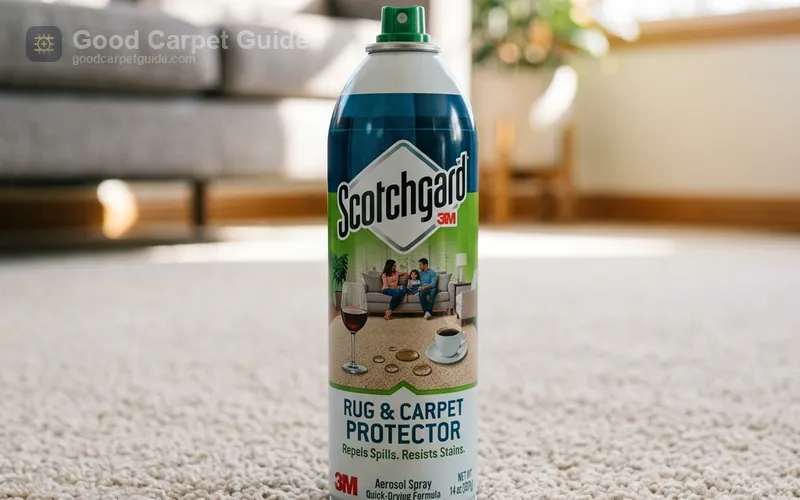
Scotchgard Rug & Carpet Protector
Retail aqueous silicone foam spray for short-term water repellency on upholstery and synthetic fibers.
Check Price on Amazonwhat is the best carpet stain protection spray?
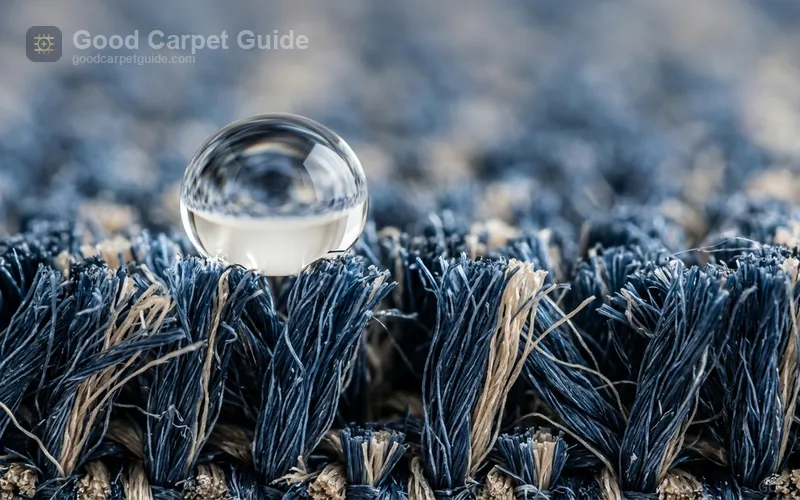
The best product for a given household is the one matched to fiber type and traffic load. The highest advertised durability claim is not the deciding factor. A short-chain C4 fluorochemical such as Maxim Advanced pushes the water contact angle past 90 degrees and holds an oil and grease barrier for 12 to 18 months, which makes it the strongest performance option in this set. That same chemistry carries a documented trade-off: some fluorochemical formulations raise environmental and chemical-exposure considerations, and application can involve solvent and chemical off-gassing. Households that want to avoid both choose a PFAS-free hydrocarbon or silica-based formula instead, at the cost of reapplying every 30 to 45 days.
does carpet stain protection spray differ by fiber type?
Yes, fiber type changes both the chemistry required and the warranty risk involved.
- Nylon (acid-dyed): Hygroscopic fiber with ionic acid-dye bonds. Requires an anionic fluoropolymer paired with an acid-dye resistor, such as Maxim Advanced. Silicone-based protectors are associated with yellowing on this fiber, and applying one can put a mill stain warranty at risk.
- Polyester (PET): Naturally hydrophobic but oleophilic, meaning it resists water on its own but attracts oil. Requires a cationic fluorochemical or heavy hydrocarbon sealer to block oil and soot. Acid-dye blockers have no function here because PET has no ionic dye sites to protect.
- Triexta (PTT, sold as SmartStrand): Manufactured with built-in stain resistance and does not accept topical protectors well. Low surface energy causes sprayed protector to pool on the pile surface without penetrating it, and the pooled product dries into a stiff, tacky mat. Check the manufacturer's warranty terms before applying anything topical, since aftermarket treatments are a common exclusion.
- Wool: A protein fiber that reacts to pH extremes. Requires a neutral-pH, WoolSafe-approved water-based fluorochemical, such as Chemspec StainShield Professional, or a solvent-based sealant. Alkaline products damage the fiber cuticle and cause yellowing, and over-wetting risks cellulosic browning where the carpet backing contains jute.
how long does carpet stain protection spray last?
Duration ranges from about 30 days to 18 months depending on the chemistry and how much foot traffic the treated area receives. PFAS-free hydrocarbon and silica-based formulas need reapplication every 30 to 45 days because their oil repellency is weaker by design. Retail silicone aerosols wear off in 3 to 6 months under normal household traffic. Short-chain C4 fluorochemicals and WoolSafe-approved anionic concentrates hold their barrier for 12 to 18 months, with Vectra 22 claiming up to two years of residual protection. Traffic load changes these numbers directly: a main hallway wears a coating faster than a guest bedroom used a few times a month, because repeated flexing and abrasion strip the physical or covalent bond between the protector and the fiber surface.
how to choose a carpet stain protection spray
- Identify the fiber. Check the carpet's care tag or ask the original installer whether it is nylon, polyester, triexta, or wool, since the correct chemistry depends entirely on this answer.
- Rule out triexta. If the carpet is SmartStrand or another triexta product, skip topical protectors; the built-in stain resistance already covers the fiber, and a topical spray risks a warranty exclusion.
- Match chemistry to fiber. Choose an anionic fluoropolymer with an acid-dye resistor for nylon, a cationic fluorochemical for polyester, and a neutral-pH WoolSafe-approved formula for wool.
- Pre-clean with hot-water extraction. Spraying protector over surface dirt bonds the coating to the dirt layer instead of the fiber, and the first vacuum pass strips it off. The IICRC S100 standard covers how to steam clean carpet as a professional cleaning method for textile floor coverings.
- Weigh PFAS exposure against durability. A short-chain C4 fluorochemical lasts 12 to 18 months but carries off-gassing during application and water-system persistence; a PFAS-free hydrocarbon formula avoids that trade-off but needs reapplication every 30 to 45 days.
- Set a reapplication reminder based on the product's documented interval, since missing the window lets fiber surface energy climb back toward its untreated baseline and the stain barrier disappears without any visible warning sign.
what is the difference between carpet protection spray types?
Fluoropolymer sprays repel both water and oil-based stains, while silicone sprays repel water only. That single distinction explains most of the yellowing and re-soiling complaints tied to DIY application. A silicone-based sealant forms a hydrophobic physical film around each fiber and produces excellent water beading, but it offers no meaningful resistance to oil-based soiling such as cooking grease or lotion residue. Anionic fluorochemicals lower surface energy across both liquid types. They do not form a surface film, which is why they show no tactile change to the carpet and carry a lower yellowing risk on nylon and wool.
can you apply carpet stain protection spray yourself?
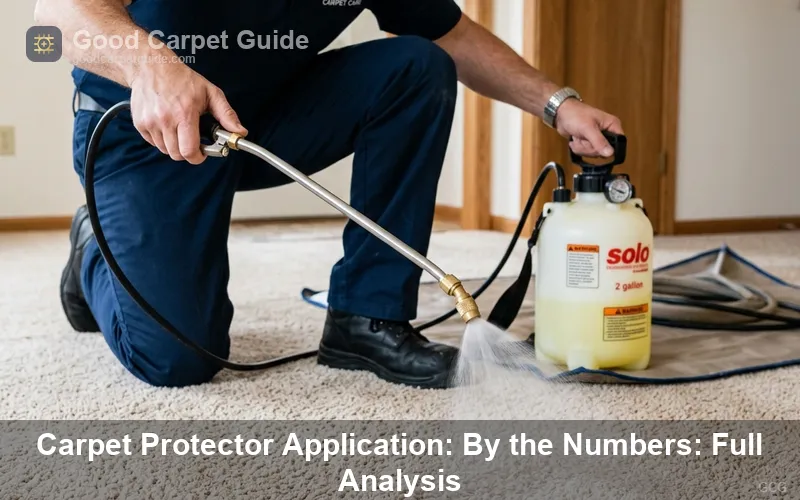
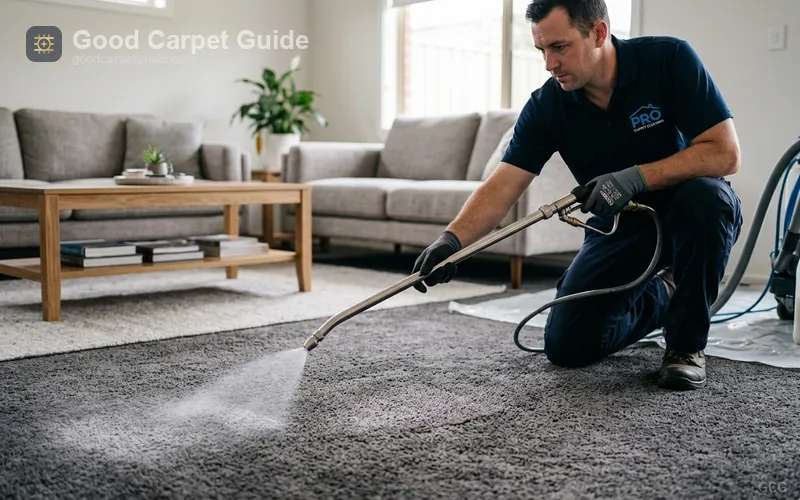
Yes, but hand-applied consumer aerosols distribute far less active concentrate than the can suggests. Retail aerosols are mostly water and solvent carrier, with a small percentage of active protector by volume. Sprayed by hand without mechanical grooming, that active fraction spreads in a thin, uneven layer that wears off in 3 to 6 months. Professional application uses a pump sprayer at a controlled dilution ratio (commonly 4:1 for concentrates like Chemspec StainShield Professional) followed by grooming with a carpet rake to work the solution evenly into the pile, which is the main reason professional-grade treatments outlast consumer aerosols even when the underlying chemistry is similar. Proper carpet protector application techniques ensure complete fiber coverage without overspray pooling.
Two field realities affect DIY results beyond the spray itself. First, factory mill finishes are heat-cured onto newly extruded fiber at high temperature, which forms covalent bonds that survive years of cleaning. Aftermarket sprays cure at ambient room temperature, roughly 20-25°C, and form weaker physical attachments; they do not create the covalent bond a factory finish does.
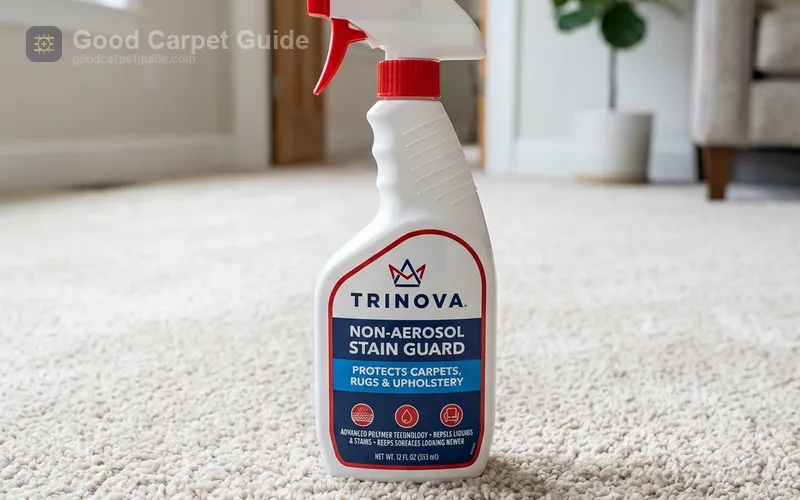
TriNova Non-Aerosol Stain Guard
Fluorine-free non-aerosol hydrocarbon polymer spray designed for safe eco-friendly home application.
Check Price on Amazonis carpet stain protection spray worth it?
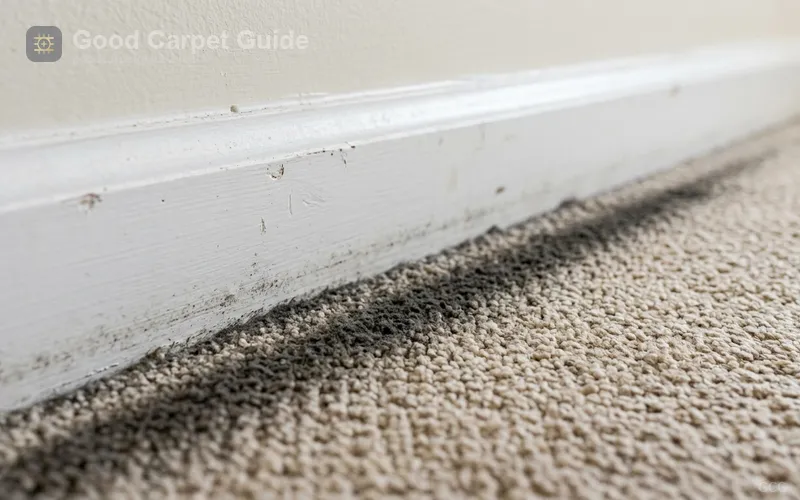
Cost per square foot alone does not answer that question; the pre-cleaning step and reapplication discipline decide the outcome. A $55 gallon of Chemspec StainShield Professional at $0.01 per square foot beats a $9.98 aerosol at $0.25 per square foot on price, but only if the carpet was hot-water extracted first and the concentrate was diluted and applied evenly rather than hand-sprayed in patches. Skipping the pre-clean step causes the dirt magnet problem: detergent and protector residue combine into a tacky film on the fiber surface, and under foot traffic that film binds dust, pet dander, and soot faster than an untreated carpet would collect it. Filtration soiling along baseboards and HVAC vents is a related but separate mechanism: sealed homes force air to escape under baseboards, and a tacky residue there functions as an efficient filter that produces dark, soot-like lines regardless of which protector was used.
No protector makes a carpet stain-proof under every condition. Topical treatments create a temporary window, typically minutes to a few hours, during which a liquid beads instead of soaking in. Hot liquids defeat that window faster than room-temperature liquids because higher molecular energy overcomes the surface-tension barrier the protector created. A protector is worth the cost for households with pets, children, or high foot traffic who reapply on schedule and know how to remove carpet stains promptly when spills happen. It is not worth the cost, and carries yellowing risk, for anyone with a light-colored acid-dyed nylon carpet reaching for a silicone can off a hardware store shelf.
when should you reapply carpet stain protection spray?
Reapply the protective coating on the schedule printed on the product label, before any stain appears. Waiting for a visible failure means the fiber has already spent weeks or months back at its untreated surface energy, which is when filtration soiling and permanent staining set in fastest. A PFAS-free formula needs a fresh coat every 30 to 45 days; a short-chain fluorochemical or WoolSafe-approved concentrate holds for 12 to 18 months. For carpets under heavier-than-average traffic, such as a main hallway or a stairway landing, shortening that interval is a reasonable adjustment given the faster mechanical wear those areas produce.
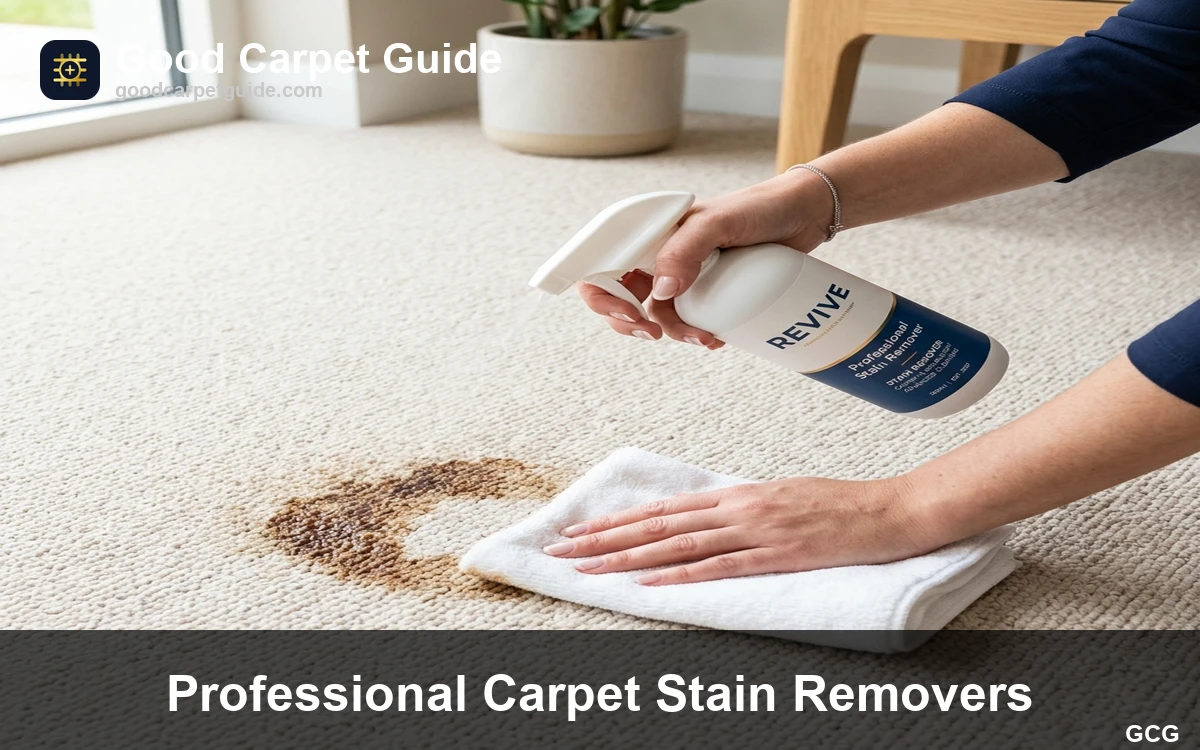
Related reading covers the failure modes that most often accompany a missed reapplication window: the carpet stain removers guide for treating a stain that got through before recoating, and the carpet delamination guide for cases where an over-wet application or an aggressive plastic-film removal has separated the backing from the face fibers.
real-world application considerations
Protector application can be less uniform around seams, transition strips, stairs, and other areas where carpet fibers receive more mechanical wear. Where a seam has been repaired or sealed, allow the repair material to cure fully before applying any topical protector. On stairs and hallways specifically, the combination of higher foot traffic and tighter turning radius wears a topical coating faster than an open living room; the best carpet for stairs guide and the best carpet for basement guide both cover fiber choices that reduce how often a protector needs reapplying in those higher-wear zones.
the bottom line on carpet stain protection spray
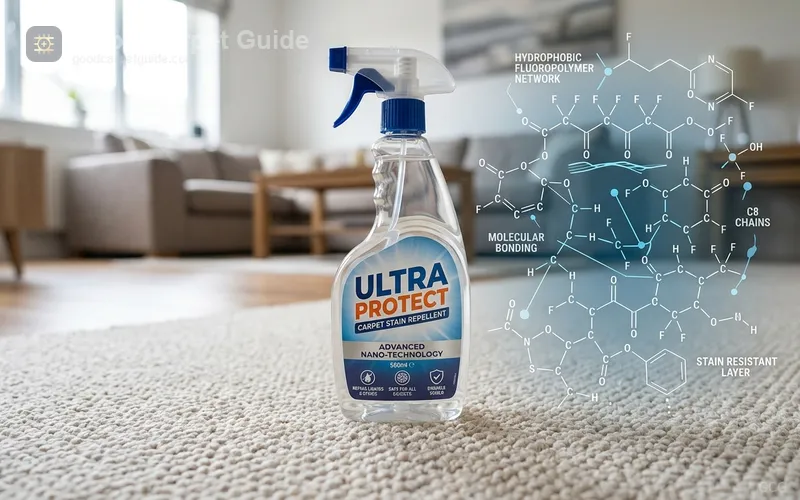
Match the chemistry to the fiber first, then decide based on cost per square foot and reapplication interval. Nylon and wool households should default to a fluorochemical concentrate like Maxim Advanced or Chemspec StainShield Professional and avoid silicone aerosols. Polyester and olefin households can use silicone or a heavier hydrocarbon sealer with less yellowing risk, since those fibers are already hydrophobic and the main threat is oil-based soiling. Triexta and SmartStrand owners should skip topical sprays altogether and preserve the factory warranty. Anyone applying a spray themselves should hot-water extract the carpet first, dilute a pump-applied concentrate rather than hand-spray a thin aerosol layer, and set a calendar reminder for the specific reapplication window printed on that product's label, because a missed window is the most common reason a correctly matched protector still ends in a stain claim denial.
Folex Instant Carpet Spot Remover
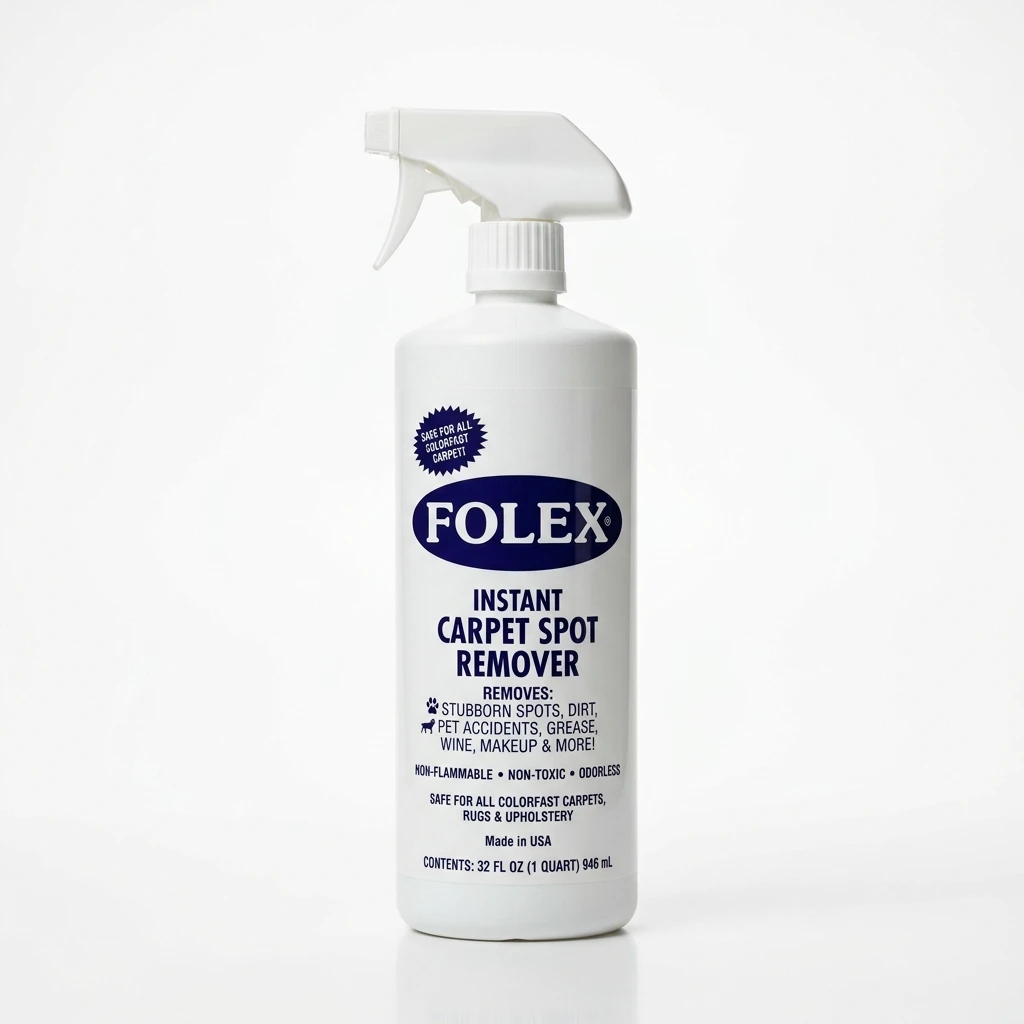
Water-based surfactant spot cleaner for pre-cleaning carpet fibers prior to protector application.
Check Price on Amazon