Carpet stain removers determine whether a spill vanishes permanently or reappears as a dark silhouette within weeks. They also dictate whether synthetic fiber filaments remain resilient or turn sticky, brittle, and discolored from residue buildup. Most retail homeowners focus entirely on surface discoloration during the initial accident, but professional flooring installers evaluate surfactant polarity, fiber dye-site chemistry, and moisture migration inside the underlayment.
Chemical spotters separate into five distinct categories: non-ionic surfactants for routine soil release, bio-enzymatic digesters for organic waste, chemical oxidizers for tannin discoloration, reducing agents for synthetic food dyes, and dry solvents for petroleum grease. Choosing the wrong chemical formula often binds the stain permanently to the fiber core or strips factory stain-resistant coatings. For complete physical extraction protocols and blot timing, reference our master tutorial on how to remove carpet stains .
The chemistry problem with retail aerosol sprays
Most retail carpet spot removers sold in supermarkets create long-term pile damage by depositing dense surfactant residues. Foaming aerosol sprays rely heavily on sodium lauryl sulfate and high-pressure propellants to generate thick white lather. Manufacturers formulate these products for visual marketing, as homeowners associate bubbling foam with active cleaning. In practice, expanding foam forces liquid outward and downward into the backing rather than lifting it upward into an absorbent towel.
Surfactant residue represents the primary cause of rapid carpet resoiling. Surfactant molecules contain a hydrophobic tail that attaches to oils and a hydrophilic head that bonds with water. Retail sprays leave unrinsed surfactant film coated over individual carpet filaments. Once dry, this sticky film behaves like flypaper, pulling dry particulates, airborne cooking oils, and shoe soil into the fiber structure whenever someone walks across the room.
Retail spotters also include optical brighteners to simulate immediate stain removal. These stilbene fluorescent whitening agents absorb ultraviolet radiation and re-emit light in the blue spectrum. This blue fluorescence tricks human eyes into perceiving discolored carpet as clean under indoor lighting. Over time, optical brighteners degrade under direct sunlight, producing irreversible yellow or green chemical halos on lighter carpet piles.
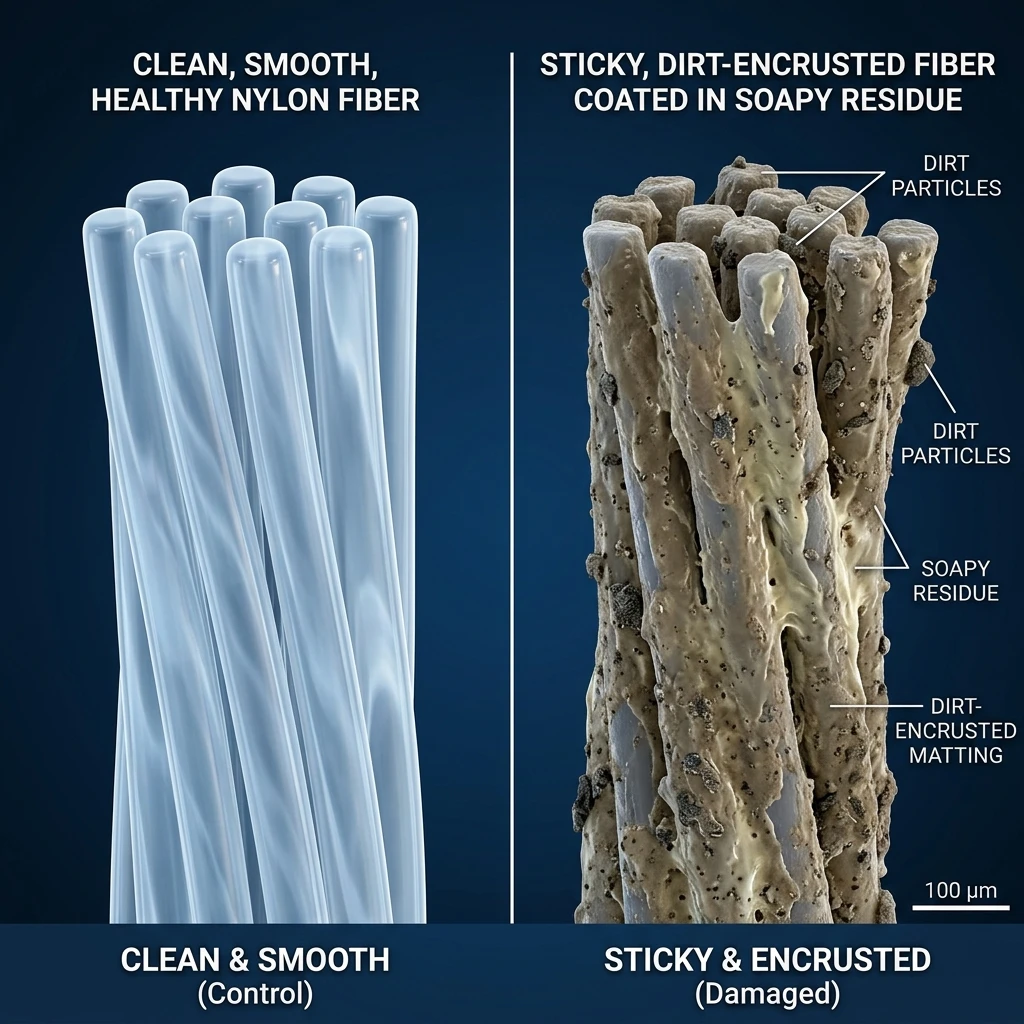
Microscopic magnification reveals how detergent residue forms a tacky sheath over carpet filaments, trapping dry particulates and foot traffic oils.
Retail formulations suffer from low active ingredient concentrations. Standard retail aerosol cans consist of roughly 90 percent water and propellant, containing only 2 to 5 percent active cleaning chemicals. Professional carpet spotters contain 15 to 25 percent active ingredients, providing concentrated solvency without requiring excessive liquid volume. Over-wetting carpet fibers with diluted retail sprays saturates the primary backing and triggers sub-surface wicking.
The five chemical classes of professional stain removal
Professional cleaning technicians select spotters based on the molecular structure of the contaminant rather than brand marketing. A chemical formulated to break down petroleum grease cannot digest the protein matrix of pet urine. Matching the specific chemical mechanism to the contaminant prevents secondary discoloration and protects fiber warranties.
Non-ionic surfactants and encapsulating spotters
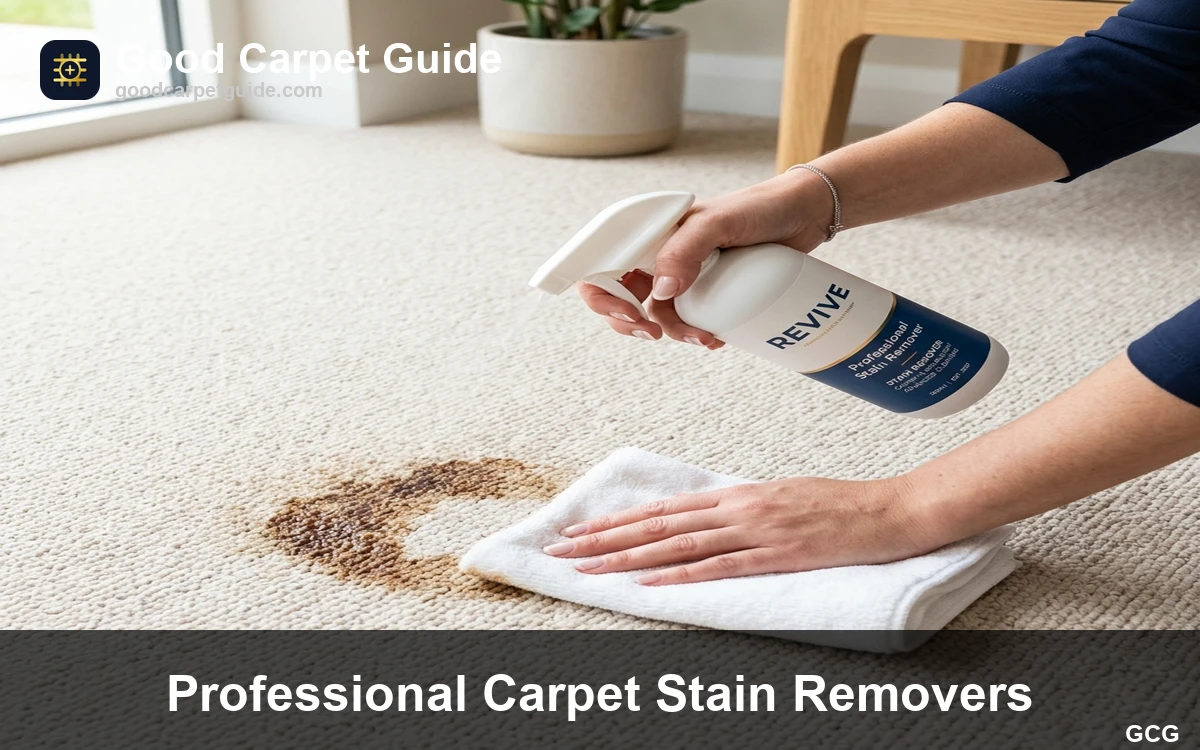
Non-ionic surfactants represent the safest general-purpose chemistry for modern carpet installations. These surfactants carry no electrical charge on their polar head groups. Because they lack ionic charge, non-ionic surfactants do not bond with the positively charged mineral soils tracked into homes from sidewalks and driveways. They break the surface tension of water, allowing the solution to penetrate tight carpet tufts and suspend oily soils without leaving an adhesive residue.
Advanced non-ionic formulations utilize polymer encapsulation technology. As the spotter dries, the polymer binds the loosened soil particles into brittle, microscopic crystals. Everyday vacuuming then lifts these dry crystalline capsules out of the pile during routine maintenance. This zero-residue behavior prevents the dark rings that routinely appear weeks after using conventional foaming cleaners.
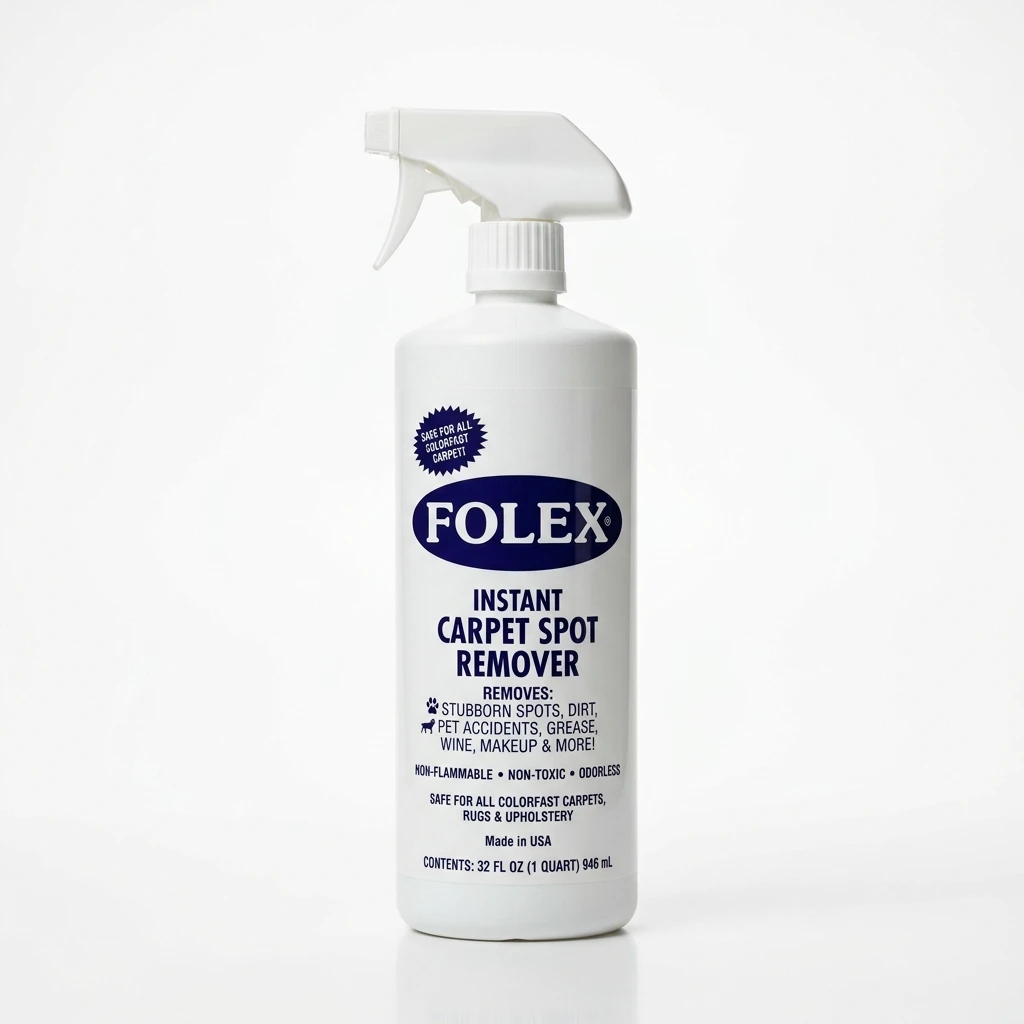
Folex Instant Carpet Spot Remover
Water-based non-ionic surfactant formula that releases stains without foaming, optical brighteners, or sticky detergent residue.
Check Price on AmazonInstallers frequently rely on Folex Instant Carpet Spot Remover for quick spot correction on synthetic carpets. The water-based formula rinses freely and lifts organic and water-soluble soils through natural capillary action. Because it contains no bleaching oxidizers or petroleum distillates, it preserves factory acid-dye resistors on residential nylon carpets.
Bio-enzymatic digesters for protein and organic waste
Bio-enzymatic cleaners utilize targeted biological enzymes produced by beneficial bacterial cultures. These specialized enzymes act as biochemical catalysts, cleaving complex protein, lipid, and carbohydrate chains into harmless basic compounds such as carbon dioxide and water. Common enzyme classes include proteases for blood and dairy, amylases for starches, and lipases for animal fats.
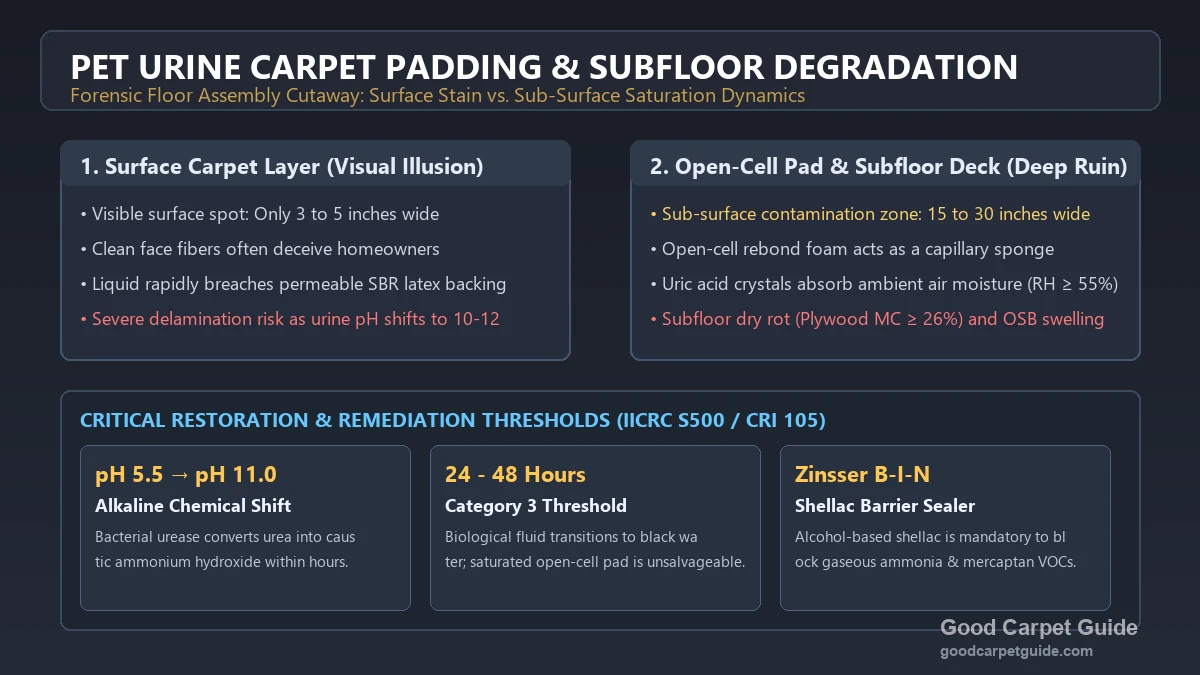
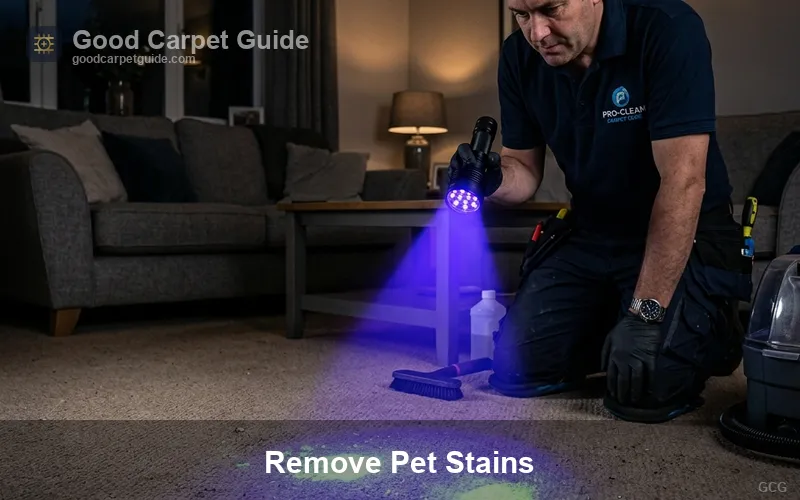
Enzymatic formulas are mandatory for pet accidents because urine contains insoluble uric acid crystals. Conventional detergents wash away soluble urea and urobilin pigments, but the uric acid crystals remain bonded to carpet backings and cushion cells. Whenever indoor humidity rises, these crystals release pungent ammonia gas. Enzymatic digesters physically consume the uric acid crystals, eliminating the odor source permanently rather than masking it with synthetic perfumes.
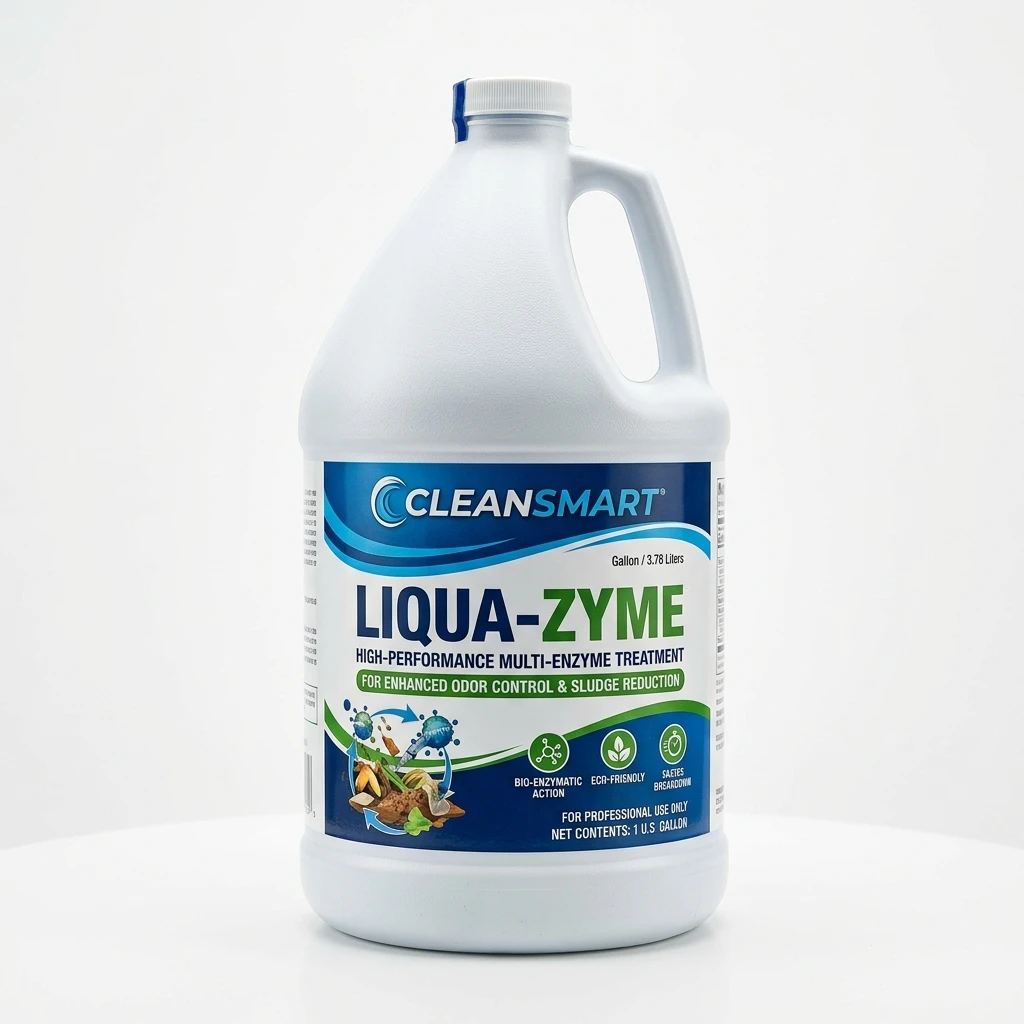
Cleansmart Liqua-Zyme Enzymatic Digester
Multi-strain enzymatic digester designed to break down uric salt crystals, protein spills, blood, and organic residues inside carpet backing.
Check Price on AmazonSuccessful enzymatic treatment requires adequate moisture dwell time. Enzymes remain biologically active only while damp, requiring 4 to 8 hours of sustained moisture to break down dense protein deposits. Homeowners must avoid applying water hotter than 120°F (49°C) during enzymatic cleaning, as high temperatures permanently denature protein enzymes and render them inert. Homes with frequent pet traffic can avoid underlayment contamination entirely by installing the best carpet for pets equipped with integrated moisture barriers.
Oxidizing agents for organic tannin and dye stains
Chemical oxidizers remove discoloration by releasing active oxygen atoms that alter the molecular structure of color-producing compounds known as chromophores. When an oxidizer encounters organic tannins from red wine, coffee, tea, mustard, or berries, it breaks the conjugated chemical double bonds inside the chromophore molecule. Once these double bonds rupture, the compound loses its ability to absorb light in the visible spectrum, rendering the stain invisible.
Professional oxidizers use stabilized hydrogen peroxide (H₂O₂) combined with specialized buffering agents. Unlike chlorine bleach, which strips color from synthetic fibers and dissolves wool proteins, buffered peroxide oxidizers target organic pigments selectively. They operate within a controlled pH window between 8.5 and 9.5, providing maximum stain decolorization without degrading primary polypropylene backings.
Bridgepoint Systems Stain-Zone
Professional single-part oxidizing spotter with stabilized hydrogen peroxide engineered for coffee, red wine, tea, and organic yellowing.
Check Price on AmazonBridgepoint Systems Stain-Zone represents an industry benchmark for difficult organic discoloration. The formula continues oxidizing until dry, neutralizing lingering coffee and red wine residues that resist conventional extraction. Installers restrict oxidizing spotters to solution-dyed synthetic carpets, as unbuffered peroxides can cause gradual color loss on delicate piece-dyed nylon or wool.
Reducing agents for synthetic colorings and dye transfer
Synthetic food dyes present in sports drinks, fruit punch, gelatin snacks, and children's cough syrups contain artificial colorants like FD&C Red 40 and Yellow 5. These synthetic pigments behave like industrial acid dyes, bonding directly to open dye sites on nylon carpet filaments. Chemical oxidizers cannot break apart these synthetic molecules reliably and may permanently set the dye.
Synthetic colorants require chemical reducing agents such as sodium metabisulfite or sodium hydrosulfite. Reduction strips oxygen atoms from the dye molecule, converting the colored artificial pigment into a colorless intermediate. Chemical reduction typically requires thermal energy to catalyze the reaction. Professional technicians apply the reducing agent, cover the spot with a damp white cotton cloth, and hover a steam iron one inch above the surface for 10 to 15 seconds.
Direct iron contact will melt synthetic carpet yarns instantly. The thermal reduction technique requires precise control, as excessive heat can scorch polypropylene backing fibers. Homeowners should attempt chemical reduction only after conventional non-ionic extraction fails to dislodge the food coloring.
Gel solvents for petroleum, grease, and adhesives
Petroleum-based contaminants require non-polar organic solvents rather than water-based detergents. Motor oil, shoe polish, cosmetic foundation, asphalt tracking, and chewing gum dissolve only when treated with hydrocarbon solvents or citrus terpenes such as d-limonene. These non-polar solvents break the cohesive intermolecular forces holding dense grease molecules together.
Liquid solvents create severe structural hazards when applied directly to installed carpet. If liquid solvent penetrates the pile and reaches the backing, it dissolves the styrene-butadiene rubber (SBR) latex adhesive compound holding the primary and secondary backings together. This adhesive failure causes carpet delamination, creating loose bubbles and ripples across the floor that require complete carpet replacement.
Professional spotters utilize thickened solvent gels rather than thin liquids. Gel formulations remain suspended within the vertical face yarn, dissolving tar and grease without migrating into the latex adhesive layer. Technicians apply the gel with a dull spatula, allow two minutes of dwell time, and blot upward onto white cotton towels.
Why dish soap, vinegar, and baking soda damage carpets
DIY carpet cleaning recipes frequently circulate on home improvement forums, promoting mixtures of blue dish soap, white vinegar, and baking soda. While these kitchen staples clean non-porous ceramic plates and glass cooktops effectively, applying them to absorbent carpet tufts causes severe structural and aesthetic deterioration.
Dish detergents contain dense concentrations of anionic surfactants engineered for grease removal under continuous, high-volume tap water rinsing. Carpet fibers cannot be rinsed like dishes in a sink. Extracting a single teaspoon of concentrated dish soap out of a thick carpet pile requires more than 30 gallons of pressurized rinse water. The unrinsed detergent residue remains trapped in the backing, creating a sticky magnet for dirt that turns black within two weeks.
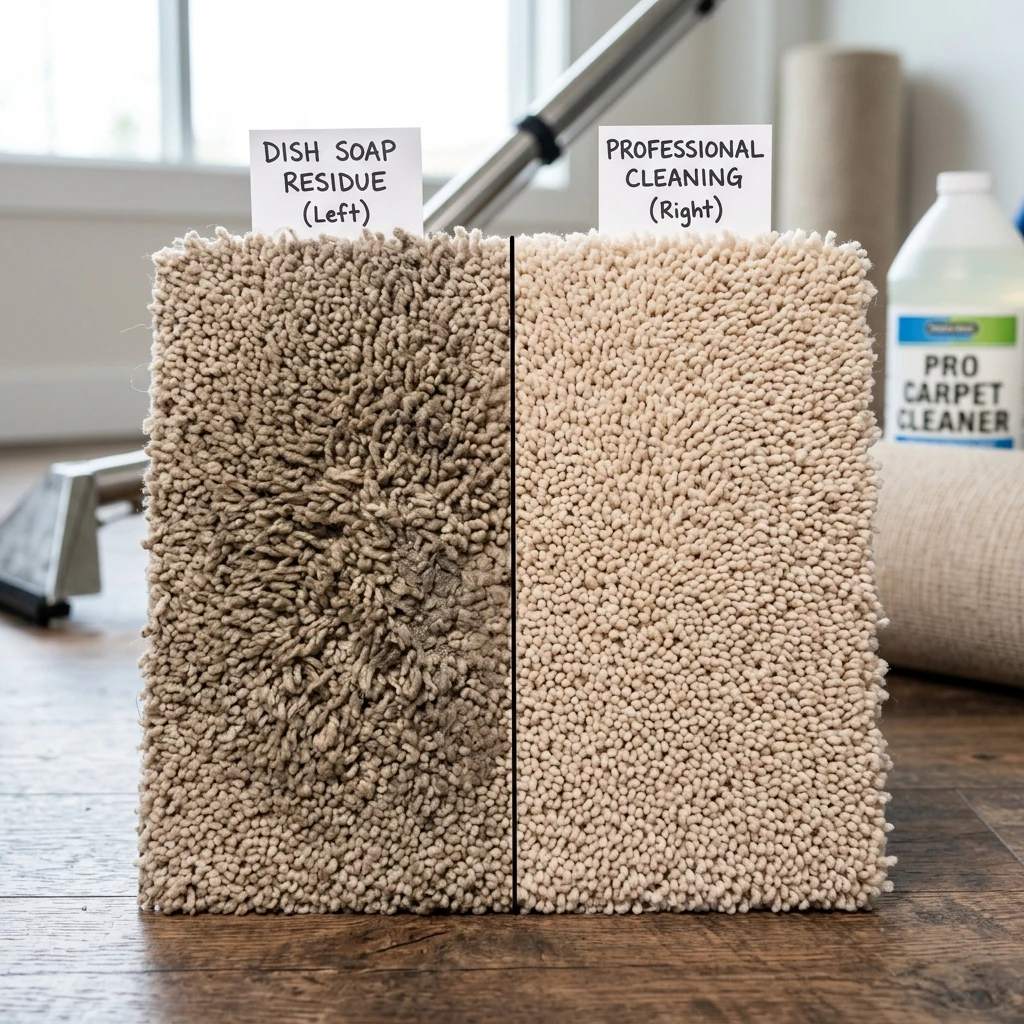
Visual comparison demonstrating how household dish soap residues attract dark foot-traffic particulate, while neutral professional spotters leave fibers clean and dry.
Repeated exposure to high-foaming detergents also degrades synthetic pile structure. Laboratory testing indicates that concentrated alkaline surfactants can reduce the tensile strength of nylon 6,6 filaments by over 25 percent over extended exposure periods. The sticky surfactant film also attracts moisture from ambient humidity, encouraging microbial activity along the latex adhesive seam.
Mixing vinegar with baking soda produces an immediate, counterproductive acid-base neutralization. Baking soda is an alkaline base (pH ~8.5) and vinegar is dilute acetic acid (pH ~2.5). When combined, they react vigorously to produce water, carbon dioxide gas, and sodium acetate salt.
The fizzing action looks impressive, but the cleaning power neutralizes instantly. The leftover sodium acetate salt crystals stay embedded in the pile. Under foot traffic, these sharp microscopic crystals abrade carpet filaments like sandpaper.
Matching cleaner chemistry to carpet fiber types
Carpet fiber chemistry dictates how stains bind to yarns and which spotters can be applied safely. Applying an aggressive chemical without identifying the pile fiber risks permanent bleaching, fiber distortion, or backing delamination.
| Fiber Family | Predominant Characteristics | Ideal Cleaner Chemistry | Chemicals to Avoid | Critical Precautions |
|---|---|---|---|---|
| Nylon (Type 6 & 6,6) | Resilient, porous, contains open acid-dye receptor sites | Neutral non-ionic surfactants, buffered oxidizers (pH 6.5 to 9.0) | High-alkaline strippers (pH > 10.0), optical brighteners | High pH strips factory stain-resist acid blocker coatings |
| Polyester (PET) | Hydrophobic, non-porous, highly oleophilic | Encapsulating surfactants, citrus terpene gels | Heavy foaming detergents, unbuffered hot water | Attracts oily soils; requires solvent-assisted degreasing |
| Triexta (PTT) | Built-in molecular stain resistance, zero dye sites | Mild non-ionic spotters, warm water rinse | Harsh bleaching agents, cationic biocides | Responds best to warm water and prompt blotting |
| Olefin (Polypropylene) | Chemical-resistant, bleach-safe, low thermal threshold | Oxidizing bleaches, low-pH acid rinses | High heat reduction (>250°F), heavy petroleum solvents | Low melting point (330°F); bonds tenaciously with grease |
| Wool | Natural protein fiber, sensitive to alkali and oxidizers | WoolSafe neutral spotters (pH 5.5 to 7.5) | Chlorine bleach, high-pH reducers, enzymes | Alkaline chemistry dissolves natural keratin cuticle scales |
Nylon represents the most popular residential carpet fiber due to its resilience, but standard nylon contains open acid-dye receptor sites. Mills treat residential nylon with acid-blocker chemical coatings that seal these sites against liquid spills. Cleaners with an alkaline pH above 10.0 strip away this protective barrier, allowing liquids to penetrate and permanently dye the fiber core.
Polyester and Triexta fibers exhibit inherent hydrophobic properties, meaning water-based spills bead on the surface without penetrating the filament core. However, polyester possesses strong oleophilic properties, bonding aggressively with kitchen grease, cooking oils, and skin oils. Removing grease from polyester requires solvent gels or non-ionic degreasers rather than heavy aqueous detergents. To understand how fiber selection influences overall wear patterns, read our analysis on how long does carpet last .
Wool demands the strictest chemical discipline of any flooring material. As an animal protein fiber, wool consists of interlocking keratin cuticle scales. Alkaline solutions with a pH above 8.0 soften and dissolve these protein scales, leaving wool fibers brittle, fuzzy, and permanently discolored.
Oxidizing bleaches and enzyme-based digesters also break down wool keratin rapidly. Chlorine bleach will dissolve natural wool yarn entirely within minutes. Homeowners must use exclusively WoolSafe-approved neutral detergents on wool rugs and broadloom.
The mechanics of stain wicking and pad contamination
One of the most frustrating experiences in carpet maintenance occurs when a thoroughly cleaned spot reappears 24 to 48 hours later. Homeowners assume the cleaner failed, but the reappearance is driven by capillary wicking from the underlying cushion.
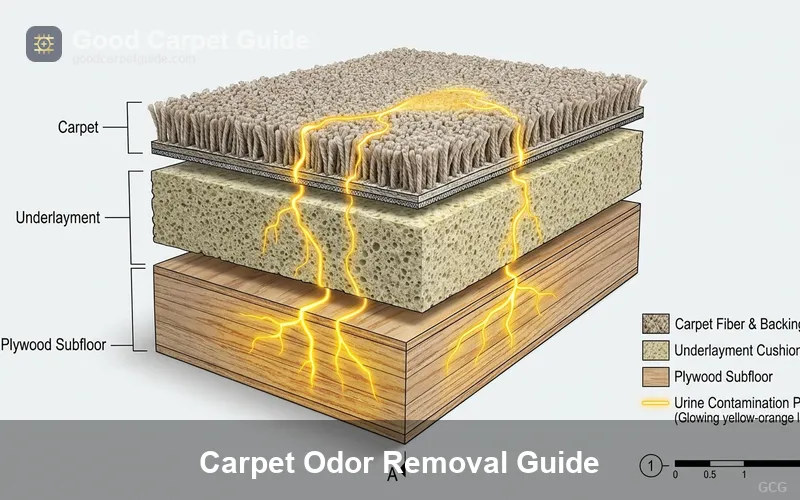
When a spill occurs, liquid penetrates through the primary carpet backing and passes through the porous latex adhesive layer into the open-cell polyurethane foam pad beneath. While surface cleaning extracts liquid from the top third of the pile, the pad remains saturated with liquid and dissolved soil.
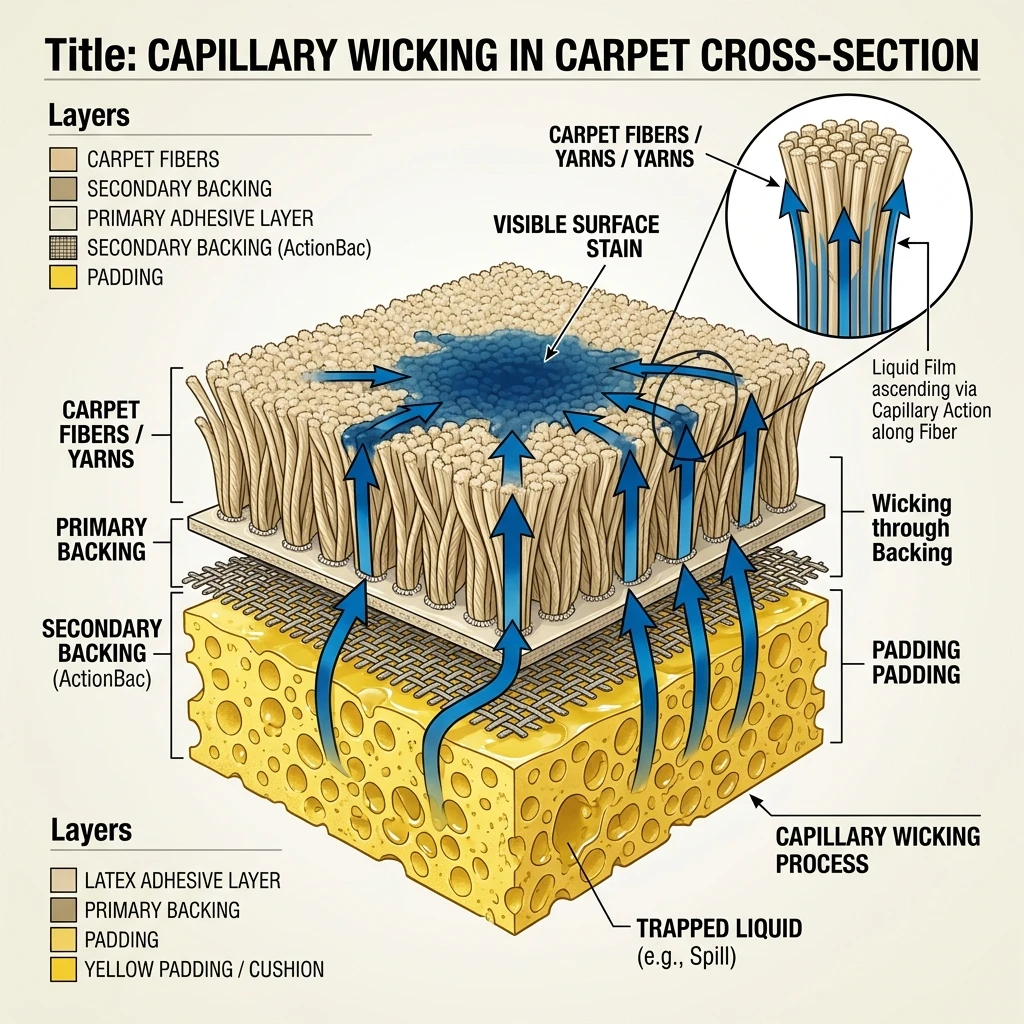
Cross-section diagram showing how liquid trapped inside open-cell foam underlayment travels upward through capillary action as surface fibers evaporate.
As the face yarns dry from the top down, moisture evaporates into the air from the fiber tips. This continuous atmospheric evaporation creates negative hydrostatic pressure inside the carpet tufts. Through capillary action, liquid trapped deep inside the cushion siphons upward through the yarn bundle to the surface, carrying dissolved soils along with it. Once the surface moisture evaporates completely, the concentrated soil remains deposited on the fiber tips.
Installers rely on a straightforward diagnostic rule: if an odor persists in a dry room, the contamination has penetrated deep into the cushion or subfloor. If the spot is visible without any detectable odor, the discoloration is usually confined to the face fiber. How different foam densities and moisture barriers control this fluid migration is detailed in our guide on carpet padding .
The weighted towel extraction method
Homeowners can stop capillary wicking without renting heavy commercial equipment by applying the weighted towel extraction technique. This process uses downward gravitational compression to divert capillary evaporation into a disposable absorbent medium instead of the carpet pile.
- Step 1: Blot the original spill immediately using clean, dry white cotton towels, working from the outside edge toward the center.
- Step 2: Apply a neutral non-ionic spotter sparingly, targeting only the surface face fibers rather than flooding the carpet backing.
- Step 3: Fold a clean white terry cloth towel into four thick layers and center it directly over the damp treatment zone.
- Step 4: Place an impermeable plastic sheet or piece of wax paper over the folded towel to prevent moisture from transferring upward.
- Step 5: Place a 10 to 15 pound flat deadweight, such as a heavy stack of books or a tool case, directly onto the plastic barrier.
- Step 6: Leave the weighted setup undisturbed for 12 to 24 hours while the carpet dries.
The downward pressure compresses the carpet tufts against the absorbent cotton loops. As the moisture attempts to evaporate, the capillary pull of the dense cotton towel proves stronger than the carpet yarn. The wicking fluid transfers upward into the towel and dries there, preventing soil from resettling onto the fiber tips.
Spot extraction tools vs manual blotting
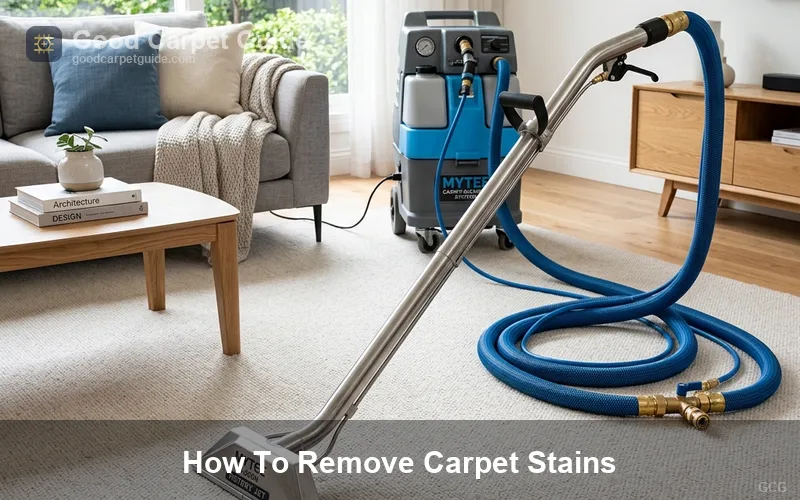
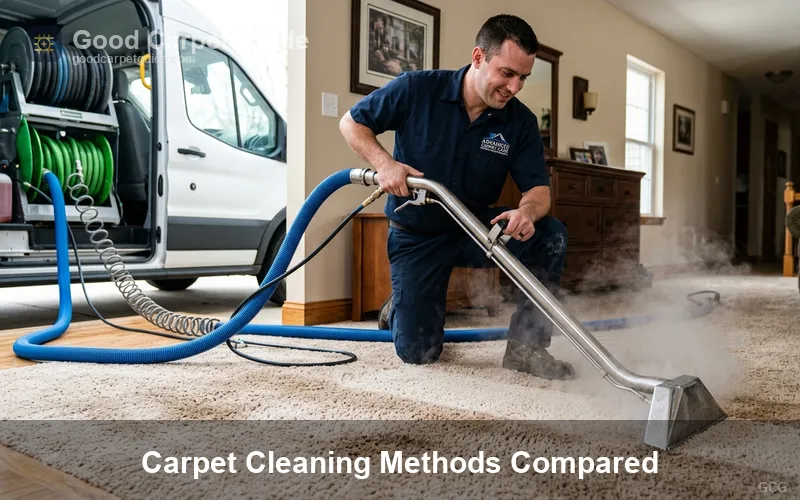
While manual blotting handles small, immediate spills, deep fluid contamination requires mechanical suction. Applying manual pressure with a towel compresses liquid downward into the open-cell cushion before absorbing it. A dedicated portable extractor flushes the spot with clean water while instantly recovering the suspended soil under high vacuum airflow.
Extracting the liquid before it breaches the secondary latex backing protects the subfloor from rot and prevents adhesive delamination. Portable extraction machines also allow homeowners to thoroughly rinse out spotter chemistry. This ensurings zero sticky residues remain to attract foot-traffic soil.
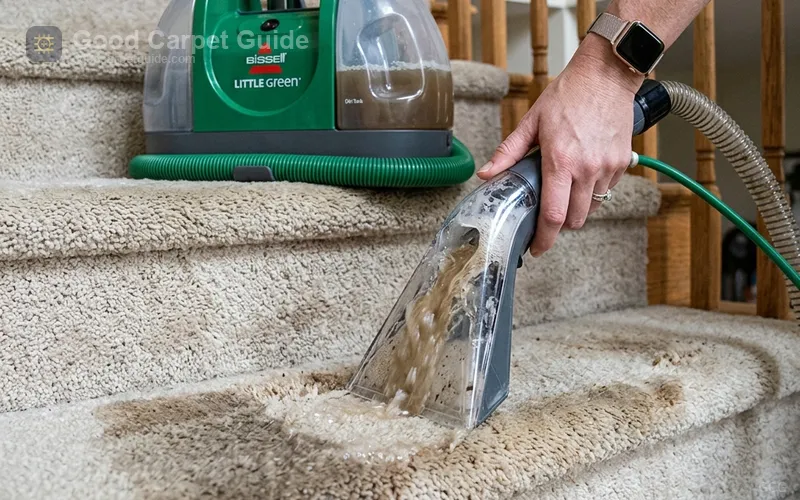
Hoover CleanSlate Pro Portable Carpet Spot Cleaner
High-suction portable extractor for flushing dissolved soils and stopping capillary wicking before contamination enters the pad.
Check Price on AmazonThe Hoover CleanSlate Pro Portable Carpet Cleaner provides strong recovery suction suited for residential spot mitigation. Its specialized tight-path extraction nozzle concentrates vacuum airflow directly over the spill, lifting liquid out of the tuft base before it migrates into the underlying pad. Using clean, cool tap water in the rinse tank ensures complete extraction of spotter residues without disturbing factory stain warranties.
Essential spotting toolkit recommendations
A reliable home spotting kit does not require dozens of specialized spray cans. A professional-grade maintenance kit requires four foundational chemical formulas and two physical tools to resolve virtually any residential spill.
- Non-Ionic General Spotter: Keep a bottle of Folex or an equivalent encapsulating spotter for 80 percent of routine water-soluble spills, food drops, and track-in soil.
- Bio-Enzymatic Digester: Stock a multi-strain bacterial enzyme cleaner for pet accidents, milk, blood, and protein-based organic waste.
- Buffered Hydrogen Peroxide Oxidizer: Maintain a stabilized 3 percent peroxide spotter for stubborn coffee, tea, red wine, and fruit juice tannins.
- Citrus Gel Solvent: Keep a thickened d-limonene solvent gel for chewing gum, asphalt, makeup, adhesives, and candle wax.
- White Cotton Terry Towels: Use only unbleached, un-dyed white cotton towels to eliminate the risk of accidental color transfer during blotting.
- Blunt Spotting Bone or Spatula: Use a smooth plastic or bone scraper to gently work spotters into dense pile without abrading yarn twists.
Never use scrub brushes, scouring pads, or colored shop rags on residential carpet. Aggressive scrubbing untwists carpet filaments, causing permanent pile blooming and fiber fraying that cannot be repaired chemically.
Frequently asked questions about carpet stain removers
Homeowners regularly encounter specific chemistry and warranty challenges when managing household spots. Below are direct, installer-tested answers to the most common carpet stain questions.
Why does a cleaned carpet spot turn darker after several weeks?
The dark area results from sticky detergent residue left behind by retail cleaners or dish soap. The leftover surfactant traps fine dust, airborne soot, and shoe dirt, creating an accelerated soil deposit directly where the cleaner was applied.
Can carpet stain removers void my manufacturer warranty?
Yes. Using spotters with a pH above 10.0, chlorine bleaches, or unapproved retail solvents strips factory stain-resist acid blockers and voids residential stain warranties. Always select cleaners certified under the Carpet and Rug Institute (CRI) Seal of Approval program.
Should I use hot water or cold water when treating carpet spots?
Always begin with cool or lukewarm water. Hot water coagulates protein stains like blood, eggs, and dairy, locking them permanently into the fiber structure. Hot water also denatures biological enzymes in pet digesters and can melt synthetic artificial food dyes into nylon dye sites.
What is the safest stain remover for wool carpets?
Wool requires neutral-pH spotters certified by WoolSafe, maintaining a pH between 5.5 and 7.5. Never apply chlorine bleach, high-alkaline degreasers, or active protease enzyme cleaners to natural wool fibers, as these chemicals dissolve keratin protein filaments.