INSTALLER'S SAFETY ALERT
• Avoid selecting carpet based only on face weight. Density and fiber twist determine long-term texture retention.
• Avoid installing carpet over padding thicker than 1/2 inch or below the manufacturer-required density because warranty protection is voided by incorrect underlayment.
• Avoid accepting installation performed only with a knee kicker. Industry standards require power stretching to reduce wrinkles and backing stress.
• Avoid using baking soda or scented carpet powders because abrasive particles accelerate fiber wear and contribute to latex backing failure.
• Avoid renting high-heat steam equipment if the warranty specifies hot water extraction by an IICRC-certified technician.
"How long does carpet last" depends primarily on fiber type, installation quality, traffic level, maintenance practices, and cushion selection. How long does carpet last ranges from about 3 years for builder-grade polyester installed in heavy-use conditions to more than 20 years for premium nylon installed correctly and maintained according to manufacturer specifications.
Carpet lifespan follows measurable technical variables rather than marketing claims. Carpet lifespan changes according to fiber resilience, pile construction, density, twist level, moisture exposure, ultraviolet degradation, and subfloor preparation. Homeowners comparing nylon, triexta, polyester, wool, or olefin receive the highest return on investment by evaluating durability metrics instead of warranty brochures.
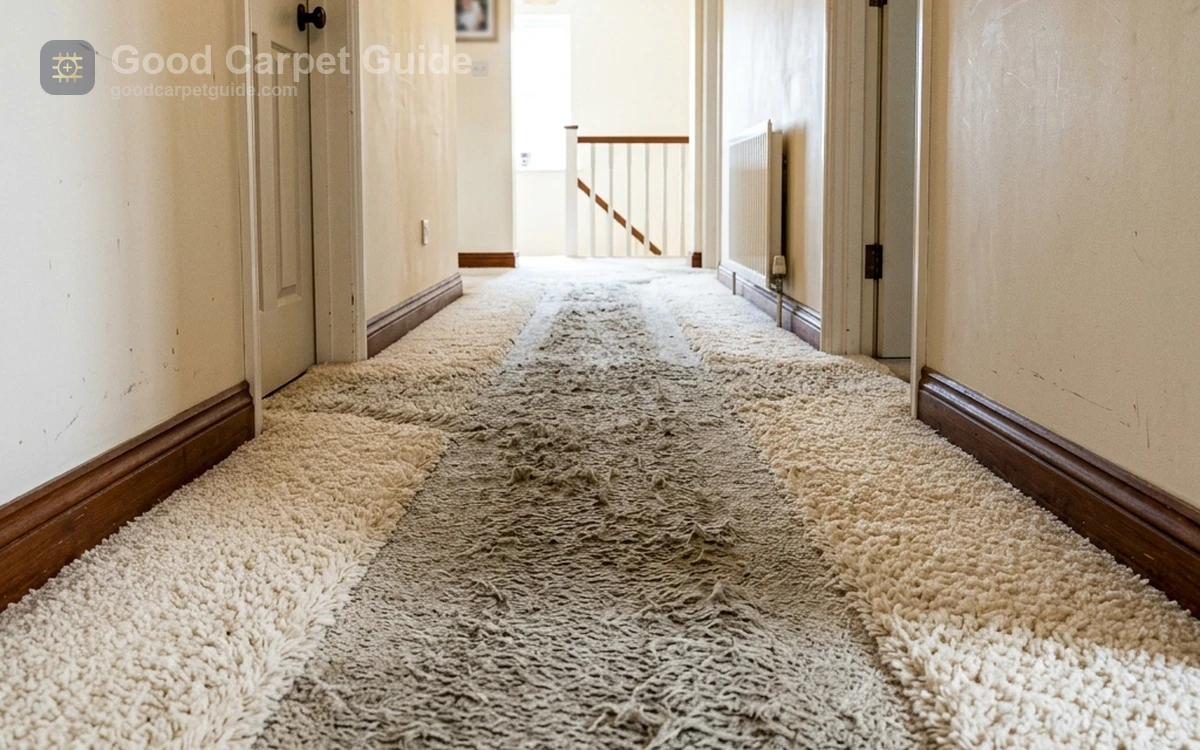
Caption: Premium residential carpet construction demonstrates how density and fiber resilience influence service life before the following sections explain individual material performance and installation variables.
how long does high quality carpet last
High-quality carpet lasts 15 to 20 years, while premium nylon 6,6 products installed over compliant padding regularly exceed that range in moderate-traffic households.
High-quality carpet: A floor covering manufactured from resilient fibers, engineered backing systems, and high-density pile construction designed to maintain texture retention under repeated foot traffic.
The following variables determine whether premium carpet reaches its expected service life:
- Uses high-density construction that limits pile collapse.
- Uses tightly twisted yarn that improves texture retention.
- Uses nylon 6 or nylon 6,6 fibers that resist crushing.
- Uses manufacturer-approved padding between 6-pound and 8-pound density.
- Uses professional power stretching during installation.
- Uses scheduled hot water extraction according to warranty instructions.
The combination of those variables produces measurable durability improvements over entry-level products. Premium carpet with poor installation performs worse than mid-grade carpet installed correctly.
A former flooring sales manager summarized the specification problem clearly by explaining that an 80-ounce face weight means little if the underlying fiber remains low-grade polyester. Density and twist determine structural durability more accurately than face weight alone.
Expected lifespan by carpet category
The following table compares common residential carpet categories and their expected replacement intervals.
| Carpet category | Typical material | Expected lifespan |
|---|---|---|
| Builder grade | Polyester | 3–5 years |
| Mid grade | Polyester or entry nylon | 6–12 years |
| Premium residential | Nylon 6,6 or premium triexta | 12–20 years |
| Luxury custom installation | High-density nylon or wool | 20+ years |
The comparison demonstrates that installation quality and fiber selection produce substantially different ownership costs over the life of the flooring.
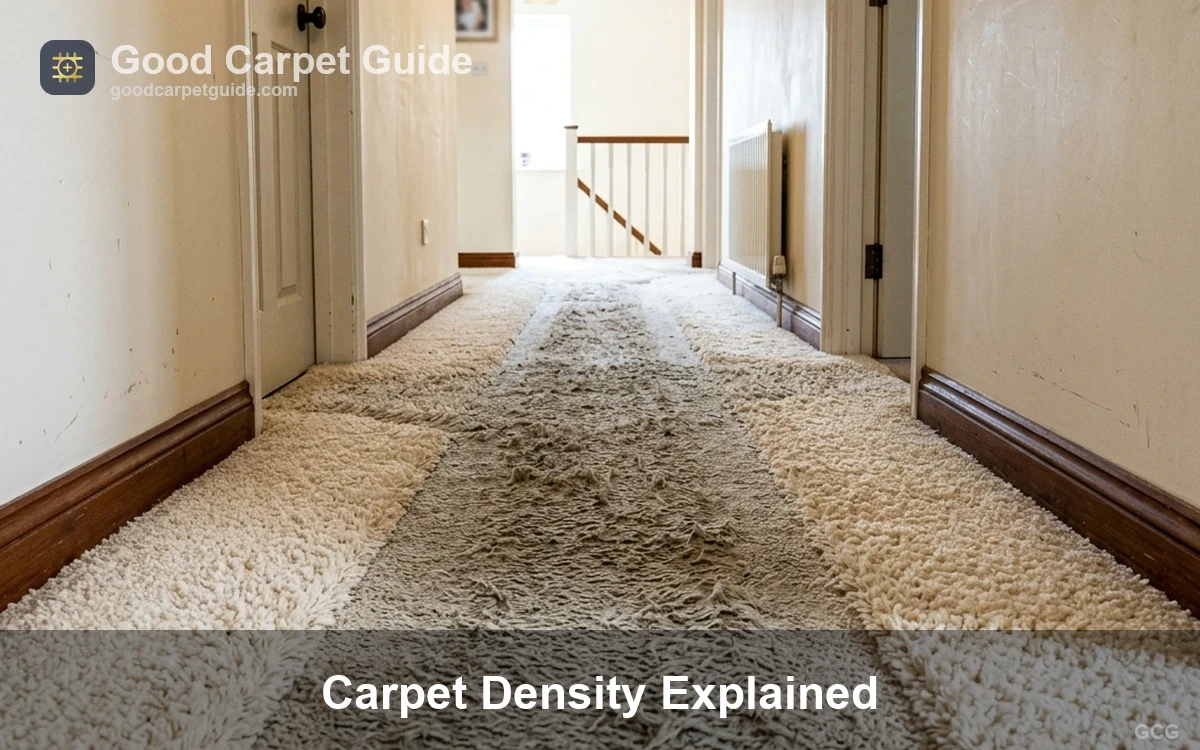
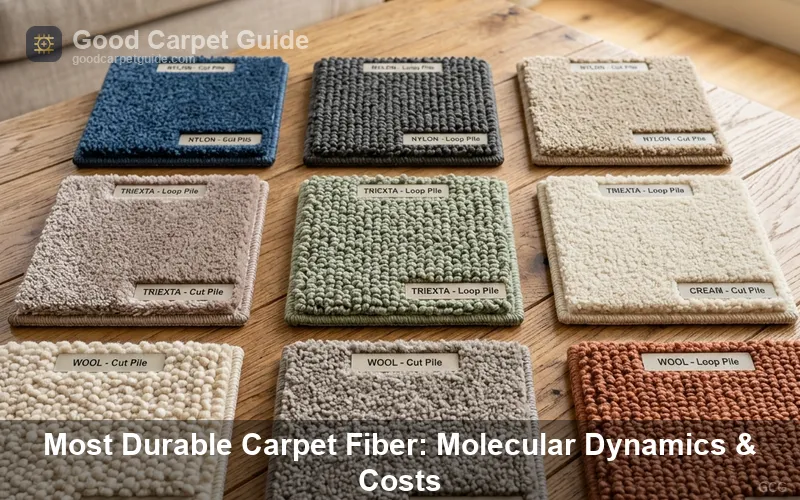
Caption: Carpet density comparison illustrates why the following durability discussion focuses on structural engineering instead of simple face-weight marketing.
14 practical rules to extend carpet lifespan
Maximizing carpet service life requires disciplined preventative maintenance designed to eliminate abrasive particulate soil before it cuts synthetic fibers.
Laboratory soil studies show that over 80 percent of dry particulate soil tracked into residential homes consists of hard silica grit and crushed quartz rock. When foot traffic drives sharp grit down into the pile base, the particulate edges act like microscopic saws against synthetic filament yarns. Incorporating the following 14 field-tested rules preserves tuft twist, prevents backing abrasion, and adds years of service to any carpet installation:
- Place exterior and interior walk-off mats: High-friction entrance mats trap up to 85 percent of outdoor grit and asphalt binder before shoes reach living areas.
- Implement a strict no-shoes policy: Walking in socks or indoor slippers eliminates outdoor gravel friction and heavy rubber sole shear force.
- Vacuum high-traffic lanes three times weekly: Daily passes in entryways and hallways remove abrasive grit before it settles into backing crevices.
- Vacuum light-traffic rooms once weekly: Bedrooms and formal living areas require steady weekly soil extraction to prevent atmospheric dust settling.
- Adjust vacuum beater bar height properly: A brush roll set too low shreds yarn tufts, while a brush roll set too high fails to agitate out deep grit.
- Blot spills immediately rather than scrubbing: Vigorous scrubbing untwists yarn tips permanently (fiber blooming) and drives liquid into the cushion.
- Use clean white cotton towels for spot removal: Dyed towels transfer colored dye into synthetic fibers when mixed with spot cleaning solvents.
- Work spot cleaning from edge toward center: Working outward spreads liquid outward and creates larger chemical water rings.
- Rinse spot cleaning solutions thoroughly: Detergent residues left behind in the pile act as chemical magnets that attract rapid resoiling. For safe spot treatment that avoids sticky surfactant residue, use top-rated carpet stain removers specifically formulated for residential fibers.
- Use professional hot water extraction every 12 to 18 months: IICRC-certified steam extraction flushes accumulated oily binders required by carpet warranties.
- Rotate heavy furniture every 6 to 12 months: Shifting point-load furniture legs shifts traffic lanes and allows crushed cushion to recover.
- Use wide-profile caster cups under heavy legs: Spreading 200+ psi concentrated loads prevents localized latex adhesive pulverization.
- Install window blinds to mitigate ultraviolet fade: Direct solar radiation photochemically breaks down synthetic polymers and embrittles yarn filaments.
- Use a carpet grooming rake between deep cleanings: Raking lifts compressed pile upright, allowing vacuum airflow to extract deeply embedded sand.
Five definitive signs your carpet requires replacement
Understanding the boundary between cleanable surface wear and permanent structural failure protects homeowners from wasting money on futile cleaning attempts.
When carpet reaches structural obsolescence, repeated cleaning and restretching can no longer restore safety, appearance, or acoustic insulation. If your flooring exhibits any of the following five conditions, professional replacement represents the only viable remedy:
- Irreversible pile crushing and matting: When walking lane fibers remain permanently flattened like cardboard even after hot water extraction and pile lifting, the fiber polymers have suffered permanent elastomeric fatigue.
- Latex backing pulverization and delamination: When white powdery residue appears under vacuum passes and ripples cannot be stretched out because the primary and secondary backings have separated, backing failure is irreversible. Homeowners observing these structural backing issues should consult our forensic guide on carpet delamination to verify backing bond failure.
- Subterranean pet urine crystallization: When repeated pet accidents penetrate through the carpet into the cushion and subfloor, uric acid salts bond with the substrate, emitting persistent ammonia odor blooms during summer humidity.
- Cushion core collapse and hollow footsteps: When the underlayment beneath walking paths feels crunchy, completely flat, or bottomed out against the concrete subfloor, the cushion has lost shock-absorbing capacity.
- Persistent biological contamination and allergen retention: When decade-old carpeting triggers respiratory irritation or allergy symptoms despite deep extraction, bio-contaminants embedded in the backing matrix require complete removal. Homeowners evaluating replacement timing can reference our detailed overview on when to replace carpet for detailed criteria.
how long does carpet last according to real users
Real homeowner experiences reveal that warranty language and laboratory testing frequently differ from daily residential performance.
One homeowner reported purchasing second-tier carpet with premium padding from a national retailer before observing severe crushing after fewer than two years. The homeowner described the worn traffic lane by stating that vacuum brushes no longer reached flattened fibers without approaching from the side.
Another homeowner described twelve years with Mohawk SmartStrand by praising stain removal while criticizing stair performance. The homeowner summarized the experience with the statement, "The stairs look like crap. That's it. All stains come out."
A third homeowner pursued legal action after receiving poor installation that included visible seams, missed closets, and deficient stretching despite paying approximately $16,000 for premium materials and labor.
Those experiences reinforce one consistent pattern. Installation quality influences service life as much as fiber chemistry.
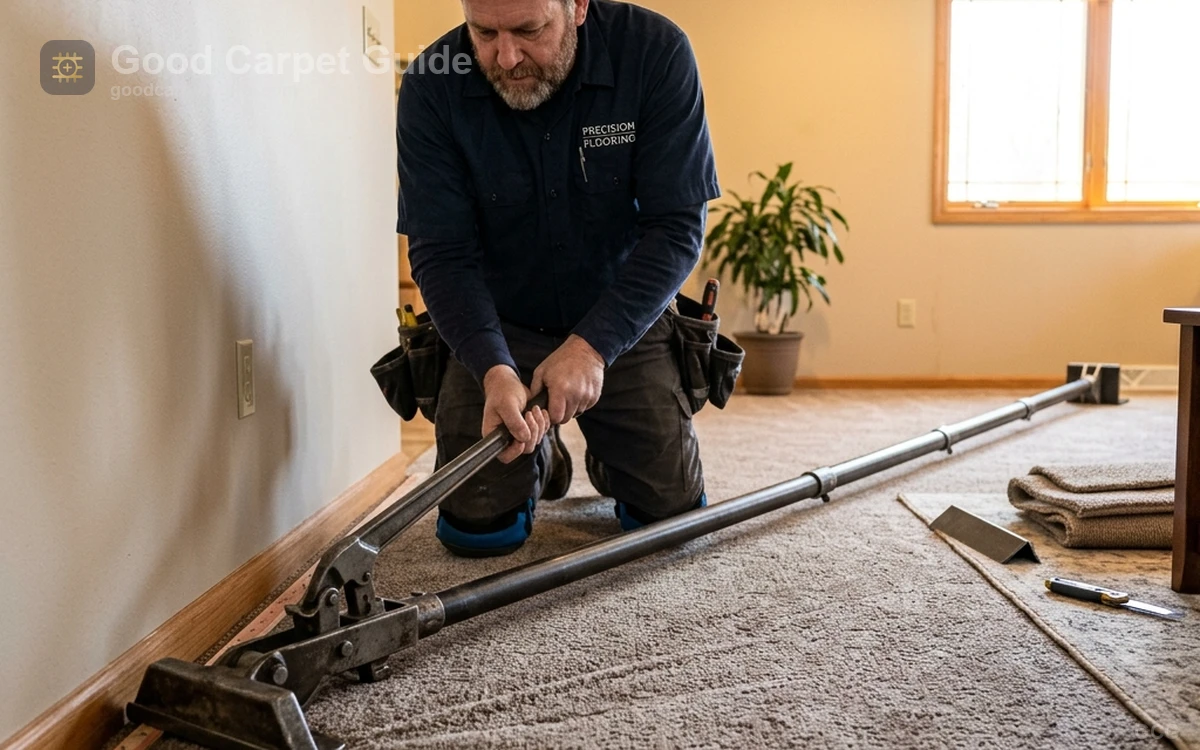
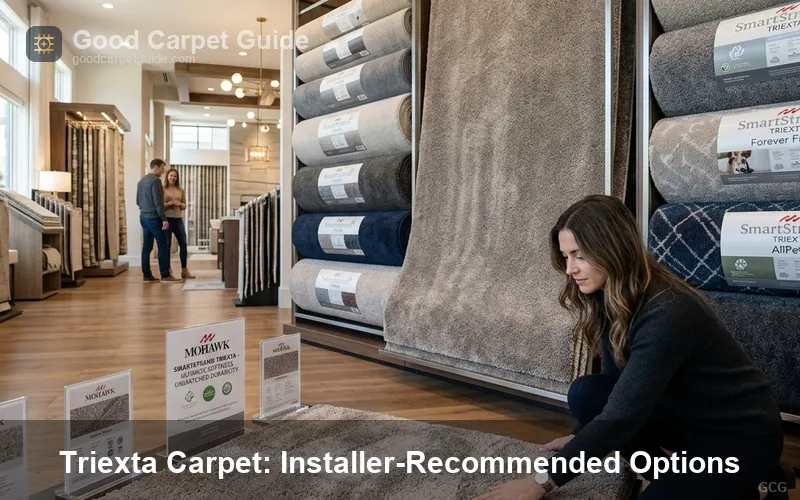
Caption: Professional power stretching connects homeowner experiences about premature failure with the following analysis of installer and manufacturer disagreements.
do carpet manufacturers and installers agree on lifespan
Installer experience and manufacturer marketing frequently produce different expectations for carpet longevity. Manufacturer testing emphasizes controlled laboratory conditions, while installers evaluate thousands of occupied homes with pets, children, furniture movement, and uneven maintenance habits.
A major disagreement involves triexta (SmartStrand) durability.
Nylon versus triexta versus polyester
Nylon: A synthetic polyamide fiber recognized for resilience and texture retention under repeated compression.
Triexta (PTT): A synthetic polymer classified separately from polyester by the Federal Trade Commission because of its distinct chemical structure and performance profile.
Polyester (PET): A synthetic fiber valued for softness and stain resistance but known for lower long-term resilience under heavy traffic.
Experienced installers consistently report that nylon maintains appearance longer in hallways and staircases.
One flooring professional with more than three decades of industry experience stated that solution-dyed nylon provides longer-lasting texture retention and resists visible traffic patterns better than non-nylon alternatives. Another installer explained that polyester may develop wear patterns within months, while comparable nylon installations preserve pile definition for years.
The disagreement becomes most visible with SmartStrand. Many homeowners praise SmartStrand for exceptional stain removal after spills involving candy dye, pet accidents, and food coloring. Some installers, however, criticize SmartStrand for seam visibility and crush resistance in demanding applications.
The practical lesson remains straightforward. Evaluate carpet by intended location instead of advertising language.
Installation quality determines return on investment
Installation errors reduce carpet life regardless of fiber selection.
The following installation practices protect long-term performance.
- Use a power stretcher across every installation area.
- Use manufacturer-approved cushion density and thickness.
- Match seam construction to pile direction.
- Secure tack strips with correct spacing.
- Verify subfloor moisture before installation.
- Follow acclimation procedures before stretching.
Those installation standards reduce wrinkling, seam failure, and backing stress throughout the ownership period.
Homeowners observing these backing issues should review the indicators for when to replace carpet, because severe structural deterioration frequently signals that the floor has reached the end of its functional life.
Face weight does not predict lifespan
Face weight measures yarn quantity. Face weight does not measure structural quality.
Density, twist level, backing system, fiber chemistry, and pile architecture collectively determine durability.
Many consumers incorrectly assume that an 80-ounce carpet automatically outperforms a 50-ounce carpet. A dense 50-ounce nylon construction regularly exceeds the service life of a loosely constructed heavy polyester product.
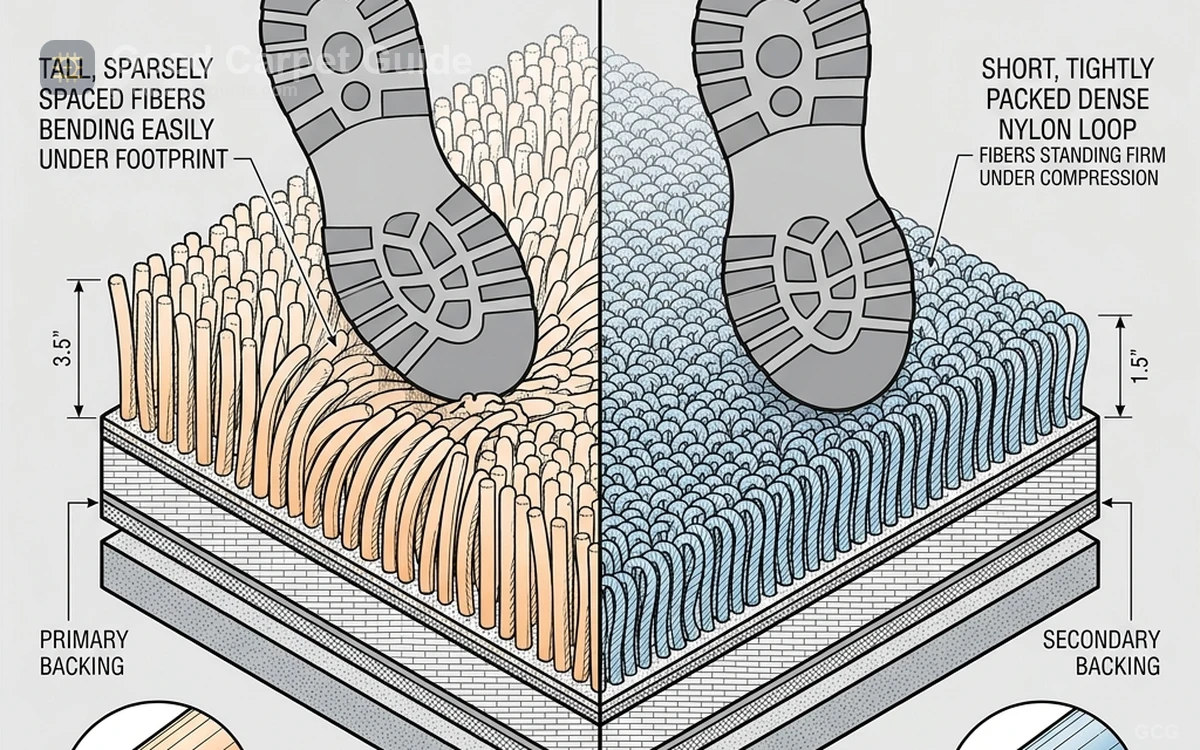
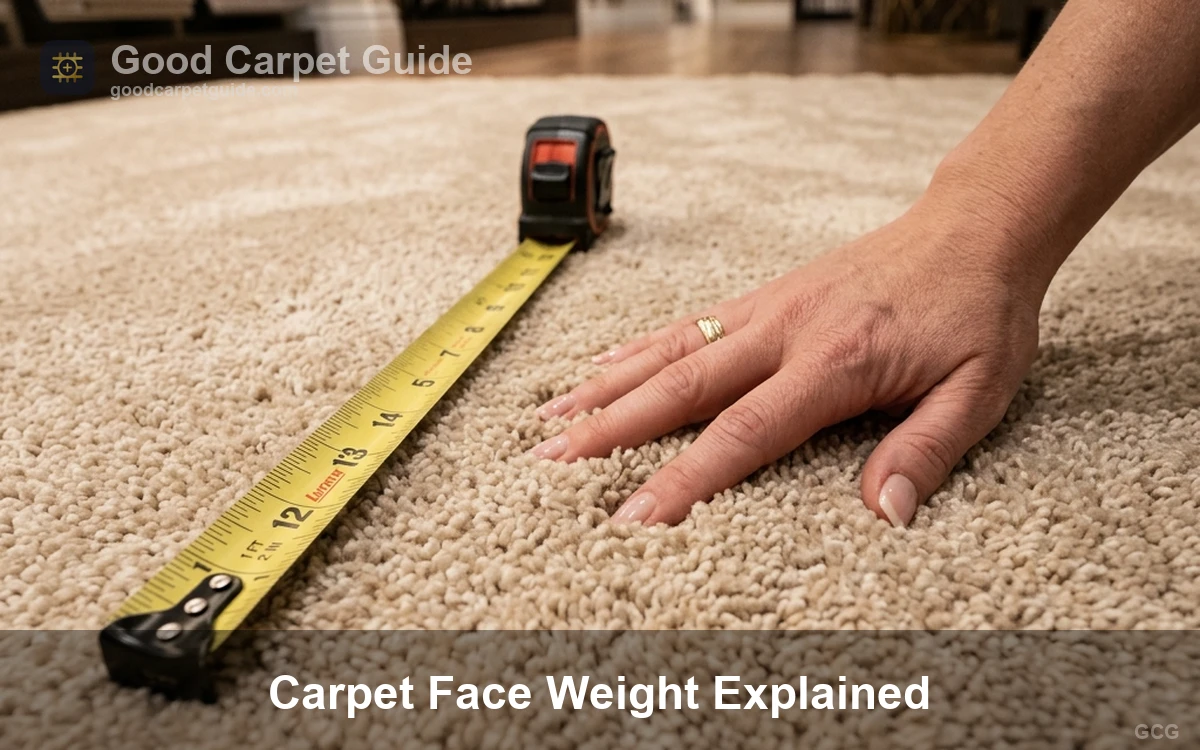
Caption: Fiber twist and pile density demonstrate why the following cost analysis evaluates engineering characteristics instead of marketing specifications.
Cost and budget considerations
Carpet replacement cost combines material expense, installation quality, and expected lifespan into a measurable ownership calculation.
The following table summarizes residential pricing ranges derived from industry research.
| Category | Material and installation cost | Expected service life |
|---|---|---|
| Builder grade | 0.50–1.50 per sq ft | 3–5 years |
| Mid grade | 1.50–6.00 per sq ft | 6–12 years |
| Premium residential | 6.00–21.00+ per sq ft | 12–20+ years |
The comparison shows that a higher purchase price frequently produces a lower annual ownership cost because replacement intervals increase substantially.
Example quotes for a 2,000-square-foot house
The following examples illustrate real quotation differences among common product categories.
| Product | Approximate installed price |
|---|---|
| Dreamweaver Affinity II polyester | $7,000 |
| Mohawk Striking Option triexta | $11,550 |
| Dixie Home Gusto nylon 6,6 | $14,950 |
The price spread demonstrates that premium nylon requires a larger initial investment while offering the longest projected service interval under heavy household traffic.
Big-box stores versus local flooring dealers
Big-box retailers frequently advertise free installation promotions.
Many flooring professionals argue that promotional pricing shifts cost into padding upgrades, transition strips, furniture moving charges, or increased measurement estimates rather than eliminating labor expense.
Several experienced consumers report preferring local dealers because local installers maintain stronger accountability for seam quality and stretching standards.
From a value perspective, installation reputation deserves equal evaluation alongside carpet brand.
carpet lifespan frequently asked questions
Flooring consumers regularly submit queries regarding the lifespan of specific product lines. The following section provides direct answers based on manufacturer specifications and installer experience.
How long does triexta carpet last?
Triexta carpet lasts approximately 10 to 20 years depending on density, installation quality, and traffic conditions. Flat stair treads experience mechanical wear faster than bedrooms or formal living rooms.
How long does good carpet last?
Good carpet lasts 10 to 15 years when manufactured from quality nylon or high-density triexta and maintained according to manufacturer cleaning schedules.
How long does mid grade carpet last?
Mid-grade carpet lasts 6 to 12 years under normal residential conditions. Polyester construction installed in busy hallways reaches replacement age sooner than nylon installed in low-traffic rooms.
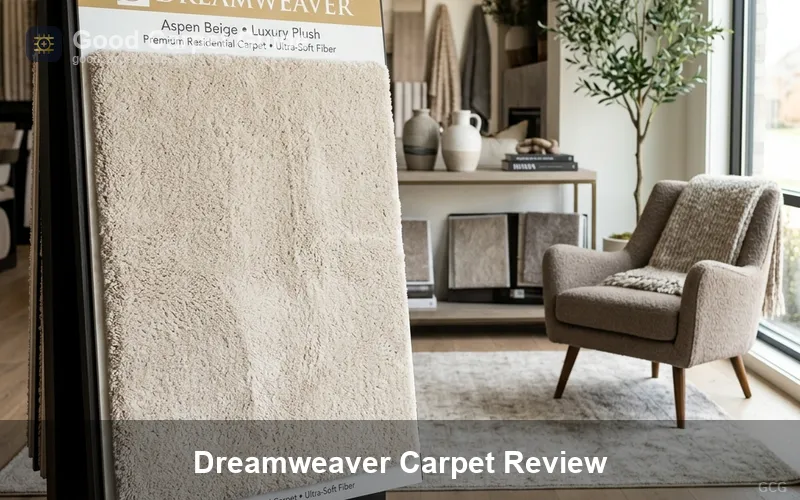
How long does Dreamweaver carpet last?
Dreamweaver carpet lifespan depends on the specific collection and fiber construction. Budget polyester collections commonly reach 5 to 10 years, while higher-density products perform longer under moderate traffic. Installer reports and homeowner experiences reveal significant variation between product lines.
How long does carpet last in a rental?
Rental carpet commonly lasts 3 to 7 years because tenant turnover, furniture movement, and concentrated traffic accelerate visible wear.
How long does outdoor carpet last?
Outdoor carpet lasts approximately 5 to 15 years depending on ultraviolet exposure, drainage, adhesive quality, and climate.
how long does carpet last by room type
Selecting carpet based on room function produces stronger long-term value than selecting carpet based on showroom softness.
Choose high-density nylon for busy staircases because repeated compression requires maximum resilience. Homeowners comparing stair products should review the detailed best carpet selection for stair installations .
Choose moisture-tolerant products for below-grade rooms because concrete moisture changes carpet performance over time. Buyers planning basement renovations benefit from reviewing the specialized best carpet options for basement environments.
Choose comfort-oriented dense nylon or premium triexta for sleeping areas because softness and moderate traffic coexist effectively in bedrooms.
The evidence from installers, flooring professionals, and long-term homeowners supports one consistent conclusion. The longest-lasting carpet is not simply the most expensive carpet. The longest-lasting carpet combines resilient fiber chemistry, correct density, compliant padding, professional installation, and disciplined maintenance into a single flooring system.
what is the lifecycle cost of carpet ownership
Carpet longevity economics measures total ownership cost across installation price, maintenance intensity, and replacement interval rather than initial purchase price alone. Carpet longevity economics shows that carpet lasting 15–20 years delivers lower annualized cost than carpet replaced every 4–6 years, even when initial installation cost doubles.
Carpet lifespan performance converges into three controlling variables: fiber resilience, installation integrity, and maintenance discipline. Fiber resilience determines structural resistance to crushing. Installation integrity determines seam stability and backing tension. Maintenance discipline determines surface abrasion rate and contamination buildup.
Core durability hierarchy across all carpet systems
The following durability hierarchy reflects combined installer experience and homeowner outcome reports:
- Maintains texture stability through high-density nylon construction in traffic corridors.
- Maintains stain resistance through triexta polymer chemistry in spill-prone environments.
- Maintains cost efficiency through polyester selection in low-traffic, short-horizon properties.
- Maintains structural consistency through correct padding density between 6 lb and 8 lb specification.
- Maintains installation lifespan through power stretching and seam alignment accuracy.
Each factor operates independently but compounds performance when correctly combined.
Failure pattern analysis across real homes
Carpet failure occurs through predictable mechanisms rather than random degradation. The most common failure patterns include:
- Compresses pile structure in hallways and stair treads under repeated directional load.
- Delaminates backing layers when incorrect padding thickness introduces excessive flex stress.
- Shows visible seam separation when installation lacks uniform tensioning across joints.
- Develops traffic lane discoloration when abrasive powders and improper vacuuming techniques accumulate residue.
- Retains odor molecules in backing layers when biological contamination is not extracted at the source.
These failure patterns align consistently with installer reports and homeowner experiences rather than manufacturer warranty descriptions.
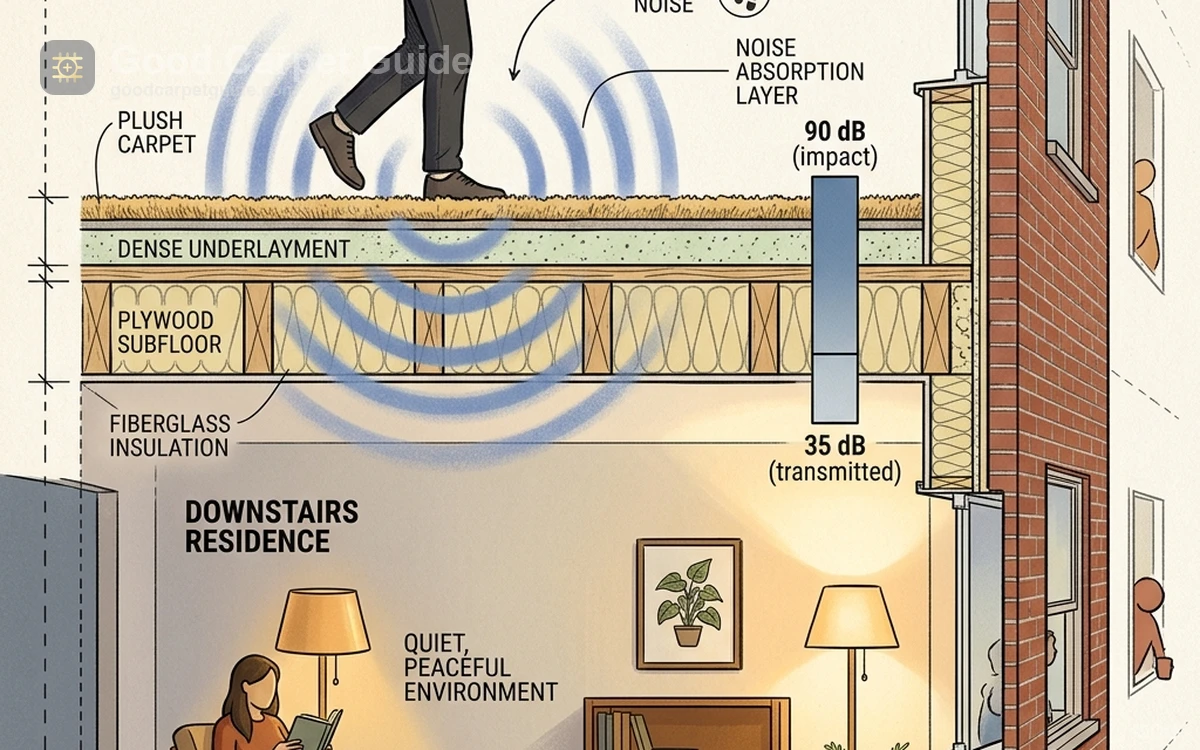
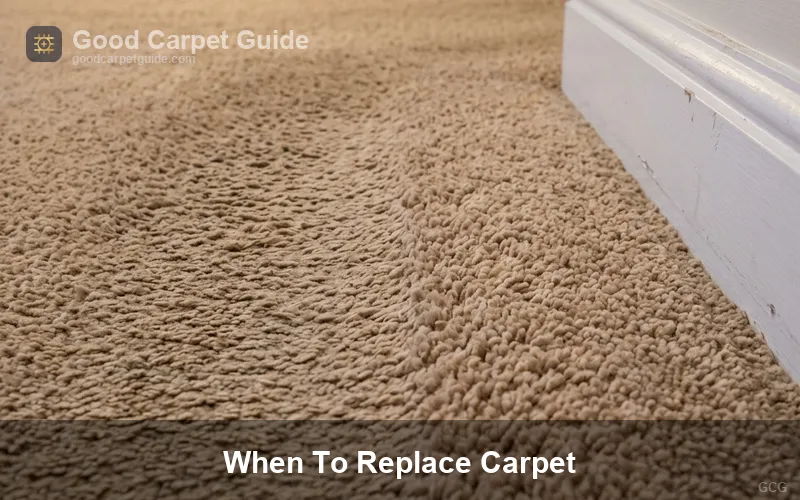
Caption: Carpet traffic lane degradation demonstrates how fiber compression and maintenance practices determine replacement timing across residential environments.
Regional and usage-based lifespan variation
Carpet lifespan varies significantly across environmental and usage conditions:
- Extends lifespan in low-humidity climates because reduced moisture limits backing degradation.
- Reduces lifespan in coastal or high-humidity regions because moisture accelerates adhesive breakdown.
- Reduces lifespan in households with pets due to concentrated biological contamination cycles.
- Extends lifespan in low-mobility households where furniture repositioning frequency remains minimal.
Carpet lifespan therefore functions as a variable system rather than a fixed product specification.
Final evidence-based guidance for buyers
Carpet purchasing decisions produce optimal outcomes when structured around performance engineering rather than showroom presentation.
- Select nylon 6,6 for high-traffic environments because fiber resilience supports long-term texture retention.
- Select triexta for spill-heavy environments because stain resistance reduces permanent discoloration risk.
- Select polyester only for short-term or low-traffic environments because compression resistance remains limited.
- Select compliant padding systems because incorrect underlayment voids warranties and accelerates structural failure.
- Select professional installation teams because power stretching determines seam longevity and wrinkle resistance.
Carpet lifecycle economics confirms that installation quality and fiber engineering outweigh marketing claims and warranty language.
Summative conclusion on carpet lifespan
Carpet lifespan is defined by a combined system of material science, installation precision, and behavioral maintenance. Carpet lifespan increases significantly when nylon fibers, correct padding density, and certified installation methods operate together as a unified flooring system. Carpet lifespan decreases rapidly when any single system component fails, particularly in high-traffic zones such as hallways and stairs.
Carpet selection therefore functions as a lifecycle investment decision rather than a decorative purchase decision. The most durable outcome emerges when homeowners evaluate carpet as a long-term infrastructure surface rather than a short-term interior aesthetic.