Triexta Carpet vs Nylon Compared on Durability and Cost
Triexta carpet is a non-polar PTT polyester priced at 7.95 per sq. ft. installed, while nylon 6,6 leads stair durability at9.55 per sq. ft.
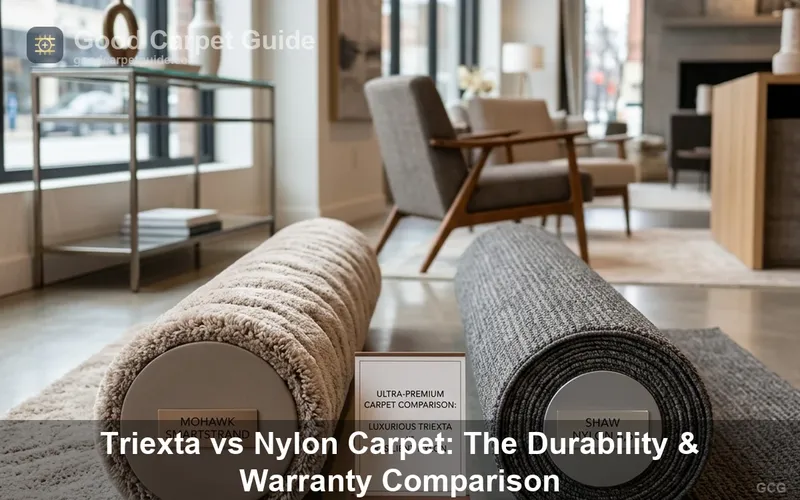
Triexta carpet is a hydrophobic polytrimethylene terephthalate (PTT) fiber with built-in water-based stain resistance and a benchmark installed cost of 7.95 per sq. ft., compared to9.55 per sq. ft. for nylon 6,6 and solution-dyed nylon according to Forbes Home. Triexta (Mohawk SmartStrand) delivers 65.7 to 78.1% elastic recovery and up to 37% bio-based carbon content, while nylon 6,6 maintains a higher glass transition range of 65°C–90°C and 33% greater wear resistance than nylon 6. Homeowners carpeting heavy-traffic hallways or stairs where pile crushing dominates benefit from nylon 6,6, while households managing active pets and aqueous spills in bedrooms or family rooms benefit from triexta.
Triexta carpet vs nylon fiber chemistry
Triexta carpet is a generic polyester subclass defined under Federal Trade Commission Rule 7(c) of the Textile Fiber Products Identification Act as a fiber containing at least 85% by weight of an ester of a substituted or unsubstituted diol and terephthalic acid. DuPont's JRC Publications report specifies that polytrimethylene terephthalate (PTT) forms from 1,3-propanediol and terephthalic acid at an 85% ester mass threshold with a repeating unit molecular weight of 206.17 g/mol. Its trimethylene glycol segment creates a helical molecular spring between ester linkages, whereas nylon consists of aliphatic polyamides (nylon 6 and nylon 6,6) connected by repeating polar amide linkages. SpecialChem notes that Wallace Carothers achieved commercial synthesis of synthetic nylon polymer in 1935.
Renewable monomer content and fiber blending distinguish retail broadloom formulations. DuPont's WUR eDepot documentation and Textile School report that Sorona PTT incorporates up to 37% renewably sourced bio-based carbon content by weight from corn starch fermentation, whereas Sales Plastics confirms standard petroleum-derived nylon contains 0% bio-based carbon content. Not every carpet marketed with triexta is pure PTT; S&G Carpet and More lists Elevation Change broadloom at 75% triexta and 25% PET, while Innovative Polytrimethylene Terephthalate (Ptt) Polymers for Technical Nonwovens notes a 0.4% titanium dioxide (TiO2) additive in Corterra PTT staple fiber.
Thermal transition limits determine how firmly carpet yarns hold their heat-set twist under foot friction. Swicofil reports a PTT melting temperature of 228 °C (with a 230 °C peak in its comparison table) and a glass transition temperature of 51 °C, matching the 228 °C crystalline melting temperature reported in Poly Trimethylene Terephthalate: Based Blends, IPNs, Composites and Nanocomposites. DuPont's JRC Publications differential scanning calorimetry (DSC) testing records PTT melting peaks of 226.7 °C (first heat) and 225.8 °C (second heat), a second-heat glass transition temperature of 46.3 °C, and a cold crystallization temperature of 73.9 °C, while Innovative Polytrimethylene Terephthalate (Ptt) Polymers for Technical Nonwovens places dry PTT glass transition between 45 °C and 60 °C. Swicofil also measures PTT specific gravity at 1.34 g/cm³, initial Young's modulus at 23 cN/dtex, and boil shrinkage at 14%.
Polyamide thermal and moisture profiles separate nylon 6 from nylon 6,6 and from hydrophobic PTT. Enzymatic Synthesis of Biobased Polyesters and Polyamides (PMC/NIH) reports nylon 6 (PA6) polymerization at 250 °C, Sales Plastics lists nylon 6 melting between 215 °C and 225 °C with a dry glass transition of 40 °C to 60 °C, and Alfa Chemistry records a nylon 6 density of 1.13 g/cm³ and short-term maximum service temperature of 200 °C. Nylon 6,6 reaches a crystalline melting point of 264 °C (King Saud University Polymers and Petrochemicals), a standard melting point maximum of 265 °C, and a glass transition range of 65°C–90°C (Sales Plastics). Because PTT is non-polar, its moisture regain remains low at 0.34% experimentally and 1.50% commercially (JRC Publications) or 0.2% maximum (Swicofil), whereas polar amide groups raise nylon 6 equilibrium moisture absorption to 3.5% (Alfa Chemistry) and standard polyamide moisture regain up to 4.5% (Patsnap Eureka).
Elastic recovery and texture retention under foot traffic
Nylon 6,6 carpet fiber achieves 33% greater wear resistance than nylon 6 through dense intermolecular hydrogen bonding and rigid crystalline domains, according to Alfa Chemistry. Triexta generates mechanical recovery through the torsional flexibility of its helical trimethylene backbone rather than amide hydrogen bonds. DuPont's JRC Publications testing records triexta (Mohawk SmartStrand) elastic recovery at 65.7 to 78.1%, whereas Swicofil reports 88% tensile recovery from 20% elongation for Corterra PTT alongside 62% elastic recovery for nylon 6,6.
Face weight, appearance ratings, and accelerated wear testing complement raw polymer resilience. Mohawk Flooring manufactures SmartStrand broadloom across face weight tiers including 35 oz/yd² (Exceptional Choice), 48 oz/yd² (Classical Design II), and 55 oz/yd² (Quality Life), providing denser yarn support in heavier constructions. CU Anschutz Section 096813 requires commercial carpets to withstand 12000 cycles on a Hexapod accelerated wear tester, HOM Furniture outlines residential Carpet Performance Appearance Retention (PAR) ratings up to a maximum 5 rating, and Forbes reports an expected average lifespan maximum of 15 years for residential broadloom.
Underlayment support and proper stretching tension directly protect tuft bind and backing longevity. The Carpet and Rug Institute recommends a maximum cushion thickness of 0.5 inch for traditional roll carpeting, and pairing pile density with proper carpet padding thickness limits vertical flexing that weakens backing adhesives and loosens tufts. CRI 105 further requires stretching tufted carpet with synthetic backing at least 1% in both length and width using a mechanical power stretcher rather than a manual knee-kicker, while sealing every trimmed seam edge across primary and secondary backings to stop edge ravel.
Where the sources disagree involves how laboratory tensile recovery percentages translate into long-term crush resistance. Swicofil reports 88% tensile recovery from 20% elongation for Corterra PTT versus 62% elastic recovery for nylon 6,6, and DuPont's JRC Publications testing measures PTT elastic recovery at 65.7 to 78.1%. Conversely, Sales Plastics designates nylon 6,6 as the benchmark for texture retention under sustained foot stress because its 65°C–90°C glass transition range sits above PTT's 45 °C to 60 °C dry range reported in Innovative Polytrimethylene Terephthalate (Ptt) Polymers for Technical Nonwovens (46.3 °C in JRC Publications and 51 °C in Swicofil). Source figures also diverge slightly on PTT moisture regain, spanning Swicofil's 0.2% maximum, DuPont's 0.34% experimental reading, and DuPont's 1.50% commercial regulatory allowance.
Texture retention and crush resistance on stairs
Nylon 6,6 stair texture retention is the residential industry benchmark because its 65°C–90°C glass transition range keeps polymer chains rigid against frictional heat and sharp tuft bending over stair nosings, according to Sales Plastics. Footfalls on stairs concentrate body weight and pivoting shear forces onto narrow tread edges rather than flat room surfaces. Because triexta exhibits a lower dry glass transition temperature of 45 °C to 60 °C (Innovative Polytrimethylene Terephthalate (Ptt) Polymers for Technical Nonwovens), 46.3 °C (JRC Publications), or 51 °C (Swicofil), low-density or ultra-soft cut-pile triexta styles face earlier pile flattening and permanent creasing along stair nosings.
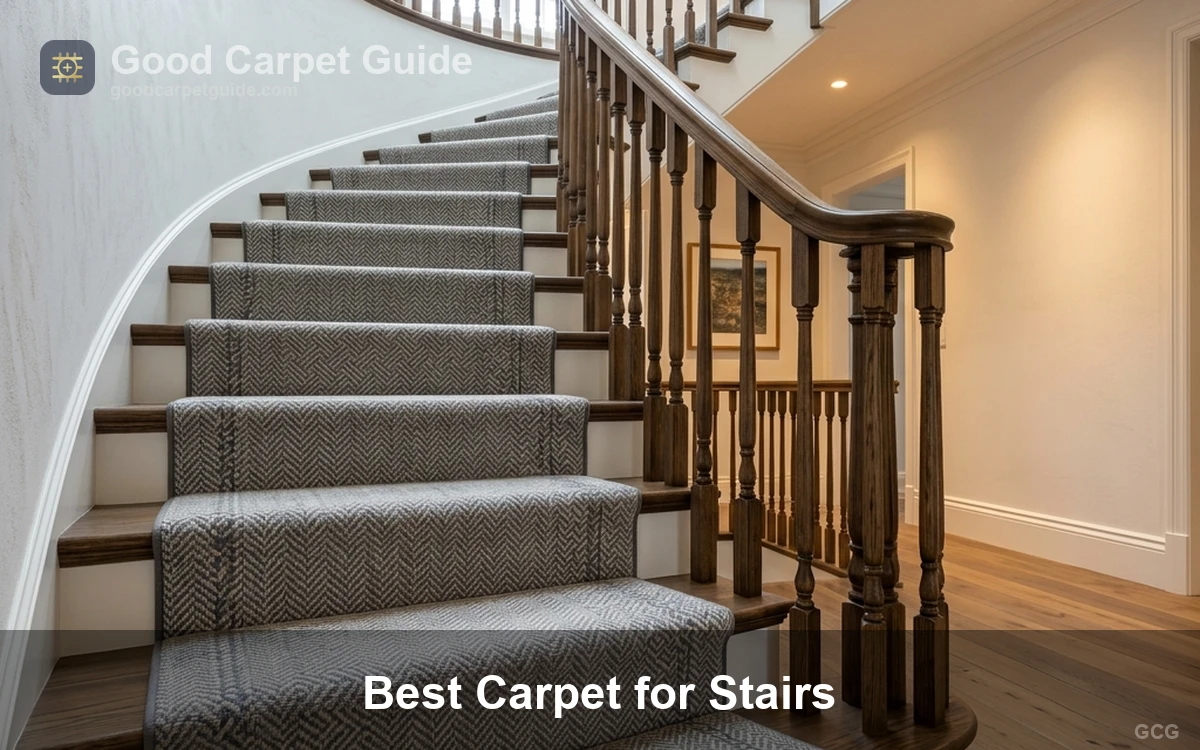
Warranty eligibility and installation geometry reinforce this structural gap on staircases. Mohawk's residential carpet warranty brochure excludes stairs from standard SmartStrand warranties unless paired with Mohawk SmartCushion underlayment, whereas Sales Plastics confirms nylon 6,6 stair texture retention is included in standard warranties. CRI 105 mandates clean, dry, structurally sound treads and risers with rounded stair nosing returns, separate pad extending over the nosing, and sealed upholstery seams split in the direction of spindles; homeowners evaluating the best carpet for stairs should select dense nylon 6,6 for unencumbered stair coverage or pair heavy-face-weight triexta with SmartCushion.
Stain resistance and oleophilic soil attraction
Triexta carpet stain resistance is built into its inherent non-polar polyester core, which lacks the reactive amine dye sites required for acid food dyes and pet urine to bond according to Federal Register Rule 7(c). Conventional piece-dyed nylon contains polar amide dye receptor sites, so mills apply topical sulfonated phenolic resin acid-dye blockers and fluorochemical coatings to block colored liquids. Foot abrasion gradually wears away topical nylon coatings and high-pH cleaning solutions can strip them chemically, whereas triexta's built-in core stain resistance cannot rinse off or abrade away. Solution-dyed nylon resolves topical stripping by melt-infusing color pigments into the polymer matrix before extrusion, as documented in CU Anschutz Section 096813.
Oil-based soil attraction reverses the surface advantage between both carpet polymers. Because triexta is a low-surface-energy polyester, it is naturally oleophilic and chemically attracts non-polar hydrocarbons, fats, and oils. Polyamide nylon carries higher surface energy and behaves oleophobically relative to polyester, repelling oily residues so routine vacuuming lifts tracked dirt before lipids glue fine soil to yarn walls.
Water based spills versus oil attraction in daily use
Triexta filament moisture regain measures 0.34% experimentally in DuPont's JRC Publications report and 0.2% maximum in Swicofil data, causing water-based spills to bead on top of the yarn. Aqueous household spills including soda, fruit juice, coffee, red wine, mustard, and pet urine blot away from hydrophobic triexta using warm water and mild detergent. Nylon absorbs more water at 3.5% equilibrium for nylon 6 (Alfa Chemistry) and up to 4.5% standard polyamide moisture regain (Patsnap Eureka), raising liquid dye vulnerability once topical acid-dye blockers wear thin.
Non-polar lipid soils produce the opposite maintenance pattern in daily living areas. Bare-foot skin oils, pet sebum, airborne kitchen cooking grease, and tracked garage motor oil adsorb onto oleophilic triexta filaments and form an adhesive film that binds soot and dust. Georgia Carpet Industries' Mohawk residential carpet warranty information notes that unextracted oily residues lead to traffic-lane graying, localized yellowing, and dark filtration lines along baseboards, whereas oleophobic nylon resists body oils and cooking vapors more effectively.
Vacuum selection and maintenance requirements
Residential carpet maintenance under ANSI/IICRC S100 consists of 5 core principles led by dry soil removal because insoluble dry particulate matter accounts for 79% of household carpet soil, according to Otesse and IICRC S100. Silica, quartz, and abrasive grit cut yarn tips under foot pressure and turn into stubborn mud if wet extraction precedes dry vacuuming. Dense, ultra-soft broadloom lines such as SmartStrand Silk and soft nylon require vacuums with adjustable height controls, wide-track wheels, and airflow bypass valves so excessive suction does not lock down the nozzle, untwist yarns, or burn drive belts. The Carpet and Rug Institute Seal of Approval program evaluates vacuums, extractors, and cleaning chemicals across 3 program areas using X-ray fluorescence (XRF) to confirm soil removal efficiency, dust containment, and protection against pile tip bloom or fuzzing.
Post-installation ventilation and scheduled professional extraction protect indoor air quality and warranty validity. The Carpet and Rug Institute Home Carpet Installation Checklist recommends ventilating rooms for 72 hours after installation to dissipate volatile organic compounds, while CRI 105 directs operating HVAC systems, prohibiting sweeping compounds before adhesive application, and prohibiting plastic sheeting over curing glue-down adhesives. Georgia Carpet Industries' Mohawk warranty information requires professional hot water extraction (HWE) by a CRI Seal of Approval-certified cleaner every 18 months, and homeowners can maintain either fiber systematically using this maintenance checklist:
- Use a height-adjustable CRI-certified vacuum: Select equipment certified across the CRI Seal of Approval 3 program areas and adjust height controls, wide-track wheels, and airflow bypass so high suction glides over dense cut-pile yarn without locking down or fuzzing tips.
- Remove dry grit before wet cleaning: Vacuum traffic lanes and perimeters thoroughly to capture the 79% of residential soil composed of insoluble dry particulate matter prior to spot treating or wet extraction.
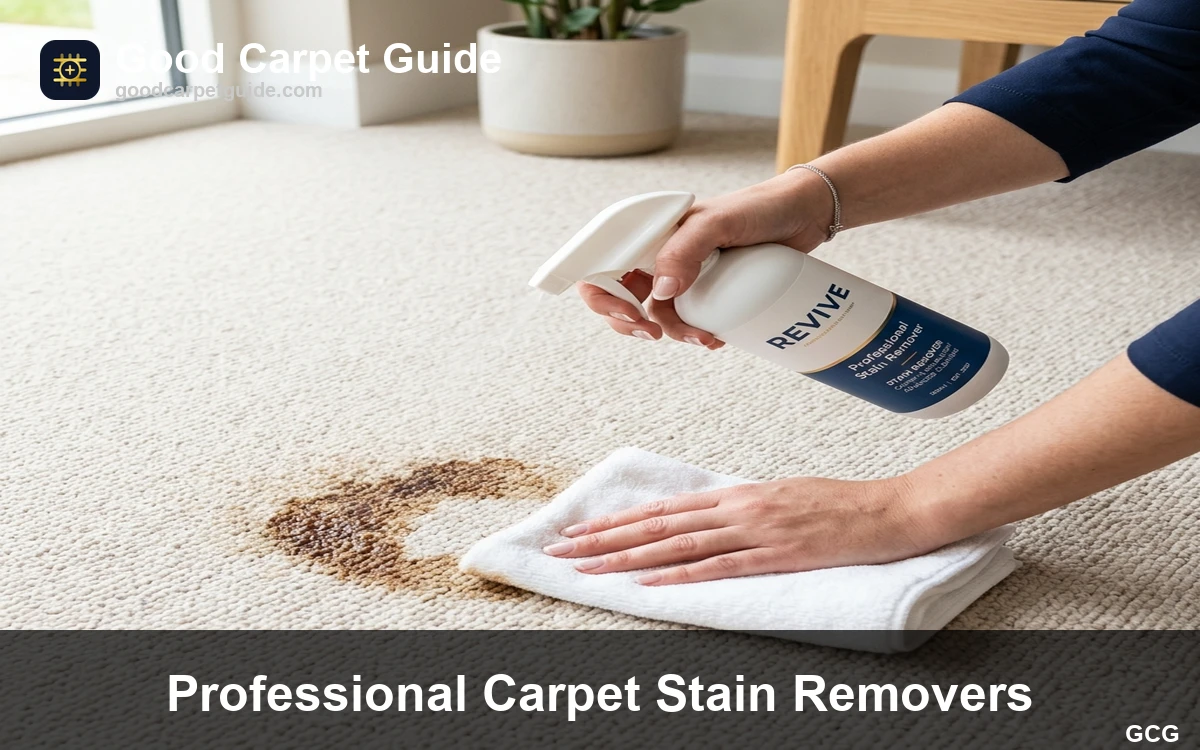
- Blot aqueous spills and remove oils promptly: Clean water-based food, drink, and pet spills on triexta using warm water and mild detergent, and spot-clean lipid transfers such as cooking grease or pet sebum quickly so oils do not trap dust into gray traffic lanes.
- Protect nylon dye blockers with compliant chemistry: Follow ANSI/IICRC S100 soil suspension principles by applying manufacturer-approved, near-neutral cleaning agents on nylon so high-pH detergents do not strip topical acid-dye blockers.
- Complete certified hot water extraction and forced drying: Schedule professional CRI-certified hot water extraction every 18 months per Mohawk warranty rules, rinse out detergent residues completely to prevent rapid re-soiling, and run air movers for forced drying to avoid wicking, delamination, or microbial growth.
Triexta and nylon warranty fine print comparisons
Mohawk SmartStrand Forever Clean limited abrasive wear warranty coverage lasts 25 years and defines warrantable wear strictly as physical face weight loss exceeding 10% of original pile weight, according to Mohawk's warranty brochure and Georgia Carpet Industries' warranty guide. That 10% fiber-loss rule excludes surface matting, pile crushing, shading, and traffic-lane dulling from abrasive wear claims. Pile flattening and yarn untwisting fall under separate texture retention warranties evaluated against standardized visual appearance scales.
Stain exclusions and staircase clauses create decisive contract differences between both carpet materials. Mohawk SmartStrand covers food, beverage, and All Pet stains for life, yet Mohawk's warranty brochure and Georgia Carpet Industries explicitly exclude stains and damage caused by non-food oil, grease, asphalt tar, wax, shoe polish, mascara, lipstick, and oil-based paints. Standard Mohawk SmartStrand warranties also exclude stairs unless installed over Mohawk SmartCushion underlayment, whereas Sales Plastics confirms nylon 6,6 stair texture retention is included in standard warranties; readers examining Mohawk's full product tiers and exclusions can consult the standalone SmartStrand carpet review .
Enforcing residential warranty coverage requires preserving proof of compliant installation and maintenance. Mohawk's residential carpet warranty brochure instructs homeowners to retain original purchase invoices, retailer carpet sample labels, an installation remnant piece, and itemized receipts confirming CRI-certified hot water extraction every 18 months. Skipping concrete subfloor moisture testing, material acclimation, or the minimum 1% length-and-width power stretch mandated under CRI 105 can also void coverage before normal traffic wears the pile.
Installed material and labor cost breakdown
Installed carpet cost per sq. ft. benchmarks at 7.95 for triexta (Mohawk SmartStrand) and9.55 for both nylon 6,6 and solution-dyed nylon, according to Forbes Home. Broadloom material pricing spans distinct fiber tiers before labor and padding are added. Forbes benchmarks entry-level residential broadloom material at 3.00 per sq. ft., S&G Carpet and More retails blended Elevation Change broadloom (75% triexta and 25% PET) at5.59 per sq. ft., and Wall to Wall Floor Covering benchmarks high-end SmartStrand Silk material at $8.00 per sq. ft.
Labor scope and specialty underlayment adjust installed budgets beyond flat-room quotes. Forbes Home benchmarks mid-grade residential installation labor at 1.75 per sq. ft., while the Carpet and Rug Institute benchmarks custom residential staircase installation labor at25 per stair step, with extra costs applying for old carpet tear-out, CRI 105 subfloor preparation, and upgraded underlayment such as Mohawk SmartCushion.
| Cost Component | Fiber or Installation Scope | Verified Benchmark | Source |
|---|---|---|---|
| Entry-level broadloom material | Standard residential broadloom | $3.00 per sq. ft. | Forbes |
| Blended broadloom material | Elevation Change (75% triexta, 25% PET) | $5.59 per sq. ft. | S&G Carpet and More |
| High-end triexta material | SmartStrand Silk | $8.00 per sq. ft. | Wall to Wall Floor Covering |
| Flat-room installation labor | Mid-grade residential stretch-in | $1.75 per sq. ft. | Forbes Home |
| Custom staircase labor | Residential stair installation | $25 per stair step | The Carpet and Rug Institute |
| Total installed cost | Triexta (Mohawk SmartStrand) | $7.95 per sq. ft. | Forbes Home |
| Total installed cost | Nylon 6,6 | $9.55 per sq. ft. | Forbes Home |
| Total installed cost | Solution-dyed nylon | $9.55 per sq. ft. | Forbes Home |
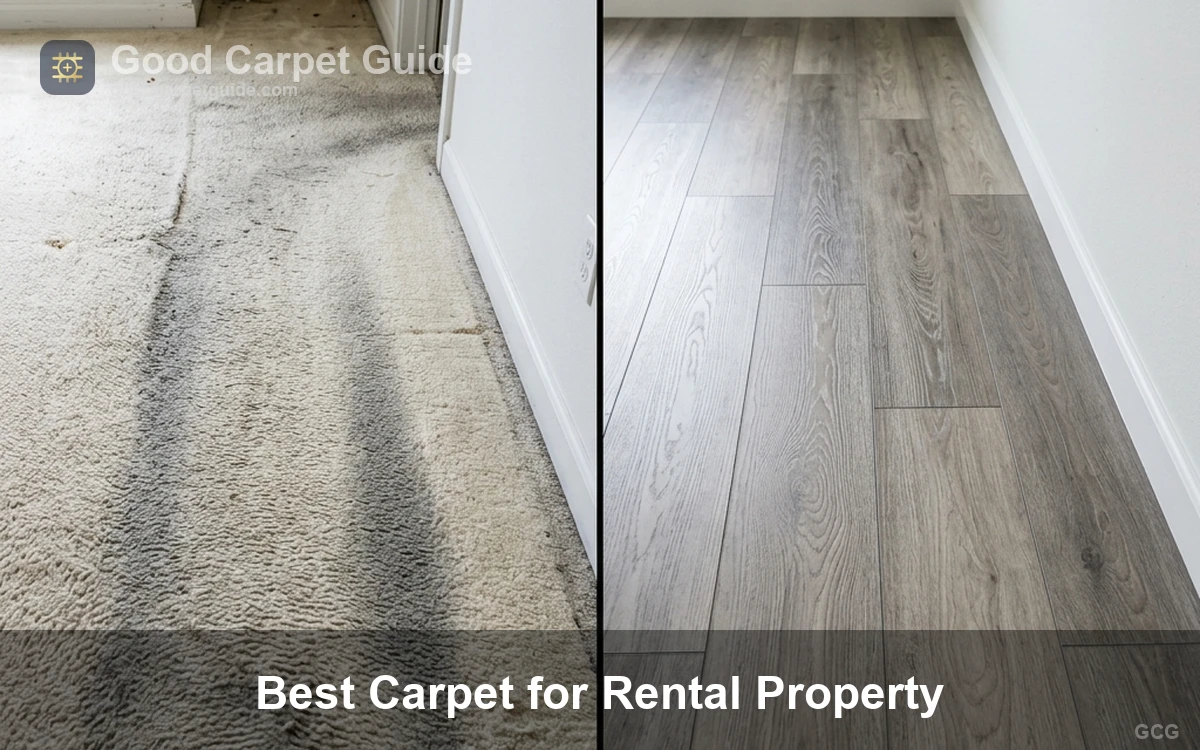
Lifecycle budgeting balances upfront installed cost against the expected average lifespan maximum of 15 years reported by Forbes and mandatory 18-month professional cleanings. Property owners selecting rental property carpet weigh lower upfront spending on entry broadloom (3.00 per sq. ft. material) or triexta blends (5.59 per sq. ft. material) against solution-dyed nylon ($9.55 per sq. ft. installed), whose melt-infused pigments withstand harsh tenant cleanings without topical stripping.
Choosing between triexta and nylon carpet
Triexta and nylon carpet selection depends on matching fiber glass transition stability, stair warranty eligibility, stain chemistry, and installed price tier to each room's dominant wear risk. The table below compares elastic recovery, stain resistance mechanisms, stair texture retention, and installed cost across triexta (Mohawk SmartStrand), nylon 6, nylon 6,6, and solution-dyed nylon.
| Carpet Fiber | Elastic Recovery | Stain Resistance Mechanism | Stair Texture Retention | Installed Cost Per Sq Ft |
|---|---|---|---|---|
| Triexta (Mohawk SmartStrand) | 65.7 – 78.1 % | Inherent non-polar core; lacks reactive amine dye sites | Excluded from standard warranty; requires SmartCushion upgrade | $7.95/sq. ft. |
| Nylon 6 | not stated | not stated | not stated | not stated |
| Nylon 6,6 | 62 % | not stated | Industry benchmark (Tg 65°C–90°C); included in standard warranties | $9.55/sq. ft. |
| Solution-Dyed Nylon | not stated | Color pigments melt-infused into polymer matrix; resists topical stripping | not stated | $9.55/sq. ft. |
https://www.youtube.com/watch?v=jQihNqSZvFw
Room-specific decision rules clarify which fiber matches each residential environment:
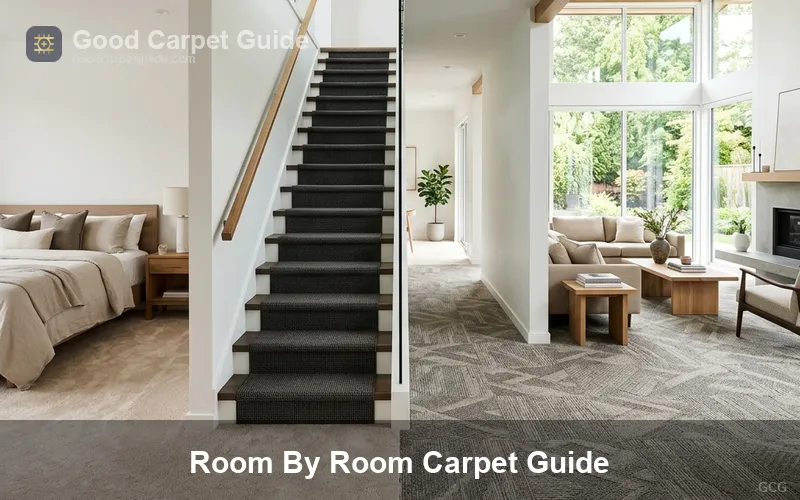
- If installing carpet in heavy-traffic hallways or stairs where pile crushing is the primary failure mode, then choose nylon 6,6 for its 65°C–90°C glass transition stability, 33% wear resistance advantage over nylon 6, and direct inclusion in standard stair warranties.
- If active pets and frequent aqueous spills in bedrooms or family rooms dominate daily wear, then choose triexta (Mohawk SmartStrand) for its permanent non-polar stain resistance, 0.34% experimental moisture regain, and $7.95 per sq. ft. installed cost benchmark.
- If the carpeted room borders a kitchen, garage, or exterior entry exposed to cooking grease, asphalt tar, or motor oil, then choose nylon over triexta to avoid oleophilic oil adsorption, dark filtration lines, and non-food oil warranty exclusions.
- If reducing petroleum feedstock use is a priority alongside built-in food stain protection, then choose Sorona-based triexta incorporating up to 37% renewably sourced bio-based carbon content rather than conventional petroleum-derived nylon at 0% bio-based carbon content.
- If heavy cleanings or aggressive spot removers are expected in active households or rentals, then choose solution-dyed nylon ($9.55 per sq. ft. installed) or triexta so cleaning chemistry cannot strip topical acid-dye blockers.
Frequently asked questions
What is triexta carpet?
Triexta carpet is a polyester subclass established under Federal Trade Commission Rule 7(c) that consists of polytrimethylene terephthalate (PTT) containing at least 85% ester by weight from 1,3-propanediol and terephthalic acid. Commercial broadloom styles such as Mohawk SmartStrand incorporate DuPont Sorona polymers with up to 37% renewably sourced bio-based carbon content. Its non-polar polymer core permanently resists water-based food, beverage, and pet stains without relying on topical acid-dye blockers.
Is triextra the same fiber as triexta carpet?
Triextra is an informal spelling variation of triexta carpet, which is the official generic fiber name authorized under Federal Trade Commission Rule 7(c). No separate carpet polymer is manufactured under the spelling triextra, and technical specifications identify the material as triexta or polytrimethylene terephthalate (PTT). Buyers checking retail labels should still confirm fiber percentages because blended broadloom styles such as Elevation Change combine 75% triexta with 25% PET.
Does triexta carpet hold up on stairs compared to nylon?
Triexta carpet carries higher pile-flattening risk on stairs than nylon 6,6 because PTT has a dry glass transition range of 45 °C to 60 °C compared to 65°C–90°C for nylon 6,6. Concentrated downward shear over sharp stair nosings softens lower-Tg cut-pile yarns sooner, which is why standard Mohawk SmartStrand warranties exclude stairs unless paired with Mohawk SmartCushion underlayment. Standard nylon 6,6 warranties cover staircases directly, making dense nylon 6,6 the benchmark choice for heavy-use stairs.
Why does triexta carpet resist food stains while attracting oil?
Triexta carpet blocks aqueous spills because its hydrophobic, non-polar PTT core lacks reactive amine dye sites and registers an experimental moisture regain of 0.34%. That same low surface energy makes triexta naturally oleophilic, causing bare-foot skin oils, pet sebum, cooking grease, and tracked motor oil to adsorb onto filaments and bind airborne soot. Prompt spot removal of oily residues and CRI-certified hot water extraction every 18 months prevent gray traffic lanes and protect Mohawk warranty standing.