The best carpet for rental property installations balances turnover cost, tenant abuse resistance, stain survivability, and subfloor limitations. The best carpet for rental property units also depends on whether the property sits on concrete, whether pets are allowed, and whether downstairs tenants complain about foot traffic noise. Landlords consistently report that cheap rental carpet fails after one tenancy, while installers repeatedly warn that modern PET polyester fibers flatten and mush within 12 to 24 months despite aggressive manufacturer marketing claims.
Luxury vinyl plank dominates modern rental renovations because landlords replace fewer floors between tenants. Luxury vinyl plank also creates a separate structural problem that most online flooring comparisons ignore. Installers report that uneven subfloors fracture brittle locking joints under vertical deflection, creating curling edges, squeaking floors, and plank separation. Carpet remains the safer flooring system in older buildings with imperfect subfloors and upstairs units with severe sound transmission complaints.
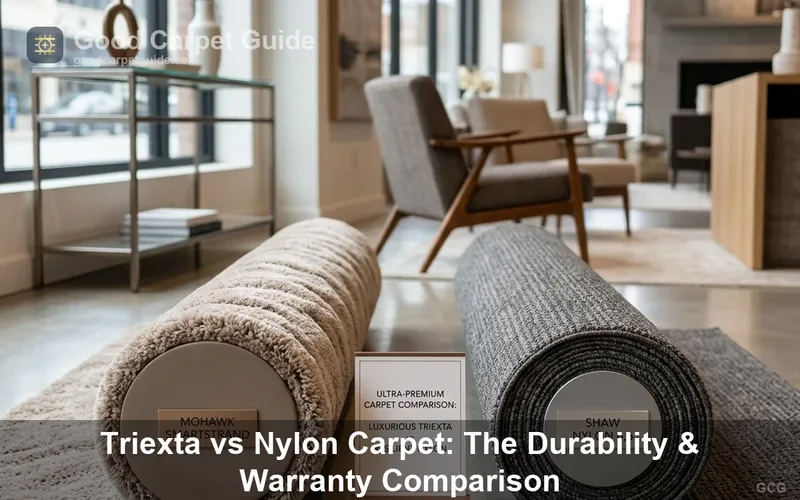
Fiber selection determines the lifecycle cost of rental carpeting more than color or style. Solution-dyed nylon remains the physical durability benchmark because nylon fibers resist crushing, maintain twist retention, and survive repeated tenant turnover cycles. Mohawk SmartStrand Triexta occupies a separate category because Triexta fibers repel liquid, clean with water, and resist pet staining better than traditional nylon. PET polyester remains the lowest upfront-cost option, but installers repeatedly describe PET as a short-term cosmetic surface rather than a long-term rental flooring system.
Landlords choosing between major manufacturers can reference the Shaw vs Mohawk brand comparison for installation cost and durability trade-off data.
Padding selection changes carpet lifespan as much as carpet fiber. Landlords frequently confuse thickness with density, leading to soft underlays that accelerate carpet crushing. Concrete slab rentals create another hidden risk because waterproof moisture barrier pads trap vapor emissions under the carpet system, creating mold growth beneath the underlayment.
The Rental Property Flooring Dilemma: Carpet vs. Luxury Vinyl Plank (LVP)
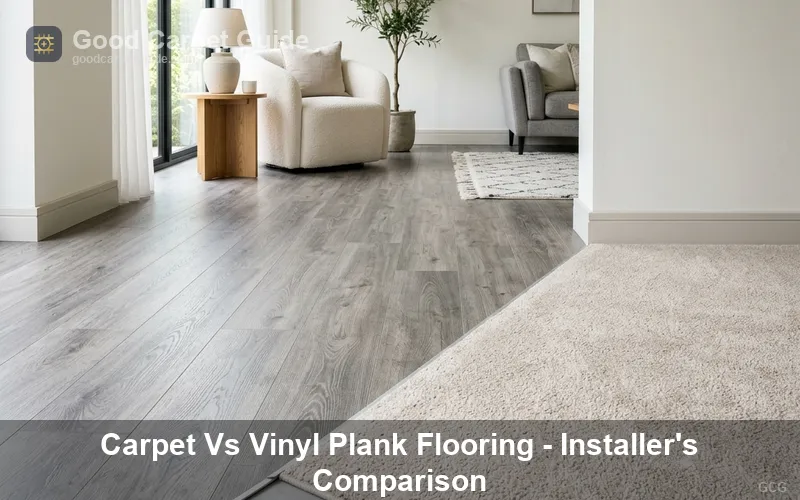
Luxury vinyl plank provides lower turnover costs, while carpet provides better sound insulation and greater tolerance for imperfect subfloors. Landlords repeatedly describe LVP as the “undisputed champion” for reducing replacement frequency because tenants vacuum and mop hard flooring faster than carpet. Tenants also perceive carpet as unhygienic because carpet traps visible soil, pet hair, and odors inside the pile structure.
Carpet still solves problems that LVP does not solve. Carpet absorbs foot traffic vibration, reduces airborne noise reflection, and hides uneven floor transitions better than rigid plank flooring. Older multifamily buildings with wooden joists frequently perform better acoustically with carpet than with floating LVP systems.
Use carpet in upper-story units if downstairs tenants already complain about impact noise. Use carpet in older buildings if the subfloor contains dips, soft spots, or patched plywood transitions. Use LVP in ground-floor units with frequent pet turnover if the subfloor remains structurally flat and dry.
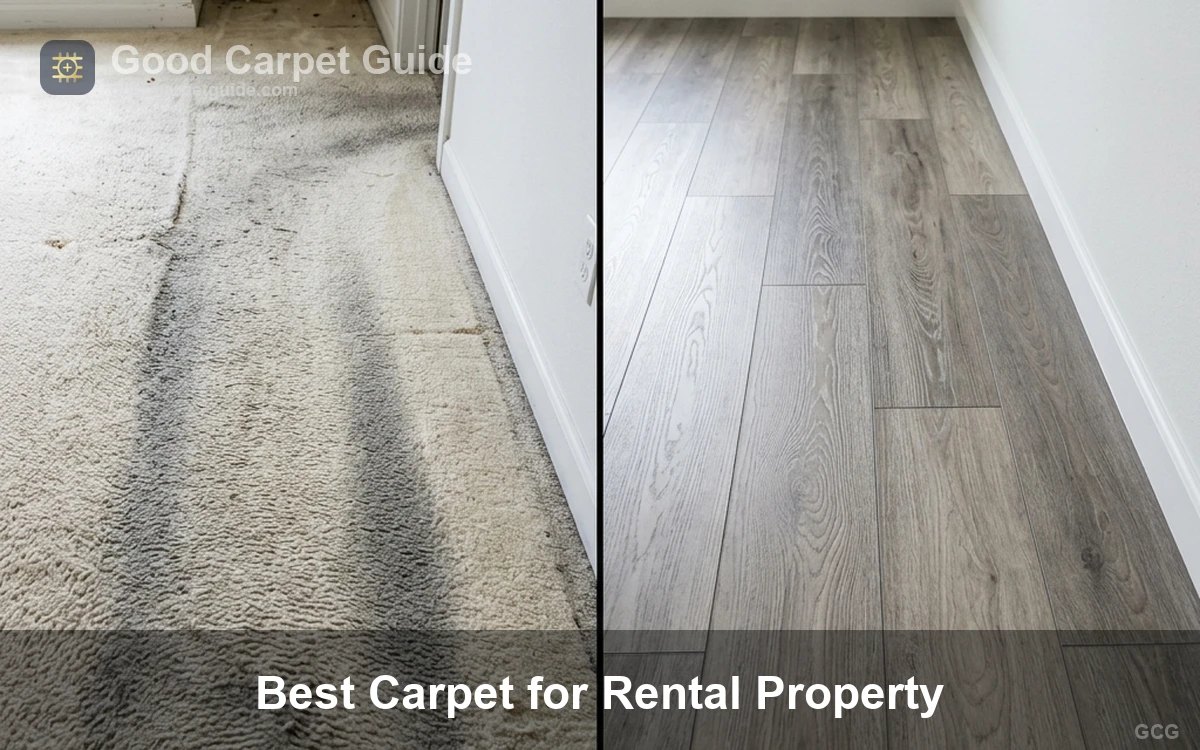
Worn PET polyester carpet develops visible traffic lanes and permanent crushing, while rigid-core LVP creates a cleaner visual appearance but transfers more foot traffic vibration into downstairs units.
Landlords also underestimate tenant psychology during property tours. Tenants consistently associate fresh LVP with cleanliness because hard surfaces visually expose dirt instead of trapping dirt below the surface pile. Carpet creates an immediate odor perception problem if previous tenants owned pets or smoked indoors.
Read the full fiber durability comparison in nylon vs polyester carpet .
The LVP Subfloor Reality Check: Brittle Joints and Vertical Deflection
LVP locking systems fracture when uneven subfloors create vertical deflection beneath rigid planks. Installers repeatedly warn that floating vinyl systems fail from movement, not from surface wear. Brittle click-lock joints separate after repeated flexing under furniture loads and concentrated foot traffic.
Vertical deflection occurs when the subfloor compresses downward between joists or across low spots. Vertical deflection repeatedly stresses the locking tabs until the joint cracks. Cracked joints create edge curling, squeaking sounds, visible separation lines, and shifting planks.
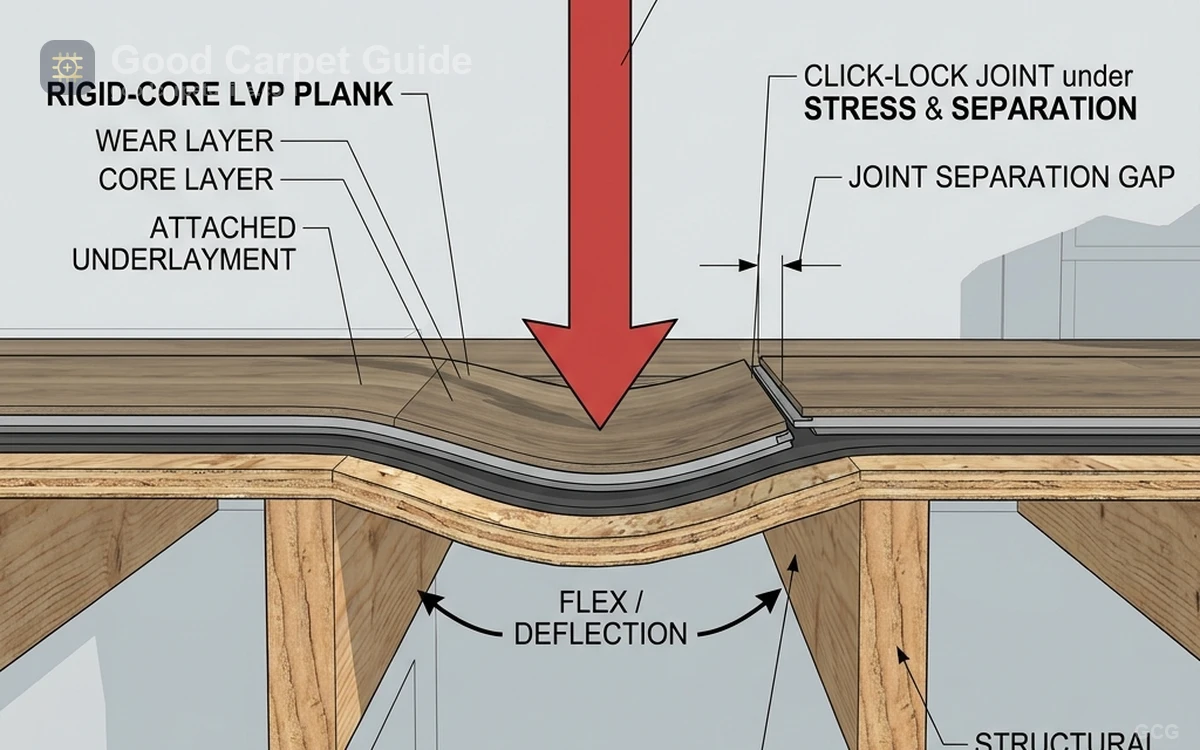
Uneven subfloors create vertical deflection beneath floating LVP planks, causing brittle locking tabs to fracture and separate under repetitive tenant foot traffic.
Older rental properties rarely contain perfectly level subfloors. Older rental properties frequently contain patched plywood, settling foundations, and uneven concrete slabs. Carpet systems tolerate those imperfections because carpet and pad compress over irregular surfaces instead of transmitting movement into rigid joints.
Subfloor preparation also changes renovation cost calculations. Self-leveling compounds, floor grinding, and plywood correction work frequently eliminate the labor savings that initially made LVP attractive.
The Nylon vs. PET Polyester Conflict: Real-World Durability vs. Marketing Hype
Nylon carpet outlasts PET polyester carpet under tenant abuse because nylon fibers retain twist structure and recover from compression. Installers consistently describe PET polyester as visually attractive on installation day but structurally weak after sustained traffic.
Manufacturers market PET polyester as “pet-friendly” and “high-performance” because PET resists water-based staining. PET polyester still crushes permanently under repeated foot traffic because PET fibers lose twist memory faster than nylon. Installers repeatedly summarize the problem with phrases such as “the polys will mush and mat.”
Rental environments accelerate carpet failure faster than owner-occupied homes. Rental environments contain heavier furniture dragging, inconsistent vacuuming, concentrated traffic lanes, and greater pet accident frequency. Cheap PET polyester rarely survives more than one aggressive tenancy without visible crushing.
For a comprehensive breakdown of rental-grade specifications, occupant wear rules, and deposit dispute guidelines, see the apartment carpet guide produced by our technical expert.
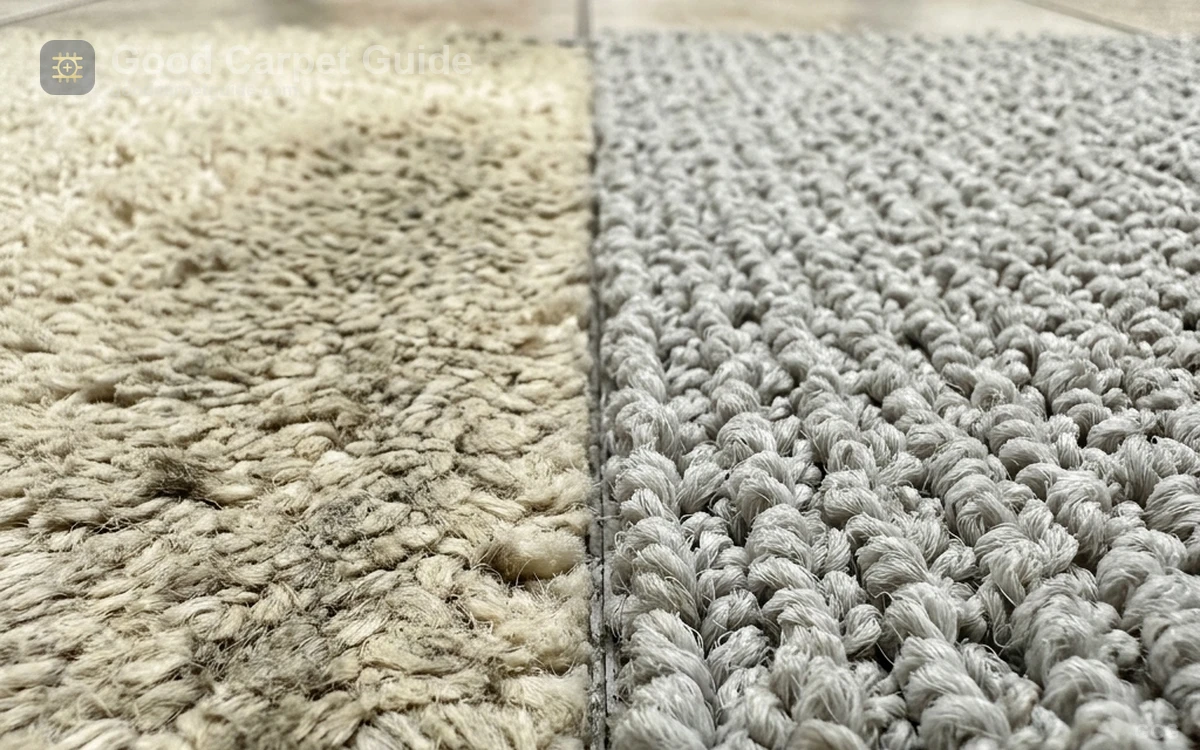
PET polyester fibers lose twist definition and flatten into traffic lanes, while solution-dyed nylon fibers maintain upright structure under repeated rental-property foot traffic.
Pet damage creates another separation between nylon and PET. Pet urine contains acidic compounds that permanently etch nylon surfaces when accidents remain untreated. Acidic staining physically damages the fiber surface rather than creating removable topical discoloration. PET resists moisture absorption better than nylon, but PET still physically crushes under repeated occupancy.. For detailed repair steps, see burn damage repair .
Review more high-abuse flooring performance scenarios in best carpet for high traffic areas .
Solution-Dyed Nylon: The Gold Standard for Physical Durability
Solution-dyed nylon provides the highest crush resistance and longest physical lifespan in rental carpeting. Solution-dyed nylon embeds pigment throughout the entire fiber during manufacturing instead of applying color only to the surface. Embedded color reduces visible bleaching and helps hide abrasion marks.
Solution-dyed nylon routinely survives 10 to 15 years in properly managed rental units. Nylon fibers also recover from compression better than PET polyester because nylon contains stronger molecular resilience. Traffic lanes remain less visible even after multiple turnovers.
Shaw Anso Nylon and Engineered Floors PureColor represent common rental-focused durability lines. Shaw ClearTouch products also target landlord installations because the surface chemistry improves stain cleanup performance.
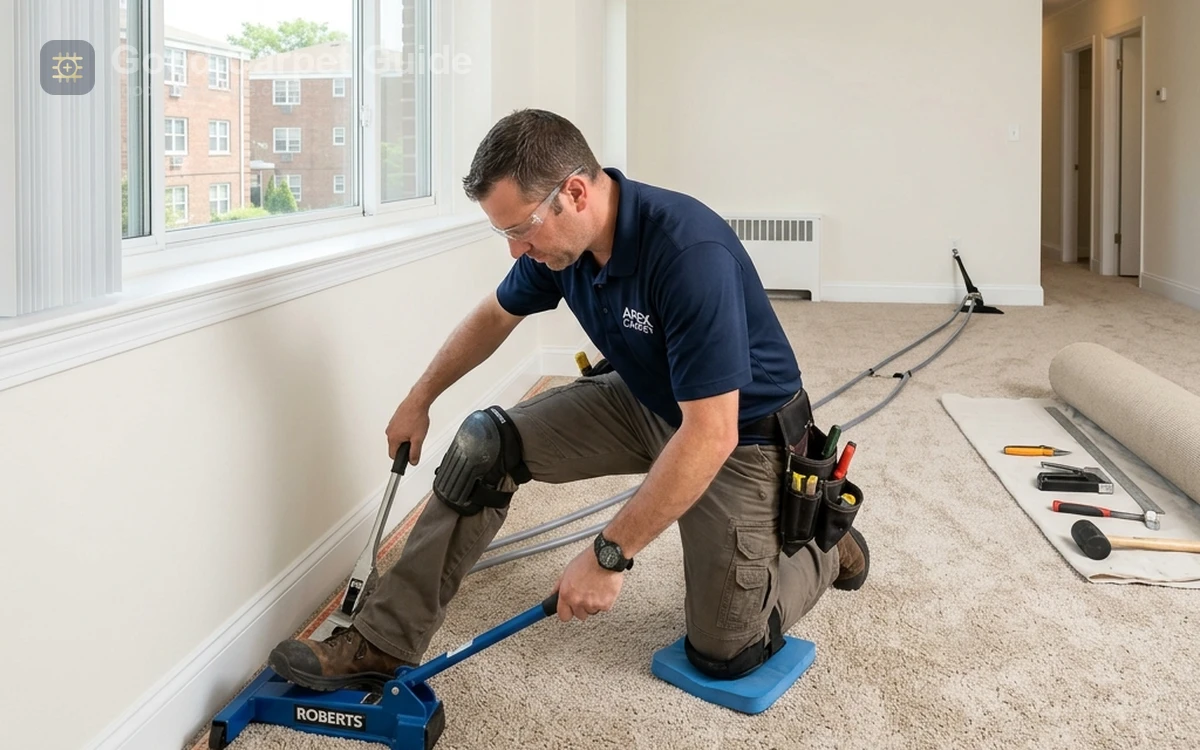
Solution-dyed nylon carpet withstands repeated rental turnovers because nylon fibers recover from compression and retain surface texture longer than PET polyester.
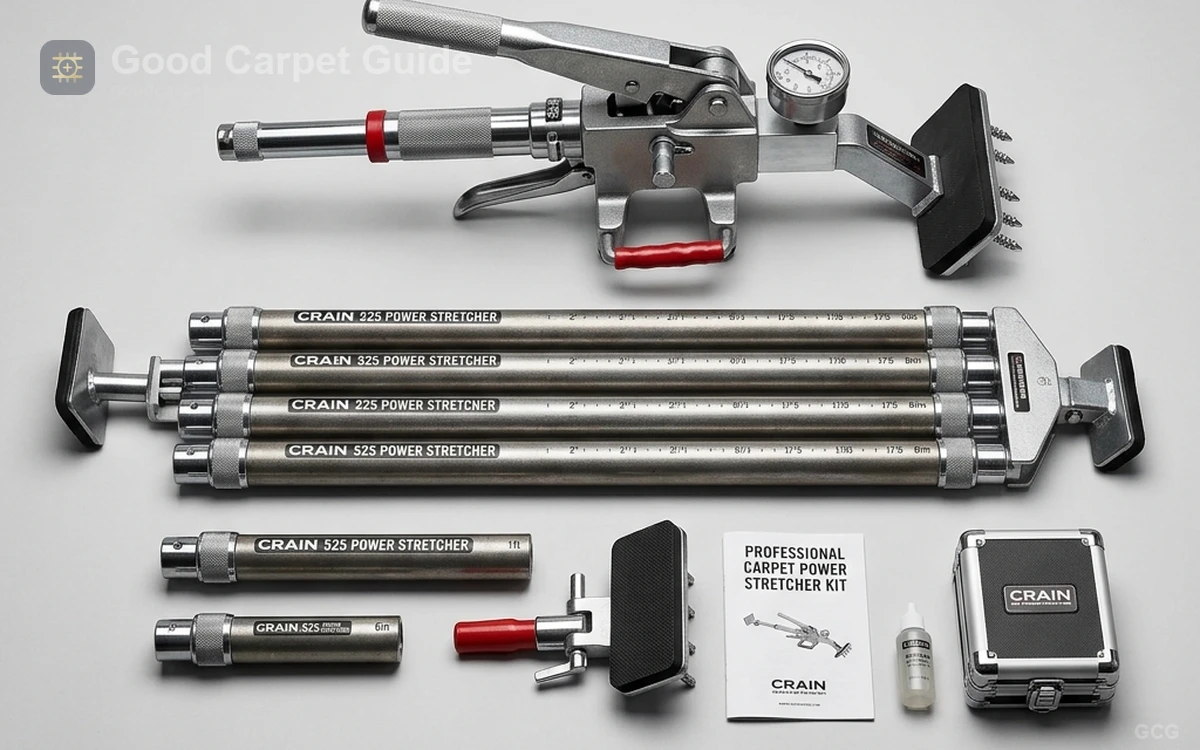
Roberts 10-254 Professional Carpet Power Stretcher
Professional-grade power stretcher for carpet installation. Prevents loose carpet, wrinkles, and premature wear by ensuring correct tension across rooms.
Check Price on AmazonNylon still requires immediate pet accident cleanup. Dog urine and cat urine permanently etch nylon fibers if acidic contamination penetrates into the pile and backing system. Landlords frequently replace entire rooms because odor contamination remains trapped inside the carpet pad even after extraction cleaning.
Use the techniques from best carpet stain removers immediately after tenant accidents to reduce permanent contamination risk.
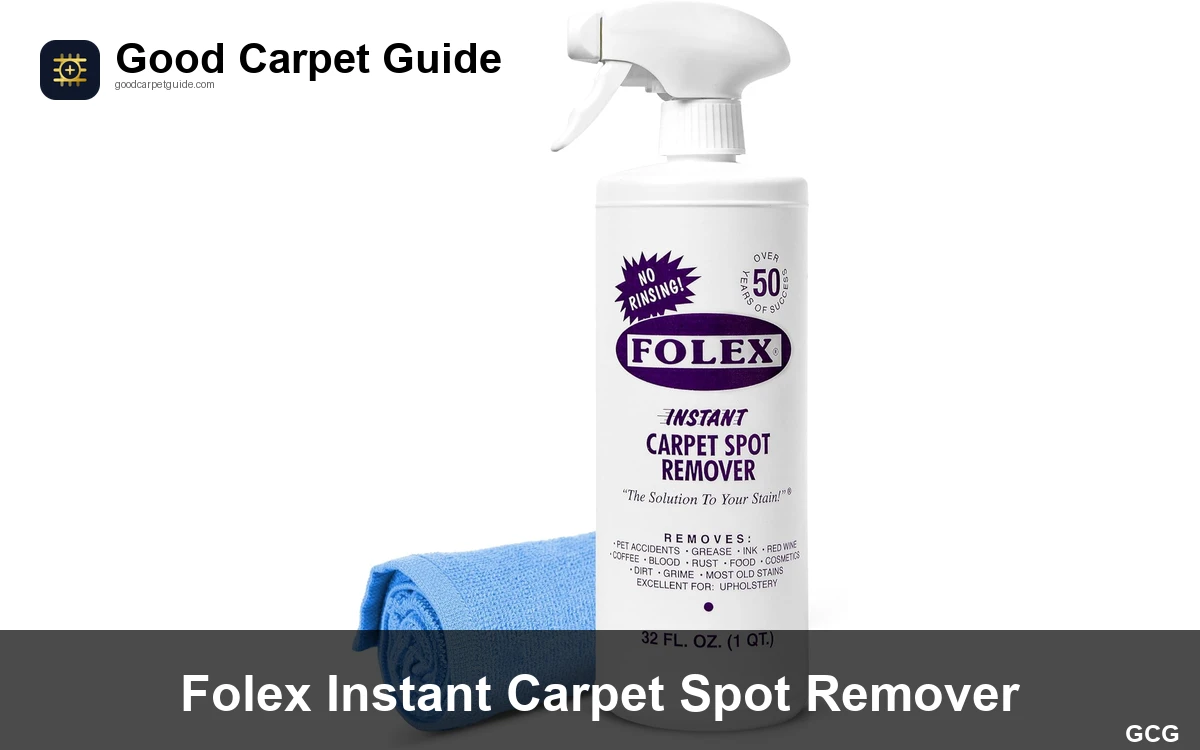
Folex Instant Carpet Spot Remover
The gold standard for low-residue cleaning. Folex is non-ionic, meaning it won't attract dirt after it dries. Perfect for general spots, traffic lanes, and spills.
Check Price on AmazonPET Polyester: Why Budget Carpeting Rarely Lasts a Single Tenancy
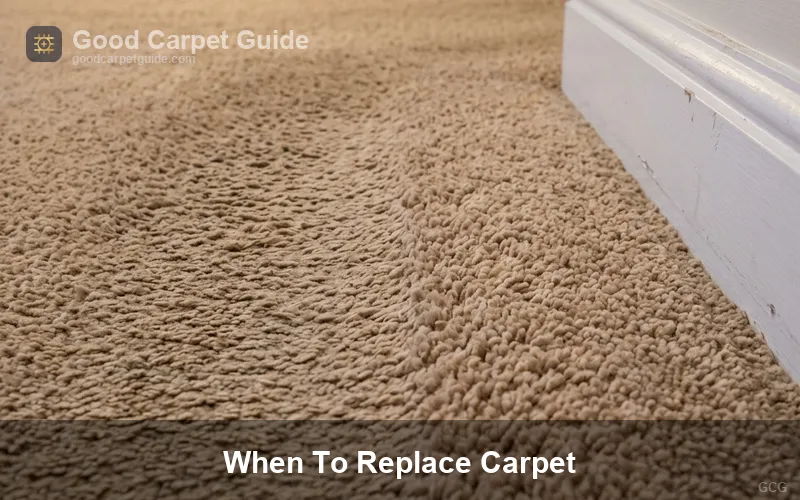
PET polyester carpet loses texture rapidly because PET fibers flatten permanently under repeated pressure. PET polyester also develops visible traffic lanes faster because the fiber structure lacks the resilience required for rental-grade wear cycles.
Budget PET products dominate low-cost apartment renovations because material pricing starts around $1.00 to $1.50 per square foot. Cheap upfront pricing creates an illusion of savings that disappears during early replacement cycles.
Installers repeatedly describe the same progression pattern:
- Develops visible matting within the first year.
- Develops crushed traffic lanes within 24 months.
- Develops permanent texture loss under dining tables and hallways.
- Develops appearance complaints during tenant showings.
PET polyester carpet develops permanent traffic lanes and texture collapse within one aggressive tenancy, reducing the perceived cleanliness of the rental property.
PET polyester still occupies a functional role in extremely low-budget rentals. Use PET polyester only if turnover frequency remains low and replacement intervals remain financially acceptable.
Triexta vs. Nylon: Is Mohawk's Corn-Sugar Fiber Safe for Rentals?
Triexta provides superior stain resistance, while nylon provides superior long-term crush resistance. Triexta fibers contain bio-engineered corn sugars instead of petroleum-heavy polymer structures. Mohawk markets Triexta under the SmartStrand brand family.
Mohawk SmartStrand Forever Clean remains one of the most landlord-friendly carpet systems for pet-heavy rentals. Triexta fibers repel liquid aggressively because Triexta remains hydrophobic at the molecular level. Water-based spills remain near the surface instead of penetrating deeply into the fiber.
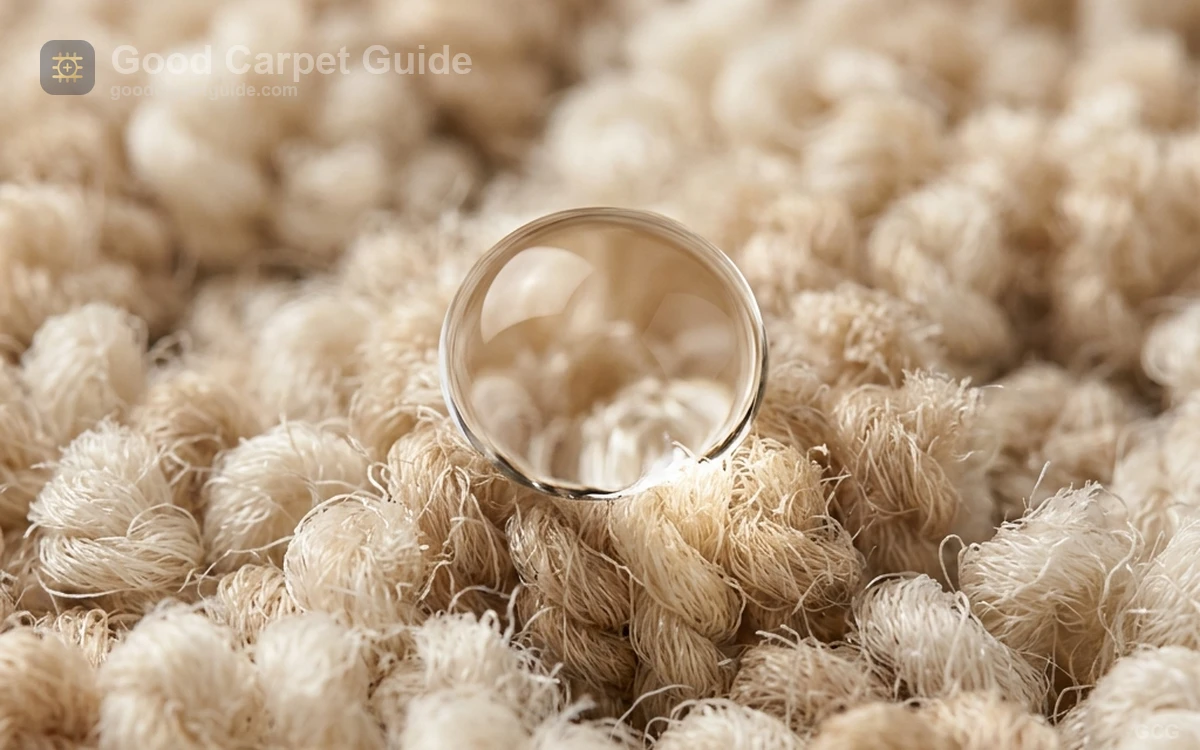
Hydrophobic Triexta fibers repel liquid spills near the surface, allowing landlords to clean pet accidents before deep contamination reaches the carpet pad.
Triexta also cleans with plain water in many situations. Landlords repeatedly choose SmartStrand products because tenant spills create fewer permanent staining events compared with traditional nylon.
Mohawk Air.o occupies another notable category because Air.o removes traditional latex backing layers and attached padding systems. Air.o installations reduce moisture retention and simplify replacement during turnover renovation.
Triexta still compresses slightly faster than premium solution-dyed nylon under extreme traffic concentration. Use Triexta in pet-focused rentals where stain survivability outweighs maximum crush resistance.
The Carpet Padding Trap: Density, Thickness, and the Mold Risk
Carpet padding determines structural support beneath the carpet face fiber. Carpet padding also determines how quickly carpet fibers collapse under concentrated tenant traffic.
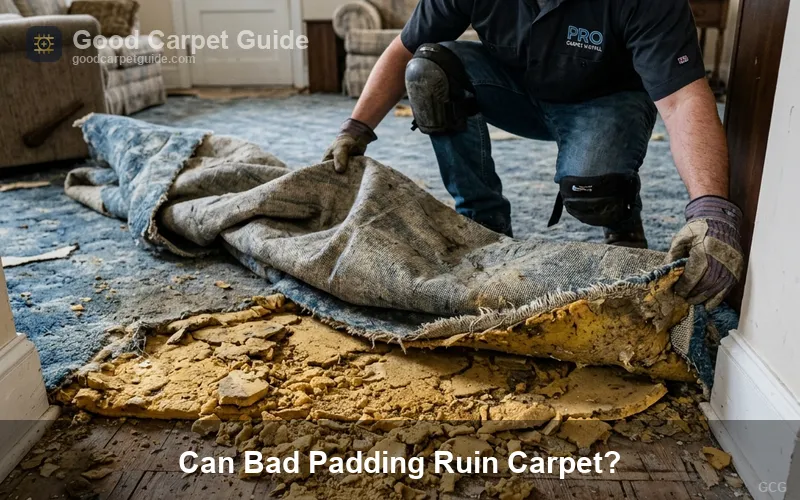
Landlords frequently buy thick carpet pads believing softness equals durability. Thick low-density pads actually accelerate carpet crushing because excessive movement flexes the carpet backing system during every footstep.
Rebond padding dominates rental installations because rebond provides predictable density and affordable pricing. Urethane foam pads feel softer initially but compress more aggressively under repeated occupancy.
Read the full structural breakdown in carpet padding guide.
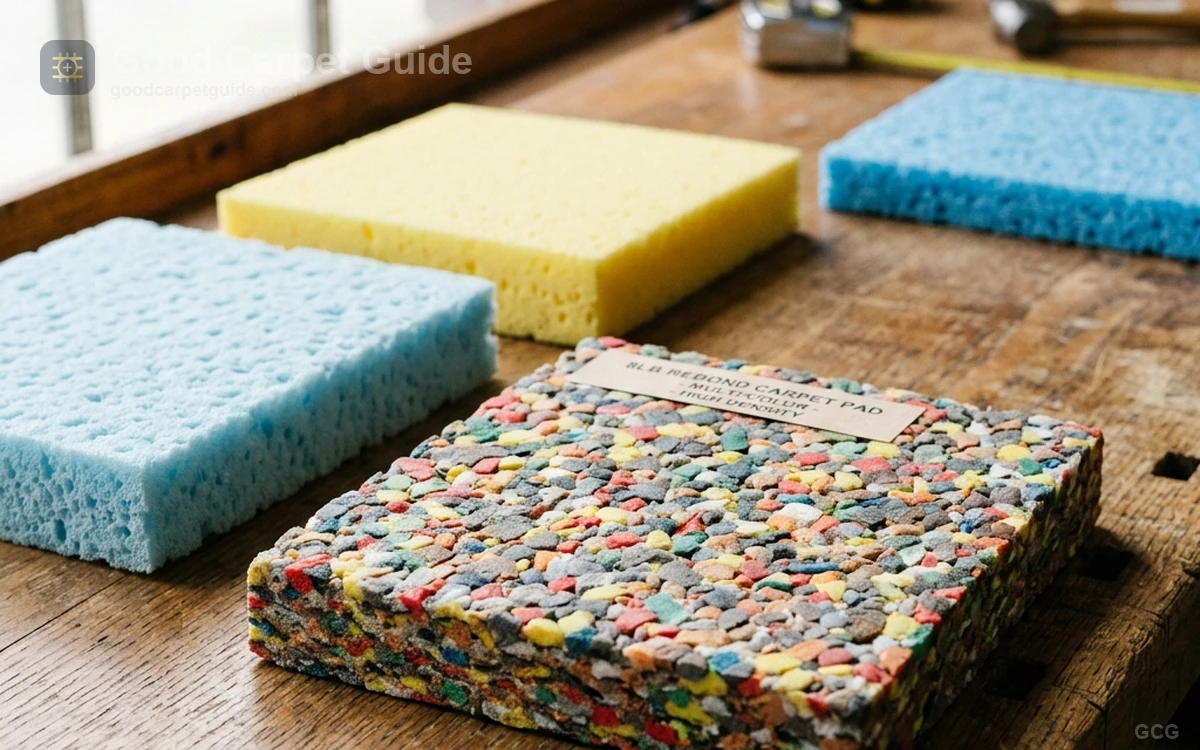
Dense rebond padding stabilizes carpet backing and reduces flexing, while thick soft foam padding increases carpet movement and accelerates texture loss.
Density vs. Thickness: Why 8lb Pad Extends Cheap Carpet Lifespan
Dense 8 lb rebond padding extends carpet lifespan better than excessively thick soft padding. Density measures structural mass per cubic foot, while thickness measures vertical height.
A 7/16-inch 8 lb rebond pad supports carpet backing more effectively than thick low-density foam. Stable support reduces carpet flexing and reduces premature fiber collapse. Cheap PET carpet survives longer over dense rebond because the backing system shifts less during traffic.
The standard landlord-grade benchmark remains:
| Padding Type | Typical Cost | Structural Performance |
|---|---|---|
| 7/16-inch 8 lb rebond pad | $0.45/sq. ft. | Stable support and balanced durability |
| 10 lb urethane moisture barrier pad | $1.11/sq. ft. | Softer feel but greater vapor-trapping risk |
M-D Building Products 7/16-inch Rebond Underlayment (8lb)
High-density 8lb rebond padding. Provides stable support, reduces carpet backing flexing, and extends texture retention for residential rentals.
Check Price on AmazonLandlords also misunderstand the purpose of higher-density padding. Higher-density padding improves support, not softness. Thick soft underlays create a cushioned sensation that tenants initially enjoy, but soft underlays accelerate carpet wrinkling and crushing.
Review the density breakdown in 8lb vs 10lb carpet padding.
The Concrete Moisture Barrier Trap: Concrete Vapors and Toxic Mold
Waterproof carpet pads trap vapor emissions over concrete slabs and create mold growth beneath the flooring system. Concrete continuously emits moisture vapor through microscopic capillary movement. Moisture barrier pads block upward evaporation.
Installers repeatedly warn against impermeable moisture barriers directly over basement slabs and ground-floor concrete apartments. Trapped vapor accumulates beneath the pad and creates a dark organic environment for mold colonization.
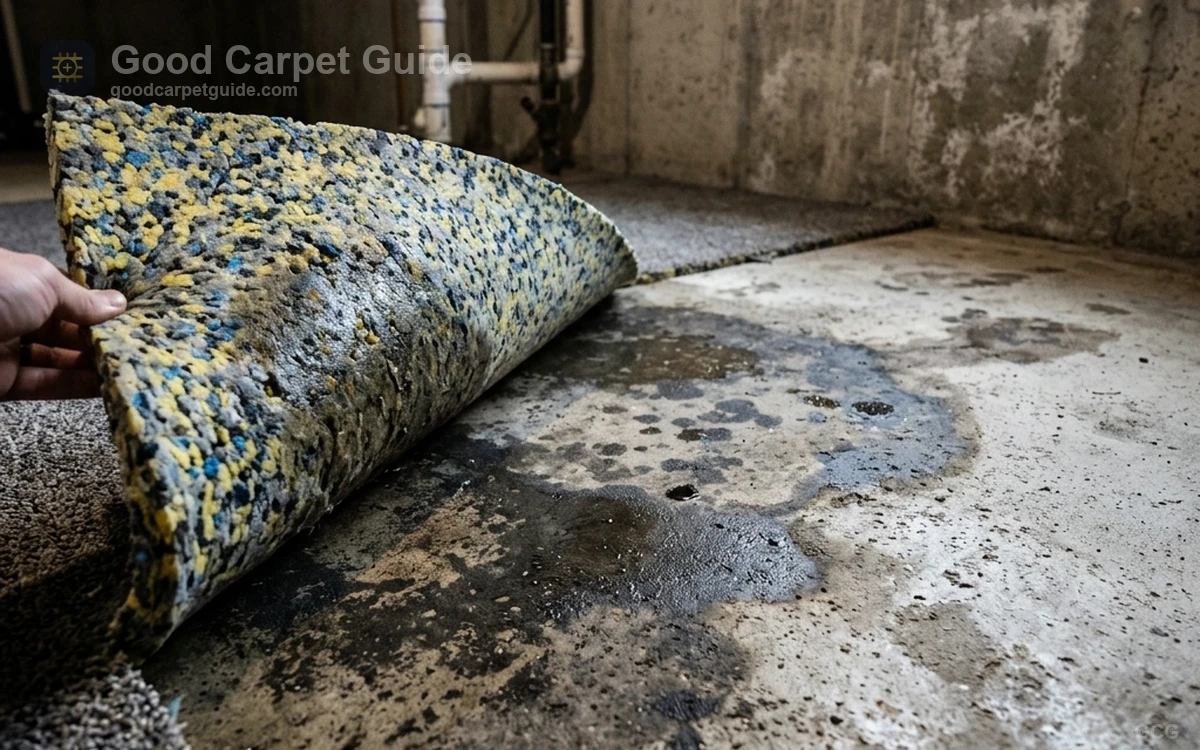
Waterproof carpet pads installed over concrete slabs trap rising vapor emissions, creating hidden mold colonies beneath the carpet system.
Pet accident prevention complicates the decision. Waterproof pads stop urine penetration into the slab, but waterproof pads also stop natural vapor dissipation. Breathable padding systems reduce mold risk more effectively in humid concrete environments.
Use breathable rebond pads over dry concrete slabs with verified moisture testing. Use hard-surface flooring instead of carpet if chronic slab moisture already exists.
Soundproofing the Upper Units: Carpet vs. LVP Foot Traffic Noise
Carpet reduces impact noise transmission more effectively than floating LVP systems. Carpet absorbs vibration energy inside the fiber and pad structure before vibration transfers into the subfloor assembly.
Upper-floor apartments generate constant downstairs complaints after hard-surface renovations. Downstairs tenants describe heel strikes, chair movement, and child running as sharp impact noise instead of muted background movement.
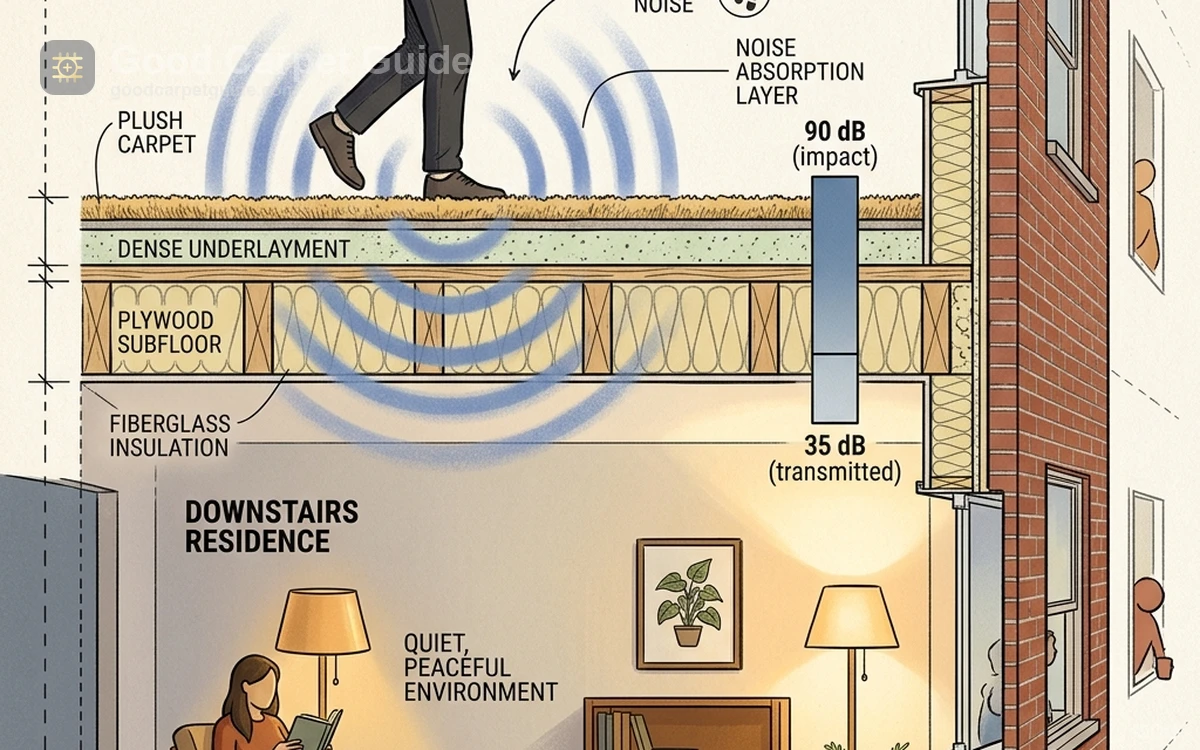
Carpet and dense padding absorb impact vibration before foot traffic noise transfers into downstairs living spaces.
LVP underlayments reduce some airborne sound, but thin underlayment does not absorb concentrated impact energy effectively. Luxury apartment developers frequently continue using carpet inside bedrooms and upper corridors specifically for acoustic isolation.
Use carpet in second-story family rentals. Use carpet in wood-frame multifamily buildings with aging joist systems. Use LVP selectively in concrete high-rise structures where slab mass already blocks impact transfer.
Why Modular Carpet Tiles Make Your Rental Look Like a "Slumlord" Property
Modular carpet tiles create a commercial-office appearance that reduces residential appeal. Designers repeatedly discourage carpet tile installations in living rooms and bedrooms because visible seams visually cheapen the space.
Carpet tiles also age unevenly inside residential settings. Individual replacement tiles fade differently, creating patchwork color inconsistency after several turnover cycles.
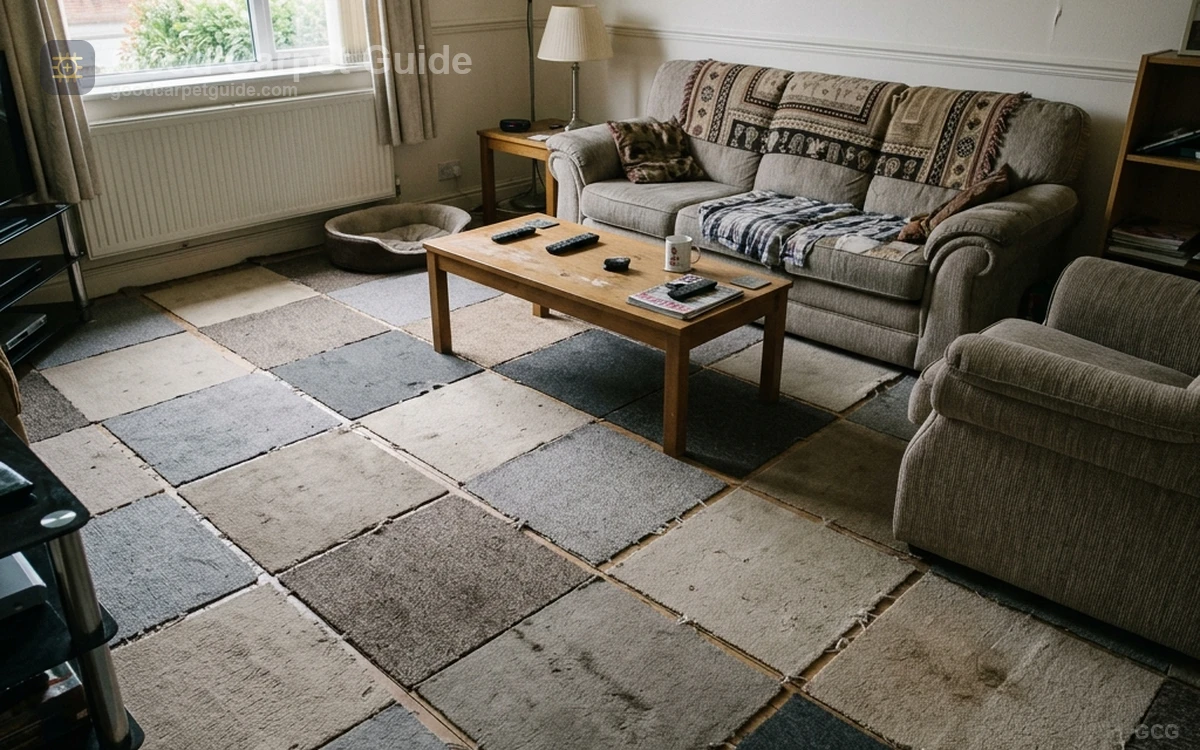
Visible carpet tile seams and mismatched replacement sections create a commercial-office appearance that lowers perceived residential quality.
Commercial office environments tolerate carpet tile aesthetics because office layouts prioritize modular maintenance access. Residential tenants associate carpet tile seams with low-budget property management and neglected interiors.
Carpet tiles still function effectively inside leasing offices, maintenance rooms, and basement utility spaces. Carpet tiles reduce perceived property quality inside primary residential living areas.
The Real Cost of Rental Carpeting: Materials, Labor, and Promo Baselines
Rental carpet installation costs vary primarily by fiber type, pad selection, and labor complexity. Material pricing alone rarely reflects total turnover cost because installation, furniture moving, and subfloor correction increase final invoices.
Recent landlord pricing baselines include:
| Flooring Component | Real-World Price Range |
|---|---|
| Budget PET polyester carpet | $1.00 – $1.50/sq. ft. |
| Carpet installation labor | $1.50 – $2.00/sq. ft. |
| Home Depot package deal | $2.75/sq. ft. installed |
| Example 550 sq. ft. installation | ~$2,000 total |
| 7/16-inch 8 lb rebond pad | ~$0.45/sq. ft. |
| 10 lb urethane moisture pad | ~$1.11/sq. ft. |
Home Depot also promotes free installation on qualifying carpet purchases above $1.49 per square foot. Promotional pricing frequently lowers initial turnover cost for landlords renovating multiple units simultaneously.
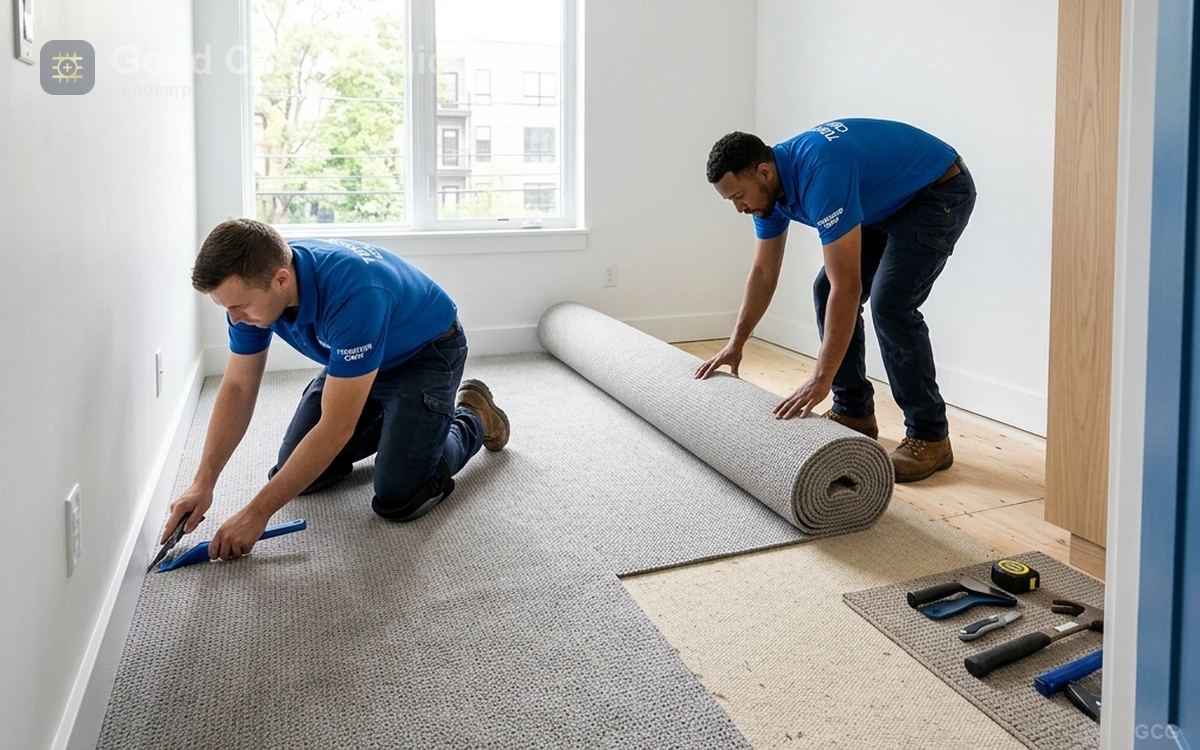
Neutral rental-grade carpet installations reduce upfront turnover costs, but fiber selection ultimately determines replacement frequency and lifecycle ROI.
Cheap carpet systems generate hidden replacement costs. Early crushing, pet odor contamination, and poor tenant perception shorten replacement intervals and increase vacancy preparation expense.
The Landlord's Decision Framework: Which Carpet to Install?
Install solution-dyed nylon if the rental property experiences heavy turnover, frequent pet occupancy, or concentrated hallway traffic. Solution-dyed nylon delivers the longest structural lifespan and maintains appearance longer during repeated leasing cycles.
Install Mohawk SmartStrand Triexta if pet staining creates the largest operational expense. Triexta fibers repel moisture aggressively and simplify cleanup after tenant accidents.
Install dense 7/16-inch 8 lb rebond padding if the property uses standard broadloom carpet. Dense rebond stabilizes the carpet backing and extends texture retention better than thick soft foam.
Avoid PET polyester if the property attracts large dogs, multiple roommates, or short-term tenants. PET polyester crushes rapidly and develops visible traffic lanes within one aggressive tenancy.
Avoid waterproof moisture-barrier pads over concrete slabs unless independent slab moisture testing confirms extremely low vapor transmission. Trapped concrete vapor creates hidden mold contamination beneath impermeable underlays.
Install carpet instead of LVP in upstairs apartments with recurring downstairs noise complaints. Carpet absorbs impact vibration more effectively than floating hard-surface systems.
Install LVP selectively in ground-floor units with level subfloors and chronic spill exposure. LVP reduces odor retention and shortens turnover cleaning time if the substrate remains structurally flat.
Avoid modular carpet tiles inside living rooms and bedrooms. Residential tenants associate visible tile seams with neglected low-budget rentals rather than professionally managed housing.