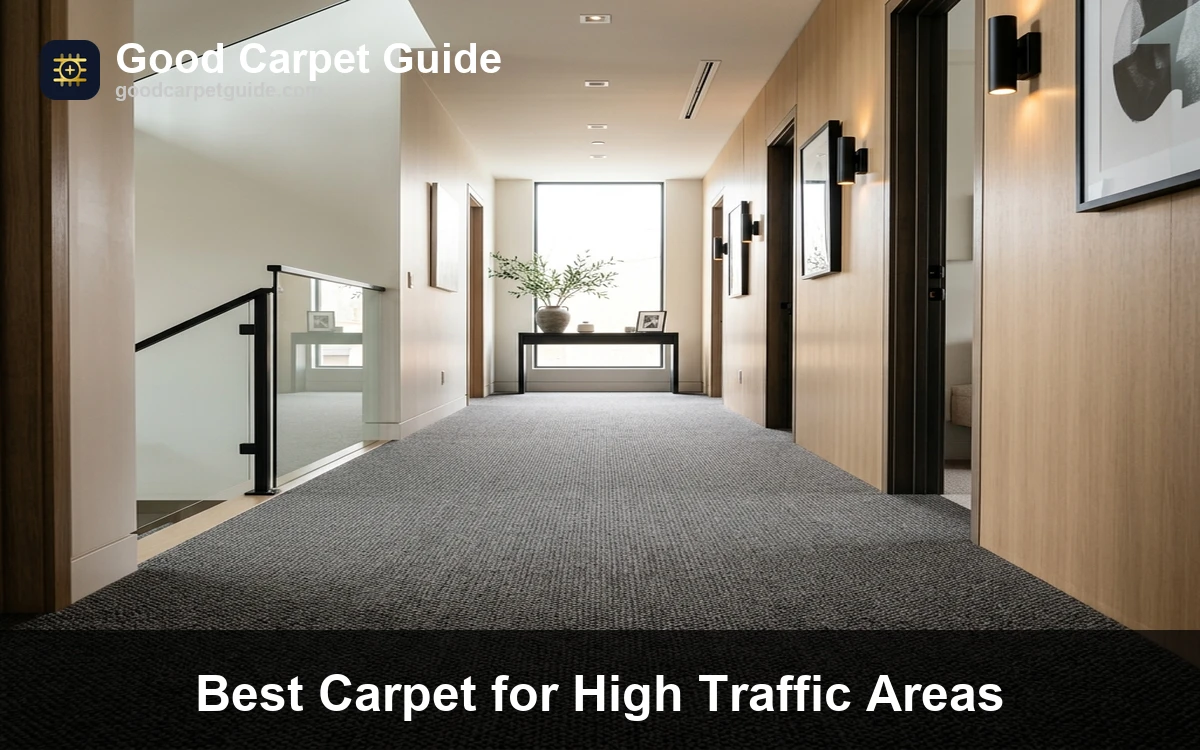
Best Carpet for High Traffic Areas
Title Tag: Best Carpet for High Traffic Areas (2026 Installer Data)
Meta Description: Discover the best carpet for high traffic areas like stairs and hallways. Learn why installers recommend nylon over polyester and how padding impacts longevity.
Slug: best-carpet-high-traffic-areas
High-traffic flooring fails from texture loss, fiber crushing, ripple formation, and stain retention long before the carpet backing physically wears through. The best carpet for high traffic areas resists matting, maintains yarn twist integrity, and survives repeated compression from foot traffic, pets, rolling loads, and vacuum agitation. The best carpet for high traffic areas also depends on carpet fiber type, carpet density, carpet padding density, and installation tension rather than showroom softness alone.
Homeowners repeatedly report the same failure patterns. Plush polyester carpets track footprints within weeks. Thick carpet padding creates ripples on stairs and hallways. Ultra-soft fibers collapse into permanent traffic lanes. Installers consistently recommend dense nylon constructions instead of fluffy PET polyester styles because nylon recovers from compression while polyester remains crushed. Professional installers also state that carpet padding contributes roughly 50% of total carpet lifespan.
This buying guide explains how nylon, triexta, and polyester perform under real traffic loads. This buying guide also explains why face weight creates misleading comparisons, why thinner carpet padding outperforms thick padding in hallways, and why installation quality determines long-term carpet appearance. Real homeowner experiences, installer recommendations, and pricing tiers from Shaw, Mohawk, Dream Weaver, Fabrica, and Masland support every decision factor.
---
Which Carpet Fiber Lasts Longest in High Traffic Areas?
Nylon carpet lasts longest in high traffic areas because nylon fibers recover from compression better than polyester fibers and maintain texture integrity under repeated foot traffic. Nylon carpet also resists crushing on stairs, hallways, family rooms, and landings where repeated directional traffic creates visible wear paths.
Nylon is a synthetic polymer fiber engineered for elasticity, abrasion resistance, and texture retention. Nylon carpet fibers rebound after compression because nylon maintains molecular resilience under repeated weight loads.
Professional installers consistently favor solution-dyed nylon over polyester for active households. One 30-year Mohawk veteran stated: “You want to stay away from PET. Go with 100% Solution Dyed Nylon. The pattern literally walks out of PET and only gets worse over time.”
Nylon vs Polyester Performance in Traffic Lanes
| Carpet Fiber | Texture Retention | Footprint Visibility | Crush Resistance | Stain Resistance | Lifespan in High Traffic |
|---|---|---|---|---|---|
| Nylon | Excellent | Low | Excellent | High | 15-20 years |
| Triexta (SmartStrand) | Moderate | High | Moderate | Excellent | 10-15 years |
| Polyester (PET) | Poor | High | Poor | Moderate | 5-8 years |
Polyester carpet creates immediate softness because polyester manufacturers use ultra-fine filament yarns with high pile heights. Polyester carpet loses structural integrity quickly because soft filaments collapse under body weight and vacuum pressure.
A homeowner described the failure pattern clearly: “Carpet is matted after only 2 years. It’s high traffic carpet but my stairs look like garbage.”
Use nylon carpet if hallways, stairs, entryways, or living rooms receive daily foot traffic. Use triexta carpet if permanent stain resistance matters more than texture retention. Avoid PET polyester carpet in heavily traveled pathways.
Understanding the nylon vs polyester carpet differences is the first step in selecting a high-traffic flooring system.
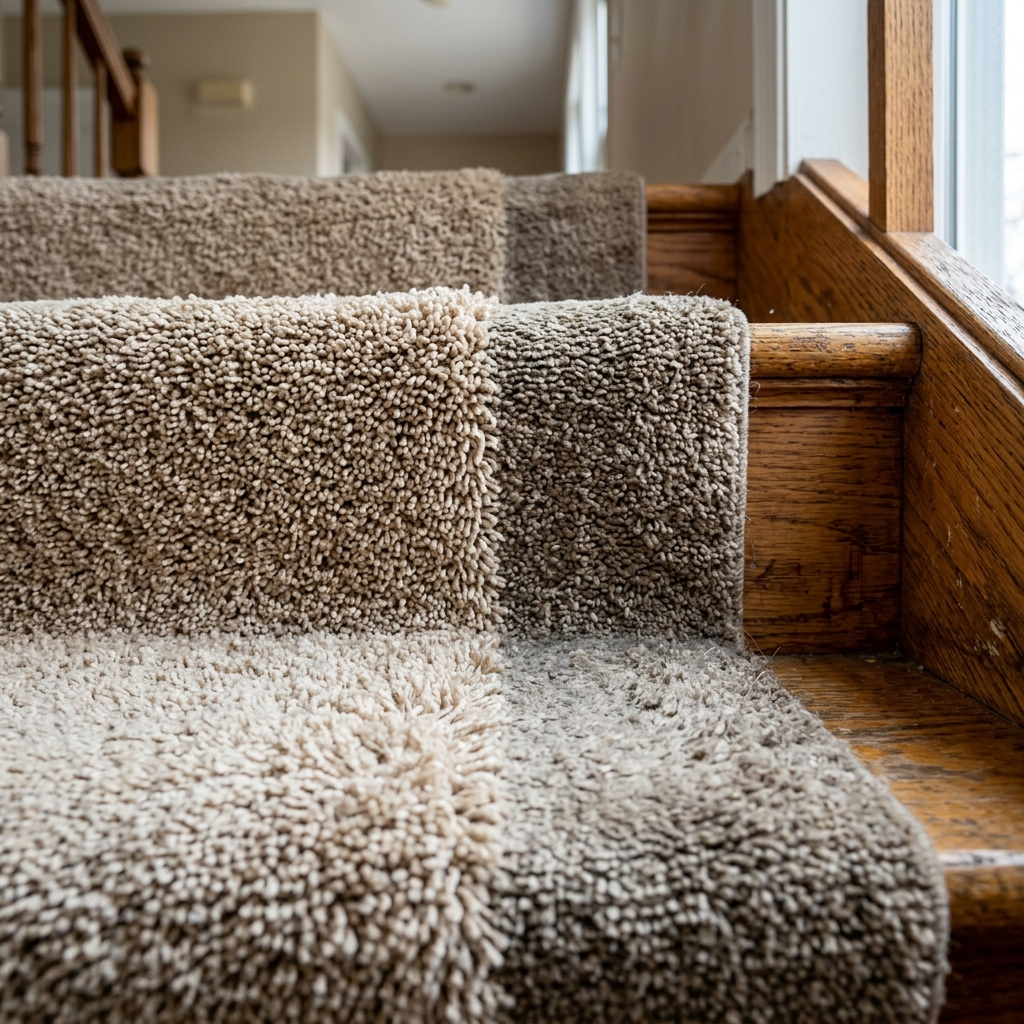
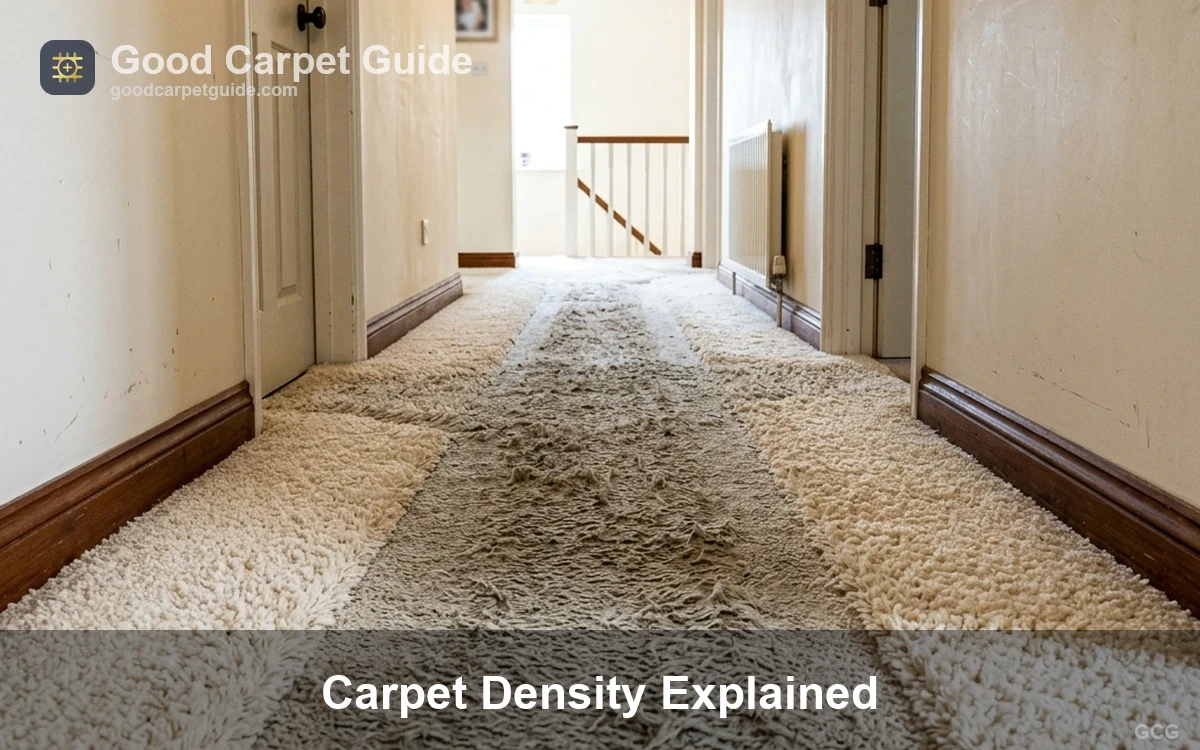
Dense nylon yarns maintain texture definition while crushed polyester fibers flatten into permanent traffic lanes that continue into the discussion about pile construction and carpet density.

BISSELL Big Green Professional
The industry standard for deep cleaning high-traffic zones. Effectively lifts crushed fibers and removes deep-seated soil that destroys nylon resilience.
Check Price on Amazon---
Which Carpet Construction Prevents Matting and Tracking?
Low-pile dense carpet construction prevents matting and tracking because short tightly packed yarn systems distribute pressure more evenly across the carpet surface. Dense carpet construction also limits footprint visibility and vacuum marks.
High-pile plush carpet fails faster in traffic zones because tall yarn systems bend farther during compression. Tall yarn systems remain permanently distorted after repeated traffic cycles.

Scotchgard Rug & Carpet Protector
An invisible shield that prevents soil from bonding to high-traffic fibers. Essential for maintaining the "new carpet" look in hallways and stairs.
Check Price on AmazonBest Carpet Styles for High Traffic Areas
| Carpet Style | Traffic Performance | Common Failure Pattern |
|---|---|---|
| Textured Cut Pile | Excellent | Minor flattening over time |
| Low-Pile Pattern Loop | Excellent | Minimal visible wear |
| Berber Loop | Very Good | Snagging from pets |
| Saxony Plush | Poor | Footprints and shading |
| Frieze | Moderate | Fiber untwisting |
Textured cut pile performs best in residential traffic zones because twisted yarn tips scatter light inconsistently. Textured carpet hides vacuum marks, footprints, and directional shading better than smooth plush surfaces.
Loop pile carpet resists crushing because continuous loops distribute body weight across compact fiber rows. Commercial offices frequently use loop pile systems because loop construction survives rolling loads and repetitive traffic.
Avoid ultra-soft “silk” carpets in busy households. One Mohawk Silk Strand buyer explained the common complaint: “We were talked into it even though I said I don’t want to see footprints. Well it was put in and all I see are footprints. I hate it so much.”
Why Face Weight Creates Misleading Comparisons
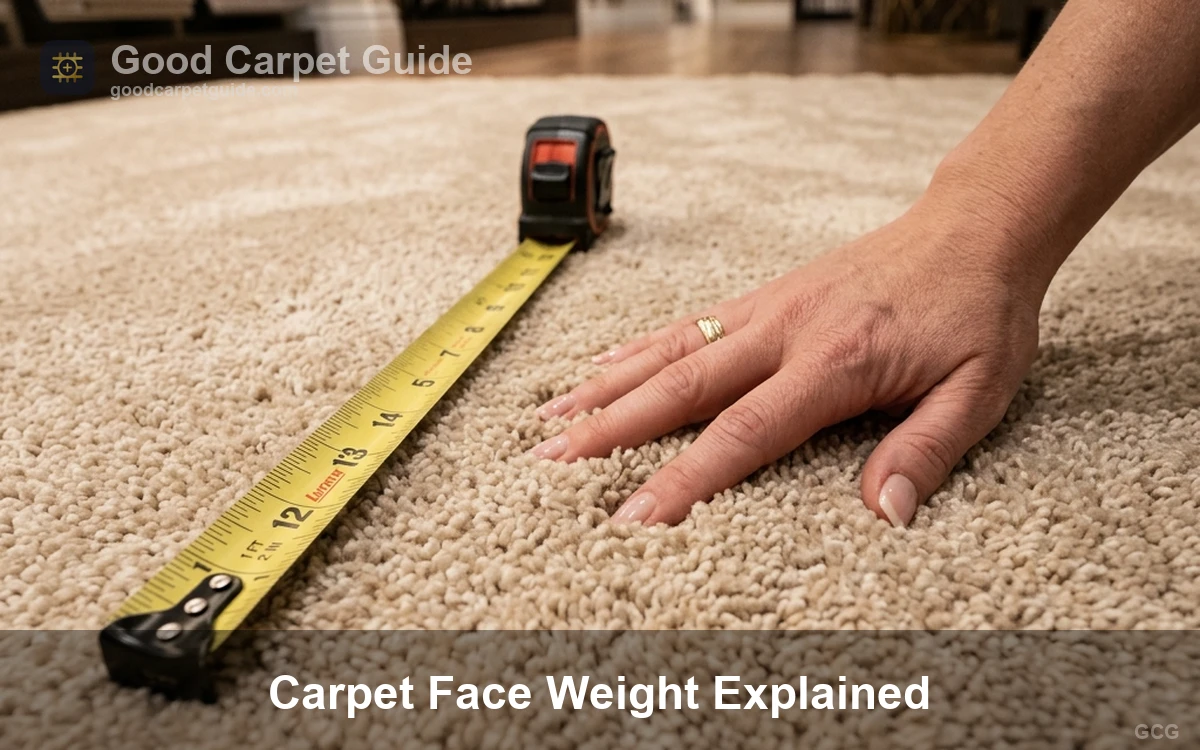
Face weight measures yarn ounces per square yard. Face weight does not measure yarn density, pile height, or tuft spacing.
A 60-ounce shag carpet performs worse than a 40-ounce dense textured nylon because loose tall yarn systems collapse faster than short compact yarn systems.
Focus on these specifications instead:
* Choose carpet density above 2,500 for residential hallways.
* Choose pile heights below 0.5 inches for stairs.
* Choose twist levels above 5 turns per inch for cut pile carpets.
* Choose low-profile textured constructions instead of plush finishes.
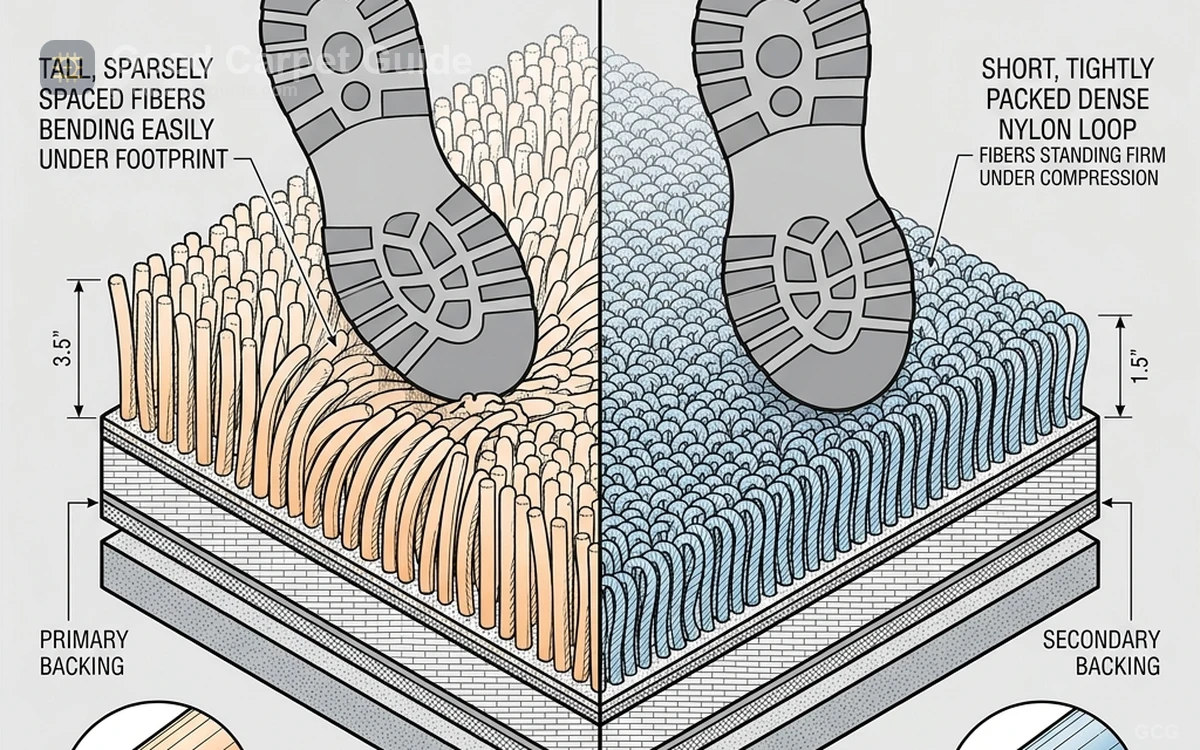
Carpet density measurements reveal why low-profile textured constructions outperform high-pile plush carpets discussed previously and connect directly to carpet padding performance in the next section.
---
Why Carpet Padding Determines Half of Carpet Lifespan
Carpet padding determines roughly 50% of carpet lifespan because carpet cushion controls vertical movement, impact absorption, and backing stress during foot traffic. Carpet padding also affects wrinkle formation, seam stress, and stair stability.
Professional installers repeatedly emphasize the same specification range for traffic areas:
| Padding Specification | Recommended Range |
|---|---|
| Thickness | 3/8 inch |
| Density | 8 lb to 10 lb |
| Material | Rebond foam or rubber |
| Traffic Use | Hallways, stairs, living rooms |
Thick carpet padding feels soft inside a showroom. Thick carpet padding accelerates carpet failure inside active homes because excessive vertical movement stretches the backing system.
Installers describe the process directly. Thick underlayment allows carpet flexing during every footstep. Carpet flexing weakens backing attachment points and produces ripples. Rippled carpet wears three to four times faster than properly tensioned carpet.
Why Stairs Need Dense Thin Padding
Stairs compress carpet fibers aggressively because body weight concentrates onto narrow tread surfaces. Thick soft padding increases slipping hazards on staircases.
A homeowner explained the issue clearly: “Several people including myself have slipped down my stairs because of the thick slick carpet.”
Use dense thin padding on stairs because dense padding stabilizes footing and minimizes vertical flex.

RUGPADUSA - Basics - 1/2" Thick
100% Felt padding that provides maximum density without the excessive vertical flex of soft foam. Perfect for stabilizing area rugs over high-traffic carpet.
Check Price on AmazonFollow these professional carpet padding guidelines to ensure your subfloor protection matches your fiber choice.
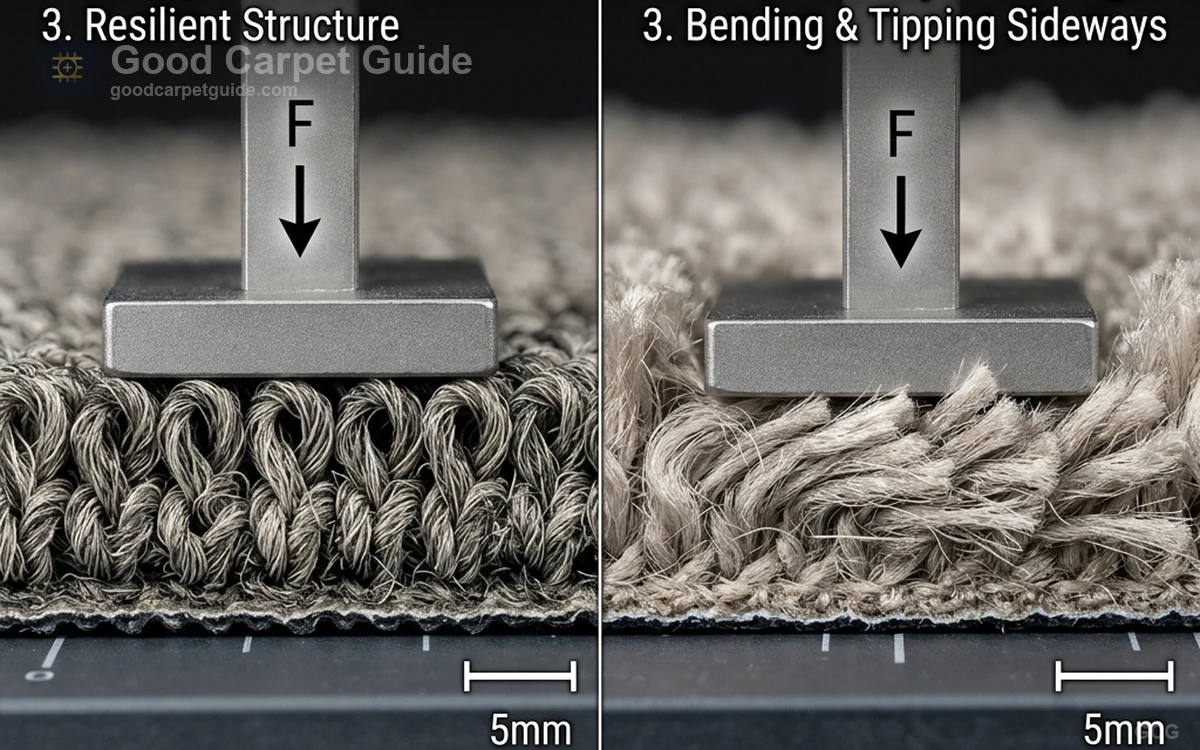
Thin dense carpet cushion stabilizes carpet backing and reduces ripple formation, leading directly into the installation methods that preserve carpet tension.
---
Why Carpet Installation Matters More Than Brand Marketing
Carpet installation matters more than brand marketing because improper stretching destroys carpet structure regardless of fiber quality. Carpet installation also determines seam stability, wrinkle resistance, and long-term texture appearance.
Professional installers repeatedly criticize shortcut installations where crews skip power stretching tools. A power stretcher mechanically tensions carpet across the room before attachment.
Under-tensioned carpet forms ripples because loose backing systems shift during repeated foot traffic. Rippled carpet develops accelerated wear along raised sections.
Installation Errors That Destroy Carpet Early
| Installation Error | Result |
|---|---|
| No power stretcher | Ripples and buckling |
| Thick soft padding | Excessive flexing |
| Weak seam sealing | Fraying edges |
| Poor stair wrapping | Loose tread movement |
| Incorrect tack strip spacing | Edge separation |
Homeowners frequently blame manufacturers for failures caused by installation shortcuts. Professional installers consistently separate fiber failure from installation failure.
One installer explained that improperly stretched carpet “wears out 3-4 times faster than the rest of the carpet.”
Why Marketing Demonstrations Mislead Buyers
Manufacturers frequently emphasize stain tests instead of compression recovery tests. Mohawk’s SmartStrand Rhino marketing campaign demonstrated stain resistance and fiber survival under heavy animal traffic.
Professional cleaners criticize the demonstration because mechanical wear differs from stain resistance. Thousands of pounds of repetitive pressure permanently alter carpet texture even when fibers remain technically intact.
SmartStrand triexta excels at stain resistance because color exists inside the fiber structure rather than on surface dye coatings. SmartStrand triexta still develops tracking and matting under concentrated traffic lanes according to multiple homeowner reports.
---
Which Carpet Brands Perform Best in Real Homes?
Shaw Anso Nylon, Fabrica, and Masland perform best in real high-traffic homes because those brands prioritize dense nylon constructions over ultra-soft showroom textures. Dream Weaver and Mohawk occupy different positions based on budget and stain priorities.
Best Carpet Brands by Use Case
| Brand | Best Use Case | Primary Strength | Primary Weakness |
|---|---|---|---|
| Shaw Anso Nylon | Busy family homes | Texture retention | Higher cost |
| Fabrica | Luxury installations | Premium construction | Expensive |
| Masland | Designer interiors | Dense nylon systems | Expensive |
| Mohawk SmartStrand | Pet households | Stain resistance | Tracking |
| Dream Weaver | Budget remodels | Fade resistance | Crushing |
Shaw Anso Nylon
Shaw Anso Nylon consistently receives installer support because Shaw uses durable nylon systems with strong twist retention. Shaw Anso products maintain appearance longer in hallways and stairs than comparable polyester carpets.
Fabrica and Masland
Fabrica and Masland represent premium residential carpet manufacturing under the Dixie Group portfolio. Installers describe Fabrica and Masland as long-term investments because dense premium constructions survive 20 to 25 years with proper maintenance.
One installer recommendation summarized the market clearly: “If you want true premium carpeting, consider Fabrica, Nourison, or Masland. DO NOT cheap out on the cushion.”

ROBERTS Carpet Rake and Groomer
The professional's secret weapon for high-traffic zones. This rake lifts matted fibers and restores the original texture of nylon and triexta carpets.
Check Price on AmazonMohawk SmartStrand
Mohawk SmartStrand divides homeowner and installer opinions. Families appreciate SmartStrand stain resistance because triexta fibers resist permanent spills from pets, juice, wine, and food.
Cleaners and installers criticize SmartStrand texture retention because triexta fibers track footprints heavily and develop visible traffic lanes.
A homeowner described the issue directly: “Threads are pulling out all over the place and it looks terrible.”
Dream Weaver
Dream Weaver occupies the budget segment using solution-dyed polyester branded as PureColor. Dream Weaver resists fading effectively because pigment exists throughout the fiber structure.
Dream Weaver still uses PET polyester construction. PET polyester crushes faster than nylon under concentrated traffic loads.
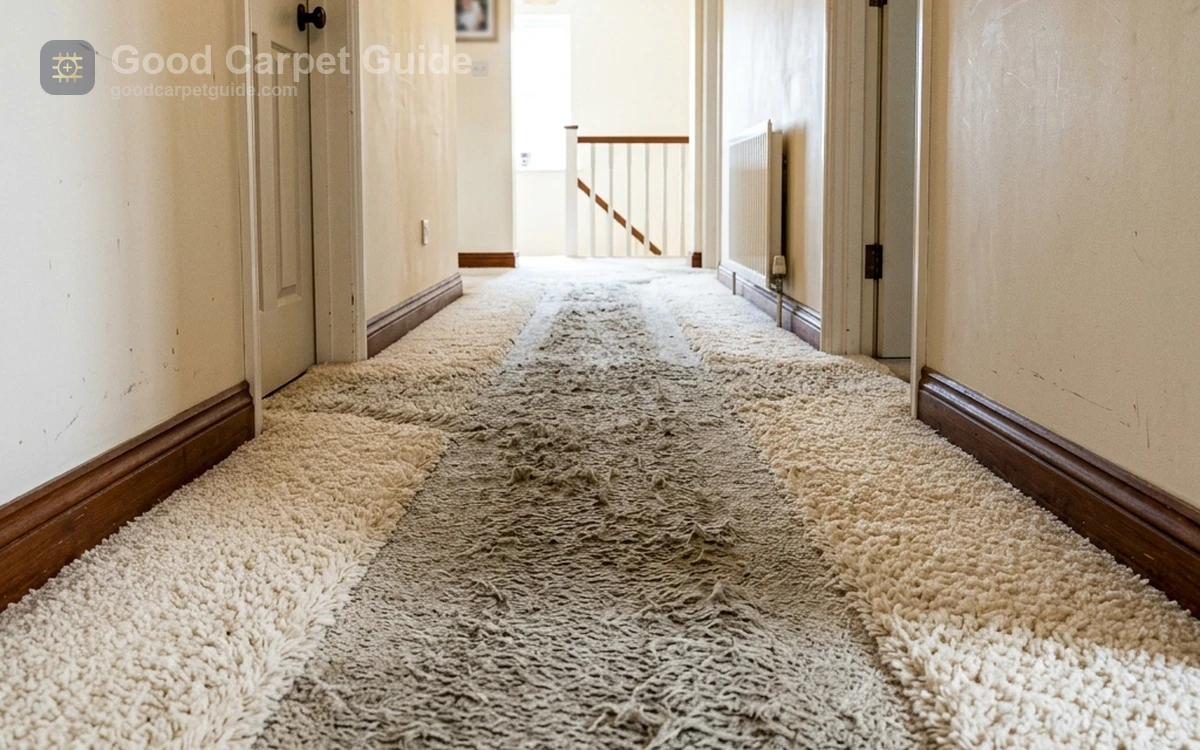
Brand-level construction differences explain why dense nylon systems retain texture better than soft polyester surfaces discussed previously and transition into long-term ownership costs.
---
How Much Does High Traffic Carpet Cost?
High traffic carpet costs range from budget polyester installations under mid-tier pricing to premium nylon systems costing nearly double upfront but lasting more than twice as long. Total carpet cost also includes padding, installation labor, seam work, stair wrapping, and furniture moving.
One homeowner reported spending “almost $10,000 for whole small house” on Shaw Stainmaster carpet installation.
Carpet Cost Tiers
| Tier | Brands | Fiber Type | Relative Cost | Expected Lifespan |
|---|---|---|---|---|
| Budget | Dream Weaver | Polyester (PET) | Lowest | 5-8 years |
| Mid-Tier | Shaw, Mohawk | Nylon / Triexta | Moderate to High | 10-20 years |
| Luxury | Fabrica, Masland | Premium Nylon | Highest | 20-25 years |
Budget polyester installations reduce upfront cost but increase replacement frequency. Luxury nylon installations increase upfront cost but reduce lifetime replacement cycles.
Where Buyers Waste Money
Homeowners frequently overspend on softness and underspend on padding quality. Ultra-soft plush fibers flatten quickly while dense padding dramatically extends lifespan.
Homeowners also overvalue face weight marketing. Dense low-profile nylon outperforms heavy fluffy polyester despite lower face-weight numbers.
Which Upgrades Deliver Real Value
* Choose dense nylon fibers instead of ultra-soft polyester filaments.
* Choose 8 lb to 10 lb carpet padding instead of thick soft cushion.
* Choose professional power stretching during installation.
* Choose textured low-pile constructions for hallways and stairs.
* Choose premium padding before upgrading decorative softness.
You can learn how to estimate total carpet cost by calculating labor, padding, and materials separately.
---
Which Carpet Works Best for Specific High Traffic Areas?
Different traffic zones require different carpet constructions because stairs, hallways, basements, and family rooms create different compression patterns and moisture exposure levels. Carpet selection improves when the traffic pattern matches the carpet structure.
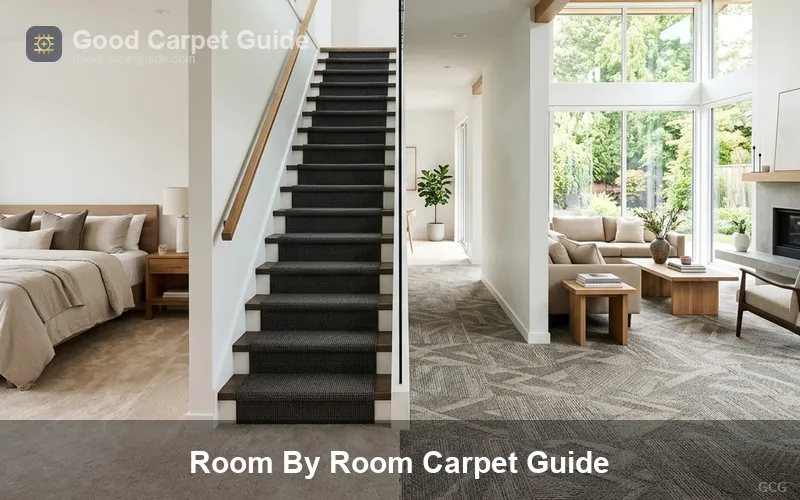
Best Carpet for Stairs
Use dense textured nylon on stairs because stair traffic concentrates body weight into narrow repeated pathways. Use low-pile construction because thick plush carpet increases slipping risk.
Best Carpet for Hallways
Use patterned loop or textured cut pile nylon in hallways because hallways create directional traffic lanes. Dense yarn systems maintain visual consistency longer than plush styles.
Best Carpet for Pet Households
Use triexta or solution-dyed nylon in pet households because permanent stain resistance matters alongside abrasion resistance. Avoid loose loop Berber styles if pets have claws because loop snagging damages rows.
Best Carpet for Basements
Use low-pile solution-dyed synthetic carpet in basements because synthetic fibers resist moisture absorption better than natural fibers. Dense low-profile constructions also dry faster after humidity exposure.
Best Carpet for Rental Properties
Use commercial-grade textured nylon in rental properties because commercial yarn systems survive furniture movement, inconsistent maintenance, and concentrated wear patterns.
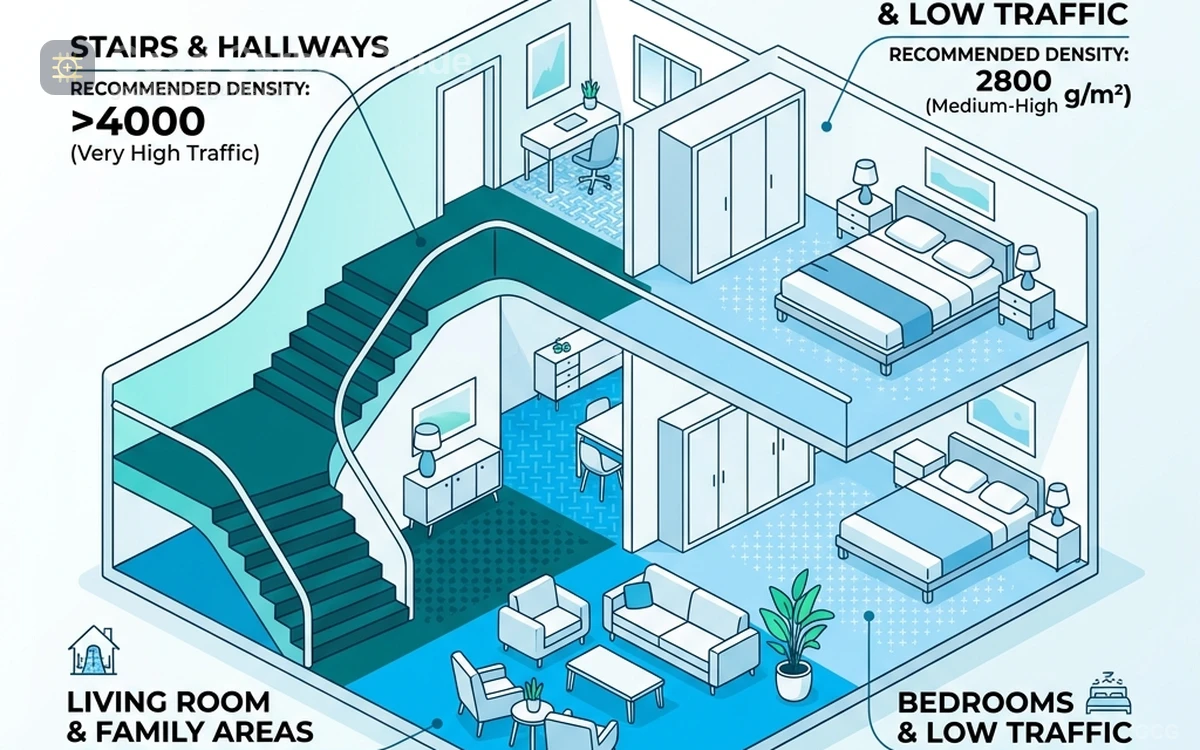
Dense textured nylon construction stabilizes traffic lanes and stair treads, reinforcing the final recommendations for long-term carpet performance.
---
Final Recommendations for High Traffic Carpet Buyers
Use solution-dyed nylon carpet if long-term durability matters more than initial softness. Nylon maintains texture integrity, resists crushing, and survives hallway and stair traffic better than polyester.
Use textured cut pile or low-profile loop construction instead of plush Saxony styles. Dense compact yarn systems prevent visible tracking and permanent traffic lanes.
Use 3/8-inch 8 lb to 10 lb carpet padding instead of thick soft cushioning. Dense padding stabilizes carpet backing and prevents ripple formation.
Use professional power-stretch installation because improper tension destroys carpet lifespan regardless of fiber quality.
Choose Shaw Anso Nylon for balanced durability and mainstream availability. Choose Fabrica or Masland for long-term premium installations with 20-to-25-year lifespan expectations. Choose Mohawk SmartStrand if permanent stain resistance outweighs footprint visibility concerns. Choose Dream Weaver only for lower-budget spaces with moderate traffic loads.
Avoid ultra-soft polyester carpets in stairs, hallways, entryways, and active family rooms because plush PET fibers crush quickly and develop permanent traffic shading.
---
Amazon Buyer's Guide: What to Search for High-Traffic Carpet
If you are looking for supplementary products to protect your investment, use these specific semantic search terms on Amazon to find the highest-rated professional equipment:
* For Deep Maintenance: Search for commercial grade carpet extractor (Avoid cheap "upright" models for high-traffic zones).
* For Fiber Protection: Search for surfactant-free carpet protector to avoid rapid re-soiling.
* For Matting Restoration: Search for carpet pile lifter or nylon fiber groomer .
* For Padding Upgrades: Search for frothed foam 10lb carpet padding if you are buying for wall-to-wall installations.