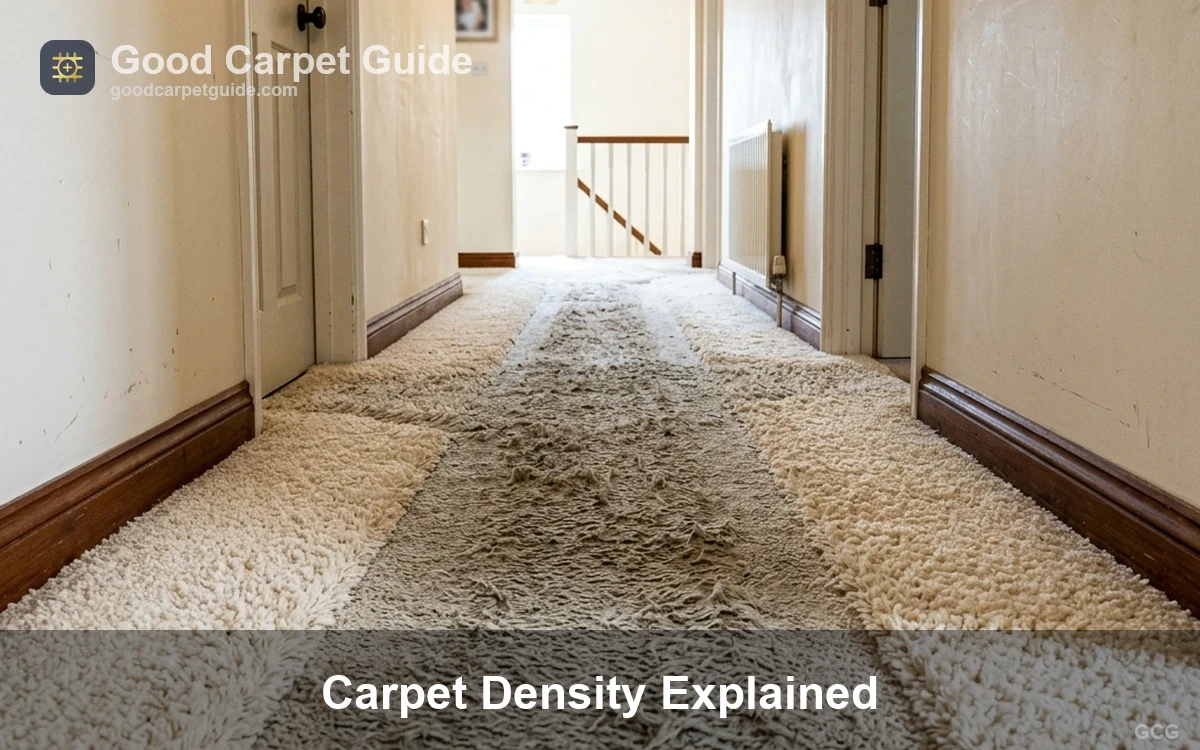
Carpet density explained means understanding how tightly carpet fibers occupy physical space inside the carpet structure. Carpet density explained also means separating showroom softness from long-term structural durability. Most residential carpet failures do not begin with holes or fiber loss. Most residential carpet failures begin with visible traffic lanes, gray shading, crushed pile, and permanent matting that flooring installers call “ugly-out.”
The ugly-out phenomenon explains why homeowners replace carpets that still contain intact fibers. The carpet fibers remain physically present, but the pile loses resilience, directional uniformity, and vertical support. A carpet with low density collapses under repetitive compression because the fiber bundle lacks structural reinforcement. A carpet with high density resists crushing because adjacent yarn bundles support each other during foot traffic.
The carpet industry heavily markets face weight, softness, plush texture, and deep pile height because face weight sells carpet quickly in retail showrooms. Density preserves appearance retention over years of use. Flooring installers repeatedly remove low-density polyester carpets after only 1-3 years because tall fiber systems tip sideways and remain permanently crushed. Manufacturers frequently deny warranty claims for matting because flattening falls under “appearance change” rather than manufacturing defect classification.
Carpet density directly affects:
- Traffic lane visibility
- Furniture dent recovery
- Stair durability
- Hallway crushing resistance
- Seam stability
- Latex backing stress
- Carpet pad compatibility
- Long-term replacement cost
What Carpet Density Means
Carpet density is the measurement of how tightly carpet fibers are packed into the carpet backing. Carpet density measures fiber concentration relative to vertical pile height rather than total yarn weight alone.
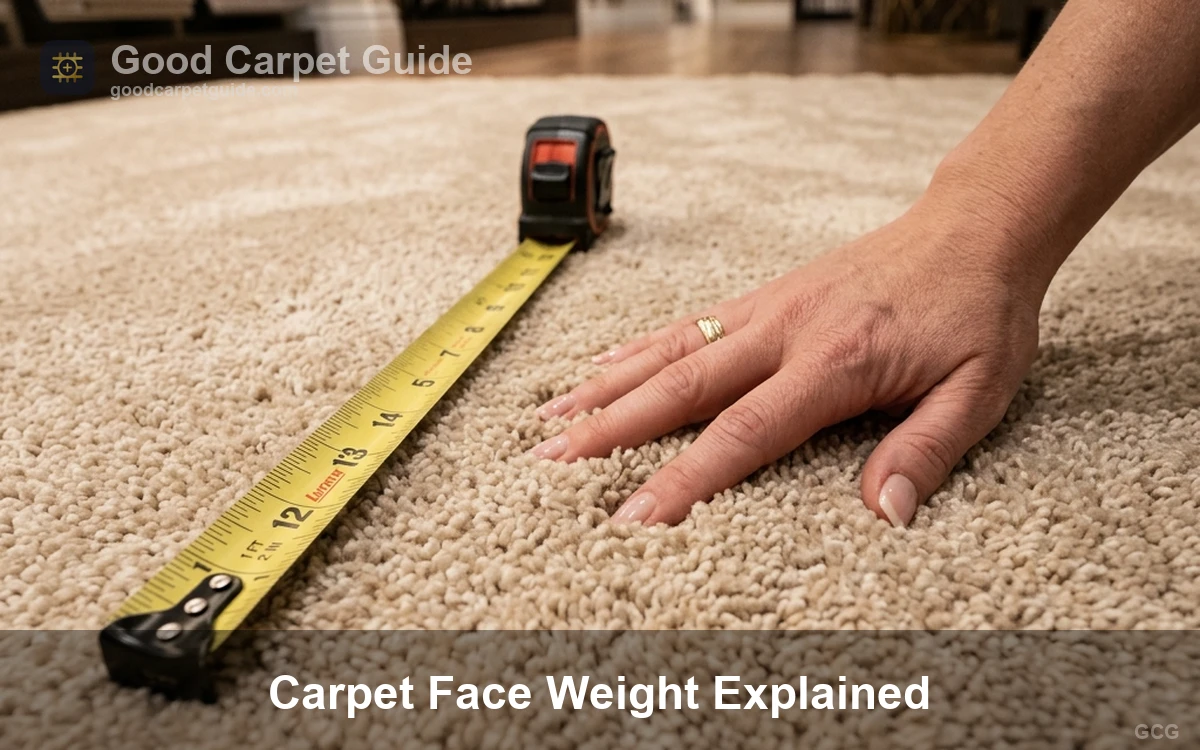
Face weight measures yarn mass per square yard. Face weight does not measure fiber spacing. A carpet with extremely tall fibers achieves a high face weight while still containing large empty air gaps between yarn bundles.
Density resolves that problem mathematically.
The industry-standard carpet density formula is:
Density = (Face Weight × 36) / Pile Height
A carpet with 40-ounce face weight and 0.5-inch pile height produces a density rating of 2,880 oz/cu yd. A carpet with the same 40-ounce face weight and 0.3-inch pile height produces a density rating of 4,800 oz/cu yd. The shorter pile carpet performs dramatically better under traffic because the same fiber mass occupies a smaller vertical space.
Flooring professionals summarize the relationship with a common industry statement:
“Face weight sells carpet. Density keeps it looking good.”
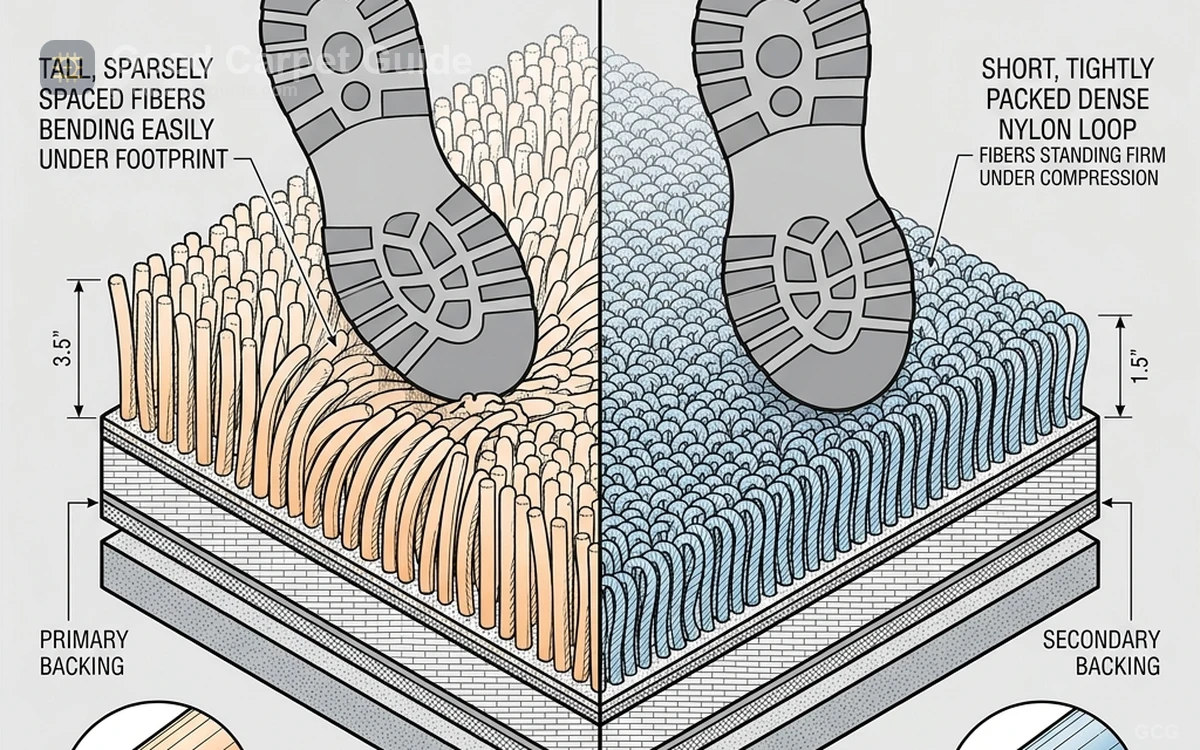
Low-density plush carpet spreads face weight across tall fiber columns, while high-density carpet compresses identical yarn weight into shorter, structurally reinforced pile architecture that resists ugly-out traffic patterns.
A dense carpet behaves similarly to tightly packed bristles on a commercial brush. The neighboring fibers physically support adjacent yarn strands during compression cycles. Sparse carpet construction leaves fibers unsupported, allowing the yarn to fold sideways permanently.
Why Face Weight Misleads Homeowners
Face weight misleads homeowners because face weight measures fiber quantity without measuring fiber distribution. Carpet retailers frequently advertise high face-weight numbers because consumers associate heavier carpet with higher quality.
A 60-ounce polyester carpet with extremely tall pile height crushes faster than a 38-ounce dense nylon carpet. The tall polyester yarn lacks lateral support and collapses under concentrated foot pressure. Homeowners can read our installer guide to carpet face weight explained to understand why high-ounce showroom carpets frequently fail.
Retail showrooms amplify the problem through tactile perception. Thick plush carpet feels luxurious during a 15-second showroom interaction because deep fibers create immediate softness underfoot. Long-term traffic performance follows structural mechanics rather than showroom softness.
Installers repeatedly describe the same replacement cycle:
- Homeowners purchase ultra-soft polyester carpet.
- Homeowners notice visible traffic lanes within 12-24 months.
- Homeowners observe permanent furniture dents.
- Homeowners file appearance complaints.
- Manufacturers classify crushing as normal wear behavior.
Several flooring professionals specifically identify ultra-soft plush styles as the primary premature failure category. Mohawk’s SmartStrand Silk and Shaw’s Caress product families exemplify the modern “soft carpet” marketing trend. The softness derives partly from thinner fiber filaments and taller pile architecture. Taller pile architecture increases tip-over risk.
A flooring installer described the problem bluntly:
“We have continuously pulled out polyester carpets over and over after 1-3 years due to matting and wear patterns.”
The physical mechanism remains simple. Long fibers bend farther during compression. Long fibers also struggle to rebound vertically after repeated pivot traffic.
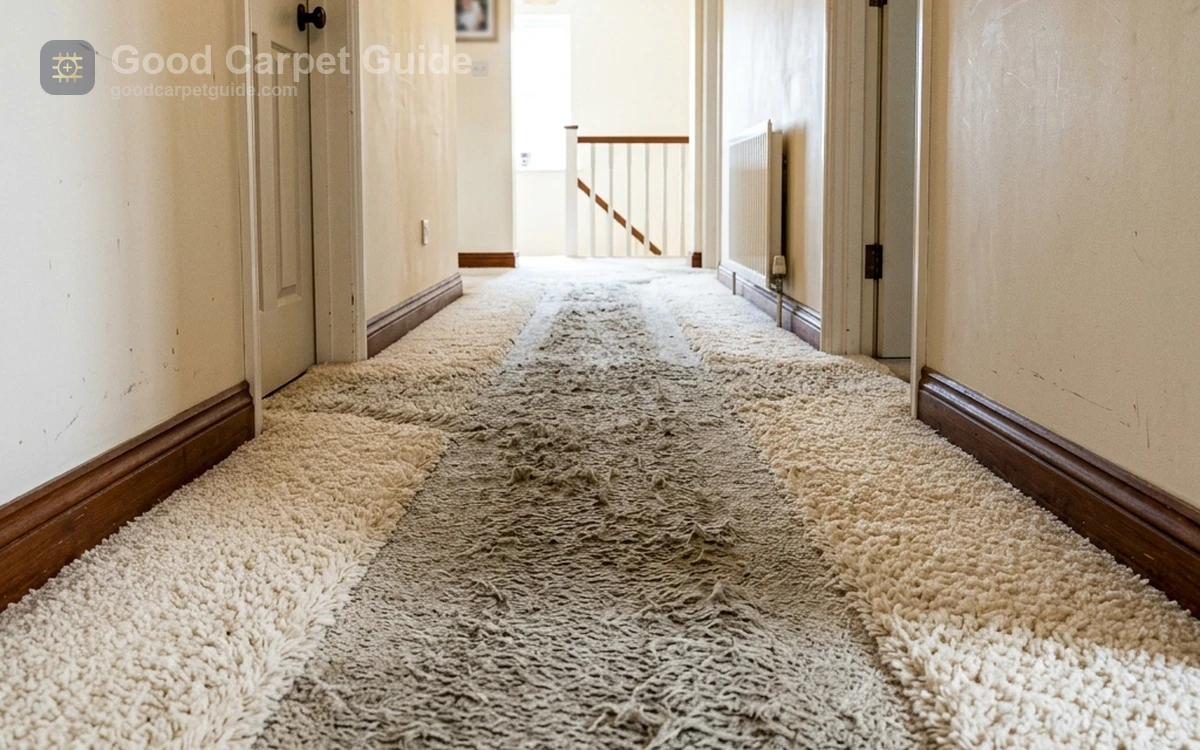
Traffic-lane matting develops when tall low-density fibers lose vertical resilience, while protected perimeter fibers preserve original texture and pile orientation outside compression zones.
:::AffiliateProduct
{
"id": "01AFFILIATEGRNDGROOM",
"name": "Grandi Groom Carpet Rake",
"description": "The professional standard to revive matted high-traffic carpet pile. Gently lifts and aligns crushed fibers to restore original vertical structure and loft.",
"url": "https://amzn.to/3WqP4oH",
"badge": "Best for Crushed Pile"
}
:::
How to Calculate Carpet Density Correctly
Calculate carpet density by combining face weight and pile height into a single structural durability metric. Carpet spec sheets normally include both measurements.
Use this formula:
D = (FW × 36) / PH
Definitions:
- D = Density
- FW = Face Weight in ounces
- PH = Pile Height in inches
Example 1: Low-Density Plush Polyester
- Face Weight: 50 oz
- Pile Height: 0.8 inches
Calculation:
D = (50 × 36) / 0.8 = 2,250
A density score of 2,250 indicates weak traffic resistance despite the high face weight.
Example 2: Dense Textured Nylon
- Face Weight: 38 oz
- Pile Height: 0.32 inches
Calculation:
D = (38 × 36) / 0.32 = 4,275
A density score of 4,275 indicates strong structural durability suitable for hallways and stairs.
The second carpet contains less yarn weight but dramatically higher compression resistance because the fibers support each other more effectively.
Density Benchmarks
| Density Rating | Traffic Performance | Suitable Areas |
|---|---|---|
| Below 2,500 | Poor | Guest rooms, low-use spaces |
| 2,500-3,000 | Moderate | Average bedrooms |
| 3,000-3,500 | Good | Living rooms |
| 4,000+ | Excellent | Hallways, stairs, active households |
FHA standards reinforce those thresholds.
- FHA Class 1 moderate traffic requires minimum 3,300 density.
- FHA Class 2 heavy traffic requires minimum 4,000 density.
Carpets below those thresholds fail the FHA definition of basic serviceability for moderate residential use.
Why High-Density Carpet Lasts Longer
High-density carpet lasts longer because dense fiber systems distribute compression force across more yarn bundles. Dense carpet construction reduces individual fiber stress during every footstep.
Low-density carpet concentrates body weight onto isolated yarn tufts. Repeated compression fractures fiber resilience and weakens tuft orientation. The carpet visually grays because crushed fibers reflect light unevenly.
High-density carpet improves:
- Resists traffic-lane matting
- Resists furniture compression dents
- Resists seam separation
- Improves pile recovery
- Improves stair-edge retention
- Improves appearance retention
- Reduces backing stress
Fiber type still matters. Density alone does not compensate for weak polymer resilience.
nylon vs polyester carpet performance differences become especially visible in high-density constructions because nylon possesses stronger elastic recovery characteristics than commodity polyester.
Nylon vs Polyester Under Traffic
Nylon functions as an engineered synthetic polymer with high resilience memory. Polyester functions as a softer hydrophobic fiber with lower crush recovery.
A dense nylon carpet preserves texture significantly longer than dense polyester under identical traffic loads.
Triexta Performance Characteristics
Triexta occupies the middle ground between polyester softness and nylon resilience. Mohawk SmartStrand Silk products use triexta fibers with softer filament structures. Dense triexta performs substantially better than low-density polyester but still trails dense commercial nylon in severe traffic environments.
Loop vs Plush Construction
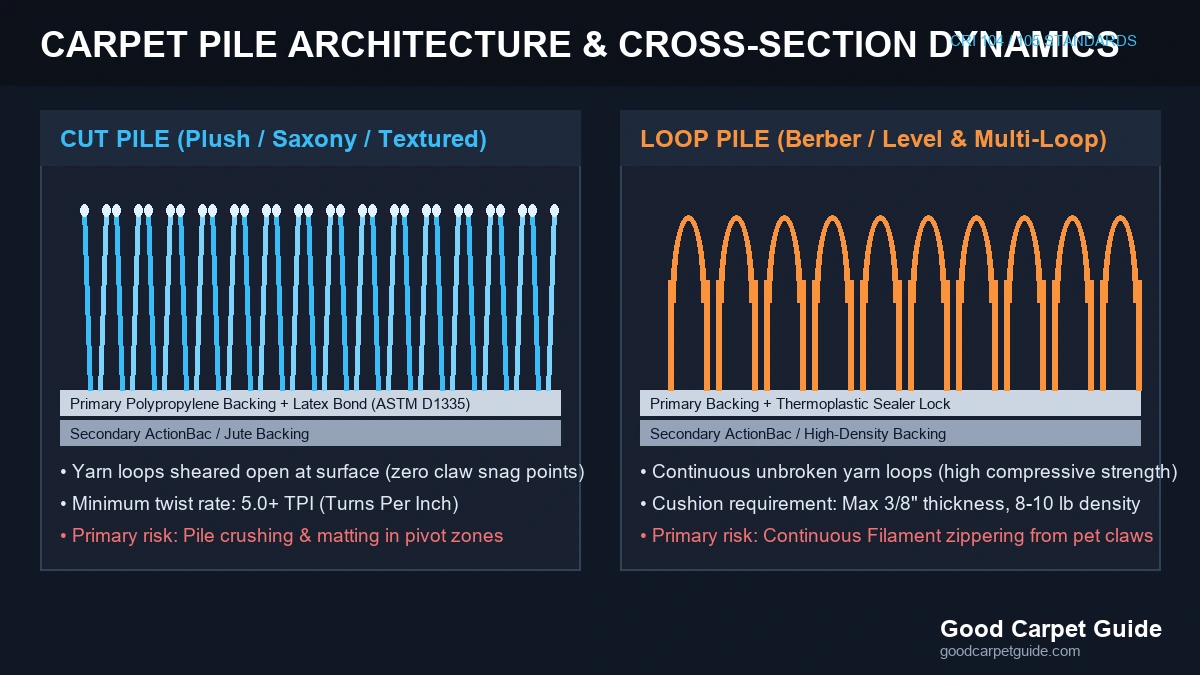
Loop carpet construction naturally increases structural support because looped yarn anchors both fiber ends into the backing system. Plush carpet construction leaves fiber tips exposed and vulnerable to directional crushing.
Dense textured loop carpet outperforms ultra-soft plush carpet in:
- Hallways
- Stairs
- Family rooms
- Pet zones
- Entry corridors
Homeowners searching for the best carpet for high-traffic areas should prioritize density and pile structure before softness.
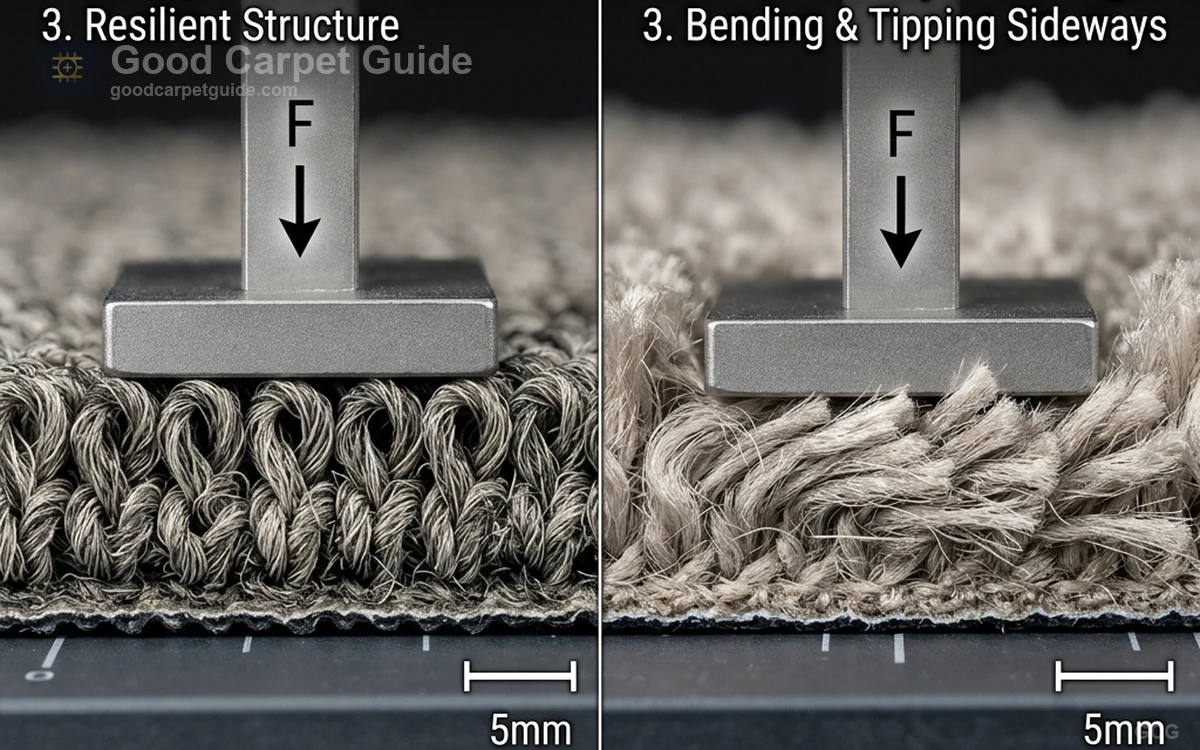
Dense loop construction stabilizes yarn bundles during repetitive compression, while tall plush fibers fold sideways under concentrated traffic loads and retain visible wear patterns.
:::AffiliateProduct
{
"id": "01BR_PAD_HERO",
"name": "Future Foam 10lb Rebond Cushion",
"description": "Recommended by flooring professionals for stairs, halls, and active family rooms. Delivers superior IFD support to prevent vertical fiber collapse.",
"url": "https://amzn.to/3UEkR3l",
"badge": "Installer Recommended"
}
:::
How Carpet Padding Affects Carpet Density Performance
Carpet padding affects carpet density performance by controlling how deeply foot pressure compresses the fiber system. Carpet cushion selection changes the stress transferred into the carpet backing and pile yarn.
A weak carpet pad destroys dense carpet prematurely. A proper carpet pad stabilizes the carpet structure and absorbs impact energy before compression reaches the backing adhesive.
6lb Padding Problems
Low-cost 6lb rebond padding collapses rapidly in hallways and stairs. Collapsed padding removes shock absorption and forces the carpet fibers directly against the subfloor.
Installers repeatedly observe hallway collapse within two years using cheap rebond cushion.
8lb Padding Performance
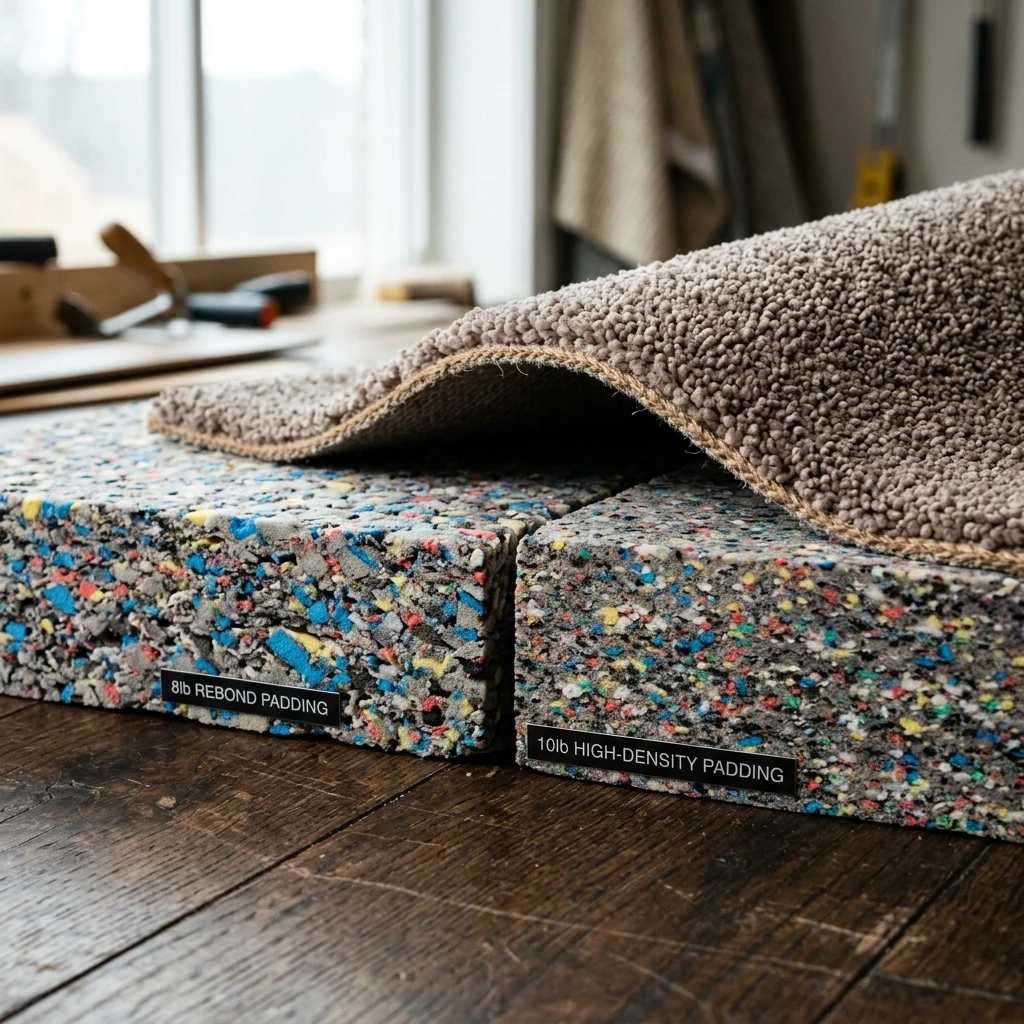
8lb carpet padding functions as the residential industry sweet spot. 8lb rebond balances comfort, compression resistance, and shock absorption effectively for:
- Living rooms
- Bedrooms
- Family rooms
- Moderate traffic zones
10lb Padding Performance
10lb carpet padding performs best in high-stress zones because firmer cushion prevents excessive carpet flexing.
10lb cushion improves:
- Stair durability
- Hallway resilience
- Backing stability
- Latex preservation
- Tack-strip retention
Dense carpet paired with 10lb cushion creates a stable flooring system that minimizes vertical flex.
Why Thick Padding Causes Failure
Padding thickness above 7/16 inch creates a trampoline effect. Excessive flex causes the carpet backing to bend repeatedly during foot traffic.
Repeated vertical flex:
- Pulls carpet away from tack strips
- Weakens seam integrity
- Cracks latex backing adhesive
- Creates ripples and buckling
- Accelerates delamination
8lb vs 10lb carpet padding differences become especially important beneath dense nylon carpet because high-density fiber systems transfer more concentrated compression force into the cushion layer.
General underlayment selection principles appear in the broader carpet padding guide.
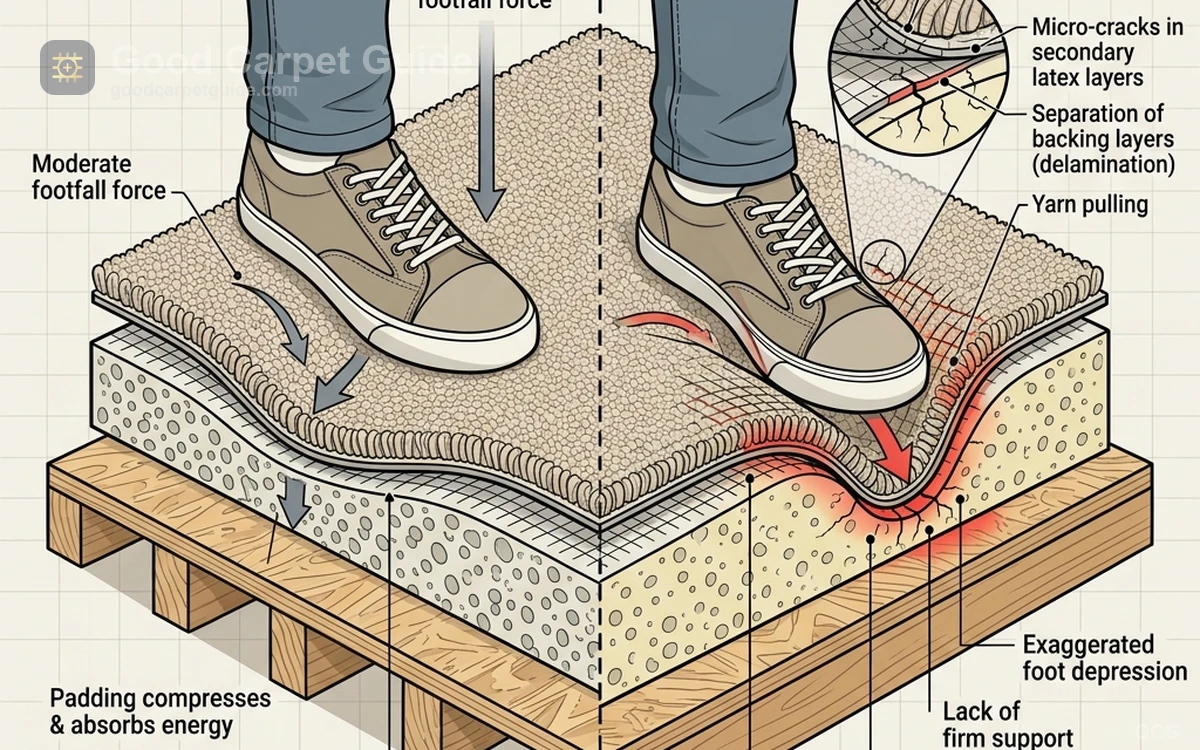
Excessively thick carpet padding allows vertical carpet flex that strains latex backing adhesive, destabilizes tack-strip tension, and creates permanent ripple formation across high-traffic flooring systems.
How Carpet Density Changes Real Ownership Cost
Carpet density changes real ownership cost because premature ugly-out forces replacement long before fiber loss occurs. Cheap carpet frequently produces higher lifetime flooring expense.
Entry-Level Low-Density Polyester
| Carpet Type | Material Cost | Installed Cost | High-Traffic Lifespan |
|---|---|---|---|
| Entry Polyester | $1.00-$3.00/sq ft | $3.00-$5.00/sq ft | 3-5 years |
Examples:
- Lowe’s Stainmaster Essentials
- Home Depot LifeProof Cardigan SD Polyester
Low-density polyester produces low upfront cost but rapid appearance degradation.
Premium Face-Weight Polyester
| Carpet Type | Material Cost | Installed Cost | High-Traffic Lifespan |
|---|---|---|---|
| Premium Polyester | $3.00-$5.99/sq ft | Higher install labor possible | 5-7 years |
Example:
- Home Depot LifeProof Dewdrop III SD Polyester
Premium polyester improves softness and visual richness but still suffers from traffic-lane crushing if density remains weak.
High-Density Nylon
| Carpet Type | Material Cost | Installed Cost | High-Traffic Lifespan |
|---|---|---|---|
| High-Density Nylon | $4.00-$8.00/sq ft | $7.00-$10.00/sq ft | 15-20 years |
Examples:
- Stainmaster PetProtect Nylon
- Anso Nylon
- Home Depot LifeProof Heartfelt Fashion Nylon
Dense nylon carries higher upfront pricing but dramatically lower annualized replacement cost.
Triexta Carpet
| Carpet Type | Material Cost | Installed Cost | High-Traffic Lifespan |
|---|---|---|---|
| Triexta / SmartStrand | $3.00-$6.00/sq ft | $5.00-$9.00/sq ft | 10-15 years |
Example:
- Mohawk SmartStrand Silk
Triexta balances stain resistance, softness, and moderate crush resistance better than commodity polyester.
A homeowner replacing low-density polyester every 5 years spends substantially more over 20 years than a homeowner installing dense nylon once.
Which Carpet Density Works Best for Each Room
Different rooms require different carpet density thresholds because traffic concentration changes compression intensity. Hallways and stairs create repetitive pivot stress concentrated into narrow walking paths.
Bedrooms
Use density ratings above 2,800 for adult bedrooms. Lower traffic reduces compression frequency.
Living Rooms
Use density ratings above 3,200 for family living rooms. Seating zones and walking paths create concentrated wear corridors.
Hallways
Use density ratings above 4,000 with shorter pile height. Hallways create repetitive linear traffic compression.
Stairs
Use density ratings above 4,000 with dense nylon or dense loop construction. Stair noses produce severe localized crushing.
Rental Properties
Use dense textured nylon instead of plush polyester. Rental flooring requires appearance retention more than showroom softness.
Homes With Pets
Use dense low-pile carpet because pet claws increase directional fiber stress. Dense textured nylon and dense triexta resist crushing more effectively than soft polyester plush.
:::AffiliateProduct
{
"id": "01PUBAMZN1RUGPADUSA",
"name": "RugPadUSA - Basics - 1/2\" Felt & Rubber",
"description": "High-density recycled felt and natural rubber backing that provides maximum shock absorption, protection, and sound insulation for active pet households.",
"url": "https://amzn.to/4dDuhb2",
"badge": "Pet & Family Choice"
}
:::
Elderly Households
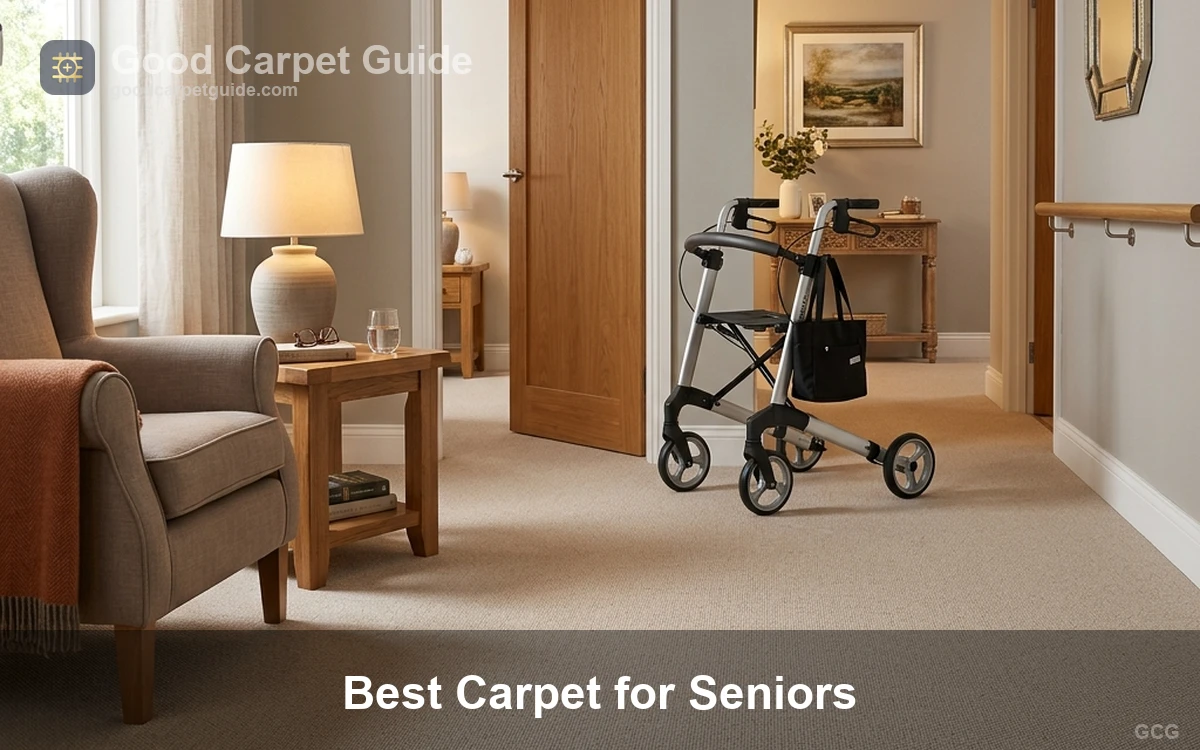
Use moderate-density textured carpet with stable 8lb cushion rather than ultra-soft deep pile. Excessively soft carpet destabilizes walking mechanics and furniture movement.
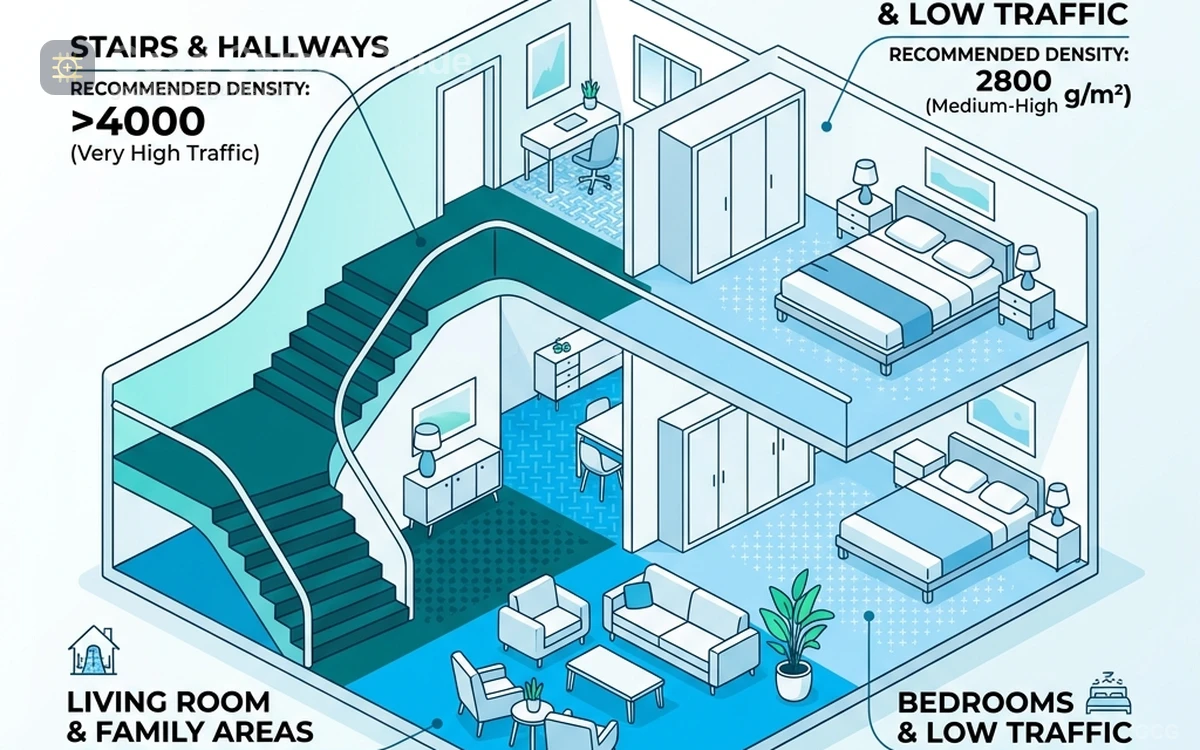
Carpet density requirements increase as traffic concentration intensifies, with stairs and hallways demanding short-pile dense construction while bedrooms tolerate lower structural density thresholds.
How to Avoid the Plush Carpet Marketing Trap
Avoid the plush carpet marketing trap by evaluating density before softness, face weight, or branding language. Retail branding emphasizes tactile sensation because tactile sensation closes showroom sales quickly.
Words such as:
- Silk
- Plush
- Ultra-soft
- Deep pile
- Luxury comfort
- Cloud softness
frequently indicate taller fiber architecture rather than durable construction.
Evaluate carpet specifications using this sequence instead:
- Verify density rating first.
- Verify pile height second.
- Verify fiber type third.
- Verify cushion compatibility fourth.
- Evaluate softness last.
Dense carpet feels firmer initially because the fibers resist compression. Dense carpet preserves appearance dramatically longer because the fiber network remains structurally supported.
Flooring professionals consistently recommend shorter dense pile for households prioritizing longevity over showroom softness.
A dense nylon textured carpet paired with 8lb or 10lb cushion outperforms many ultra-soft luxury carpets costing substantially more per square foot.
Final Recommendations by Use Case
Use dense nylon above 4,000 density for hallways, stairs, active families, and long ownership cycles. Dense nylon delivers the strongest appearance retention and lowest lifetime replacement frequency.
Use dense triexta between 3,200 and 4,000 density for households prioritizing stain resistance and moderate softness without sacrificing structural durability.
Use entry polyester only in low-traffic bedrooms, temporary living situations, or budget-constrained installations where replacement within 3-5 years remains acceptable.
Avoid tall plush polyester carpet in hallways, stairs, rental properties, and active households. Tall plush polyester produces the fastest ugly-out failure pattern.
Pair moderate-density carpet with 8lb cushion in general living spaces. Pair high-density carpet with 10lb cushion in hallways and stairs to stabilize backing structure and reduce flex fatigue.
Reject carpet padding thicker than 7/16 inch because excessive cushion flex damages seams, backing adhesive, and tack-strip retention.
Prioritize density over face weight. Prioritize structural resilience over showroom softness. Dense carpet preserves appearance long after plush low-density carpet develops visible traffic lanes, gray shading, and permanent matting.
Frequently Asked Questions (FAQ Schema)
Homeowners frequently ask how to calculate carpet density, what ratings are required for heavy traffic, and how density compares to showroom face weight.
what is a good carpet density rating
A good carpet density rating for normal residential traffic is 3,000 or higher. For high-traffic areas like stairs, hallways, and active family rooms, aim for a density rating of 4,000+ to prevent traffic lane flattening and "ugly-out."
how to calculate carpet density
Calculate carpet density using the installer's mathematical formula: Density = (Face Weight in ounces × 36) / Pile Height in inches. For example, a 40-oz carpet with a 0.5-inch pile height has a density of (40 × 36) / 0.5 = 2,880.
does higher face weight mean higher density
No. Face weight measures the total weight of the yarn per square yard, whereas density measures how tightly those fibers are packed relative to their pile height. A carpet with a high face weight can have a low density if its fibers are tall and sparse.
what is the fha carpet density requirement
The Federal Housing Administration (FHA) requires a minimum density of 3,300 for Class 1 (moderate traffic) and a minimum of 4,000 for Class 2 (heavy traffic) to certify the carpet for residential durability.
why does loop carpet have higher density than plush carpet
Loop carpet (like Berber) anchors both ends of the yarn loop into the backing, packing the fiber bundles tightly together. This prevents fibers from tipping sideways or crushing, providing much higher structural density and appearance retention than open-ended plush carpet.