When To Replace Carpet
An expensive replacement mistake is treating a visibly stained carpet as the problem when the actual failure is hidden underneath: moisture from a leak can saturate the cushion, dissolve the secondary backing adhesive and start fungal growth while the fibers still look acceptable. For repair steps, see carpet burn repair guide .
"When to replace carpet" is not determined by age alone. When to replace carpet depends on fiber resilience, backing integrity, pad condition, moisture exposure, traffic compression, and indoor air quality. A 12-year-old nylon carpet supported by an 8-pound rebond pad frequently outperforms a 3-year-old polyester carpet installed over low-density cushioning.
The replacement decision also involves warranty restrictions, hidden installation defects, recurring stain migration, and subfloor conditions. Homeowners searching for when to replace carpet in home environments, when to replace old carpet after water damage, and when landlords must replace carpet require objective criteria rather than marketing claims. The following analysis examines physical failure indicators, real homeowner experiences, warranty exclusions, replacement costs, and evidence-based replacement timelines.
when to replace carpet in home
Replace carpet in a home when the carpet system exhibits irreversible structural degradation, persistent contamination, moisture damage, or mechanical compression.
Carpet replacement indicators fall into five measurable categories:
- Replace carpet when fibers remain matted after professional hot water extraction.
- Replace carpet when backing layers separate through delamination.
- Replace carpet when recurring stains wick back after cleaning.
- Replace carpet when moisture contamination exceeds remediation limits.
- Replace carpet when odor-producing bacterial colonies remain after treatment.
The list above represents structural failures rather than cosmetic defects. Structural failures reduce performance, hygiene, appearance retention, and service life simultaneously.
Carpet lifespan by fiber type
Fiber composition directly affects replacement timing because molecular resilience differs between polymer types.
The following table compares common carpet fibers and expected service life under normal residential traffic.
| Fiber Type | Typical Lifespan | Compression Resistance | Stain Resistance | Replacement Risk |
|---|---|---|---|---|
| Polyester (PET) | 5-8 years | Low | High | Early matting |
| Triexta (PTT) | 10-12 years | Moderate-High | High | Moderate |
| Nylon 6 | 10-15 years | High | Moderate | Low |
| Nylon 6,6 | 12-15+ years | Very High | Moderate | Lowest |
| Wool | 15-25 years | High | Moderate | Depends on maintenance |
The table demonstrates why installers frequently recommend nylon for high-traffic environments. Nylon carpet contains intermolecular hydrogen bonding that creates molecular memory, allowing fibers to recover after compression.
Polyester carpet demonstrates a different wear mechanism. Polyester carpet undergoes plastic deformation under continuous traffic loads, causing irreversible flattening.
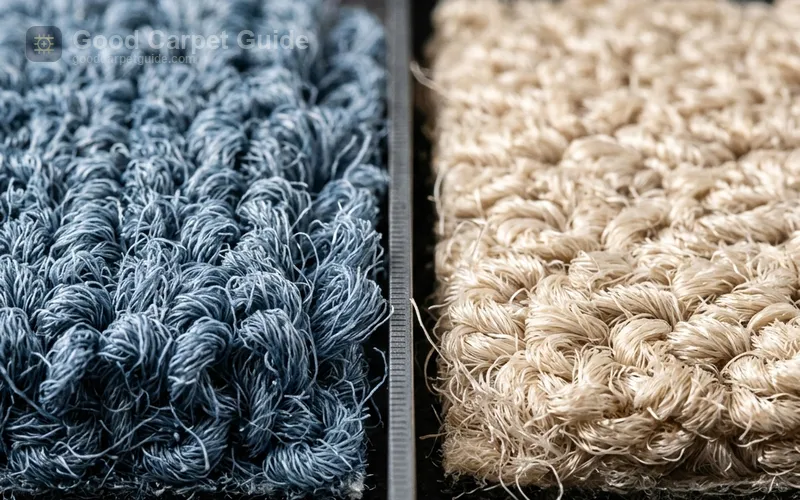
Caption: Fiber resilience determines appearance retention, and appearance retention directly influences the timeline used to determine when replacement becomes necessary.
How to know when to replace carpet
Replace carpet when professional cleaning no longer restores function.
Several physical symptoms provide direct evidence:
- Observe traffic lanes that remain darker after cleaning.
- Inspect seams that separate under foot pressure.
- Measure persistent odors despite remediation attempts.
- Identify backing cracks during carpet lifting.
- Detect ripples, buckling, or loss of stretch tension.
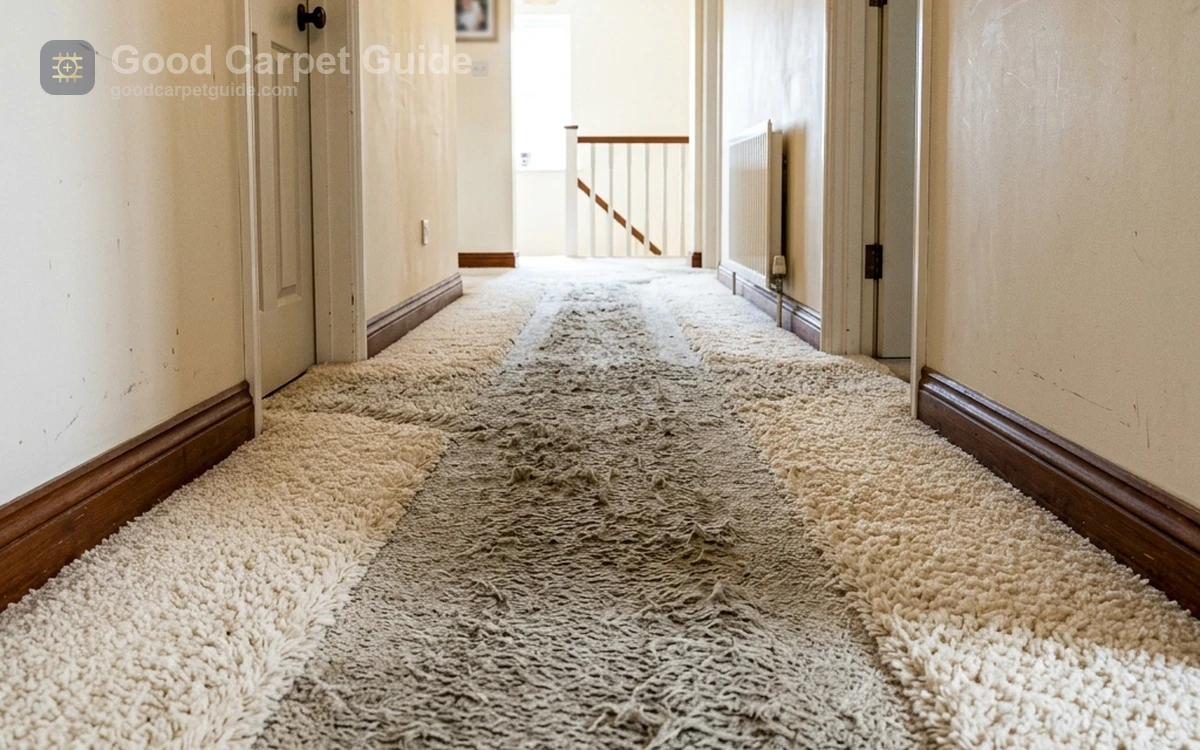
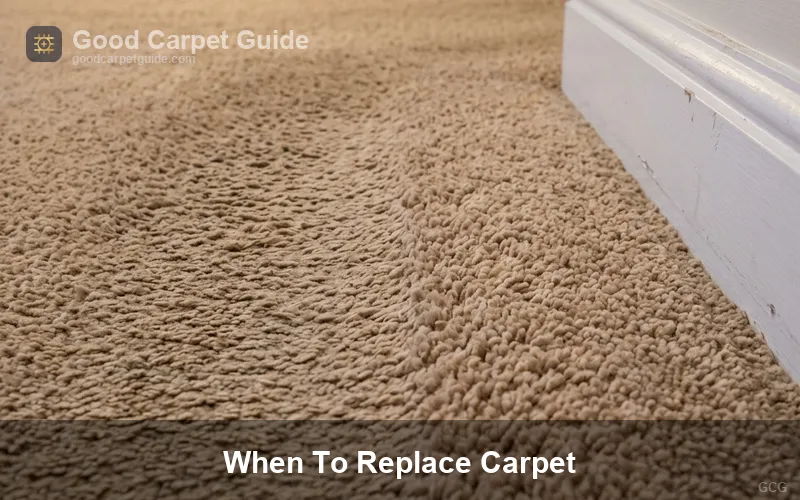
Traffic lane wear represents one of the most reliable indicators. Traffic lane wear occurs when pile yarns lose elasticity and remain permanently compressed.
when to replace your carpet
Replace your carpet when restoration costs exceed remaining service value.
A practical replacement formula used by flooring inspectors is:
Replacement Value Remaining = Expected Lifespan − Current Age
A carpet expected to last 10 years and currently aged 8 years retains approximately 20% of its useful service life.
The padding matters more than the carpet
Padding determines replacement timing more than many homeowners realize.
Padding affects:
- Absorb impact loads from foot traffic.
- Support carpet backing structures.
- Reduce compression stress on yarn bundles.
- Control acoustic transmission.
- Extend overall carpet lifespan.
Industry professionals regularly report that a quality pad extends carpet life by approximately 50%.
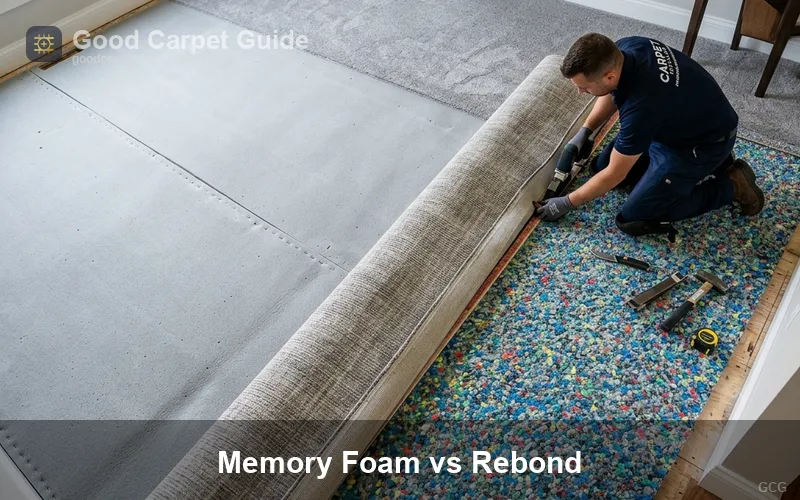
An 8-pound rebond pad consistently outperforms a 6-pound rebond pad because the denser cushion resists bottoming out. Bottoming out transfers impact loads directly into the carpet backing and accelerates fiber fatigue.
The squeeze test mistake
Many consumers select carpet cushioning using softness alone.
Memory foam padding that feels extremely soft inside a showroom frequently creates excessive movement beneath the carpet. Excessive movement increases seam stress and accelerates backing fatigue.
Dense support produces longer service life than excessive softness.
For basement applications, installers frequently recommend moisture-permeable support systems rather than dual-barrier cushions. Moisture trapped beneath impermeable barriers creates bubbles and surface distortions.
Homeowners evaluating below-grade installations should review a dedicated basement carpet moisture and padding analysis .
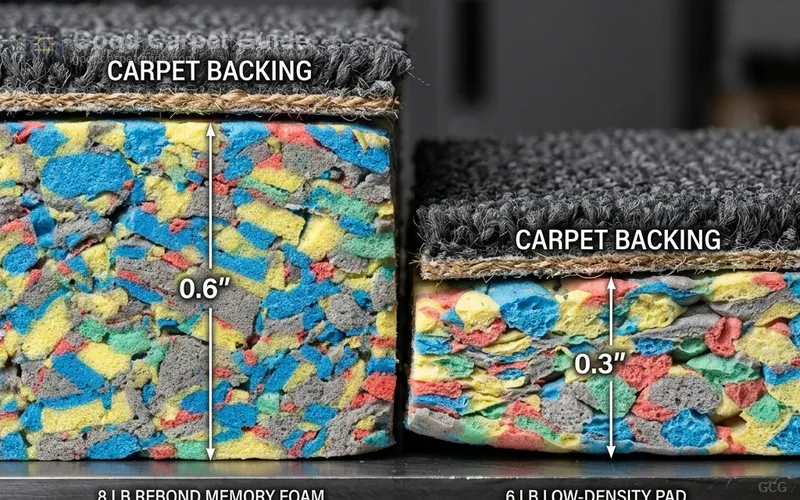
Caption: Carpet cushioning influences structural support, and structural support influences the replacement interval more than visible surface appearance.
when to replace old carpet
Replace old carpet when age combines with measurable performance failure.
Old carpet alone does not require replacement. Functional degradation requires replacement.
Replacement timeline by condition
The following table provides a condition-based replacement framework.
| Carpet Condition | Recommended Action |
|---|---|
| Less than 5 years old, structurally sound | Clean and maintain |
| 5-10 years old, moderate wear | Inspect backing and pad |
| 10+ years old, heavy traffic | Evaluate replacement |
| Water damaged beyond 48 hours | Replace immediately |
| Delamination present | Replace immediately |
| Mold contamination present | Replace immediately |
The table demonstrates that condition carries more weight than chronological age.
When to replace carpet after water damage
Replace carpet after water damage when moisture remains longer than 24-48 hours.
Water damage initiates multiple failure mechanisms simultaneously:
- Dissolve backing adhesives.
- Promote fungal colonization.
- Promote bacterial colonization.
- Degrade cushion integrity.
- Generate persistent odor compounds.
Humidity accelerates these mechanisms. Coastal and humid regions compress the safe remediation window significantly.
Carpet affected by prolonged moisture frequently develops backing separation known as delamination. Homeowners investigating adhesive breakdown should review this detailed discussion of carpet backing separation and delamination problems .
You cannot install carpet over old carpet
Installing new carpet over old carpet creates an unstable flooring assembly.
Installing carpet over existing carpet:
- Create uneven support surfaces.
- Trap moisture between layers.
- Trap dust and allergens.
- Increase wrinkling risk.
- Accelerate premature wear.
Professional installation standards require complete removal of the existing carpet system before replacement.
Real Reddit User Experiences
Real homeowner reports reveal patterns that laboratory specifications never capture.
Premature polyester failure
Many homeowners report polyester carpet flattening in less than 24 months.
The complaint follows a consistent pattern. Polyester carpet initially presents a dense appearance, then develops visible traffic lanes, followed by irreversible matting. Installers attribute the problem to poor elastic recovery under repeated compression.
Several homeowners compare matted polyester fibers to unbrushed shaggy dog hair. The visual description aligns closely with the mechanical deformation observed during inspections.
Recurring stain wicking
Recurring stains represent another major replacement trigger.
Homeowners frequently report successful cleaning followed by stain reappearance days later. The physical mechanism is known as wicking.
Wicking occurs when liquid contamination penetrates the carpet backing and cushion. Residual moisture transports dissolved contaminants back toward the fiber surface during evaporation.
Repeated wicking frequently indicates contamination beneath the visible pile layer.
Big-box installation failures
Big-box installation complaints appear repeatedly across flooring forums.
Reported problems include:
- Damage walls during appliance movement.
- Damage baseboards during carpet removal.
- Ignore expansion requirements.
- Delegate accountability among subcontractors.
- Create delays in warranty resolution.
The recurring issue involves organizational structure rather than carpet quality. Multi-tier subcontracting models frequently separate responsibility from decision-making authority.
Independent flooring dealers typically provide a single point of accountability.
Warranty Fine Print Analysis
Warranty documents rarely define replacement conditions the way homeowners expect.
The truth about wear warranties
A "20-Year Wear Warranty" does not guarantee 20 years of attractive appearance.
Many warranties exclude:
- Exclude fiber crushing from foot traffic.
- Exclude appearance retention issues.
- Exclude maintenance neglect.
- Exclude installation defects.
- Exclude moisture-related failures.
Mechanical crushing remains one of the most common homeowner complaints, yet mechanical crushing frequently falls outside warranty coverage.
Professional cleaning requirements
Major manufacturers impose maintenance requirements.
Common requirements include:
- Maintain documented cleaning records.
- Schedule professional hot water extraction.
- Use approved cleaning methods.
- Follow prescribed maintenance intervals.
- Retain receipts and inspection documents.
Manufacturers such as Shaw Industries and Mohawk Industries commonly require professional hot water extraction every 18 to 24 months.
Failure to maintain documentation frequently voids warranty coverage.
SmartStrand and premium alternatives
Premium products delay replacement timelines through improved engineering.
SmartStrand utilizes Triexta (PTT) fiber with a kinked molecular structure. The molecular configuration acts similarly to a microscopic spring, improving resilience against crushing.
Premium nylon products such as Karastan Modern View combine high face weight, high density, and substantial twist levels to improve long-term appearance retention.
Homeowners evaluating sleeping areas should compare durability requirements against comfort requirements using this bedroom carpet selection guide .
Cost & Budget Considerations
Replacement decisions require cost analysis alongside condition assessment.
National replacement costs
The following table summarizes common replacement expenses.
| Cost Category | Typical Range |
|---|---|
| Carpet Material | $0.50-$21.00+ per sq. ft. |
| Padding | $0.25-$1.00 per sq. ft. |
| Labor | $0.50-$1.50 per sq. ft. |
| Removal | $0.70-$1.60 per sq. ft. |
| Stair Installation | $3-$12 per step |
| Total Installed Cost | $2-$8 per sq. ft. |
The table illustrates why replacement estimates vary dramatically. Material quality, removal complexity, and staircase work create substantial cost variation.
Free installation is rarely free
Free installation promotions typically recover labor costs through material pricing.
Installers frequently report:
- Increase pad pricing.
- Increase accessory pricing.
- Exclude preparation work.
- Exclude furniture moving.
- Exclude removal services.
A quote must be evaluated using total project cost rather than advertised labor rates.
Local dealer versus big-box retailer
Replacement satisfaction correlates strongly with installer accountability.
| Factor | Big Box Retailer | Local Dealer |
|---|---|---|
| Point of Contact | Multiple parties | Single party |
| Change Orders | Common | More transparent |
| Installer Selection | Lowest bidder model | Reputation-based |
| Issue Resolution | Distributed responsibility | Direct responsibility |
The comparison explains why many replacement regrets involve installation rather than carpet performance.
Homeowners replacing carpet on staircases should evaluate density, backing strength, and tread wear resistance using a dedicated stair carpet durability resource .
Frequently Asked Questions (FAQ Schema)
When do you need to replace carpet?
Replace carpet when irreversible compression, delamination, mold contamination, recurring odor, or structural backing failure occurs. Age alone does not require replacement.
When is the best time to replace carpet?
Replace carpet immediately after structural failure is confirmed. Seasonal timing carries less importance than preventing moisture damage and backing deterioration.
When is a landlord required to replace carpet in California?
California does not impose a universal replacement schedule. Replacement obligations depend on habitability standards, excessive wear, safety concerns, contamination, and lease terms.
When are landlords required to replace carpet?
Landlords generally replace carpet when carpet condition affects habitability, sanitation, safety, or lease compliance.
When do landlords need to replace carpet?
Landlords need to replace carpet when carpet damage exceeds normal wear and creates unsanitary or unsafe living living conditions.
When do apartments have to replace carpet?
Apartment owners typically replace carpet when carpet condition interferes with habitability, tenant turnover standards, or property management requirements.
How to replace carpet when you have furniture?
Follow this replacement process:
- Move small items into temporary storage.
- Relocate large furniture to unaffected rooms.
- Remove existing carpet and padding.
- Inspect subfloor conditions.
- Install new padding.
- Install new carpet.
- Reposition furniture after stretching and trimming.
Can a tenant be charged for replacing old carpet?
A tenant should not pay full replacement cost for carpet that has exceeded its useful life. Many housing authorities and depreciation schedules place residential carpet lifespan between 5 and 10 years.
Final Assessment
The most accurate answer to when to replace carpet is simple: replace carpet when the carpet system fails physically, hygienically, or structurally. Fiber age alone provides incomplete information. Nylon carpet supported by an 8-pound rebond pad routinely survives beyond a decade, while low-density polyester installations frequently require replacement in less than half that period.
Water damage exceeding 48 hours, carpet delamination, persistent wicking stains, mold contamination, and irreversible traffic-lane matting justify immediate replacement. Homeowners seeking maximum lifespan should prioritize dense cushioning, qualified local installers, documented maintenance, and resilient fiber systems such as nylon or SmartStrand rather than focusing exclusively on face fiber appearance.