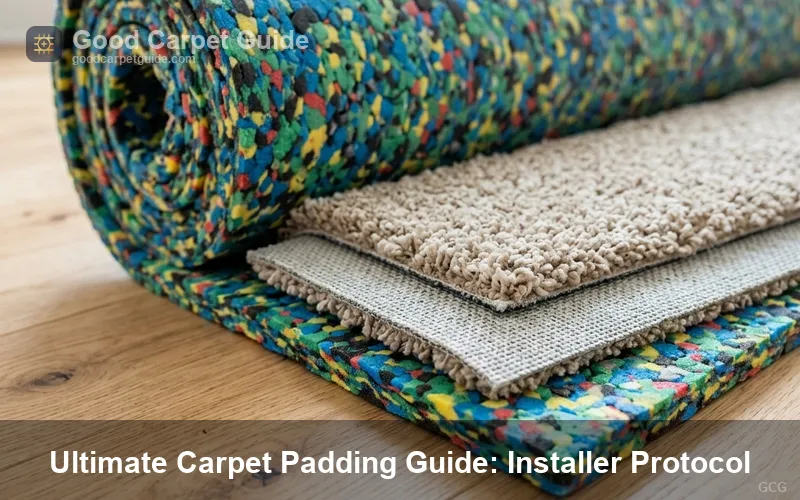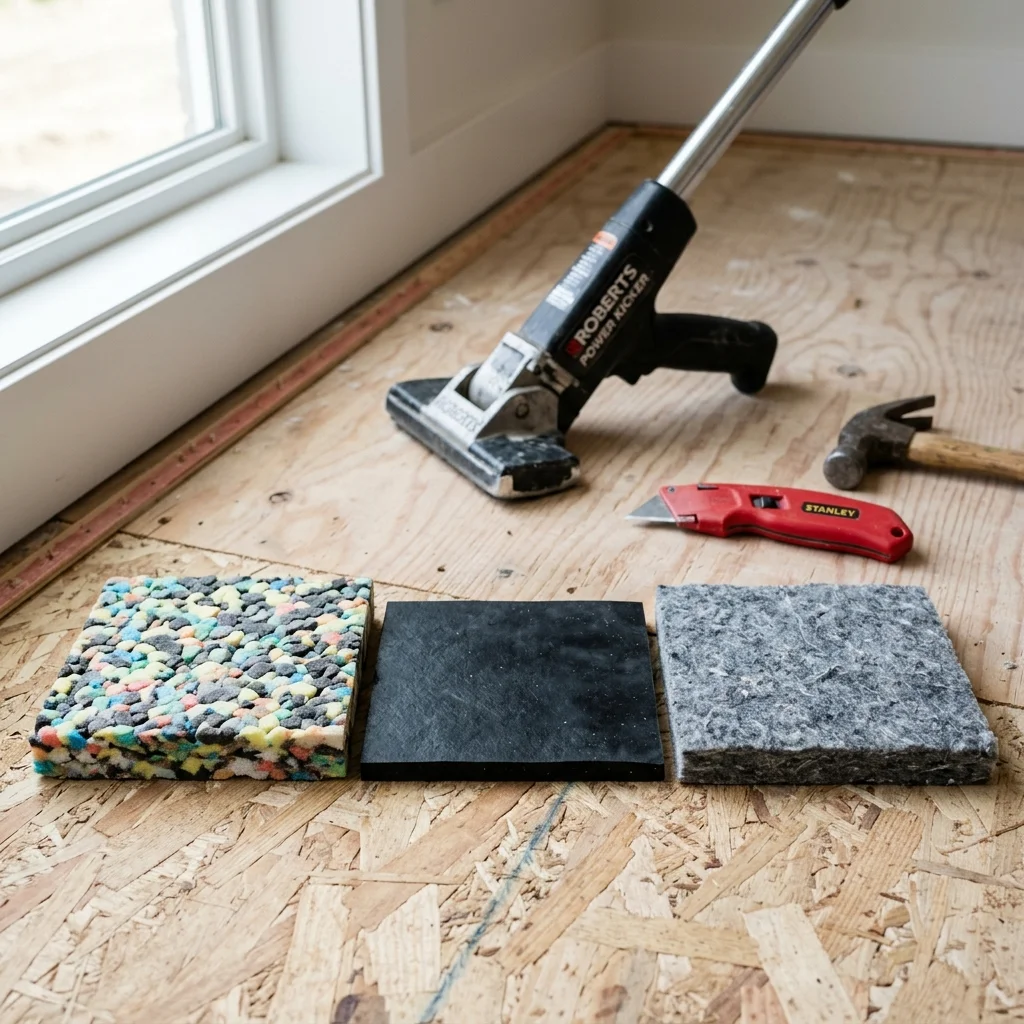
The best carpet for basement installations uses hydrophobic synthetic fibers, breathable moisture-management systems, and inorganic padding that resists mold growth over concrete slabs. The best carpet for basement environments also depends on controlling vapor transmission from the concrete subfloor before carpet installation begins. Basements fail from trapped moisture, alkaline concrete vapor, and improper underlayment systems long before the carpet face fiber wears out.
Concrete slabs continuously absorb groundwater through capillary action. Concrete slabs then release that moisture upward into carpet padding, tack strips, adhesives, and latex backings. Homeowners commonly describe the resulting odor as “wet cardboard,” “old bread,” or “damp storage room” smells even without visible flooding.
Professional installers reject thick rebond foam padding in below-grade rooms because rebond padding traps moisture like a sponge. Professional installers also avoid wool carpet in basements because wool fibers absorb water rapidly and support mold growth. Olefin, polyester, and triexta dominate modern basement installations because synthetic hydrophobic polymers resist moisture intrusion and biological contamination.
Moisture-resistant basement carpet systems rely on four connected components:
- Control vapor transmission from the concrete slab.
- Install breathable or raised subfloor assemblies.
- Select hydrophobic synthetic carpet fibers.
- Use inorganic moisture-resistant carpet padding.
Basement carpet failures usually originate underneath the visible flooring surface. Basement carpet failures start with alkaline moisture attacking tack strips, dissolving latex backing compounds, and rotting wood perimeter materials. Moisture management determines the lifespan of every basement carpet installation.
Basement Moisture Dynamics Destroy Standard Carpet Systems
Basement moisture dynamics destroy standard carpet systems through vapor migration, hydrostatic pressure, and biological contamination. Basement moisture moves upward through concrete slabs even during dry weather because concrete behaves like a porous mineral sponge.
Capillary Action and Musty Odors in Below-Grade Spaces
Concrete slabs absorb groundwater continuously. Concrete slabs then release moisture vapor into the carpet system through microscopic capillaries. Moisture vapor accumulates beneath impermeable padding and creates damp pockets that foster mold colonies and adhesive failure.
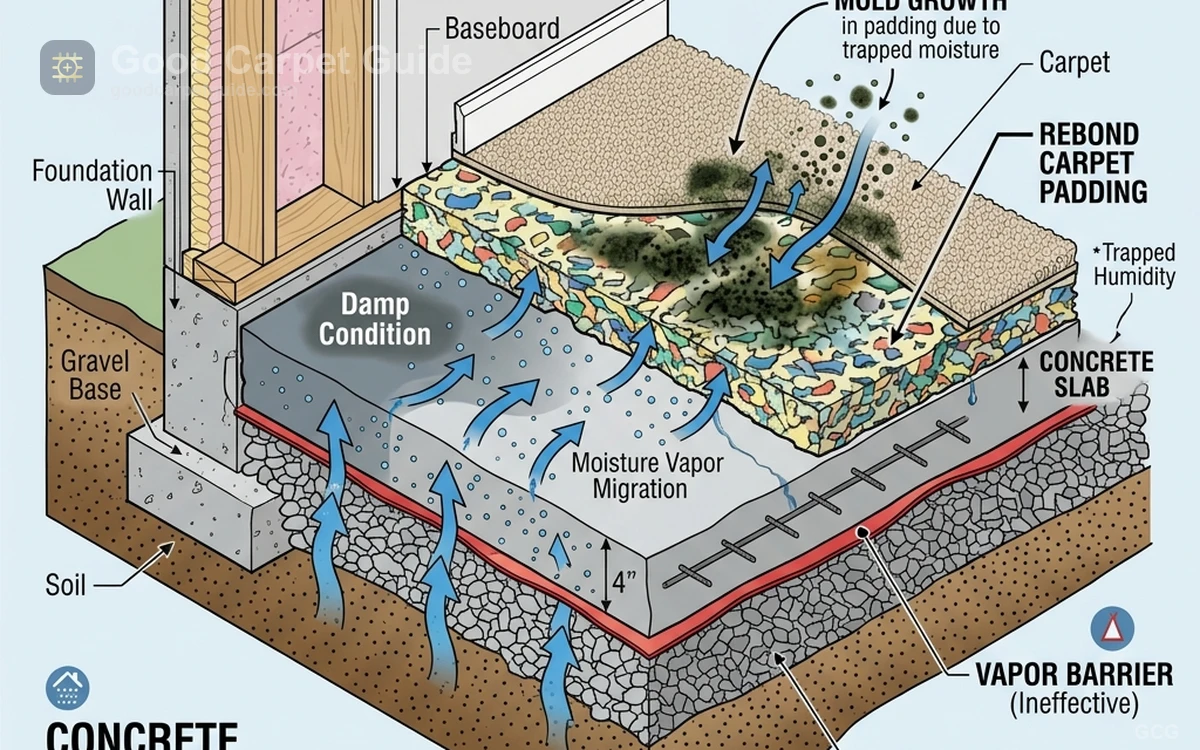
Moisture vapor rising through an unprotected concrete slab saturates rebond padding, corrodes tack strip adhesives, and creates the musty odors discussed in the following section about vapor barrier failures.
Sump Pump Failures and Catastrophic Flooding Risks
Sump pump failures represent the most destructive basement carpet scenario. Homeowners report sump systems cycling every 20 minutes during heavy rain before float arms jam against the pit wall, causing complete flooding events. Category 3 water intrusion from sewage backups contaminates carpet fibers, padding, tack strips, and drywall simultaneously.
Category 3 water permanently contaminates porous carpet systems. Category 3 water also requires complete removal of carpet and padding because sewage bacteria penetrate deep into foam cushions and latex backings. Many homeowners lose recently installed carpet systems worth $4,000 or more after a single sewage backup event.
Corrosion Chemistry: Tack Strip Rot and Alkaline Moisture
Moisture also changes the chemistry of the concrete slab itself. Concrete moisture dissolves alkaline minerals within the slab and raises local pH levels into the 9 to 10 range. High-alkaline moisture attacks carpet adhesives, softens latex backing compounds, and rots wooden tack strips anchored into the perimeter concrete.
Latex-backed carpet systems fail rapidly in alkaline basements. Latex-backed carpet systems also experience backing separation and structural decay commonly associated with carpet delamination . Moisture degradation starts below the visible carpet surface long before stains or odors appear upstairs.
The Vapor Barrier Paradox in Below-Grade Installation
The vapor barrier paradox changes basement carpet performance because impermeable plastic sheeting traps condensation directly above the concrete slab. Carpet manufacturers require vapor barriers for warranty compliance, but installers frequently observe hidden mold growth beneath those barriers.
Manufacturer Warranty Guidelines vs. Real-World Failure
Leading manufacturers such as Shaw Industries and Mohawk Industries exclude moisture-related failures from standard carpet warranties. Manufacturer warranties transfer financial responsibility for subfloor moisture testing and moisture mitigation directly to installers or homeowners.
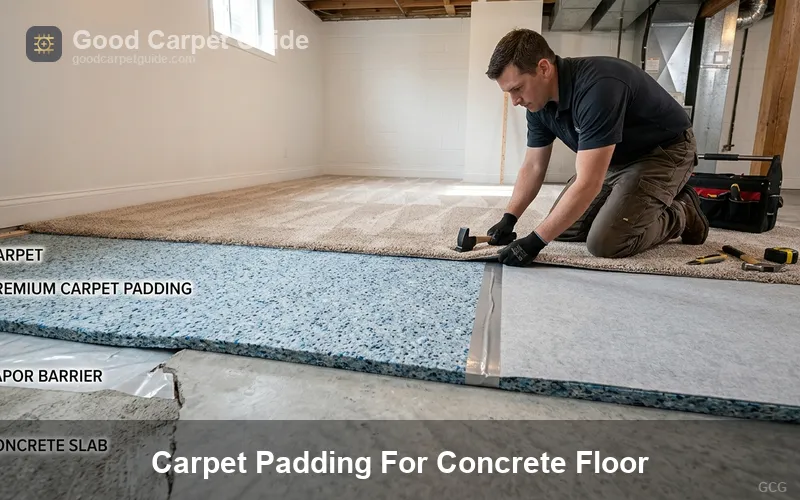
Most manufacturer specifications require 6-mil polyethylene sheeting over concrete slabs. Polyethylene sheeting blocks vapor migration upward into the carpet system. Polyethylene sheeting also creates a closed condensation chamber directly above damp concrete.
Installers refer to that condition as the vapor barrier paradox. Moisture vapor condenses underneath the plastic barrier because rising vapor loses airflow exposure. Condensation then saturates adhesives, wood sleepers, tack strips, and lower carpet layers trapped above the slab.
Why Cheap Paint-On Concrete Sealers Bubble and Fail
Cheap paint-on concrete sealers also fail in active-moisture basements. Hydrostatic pressure pushes upward against brittle sealers and forms raised “speed bump” blisters underneath carpet padding. Carpet surfaces then develop uneven ridges and soft spots across the room.
Installer-Approved Liquid Polyurethane Membranes
Professional installers prefer flexible liquid polyurethane membranes instead of rigid epoxy or paint coatings. Polyurethane membranes bond directly to concrete while remaining flexible under moisture pressure. Polyurethane membranes also accept standard carpet adhesives after curing.
Two-part epoxy coatings create a separate installation problem. Epoxy coatings block standard water-based carpet adhesives from bonding properly. Installers must then switch to expensive reactive chemical adhesives designed specifically for epoxy-coated concrete.
Raised Subfloor Panels as a Breathable Alternative
Raised subfloor systems solve the vapor paradox more effectively than sealed plastic sheets. Raised subfloor panels create a ventilation cavity between the slab and carpet assembly. Moisture vapor then dissipates around perimeter baseboards instead of condensing underneath the flooring.
Safe Underlayment Selections Prevent Mold and Odor
Safe underlayment selections prevent mold and odor by controlling airflow, limiting water absorption, and separating carpet from concrete vapor. Carpet padding determines basement odor performance as much as the carpet fiber itself. Refer to the carpet padding guide to analyze how padding density and design impact longevity under different moisture conditions.
Why Standard Rebond Padding Acts Like an Open-Cell Sponge
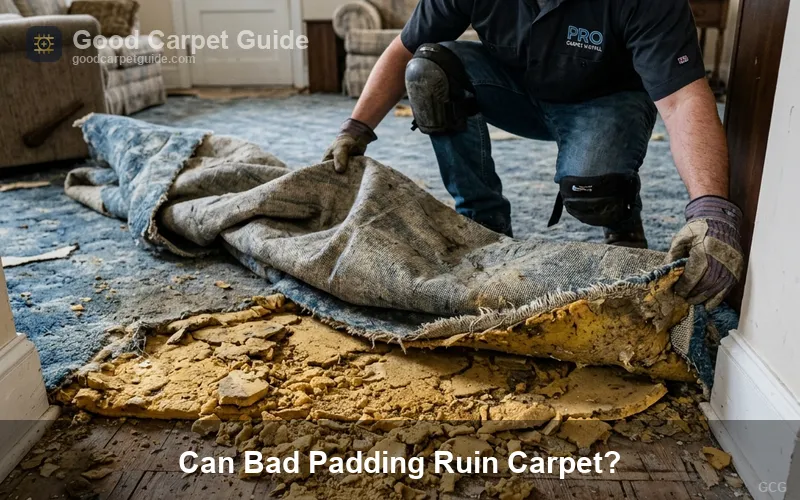
Standard rebond padding fails in basements because rebond foam contains recycled open-cell polyurethane scraps. Open-cell foam absorbs concrete moisture continuously and traps vapor underneath the carpet surface.
Rebond padding also disintegrates under alkaline moisture exposure. Basement moisture breaks down foam binders and creates sour, musty odors underneath the carpet.
Breathable Synthetic Fiber and Felt Cushion Performance
Professional basement installations use inorganic or antimicrobial cushion systems instead:
- Use synthetic felt padding to improve breathability.
- Use flat rubber padding to resist water absorption.
- Use low-profile cushions to reduce wrinkling risk.
- Use inorganic materials to prevent mold feeding.
Synthetic felt pads provide strong airflow characteristics. Synthetic felt pads also avoid the sponge-like water retention associated with rebond foam.
Flat Synthetic Rubber Padding as a Premium Vapor Barrier
Flat synthetic rubber padding represents the premium basement option. Rubber padding blocks liquid penetration while providing antimicrobial protection and thermal insulation against cold concrete slabs.
Basement carpet padding thickness also matters. Thick padding flexes excessively under foot traffic and causes carpet wrinkling or buckling. Installers limit basement padding thickness to 7/16 inch maximum and reduce Berber installations to 1/4 to 3/8 inch cushions.
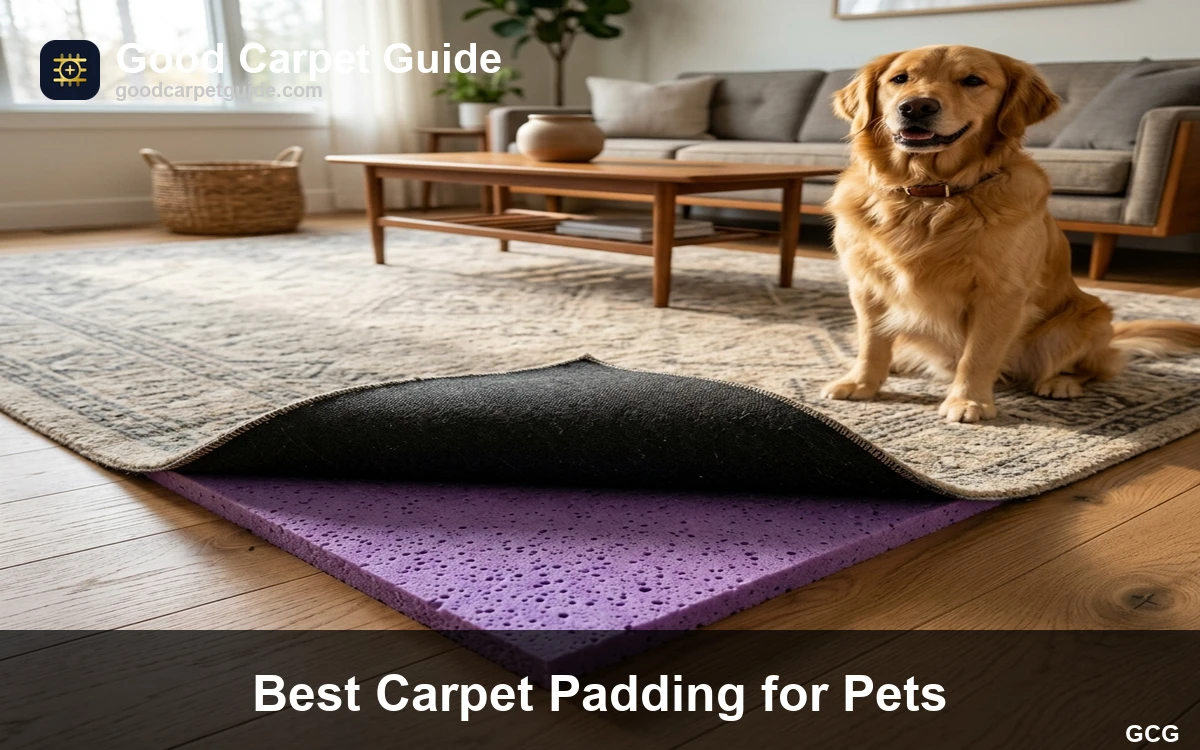
Homeowners with pets should also review best carpet padding for pets because pet accidents compound basement moisture conditions rapidly.
Integrated carpet backing systems eliminate separate cushion failure points entirely. Air.o from Mohawk Industries uses a breathable felt-like backing without latex adhesive layers. Air.o systems resist moisture damage because no separate foam pad traps vapor underneath the carpet.
LifeGuard from Shaw Industries uses a waterproof backing layer that blocks liquid spills from penetrating into the pad. Waterproof backing systems improve basement survivability after minor leaks or pet accidents.
Comparing Synthetic Carpet Fibers for Below-Grade Concrete
Comparing synthetic carpet fibers for basement installations reveals major differences in water absorption, mold resistance, and odor retention. Hydrophobic synthetic fibers dominate below-grade applications because hydrophobic polymers resist moisture absorption at the molecular level.
Hydrophobic Performance of Olefin (Polypropylene) Fibers
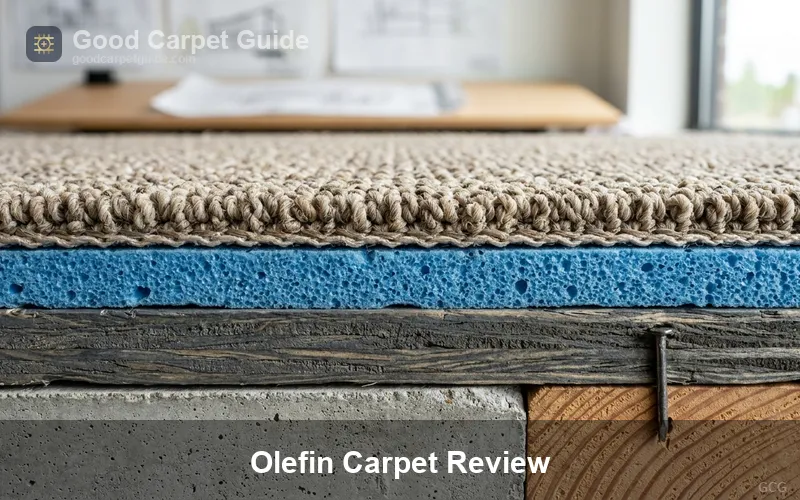
Olefin carpet provides the strongest moisture resistance among mainstream basement carpet fibers. Olefin fibers absorb almost zero moisture because polypropylene polymer chains repel water naturally.
Olefin carpet prevents mold growth inside the face fiber. Olefin carpet also dries rapidly after humidity spikes or minor water exposure. Berber basement carpet frequently uses olefin yarn because looped olefin construction resists staining and moisture simultaneously. Before selecting a looped pile, homeowners should review the mechanical trade-offs outlined in our guide on berber carpet pros and cons .
Olefin does sacrifice resilience under heavy furniture traffic. Olefin fibers crush more easily than nylon or triexta in high-use family rooms.
Closed-Cell Moisture Resistance of Polyester (PET) Carpets
Polyester carpet combines strong moisture resistance with soft texture. Polyester fibers use a closed-cell polymer structure that resists water absorption and limits odor retention.
Modern PET polyester carpet performs significantly better than older polyester products. Modern polyester also resists fading and staining effectively in finished basement entertainment spaces. Homeowners comparing nylon vs polyester carpet for basements usually select polyester because polyester resists moisture better than nylon.
Triexta vs. Nylon: Balancing Mechanical Resilience and Water Absorption
Triexta carpet combines nylon-like resilience with polyester-like hydrophobic performance. Triexta polymer technology allows fibers to resist crushing while maintaining low moisture absorption.
SmartStrand from Mohawk Industries represents one of the strongest premium basement carpet options. Triexta fibers maintain softness while resisting mold-related moisture retention.
Nylon carpet provides the strongest wear resistance but absorbs more moisture than olefin, polyester, or triexta. Nylon fibers feel damp longer in humid basements because nylon polymer chains absorb water internally.
Nylon carpet requires aggressive humidity control below grade. Nylon carpet also requires breathable underlayments and active dehumidification to prevent musty odors.
Why Natural Organic Wool is Unacceptable in Basements
Wool carpet fails in basement environments because wool fibers absorb water aggressively. Wool fibers also provide an organic food source for mold colonies and mildew growth.
Professional installers reject wool for below-grade applications. Professional installers instead prioritize synthetic hydrophobic materials engineered specifically for concrete moisture exposure.
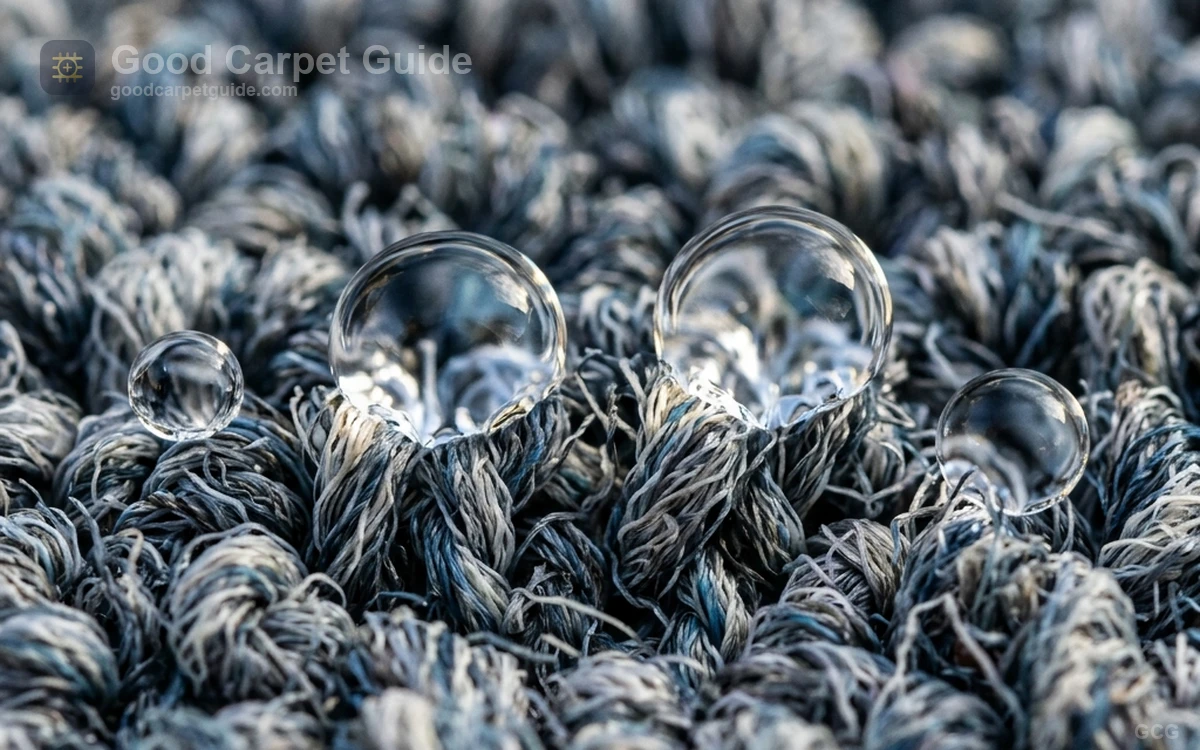
Hydrophobic synthetic fibers such as olefin and triexta repel moisture above concrete slabs, leading directly into the next section covering mold-resistant carpet padding systems.
Real-World Basement Subfloor Preparation and Carpet Installation Costs
Raised subfloors solve cold and damp basement floors by creating an airflow gap between the concrete slab and the carpet system. Airflow gaps interrupt direct vapor transfer from concrete into carpet padding.
Raised subfloor systems elevate carpet installations roughly 1/4 inch above the slab surface. Moisture vapor then dissipates laterally toward the room perimeter instead of accumulating beneath the carpet.
DRICORE-style panels dominate professional basement finishing projects. Interlocking raised panels combine rigid top surfaces with molded moisture channels underneath.
Budget-conscious homeowners also build DIY raised systems using rigid foam insulation and chipboard panels. DIY raised systems reduce cold-floor transfer while creating a moisture break above the slab.
Elevated Subfloor Panels and Drainage Tile Expenses
Real-world basement subfloor costs remain manageable compared with flood replacement costs:
| Subfloor System | Approximate Coverage | Approximate Cost |
|---|---|---|
| Vevor drainage tiles | 650 sq ft | $800 |
| DIY foam + chipboard panels | Medium basement | $1,200 |
| Hygrometer for humidity tracking | Single room | $10-$50 |
Sump Pump Upgrades and Dehumidifier Tracking Costs
Humidity monitoring remains mandatory in finished basements. Basement humidity must stay between 30% and 50% relative humidity to prevent mold growth and odor accumulation.
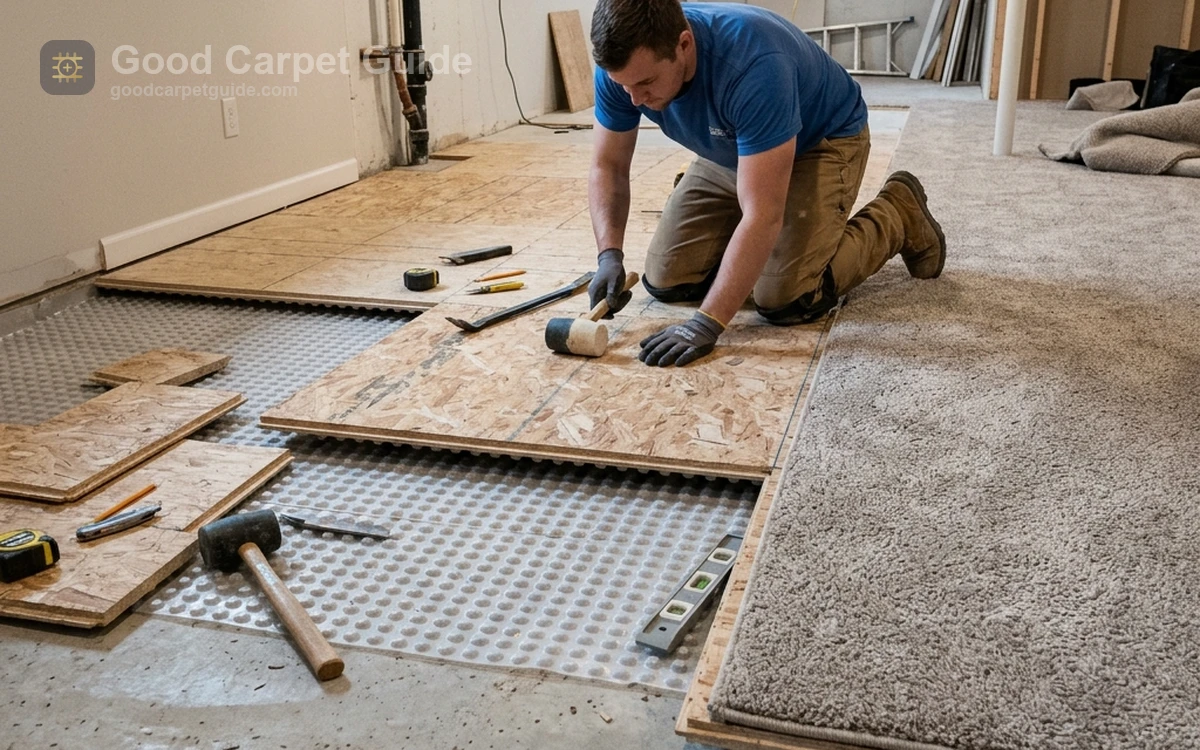
Raised subfloor airflow cavities allow moisture vapor to escape around the perimeter baseboards, connecting directly to the following section on humidity management and long-term basement carpet survival.
Basement dehumidifiers protect carpet systems continuously by removing airborne moisture before humidity condenses inside carpet fibers or padding materials. Dehumidifiers remove airborne moisture before humidity condenses inside carpet fibers or padding materials.
Total Replacement Estimates After Category 3 Water Damage
Dealing with a basement flood insurance claim can easily run roughly a $4,000 claim, with another homeowner noting $4,000 out of pocket to adhere new carpet and materials. Conversely, throwing down cheap Home Depot carpet or remnants directly on the slab costs about $600 to $800 on the first attempt, though this risks rapid failure and additional replacement expenses.
Best Carpet Styles for Basement Conditions
Best carpet styles for basement conditions prioritize low pile density, fast drying performance, and reduced moisture retention. Carpet style changes drying speed as much as carpet fiber chemistry.
Low-profile Berber carpet performs strongly in basements because looped construction exposes less fiber surface area to humidity. Berber carpet also pairs well with thinner basement padding systems.
Cut-pile plush carpet traps more humidity between dense yarn tufts. Thick plush carpet also dries slower after moisture exposure or basement humidity spikes.
Basement-friendly carpet styles include:
- Choose low-pile Berber for moisture resistance.
- Choose textured loop carpet for airflow improvement.
- Choose low-density cut pile for faster drying.
- Choose solution-dyed synthetics for stain resistance.
Patterned loop carpets hide minor rippling and traffic wear effectively. Patterned loop carpets also maintain structural stability better than deep plush constructions over concrete slabs.
Dark basement carpet colors hide moisture staining temporarily but conceal developing leaks. Medium-tone neutral carpet colors expose moisture changes earlier while still masking routine dirt accumulation.
Best Carpet for Basement Use Cases
Best carpet for basement use cases changes according to flood risk, room purpose, and humidity conditions. Basement bedrooms require different carpet systems than basement utility rooms or entertainment spaces.
Best Carpet for Flood-Prone Basements
Select olefin Berber carpet with synthetic felt padding over a raised subfloor system. Olefin fibers resist water absorption while breathable underlayments reduce trapped moisture.
Avoid glued-down carpet systems entirely in flood-prone spaces. Stretch-in installations allow faster removal after water intrusion events.
Best Carpet for Finished Family Basements
Select triexta textured carpet with flat rubber padding. Triexta fibers provide better resilience against furniture traffic while maintaining strong moisture resistance.
Install a polyurethane moisture membrane before carpet installation. Polyurethane membranes prevent alkaline vapor from attacking adhesives and tack strips.
Best Carpet for Basement Bedrooms
Select polyester cut-pile carpet with breathable felt padding. Polyester carpet provides softer texture while resisting humidity better than nylon.
Maintain indoor humidity between 30% and 50% continuously. Hygrometers provide low-cost humidity tracking for long-term odor prevention.
Best Carpet for Low-Budget Basement Projects
Select low-profile olefin carpet with synthetic felt padding. Olefin carpet provides the strongest low-cost moisture resistance among mainstream carpet fibers.
Avoid thick rebond foam padding even in budget installations. Cheap sponge padding creates expensive odor and mold failures later.
Final Recommendations for Basement Carpet Systems
The best carpet for basement installations combines hydrophobic synthetic fibers, inorganic breathable padding, and active moisture-control systems underneath the flooring surface. Basement carpet success depends more on vapor management below the carpet than on the visible carpet texture above it.
Olefin provides the strongest moisture resistance for flood-prone basements. Triexta provides the best balance between softness, resilience, and hydrophobic performance for finished living spaces. Polyester provides strong value for basement bedrooms and moderate-humidity environments.
Avoid wool carpet completely below grade. Avoid thick rebond foam padding directly over concrete slabs. Avoid cheap paint-on concrete sealers that blister under hydrostatic pressure.
Install raised subfloor systems if the basement experiences seasonal humidity or recurring moisture migration. Install polyurethane moisture membranes if the slab shows measurable vapor transmission during moisture testing.
Track humidity continuously with a hygrometer. Maintain relative humidity between 30% and 50% year-round. Moisture control determines whether a basement carpet lasts 15 years or fails within 24 months.