Berber Carpet Pros and Cons: Loop Pile & Fiber Realities
Berber carpet is a loop-pile carpet construction defined by continuous uncut yarn loops anchored into a primary backing. Modern berber carpet combines a distinctive loop architecture with fiber systems such as olefin, nylon, and wool, creating dramatically different performance outcomes despite a similar visual appearance. The real decision behind berber carpet is not color, pattern, or softness. The real decision involves loop stability, fiber chemistry, vacuum compatibility, pet exposure, traffic intensity, installation complexity, and long-term maintenance costs.
Many homeowners evaluate Berber based on showroom samples and marketing claims about durability. Field failures reveal a different reality. Loop snagging creates zipper-style unraveling, incorrect vacuum heads destroy loop integrity, olefin fibers retain oily soils permanently, and poorly installed stair applications expose backing through a defect known as smiling. At the same time, premium nylon and wool Berber products deliver exceptional traffic performance, structural resilience, and long service life when matched to the correct environment.
Before comparing products, the most important distinction is fiber type.
| Factor | Olefin Berber | Nylon Berber | Wool Berber |
|---|---|---|---|
| Water Resistance | Excellent | Good | Moderate |
| Oil Resistance | Poor | Good | Good |
| Texture Retention | Fair | Excellent | Excellent |
| Melting Resistance | Low (320°F / 160°C) | High (428°F–500°F) | Chars Rather Than Melts |
| Pet Snag Resistance | Moderate | Good | Good |
| Traffic Performance | Moderate | Excellent | Excellent |
| Cost Installed | $2–$6/sq ft | $3–$8/sq ft | $6–$30+/sq ft |
| Maintenance Difficulty | Moderate | Low | Moderate |
| Best Use Case | Basements | High-Traffic Living Areas | Luxury Applications |
What is Berber Carpet? (The Loop Architecture & Amazigh Roots)
Berber carpet is a loop-pile floor covering derived from the visual patterns of traditional North African textiles associated with the Amazigh people.
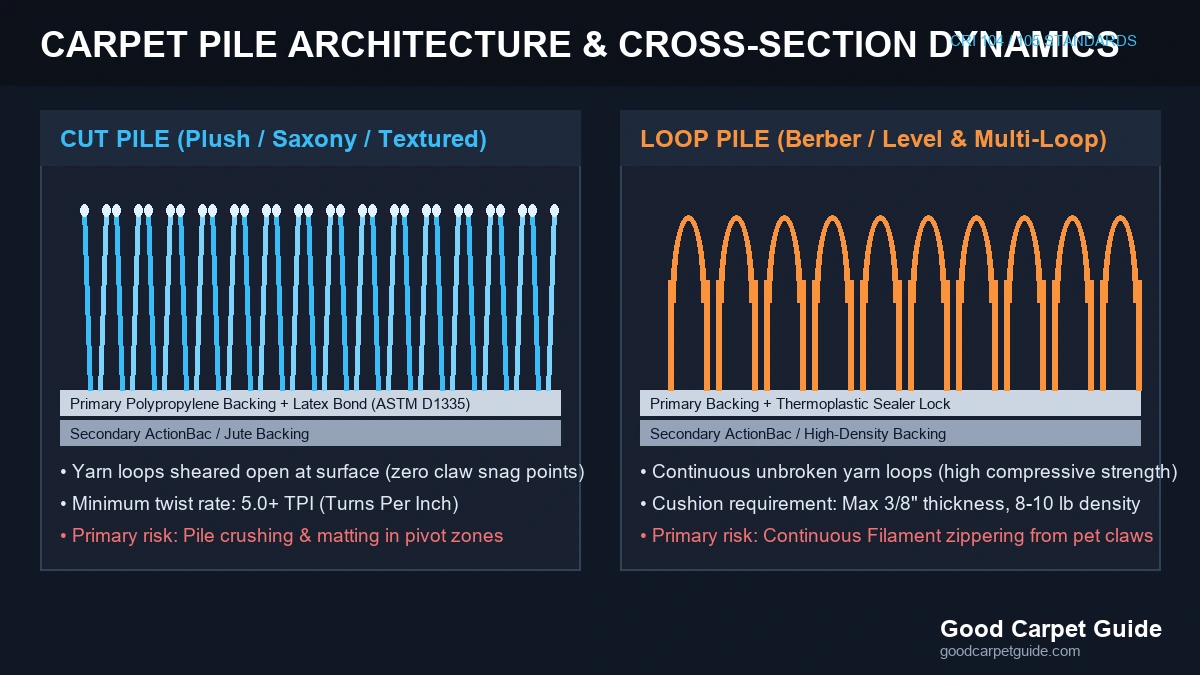
Modern Berber carpet uses continuous yarn loops rather than cut yarn ends. The loop construction creates a dense, textured surface with strong dimensional stability and excellent resistance to visible footprints.
The defining engineering feature is the uncut loop. Every loop remains connected to adjacent loops through a continuous strand structure. Continuous strand construction increases wear resistance but simultaneously creates the unraveling vulnerability known as the zipper effect.
Traditional cut-pile carpet isolates individual tufts. Berber carpet connects loops across larger sections of the floor.
What is the difference between Berber carpet and regular cut-pile carpet?
Berber carpet uses uncut loops while regular cut-pile carpet uses sheared fiber ends.
Cut-pile constructions provide greater softness because exposed fiber tips compress easily under foot traffic. Loop-pile constructions provide greater dimensional stability because continuous loops distribute loading forces across a wider area.
The tradeoff is structural vulnerability. A damaged cut-pile tuft remains localized. A damaged Berber loop can propagate across multiple rows if the strand begins unraveling.
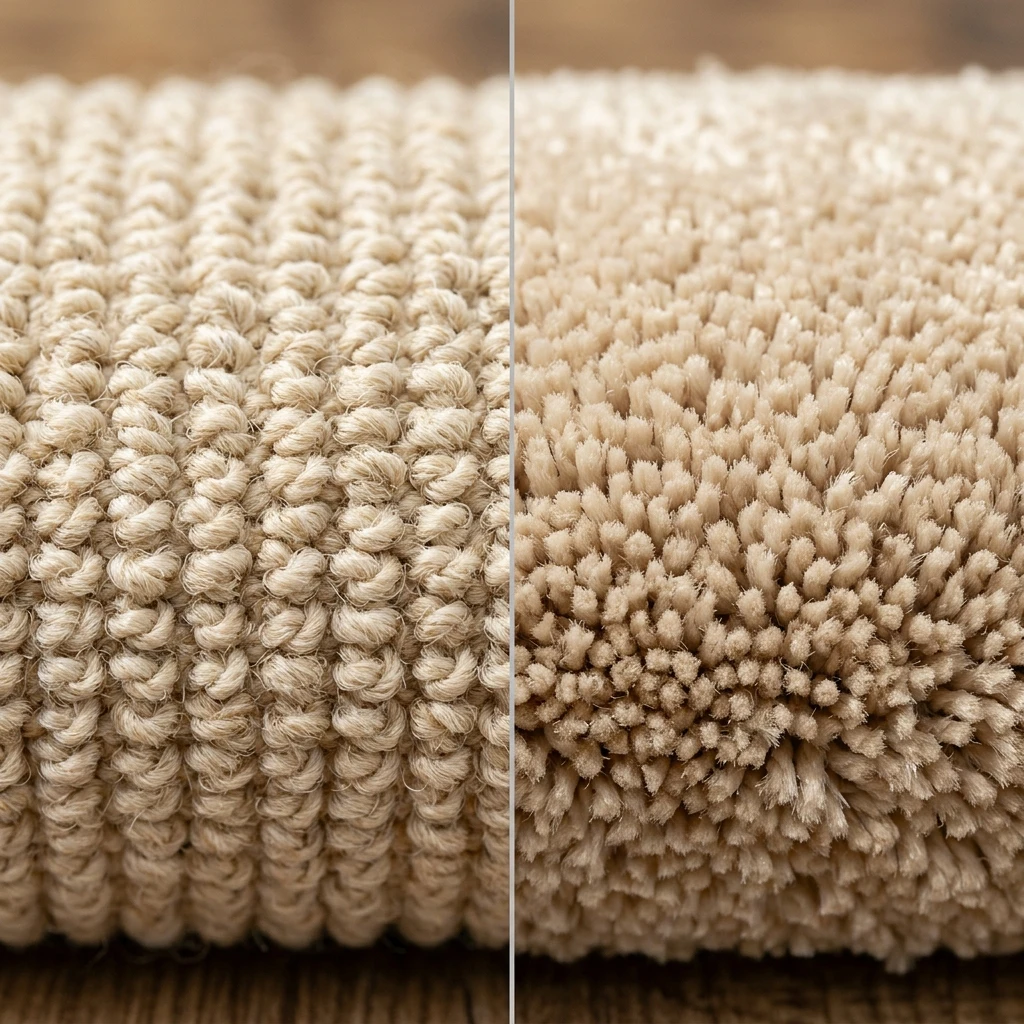
Loop continuity explains why Berber resists crushing better than plush carpet, while the same continuous strand structure creates the unraveling risks discussed in the following performance analysis.
The Core Pros and Cons of Berber Carpeting
Berber carpet delivers exceptional traffic resistance but introduces unique maintenance and repair risks.
Pros
- Provides excellent texture retention under heavy foot traffic.
- Conceals soil and debris through multi-tone flecked coloration.
- Reduces visible footprints compared with plush carpet.
- Maintains dimensional stability in hallways and family rooms.
- Supports long service life when paired with nylon or wool fibers.
Cons
- Creates snagging vulnerability due to continuous loops.
- Develops zipper-style unraveling after loop damage.
- Requires vacuum compatibility verification.
- Complicates stair installations.
- Reveals seams more easily than many cut-pile products.
- Produces a firmer underfoot feel than plush constructions.
The largest misconception surrounding Berber involves durability. Loop construction improves wear resistance. Loop construction does not eliminate damage mechanisms.
The Fiber Showdown: Olefin vs. Nylon vs. Wool Berber
Fiber chemistry determines nearly every long-term performance outcome.
The same loop structure behaves very differently depending on whether the fiber is polypropylene, nylon, or wool.
1. Olefin (Polypropylene) - The Budget King with a Melting Problem
Olefin is a hydrophobic petroleum-derived polymer engineered for moisture resistance.
Olefin Berber dominates entry-level installations because material costs remain low. Olefin fibers reject water effectively, making olefin a common recommendation in moisture-prone environments and applications similar to those discussed in our best carpet for basement guide .
The primary weakness is thermal sensitivity.
Olefin melts at approximately 320°F (160°C). Localized friction heat generated by dragged furniture, damaged vacuum belts, or repetitive abrasion creates permanent melting damage. Melted olefin forms hard, glossy craters and black scorch marks that cannot be repaired.
The second weakness involves oil attraction.
Olefin is highly oleophilic. Skin oils, pet oils, cooking residues, and airborne grease chemically bond to the polymer surface. Olefin traffic lanes gradually darken into permanent gray pathways despite repeated cleaning.
2. Nylon - The High-Resilience Traffic Survivor
Nylon is a synthetic polyamide engineered for elasticity and structural recovery.
Nylon Berber outperforms olefin Berber in high-traffic environments because nylon possesses superior resilience. Nylon fibers compress under load and rebound more effectively after traffic cycles.
Nylon also withstands substantially higher temperatures before thermal deformation occurs. Higher thermal resistance reduces the risk of friction-related damage.
Most professional installers select nylon Berber for hallways, family rooms, and active households with children.
3. Wool - The Luxurious, Self-Extinguishing Premium Pick
Wool is a natural protein fiber harvested from sheep fleece.
Wool Berber represents the highest-performance category available in residential loop pile. Wool fibers possess natural crimp structures that improve resilience while creating a softer tactile profile.
Wool differs fundamentally from synthetic fibers during heat exposure.
Wool chars rather than melts. Wool also exhibits natural flame resistance and excellent particulate soil release characteristics.
The tradeoff is cost. Wool Berber occupies the premium segment of the flooring market and frequently exceeds $15 per square foot before installation.
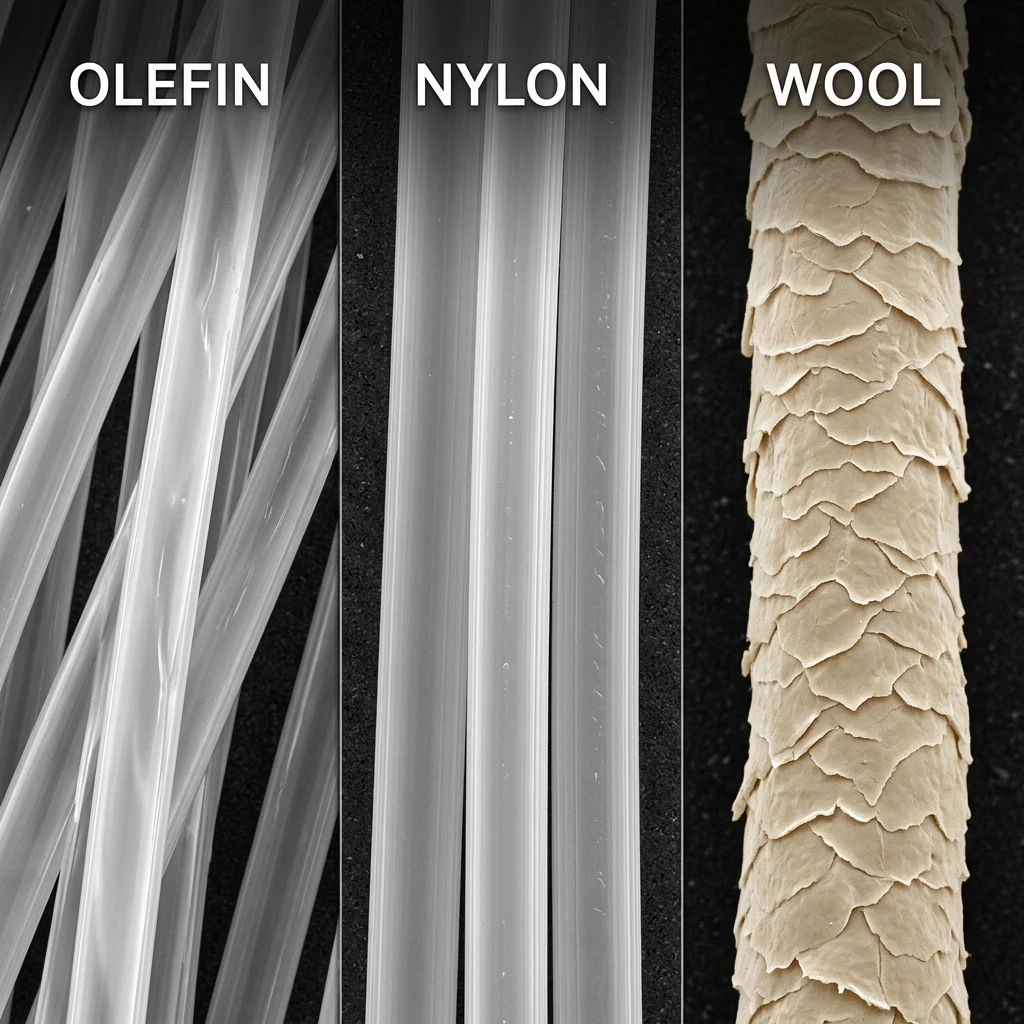
Fiber chemistry governs resilience, stain behavior, thermal performance, and traffic durability, making material selection more important than color or pattern selection.
The "Beater Bar" Vacuum Trap & Warranty Fine Print
The beater bar vacuum trap is one of the most expensive mistakes made by Berber owners.
Loop-pile carpeting requires suction-focused cleaning rather than aggressive brush-roll agitation. Rotating beater bars repeatedly strike exposed loop crowns and gradually pull microfibers away from the loop surface.
The resulting damage appears as fuzzing, blooming, and texture distortion.
Major manufacturers explicitly address this issue in warranty documentation.
Mohawk requires complete beater-bar disengagement on thick loop styles. Mohawk excludes vacuum-related fuzzing and fraying from warranty coverage.
Shaw specifies suction-only cleaning heads or fully elevated brush systems. Shaw excludes structural damage caused by rotating brush rolls.
Professional flooring technicians consistently recommend:
- Use Sebo Felix with brush-roll shutoff capability.
- Use Sebo Airbelt E3 or K3 systems.
- Use Miele canister vacuums with straight-suction attachments.
- Use Numatic Henry 160 for pure suction cleaning.
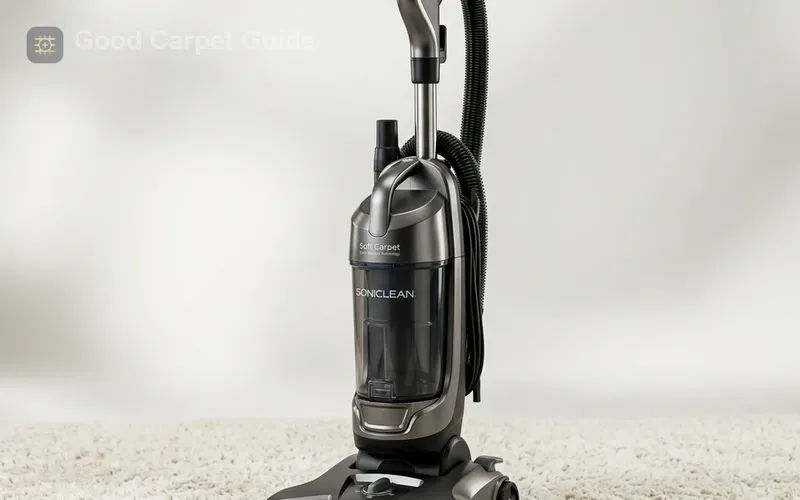
Soniclean Soft Carpet Upright Vacuum Cleaner (SFC-7000)
The ideal vacuum for delicate loop pile. Engineered with adjustable air vents and ultra-soft nylon bristles that protect continuous Berber loops from abrasive fraying, fuzzing, and subsequent warranty voiding.
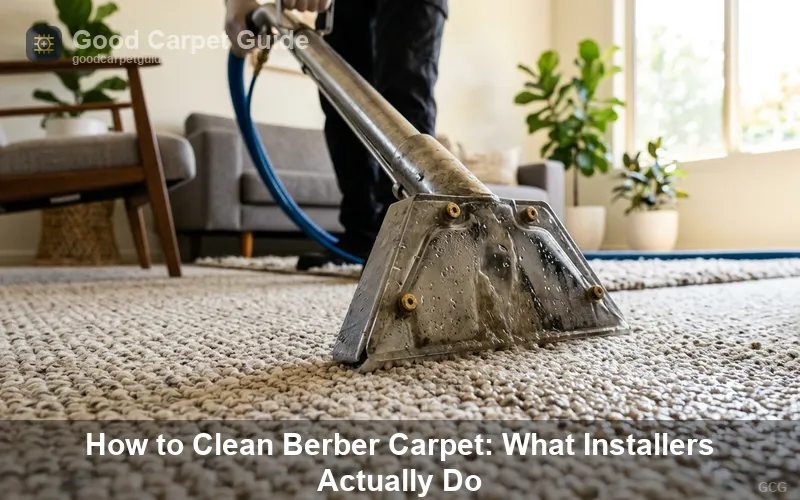
Check Price on AmazonHow do you clean Berber carpet spills before they stain?
Blot Berber carpet spills immediately with absorbent white towels.
Remove liquid before penetration reaches the backing system. Avoid aggressive scrubbing because scrubbing distorts loop geometry and spreads contamination deeper into the pile.
Use manufacturer-approved cleaning agents. Use minimal moisture on wool products.
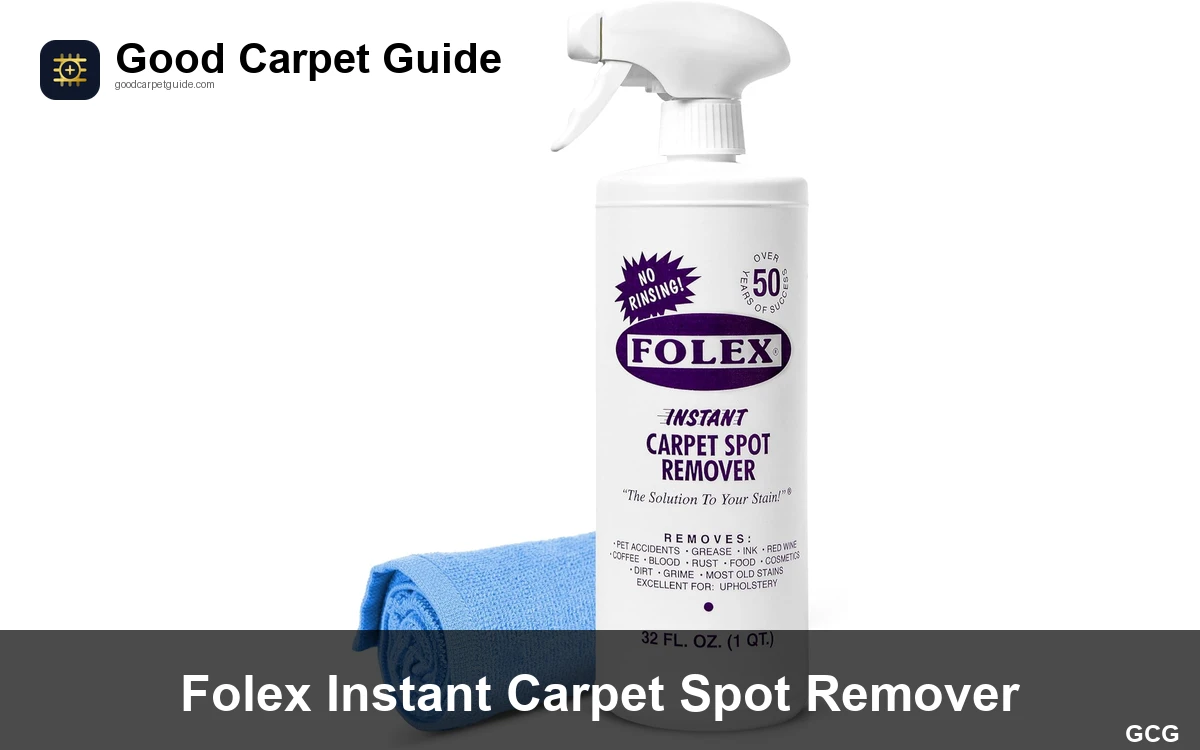
Folex Instant Carpet Spot Remover (32 oz)
A water-based non-ionic surfactant designed specifically to release oils, foot grease, and pet sebum from highly oleophilic synthetic Berber fibers without leaving sticky soap residues that cause dark traffic lanes.
Check Price on AmazonIs Berber Carpet Safe for Pets? (The Zipper Effect Unraveled)
Berber carpet is not the optimal carpet construction for homes with cats.
The continuous loop structure creates a direct mechanical target for claws. A single snag introduces tension into the loop network. Excess force pulls yarn from the primary backing in a progressive unraveling sequence known as the zipper effect.
Real-world homeowner reports consistently describe the same failure pattern.
One flooring forum user reported that two household cats repeatedly snagged loops and created multiple unraveling areas. Another homeowner stated that dog nails caused enough damage to permanently eliminate Berber from future flooring purchases.
Vacuum cleaners magnify the problem.
A homeowner described an incident where a hidden snag entered the vacuum path and instantly ripped up an entire line of carpet.
Can pets (cats/dogs) damage Berber carpet loops?
Pets damage Berber carpet loops through claw engagement and nail snagging.
Cats create the highest risk because clawing behavior directly targets loop structures. Dogs create risk when elongated nails hook exposed loops during running and turning movements.
Choose nylon vs polyester carpet cut-pile constructions in pet-intensive homes.
Room-by-Room Suitability Guide
Room suitability depends on traffic patterns, moisture exposure, furniture loading, and maintenance expectations.
Berber on Stairs: Why Installers Hate It
Berber carpet is one of the most technically demanding stair installations.
The primary defect is smiling. Smiling occurs when installers wrap loop rows widthwise around stair noses. Bending forces separate loop rows and expose the backing underneath.
Professional installers orient rows lengthwise to reduce row separation.
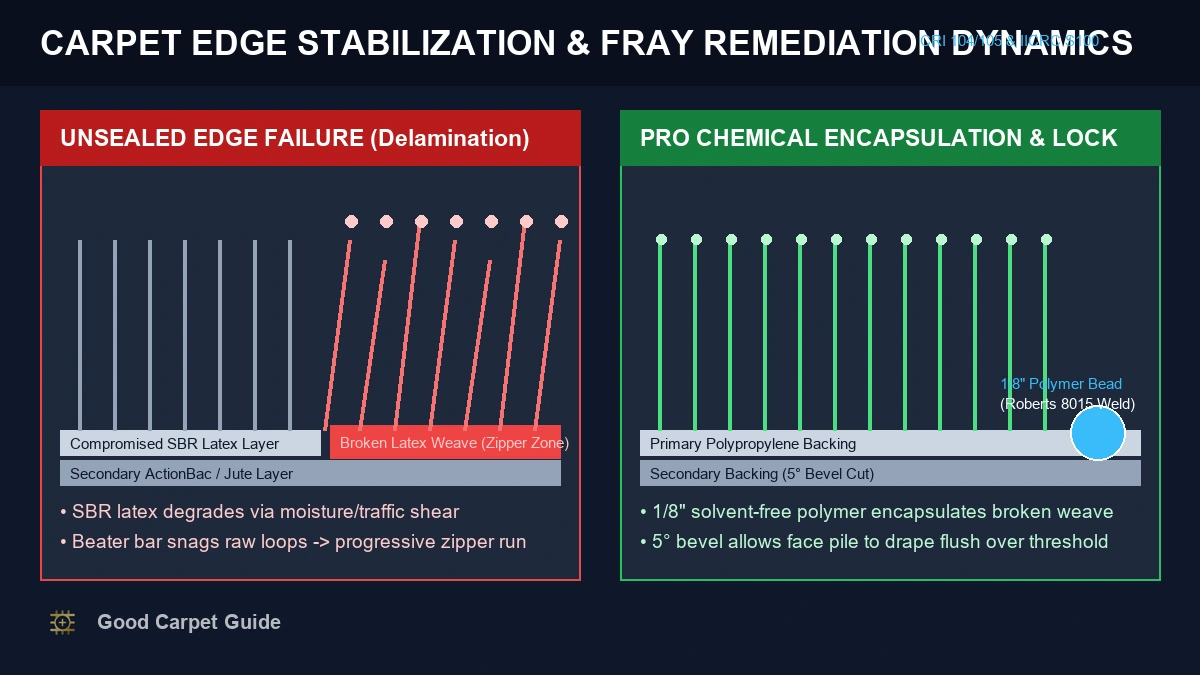
Spindle areas create another challenge. Relief cuts around balusters require extensive latex sealing. Inadequate sealing initiates fraying and unraveling.
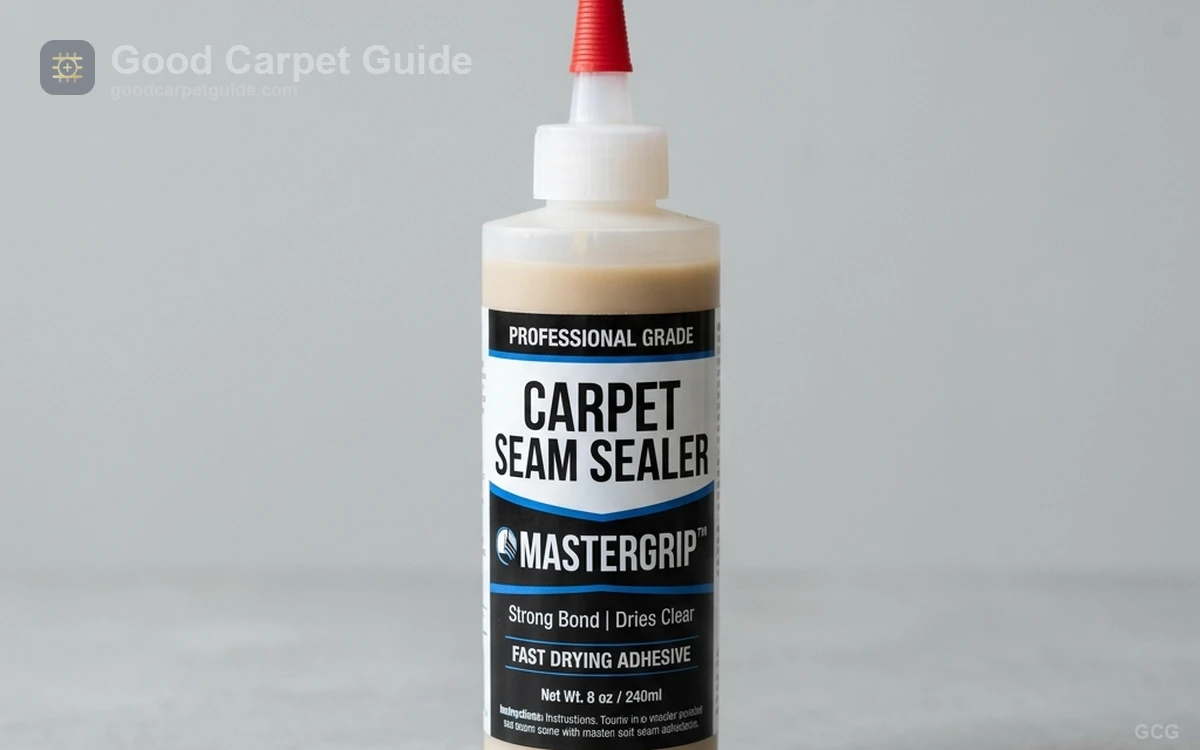
Roberts 8015 Universal Carpet Seam Sealer (8 oz)
The professional installer choice for securing cut edges, stair baluster relief cuts, and seams. Bonds loop pile firmly to the secondary backing to physically prevent loop pulls, snags, and the catastrophic 'zipper effect'.
Check Price on AmazonStaple dimples create a third challenge. Pneumatic staplers crush loops permanently, leaving visible depressions.
Homeowners evaluating stair projects should review a dedicated best carpet for stairs guide .
Is Berber carpet good for stairs?
Berber carpet performs poorly on stairs compared with premium cut-pile alternatives.
The loop structure increases installation complexity and exposes defects more readily than cut-pile constructions.
Berber in Basements: The Olefin Moisture Shield
Olefin Berber performs well in basements because olefin resists water absorption.
Hydrophobic polypropylene fibers reduce moisture retention and support faster drying after minor water exposure. Moisture resistance makes olefin Berber a common option in spaces covered in our best carpet for basement guide .
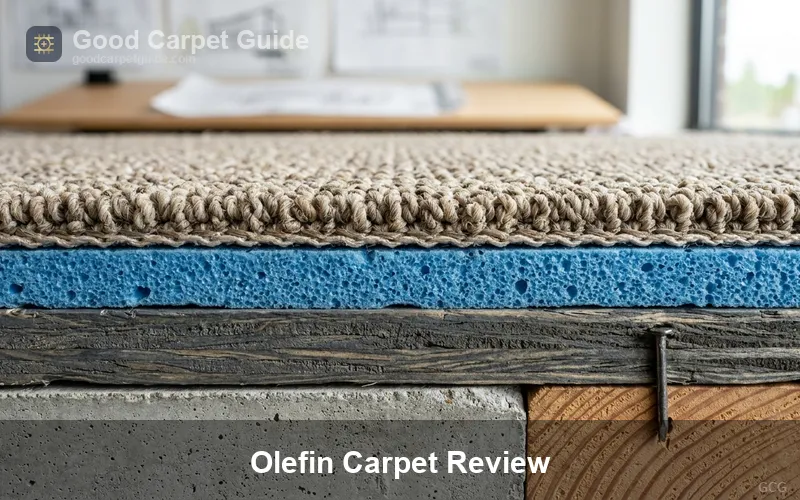
Moisture resistance does not eliminate mold risk inside the cushion or subfloor assembly.
Berber in Bedrooms: Comfort vs. Indentation Resistance
Berber carpet prioritizes dimensional stability over softness.
Plush carpets provide superior tactile comfort for barefoot traffic. Berber carpets provide superior resistance to furniture indentation and visible traffic lanes.
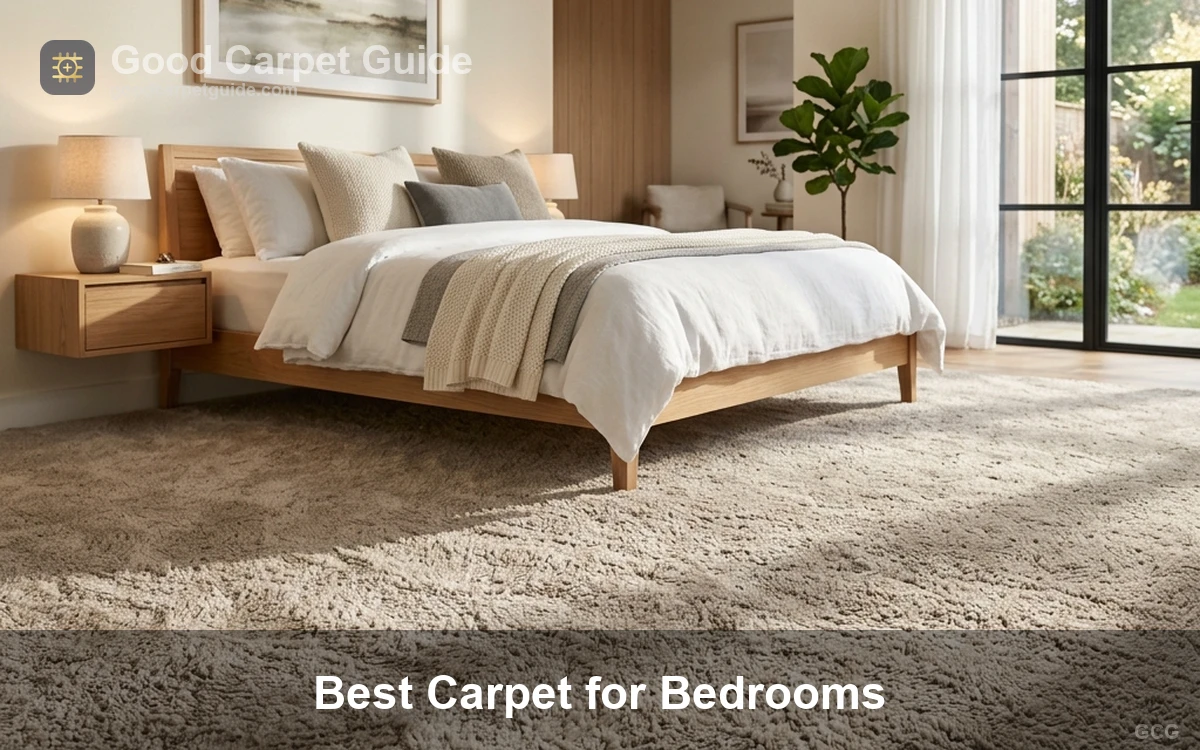
Many homeowners prefer plush products for sleeping areas. Detailed comparisons appear in our best carpet for bedrooms guide .
Berber vs. plush carpet: Which is better for bedrooms?
Plush carpet is better for bedrooms focused on softness.
Berber carpet is better for bedrooms focused on durability and furniture-load resistance.
Berber Carpet Cost: Materials & Installation Price Breakdown
Berber carpet pricing varies primarily by fiber category.
| Fiber Type | Material Cost | Installed Cost |
|---|---|---|
| Olefin Berber | $1–$4/sq ft | $2–$6/sq ft |
| Nylon Berber | $2–$5/sq ft | $3–$8/sq ft |
| Wool Berber | $5–$15+/sq ft | $6–$30+/sq ft |
Installation complexity significantly influences final pricing.
Standard installation labor ranges from $0.50 to $1.50 per square foot. Stair work generates separate surcharges ranging from $15 to $45 per step.
Independent flooring dealers frequently bundle furniture moving and 6-pound padding into transparent project pricing. Big-box promotions frequently advertise free-room incentives while shifting costs into padding upgrades and installation fees.
How much does Berber carpet cost per square foot installed?
Berber carpet costs between $2 and $30+ per square foot installed depending on fiber selection and installation complexity.
Real Reddit & Professional Installer Experiences
Field reports reveal recurring patterns that laboratory specifications fail to capture.
One homeowner reported multiple vacuum-related unraveling incidents after hidden snags entered the vacuum path. Another homeowner reported recurring cat-claw damage that gradually unraveled loop sections.
Professional installers report three recurring service calls:
- Repair snagged loops after pet damage.
- Repair seam peaking exposed by natural light.
- Repair stair smiling caused by incorrect orientation.
DIY repair attempts frequently create secondary damage.
Excessive hot glue migrates into yarn bundles and forms hard black spots. Hardened adhesive destroys texture consistency and creates visible wear points under traffic.
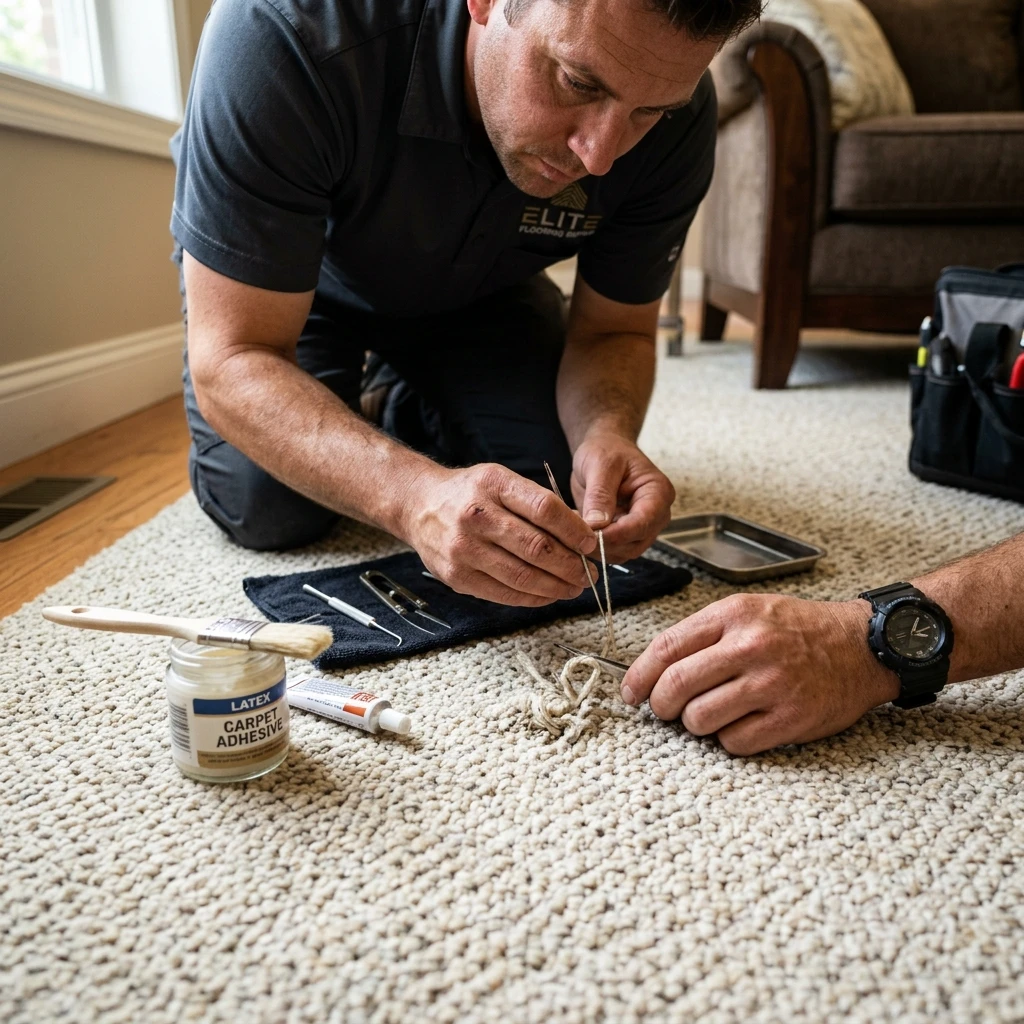
Correct loop repair focuses on strand stabilization and backing integrity, preventing the hardened adhesive defects frequently seen after homeowner repairs.
Frequently Asked Questions (FAQ)
Why is Berber carpet called "Berber"?
Berber carpet derives its name from traditional woven textiles associated with the Amazigh peoples of North Africa.
How long does Berber carpet last under heavy foot traffic?
Nylon Berber lasts significantly longer than olefin Berber under heavy traffic because nylon retains texture and resilience more effectively.
What are the different fiber types of Berber carpet?
The primary fiber types are olefin (polypropylene), nylon, and wool.
Is Berber carpet more expensive than cut-pile?
Berber carpet ranges from less expensive to more expensive than cut-pile depending on fiber selection. Olefin Berber frequently costs less than cut-pile nylon. Wool Berber frequently costs more than premium cut-pile products.
When should you replace a worn Berber carpet?
Replace Berber carpet when widespread zippering, seam separation, backing exposure, persistent odor contamination, or irreversible traffic-lane discoloration becomes visible.
Is Berber carpet suitable for older adults?
Berber carpet provides a stable walking surface but delivers a firmer feel than plush products. Households prioritizing cushioning and comfort should review options in our best carpet for seniors guide .
Final Recommendation
Choose nylon Berber for hallways, family rooms, active households, and long-term durability. Nylon delivers the best balance of resilience, thermal resistance, texture retention, and maintenance practicality.
Choose olefin Berber for dry basements, budget-driven projects, and moisture-prone areas where water resistance outweighs traffic durability.
Choose wool Berber for luxury applications where premium comfort, natural flame resistance, and long service life justify higher acquisition costs.
Avoid Berber carpet in homes with aggressive scratching cats. Avoid Berber carpet on complex staircases with numerous spindles. Avoid Berber carpet if household cleaning depends on aggressive upright vacuums with active brush rolls.
The strongest version of Berber carpet is not defined by the loop construction itself. The strongest version of Berber carpet is a properly installed nylon or wool loop-pile system maintained with suction-only cleaning and matched to the correct room environment.