Nylon and polyester account for the vast majority of residential carpet sold in the United States, yet the two synthetic fibers behave like fundamentally different materials under mechanical load. Nylon springs back after compression. Polyester stays crushed. Understanding fiber chemistry, ASTM test standards, brand-level manufacturing specifications, and 15-year lifecycle cost modeling prevents premature replacement and structural pile collapse.
molecular physics of synthetic carpet fibers
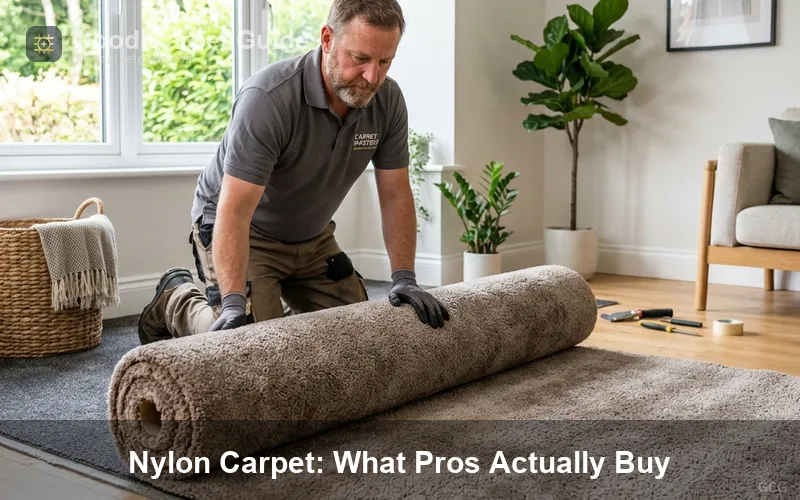
Nylon 6,6 is a condensation polymer synthesized from hexamethylenediamine and adipic acid. The chemical reaction produces repeating -CO-NH- polar amide linkages along the polymer backbone. These amide groups form a dense, symmetrical three-dimensional network of intermolecular hydrogen bonds between adjacent polymer chains.
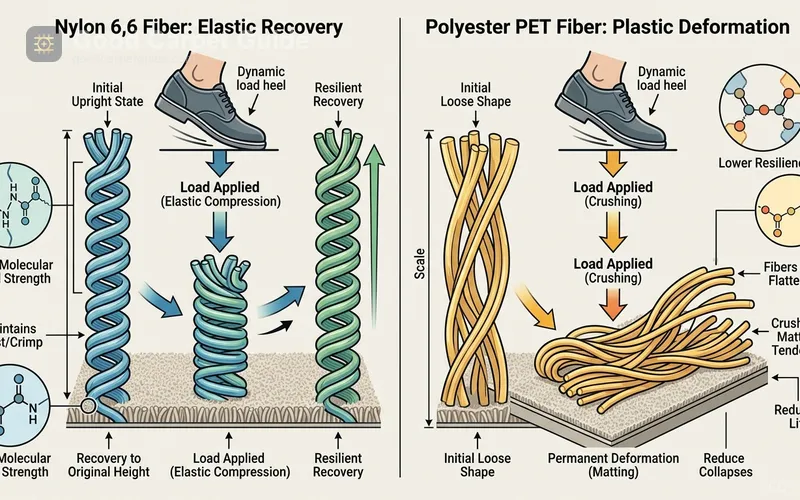
Under physical load, that hydrogen-bonded network functions as a microscopic spring. Foot traffic and shear forces deform the bonds, and the bonds exert strong restorative force to pull the fiber back toward its original upright geometry once the load lifts.
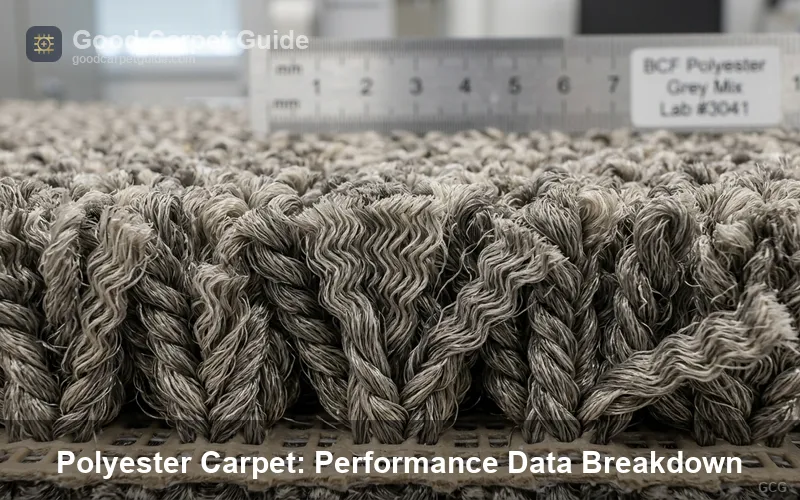
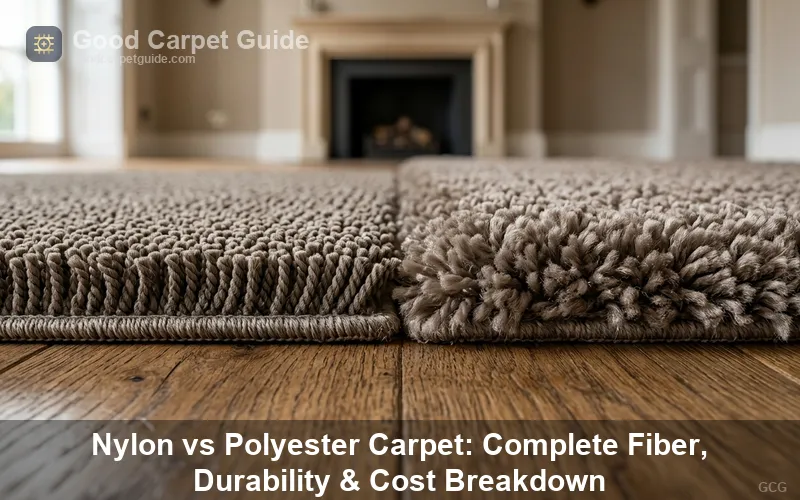
Polyester carpet fiber is polyethylene terephthalate (PET), constructed from nonpolar ester linkages (-CO-O-). PET lacks amide groups and cannot form intermolecular hydrogen bonds between chains. Its amorphous regions allow polymer chains to slide past one another under repetitive compression.
Once a PET fiber crushes past its plastic yield point, the deformation is irreversible and permanent. The industry term for this failure mode is "ugly-out": the pile retains structural fiber mass but flattens permanently. Neither hot water extraction nor mechanical pile lifting can restore loft.
| Physical and Polymer Property | Nylon 6,6 (PA66) | Polyester (PET) |
|---|---|---|
| Tensile Strength | 60–110 MPa | 22–95 MPa |
| Tenacity (Breaking Force) | ~15% higher than PET | Baseline Standard |
| Abrasion Resistance | ~60,000 rubs before visible wear | ~20,000 rubs before visible wear |
| Melting Point (Tm) | ~265°C (509°F–516°F) | ~250°C (482°F) |
| Moisture Regain Rate | 8.0%–10.0% | Below 0.4% (Hydrophobic) |
why stairs and hallways expose the difference first
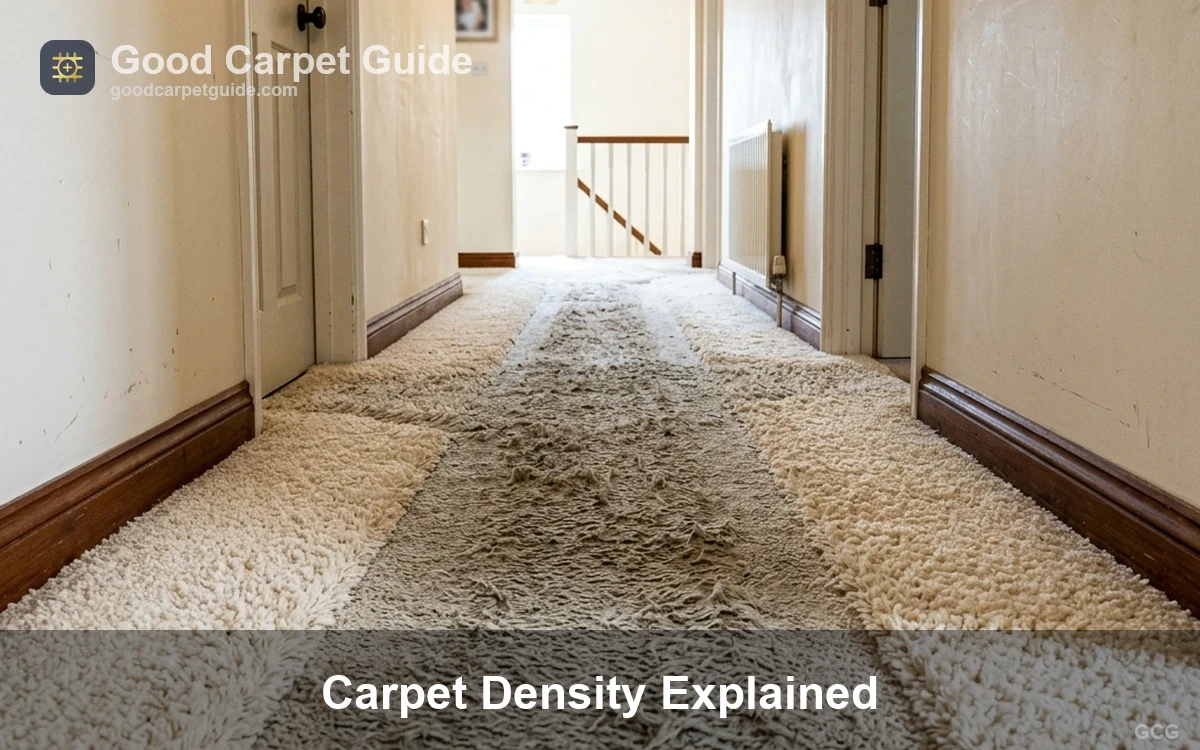
Stair treads and hallway runners concentrate compressive and torsional loads onto narrow, repetitive footprints. PET broadloom installed on stairways frequently suffers irreversible pile collapse within 6 to 18 months of installation. Nylon carpet installed on the identical traffic pattern retains tuft twist definition for 10 to 20 years, supported by the elastic spring recovery of its intermolecular amide bonds.
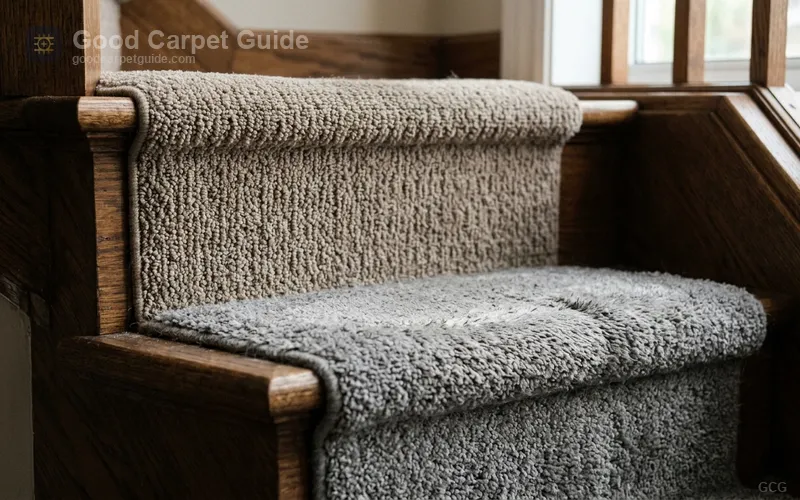
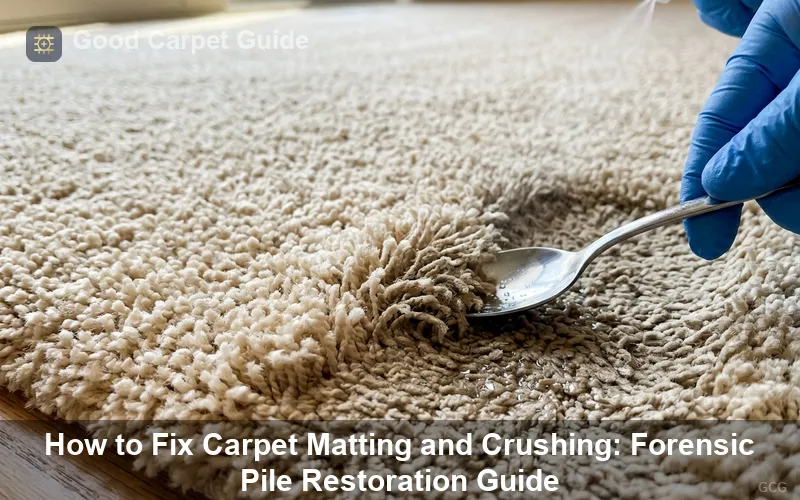
Once PET pile crushes along a stair nosing, professional hot water extraction cannot restore its original vertical height. Professional cleaning removes particulate soil; it does not reverse plastic polymer deformation at the molecular level.
For this reason, best carpet for high traffic areas protocols treat fiber composition as the primary performance filter. Pile style, face weight, and color remain secondary considerations.
acid dye staining chemistry: why nylon needs a chemical shield
Unprotected nylon carries terminal amine end groups (-NH2) at the ends of its polymer chains. In acidic environments (pH below 6.0), these amine groups become protonated, forming positively charged ammonium cations (-NH3+). Common household acid-dye sources include fruit juices, wine, tomato sauce, and sports drinks formulated with FD&C Red No. 40.
The protonated amine sites form permanent ionic bonds with the anionic dye molecules in these liquids. Piece-dyed nylon without specialized chemical protection stains permanently on contact.
Carpet mills address this vulnerability by applying topical acid stain blockers called syntans (sulfonated aromatic formaldehyde condensates) during finishing. Syntans occupy and block the cationic amine sites before acidic liquid spills can reach them. Consequently, stain-resistance claims on piece-dyed nylon carpet labels reference a topical chemical barrier rather than an inherent fiber property.
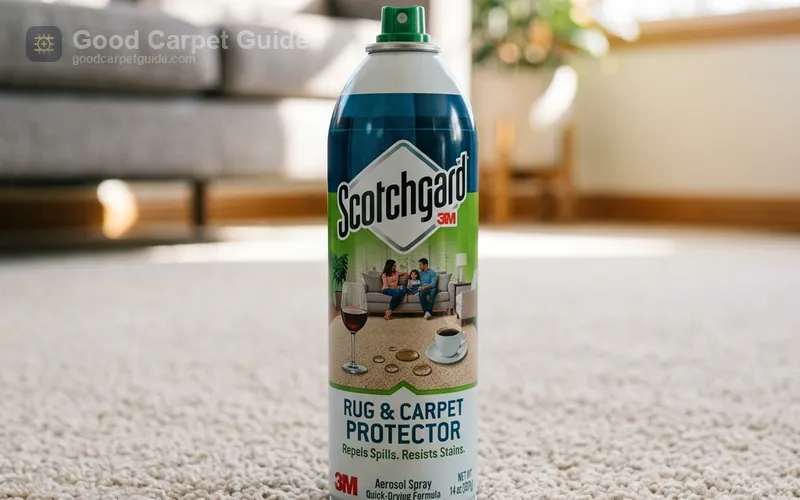
Scotchgard Rug & Carpet Protector Spray
Applied fluorochemical barrier that blocks acidic food dyes from penetrating piece-dyed nylon while repelling water-borne spills.
Check Price on AmazonPET contains zero terminal amine dye sites, meaning water-soluble acid food colorings cannot form chemical bonds with the polymer. Spilled fruit juice or red soda sits purely within the microvoids between PET filaments and rinses away with clear water.
However, that chemical advantage reverses for petroleum- and oil-based soiling. PET has low surface energy, making it intensely oleophilic. It possesses strong chemical affinity for nonpolar hydrocarbons, including cooking oils, butter, body grease, pet sebum, and asphalt tracked indoors from driveways. These oily contaminants form powerful hydrophobic bonds with PET filaments that resist standard alkaline detergent emulsification.
bleach exposure and color stability
Piece-dyed nylon suffers rapid oxidation and yellowing upon direct exposure to sodium hypochlorite (household chlorine bleach). Solution-dyed nylon (SDN)—where colored pigments are locked directly into the molten polymer prior to fiber extrusion—exhibits exceptional resistance to bleach-induced discoloration.
Solution-dyed PET resists chlorine bleach without measurable color loss. In contrast, piece-dyed PET undergoes oxidative chain scission when exposed to concentrated bleach: its ultimate tensile elongation (measured under ASTM D638) drops by up to 38%, creating severe structural fiber embrittlement independent of surface shade variation.
hot water extraction: temperature and ph limits that protect fiber integrity
Applying identical cleaning settings to nylon and polyester inevitably damages one of the two fibers.
Nylon plasticizes under controlled steam and moisture. The weak hydrogen bonds broken during extraction reform as the carpet cools and dries, allowing professional hot water extraction to re-set matted pile upright. This restorative process functions only within strict operational boundaries: detergent solution pH must remain between 6.0 and 7.2 (with 8.5 as an absolute ceiling), and rinse water temperature must not exceed 110°F (43°C) at the wand tip.
Elevating detergent pH above 9.5 or water temperature above 140°F initiates nucleophilic amide hydrolysis. A single high-pH, high-heat cleaning pass reduces intrinsic polymer viscosity by 12.3% and increases subsequent pile crushing by 31% over the following 12 months (ASTM D3512 / AATCC TM 134).
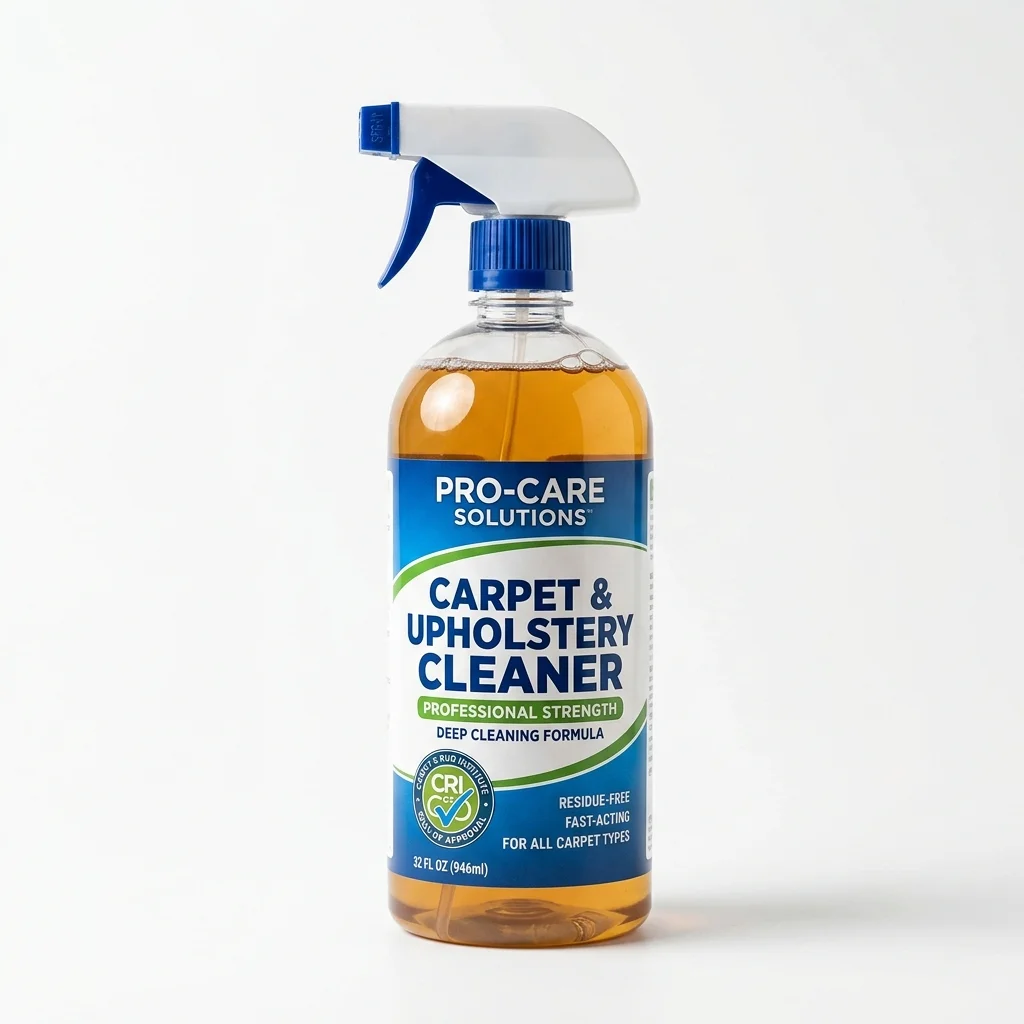
CRI-Approved Carpet & Rug Spot Cleaner
Formulated at neutral pH (6.5–7.0) to safely clean nylon and polyester fibers without hydrolyzing amide bonds or causing disperse dye bleeding.
Check Price on AmazonPolyester demands a narrow thermal window. Extraction rinse temperatures must never exceed 120°F (49°C). PET possesses a glass transition temperature (Tg) between 70°C and 80°C (158°F–176°F). Water temperatures above 130°F (54°C) relax the crystalline domains that hold disperse dyes in place.
Once those domains relax, disperse dye molecules desorb and migrate laterally across filaments, causing permanent dye bleed, halos, and color ghosting (CIELAB Delta E > 5.1 within 90 seconds). High-temperature steam cleaning at 212°F reduces PET tensile strength by 41% in a single cycle (ASTM D5034).
standardized durability testing: what astm ratings mean for longevity
The flooring industry evaluates carpet wear and tuft appearance retention using the ASTM D5252 Hexapod Drum Test. In this standardized test, carpet specimens are tumbled inside a rotating steel drum with an 8.3-lb studded metal tumbler for 12,000 to 22,000 cycles. Surface changes are scored using the Texture Appearance Retention Rating (TARR) scale, graded from 1.0 to 5.0:
- 5.0 Rating: Zero visible change in surface pile or tuft definition.
- 3.5 to 4.0 Rating: Certified for Severe Traffic (Class D); represents the mandatory nylon threshold for stairs, active living rooms, and commercial corridors.
- 2.5 Rating: Certified for Moderate Traffic (Class B); represents the standard threshold achieved by mid-grade PET broadloom.
- 1.0 Rating: Total loss of tuft integrity with severe, permanent matting.
Carpet with a TARR rating below 3.5 cannot withstand long-term foot traffic on stairways or main hallway corridors regardless of listed face weight or retail price.
brand-by-brand construction breakdown
Major carpet mills engineer distinct polymer formulations and finishing chemistry across their residential synthetic lines.
shaw industries: anso nylon
Shaw's Anso® product line utilizes premium Nylon 6 bulked continuous filament (BCF) engineered with a specialized light-scattering filament cross-section that conceals dry particulate soil between vacuuming passes. Anso styles feature Shaw's proprietary R2X® fluorochemical stain and soil treatment, providing high-contact-angle fluid repellency to protect both fiber tips and backing structures.
mohawk industries: smartstrand vs everstrand
Mohawk manufactures two contrasting synthetic lines:
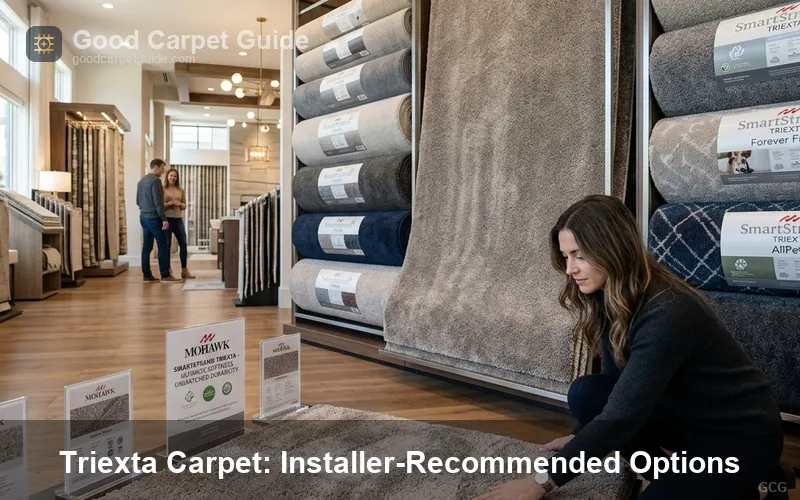
- SmartStrand® (Triexta / PTT): Built from polytrimethylene terephthalate (PTT), containing approximately 37% bio-based feedstock derived from industrial corn sugar. PTT possesses a semi-crystalline "kinked spring" molecular geometry that delivers elastic crush recovery comparable to premium nylon. Because PTT contains no terminal amine dye sites, its stain resistance is 100% inherent and requires zero topical chemical additives.
- EverStrand® (PET): Extruded from 100% post-consumer recycled PET drink containers (rPET). EverStrand offers soft hand feel, rich color clarity, and high resistance to water-borne stains at an economical price point, but remains subject to classic PET pile flattening in heavy traffic corridors.
engineered floors: purecolor pet
Engineered Floors utilizes a continuous solution-dyeing process for its PureColor® PET lines. Organic pigment is blended directly into the molten polymer before filament extrusion ("carrot versus radish" coloration), making the fiber completely impervious to bleach discoloration and ultraviolet fading. Produced with up to 25% recycled content, PureColor performs reliably in bedrooms, basements, and quiet living areas, but flattens when placed under heavy shear stresses on stairs.
stainmaster brand structure
Historically, the Stainmaster® trademark specified premium Nylon 6,6 manufactured to a strict minimum tuft twist count of 5.75 turns per inch (TPI). In recent retail restructuring, the brand has diversified into multiple tiers: Stainmaster Essentials (entry-level PET broadloom distributed through big-box home centers) and Stainmaster Signature (nylon and PTT constructions). Homeowners must inspect the manufacturer specification label to verify exact fiber composition rather than relying solely on the brand trademark.
carpet density and construction formulas
Evaluating carpet durability requires objective mathematical analysis rather than subjective retail descriptions. The primary formula for carpet performance is:
Density (D) = (Face Weight in oz/yd² × 36) / Pile Height in inchesWhere:
- D = Pile density, expressed in ounces per cubic yard (oz/yd³).
- W = Yarn face weight, measured in ounces per square yard (oz/yd²).
- H = Finished pile height, measured in decimal inches above the primary backing.
| Density Threshold (oz/yd³) | Performance Classification | Recommended Application |
|---|---|---|
| Below 2,100 | Unacceptable for active traffic | Short-term rental turns, light guest rooms (mats within 12–24 months) |
| 2,100 to 2,900 | Moderate Grade | Master bedrooms, home offices, low-traffic formal spaces |
| 3,100 to 4,500+ | Heavy / Severe Traffic Grade | Staircases, main hallways, family living rooms, entryway paths |
Detailed mathematical comparisons and sample calculations are provided in carpet density explained .
Face weight alone does not determine longevity. A plush carpet featuring a 50-oz face weight with a 0.75-inch pile height yields a density of only 2,400 oz/yd³. Conversely, a compact cut-pile featuring a 36-oz face weight with a 0.35-inch pile height produces a density of 3,702 oz/yd³.
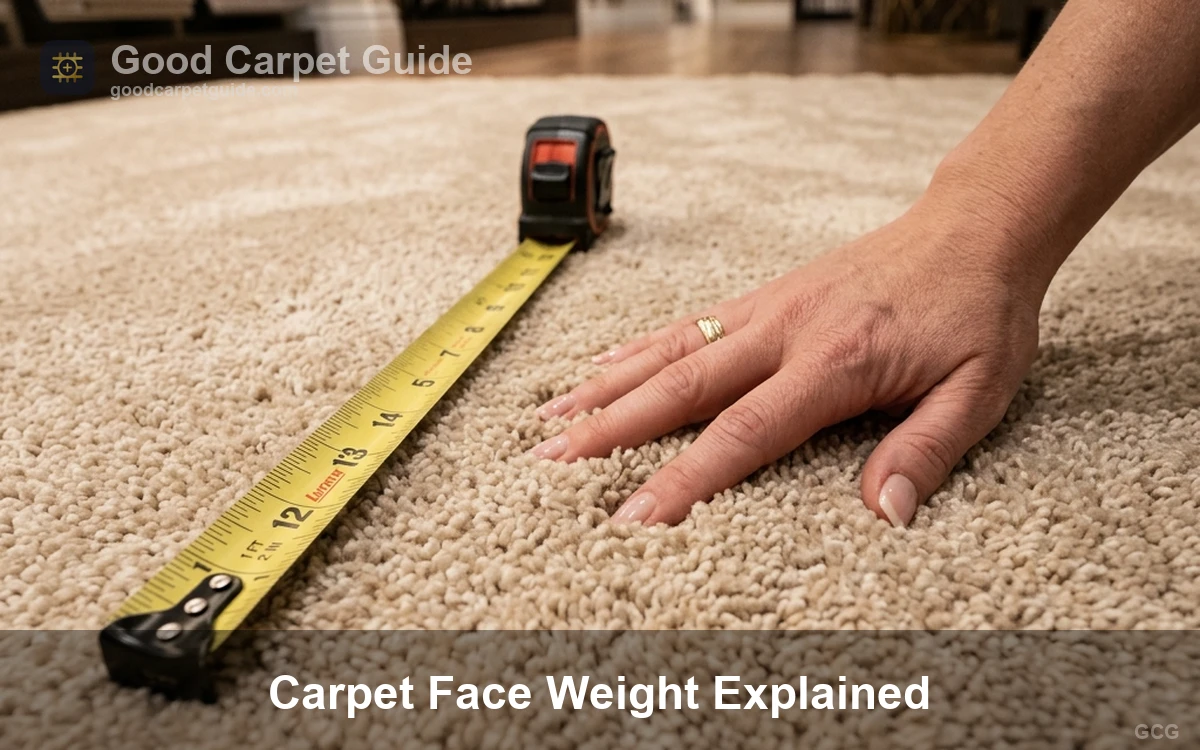
The 36-oz carpet provides superior crush resistance and retains its tuft structure years longer than the 50-oz option. Retail sales staff frequently highlight face weight because it represents the larger marketing figure. The underlying dynamics between fiber volume and pile height are detailed in carpet face weight explained .
tuft twist and the physics of pile recovery
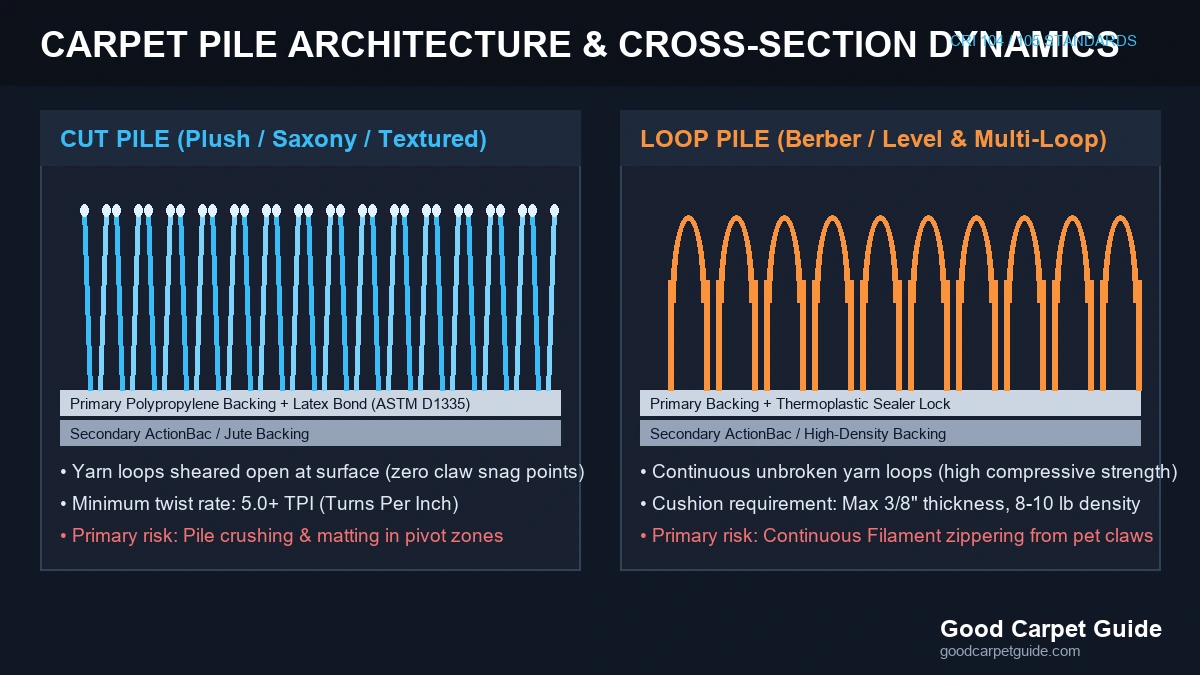
Tuft twist count—measured in turns per inch (TPI)—quantifies how many times individual yarn plies are spun around one another per linear inch before tufting:
- Low Grade (3.0 to 4.5 TPI): Tuft tips bloom, untwist, and flatten rapidly under foot traffic.
- High Performance (5.0 to 8.0+ TPI): Tightly coiled yarns resist unraveling and maintain vertical pile orientation under load.
- Frieze Styles (6.5 to 8.5 TPI): High-twist yarns curl over deliberately, concealing footprints, vacuum marks, and localized tracking.
Higher tuft twist numbers directly extend carpet service life by preventing yarn blossoming at the pile surface.
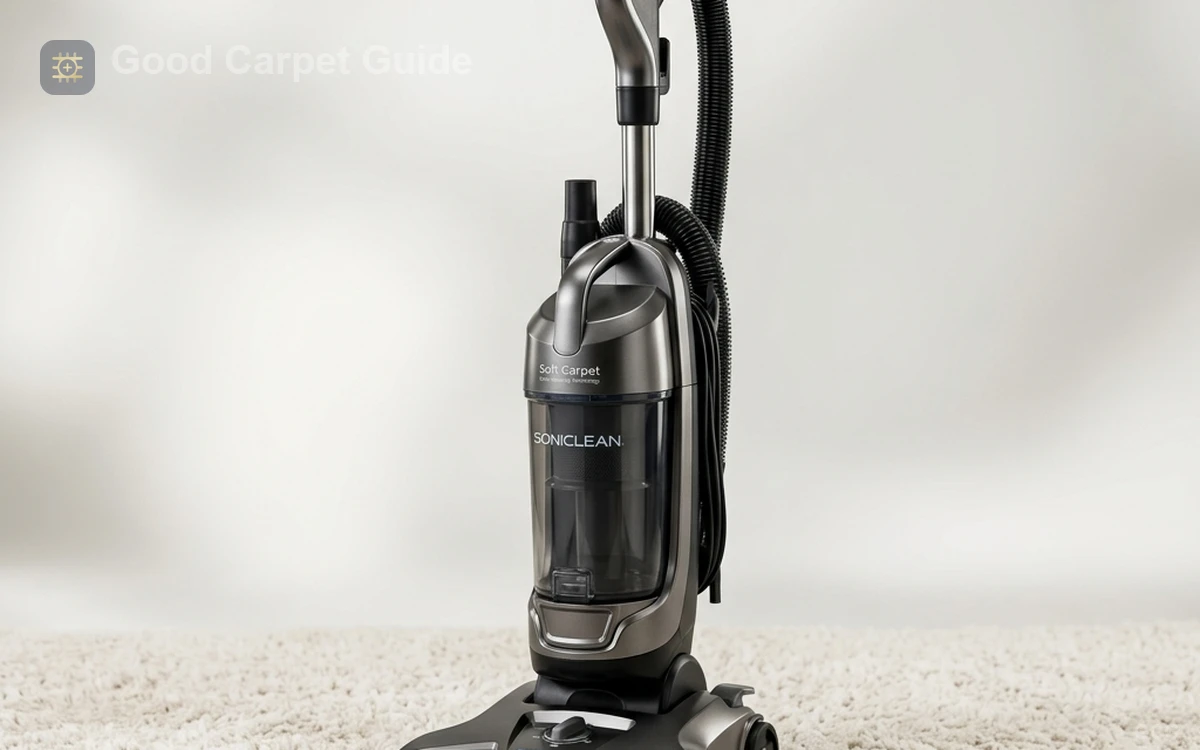
Soniclean Soft Carpet Upright Vacuum
Engineered with adjustable vent airflow and ultra-soft brush rolls to prevent fuzzing and premature matting on dense high-twist broadloom.
Check Price on Amazonnap direction and traffic wear patterns
Carpet pile possesses natural directional orientation, known as the nap. Brushing a hand across the nap in one direction lays the fibers flat and alters light reflection; brushing in the opposite direction lifts the tufts upright. Installers must orient the nap consistently across rooms and run the pile downward on stair treads.
Installing carpet against the natural nap orientation at doorway thresholds or stair transitions accelerates pile crushing. Foot traffic strikes directly against the fiber lean rather than with it.
underlayment coupling: cushion specifications by room type
Carpet fibers function as part of an integrated flooring system. The cushion beneath the broadloom dictates deflection rates and prevents premature fiber fatigue:
- Standard Living Rooms and Bedrooms: 7/16-inch thickness, 8-lb density bonded polyurethane (rebond) foam. Cushion thickness must never exceed 1/2-inch to maintain manufacturer warranty compliance.
- Stairs and High-Traffic Corridors: 3/8-inch thickness, 10-lb density rebond cushion or commercial-grade synthetic rubber padding. Firm underlayment limits pile flexing over stair nosings.
- Berber and Loop Constructions: 3/8-inch maximum thickness at 8-lb density to prevent backing delamination, excess vertical movement, and loop zippering.
Detailed cushion selection parameters and density ratings are cataloged in the carpet padding guide .
15-year total cost of ownership: nylon vs polyester
Sticker price per square foot presents an incomplete picture of total flooring expenditure. The lifecycle model below evaluates a 1,000-square-foot broadloom installation over a 15-year residential ownership horizon:
mid-grade polyester (pet) cycle
- Initial Installation (Year 0): 1,000 sq ft @ 4.50/sq ft (materials, pad, labor) = 4,500
- First Replacement (Year 5): 1,000 sq ft @ 4.50/sq ft +1,000 tear-out/disposal = $5,500
- Second Replacement (Year 10): 1,000 sq ft @ 4.50/sq ft +1,000 tear-out/disposal = $5,500
- Total 15-Year Expenditure: 15,500 (1,033 per year)
- Environmental Burden: Approximately 2,000 lbs of crushed synthetic broadloom discarded into landfills.
mid-grade nylon cycle
- Initial Installation (Year 0): 1,000 sq ft @ 6.50/sq ft (materials, premium 8-lb pad, labor) = 6,500
- Zero Replacements Required (Years 1–15): High-density nylon (Density ≥ 3,200, TPI ≥ 5.5) maintains structural twist with routine maintenance.
- Total 15-Year Expenditure: 6,500 (433 per year)
- Net Financial Savings: $9,000, accompanied by zero intermediate tear-out disruptions.
quick decision framework
| Household Profile or Room Type | Optimal Fiber Selection | Engineering Rationale |
|---|---|---|
| Staircases, Hallways, Main Entries | Nylon 6,6 or SmartStrand PTT | Intermolecular hydrogen bonds and kinked-spring geometry survive heavy compression; PET mats within 6–18 months. |
| Bedrooms, Guest Suites, Home Offices | Solution-Dyed PET (PureColor / EverStrand) | Low upfront cost (2.00–3.50/sq ft material) is justified where foot traffic and compressive loads are minimal. |
| Homes with Young Children & Beverage Spill Risks | Solution-Dyed Nylon or PTT (SmartStrand) | Provides permanent acid-dye stain resistance without relying solely on topical syntan coatings. |
| Homes with Pets & Driveway-Adjacent Entryways | Solution-Dyed Nylon | Resists oleophilic oil/grease absorption while withstanding commercial-grade hot water extraction. |
| Budget Rental Properties (Short Horizon) | Mid-Grade PET (Density ≥ 2,500) | Lowest upfront capital outlay matches 3- to 5-year tenant turnover cycles. |