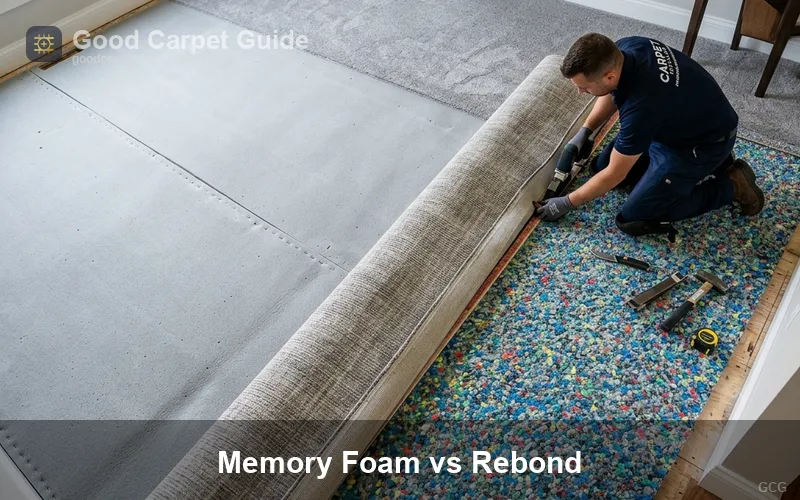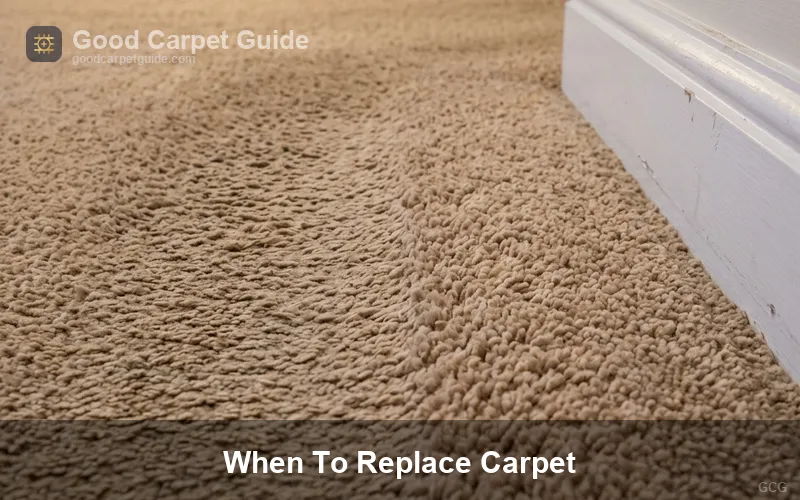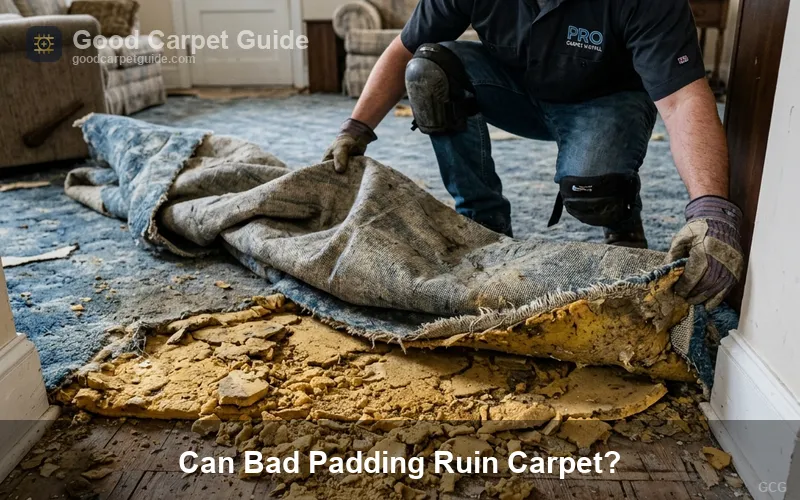
A veteran carpet installer pulled back a five-year-old living room carpet that looked twenty years old. The carpet surface showed wrinkles, loose seams, crushed traffic lanes, and visible buckling. The homeowner believed the carpet manufacturer had sold a defective product.
The inspection revealed a different cause. The carpet sat on an oversized 1/2-inch low-density foam pad that felt luxurious in the showroom but flexed excessively under daily foot traffic. That excessive flexing stressed the carpet backing, weakened the latex bonding system, and accelerated structural failure. Beneath the cushion, moisture trapped against the wood deck had already started darkening and softening the subfloor.
Can bad padding ruin carpet? Yes. Can bad padding ruin carpet even when the carpet itself is high quality? Yes. Carpet padding controls impact absorption, backing stability, moisture movement, warranty compliance, and long-term wear patterns. A premium carpet installed over the wrong underlayment frequently fails faster than a budget carpet installed over the correct cushion.
Bad padding ruins carpet through excessive flexing, density loss, moisture retention, furniture indentations, warranty violations, and subfloor damage. The most expensive carpet in a home remains dependent on the performance of the material hidden underneath it. Understanding thickness limits, density requirements, moisture barriers, and padding construction prevents costly replacement cycles and protects the investment made in carpet flooring.
The Thick Pad Fallacy: How Cushions Ruin Carpets
The thick pad fallacy ruins carpets by allowing excessive movement beneath the carpet backing.
Many showroom displays emphasize softness. Many showroom displays use thick memory foam cushions because a plush feel increases perceived comfort during a 30-second product demonstration. Carpet performance inside a home depends on structural support rather than showroom softness.
Installers repeatedly identify excessive cushion thickness as a major cause of premature carpet failure. Thick low-density padding allows the carpet backing to bend and flex every time someone walks across the surface. That repetitive flexing stresses the latex adhesive that holds primary and secondary backing layers together.
Once the backing system weakens, several problems emerge:
- Causes carpet backing flex.
- Causes carpet wrinkles.
- Causes carpet buckling.
- Causes tuft loss.
- Causes premature carpet delamination problems .
The issue becomes especially severe under heavy furniture and in hallways. Hallways concentrate thousands of foot strikes into a narrow path. Hallways therefore expose low-density padding weaknesses much faster than bedrooms or guest rooms.
Research measuring carpet wear found that carpet installed without padding lost 19.3% of face fiber thickness after 20,000 wear cycles. Proper padding reduced fiber loss to approximately 5% to 10%. Proper carpet protection relies on padding that supports the carpet correctly. Padding protects carpet only when the padding supports the carpet correctly.
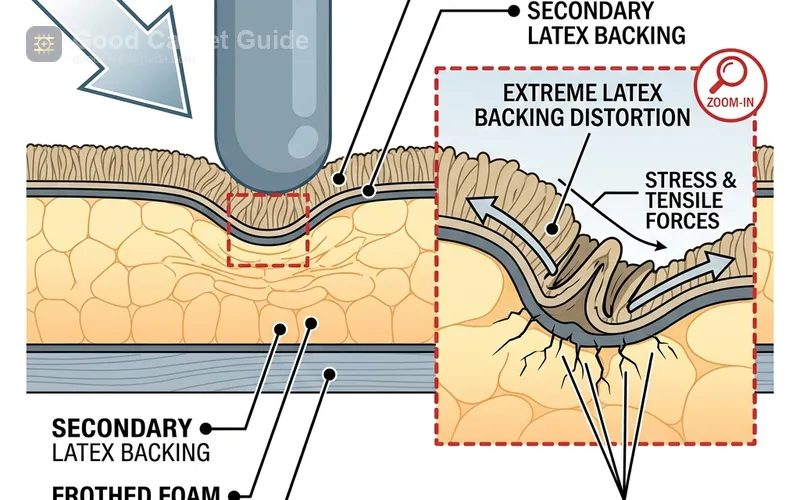
Caption: Excessive cushion compression creates carpet backing movement, while proper support limits flexing and reduces delamination risk discussed in warranty and density specifications.
Another overlooked consequence involves door clearance. Homeowners upgrading from contractor-grade padding to plush 1/2-inch premium cushions frequently discover that bedroom doors scrape the carpet or fail to close. Installers often solve the issue by trimming the bottom edge of interior doors.
The Warranty Specifications: Thickness and Density Limits
Warranty specifications protect carpets by limiting cushion thickness and requiring minimum density.
Major manufacturers do not treat carpet padding as an optional accessory. Major manufacturers treat carpet padding as a structural component of the flooring system.
The two most important specifications are thickness and density.
| Carpet Type | Maximum Thickness | Minimum Thickness | Minimum Density |
|---|---|---|---|
| Standard Cut Pile Carpet | 1/2 inch | 3/8 inch | 5-6 lb |
| Berber Carpet (Loop Pile) | 3/8 inch | 1/4 inch | 8 lb |
An 8-pound pad means one cubic foot of cushion material weighs eight pounds. Density measures support capacity rather than softness. Density therefore matters more than thickness for long-term performance.
Manufacturers such as Shaw Industries and Mohawk Industries specify these requirements because unsupported carpet movement accelerates backing failure.
A common mistake occurs when homeowners select oversized memory foam products marketed as luxury upgrades. The installer completes the project correctly, but the selected cushion falls outside manufacturer specifications. The warranty becomes void immediately.
Consumers comparing density levels should review our analysis of 8 lb versus 10 lb carpet padding performance .
Why Density Matters More Than Thickness
Density matters more than thickness because density determines resistance to compression.
A dense 3/8-inch rebond cushion frequently outperforms a soft 1/2-inch memory foam cushion. Dense rebond cushion supports the carpet backing. Dense rebond cushion also limits excessive movement that leads to wrinkles and delamination.
The flooring industry lacks a standardized government verification system for density labels. Consumers should therefore verify specifications through manufacturer documentation rather than relying exclusively on showroom marketing language.
Rebond vs. Prime Polyurethane Foam Padding
Rebond padding lasts longer because rebond padding maintains structural integrity under repeated compression.
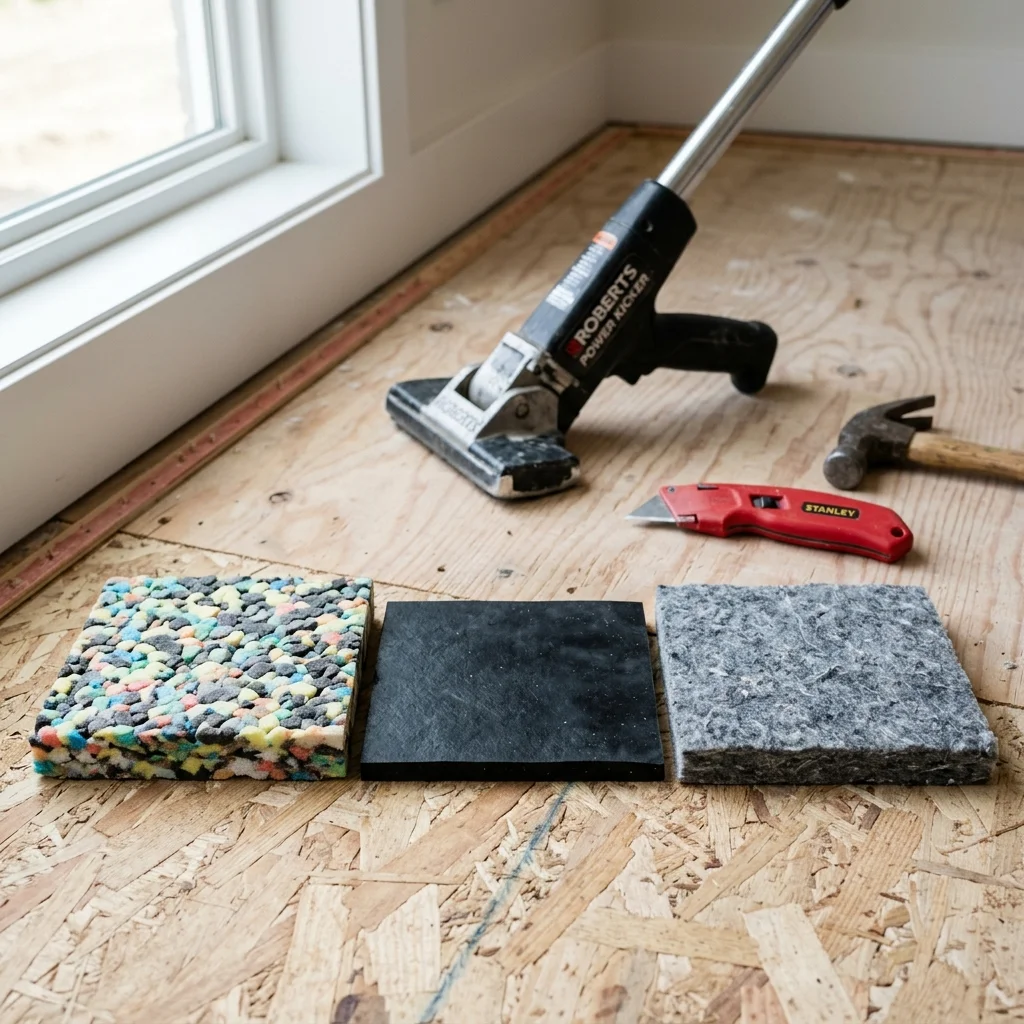
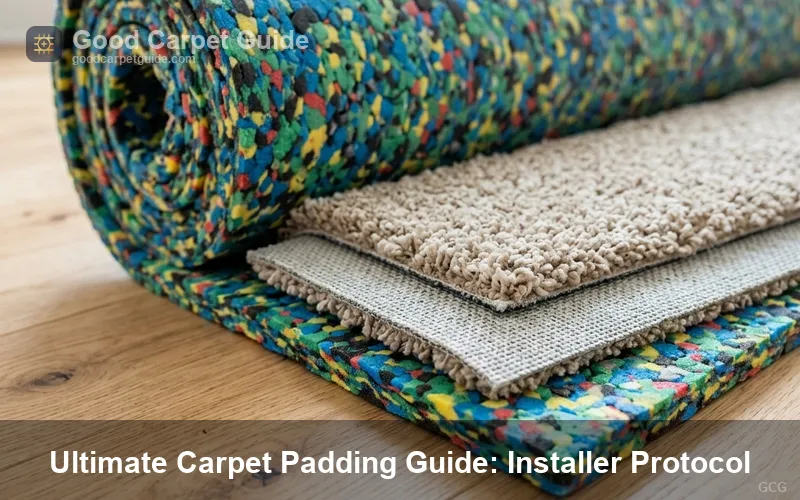
Rebond padding (polyurethane rebond) consists of recycled foam fragments bonded together under pressure. Prime polyurethane foam consists of solid foam manufactured as a single continuous material.
The differences become visible after years of service.
| Feature | Rebond Foam | Prime Foam |
|---|---|---|
| Durability | High | Moderate |
| Long-Term Compression Resistance | High | Low |
| Dust Generation | Low | High |
| Cost | Moderate | Moderate to High |
| Installer Preference | Strong | Limited |
Installers consistently favor rebond products because rebond products remain intact during removal. Prime foam products frequently degrade into powder.
The "Yellowcake" Dust Problem
The "yellowcake" dust problem occurs when aging prime foam oxidizes and crumbles into fine particulate debris.
Homeowners removing old carpet frequently describe finding a layer resembling cinnamon-colored dust, crushed cereal, or yellow powder spread across the entire floor. Foot traffic gradually pulverizes degraded foam until only dust remains.
The cleanup process becomes difficult because the dust spreads into HVAC systems, cracks, and subfloor joints. Professional installers often wear respirators during removal of severely degraded foam cushions.
The Waxy Residue Problem
The waxy residue problem occurs when decomposed foam chemically bonds to hardwood surfaces.
Old padding leaves dark adhesive-like staining on wood floors. The residue frequently requires acetone, adhesive removers, scraping, and floor sanding before refinishing becomes possible.
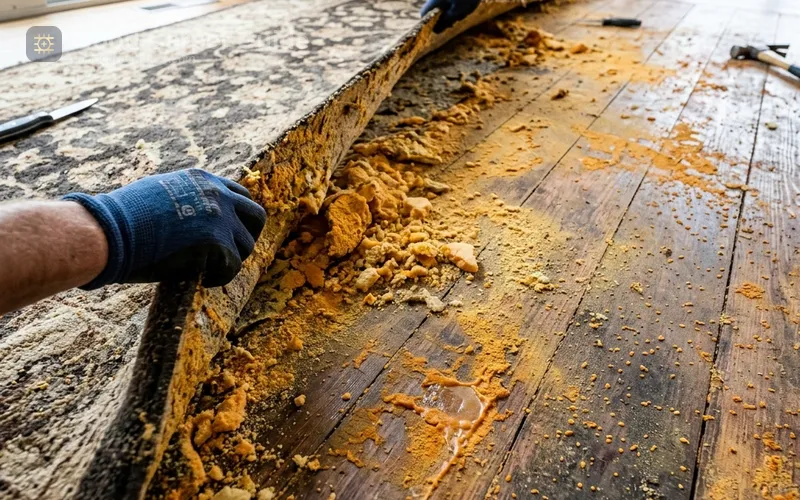
Caption: Oxidized foam padding transforms into powder and residue, connecting long-term cushion degradation with replacement timing and professional padding recommendations.
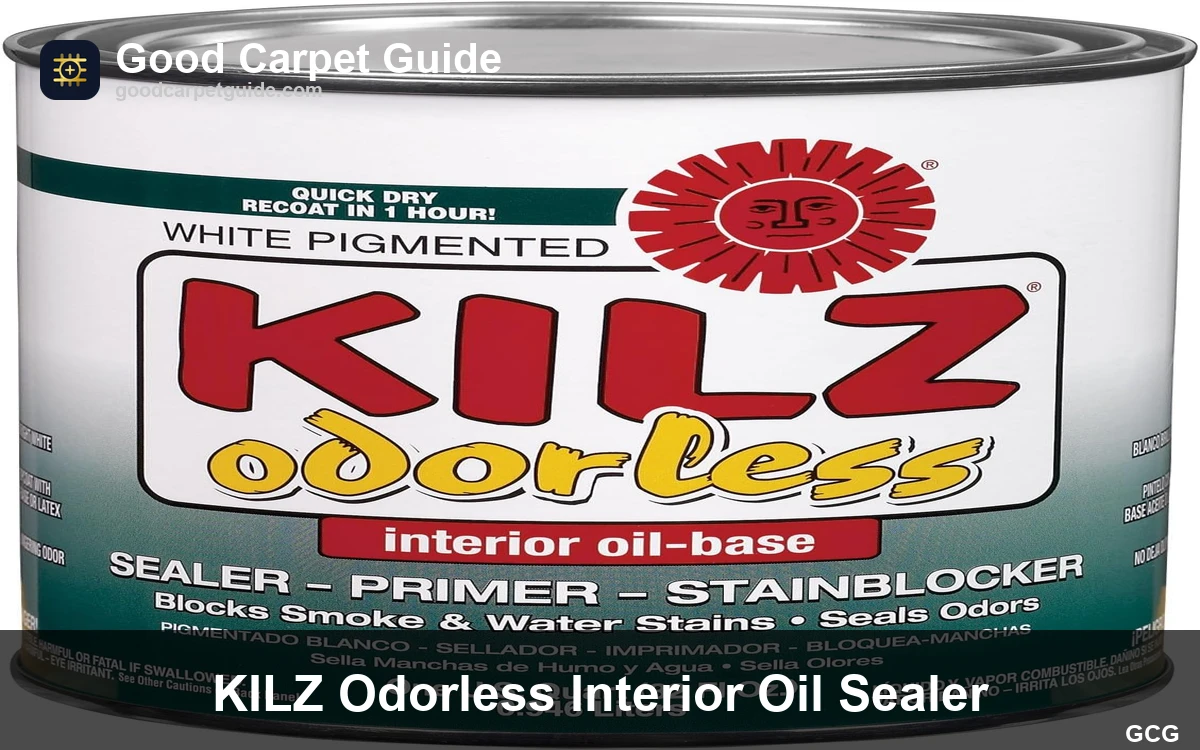
KILZ Odorless Interior Oil-Based Primer Sealer
An outstanding professional-grade primer designed specifically to seal porous concrete slabs below grade. Blocks severe musty odors, prevents alkaline vapor transfer, and stops moisture from attacking carpet adhesives.
Check Price on AmazonWhat Is the Difference Between Carpet Padding Types?
The difference between carpet padding types comes from material composition, density, support characteristics, and moisture behavior.
The major categories include:
- Uses recycled polyurethane chunks in rebond padding.
- Uses poured urethane formulations in memory foam padding.
- Uses synthetic fibers in commercial felt padding.
- Uses moisture-resistant membranes in waterproof padding.
Rebond foam dominates approximately 85% of residential installations because rebond foam balances cost, durability, and support.
Memory foam prioritizes softness but develops furniture indentations and compression fatigue.
Synthetic fiber felt prioritizes durability but produces a noticeably firm walking surface.
The Moisture Barrier Dilemma and Concrete Vapor Barriers
Moisture barriers create benefits and risks depending on the subfloor environment.
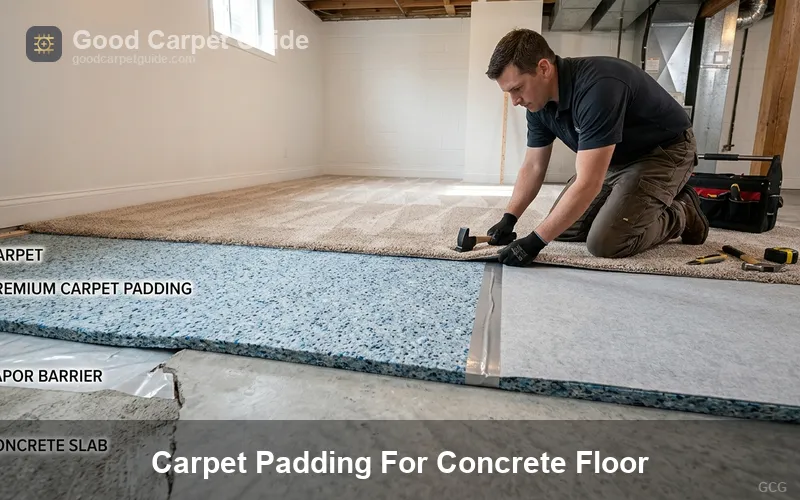
Moisture barriers protect against spills from above. Moisture barriers also trap moisture beneath the cushion if water enters from below.
Products such as Lifeproof Premium Comfort Foam and Future Foam StepAhead with Nike Grind include spill-resistant membranes designed to stop liquid penetration.
Many homeowners appreciate spill protection. Many homeowners later report unexpected side effects.
One common complaint involves noise. Users describe walking across newly installed flooring and hearing sounds resembling bubble wrap, plastic bags, or crinkling packaging material. Multiple users reported that moisture barrier membranes generated constant crunching noises throughout entire rooms.
The complaint appears most frequently in premium foam products that use waterproof film layers.
The Concrete Slab Vapor Barrier Problem
The concrete slab vapor barrier problem occurs when hydrostatic moisture becomes trapped beneath impermeable materials.
Concrete slabs release moisture vapor continuously. Double-sided moisture barriers prevent vapor escape. Trapped moisture creates a micro-greenhouse environment beneath the carpet system.
That trapped moisture encourages:
- Promotes mold growth.
- Promotes mildew growth.
- Promotes odor formation.
- Promotes subfloor deterioration.
Consumers should match moisture-control products to the specific subfloor environment rather than assuming every waterproof product improves performance.
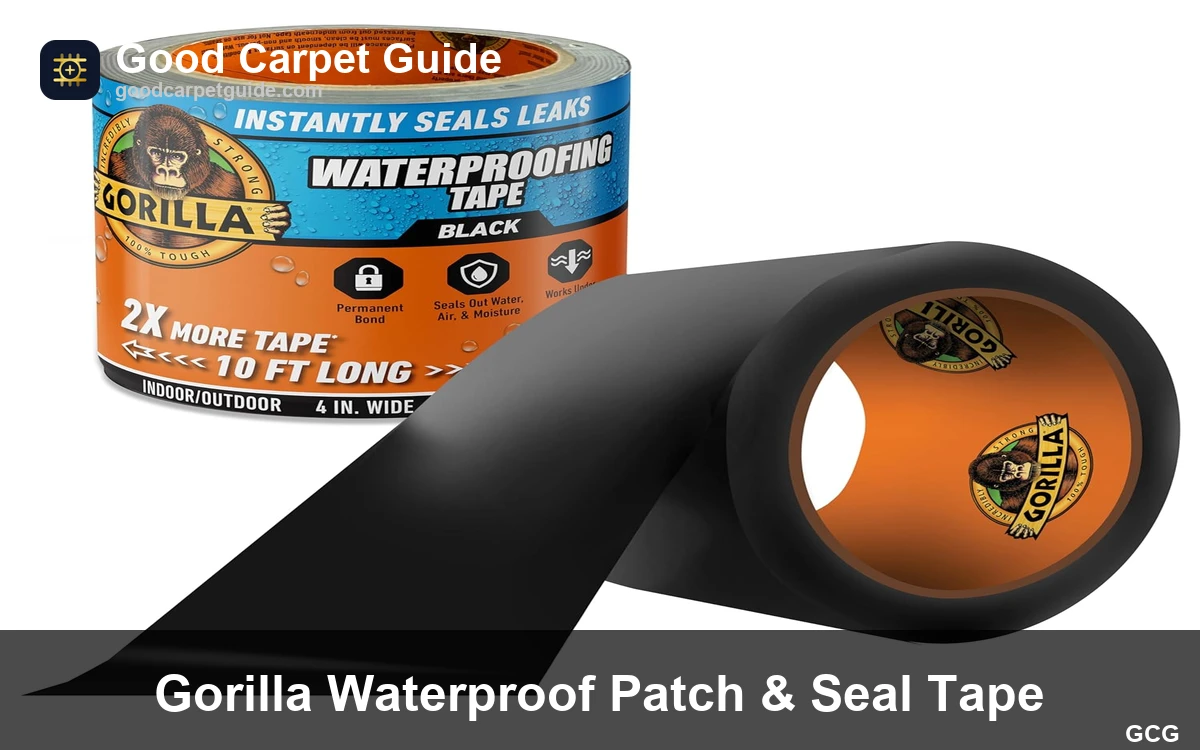
Gorilla Waterproof Patch & Seal Tape
Essential for sealing subfloor joints, underlayment seams, and foam padding edges in finished basements. Creates a permanent, airtight, and 100% waterproof seal that blocks lateral concrete vapor migration.
Check Price on AmazonFor a deeper technical explanation, review our detailed carpet padding selection guide .
The Pet Urine Wicking Paradox: Wet Rot at the Perimeter
The pet urine wicking paradox damages subfloors by redirecting moisture toward room edges.
Many consumers believe waterproof padding prevents urine damage. Waterproof padding prevents vertical penetration but changes moisture movement patterns.
Pet urine reaching a moisture barrier membrane cannot travel downward. Pet urine therefore travels sideways through capillary action until reaching perimeter expansion gaps along walls.
The moisture accumulates around tack strips and perimeter framing. The moisture accumulates around tack strips and perimeter framing because those locations become the lowest available absorption points.
The resulting damage includes:
- Rusts tack strips.
- Saturates perimeter wood framing.
- Rots perimeter subfloors.
- Creates persistent odor reservoirs.
Some flooring inspectors describe perimeter rot as the hidden consequence of moisture barrier systems. Homeowners frequently discover damage only after removing carpet years later.
One documented inspection revealed a subfloor so deteriorated that a hammer passed directly through the softened wood structure.
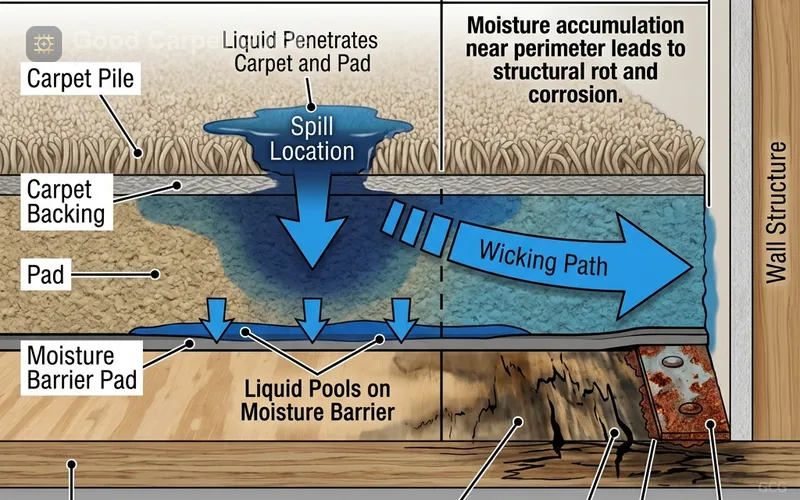
Caption: Waterproof membranes block downward penetration but redirect liquid toward perimeter gaps, bridging moisture management decisions with subfloor protection strategies.
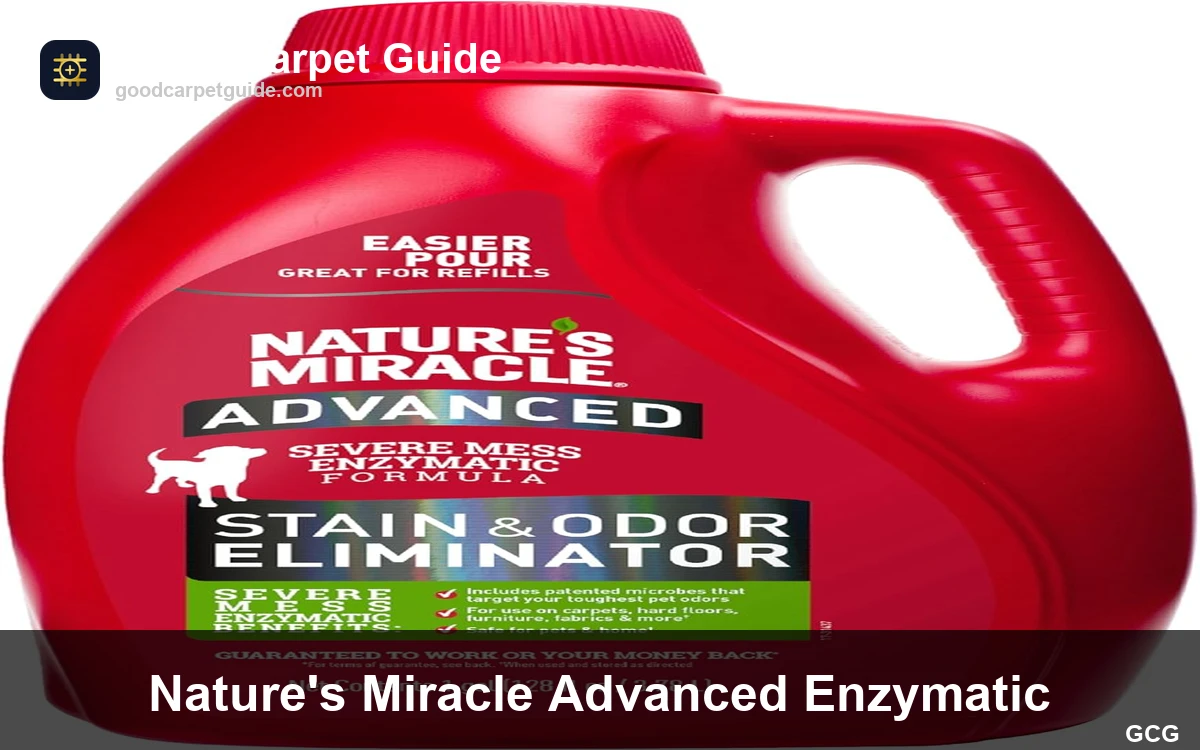
Nature's Miracle Advanced Enzymatic Odor Eliminator
Since basements naturally trap moisture and harbor mold spores, pet accidents can quickly become permanent odor nightmares. This professional enzymatic formula breaks down urine and organic molecules deep inside synthetic fibers.
Check Price on AmazonWhen Should You Replace Carpet Padding?
Replace carpet padding when the padding loses resilience, emits odor, develops moisture damage, or shows structural breakdown.
Key replacement indicators include:
- Replace padding when compression remains visible after furniture removal.
- Replace padding when powdering or yellow dust appears.
- Replace padding when moisture damage produces odor.
- Replace padding when carpet replacement occurs.
- Replace padding when warranty specifications change.
How Long Does Carpet Padding Last?
Carpet padding lasts approximately 10 to 20 years depending on material quality, traffic volume, moisture exposure, and density.
High-density rebond products frequently remain functional near the upper end of that range. Low-density foam products frequently lose performance significantly sooner.
What Carpet Padding Do Professionals Recommend?
Professionals recommend high-density rebond padding for most residential installations.
Professional recommendations focus on structural support rather than showroom softness. Professional recommendations therefore align closely with manufacturer warranty requirements.
The most commonly recommended categories include:
- Select 7/16-inch 8-pound rebond for general residential use.
- Select 3/8-inch 8-pound rebond for Berber carpet installations.
- Select synthetic felt for commercial environments.
- Select manufacturer-approved cushions for warranty protection.
Products frequently mentioned by installers include Mohawk SmartCushion, Shaw Victorious, and quality rebond products from Future Foam.
Which Brand Makes the Best Carpet Padding?
The best carpet padding depends on the carpet type and performance objective.
| Goal | Recommended Product Type |
|---|---|
| Warranty Protection | Mohawk SmartCushion |
| Warranty Protection | Shaw Victorious |
| Value and Durability | Future Foam Rebond |
| Berber Carpet Support | High-Density Rebond |
| Commercial Durability | Synthetic Felt |
How to Choose Carpet Padding?
Choose carpet padding by matching carpet construction, density requirements, moisture conditions, and traffic levels.
Use the following selection process:
- Verify carpet warranty specifications.
- Verify density requirements before thickness requirements.
- Verify subfloor moisture conditions before selecting barriers.
- Verify traffic levels before selecting cushion softness.
- Verify furniture loads before selecting memory foam products.
Consumers evaluating stair installations should review specialized requirements for the best carpet padding for stairs .
Is High-Quality Carpet Padding Worth It?
High-quality carpet padding is worth the cost when the upgrade increases density rather than softness.
Contractor-grade padding costs approximately $0.32 to $0.45 per square foot. Standard 7/16-inch 8-pound rebond costs approximately $0.53 per square foot. Premium moisture-barrier foam products range from approximately $0.77 to $1.07 per square foot.
The cost difference between contractor-grade and quality rebond padding remains relatively small compared with carpet replacement costs. Density-focused upgrades therefore generate stronger long-term value than softness-focused upgrades.
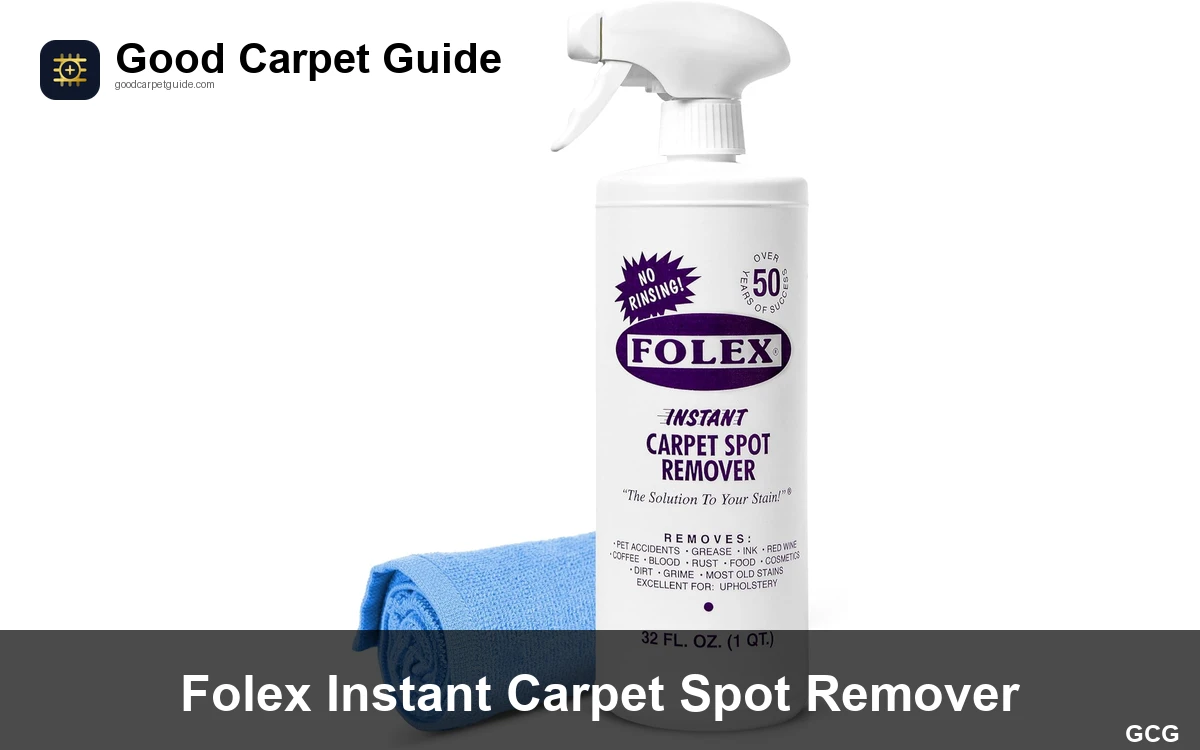
Folex Carpet Spot Remover
The gold-standard spot remover that safely eliminates stubborn carpet stains without leaving any sticky residue. Safe for all colorfast carpets and upholstery.
Check Price on AmazonFrequently Asked Questions (FAQ Schema)
Can bad padding ruin a new carpet?
Yes. Bad padding accelerates carpet wear, increases backing stress, promotes wrinkling, and voids manufacturer warranties when specifications fall outside approved ranges.
Does memory foam carpet padding damage carpet?
Memory foam carpet padding damages carpet when low-density construction allows excessive backing movement. Excessive backing movement contributes to wrinkles, buckling, and delamination.
Can carpet be installed without padding?
Carpet can be installed without padding, but carpet loses significantly more face fiber thickness under wear testing. Padding serves as an impact-absorption layer that protects both carpet fibers and backing.
Is rebond padding better than prime foam?
Rebond padding outperforms prime foam in durability, compression resistance, and long-term structural stability. Installers overwhelmingly prefer rebond products for residential applications.
Carpet vs hardwood flooring costs
Carpet generally requires lower installation investment than hardwood flooring. Carpet systems include carpet, padding, and installation costs, while hardwood flooring includes material, preparation, finishing, and refinishing considerations over time.
Carpet vs vinyl plank flooring
Carpet provides insulation, softness, and impact absorption. Luxury vinyl plank (LVP) provides moisture resistance and easier surface cleaning. LVP should never be installed over soft carpet padding because cushion movement causes locking-joint failure.
Bad carpet padding does not merely reduce comfort. Bad carpet padding changes the structural behavior of the entire flooring system. Consumers seeking maximum value should prioritize density, warranty compliance, and moisture management over showroom softness.
For most households, a 7/16-inch 8-pound rebond cushion represents the strongest balance of durability, support, warranty protection, and cost. Use 3/8-inch high-density rebond under Berber carpet. Use manufacturer-approved products such as Mohawk SmartCushion or Shaw Victorious when warranty coverage matters. Avoid oversized low-density memory foam products when long-term carpet performance is the primary objective.