| Scenario | Top Priority | Recommended Action |
|---|---|---|
| New carpet with pets | Fiber selection + transition protection | Choose continuous filament polyester or SmartStrand; install metal transition strips at every doorway |
| Rental property carpet | Stain resistance + documentation | Apply manufacturer-approved protector only; keep all professional cleaning receipts |
| Stairs during construction | Surface protection | Use Ram Board or Trimaco X-Board — never self-adhesive plastic film |
| High-traffic hallways | Pad density + vacuuming schedule | Specify minimum 6 lb/ft³ rebond pad; vacuum traffic lanes three times per week |
| Basement installation | Moisture management | Seal concrete slab before installation; use breathable Carpenter Spillguard pad, not non-breathable film |
| Home office / desk area | Point-load protection | Place a hard-surface chair mat rated for carpet pile height |
| Party or event protection | Temporary surface cover | Use Ram Board cut to width; remove within 48 hours to prevent adhesive transfer |
Protecting carpet starts at the subfloor and ends with the cleaning receipt. How to protect carpet is one of those topics where most homeowners think they already know the answer — a rug here, a door mat there — and then they're standing in front of a warranty inspector watching their claim get denied. This field guide on how to protect carpet covers the six failure points that cost homeowners the most money: pad selection, subfloor preparation, transition strip installation, stain management, construction-phase protection, and the cleaning documentation loop that almost every major warranty quietly requires.
how to protect my carpet from stains
Protecting carpet from stains requires selecting a fiber with a permanently integrated stain-resistance mechanism, not a topical spray applied after installation. Mohawk SmartStrand (Triexta), the current benchmark for stain resistance, builds protection into the polymer chain itself, meaning liquid does not bond to the fiber at the molecular level. Triexta fiber resists pet vomit, bile, and juice without requiring aftermarket sprays.
The critical warning here involves warranty language. Shaw, Mohawk, and most major manufacturers explicitly exclude any carpet treated after installation with silicone-based anti-soil products. Applying aftermarket Scotchgard to a new Shaw carpet voids stain warranty coverage immediately, regardless of the original fiber type. Read the warranty exclusions on page 3 before opening any spray can.
Cleaning product selection is the second failure point. An independent inspector denied one Shaw warranty claim because the homeowner had used Nature's Miracle and Folex on pet vomit stains. The inspector's report cited optical brightener compounds in both products as the source of a yellow oxidation halo. Folex Instant Carpet Spot Remover is formulated without optical brighteners and is widely used on job sites for exactly this reason.
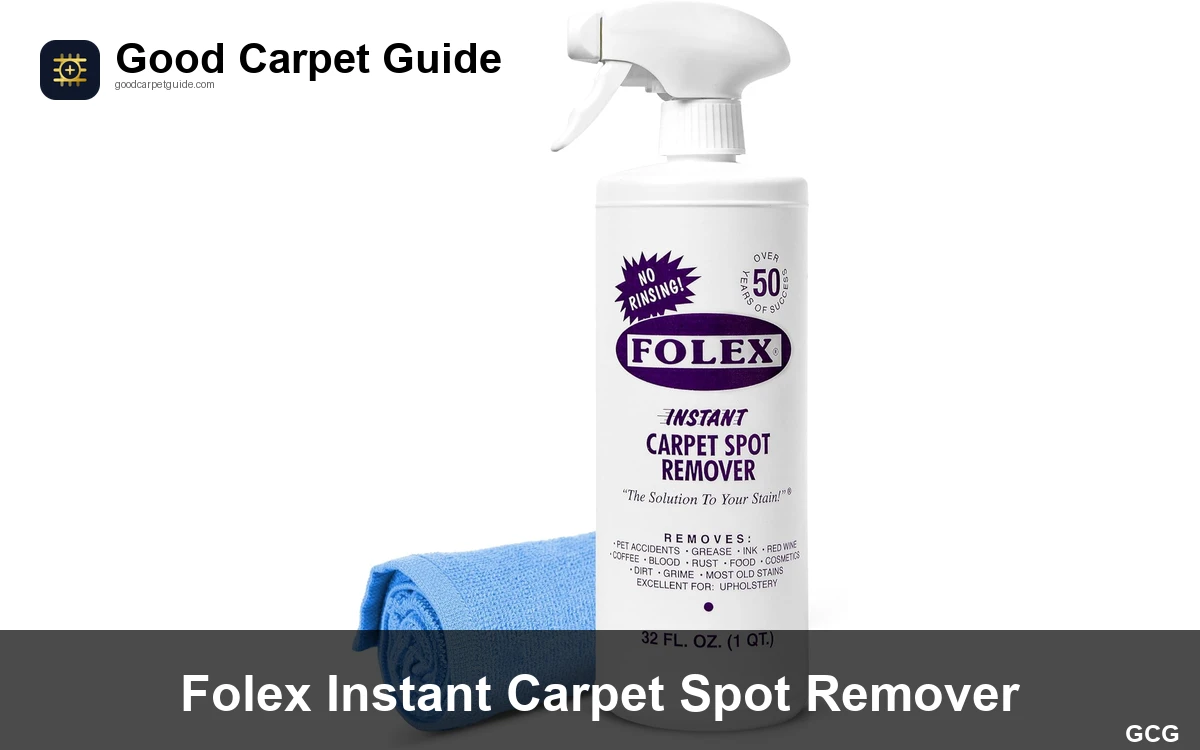
Folex Instant Carpet Spot Remover
Folex contains no optical brighteners, making it safe for use on warranted carpets where optical brightener exposure can cause permanent yellowing and void manufacturer claims.
Check Price on AmazonThe hidden professional cleaning clause tightens the stain protection loop further. Shaw, Mohawk, and similar brands mandate professional hot-water extraction cleaning by a Carpet and Rug Institute (CRI)-certified contractor every 12 to 18 months. Receipts must be retained and submitted within 30 days prior to filing any warranty claim. Without those receipts, the stain claim fails regardless of fiber quality or cleaning method.
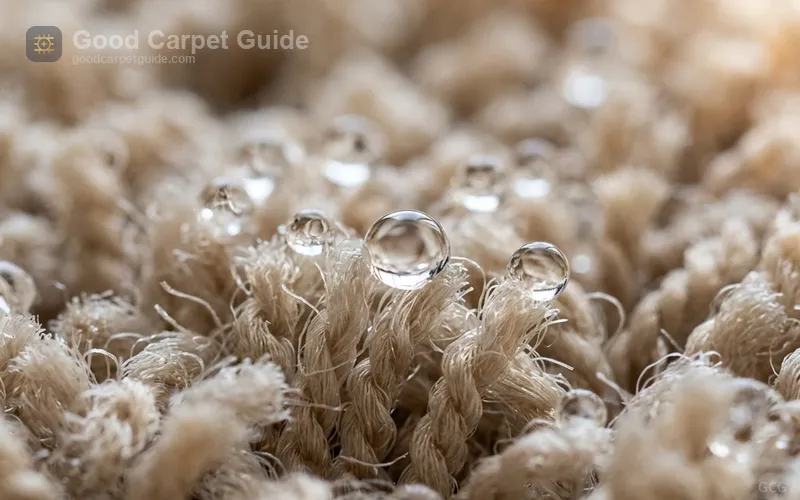
Triexta fiber's polymer-level stain resistance causes liquid to bead on the surface rather than bonding to the fiber shaft — a property that distinguishes built-in stain resistance from topical spray treatments, which can compromise warranty coverage if applied post-installation.
how to protect new carpet from pets
Protecting new carpet from pets requires addressing two separate failure modes: claw damage at transition zones and embedded hair in pile fibers. These two mechanisms require different interventions.
Cats systematically target the gap at closed doors, clawing the carpet backing down to the tack strip within weeks of installation. One homeowner reported needing to re-stick a carpet patch repeatedly because the cat clawed the section down to the backing. The fix is mechanical: install a metal transition strip at every interior doorway, and apply a double-bead of Roberts 8015 Universal Carpet Seam Sealer along any seam within 6 inches of a tack strip. The seam sealer bonds the backing so claw force distributes across a wider area rather than peeling the carpet away from a single anchor point.
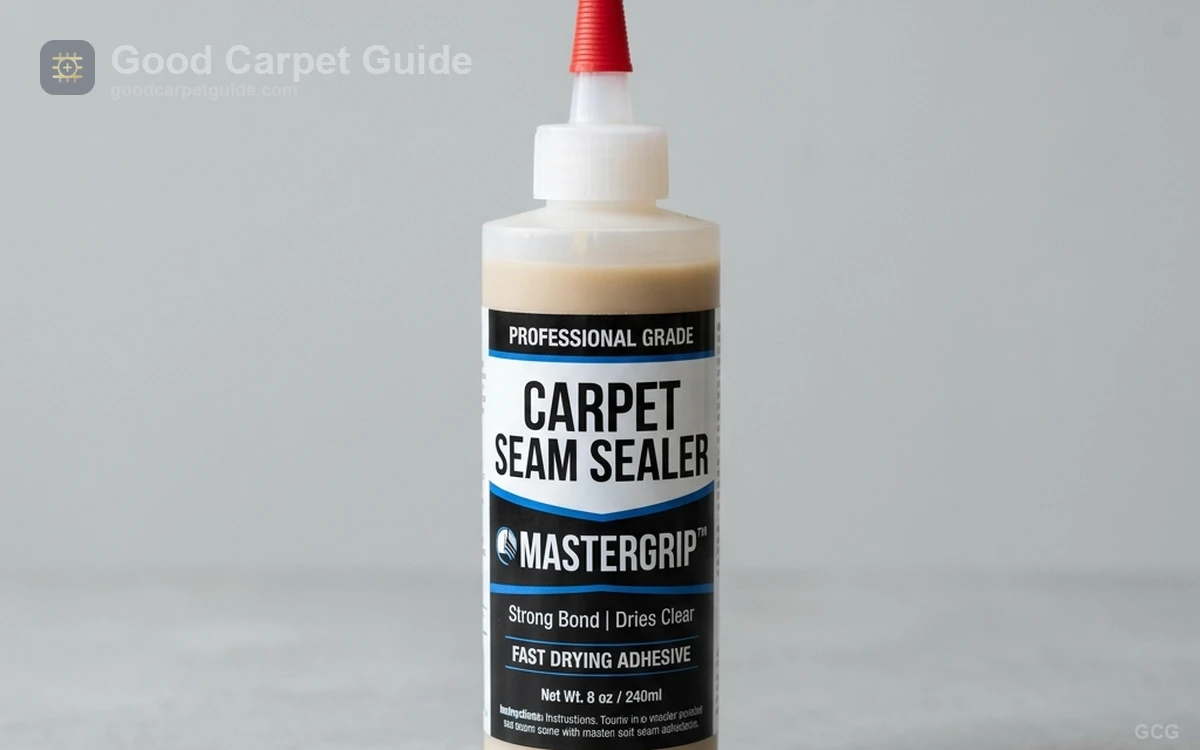
Roberts 8015 Universal Carpet Seam Sealer
Roberts 8015 seals carpet backing at transition seams and door gaps — the two zones where cat claw damage initiates — by bonding the backing fibers together so claw force distributes rather than peeling.
Check Price on AmazonEmbedded dog hair in synthetic carpet is removed with three field-tested tools: the Lilly Brush, a pumice (lava) stone, and the Tornador air compressor gun operating at 150 PSI. The Lilly Brush and pumice stone work the hair upright so it can be vacuumed. The Tornador blasts hair from deep within the pile in automotive and residential applications alike. Use a Soniclean Soft Carpet vacuum with a brush roll specifically rated for plush pile to extract hair without breaking fiber tips.
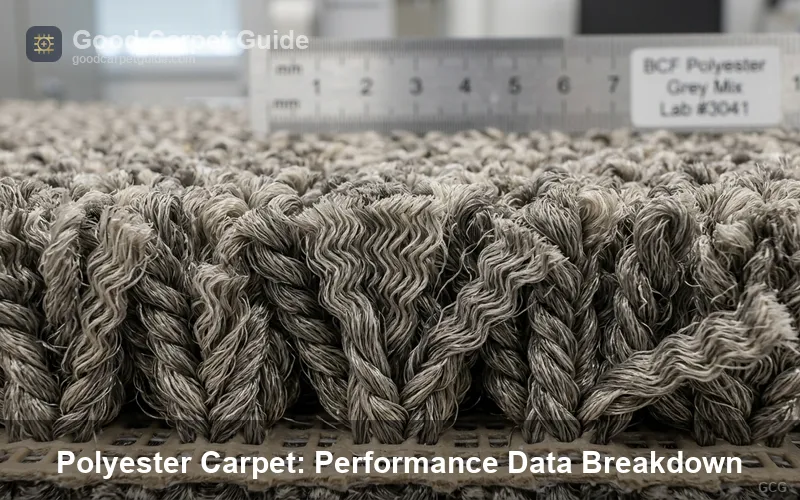
Fiber selection determines baseline pet performance. Continuous filament polyester (PET), such as the Dreamweaver line by Engineered Floors, does not shed individual fiber strands, which limits the loose fiber material available for pet hair to bind with. SmartStrand Triexta handles pet vomit and urine at the fiber level. Nylon, while historically considered the performance standard, now competes directly with modern continuous filament PET in abrasion resistance and is meaningfully less stain-resistant in the absence of topical treatments.
how to protect carpet stairs during construction
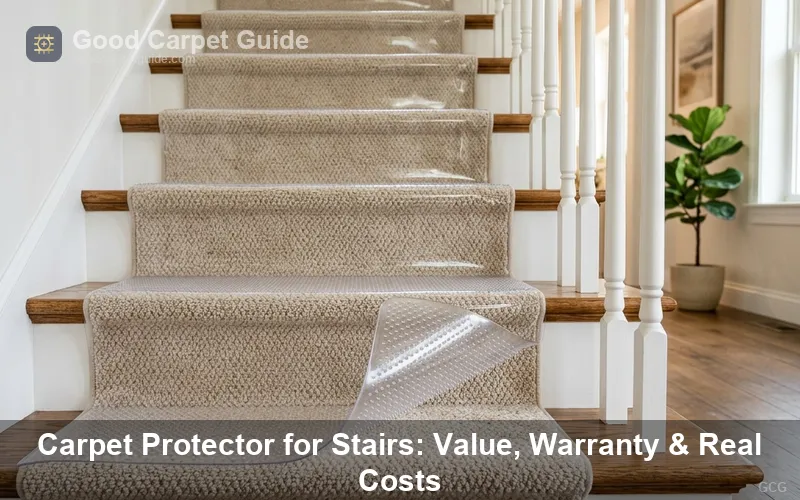
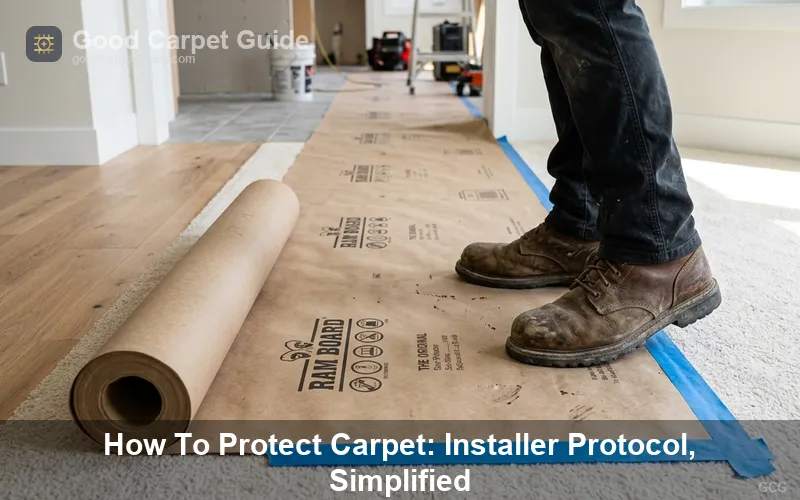
Protecting carpet stairs during construction requires a rigid, non-adhesive surface barrier installed within 24 hours of carpet placement. Ram Board (3mm pressed fiberboard) and Trimaco X-Board are the two products most specified by flooring contractors for stair protection because both products are non-adhesive, breathable, and structurally rigid enough to resist compression from construction foot traffic.
Self-adhesive plastic film is the wrong product for this application. Plastic carpet protection film left in place for more than 72 hours transfers adhesive residue to carpet fiber tips. Removing the film after extended contact can cause delamination — the physical separation of carpet face fibers from the primary backing — which is an irreversible mechanical failure. The adhesive residue left behind also acts as a permanent dirt magnet, accelerating soiling at the exact surface the film was intended to protect.
Install Ram Board on stair treads using a strip cut to the tread width, held in place by a single strip of non-adhesive painter's tape on the riser face below. Remove Ram Board within 14 days. On stair nosings, where construction traffic concentrates the most load, place a second layer of X-Board cut as a 6-inch strip across the nosing edge only.
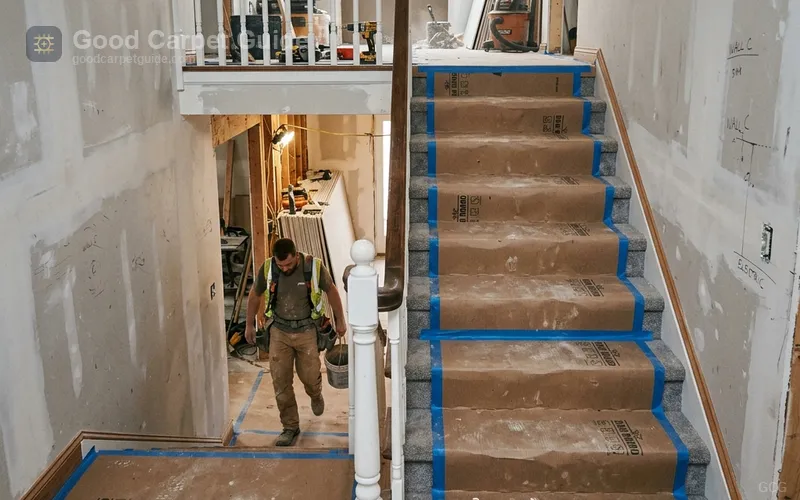
Rigid Ram Board panels separate construction foot traffic from carpet pile on stair treads without the adhesive contact that causes plastic film to transfer residue and initiate fiber delamination — the primary failure mode of self-adhesive carpet protection products used beyond 72 hours.
how to protect carpet stairs from dirt
Protecting carpet stairs from dirt accumulation requires managing three distinct loading zones: the stair nosing, the center tread, and the riser base. Each zone receives dirt from a different mechanism, and a single cleaning or protection approach does not address all three equally.
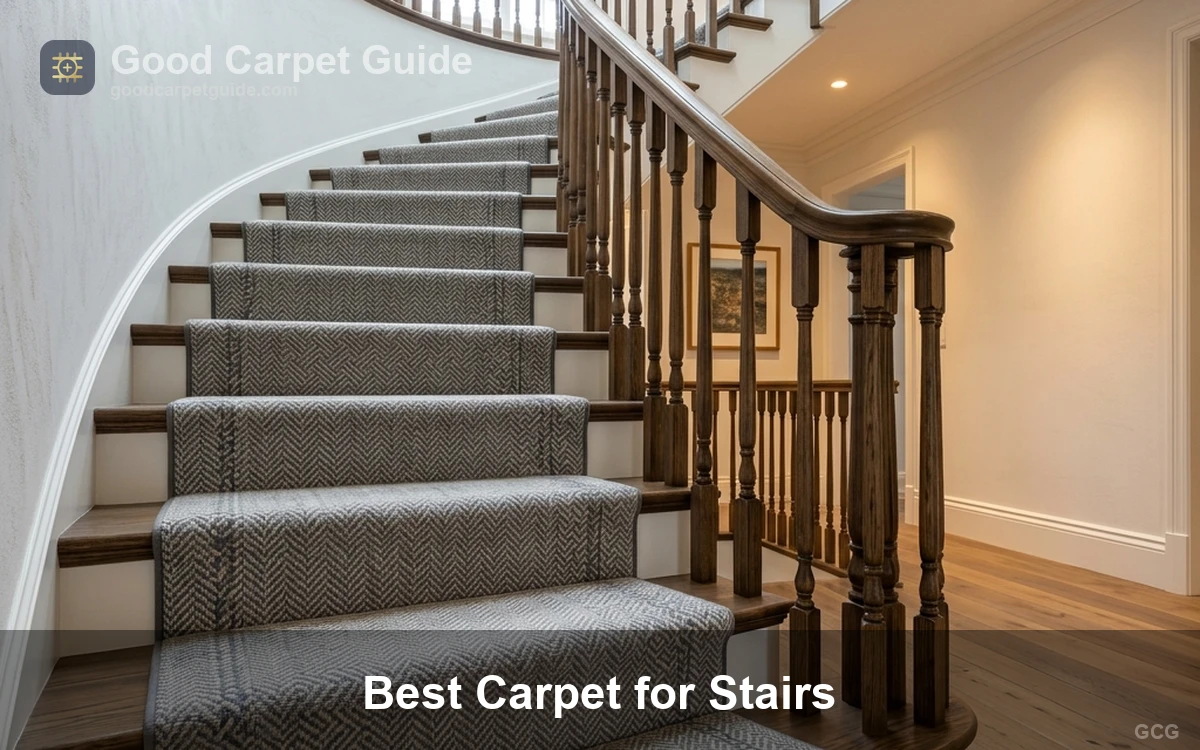
The stair nosing accumulates the most abrasive soil because it is the contact point for both the heel-strike on ascent and the toe-drag on descent. Installing a metal stair nosing profile over the carpet edge at each tread converts an abrasion zone into a rigid, cleanable surface. Carpet nosing profiles from brands like Schluter or M-D Building Products install with screws directly through the carpet into the tread.
The center tread collects tracked-in soil from footwear. A barrier mat system outside the exterior entry point is the most effective intervention: the Carpet and Rug Institute recommends 6 to 10 feet of walk-off matting at each entry to capture 80% of tracked-in particulate before it reaches interior carpet. Vacuuming stair treads twice per week on a beater-bar vacuum removes loosened soil before it migrates deeper into the pile, where mechanical extraction requires significantly more passes.
The riser base collects fine dust that drifts downward from foot traffic above. A microfiber attachment on a standard vacuum addresses the riser base weekly without saturating the carpet backing.
how to protect rental carpet
Protecting rental carpet starts with photographic documentation at move-in and ends with professional cleaning receipts at move-out. Rental carpet protection is a liability management discipline, not just a maintenance question.
Understanding tenant liability rules and useful life proration is critical before move-out—our apartment carpet guide details the exact depreciation formulas used to dispute illegal charges.
At move-in, photograph every existing stain, worn area, fraying transition, and wrinkle under direct light. Submit the photo set to the landlord in writing within 24 hours. This establishes baseline condition and removes ambiguity about whether damage predates the tenancy.
During the tenancy, rental carpet protection follows four active protocols:
- Apply only manufacturer-approved spot removers, since aftermarket products with optical brighteners create yellow halos that photograph as new stains
- Place hard-surface chair mats under any rolling office chair, because caster wheels grind carpet pile into the backing within weeks of daily use
- Use non-slip furniture pads under stationary furniture legs to distribute point loads that otherwise crush pile permanently
- Vacuum traffic lanes a minimum of twice per week with a vacuum carrying a CRI Seal of Approval rating
At move-out, hire a CRI-certified hot-water extraction professional and retain the receipt. Rental disputes over carpet condition are most commonly resolved in the tenant's favor when professional cleaning documentation exists.
how to protect carpet under door from cat scratching
Protecting carpet under a door from cat scratching requires eliminating the claw-entry point at the carpet-to-backing junction. Cats scratch at the door gap because the gap exposes a loose carpet edge, giving the claw a starting grip point. Remove the grip point and the behavior reduces without behavioral intervention.
Three mechanical solutions address the door gap:
- Install a door-sweep weatherstripping seal on the bottom of the door to eliminate the visible gap that initiates claw targeting
- Apply Roberts 8015 seam sealer to the carpet edge along the full width of the door, bonding the face fibers to the backing so individual tufts cannot be lifted
- Install a metal threshold or transition strip flush with the door bottom, covering the carpet edge with a rigid surface the claw cannot grip
The transition strip solution is the most permanent because the rigid metal surface physically prevents claw contact with the carpet backing. Replace the transition strip annually in multi-cat households where claw force concentrates on the same 12-inch zone daily.
how to protect car carpet from dog hair
Protecting car carpet from dog hair requires a two-part system: a physical barrier during transport and a mechanical extraction routine after each trip. Car carpet is tightly woven and low-pile, which causes dog hair to bind more aggressively to fiber shafts than residential carpet allows.
During transport, a fitted cargo liner or rear-seat cover prevents direct hair contact with the car carpet. Fitted liners from brands like WeatherTech or Husky Liners use vehicle-specific molds to cover the entire load area without leaving exposed carpet edges.
After each trip, three tools extract embedded hair from car carpet without damaging the fiber:
- The Lilly Brush uses stiff nylon bristles to lift hair that vacuum suction alone cannot dislodge
- A pumice (lava) stone dragged across the carpet surface generates static and mechanical lift that pulls hair upright for vacuuming
- The Tornador air compressor gun at 150 PSI blasts hair from deep pile fibers in high-traffic load areas
Vacuum car carpet with a handheld unit using a stiff brush attachment immediately after using the Lilly Brush or pumice stone, while the hair is still lifted above the pile surface.
how to protect carpet while painting
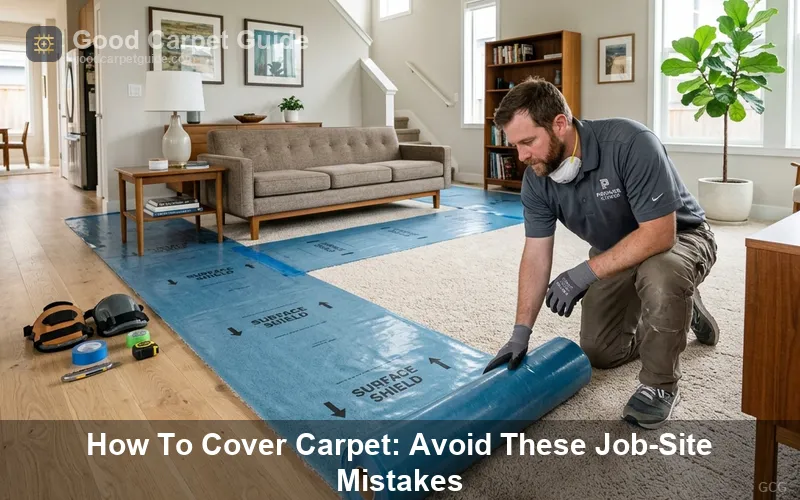
Protecting carpet while painting requires a non-adhesive, liquid-absorbent barrier installed before the first can is opened. Paint protection for carpet operates on two risk vectors: splash contact from brush and roller work, and drip contact from ladder feet, tray edges, and cans being moved across the floor.
Ram Board handles both vectors on a single material. Ram Board's pressed fiberboard construction absorbs water-based paint on contact, preventing the liquid from soaking through to the carpet below. Ram Board also resists compression from ladder feet, which eliminates the indentation risk that soft drop cloths create under point loads.
Do not use plastic sheeting as the sole barrier under ladder feet. Plastic sheeting slides on carpet pile under load, creates a trip hazard, and does not absorb drip contact — paint pools on plastic and runs to the uncovered carpet edge.
Install Ram Board with the printed side facing up, cut to cover the full perimeter of the wall being painted plus 18 inches of additional floor coverage. Remove Ram Board within 24 hours of completing the final coat to prevent moisture buildup under the fiberboard from affecting the carpet backing.
how to protect your carpet from office chair
Protecting carpet from office chair damage requires a polycarbonate or tempered glass chair mat rated for the specific carpet pile height. Rolling office chairs generate repetitive point loads from caster wheels that grind carpet pile into the primary backing within 30 to 90 days of daily use in a home office environment.
Select a chair mat using two variables: pile height and static load rating. Most residential carpets fall into the low-pile (under 3/8 inch) or medium-pile (3/8 to 1/2 inch) category. Chair mats are rated for pile heights in these increments and fail — cracking or flexing through — when installed on pile deeper than the mat's rated maximum. A polycarbonate mat rated at 250 lbs static load handles standard office chair plus occupant weight without deflecting into the carpet below.
Glass chair mats eliminate the yellowing and crazing that polycarbonate develops after 18 to 24 months of UV exposure from window light. Glass mats cost $150 to $300 versus $30 to $80 for polycarbonate, but glass mats do not require replacement on a 2-year cycle.
how to protect carpet on stairs when moving
Protecting carpet on stairs when moving requires installing Ram Board on every stair tread before the first piece of furniture crosses the threshold. Moving blankets and cardboard are inadequate stair protection because neither material is rigid enough to resist the edge compression from furniture legs and appliance corners dragged across the nosing.
Install Ram Board using the following sequence:
- Cut Ram Board strips to the stair tread depth (typically 10 to 11 inches) and the full tread width
- Position each strip with the printed face up, pushed to the back of the tread against the riser
- Secure each strip with a single run of painter's tape on the riser face directly below the front edge — do not tape to the carpet surface
- Double-layer the nosing with a second strip cut to 6 inches wide, positioned at the front edge where appliance corners and furniture legs make contact
- Remove all Ram Board within 24 hours of completing the move to prevent moisture accumulation under the board
Stair nosings are the highest-risk zone in a residential move because furniture corners concentrate 400 to 800 lbs of point load onto a 1-inch contact area during descent. The double-layer at the nosing absorbs that load without transferring it to the carpet fiber.
how to protect your carpet during a party
Protecting carpet during a party requires temporary surface barriers in traffic lanes and a spot treatment protocol ready before the first guest arrives. Party carpet protection addresses three failure modes: concentrated foot traffic on traffic lane carpet, liquid spill contact from drinks, and furniture point loads from chairs moved to high-traffic positions.
Deploy Ram Board strips cut to traffic lane width in the primary movement path from entry to living area. Remove Ram Board within 48 hours to prevent moisture buildup. Place Gorilla Double Sided Carpet Tape under the Ram Board edges only if the board shifts underfoot — do not tape the full perimeter, as extended tape contact leaves residue.
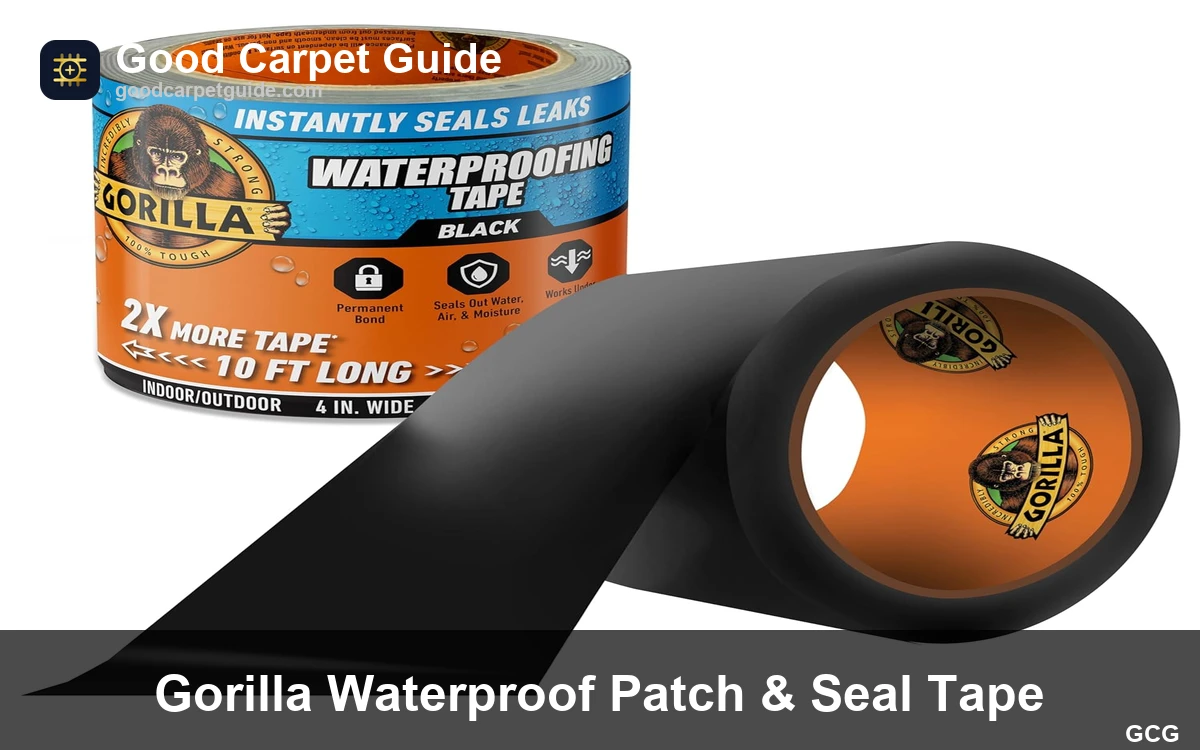
Gorilla Double Sided Carpet Tape
Gorilla carpet tape secures temporary protective barriers like Ram Board at traffic lane edges during parties, without the full-perimeter adhesive contact that leaves residue on carpet backing after removal.
Check Price on AmazonPre-position a bottle of Folex and a clean white microfiber cloth in the host's space before guests arrive. Treating spills within the first 60 seconds prevents liquid from migrating past the face fiber layer into the primary backing. Blot — do not scrub — using a straight downward press, lifting the cloth perpendicular to the carpet rather than dragging it across the pile.
how to protect carpet under desk
Protecting carpet under a desk requires a combination of a chair mat for rolling chair movement and furniture cups or coasters under all stationary desk legs. Desk leg point loads crush carpet pile in a permanent, circular depression within 4 to 8 weeks on medium-density residential carpet.
Furniture cups made of hard rubber or rigid plastic distribute desk leg load across a 3-inch diameter surface instead of concentrating it on a 1-inch square foot. Use cups rated for the combined weight of the desk plus any equipment placed on the desk surface. A standard wooden desk with dual monitors generates 80 to 150 lbs of distributed load — use furniture cups rated at a minimum of 50 lbs per cup.
Under-desk cable management also protects carpet. Cables draped across carpet pile collect dust, restrict airflow to the carpet backing, and create wear patterns where the cable shifts slightly under foot movement. Mounting cables to the underside of the desk with adhesive cable clips eliminates contact with the carpet surface.
what padding protects carpet the longest
Padding is the single most impactful variable in carpet longevity, and the correct pad specification depends on carpet type rather than personal preference for softness. Flooring professionals with decades of field experience consistently report that spending an extra few cents per square foot on the pad delivers more durability return than spending the same amount on the carpet face fiber.
The Carpet and Rug Institute (CRI) standard 105 sets the maximum pad thickness at 7/16 inch for most residential applications. Pads thicker than 7/16 inch cause excessive carpet backing flexion with each foot strike, accelerating backing breakdown and initiating permanent stretching and wrinkling. Many manufacturers will deny warranty claims citing pad thickness as installer error when a thicker-than-spec pad is discovered.
Mohawk SmartCushion and Leggett & Platt Napa are the top-rated residential pads in their respective category:
- Leggett & Platt Napa delivers 8 lb/ft³ prime foam density, which maintains dimensional stability for 10 to 15 years under normal residential traffic
- Leggett & Platt Coronado provides a rubber waffle construction rated for commercial-density traffic where foam compression fatigue is unacceptable
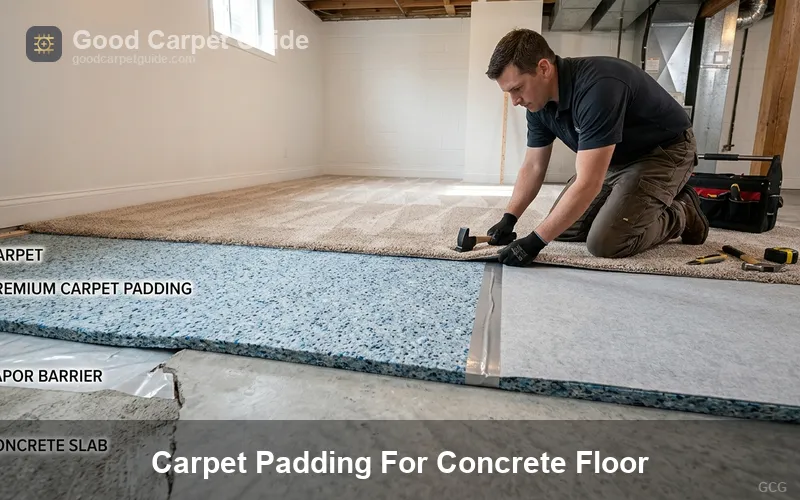
- Mohawk SmartCushion integrates a moisture barrier layer using a breathable membrane rather than a non-breathable polyethylene film
For wool berber and dense loop pile carpets, a 40 oz felt composite pad is the correct specification. Memory foam under wool berber is a documented installation mistake: the soft foam allows the rigid loop structure to flex beyond its dimensional tolerance, snapping loop pile at the foundation knot within 12 to 24 months.
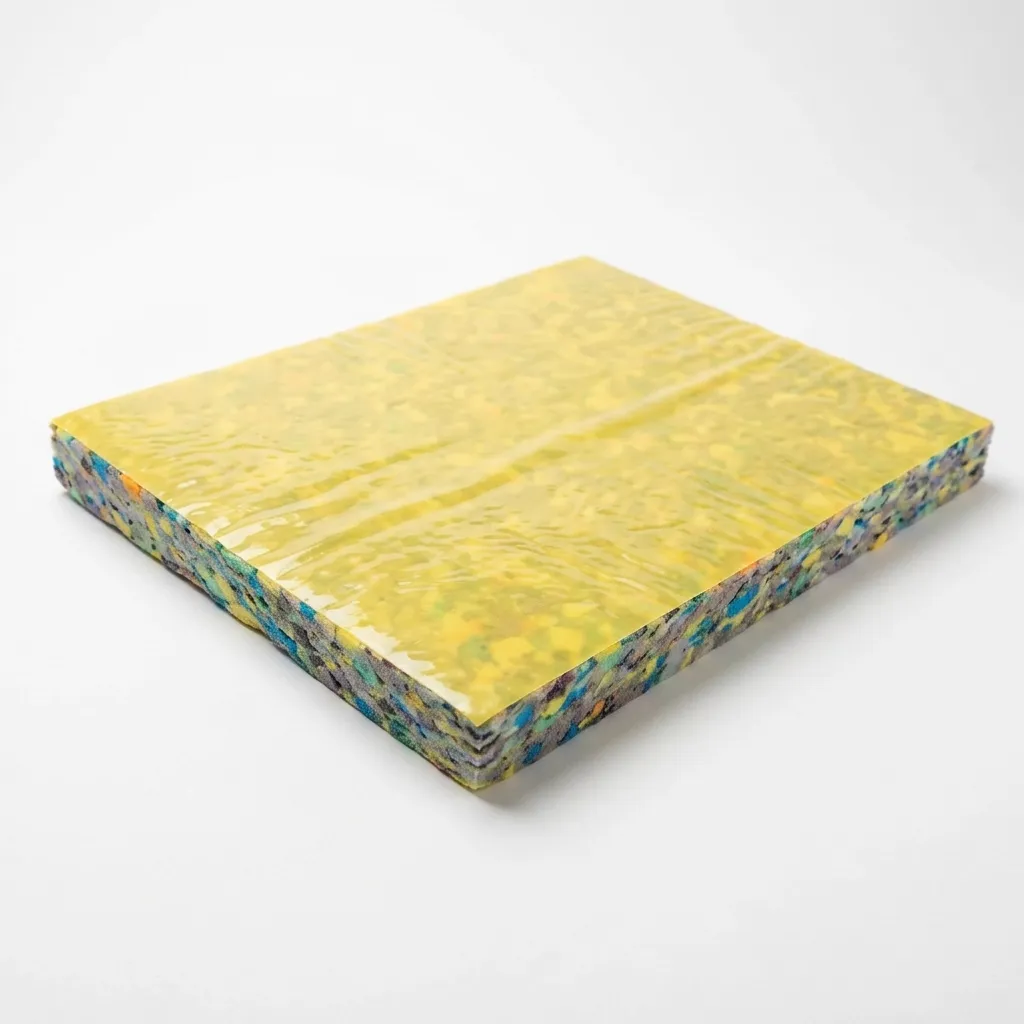
Mohawk SmartCushion Premium Carpet Padding
Mohawk SmartCushion uses a breathable moisture barrier membrane rather than a non-breathable polyethylene film, preventing moisture vapor from being trapped against concrete slabs while maintaining the density stability that carpet backing requires to resist wrinkling.
Check Price on AmazonMemory foam pads marketed as premium products have experienced documented density reductions from 5.7 lb/ft³ to 2.7 lb/ft³ in recent production runs. A 2.7 lb/ft³ foam pad reaches compression fatigue — the point at which the foam no longer recovers after load — within 6 to 24 months under residential traffic, causing the carpet above it to permanently wrinkle and stretch.
what real homeowners and installers report about carpet protection failures
Composite field reports from installer communities and homeowner forums reveal five recurring protection failures. Each failure has a specific technical cause that the homeowner did not anticipate at purchase.
Fraying at engineered hardwood transitions occurs when a builder omits a transition strip between carpet and hardwood "by design." One homeowner with an 11-month-old new build discovered severe carpet fraying at the carpet-to-hardwood seam. The builder classified the damage as "normal wear and tear" to avoid warranty liability. The actual cause was subfloor height differential between the hardwood and the carpet installation plane, which created a shear force at the seam edge with every foot strike. The correct installation protocol requires a T-molding or carpet reducer transition strip at every flooring type change.
Plastic bag noises from new carpet are reported immediately after installation of premium moisture-barrier pads like Carpenter Spillguard. The sound is caused by the polyethylene moisture barrier layer on the pad rubbing against the carpet backing under foot pressure. In rebond foam pads, the same noise comes from poorly bonded recycled foam chunks sliding against each other under compression. The noise does not indicate structural failure, but the rebond version indicates a low-quality pad that will compress faster than a prime foam product.
Warranty denial from "crushing and matting" is the most common manufacturer-level dispute. Carpet fiber mass must wear away by more than 10% before most manufacturers classify the damage as "abrasive wear" eligible for warranty replacement. Compression damage — where the pile is permanently flattened without fiber mass loss — is categorized as "crushing and matting" and is excluded from almost all residential warranties regardless of traffic level or fiber type. Rotating furniture placement every 6 months and maintaining pad density within spec are the two preventions.
Basement moisture mold develops when a non-breathable polyethylene moisture barrier pad is installed over an unsealed concrete slab. Big box store representatives frequently recommend double-sided moisture barrier pads for basement applications without disclosing that an unsealed slab releases moisture vapor upward. The non-breathable film traps that vapor between the film and the slab, creating the temperature differential and humidity level required for mold growth within 90 to 180 days. The correct basement installation sequence requires sealing the concrete slab with an epoxy moisture barrier coat, allowing 72 hours cure time, and then installing a breathable pad like Carpenter Spillguard on top of the sealed surface.
do carpet installers and manufacturers agree on what voids carpet protection
Installers and manufacturers disagree on three specific protection-related claims that homeowners assume are settled.
The subfloor flatness dispute is the most expensive disagreement. Installers frequently skip subfloor leveling to reduce labor time. Carpet manufacturers require subfloor flatness within 3/16 inch over a 10-foot span as a warranty condition. When a carpet wears unevenly over a deflecting subfloor, the manufacturer attributes the failure to installer error. The installer attributes the wear to the homeowner's traffic patterns. Homeowners with documentation of the installer's preparation (or lack of preparation) are positioned to dispute the denial, but homeowners without documentation absorb the full replacement cost.
The professional cleaning mandate is not disclosed at the point of sale. Shaw, Mohawk, and most major residential brands require professional hot-water extraction cleaning by a CRI-certified contractor every 12 to 18 months as a warranty maintenance condition. The receipt must be retained and available for submission within 30 days of filing any warranty claim. Most homeowners discover this clause for the first time when their claim is denied, not when they purchase the carpet.
The "Lifetime Warranty" classification game is the most widespread warranty dispute. Manufacturers classify premature pile flattening as "crushing and matting" — an excluded category — rather than "abrasive wear" — a covered category — as long as the fiber mass has not been reduced by more than 10%. A carpet that looks visibly flat and worn at 4 years old will pass manufacturer fiber-mass measurement at the 10% threshold, allowing the claim to be denied. Installers privately acknowledge this classification system exists specifically to reduce claim payouts, but it is written into the warranty terms consumers sign at purchase.
how much does proper carpet protection cost
The cost structure for carpet protection spans material, labor, and maintenance components. Each component carries a different cost range depending on product specification and regional labor rates.
The table below shows the cost variables for a 300 sq ft residential installation with proper protection protocols applied:
| Protection Component | Budget Option | Mid-Range | Premium |
|---|---|---|---|
| Rebond pad (per sq ft) | $0.30 – $0.55 | $0.55 – $0.80 | $1.00 – $1.50+ |
| Installation labor (per sq ft) | $1.00 (DIY prep) | $1.50 | $2.00+ |
| Tear-up / haul-away (per sq ft) | $0.40 (big box) | $0.50 | Included (local dealer) |
| Transition strips (per unit) | $8 – $15 | $15 – $25 | $25 – $45 |
| Professional cleaning (per year) | $80 – $150 | $150 – $250 | $250 – $400 |
| Ram Board construction protection (per roll) | $45 – $65 | $65 – $90 | — |
The big box "free installation" promotion at Home Depot lists basic labor at $1.02 per sq ft, but adds $0.40 per sq ft for tear-up and haul-away, plus furniture removal fees, transition strip upcharges, and stair step surcharges. A 10x10 room carries a minimum day-rate charge of $200 to $600 regardless of square footage.
Local independent dealers frequently include transition strips, subfloor prep, and furniture moving in the quoted installed price. One common homeowner report describes willingness to pay 50% more for labor to a local installer because the local shop's reputation is on the line for every installation, which creates accountability that big box subcontractors do not carry.
The total installed cost for a properly protected mid-tier carpet — TrafficMaster Inner Peace at $2.44 per sq ft in material, plus a mid-range 6 lb/ft³ rebond pad at $0.65 per sq ft, plus local installation at $1.50 per sq ft — runs approximately $4.59 per sq ft before transition strips and cleaning costs. On a 300 sq ft room, that is $1,377 installed, with an annual professional cleaning cost of $150 to $250 to maintain warranty eligibility.
frequently asked questions about how to protect carpet
Does placing furniture on carpet damage the pile permanently?
Stationary furniture legs create permanent pile compression within 4 to 8 weeks on residential-grade carpet. Furniture cups or coasters with a minimum 3-inch diameter base distribute the load and reduce compression depth by approximately 60% compared to direct leg contact.
Does a thicker pad protect carpet better?
A thicker pad does not protect carpet better above 7/16 inch total pad thickness. CRI standard 105 sets 7/16 inch as the residential maximum because thicker pads create excessive backing flexion with each foot strike, accelerating backing breakdown and initiating stretching that the manufacturer classifies as installer error under warranty terms.
Does Scotchgard void carpet warranty?
Scotchgard and similar silicone-based anti-soil treatments applied after installation void stain warranty coverage under the explicit terms of most major manufacturer warranties. Apply manufacturer-approved protectors only, follow the correct carpet protector application guidelines, and retain documentation of the product used. and retain documentation of the product used.
Does professional cleaning frequency affect carpet lifespan?
Professional hot-water extraction cleaning every 12 to 18 months removes abrasive soil particles embedded in pile that regular vacuuming does not extract. These particles function as sandpaper against fiber surfaces during foot traffic. Maintaining the CRI-certified cleaning schedule extends functional pile life by an estimated 20 to 35% compared to vacuuming-only maintenance.
Is nylon carpet more durable than polyester for protection purposes?
Nylon and modern continuous filament polyester (PET) are comparable in abrasion resistance for residential applications. Continuous filament PET does not shed individual fiber strands, which limits pilling and matting. Nylon accepts dye more uniformly and recovers from compression slightly faster. For stain resistance without topical treatments, continuous filament PET and Triexta outperform nylon in controlled comparative testing.
What is the best carpet for basements where protection from moisture is the priority?
Continuous filament PET or Triexta fiber over a breathable pad installed on a sealed concrete slab is the correct specification for basement carpet protection. Nylon absorbs moisture at a higher rate than PET or Triexta, making nylon a less durable choice in environments where concrete moisture vapor transmission is a risk factor even after slab sealing.
Carpet protection is not a single product purchase — it is a system of decisions made at installation, maintained through a documented cleaning schedule, and enforced through warranty-compliant product choices. The pad under the carpet contributes more to long-term durability than the carpet face fiber in most residential applications. The transition strip at every doorway prevents fraying that manufacturers label "normal wear and tear" to avoid warranty liability. The professional cleaning receipt kept in a folder determines whether a legitimate stain claim gets paid. Protecting carpet means building the protection in before the carpet is installed, maintaining it on a documented schedule, and making product choices that do not inadvertently void the warranty that the protection was purchased to preserve.