Installer's safety alert: read before signing a polyester carpet contract
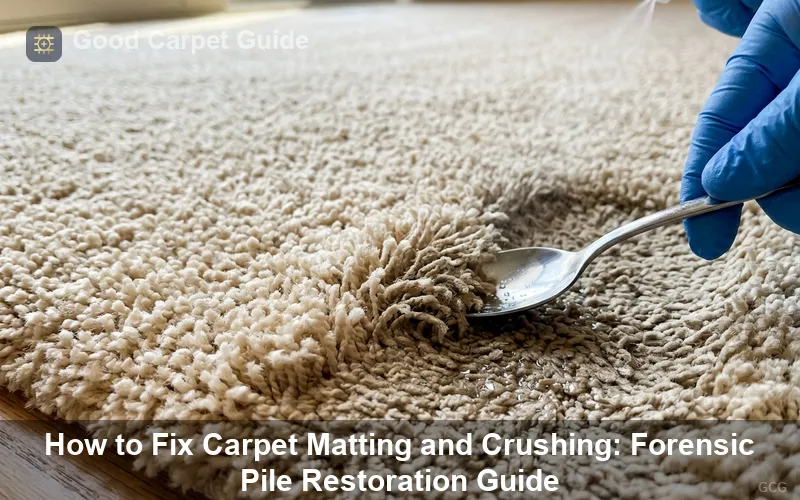
Stairs and hallways. Polyester (PET) fiber loses crimp under repeated compression at pivot points. Most residential PET wear warranties exclude stairs and exclude matting and crushing outright. Verify the exclusion clause before purchase.
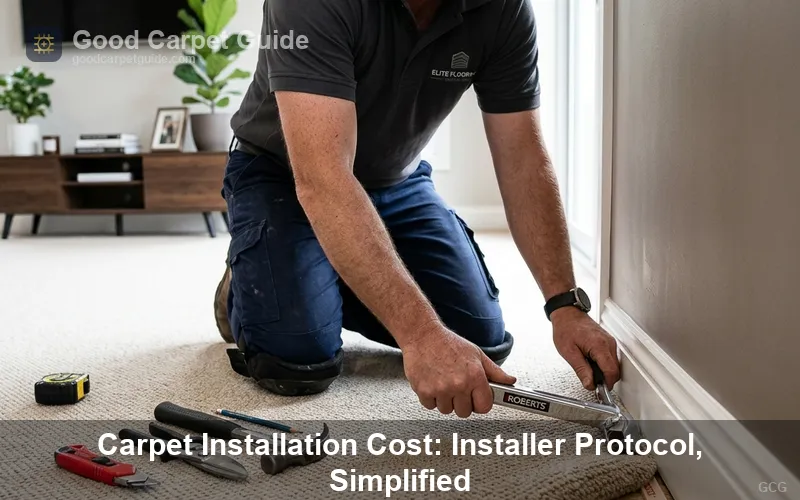
Installation method. Stretch-in installation under CRI 105 requires a mechanical power stretcher. Knee-kicker-only installation produces buckles and ripples within 12 to 24 months and voids most manufacturer installation warranties.
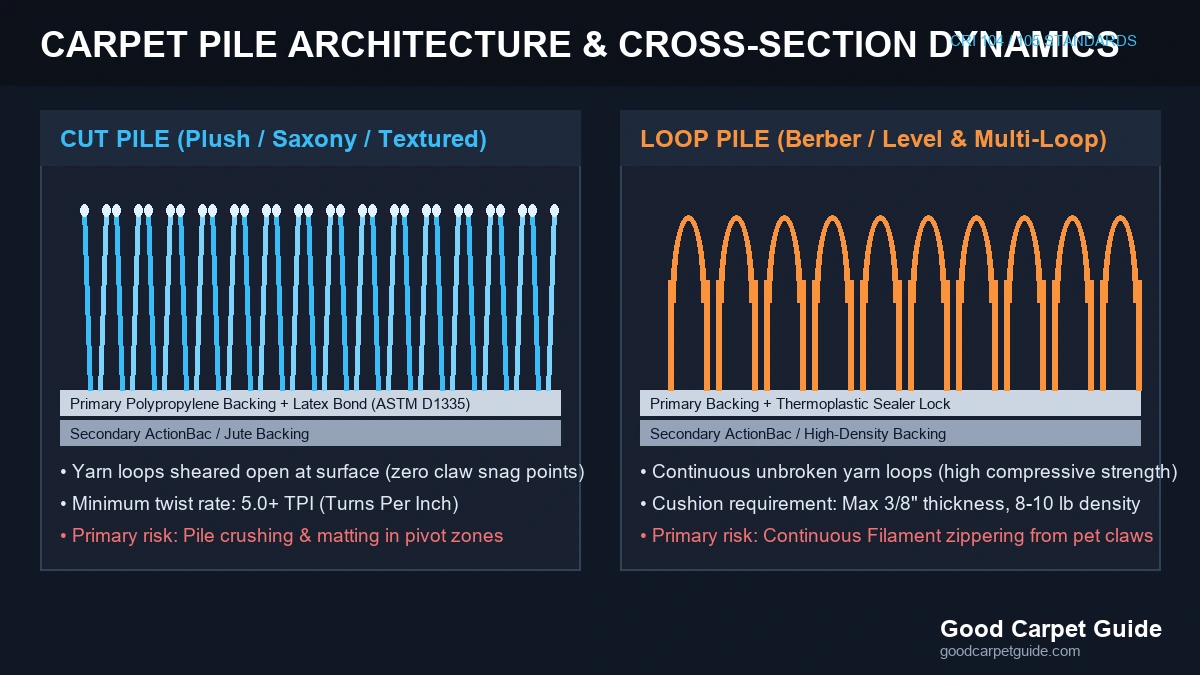
Cushion thickness limit. Residential cut-pile cushion above 1/2 inch, or above 3/8 inch under loop construction, allows excessive backing flex. Backing delamination from over-thick cushion is a documented warranty denial trigger.
Cleaning documentation. Wear and stain warranties on PET goods typically require receipts for professional hot-water extraction every 12 to 18 months. Discarded receipts eliminate the claim.
Oil exposure. PET is lipophilic. Kitchen entry zones, pet feeding areas, and shoe-on households transfer body and cooking oils that bond to the fiber surface and resist water-based cleaning.
Polyester carpet is a tufted floor covering made from polyethylene terephthalate (PET) filament, priced between $1.10 and $3.40 per square foot for material and between $2.60 and $6.90 per square foot installed. Polyester carpet delivers acceptable service life in bedrooms, guest rooms, and closets, and it fails early in hallways, stairs, and primary living zones because the fiber has no chemical mechanism for recovering lost crimp. This guide quantifies that failure mode through density and twist equations and sets measured specification thresholds for purchase decisions. It compares PET against nylon and triexta on resilience and stain chemistry, documents the warranty exclusions that make most wear claims unrecoverable, separates big box subcontracted installation from specialty dealer in-house crews, and prices four named product lines against United States market data. The recommendation structure at the end assigns specific fiber and specification combinations to specific rooms.
what polyester carpet is and how BCF polyester carpet is manufactured
Polyester carpet is manufactured from bulked continuous filament (BCF) PET yarn, the same polymer family used for beverage containers, extruded as an unbroken strand rather than spun from short staple lengths. BCF construction reduces shedding because the filament runs continuously through the tuft, and it separates PET goods from staple polyester goods that release loose fiber during the first 60 to 90 days of vacuuming. Engineered Floors and its Dreamweaver brand build the PureColor lines on solution-dyed BCF PET, where pigment enters the polymer melt before extrusion.
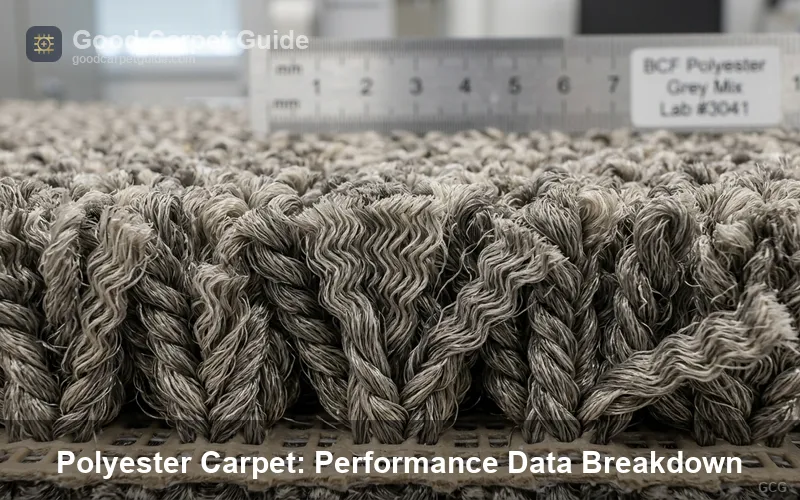
Crimp enters the yarn through heatsetting, a process that applies heat and pressure to set permanent waves and twists into the filament. The set holds while the polymer stays below its glass transition threshold. Foot traffic delivers mechanical work that gradually straightens the set waves, and PET cannot rebuild them.
Dye method separates two performance tiers. Solution-dyed PET carries pigment inside the filament cross-section, which produces colorfastness against sunlight and bleach exposure. Piece-dyed and yarn-dyed PET carries color on the fiber surface, where UV exposure at south-facing windows causes measurable fade. Mohawk EverStrand uses recycled PET content, and Dreamweaver DW Select and Clear Skies II use the solution-dyed PureColor system.
Polyester carpet in a showroom presents high luster, saturated color, and a soft hand. Filament deniers on soft PET constructions run finer than standard nylon, which produces the silk-like surface homeowners select on touch. That same fine denier reduces the individual filament's resistance to bending, which is the structural origin of the matting complaints documented later in this guide.
how durable is polyester carpet under measured compression loads
Polyester carpet durability depends on pile density and twist count rather than face weight, and the two specifications can be calculated from figures printed on the sample backing. Face weight measures fiber mass per unit area in ounces per square yard. Pile density measures fiber mass per unit volume in ounces per cubic yard. The two values are related through pile height:
Pile Density (oz/cu yd) = (Face Weight (oz/sq yd) × 36) / Pile Height (inches)
A 60 oz/sq yd PET carpet at 0.75 inch pile height calculates to (60 × 36) / 0.75 = 2,880 oz/cu yd. A 45 oz/sq yd PET carpet at 0.375 inch pile height calculates to (45 × 36) / 0.375 = 4,320 oz/cu yd. The lighter, shorter carpet carries 50 percent greater density despite 25 percent less fiber, and it resists compression set more effectively under identical traffic. Residential density values below roughly 3,000 oz/cu yd are widely treated in the flooring trade as a risk indicator for early crushing in traffic corridors, though exact break points vary by twist count and fiber denier.
Twist count measures the turns per inch applied to the yarn bundle before heatsetting. Twist below 5.0 turns per inch on cut pile PET allows the tuft tip to bloom open under compression, and the untwisted tip splays sideways into the adjacent tuft. Once tips interlock, vacuum suction cannot separate them, and the surface reads as matted.
The chemical distinction from nylon governs recovery. Nylon 6 and nylon 6,6 contain amide linkages that form hydrogen bonds, and steam at hot-water extraction temperatures temporarily disrupts those bonds so the filament returns toward its heatset geometry. PET contains ester linkages without comparable hydrogen bonding capacity, so steam produces no equivalent memory reset. Crimp loss in polyester carpet is permanent.
Higher twist count increases pile resilience in corridors carrying heavy daily foot traffic, because a tighter helix angle resists filament separation at the tuft tip. Loop constructions raise resilience further because each loop transfers load into two anchor points at the primary backing rather than one free tip.
ASTM D5252, the Hexapod tumble drum test, quantifies appearance retention by tumbling a specimen against steel pins for a set cycle count and grading surface change against reference scales. Specification sheets that omit an appearance retention rating leave the buyer without comparative wear data.
| Specification | Weak PET | Adequate PET | Notes |
|---|---|---|---|
| Face weight (oz/sq yd) | 60 to 80 with tall pile | 40 to 50 with short pile | Face weight alone does not predict wear |
| Pile height (inches) | 0.75 and above | 0.375 to 0.500 | Shorter pile shortens the lever arm on each tuft |
| Pile density (oz/cu yd) | below 3,000 | 4,000 and above | Calculated, rarely printed |
| Twist count (turns/inch) | below 5.0 | 5.5 to 7.0 | Printed on most sample backings |
| Dye method | piece-dyed | solution-dyed | Governs UV and bleach colorfastness |
how long does polyester carpet last across room types
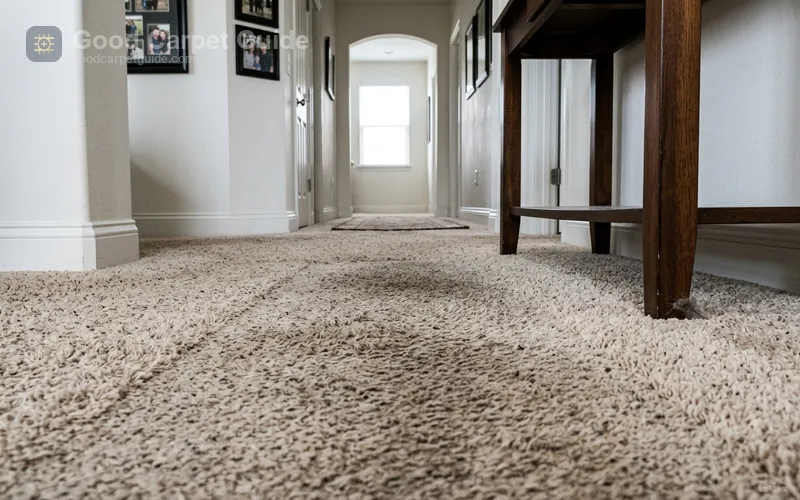
Polyester carpet typically lasts 3 to 5 years in main living zones and 8 to 12 years in low-traffic bedrooms under normal cleaning and traffic conditions, and the spread comes from traffic volume rather than product grade. Homeowner reports place visible matting on budget PET at 6 to 24 months in hallways and stairs. Manufacturer service life projections assume traffic loads and cleaning frequency that most households do not meet.
| Room | Traffic classification | Expected appearance retention | Governing failure mode |
|---|---|---|---|
| Guest bedroom, closet | Light | 10 to 15 years | UV fade on piece-dyed goods |
| Primary bedroom | Light to moderate | 8 to 12 years | Crushing at bedside pivot points |
| Home office | Moderate | 5 to 8 years | Chair caster abrasion |
| Living room | Moderate to heavy | 3 to 5 years | Crimp loss at seating approach paths |
| Hallway | Heavy | 2 to 4 years | Traffic lane matting |
| Stairs | Severe | 1 to 3 years | Nose-edge compression and abrasion |
| Basement | Variable | 5 to 10 years | Subfloor moisture and backing delamination |
Stair performance sits at the bottom of the table for a structural reason. The stair nose concentrates the full load of each footfall onto a 1 to 2 inch strip of pile bent over a 90 degree radius, which multiplies compression stress relative to a flat floor. Buyers replacing stair runners should compare fiber options in the best carpet for stairs guide before committing PET to that application.
does polyester carpet clean well, and how to clean 100% polyester carpet
Polyester carpet cleans well against water-based spills and cleans poorly against oil-based soil, a split that follows directly from PET's hydrophobic, lipophilic surface chemistry. Wine, juice, coffee, and pet urine sit on the filament surface rather than penetrating, because PET absorbs approximately 0.4 percent moisture at standard conditions, well below nylon's commonly cited 4.0 to 4.5 percent moisture regain. Body oils from bare feet, cooking aerosols, and pet dander lipids bond to that same non-polar surface and resist water-based detergents.
A second soil source arrives from the mill. Loom lubricants and spin finishes applied during extrusion remain on the yarn when the manufacturer minimizes post-tufting scouring. Residual finish attracts particulate soil, and the affected areas gray faster than fiber chemistry alone predicts.
IICRC S100, the standard for professional cleaning of textile floor coverings, defines hot-water extraction as the primary restorative method for residential cut pile. The following sequence follows that framework for 100 percent PET goods:
- Dry soil removal. Vacuum in two directions with a beater bar set to the correct pile height. Dry particulate removal accounts for the majority of total soil extracted from a residential carpet.
- Pile lifting. Run a pile lifter or carpet rake through matted traffic lanes before wet work. Lifting separates interlocked tuft tips so solution can reach the yarn bundle.
- Solvent pretreatment on oil-bonded soil. Apply a citrus or glycol-ether volatile dry solvent to traffic lanes and greasy spots. Water-based prespray alone does not release lipophilic soil from PET.
- Alkaline prespray and dwell. Apply prespray at the manufacturer's dilution and allow 5 to 10 minutes of dwell time. Do not allow the prespray to dry on the fiber.
- Hot-water extraction. Extract with clear water or a mild acidic rinse. Solution temperature at the wand should stay within the manufacturer's stated limit, because PET softens at lower temperatures than nylon.
- Groom and dry. Rake the pile in one direction and place air movers. Target dry time under 12 hours to prevent backing and cushion moisture retention.
- Retain the invoice. Warranty claims on most PET lines require documented professional cleaning every 12 to 18 months.
Detergent residue is the most common cause of rapid resoiling after cleaning. Any surfactant left in the yarn stays tacky and captures particulate soil, and the carpet appears dirtier within weeks than it did before the service.
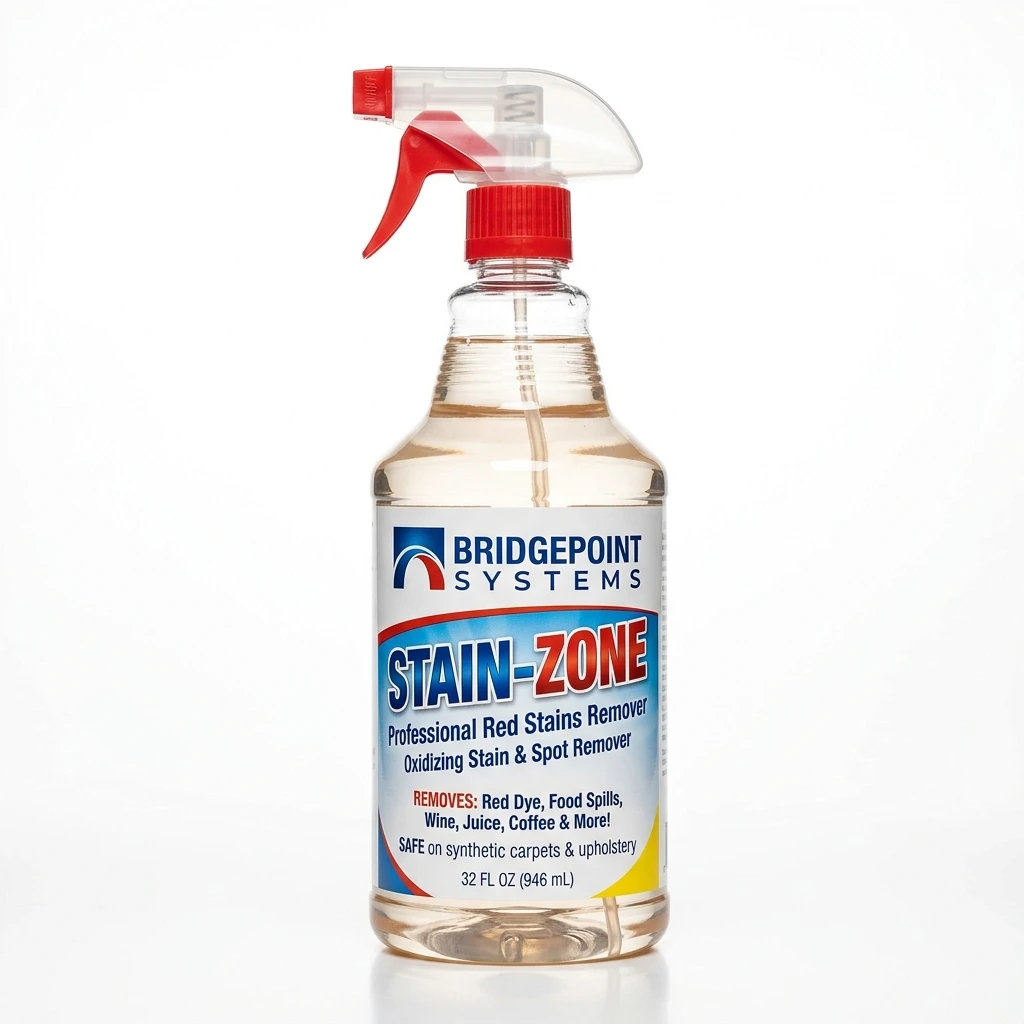
Volatile Dry Solvent Oil and Grease Spotter for Synthetic Carpet
Solvent-based spotter formulated for lipophilic soil that water-based cleaners leave behind on PET filament.
Check Price on Amazon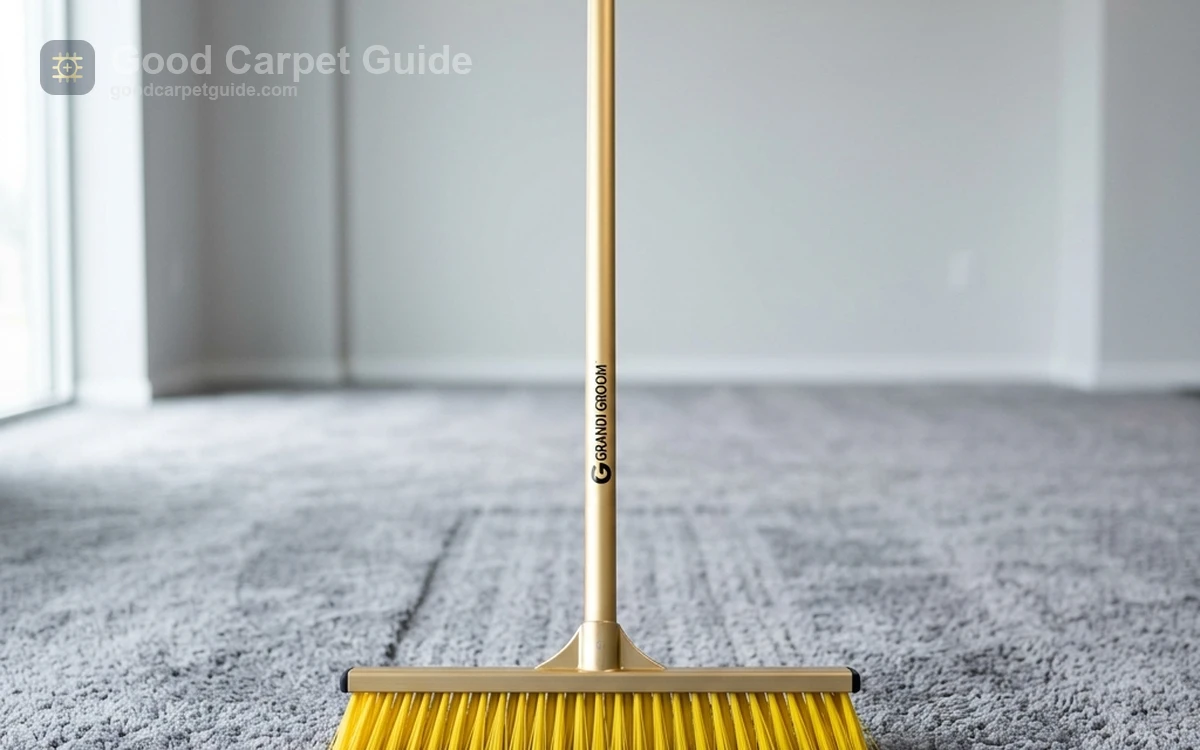
Professional Carpet Pile Lifter and Grooming Rake
Stiff-tine rake that separates interlocked tuft tips in traffic lanes before extraction cleaning.
Check Price on Amazondoes polyester carpet cause static electricity, off-gas, or release microplastics
Polyester carpet generates measurable static charge at low relative humidity, emits volatile organic compounds primarily from its backing system rather than its fiber, and sheds PET microfiber during vacuuming and abrasion. AATCC 134 measures static propensity through a controlled walk test, and static-control guidance in the flooring industry commonly cites a target threshold near 3.5 kilovolts for residential carpet; buyers should confirm the current figure against the active CRI Green Label specification, since certification thresholds are periodically revised. PET's low moisture regain removes the conductive water film that dissipates charge, so static complaints concentrate in heated interiors below 20 percent relative humidity.
New carpet odor traces largely to 4-phenylcyclohexene (4-PC), a byproduct of styrene-butadiene rubber latex used to bond the secondary backing. The compound comes from the adhesive system, not from the PET filament. CRI Green Label Plus certification sets VOC emission limits for carpet, cushion, and adhesive as separate product categories, and specifying all three as certified controls total emission load.
Microfiber release from PET carpet occurs through mechanical abrasion, and vacuum exhaust and HVAC returns carry a fraction of that release into indoor air. Published, carpet-specific quantification of residential PET microfiber shedding remains limited compared to the research base on textile laundering, so buyers should treat shedding claims for any specific product as directional rather than measured. Sealed-bag HEPA vacuums capture a higher fraction of released fiber than bagless cyclonic units.
Flammability performance follows ASTM D2859, the methenamine pill test, which every carpet sold in the United States must pass under 16 CFR Part 1630. PET melts and drips at raised temperature rather than charring, which changes the burn pattern relative to wool but does not exempt the product from the federal standard.
is polyester carpet as good as nylon, and where does triexta sit
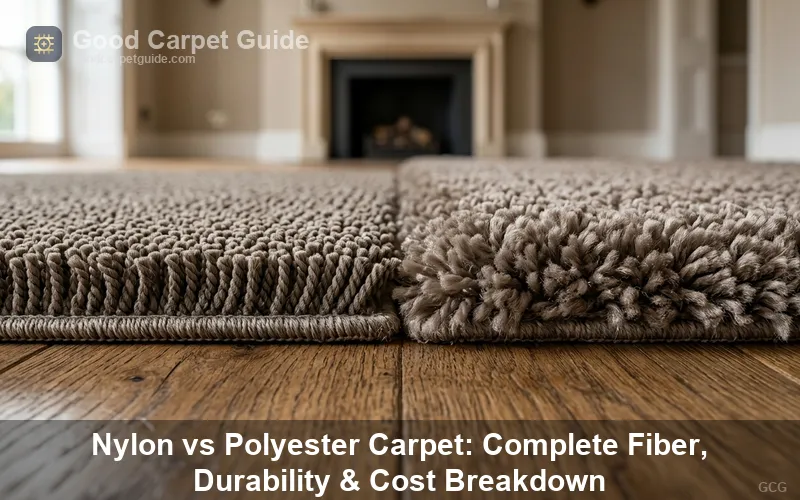
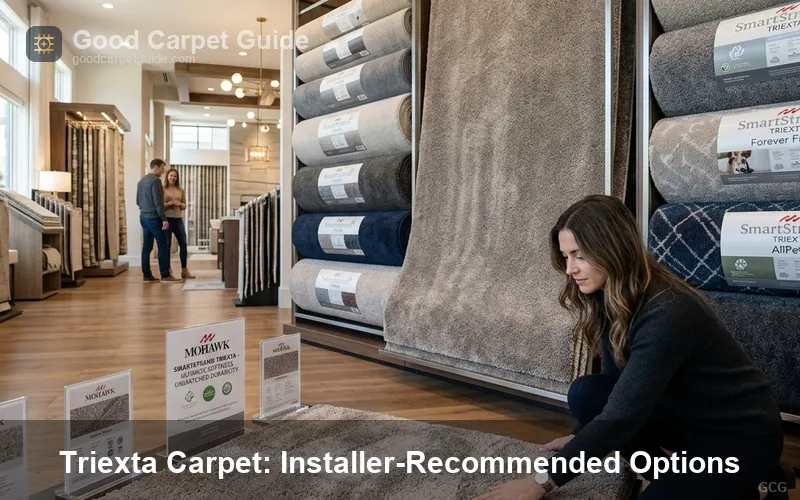
Polyester carpet is not equivalent to nylon on resilience, and triexta occupies a distinct position between them because of its molecular geometry. Triexta (PTT, polytrimethylene terephthalate) contains a kinked helical repeat unit in the polymer chain that behaves as a molecular spring, and that geometry returns elastic recovery comparable to nylon without nylon's hydrogen bonding. Mohawk builds SmartStrand on triexta, and Mohawk's own marketing materials have cited owner satisfaction figures in the mid-90-percent range for the line; buyers should treat manufacturer-reported satisfaction data as a marketing claim rather than independent laboratory testing.
| Attribute | PET polyester | Triexta (PTT) | Nylon 6 / 6,6 |
|---|---|---|---|
| Crimp recovery mechanism | none | helical chain elasticity | hydrogen bonding, steam resettable |
| Matting resistance under heavy traffic | low | moderate to high | high |
| Water-based stain resistance | high, inherent | high, inherent | requires topical treatment |
| Oil-based stain resistance | low | low to moderate | moderate |
| Colorfastness when solution-dyed | high | high | high |
| Material cost per sq ft | $1.10 to $3.40 | $2.50 to $4.50 | varies by line |
The stain performance comparison inverts the durability comparison. PET and triexta resist water-based staining because the polymer contains no dye sites available to acid-based food colorants, and that resistance is inherent to the fiber rather than applied as a finish. Nylon contains amine end groups that accept acid dyes, which is why untreated nylon stains from red drink mixes and why manufacturers apply stain-blocking chemistry that depletes over cleaning cycles. Readers weighing this tradeoff against room-specific traffic will find the full specification comparison in the nylon vs polyester carpet guide .
Shaw Floors positions Pet Perfect and Pet Perfect Plus across both PET and nylon constructions under the Anso brand, so the collection name alone does not identify the fiber. Confirm the fiber content line on the specification sheet before comparing prices between two samples in the same collection.
real homeowner and installer experiences
Homeowner reports on PET carpet cluster around a single complaint pattern: rapid appearance loss in traffic lanes within the first two years, independent of purchase price. Three representative accounts follow.
A big box purchaser reported: "We bought the best pad from Home Depot and the second to lowest grade carpet and this carpet is TRASH. It's so worn down in some areas that when I vacuum i have to come sideways... carpet is barely 2 years old."
A Dreamweaver owner reported: "I used to have dreamweaver polyester and it felt nice and was a good price but looked terrible in 6 months."
A premium-tier purchaser reported: "We bought what was supposed to be 'top of the line' Shaw carpeting and within several months the thread began to unravel and matt..."
The third account carries the most diagnostic weight, because it separates price tier from performance. Paying at the top of the PET range does not purchase nylon-equivalent resilience, since the failure originates in ester-linkage chemistry rather than in construction quality.
Flooring professionals who handle warranty callbacks commonly advise against PET on stairs, in hallways, and in busy family rooms, based on the repeat-visit patterns they see in the field rather than on manufacturer specification sheets. A gap separates manufacturer marketing from field observation. Manufacturers position modern PET as a high-performance category, and installers who return to the same homes for warranty inspections describe standard PET as a short-cycle product.
warranty fine print analysis
Polyester carpet wear warranties measure fiber weight loss rather than appearance loss, and that measurement standard makes most claims unrecoverable. A typical residential wear warranty covers loss exceeding 10 percent of original face fiber weight. PET filament compresses, splays, and untwists under traffic, and it does not abrade into measurable mass loss. A carpet that looks destroyed can retain more than 90 percent of its original face weight and fail the claim threshold.
Four exclusion categories account for the majority of denied PET claims:
- Matting and crushing. Excluded by name in most residential PET warranties, which removes the primary observed failure mode from coverage.
- Stair applications. Excluded from wear coverage on a large share of PET lines, because the nose-edge compression load exceeds the tested condition.
- Maintenance documentation. Claims require receipts for professional hot-water extraction at 12 to 18 month intervals. Homeowner rental-machine cleaning does not satisfy the requirement.
- Cushion specification. Cushion exceeding 1/2 inch under cut pile, or 3/8 inch under loop, allows backing flex that cracks the latex bond. The resulting delamination is attributed to the installation rather than the product.
Request the full written warranty document before purchase rather than the retail summary card. The summary card advertises the covered term. The full document contains the exclusion schedule and the maintenance clause.
big box store versus specialty dealer installation
Installation quality varies more between retail channels than product quality varies between PET lines, and the divergence traces to labor sourcing. Big box retailers subcontract installation to independent crews awarded on lowest bid. Specialty flooring dealers more commonly staff in-house crews whose warranty callbacks return to the same business.
| Factor | Big box channel | Specialty dealer channel |
|---|---|---|
| Labor sourcing | Subcontracted, competitive bid | In-house crew or long-term subcontractor |
| Stretch method | Knee kicker common | Power stretcher standard under CRI 105 |
| Seam construction | Seam iron with variable tape quality | Seam iron plus latex seam sealer on cut edges |
| Tackless strip | Standard pin length regardless of substrate | Pin length matched to carpet weight and substrate |
| Post-sale accountability | Routed through store service desk | Direct to installing crew |
| Ripple recurrence at 12 to 24 months | raised | Reduced |
CRI 105 specifies mechanical power stretching for stretch-in residential installation. A knee kicker positions and hooks carpet onto tackless strip; it does not develop the tension across the field that prevents later buckling. Ripples that appear 12 to 24 months after a knee-kicked installation are an installation defect, and most manufacturer warranties exclude installation defects from product coverage.
Three verification questions before signing: Does the crew own and use a power stretcher on this job? Will cut seam edges receive latex seam sealer? What tackless strip pin length is specified for this substrate and carpet weight?

8 lb Density Rebond Carpet Cushion Roll
Half-inch 8 lb rebond cushion that stays within the thickness limit most PET warranties specify for cut pile.
Check Price on Amazonpolyester carpet cost data for the united states market
Polyester carpet material costs run from $1.10 to $4.50 per square foot depending on line and fiber, and installed costs run from $2.60 to $8.00 per square foot. The installed figure includes labor, tackless strip, standard cushion, and old material removal in most quotes; confirm each line item.
| Product line | Fiber | Material per sq ft | Installed per sq ft |
|---|---|---|---|
| Dreamweaver PureColor | Solution-dyed PET | $1.10 to $2.20 | $2.60 to $4.70 |
| Mohawk EverStrand | Recycled PET | $1.50 to $2.50 | $3.00 to $5.50 |
| Shaw Pet Perfect | Anso HP PET | $2.10 to $3.40 | $4.10 to $6.90 |
| Mohawk SmartStrand | Triexta (PTT) | $2.50 to $4.50 | $4.50 to $8.00 |
The upgrade arithmetic favors triexta in traffic zones. Moving from Shaw Pet Perfect PET at $6.90 installed to Mohawk SmartStrand triexta at $8.00 installed costs $1.10 per square foot. Across a 400 square foot living room that difference totals $440 against a replacement cycle that field reports place at 3 to 5 years for PET.
Cushion upgrades produce a larger performance return per dollar than carpet grade upgrades. An 8 lb or 10 lb density rebond cushion under a mid-grade PET extends appearance retention more than a 6 lb cushion under a premium PET, because the cushion absorbs compression energy before it reaches the yarn bundle.
how to choose polyester carpet by specification threshold
Choose polyester carpet by twist count and pile density first, room traffic second, and face weight last. The following sequence orders the purchase decision:
- Read the twist count on the sample backing. Reject cut pile PET below 5.0 turns per inch for any room outside a closet or guest bedroom.
- Calculate pile density. Multiply face weight by 36 and divide by pile height. Compare candidates on the calculated figure rather than on face weight.
- Confirm the dye method. Specify solution-dyed PET for rooms with south or west window exposure and for households using bleach-based cleaners.
- Match cushion to the warranty limit. Specify 8 lb density rebond at 7/16 or 1/2 inch for cut pile, 3/8 inch for loop.
- Verify the stretch method in writing. Require power-stretched installation as a line item on the contract.
- Read the exclusion schedule. Confirm whether matting, crushing, and stair applications appear in the exclusions before signing.
bedrooms and guest rooms
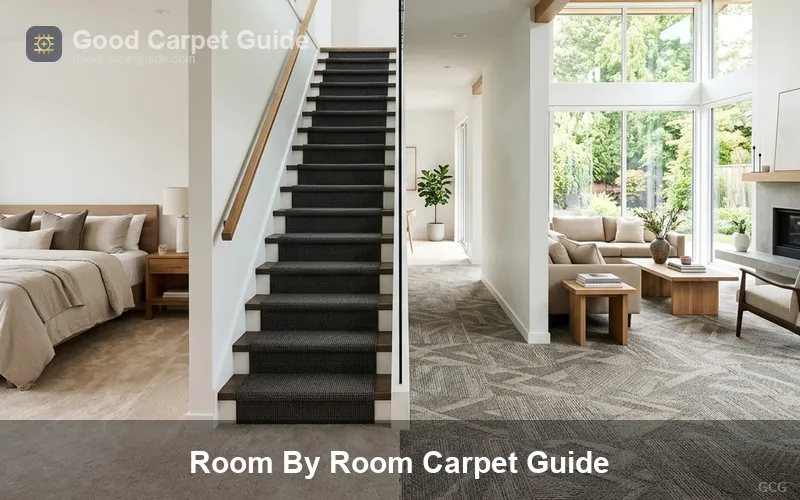
Polyester carpet performs best in bedrooms, where traffic loads stay low and the fine-denier softness that defines PET delivers its intended benefit. A solution-dyed PET at 45 oz/sq yd face weight, 0.5 inch pile height, and 5.5 turns per inch twist supports a 10 year appearance expectation in this application. Additional fiber and construction options for sleeping areas appear in the best carpet for bedrooms guide .
hallways, stairs, and living rooms
Polyester carpet carries raised regret rates in these three zones, and the documented matting timeline runs 6 to 24 months. Specify nylon or triexta instead. Where budget forces PET into a hallway, select a low-profile loop or a textured cut pile at 0.375 inch pile height and pair it with 10 lb density cushion.
basements and rental properties
Polyester carpet suits basements on the moisture axis and fails on the traffic axis, so the decision depends on how the space is used. PET absorbs approximately 0.4 percent moisture, which limits fiber-side mold substrate compared to wool. Subfloor vapor management governs the outcome more than fiber selection does, and fiber durability evaluations in the most durable carpet fiber guide cover resilient pile configurations over concrete slab. Rental properties present the strongest PET case: low material cost, solution-dyed bleach resistance for turnover cleaning, and a replacement cycle that already aligns with tenant turnover.
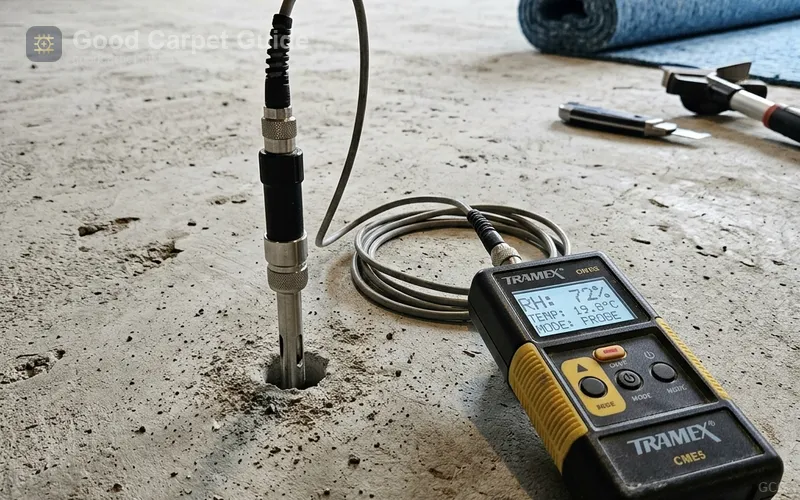
Digital Pinless Concrete and Wood Subfloor Moisture Meter
Pinless meter for verifying slab and subfloor moisture before carpet and cushion installation over concrete.
Check Price on Amazonfinal specification recommendations
Specify solution-dyed PET at 5.5 turns per inch or higher, 0.5 inch maximum pile height, and 8 lb rebond cushion for bedrooms, closets, and guest rooms. Specify triexta or nylon for stairs, hallways, and primary living rooms, and treat the $1.10 per square foot upgrade from Shaw Pet Perfect PET to Mohawk SmartStrand triexta as the least expensive durability purchase available in the category. Specify PET without reservation for rental turnovers, where the replacement cycle and the tenant cycle already match.
Two documents determine whether a PET purchase produces satisfaction or a claim denial four years later: the warranty exclusion schedule, which will state whether matting and crushing are covered, and the installation contract, which will state whether the crew power-stretches. Retail sales staff rarely present either one unprompted. Request both before the deposit clears.