TL;DR recommendation matrix
A room by room carpet guide only works if the fiber, face weight, and pad match what actually happens on that floor. The table below is the short version of everything that follows. For high-traffic transit areas connecting floors, explore our comprehensive breakdown on the best carpet for hallway stairs guide .
| Room | Primary stressor | Target face weight & twist | Recommended fiber | Fully installed cost (per sq ft) |
|---|---|---|---|---|
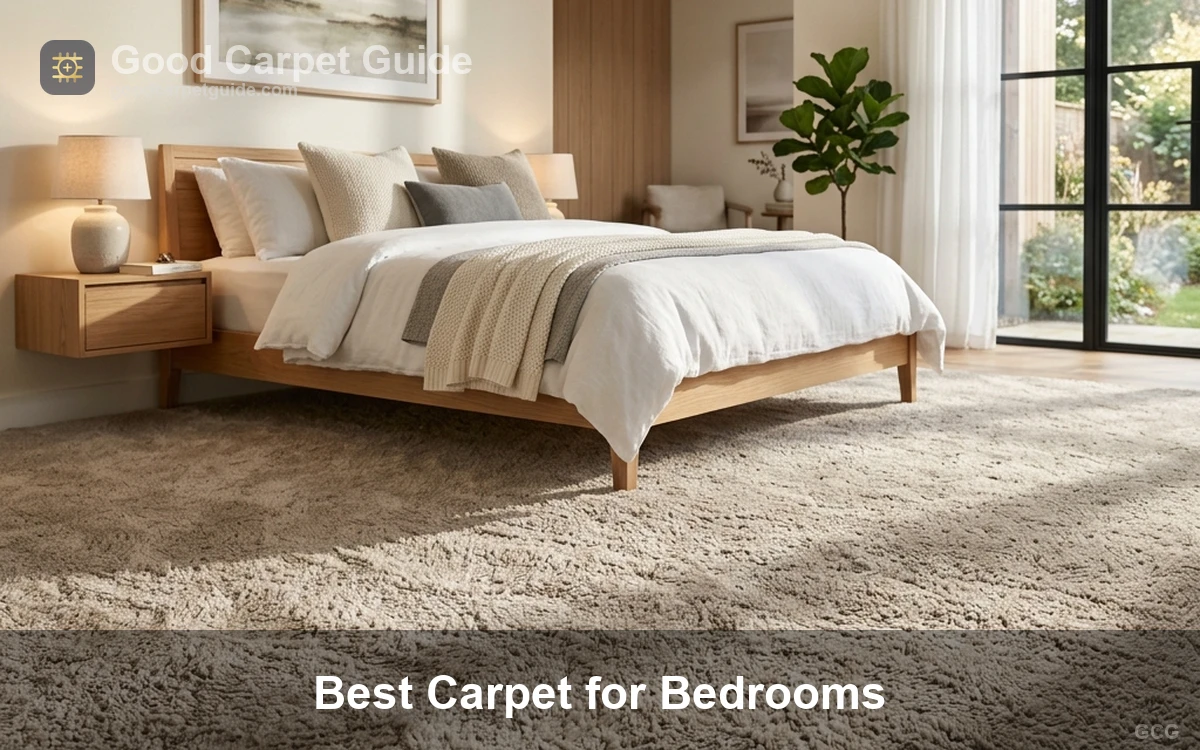
| Bedrooms | Softness, light foot traffic, sun exposure | 30-45 oz, 3.5-4.5 TPI | Triexta or high-end PET Saxony/plush | $4.75 - $7.50 |
| Stairs & hallways | Slip resistance, crushing, no loops with pets | 50-65 oz, 5.5-6.5 TPI | Solution-dyed Nylon 6,6, low-pile dense weave | $7.50 - $14.50 |
| Basements | Slab moisture, mold, vapor drive | Low-profile tight loop | Olefin or Triexta, synthetic felt backing | $2.50 - $7.50 |
| Family & living rooms | Heavy traffic, matting, cleanability | 45-60 oz, 5.0-6.0 TPI | Triexta or high-density solution-dyed Nylon, cut-and-loop | $4.75 - $10.99 |
how to choose carpet guide for each room
Choosing carpet room by room starts with matching face weight and fiber to the traffic and moisture pattern of that specific floor, not the showroom sample. A carpet rated for a guest bedroom will mat, crush, or trap moisture within one to three years if installed in a stairwell or a below-grade family room instead.
Room is the base unit for the decision. Under the Carpet and Rug Institute's CRI 104/105 installation standards, the same face weight and twist level perform differently depending on foot traffic density, humidity, and whether pets have claw contact with the pile. A 35 oz plush that reads as luxurious in a primary bedroom will "ugly out" within a season if that same product is installed at the base of a staircase.
Twist level matters as much as ounce weight. A tightly twisted, solution-dyed Nylon 6,6 at 5.5 to 6.5 twists per inch (TPI) resists the crushing that occurs on stairs and in hallways, where foot compression happens in the same narrow band every day. A looser, 3.5 to 4.5 TPI Saxony or plush is appropriate in bedrooms, where compression is spread across a wider surface and softness underfoot matters more than abrasion resistance.
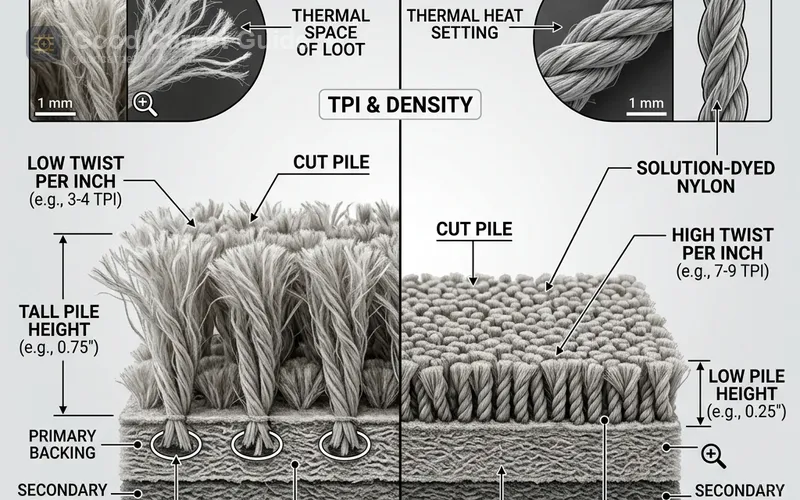
Pets change the room-by-room math further. Looped Berber-style carpet should be avoided on stairs and in hallways where cats or dogs have regular claw contact, because a single snagged loop can pull an entire row of yarn free. A cut-pile or cut-and-loop construction removes that failure point while keeping most of the texture homeowners want in high-visibility rooms.
carpets for bedrooms nearby
Bedroom carpet selection should prioritize fiber resiliency over pure softness, because plush piles that feel best in the showroom are also the fastest to crush and stain under real bedroom conditions. A homeowner identified as `d7e001` spent close to $10,000 on a whole-house installation of a Stainmaster-branded Nylon plush from Shaw. Within three years, a professional carpet cleaner assessed the pile as showing wear consistent with a ten-year-old installation, with fading concentrated in the sun-exposed sections near windows.
Sun exposure is a documented failure point for bedroom fiber, independent of foot traffic. UV degradation breaks down the polymer structure of synthetic fibers over time, and rooms with south- or west-facing windows see accelerated fading and fiber brittleness compared to interior rooms with the identical product. Homeowners specifying bedroom carpet for a sun-exposed room should request solution-dyed fiber, where color is embedded through the full cross-section of the strand rather than applied as a surface treatment, since solution-dyed fiber resists UV fading at a materially higher rate than piece-dyed alternatives.
Pet accidents compound the softness-versus-durability tradeoff. Cat hairballs and pet stains penetrated permanently into the plush Nylon fiber in the `d7e001` case above, producing visible pink discoloration that no amount of professional cleaning removed. A tighter, denser bedroom pile at 30-45 oz with a stain-resist topical treatment reduces (but does not eliminate) that penetration risk compared to an ultra-plush, low-density pile marketed primarily on hand-feel.
For a mid-range bedroom, a documented recent invoice from Sacramento, CA shows a 220 sq ft master bedroom installed for $1,600 total, or $7.25 per sq ft, using mid-grade Nylon plush over an 8-lb rebond pad with tack strip and certified labor. That price point sits inside the "Better" tier for fully installed residential carpet and reflects what most homeowners should expect to pay for a durable, sun-resistant bedroom install rather than a bargain plush that fails within three years.
how much does carpet guide cost
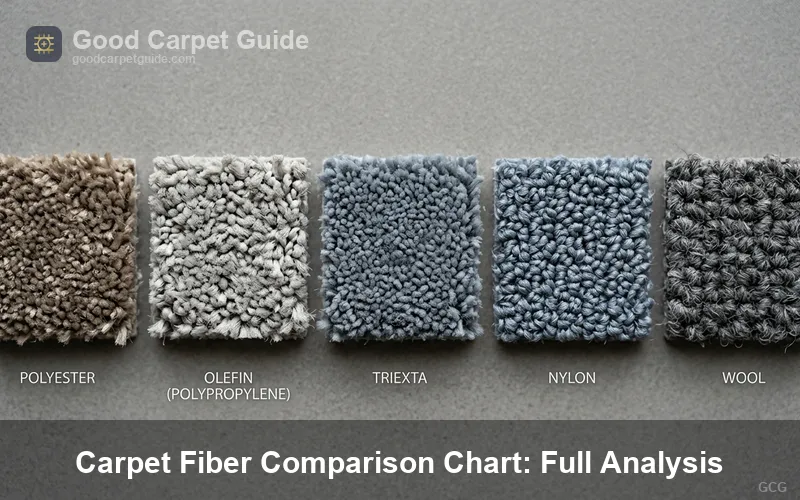
A room by room carpet guide has to separate raw fiber cost from the fully installed price, because material alone understates the real budget by 40 to 60 percent once pad, labor, and removal are added. Fiber-only pricing per sq ft runs from $1.00-$4.00 for polyester (PET), $1.00-$3.00 for olefin, $2.00-$8.00 for Nylon, $3.00-$8.00 for Triexta, and $4.00-$15.00 or more for wool.
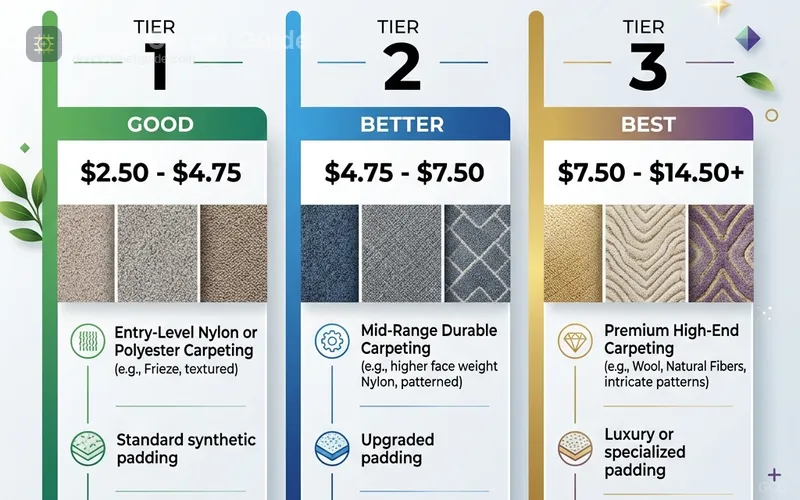
Fully installed pricing (materials, pad, and labor combined) falls into three tiers. The "Good" tier runs $2.50-$4.75 per sq ft and typically uses in-stock budget polyester or olefin over a standard 6-lb rebond pad, often with the homeowner removing the old carpet to save on labor. The "Better" tier, the standard residential sweet spot, runs $4.75-$7.50 per sq ft and includes mid-grade Nylon or Mohawk SmartStrand over an upgraded 8-lb moisture-barrier rebond pad. The "Best" tier runs $7.50-$14.50 or more per sq ft and includes premium solution-dyed Nylon 6,6 from mills such as Dixie, Masland, or Fabrica, high-density specialty underlayment, professional power-stretching, and custom stair wrapping.
Recent regional invoices confirm the spread. A 900 sq ft whole-house replacement in Stockton, CA using entry-level PET with standard padding and old-carpet removal totaled $3,700, or $4.10 per sq ft. On the higher end, a Suffolk County, NY quote for Masland Tracker (premium solution-dyed Nylon) with an 8-lb rebond pad on 1,000 sq ft totaled $10,990, or $10.99 per sq ft, excluding custom stair labor. A standard three-bedroom-and-hallway package at 500 sq ft in mid-range Nylon in Pensacola, FL ran $2,750-$4,500 fully installed.
Homeowners planning a carpet padding guide upgrade should budget the pad separately from the face fiber. An 8-lb moisture-barrier rebond pad adds real cost over a standard 6-lb pad, but it also extends carpet life in rooms with higher humidity or heavier foot traffic, which changes the total cost of ownership even when the sticker price looks higher on day one.
what carpet guide do professionals recommend
Professional flooring inspectors and installers generally steer homeowners toward solution-dyed Nylon 6,6 for high-traffic and high-visibility rooms, and toward Triexta for households prioritizing stain resistance over maximum abrasion life. Dixie Group's Masland and Fabrica lines are frequently cited by installers as the highest-performing residential options, with lifespans that can exceed 20 years in moderate-traffic conditions when installed to CRI 104/105 power-stretching standards.
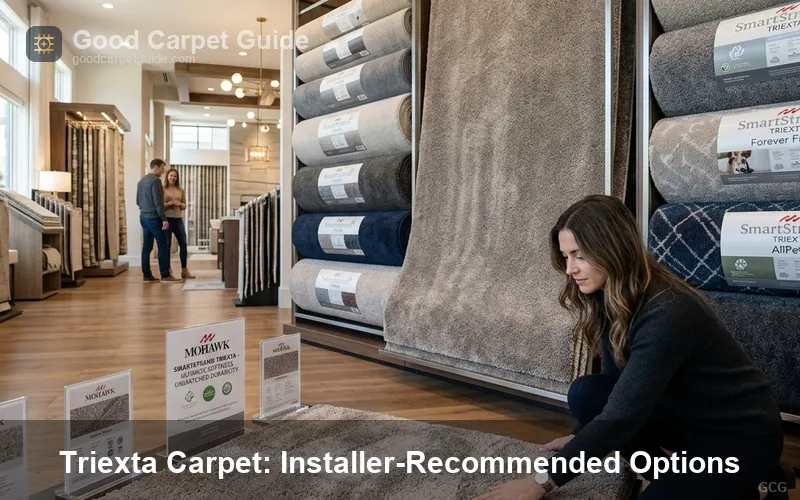
Shaw Floors is commonly recommended for pet-owning households because of its Pet Perfect and Pet Perfect Plus lines, which pair resilient Nylon fiber with R2X stain-blocking treatment and an integrated LifeGuard Blue waterproof backing system. Mohawk holds the exclusive manufacturing rights to Triexta fiber under the SmartStrand name, and its Forever Clean line is positioned by installers as the strongest option for households with young kids or heavy pet traffic, since the stain resistance is built into the fiber itself rather than applied as a topical coating that wears off.
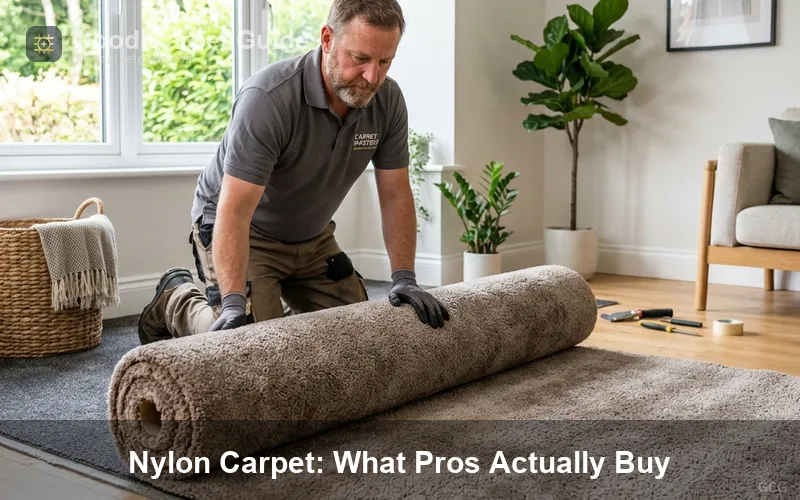
Installation method matters as much as brand selection. Certified installers power-stretch carpet using a power stretcher rather than a knee kicker alone, in line with CRI 104/105 standards. Independent contractor `Glad_Wing_758` describes big-box retailers as routinely assigning lower-tier subcontractor crews to installation jobs, since big-box labor rates run roughly half of standard independent contractor rates. A carpet installed with only a knee kicker, skipping the power stretcher, tends to ripple and buckle within 6 to 12 months as ambient humidity causes the fiber backing to expand; once ripples form, the raised crests wear down faster than the rest of the field, causing premature localized fiber failure.
Face weight alone is not a reliable quality signal, according to a former flooring sales manager, who notes that an 80 oz face weight built from low-grade polyester still performs worse than a lower-ounce, high-twist solution-dyed Nylon. Density and yarn twist, measured in TPI, are the more reliable predictors of long-term wear resistance than raw ounce weight by itself.
how long does carpet guide last
Carpet lifespan depends far more on twist retention and cleaning discipline than on the "20-to-25 year" or "lifetime" figures printed on manufacturer warranty cards. Those warranty terms cover abrasive wear only, defined as the physical loss of fiber mass, typically requiring a 10 percent mass loss threshold before a claim is valid. Standard thermoplastic fibers almost never lose 10 percent of their mass; they fail instead through matting, flattening, and loss of yarn twist, all of which are explicitly excluded from nearly all manufacturer warranties.
Real-world reports back this up. Homeowner `jess8675` selected Mohawk SmartStrand Silk with a premium pad after extensive research, and within three years the carpet was visibly thinning at the seams and matting in traffic paths. Homeowner `The37thElement` paired a low-grade Home Depot carpet with a good pad, and after two years with three young children in the house, the pile had flattened so severely that vacuuming required brushing sideways to reach the worn fibers.
Veteran carpet cleaner Robert Allen, Jr. attributes much of this to fiber chemistry rather than installation quality: modern polyester and olefin fibers have a documented affinity for oil-based soiling, which is both difficult to remove and accelerates crushing and matting in a short period compared to Nylon.
Maintaining warranty validity also shortens the practical lifespan for homeowners who skip required upkeep. Shaw and Mohawk both require professional hot water extraction, performed by an IICRC-certified technician under IICRC S100 protocol, every 12 to 18 months to keep a warranty active. Homeowners must retain every cleaning receipt; missing documentation results in automatic claim denial. Veteran cleaner Randy Dockins, with 27 years in the field, describes most residential carpet warranties in the US as effectively void by the time a claim is filed, either from installation error or missed professional cleaning intervals.
when should you replace carpet guide
Replace carpet when matting, seam separation, or moisture damage compromise the room's function rather than waiting for the fiber to hit a manufacturer's stated wear percentage, since most carpets never reach that abrasive-wear threshold before other failure modes make replacement necessary anyway. Visible traffic lanes with permanently flattened pile, seams that have become visible after three to five years of heavy use, and any carpet installed over a vapor barrier that has trapped moisture against a slab are all standard replacement triggers.
Basement installations carry a distinct moisture-driven replacement timeline. Homeowner `seeyoulaterdecorator` moved into a home with a "pet proof" carpet system that included an integrated vapor barrier over a concrete basement slab. Water from routine cleaning and minor spills became trapped between the carpet backing and the barrier despite diligent extraction after each incident, and within four years the entire second floor developed a persistent mildew odor, forcing full replacement with luxury vinyl plank (LVP).
Stairs warrant earlier replacement inspection than other rooms because compression happens in the same narrow band on every step. Once the pile on a stair nosing has flattened, the loss of cushioning creates a documented slip hazard; contractor reports describe injuries from both overly thick, slick pile and from matted, low-pile stair carpet that has lost its grip texture. Any visible flattening on stair noses should trigger a best carpet for stairs reassessment rather than a wait-and-see approach.
what is the best carpet guide
The best carpet guide is the one that assigns a different product to each room based on its specific stress profile rather than specifying one carpet for the whole house. A single whole-house Nylon plush, for example, will perform well in bedrooms and poorly on stairs and in basements, because the failure modes in each room are different.
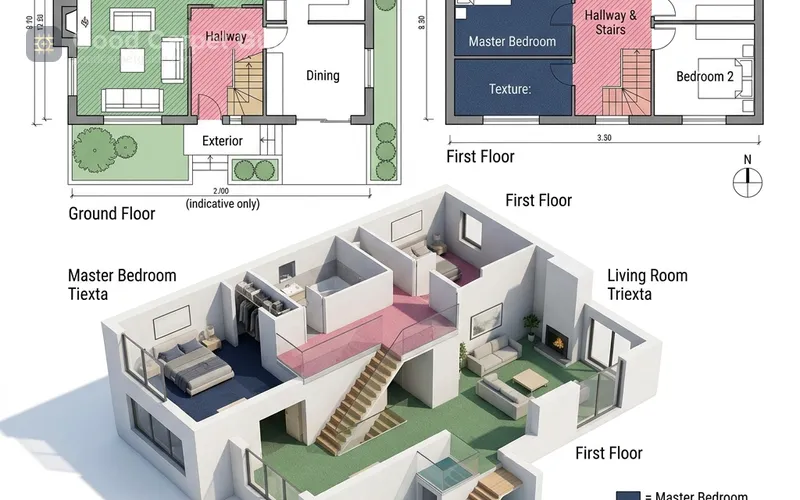
Bedrooms call for softness within a moderate face weight range (30-45 oz) and solution-dyed fiber for UV resistance near windows. Stairs and hallways call for a tight, high-twist weave (50-65 oz, 5.5-6.5 TPI) in solution-dyed Nylon 6,6 to resist both crushing and the visible wear patterns that concentrate in narrow traffic bands. Basements call for a low-profile, tight-loop olefin or Triexta product paired with a synthetic felt or rubber-backed pad that resists moisture wicking, since slab moisture defeats plush, high-loft fiber regardless of stain treatment. Family and living rooms call for a mid-to-high face weight (45-60 oz) cut-and-loop construction in Triexta or high-density solution-dyed Nylon, balancing cleanability against the heaviest daily foot traffic in the house.
Installers also flag a labeling issue that complicates the "best carpet" question: the Stainmaster brand name was purchased by Lowe's in 2021. Before that acquisition, Stainmaster referred to a chemical stain-resist treatment applied to Nylon 6,6 yarns across multiple mills, including Anderson Tuftex, Masland, and Dixie Home. Dixie Home rebranded its former Stainmaster-treated styles as Envision 6.6 Nylon following the sale, but older, now-inaccurate samples still appear on some independent retailer showroom floors, which means a "Stainmaster" label at an independent carpet store no longer guarantees the fiber quality associated with the pre-2021 product.
which brand makes the best carpet guide
No single brand wins across every room; Dixie Group's Masland and Fabrica lines lead for high-end durability, Shaw leads for pet-focused backing systems, Mohawk leads for permanent stain resistance, and Engineered Floors' Dreamweaver line leads for stretching a limited budget across a full house.
Dixie Group (Dixie Home, Masland, Fabrica) specializes in heavy-weight, solution-dyed Nylon 6,6 with custom textures. Standout products include Masland Tracker at $10.99 per sq ft installed and Masland Hunter at $8.63 per sq ft installed, both positioned by installers among the highest-performing residential carpets available, with expected lifespans exceeding 20 years in master suites and prominent staircases.
Shaw Floors specializes in fiber technology paired with pet-focused backing. Pet Perfect and Pet Perfect Plus combine resilient Nylon with R2X stain-blocking treatment and LifeGuard Blue waterproof backing, and Devon Classic III is rated highly for extreme plush comfort in bedrooms. Shaw also leads on recycled-content Nylon through its Cradle-to-Cradle program.
Mohawk Flooring holds the exclusive rights to Triexta fiber under the SmartStrand name. SmartStrand Forever Clean uses a USDA-certified plant-based fiber with permanent, non-chemical stain resistance that does not wash or wear off, making it a common installer recommendation for households with kids and pets. SmartStrand Silk and Silk Reserve trade some of that abrasion resistance for a softer hand-feel, better suited to bedrooms than to stairs or family rooms.
Engineered Floors (Dreamweaver) uses PureColor solution-dyed polyester (PET). The Dreamweaver Select and Excalibur lines offer soft, stain-resistant carpet at a lower upfront cost than Nylon, though installers note it mats down faster in busy hallways than solution-dyed Nylon 6,6 does.
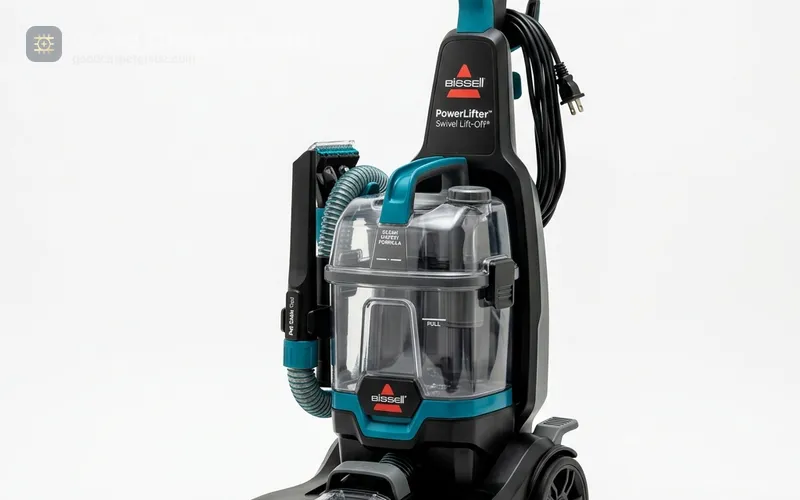
Bissell PowerLifter Carpet Cleaner
A home extraction machine for maintaining stain resistance between the professional IICRC S100 cleanings most warranties require every 12-18 months.
Check Price on Amazonreal homeowner and installer experiences
Forum and review data from Reddit and Houzz surface a consistent gap between manufacturer marketing and lived carpet performance. In living and family rooms, homeowner `nahanial` installed Shaw Cashmere Classic IV, priced around $12.29 per sq ft online, as a hallway runner. The high-ounce shag-style construction caught debris that a standard vacuum could not remove, and the pile showed damage quickly under regular household use. Homeowner `ibonnie` reported that a Mohawk SmartStrand Silk installation was effectively unusable within three years, since standard high-traffic soiling would not release even after professional steam cleaning.
Stairs generate some of the sharpest safety feedback. User `Dramamine906` reported multiple household falls linked directly to thick, slick stair carpet, while installers separately warn that low-pile cut carpet can mat down over time and become a slip hazard from the opposite direction, losing the surface texture needed for grip. Neither failure mode is covered by a standard abrasive-wear warranty, which reinforces why stair carpet selection should prioritize twist level and pile height over softness alone.
A recurring vacuum-related complaint also surfaces across both bedroom and living room reports. Fine-denier, densely packed fiber constructions such as SmartStrand Silk or Cashmere-grade Nylon can seal flat against a standard high-suction upright vacuum, making the vacuum difficult to push and, in some cases, straining the motor. Homeowners installing these ultra-soft products should budget for an adjustable-height vacuum with large wheels rather than assuming a standard household vacuum will perform correctly on the new pile.
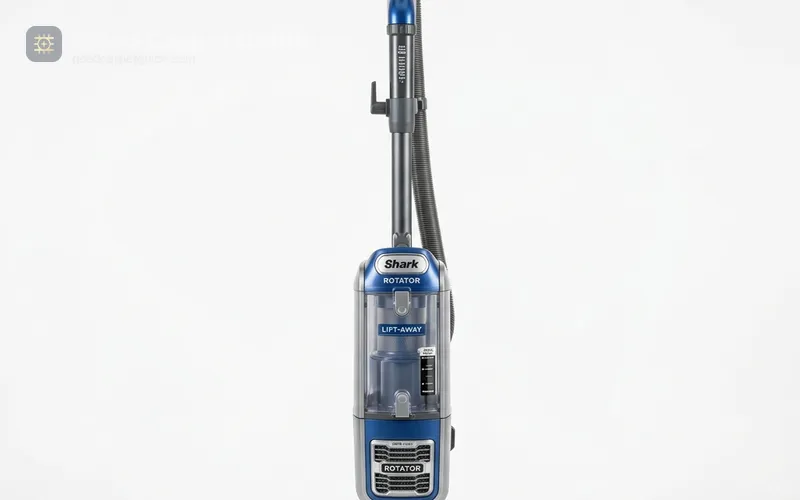
Shark Rotator Adjustable Height Vacuum
An adjustable-height vacuum designed for dense, fine-denier carpet constructions that seal flat against standard high-suction uprights.
Check Price on AmazonSeam quality is another recurring installer-level complaint that homeowner reviews rarely diagnose correctly. Visible seams within a few years typically trace back to inadequate seam sealing or a mismatched seam iron temperature during installation rather than a defect in the carpet itself. Homeowners noticing early carpet delamination at the seams, where the backing separates from the face fiber, should request an installer inspection of the original seam work before assuming the product itself has failed.
carpet installation realities worth budgeting for
A correctly executed installation depends on tools and materials that rarely appear in a homeowner's cost estimate: a power stretcher (not just a knee kicker), a seam iron with hot-melt seam tape, latex seam sealer applied to the cut edges before joining, row runners to guide straight seams, felt underlayment where specified, and tackless strip with pin lengths matched to the carpet's pile height and backing thickness. A carpet tack strip guide pin length mismatch is a common cause of carpet slipping loose from the perimeter within the first year, independent of the fiber quality installed.
Carpet's role as a passive air filter also factors into a full room by room carpet guide, particularly in bedrooms. The Carpet and Rug Institute notes that carpet traps dust, allergens, and dander within its fibers rather than allowing them to recirculate continuously, as happens more readily over hard flooring. That filtering function only holds up with the same IICRC S100 professional cleaning interval that warranty terms already require, which makes the cleaning schedule a dual-purpose maintenance item: it protects both the warranty and indoor air quality.
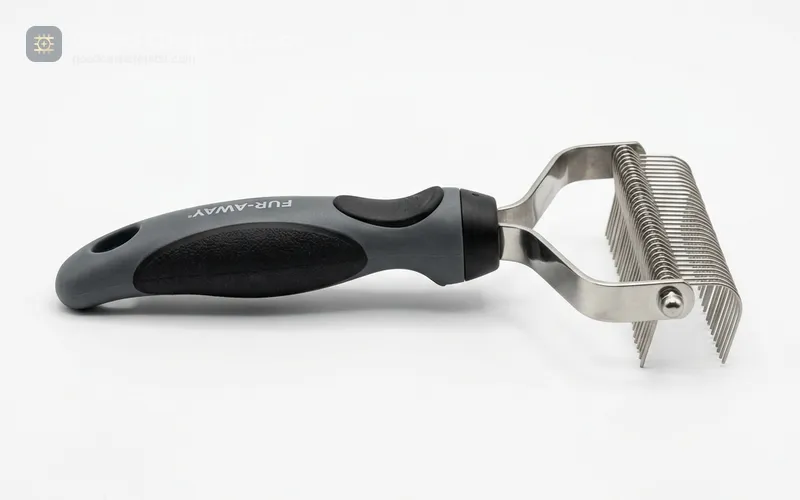
Bissell Pet Hair Eraser Turbo Rake
A grooming tool for pulling embedded pet hair and soil out of dense pile before it is an abrasive against the fiber backing during regular foot traffic.
Check Price on Amazonconclusion
A room by room carpet guide should assign fiber, face weight, and twist independently to each room rather than defaulting to one whole-house product. Bedrooms perform best with a 30-45 oz, solution-dyed Triexta or PET Saxony that resists UV fading near windows. Stairs and hallways need a 50-65 oz, high-twist solution-dyed Nylon 6,6 to resist crushing and maintain grip. Basements need a low-profile, tight-loop olefin or Triexta over a moisture-resistant pad, never a plush pile with an integrated vapor barrier over a concrete slab. Family and living rooms need a 45-60 oz cut-and-loop Triexta or high-density Nylon that balances cleanability against the heaviest daily traffic in the house.
Homeowners on a strict "Good" tier budget ($2.50-$4.75 per sq ft) should limit budget polyester and olefin to basements and secondary bedrooms, where lower abrasion resistance matters less. Anyone specifying carpet for stairs or a primary living room should budget into the "Better" or "Best" tier ($4.75-$14.50 per sq ft) and confirm the installer is power-stretching to CRI 104/105 standards rather than relying on a knee kicker alone. Keeping every professional cleaning receipt from day one, on the 12-to-18-month IICRC S100 schedule most manufacturers require, remains the single most controllable factor in whether a warranty claim gets approved five years down the line.