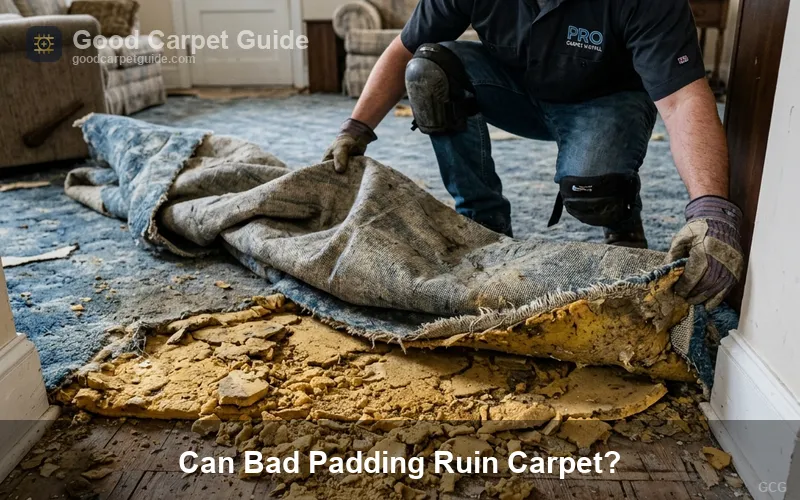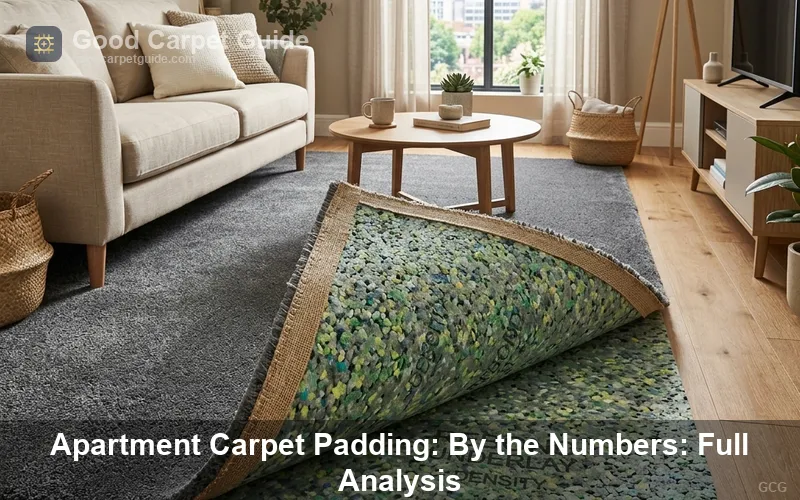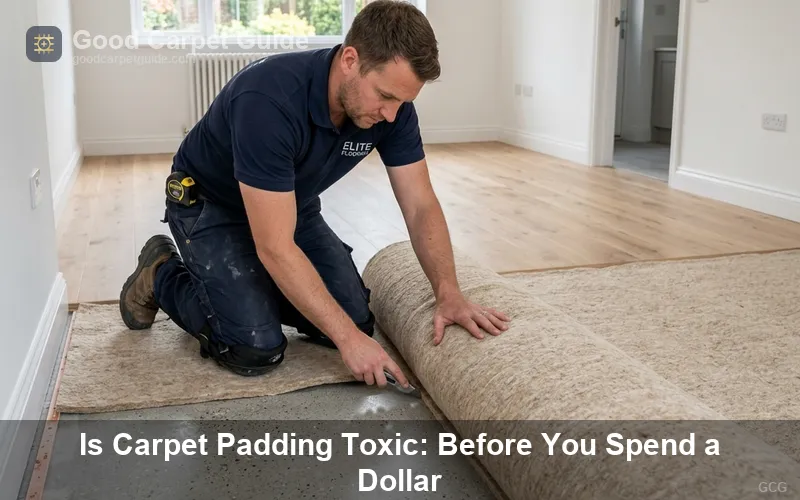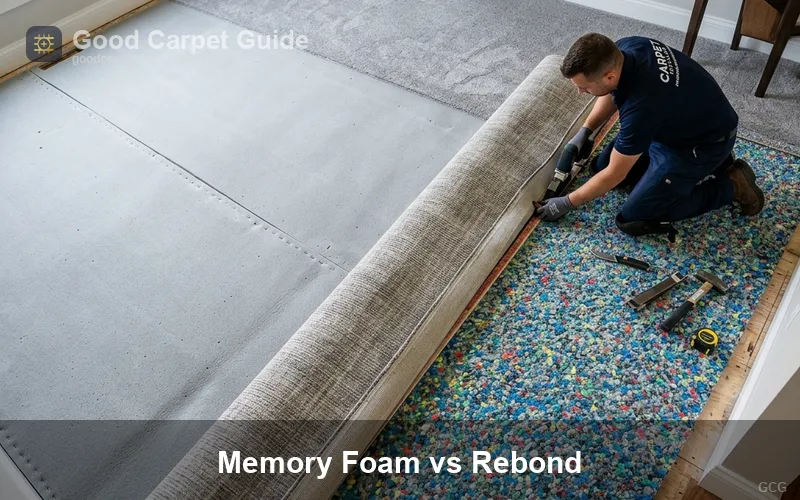
A few years ago, I pulled up a five-year-old living room carpet that looked fifteen years old. The homeowner had paid extra for a "memory foam upgrade" because the salesperson promised luxury underfoot. The memory foam vs rebond padding decision looked smart on the sales invoice and disastrous underneath the carpet.
The memory foam padding had compressed beneath every sofa leg, every recliner, and every heavy bookshelf. The memory foam padding showed permanent furniture indentations while the carpet face yarn displayed premature crushing. The homeowner expected mattress-like softness and received a carpet system that aged faster than expected.
The memory foam vs rebond padding comparison is not a comparison between cheap and premium products. The memory foam vs rebond padding comparison is a comparison between two different engineering approaches to carpet support. Density, compression resistance, carpet compatibility, regional climate, warranty compliance, and installation quality determine performance far more than marketing labels.
Most professional installers select 8-lb rebond padding for residential applications. Most homeowner complaints involve low-density poured urethane products marketed as memory foam. Premium foam products exist, but premium foam products perform differently than most consumers expect. Premium foam products feel firmer, not softer.
This article examines construction methods, durability, installation realities, warranty fine print, regional performance differences, actual pricing, and the specific products professional installers recommend.
memory foam vs rebond carpet pad
Memory foam vs rebond carpet pad comes down to compression resistance, density stability, and long-term carpet protection.
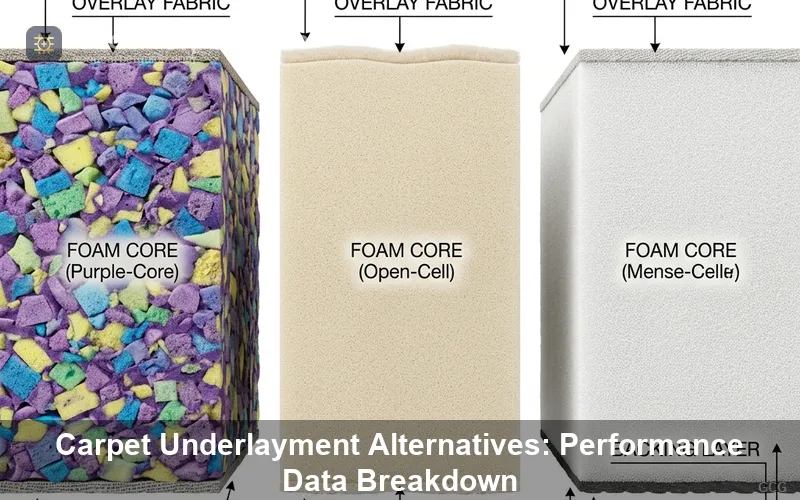
Headword: Memory Foam Padding. Memory foam padding is a polyurethane foam underlayment manufactured as a continuous foam structure. Memory foam padding distributes weight across a uniform cellular structure and frequently includes moisture barriers or antimicrobial treatments.
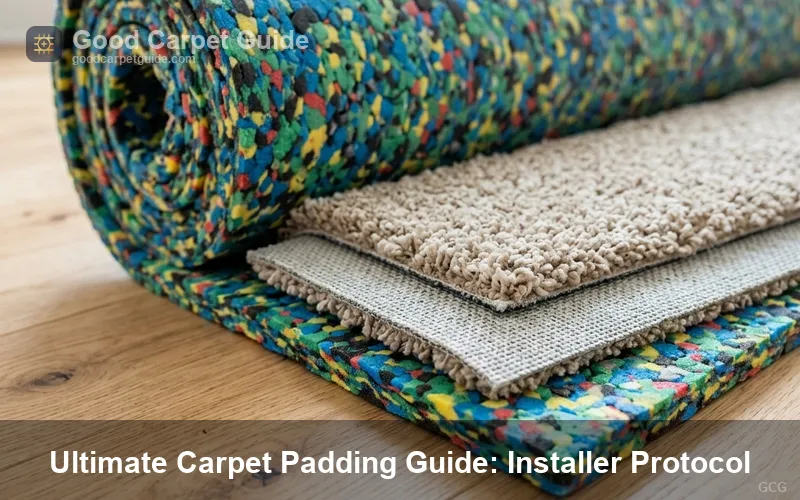
Headword: Rebond Padding. Rebond padding is a carpet cushion manufactured from recycled polyurethane foam fragments bonded together under pressure. Rebond padding creates a dense support layer with high resilience and strong recovery characteristics.
The table below compares the major performance variables homeowners actually notice after installation.
| Attribute | Rebond Padding | Memory Foam Padding |
|---|---|---|
| Construction | Recycled bonded foam chips | Continuous polyurethane foam |
| Typical Residential Density | 8 lb | 4 lb to 10 lb |
| Furniture Compression Resistance | High | Moderate to High |
| Permanent Indentation Risk | Low | Higher under heavy loads |
| Installer Familiarity | Very High | Moderate |
| Cost | Lower | Higher |
| Carpet Warranty Compatibility | Excellent | Product dependent |
| Residential Popularity | Highest | Lower |
| Long-Term Value | High | Variable |
The table shows why rebond dominates residential installations. Rebond padding provides predictable performance and broad compatibility across carpet styles.
A major source of confusion involves terminology. Many salespeople label any premium foam cushion as memory foam. One flooring professional explained that salespeople frequently use "memory foam" because customers recognize the term even when the product is not true viscoelastic memory foam.
The Density Problem Nobody Explains
Density determines performance more than thickness.
An installer warning appears repeatedly across professional discussions: a 4-lb foam pad wears out faster than an 8-lb rebond pad regardless of marketing language. One installer described some memory foam products as "around a 4lb padding which is way too soft and will lead to premature wear in the carpet."
Density controls how much the carpet system flexes under foot traffic. Excessive flexing stresses seams, backing systems, and yarn bundles.
Why Expensive Padding Feels Firmer
Premium padding feels firmer because premium padding uses more material per cubic foot.
Many homeowners expect a premium memory foam upgrade to feel softer. Premium carpet cushions frequently feel denser and more supportive instead. One professional summarized the misconception clearly: higher-priced padding generally carries higher density ratings, and higher density creates firmer support.
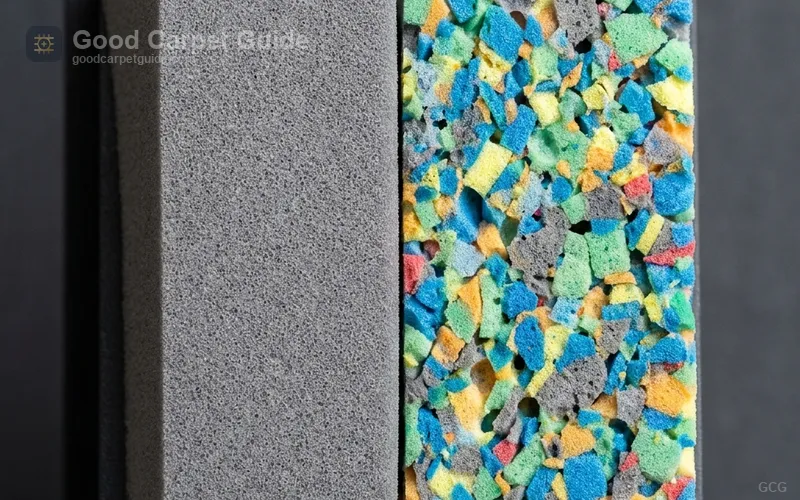
Caption: Dense carpet cushion construction influences furniture compression resistance while preparing the discussion about long-term durability and carpet protection.
The Blind Barefoot Test
Retailers sometimes evaluate padding through direct physical testing.
One flooring company placed identical carpet samples over multiple padding products and asked employees to walk barefoot across each assembly. Employees consistently selected Shaw Courage frothed foam as the preferred feel. The result demonstrates an important point: comfort perception varies significantly among users.
Comfort and durability measure different characteristics. A comfortable pad does not automatically produce the longest carpet lifespan.
is rebond padding worth it
Rebond padding is worth it because rebond padding delivers the strongest balance between cost, durability, carpet protection, and installer familiarity.
Most professional installers install 8-lb rebond in their own homes. One installer stated directly: "In my house I used rebond 8lb."
Headword: 8-lb Rebond Padding. 8-lb rebond padding is a bonded polyurethane cushion containing approximately 8 pounds of material per cubic foot. 8-lb rebond padding represents the residential industry standard because 8-lb rebond padding balances resilience and comfort.
Several factors make rebond padding valuable:
- Provides consistent support beneath residential carpet.
- Resists furniture compression better than low-density foam.
- Protects carpet backing from excessive flexing.
- Costs significantly less than premium foam upgrades.
- Meets warranty requirements across many carpet brands.
The list above explains why rebond remains the default recommendation from independent dealers and experienced installers.
What Is the Best Rebond Padding?
Several rebond products receive consistent praise from flooring professionals.
| Product | Type | Key Attribute |
|---|---|---|
| Carpenter Emerald | 8-lb Rebond | Spillguard moisture barrier |
| Shaw Hope | 8-lb Rebond | Residential standard |
| Leggett & Platt Ultra Magic | Rebond | Trade-grade performance |
| Stainmaster Napa | Rebond | Lowe's private-label option |
Carpenter Emerald receives particularly strong recommendations because Carpenter Emerald combines 8-lb density with moisture protection.
The table highlights a common pattern. The highest-rated rebond products emphasize density and moisture resistance rather than extra thickness.
What Is the Difference Between Rebond Padding Types?
Density and moisture barriers separate most rebond categories.
- Uses 6-lb density for entry-level installations.
- Uses 8-lb density for mainstream residential installations.
- Uses 10-lb density for commercial and specialty installations.
- Uses moisture barriers for pet households.
- Uses antimicrobial treatments for moisture-sensitive environments.
The difference between rebond padding types centers on density ratings rather than branding names.
For a deeper analysis of density ratings, review the 8lb vs 10lb carpet padding comparison .
How Long Does Rebond Padding Last?
Rebond padding lasts as long as the carpet in most residential installations.
An 8-lb rebond cushion commonly remains serviceable through one complete carpet lifecycle. Replacement typically occurs during carpet replacement rather than because the rebond cushion failed independently.
When Should You Replace Rebond Padding?
Replace rebond padding when visible deterioration appears.
Replace rebond padding when:
- Replace rebond padding after major flooding.
- Replace rebond padding after chronic pet contamination.
- Replace rebond padding after foam deterioration becomes visible.
- Replace rebond padding during complete carpet replacement.
The replacement criteria focus on structural degradation rather than age alone.
can you install rebond padding yourself
You can install rebond padding yourself, but carpet stretching equipment remains mandatory for a professional result.
Padding installation appears simple. Carpet system installation requires precise stretching, seam construction, tack strip placement, and transition management.
DIY Rebond Padding Installation Process
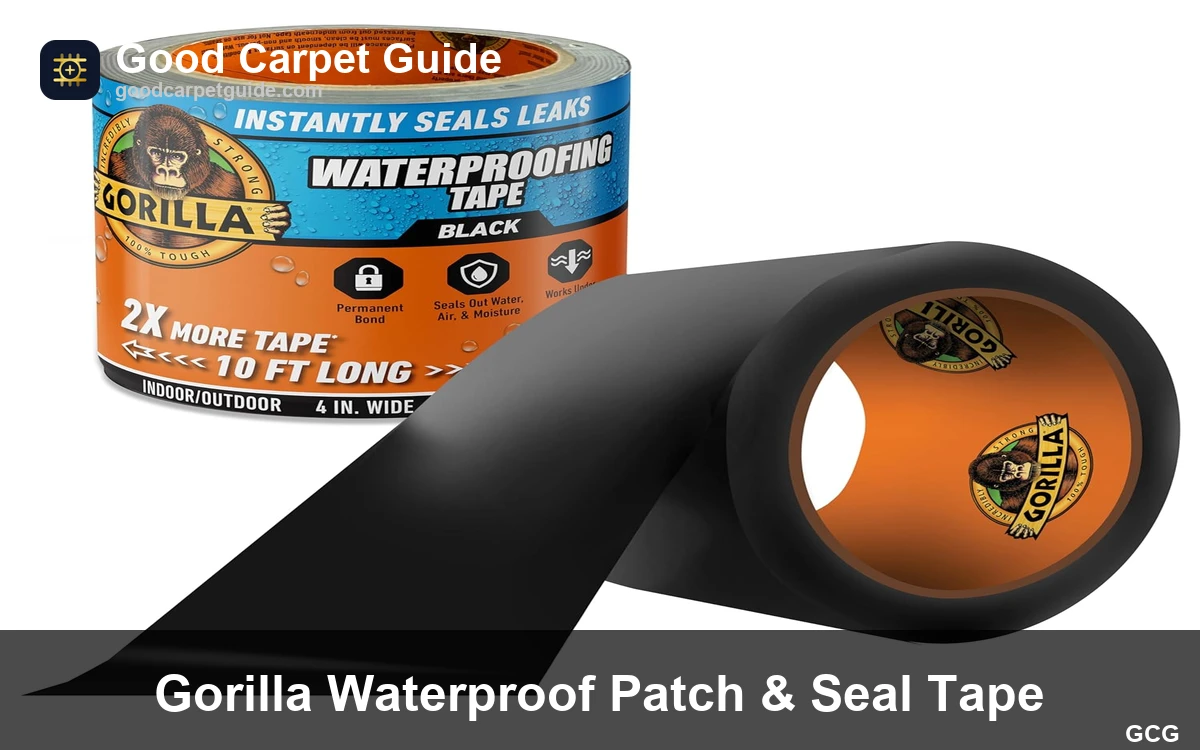
Gorilla Waterproof Patch & Seal Tape (3.2" x 10')
The professional's choice for sealing moisture barrier seams of premium 8-lb rebond or frothed foam padding. Creates an airtight, vapor-proof seal that prevents pet accidents and spills from migrating underneath the padding, protecting your subfloor from dry rot.
Check Price on AmazonThe installation process follows a clear sequence.
- Remove existing carpet and old cushion.
- Inspect subfloor panels or concrete slabs.
- Install new tack strips around room perimeters.
- Roll out rebond padding perpendicular to carpet direction.
- Staple or adhere rebond padding securely.
- Tape cushion seams using approved seam tape.
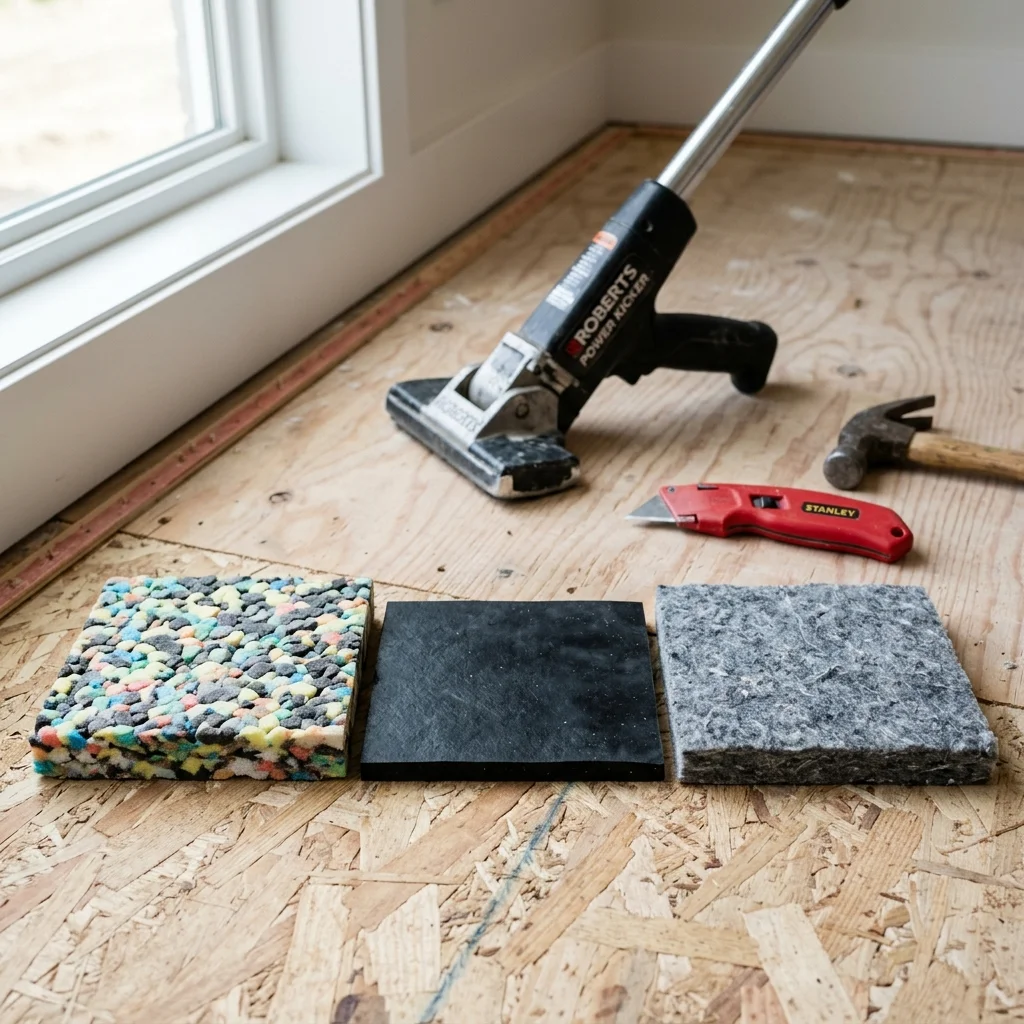
- Stretch carpet using a power stretcher.
- Trim carpet edges and finish transitions.
The sequence above explains the mechanical process. The sequence above does not eliminate the need for professional stretching equipment.
Common DIY Errors
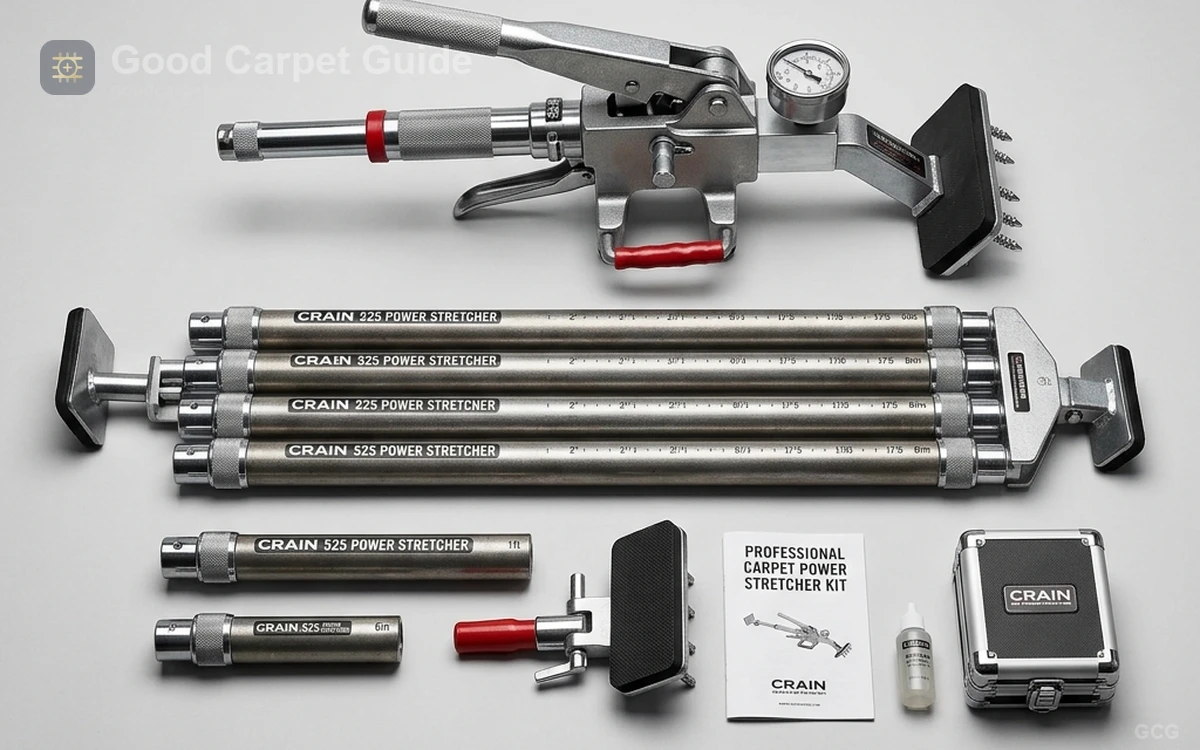
Roberts Professional Carpet Power Stretcher (10-254)
The mandatory commercial stretch system required to stretch carpet taut over dense rebond or memory foam underlayments. Distributes stretching pressure evenly across tack strips to prevent carpet buckling, ripples, and backing delamination over time.
Check Price on AmazonSeveral installation mistakes destroy carpet performance.
- Installing padding too thick for carpet specifications.
- Ignoring manufacturer density requirements.
- Leaving gaps between padding sections.
- Failing to tape seams properly.
- Using knee kickers without power stretchers.
Thick padding creates a particularly expensive problem. Multiple installers warn that thick, soft padding contributes directly to wrinkles and buckling.
The Premium Pad Installation Trap
Premium foam products introduce another risk.
One flooring professional noted that installers frequently misorient Shaw Victorious padding because the dark surface resembles carpet scrim. Incorrect orientation affects performance and may affect warranty compliance.
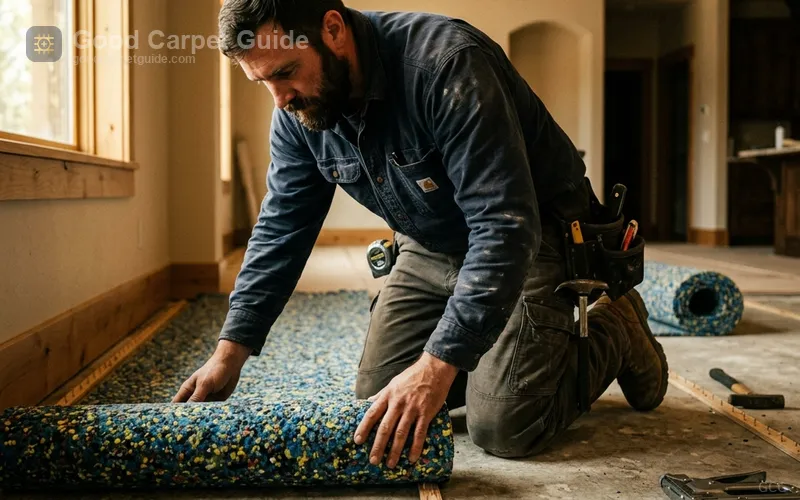
Caption: Proper cushion placement influences carpet stretching quality and transitions directly into warranty compliance and manufacturer requirements.
For broader installation principles, review the carpet padding selection resource .
Warranty Fine Print Analysis
Warranty compliance favors density specifications and thickness limits rather than marketing descriptions.
Many homeowners focus on carpet color, fiber, and style. Manufacturers focus heavily on padding specifications.
Headword: Warranty Padding Requirement. Warranty padding requirement is a manufacturer-defined density and thickness standard required to maintain coverage against premature wear and structural failure.
Thickness Violates More Warranties Than Density
Excessive thickness creates warranty problems.
Manufacturers frequently limit residential padding thickness to approximately 7/16 inch beneath many carpet constructions. Thick padding allows excessive vertical movement, and excessive vertical movement increases backing stress.
A thick pad does not equal a premium installation.
Private Labels Hide Important Specifications
Retailers frequently use private-label product names.
One homeowner described repeated attempts to obtain density and twist information from sales representatives. Sales representatives provided vague answers or refused specification disclosure. Private-label naming prevents easy comparison shopping between competing stores.
The same issue affects padding.
A consumer comparing "premium cushion" products without density specifications cannot accurately compare value.
Big Box Store Measurement Concerns
Measurement practices influence total project cost more than padding selection.
Multiple homeowners reported significant discrepancies between big-box measurements and independent dealer measurements. One homeowner received an 1,800-square-foot estimate from a chain retailer and a 1,300-square-foot estimate from a local dealer. The difference allowed the homeowner to purchase significantly better carpet while maintaining the same budget.
Accurate measurement protects consumers more effectively than promotional installation offers.
Regional Performance Differences
Regional climate changes how memory foam and rebond padding perform beneath carpet.
Climate affects moisture exposure, subfloor composition, and temperature variation.
Coastal Humid Regions
Moisture management becomes the primary concern in coastal regions.
High-density rebond products with moisture barriers perform well in humid environments. Carpenter Emerald and similar moisture-resistant products address vapor migration and accidental spills.
Concrete Slab Homes
Density becomes critical over concrete slabs.
Several installers specifically warn against low-density 4-lb foam products over concrete. Concrete slabs transfer pressure directly into the cushion layer. Low-density foam compresses more aggressively under concentrated loads.
Northern Cold Regions
Thermal insulation becomes more important in colder climates.
Both rebond and memory foam provide thermal separation from concrete. Higher-density products maintain structural performance while still contributing insulation value.
Pet Households
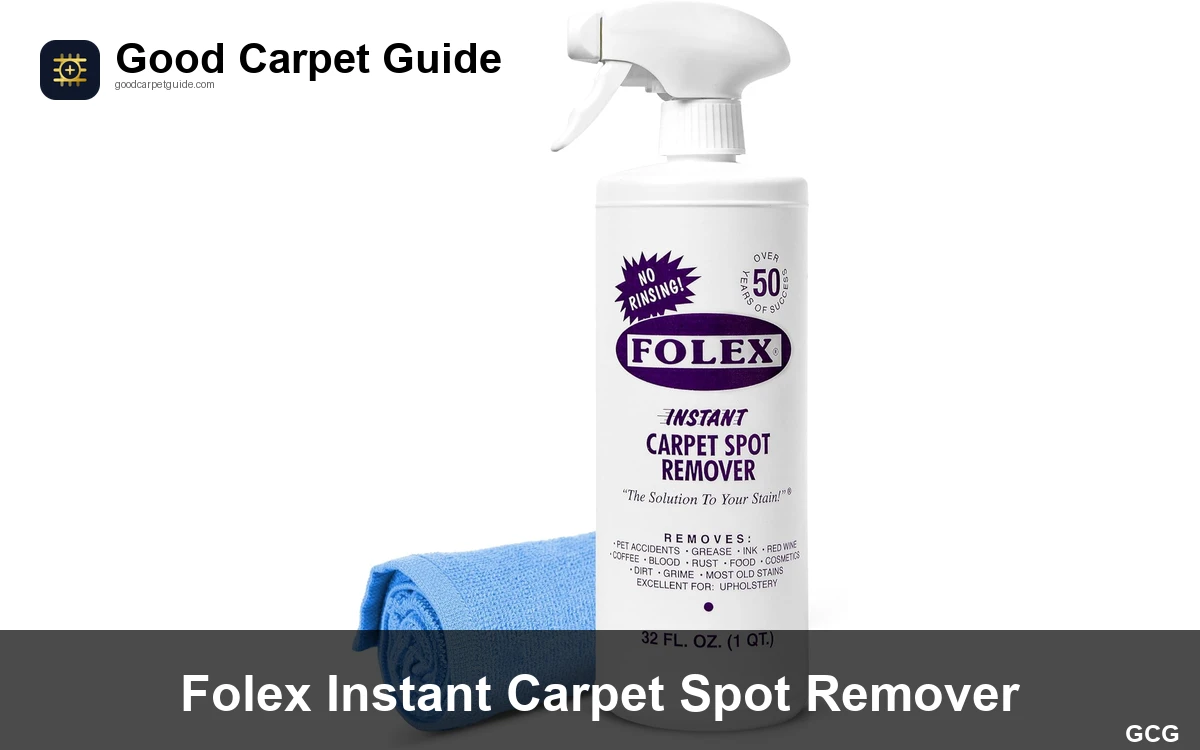
Folex Instant Carpet Spot Remover (32 oz)
The ultimate surfactant-free spot cleaner for pet households. Instantly dissolves organic spills, mud, and grease from synthetic carpets without leaving any soapy, sticky residue that attracts dirt and ruins the underlying pad's cell structure.
Check Price on AmazonMoisture barriers become essential in pet households.
The highest-performing pet installations combine:
- Uses moisture-barrier rebond padding.
- Uses stain-resistant carpet fibers.
- Uses sealed seams around vulnerable areas.
- Uses prompt spill cleanup procedures.
The combination above reduces odor retention and contamination migration into the subfloor.
Pet owners should also review the best carpet padding for stairs resource when evaluating high-traffic stair systems.
Cost & Budget Considerations
Cost differences between memory foam and rebond padding are substantial.
The table below summarizes real-world pricing reported across major retailers and professional installations.
| Product | Approximate Cost Per Sq Ft |
|---|---|
| TrafficMaster 8-lb Rebond | $0.37 |
| Future Foam 8-lb Rebond | $0.51 |
| Shaw 10-lb Urethane Pad | $1.11 |
| Future Foam Tempur Material Pad | $1.06 |
| Stainmaster Bonded Pad | $1.00-$1.15 |
| Carpenter Emerald | $2.40-$3.00 |
The pricing data reveals a clear trend. Rebond padding costs substantially less than premium foam products.
Why Cheap Installation Deals Cost More
Several homeowner reports expose a recurring pattern.
- Advertise low installation pricing.
- Recover costs through additional fees.
- Inflate material quantities through inefficient layouts.
- Charge separately for furniture handling.
- Charge separately for carpet removal.
One homeowner reported removal and furniture fees despite performing those tasks personally. Another homeowner reported an installer explaining that carpet layouts were intentionally designed to increase material consumption.
Where the Budget Should Go
Professional installers generally prioritize spending in a specific order.
- Purchase quality carpet fiber.
- Purchase 8-lb density padding.
- Purchase professional installation.
- Purchase moisture protection when needed.
- Purchase premium upgrades only after core specifications are satisfied.
The sequence above reflects long-term performance priorities rather than showroom impressions.
A quality carpet selection remains equally important. Fiber performance differences are explained in the nylon vs polyester carpet comparison .
Frequently Asked Questions (FAQ Schema)
How much does rebond padding cost?
Rebond padding typically costs between $0.37 and $0.51 per square foot at major retailers. Premium rebond products with moisture barriers reach $2.40 to $3.00 per square foot.
What rebond padding do professionals recommend?
Most professional installers recommend 8-lb rebond padding. Carpenter Emerald, Shaw Hope, and Leggett & Platt Ultra Magic receive frequent recommendations.
Which brand makes the best rebond padding?
Carpenter Emerald receives some of the strongest professional endorsements because Carpenter Emerald combines 8-lb density with a Spillguard moisture barrier.
How to choose rebond padding?
Choose rebond padding by evaluating density, thickness, moisture protection, carpet compatibility, and manufacturer warranty requirements. Density matters more than thickness.
What's better gel memory foam or memory foam?
Gel memory foam generally improves heat management and density stability. Product specifications remain more important than marketing labels.
Bonded foam vs memory foam
Bonded foam and rebond foam describe the same recycled polyurethane category. Memory foam refers to continuous polyurethane foam products designed with different compression characteristics.
Soft foam vs memory foam
Soft foam describes a feel characteristic. Memory foam describes a material category. Many memory foam products actually feel firmer than low-density soft foam products because density increases support.
Final Recommendation
The memory foam vs rebond padding debate ends with density, not branding.
Choose 8-lb rebond padding for most residential installations. Choose products such as Carpenter Emerald, Shaw Hope, or comparable high-density rebond cushions when durability, warranty compliance, and long-term value matter.
Choose premium high-density foam products only when a specific feel underfoot justifies the additional cost. Verify density specifications before purchasing. Reject vague marketing descriptions that omit density ratings.
Avoid thick, low-density cushions regardless of branding. Thick, soft cushions accelerate carpet wear, increase wrinkle formation, and create warranty concerns.
From a veteran installer's perspective, the safest recommendation remains simple: pair a quality carpet with a properly installed 8-lb rebond cushion. The combination protects the carpet, protects the warranty, and protects the budget better than most premium upgrades sold in showrooms.