A playroom floor answers to different physics than a bedroom or a living room. Kids apply repeated point loads (jumping, falling, dragging furniture), acidic and enzymatic spills (juice, slime, vomit), and constant shear from rolling toys. The rest of this guide breaks each failure mode down by polymer chemistry, construction type, and cushion engineering, then closes with brand-level specifications and installed cost figures for a typical 180 sq ft room.
TL;DR quick decision matrix
| Fiber | Style | Spill barrier needed | Cushion spec | Cost range (material) |
|---|---|---|---|---|
| Triexta (SmartStrand) | Low-pile cut pile, 0.30"–0.50" | Yes, integrated backing or membrane pad | 7/16" 8–10 lb/cu ft bonded urethane | 2.00–4.00/sq ft |
| Solution-dyed nylon | Textured cut pile / frieze | Yes, fluorochemical topical + membrane pad | 7/16" 8–10 lb/cu ft bonded urethane | 2.50–7.00/sq ft |
| Standard PET polyester | Any (not recommended) | Yes, but fiber crushes regardless | Same, does not offset crush risk | 0.50–3.50/sq ft |
| Modular carpet tiles (FLOR) | Solution-dyed nylon, 0.19" pile | Built-in Glasbac vinyl backing | None; tiles sit on subfloor or thin cushion-back | 7.44–9.00+/sq ft |
Playroom carpet performance requirements: why standard carpet fails
Four mechanical and chemical stressors define playroom flooring, and generic residential carpet is not engineered around any of them. A bedroom carpet spec assumes moderate foot traffic, occasional furniture repositioning, and rare liquid contact. A playroom spec has to assume daily, repeated point-load impact, near-constant exposure to acidic and enzymatic liquids, and abrasive lateral friction from wheeled toys running across the same paths for years. Selecting carpet for this room by showroom hand-feel alone, without checking fiber chemistry and construction type against these four stressors, is the single most common reason playroom carpet fails inside two years.
Spill chemistry. Grape, apple, and orange juice carry citric and tartaric acids with a pH between 2.5 and 4.0. Homemade borax slime, washable paints, and craft glue add polyvinyl acetate and sodium tetraborate residues. On a fiber with open dye sites, these compounds bond chemically within minutes, not hours. The stain sets before a parent reaches the spill with a towel.
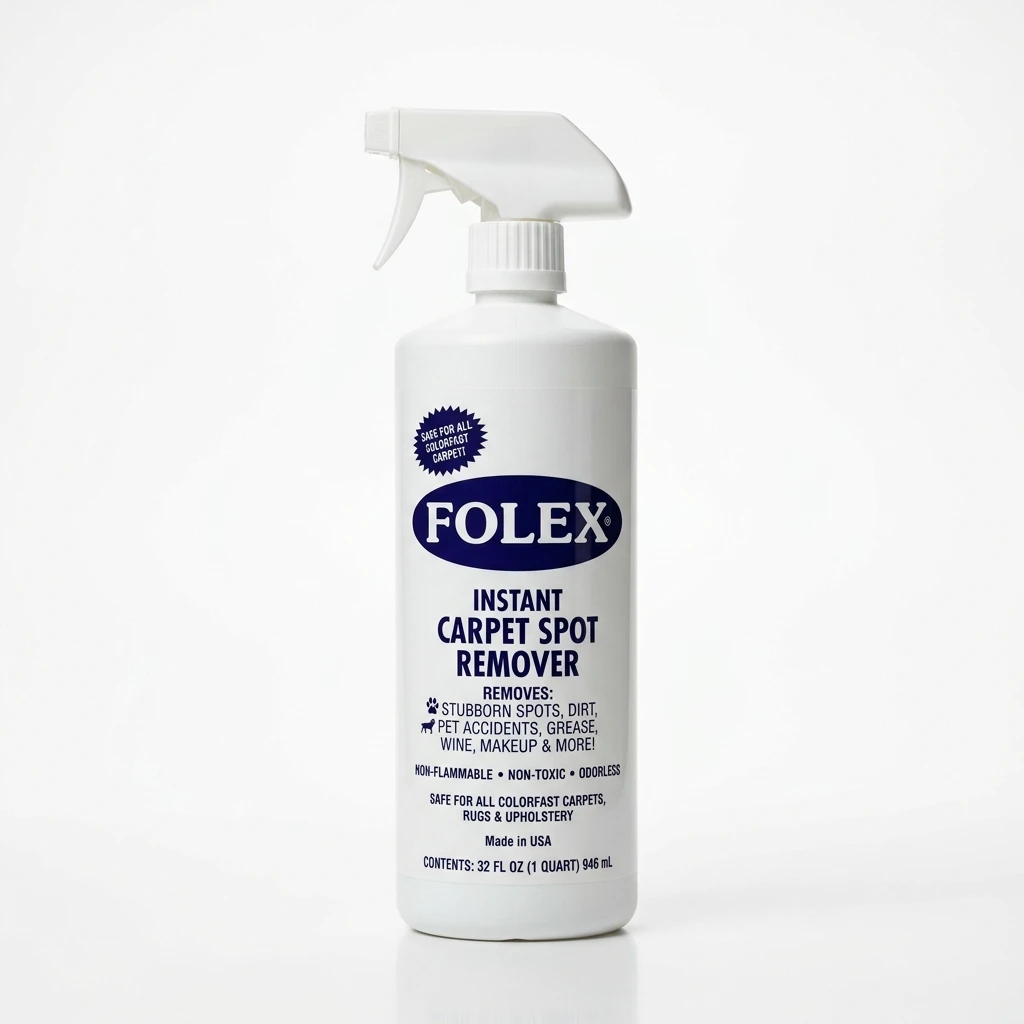
Folex Instant Carpet Spot Remover
Water-based, odor-free, non-toxic spot remover that instantly breaks down kid spills, paints, and juice without leaving sticky surfactant residue.
Check Price on AmazonThe vomit and pet-accident factor. Stomach illness, formula spit-up, and pet urine or feces demand full fiber washability plus a backing that blocks liquid migration to the pad and subfloor. A carpet that merely resists surface staining but still wicks moisture downward traps odor-causing bacteria under the face fiber, where no amount of surface cleaning reaches it. Cross-reference cleanability in multi-pet households at best carpet for pets .
Mechanical abuse from falls and impact. Children jump from couch arms, climbing frames, and bunk-bed ladders. The carpet and pad system needs to absorb vertical kinetic energy without so much give that the floor becomes an unstable, rolling surface underfoot — the ankle-roll risk covered in the cushion section below.
Toy-car friction and block-building instability. A plush, deep pile carpet (0.75" or taller) creates two separate problems. Die-cast and plastic toy cars encounter heavy rolling resistance because the wheels sink into the pile. LEGO and wooden block towers lose their base stability because the blocks tilt on uneven fiber tips, and stacks above four or five units topple. See nylon vs polyester carpet for how pile height and fiber stiffness interact with rolling resistance.
Crushing under static loads. Bean bags, toy storage cubes, activity tables, and indoor climbing structures apply sustained point loads that low-resilience fibers cannot recover from. Within 12 to 24 months, an under-engineered carpet shows permanent depression marks where furniture legs sat, even after the furniture moves.
Fiber selection science: solution-dyed nylon vs triexta vs polyester
Fiber choice determines whether a playroom carpet survives 5 years of daily abuse or requires replacement inside 2.
Nylon 6,6 remains the mechanical benchmark. Its molecular structure carries dense hydrogen bonding between adjacent polymer chains, which pulls a crushed fiber back to vertical after a load lifts. However, nylon's amide groups are inherently hydrophilic, meaning untreated fiber absorbs liquid readily. For playroom use, nylon must be solution-dyed with pigment locked into the polymer melt, or factory-treated with a fluorochemical repellent such as Shaw's R2X system to seal open dye sites.
Triexta (PTT, polytrimethylene terephthalate), sold under names like Mohawk SmartStrand and built on DuPont's Sorona polymer, uses a zig-zag molecular chain geometry rather than nylon's straight-chain hydrogen bonding. That zig-zag functions as a built-in mechanical spring, returning to shape after compression without relying on chemical bond recovery. Triexta is also near-hydrophobic at the molecular level, with moisture absorption close to 0%. Stain resistance is permanent and structural rather than a topical coating that wears off. Mohawk testing shows SmartStrand fiber surviving 60,000 foot-traffic steps without measurable pile breakdown, and cleanup for organic spills typically requires only warm water.
Standard PET polyester is the fiber flooring professionals steer buyers away from in playrooms specifically. PET lacks a molecular spring mechanism comparable to nylon's hydrogen bonding or triexta's zig-zag chain. Under sustained foot traffic and static furniture loads, the fiber undergoes plastic deformation where it bends and stays bent. Showroom softness is genuinely high on PET carpet, but that softness comes from a low-resilience fiber structure. Consequently, traffic lanes and furniture divots become permanent within 12 to 24 months regardless of stain performance.
Moisture absorption rates in practical terms. Nylon's hydrophilic amide groups mean an untreated fiber can pull moisture into the yarn core, which is why solution dyeing or a topical fluorochemical layer is essential. Triexta's near-0% absorption removes that variable entirely: there is no open dye site for a citric-acid juice spill to bond to, so the stain sits on the fiber surface until wiped away. PET sits in between chemically, but its practical performance is undermined by crushing, where matted creases trap dirt. For room palette coordination and stain-hiding heathered tones, review how to choose carpet color .
The berber and loop hazard: why looped carpet ruins playrooms
Loop-pile and berber constructions carry a structural risk that cut-pile carpet does not: zippering. In a loop construction, the yarn runs continuously from backing to surface and back to backing across the entire width of the roll. A single snag — a sharp plastic toy edge, a pet claw, a sliding toy storage bin corner — catches one loop, and because the yarn is unbroken, the pull travels straight down the row. One incident can unravel a visible line clear across the room, and the damage is not repairable by re-tufting a single tuft the way cut-pile damage often is.
Playrooms generate exactly the snag sources loop carpet cannot tolerate: LEGO bricks, toy trucks with metal axles, dress-up costume hardware, and (in mixed-use households) dog and cat claws. The construction rule for this room type is a strict exclusion of berber and level-loop styles, regardless of fiber quality underneath.
Cushion and underlayment dynamics: preventing toddler ankle rolls
Padding choice affects child safety directly, and the intuitive assumption (thicker and softer is safer) is wrong for this application.
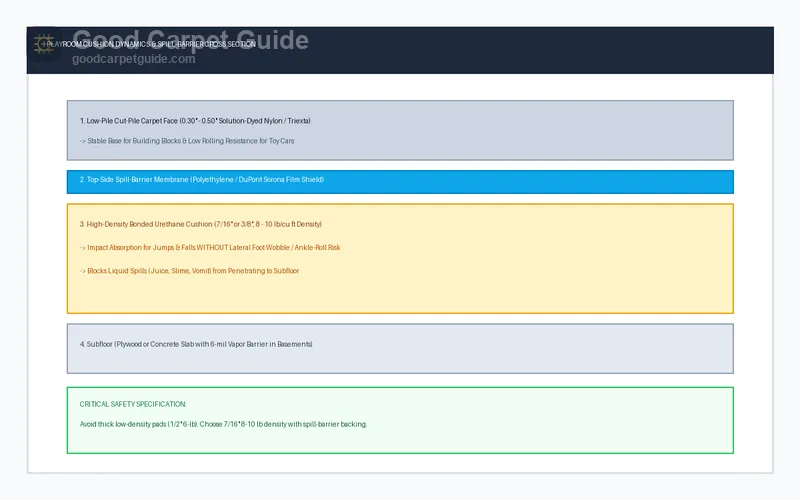
Density vs. thickness. A thick, low-density pad — a 1/2" 6-lb rebond or a soft prime urethane — feels plush in a showroom but produces excessive floor deflection underfoot. That deflection creates lateral foot wobble, and for a toddler or preschooler still developing ankle stability, wobble on a soft surface is a rolled-ankle mechanism, not a cushioning benefit. See 8lb vs 10lb carpet padding for the deflection data behind this recommendation.
Recommended specification: 7/16" or 3/8" high-density bonded urethane or flat frothed foam, rated 8 lb/cu ft to 10 lb/cu ft. This density range compresses enough to absorb impact from falls without allowing the ankle-rolling lateral shift that low-density pad produces. Pair it with a pad that has a top-side spill-barrier membrane, which stops vomit, juice, and pet accidents from reaching the subfloor before a parent can extract the liquid.
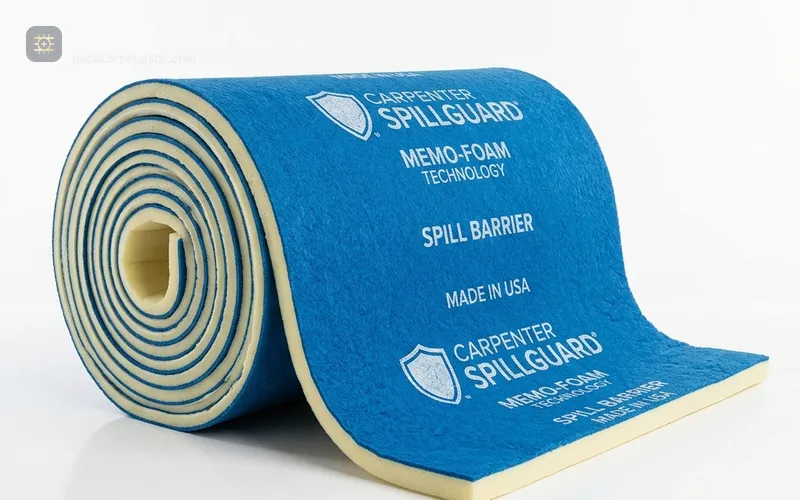
Carpenter SpillGuard 8lb Spill Barrier Carpet Cushion
Premium 8-lb density bonded urethane cushion with an integrated top-side spill-barrier film to protect subfloors from juice and vomit spills.
Check Price on AmazonWhy EVA foam gym mats fail as a pad substitute. Homeowners sometimes attempt to replace standard carpet pad with interlocking EVA foam puzzle mats underneath new carpet. This causes tack strip separation: the foam mat's thickness and compression characteristics don't match tack strip height tolerances, tension is lost across the installation, and the carpet edge buckles away from the wall within weeks.
Why EVA puzzle mats fail on top of existing carpet. The reverse setup — laying foam puzzle tiles directly over soft, plush carpet as a play surface — creates a different failure. The carpet underneath is an unstable, overly flexible sub-layer, and the foam seams pop apart and buckle at the joints because they have no rigid base to key into.
Modular carpet tiles vs wall-to-wall broadloom: cost and maintenance comparison
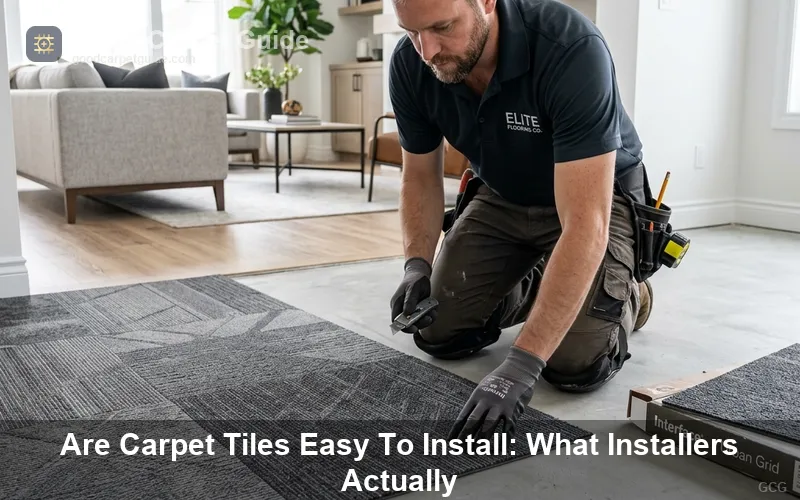
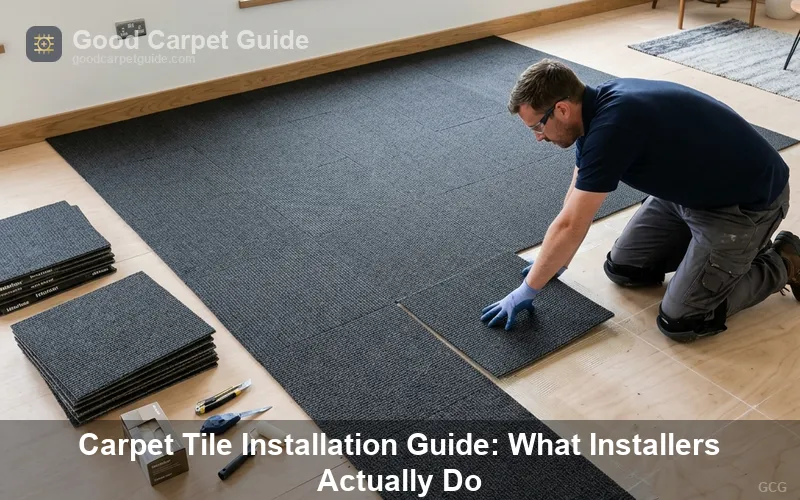
Modular carpet tiles (FLOR, Interface, and comparable systems) use 100% solution-dyed nylon face fiber over a moisture-proof Glasbac vinyl or bitumen backing, typically at a 23 oz face weight and roughly 4,358 density. A single contaminated tile lifts out and rinses in a utility sink or bathtub, then goes back down, rather than requiring whole-room extraction cleaning. Individual tiles that suffer permanent staining or mechanical damage get replaced one at a time. The format runs firmer underfoot than broadloom and costs more per square foot (7.44–9.00+), but per-incident cleanup cost is minimal.
Wall-to-wall cut-pile broadloom in SmartStrand triexta or solution-dyed nylon gives smooth coverage with no tile-edge lines to catch toy wheels or bare feet. Acoustic dampening runs meaningfully higher than hard flooring or tile (broadloom carpet systems reduce airborne room noise by roughly 70% relative to hard surfaces), which matters directly in a room built for loud play. Broadloom is not a practical DIY project for most homeowners; professional installation runs 3.50–8.00/sq ft installed, and a contaminated section requires spot extraction or patch replacement rather than single-tile swaps.
Brand and product benchmark: laboratory and field ratings
| Product | Fiber | Face weight | Density | Pile height | Stain system | Field notes |
|---|---|---|---|---|---|---|
| Mohawk SmartStrand Silk / Forever Clean | Triexta BCF, 5.5 twist | 58.8 oz | 2,936 | Varies by line | Built-in, permanent (zero absorption) | 60,000-step rating per Mohawk Industries testing; ultra-soft face can lock non-adjustable vacuum heads |
| Shaw Anso Nylon / PetPerfect | Nylon 6 | 53.5 oz | 2,791 | 0.69" | R2X topical stain shield | High mechanical bounce-back from hydrogen-bonded fiber structure |
| Stainmaster PetProtect | PET | 68.3 oz | — | — | LeakDefense backing | Soft hand feel; prone to traffic-lane crushing in high-stress playroom zones within 1–2 years |
| FLOR modular tiles (Fully Barked / Made You Look) | 100% solution-dyed nylon | — | — | 0.19" | Intersept antimicrobial shield, Glasbac vinyl backing | Sink-washable per tile; firmest underfoot of the group |
Hidden playroom floor traps: vacuums, puzzle mats, and basement concrete
Vacuum suction lockout. Ultra-soft, high-density micro-denier fiber (SmartStrand Silk is the clearest example) creates an airtight suction seal against a vacuum head that lacks height adjustment. The head stops moving, the motor keeps drawing full load, and repeated lockout events burn out drive belts. A height-adjustable vacuum or a dual-motor bypass unit avoids the seal entirely.
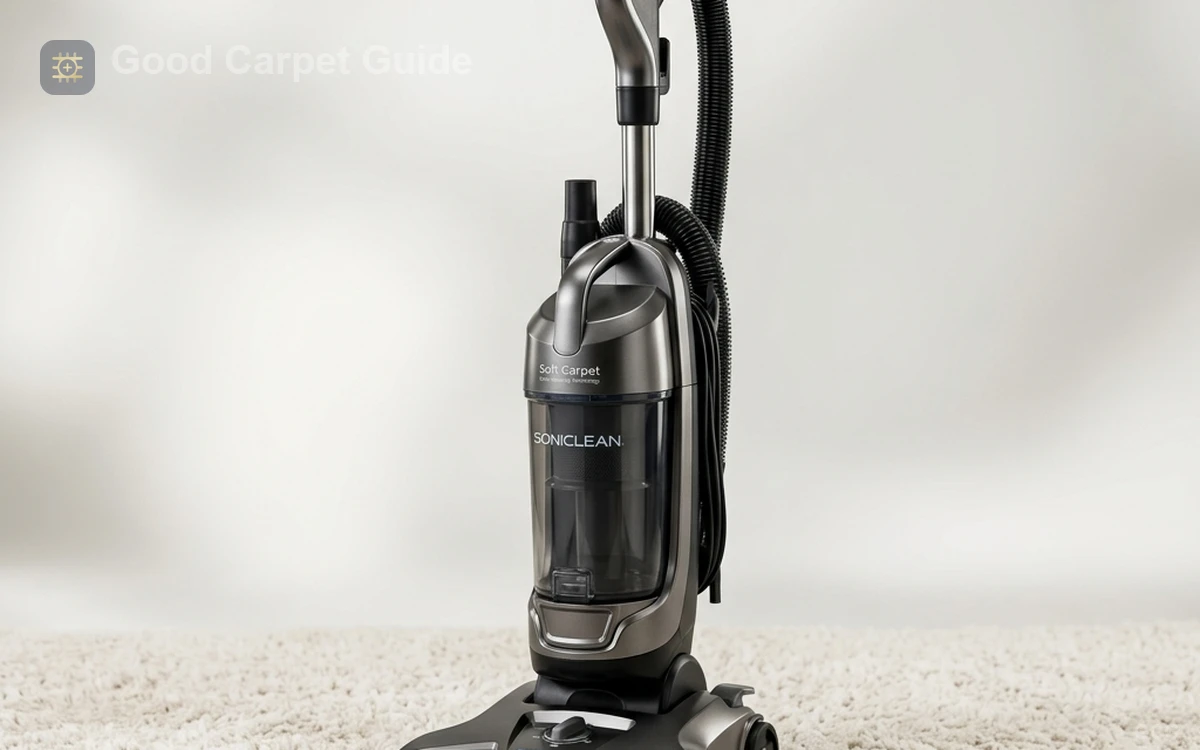
Soniclean Soft Carpet Upright Vacuum Cleaner
Dual-motor adjustable vacuum engineered with patented direct suction bypass to eliminate suction lockout on ultra-dense SmartStrand and soft nylon fibers.
Check Price on AmazonEVA foam over existing carpet, in either direction. Covered above in the cushion section: foam under new carpet loses tack strip tension, and foam over existing plush carpet buckles at the seams. Neither substitution works around a properly specified 8–10 lb/cu ft pad.
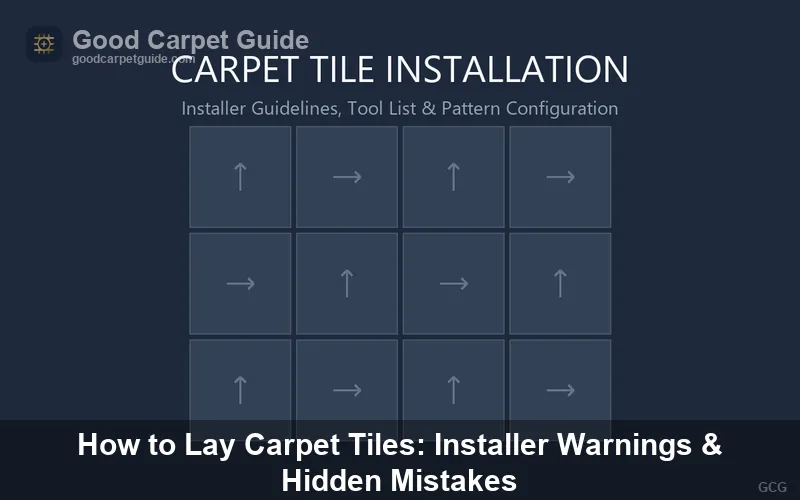
Peel-and-stick tiles on basement concrete. Full-adhesive peel-and-stick carpet tiles bonded directly to a concrete slab leave heavy adhesive residue behind if the room ever gets reconfigured, and stripping that residue later requires caustic solvents on bare concrete. The alternative: free-floating, PVC- or bitumen-backed carpet tiles secured only at the corners with releasable adhesive tabs (the FLOR Tacdot system is one implementation). Full coverage stays in place under normal foot traffic, but the whole floor lifts cleanly without solvent work.
Playroom carpet installation and procurement cost breakdown
| Component | Cost range (per sq ft) |
|---|---|
| PET polyester (material only) | 0.50–3.50 |
| Triexta / SmartStrand (material only) | 2.00–4.00 |
| Solution-dyed nylon (material only) | 2.50–7.00 |
| FLOR modular tiles (material only) | 7.44–9.00+ |
| Padding, 8–10 lb spill-barrier | 0.50–1.00 |
| Professional installation labor | 0.70–1.60 (rip-out and subfloor prep billed separately) |
For a 180 sq ft playroom, total installed project cost breaks into three bands: budget (324–900, generally PET or minimal-spec nylon with basic pad), mid-range (900–1,440, solution-dyed nylon or triexta with proper 8–10 lb spill-barrier pad), and premium (1,260–2,250, top-tier triexta or nylon broadloom, or a full FLOR modular tile installation).
Frequently asked questions about playroom carpet
Is nylon or triexta better for a playroom? Both outperform standard PET on resilience. Nylon (solution-dyed) offers the strongest mechanical bounce-back through hydrogen bonding; triexta offers near-zero moisture absorption and permanent built-in stain resistance through its zig-zag chain structure. For a room with heavy juice, slime, and craft-material exposure, triexta's non-absorbent chemistry gives it a practical edge on cleanup. For a room with heavier furniture and structural crushing risk, nylon's recovery mechanics hold up marginally better long-term.
What pile height works best for building blocks and toy cars? A low-pile textured cut pile or frieze in the 0.30"–0.50" range balances knee comfort against a stable base for block towers and low rolling resistance for toy vehicles. Anything above roughly 0.75" pile height introduces both problems simultaneously.
Do I need a moisture barrier under playroom carpet? Yes. A spill-barrier membrane on the pad, combined with a moisture-proof backing on the carpet itself (Glasbac vinyl on modular tiles, or a comparable backing on broadloom), stops vomit, urine, and juice from reaching the subfloor before cleanup. Without it, liquid wicks downward and creates odor and mold risk that surface cleaning cannot reach.
Can I put foam play mats over playroom carpet? Not on plush or deep-pile carpet. The carpet is an unstable sub-layer and the foam seams buckle. Low-pile, high-density carpet over a properly specified 8–10 lb pad is a firmer, more compatible base if foam mats are still wanted for a specific play zone.
Are carpet tiles a good option for a basement playroom? Yes, provided they're free-floating with corner-tab adhesive rather than full-adhesive peel-and-stick, which leaves heavy residue on concrete. Modular tiles also isolate any single water-damaged or stained section for individual replacement, which matters in basements with raised moisture risk.