how to steam clean carpet at home without machine
"How to steam clean carpet at home without machine" refers to using manual agitation, controlled hot water application, absorbent towels, and immediate moisture removal instead of a dedicated hot water extraction unit. Manual carpet cleaning removes surface soil but does not replicate professional extraction pressure or vacuum recovery.
Headword — Manual carpet cleaning: A low-moisture cleaning process that combines vacuuming, spot treatment, brushing, and towel extraction to reduce embedded dirt without truck-mounted equipment.
A machine-free approach follows four technical principles:
- Remove dry particulate soil before adding moisture.
- Apply controlled amounts of cleaning solution instead of saturating fibers.
- Agitate fibers using a soft carpet brush.
- Remove moisture immediately with absorbent towels or a wet vacuum.
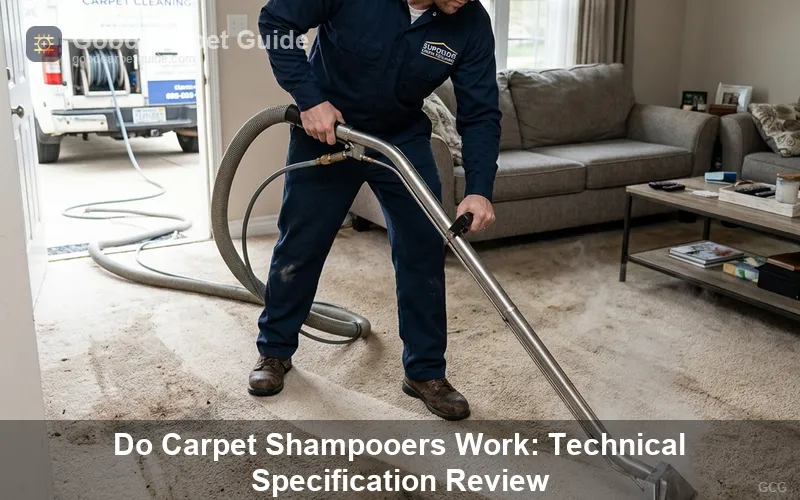
Hot water extraction removes soil and detergent residue at the backing level, which is the standard professional services use when evaluating do carpet shampooers work versus what consumer upright machines can realistically reach.
how to prepare carpet before manual cleaning
Preparation determines cleaning performance more than detergent selection. Preparation also reduces residue that causes rapid re-soiling.
The preparation process follows these steps:
- Vacuum every traffic lane slowly in overlapping passes.
- Vacuum corners using a crevice attachment.
- Remove pet hair using a metal lint scraper before applying moisture.
- Spot-test every cleaning product in a hidden location.
- Open windows or activate air circulation before beginning extraction.
The preparation stage eliminates loose debris before moisture drives particles deeper into the pile.
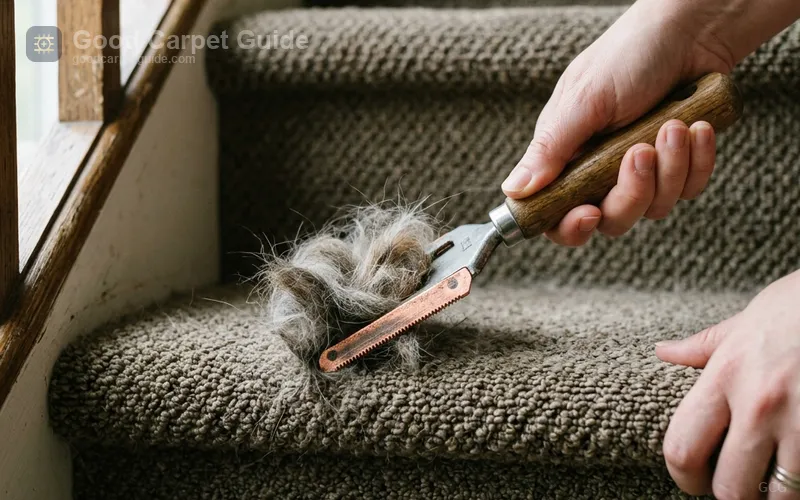
A metal lint scraper removes embedded hair before hot water treatment, reducing residue that remains after manual extraction.
Composite field observations from installers and homeowners repeatedly identify the inexpensive metal lint scraper as one of the highest-value preparation tools for carpeted stairs and pet households because embedded fur limits extraction efficiency.
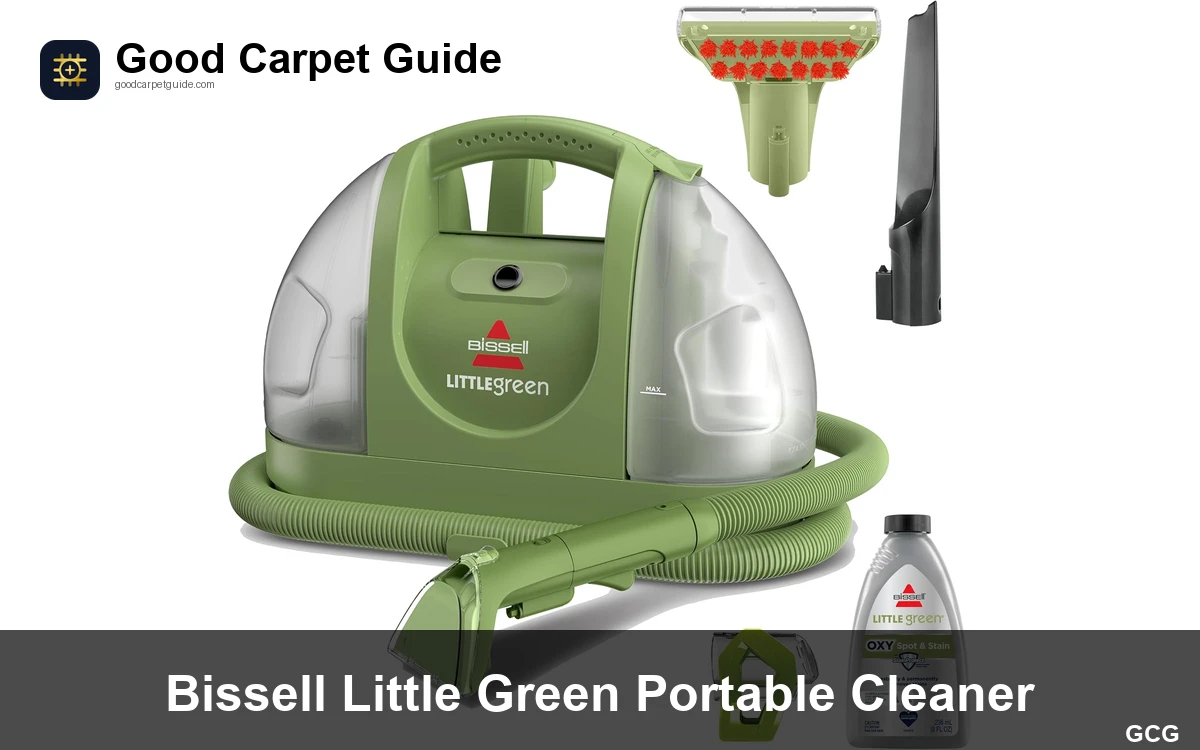
Bissell Little Green Portable Carpet Cleaner
Portable extraction improves moisture recovery for stairs, upholstery, and localized carpet cleaning.
Check Price on Amazonhow to clean carpet manually with hot water
Manual hot water cleaning depends on moisture control rather than excessive water volume. Excessive saturation increases drying time and stresses latex backing systems.
Use the following sequence:
- Mix carpet-safe detergent according to manufacturer instructions.
- Apply light misting instead of flooding the surface.
- Brush fibers gently in multiple directions.
- Blot moisture using white microfiber towels.
- Repeat until towels show minimal soil transfer.
- Dry the carpet using fans and ventilation.
The manual process removes visible soil but leaves more residue than commercial hot water extraction equipment.
how to properly steam clean a carpet
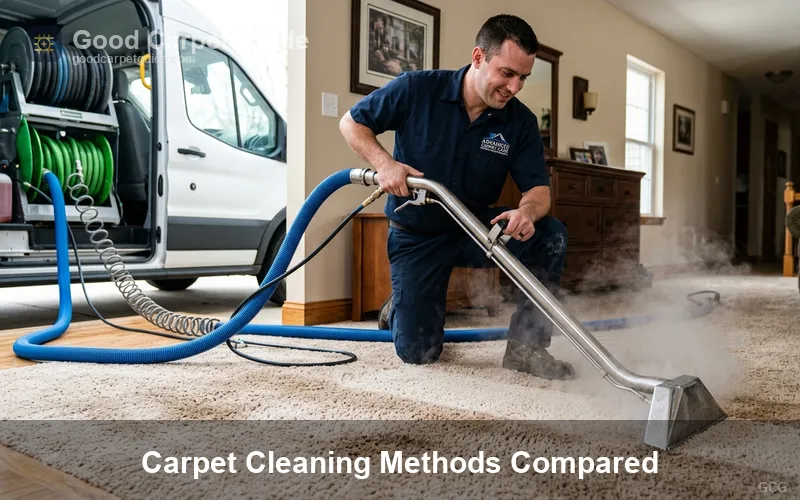
Proper carpet steam cleaning actually means hot water extraction (HWE) rather than exposing carpet directly to steam. Professional installers use the phrase "steam cleaning" even though extraction equipment injects heated water and immediately vacuums the solution back out.
Headword — Hot Water Extraction (HWE): A carpet maintenance process that injects heated cleaning solution into carpet fibers while simultaneously extracting moisture, suspended soil, allergens, and detergent residue.
Industry professionals distinguish HWE from literal steam because true steam exceeds 212°F and may damage polypropylene or olefin carpet components.
what equipment produces professional results
Professional extraction systems combine pressure, temperature, and vacuum recovery into one process.
The following table summarizes common cleaning approaches.
| Cleaning method | Water recovery | Deep soil removal | Drying speed | Typical use |
|---|---|---|---|---|
| Manual towel cleaning | Low | Limited | Moderate | Spot cleaning |
| Consumer extractor | Moderate | Moderate | Moderate | Residential maintenance |
| Truck-mounted HWE | High | High | Faster because of stronger vacuum | Professional service |
| Dry compound cleaning | Minimal moisture | Surface to moderate | Fast | Commercial applications |
Consumer machines improve results substantially over manual methods, but truck-mounted systems generate stronger lift and better residue removal.
how to perform hot water extraction correctly
A structured process minimizes residue and fiber distortion.
- Vacuum thoroughly before introducing moisture.
- Pre-treat heavy traffic lanes and visible stains.
- Operate extraction equipment using overlapping passes.
- Operate vacuum-only passes after each wet pass.
- Dry carpet completely using airflow.
- Vacuum again after drying to remove loosened grit.
Vacuuming after drying represents an overlooked maintenance step. Hot water relaxes compressed pile and releases trapped abrasive particles that become removable after fibers return to equilibrium.
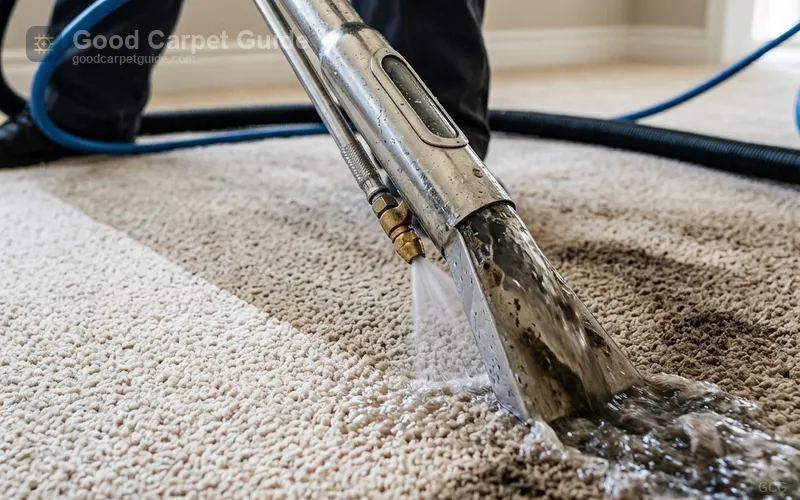
A professional extraction wand injects heated water and immediately removes suspended soil before post-drying vacuuming restores carpet pile.
Homeowners investigating structural carpet failures should also review the detailed discussion of carpet delamination problems , because excessive moisture and improper cleaning practices accelerate backing separation.
how to steam clean carpet with vacuum
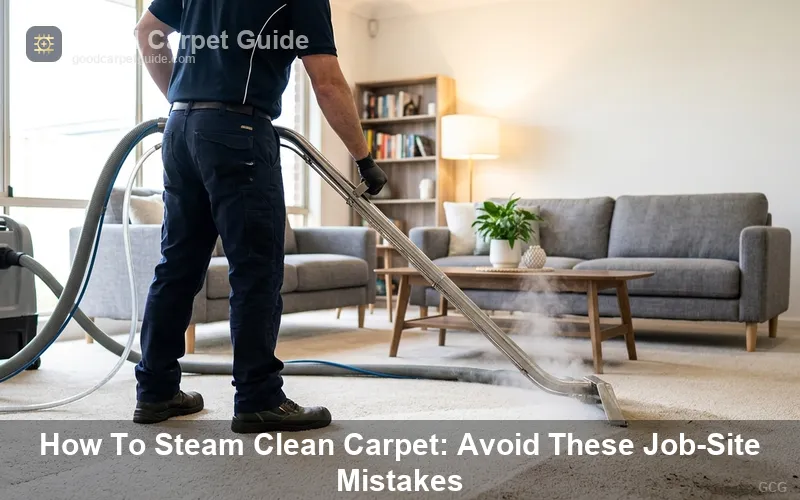
Steam cleaning with a vacuum requires an extraction vacuum rather than a standard dry vacuum. Dry household vacuums remove particulate soil but do not inject heated solution.
Headword — Extraction vacuum: A cleaning machine that sprays solution into carpet and immediately recovers water through suction.
The workflow consists of three distinct stages:
- Vacuum dry debris before extraction.
- Extract heated cleaning solution through the carpet.
- Vacuum dried carpet again after complete drying.
Many homeowners skip the final vacuuming stage. Composite installer reports identify post-drying vacuuming as a significant contributor to improved appearance because surfaced grit leaves the pile after moisture evaporation.
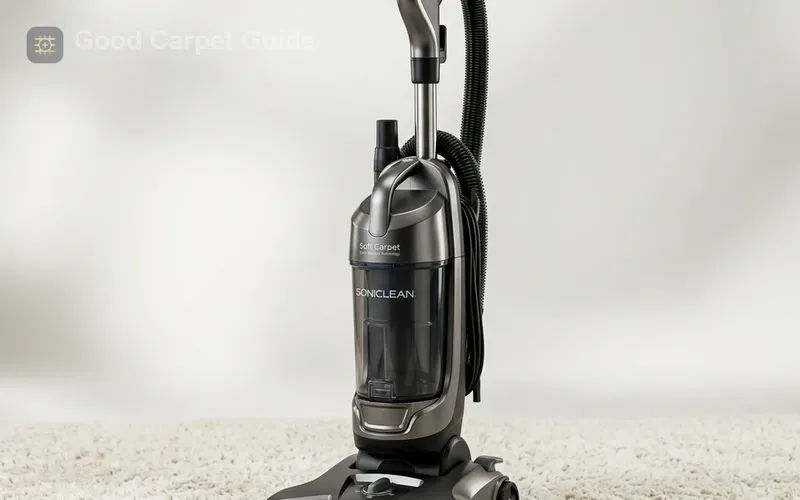
Soniclean Soft Carpet Upright Vacuum Cleaner
Soft carpet vacuum design improves dry soil removal before and after hot water extraction.
Check Price on Amazonhow to steam clean carpet with a bissell extractor
Bissell extraction machines follow the same operational sequence used by larger commercial systems.
Operate the equipment using these steps:
- Fill the clean tank with hot water and approved solution.
- Vacuum loose debris before activating spray functions.
- Pull the machine slowly while dispensing solution.
- Push the machine with suction-only passes to recover moisture.
- Empty recovery tanks before overflow occurs.
- Continue airflow until complete drying.
Slow travel speed improves extraction efficiency because suction remains over each section longer.
how long does steam cleaned carpet take to dry
Drying time depends on humidity, airflow, carpet density, and extraction quality.
The table below summarizes realistic field expectations.
| Environment | Approximate drying time |
|---|---|
| High-airflow home with fans | 6–8 hours |
| Average residential conditions | 8–12 hours |
| Dense pile with limited ventilation | 12–24 hours |
Stronger vacuum recovery consistently shortens drying time because less residual moisture remains inside the backing and cushion layers.
how to steam clean carpet with a steam cleaner
"How to steam clean carpet with a steam cleaner" depends on the type of machine. A carpet extraction machine injects heated water and removes moisture through suction, while a handheld vapor steamer produces true steam and lacks recovery capability.
Headword — Carpet extraction cleaner: A heated water cleaning system designed to flush carpet fibers and recover contaminated solution through a dedicated vacuum channel.
Many homeowners confuse floor steam mops with carpet extractors. Floor steam mops apply vapor to hard surfaces and do not remove suspended soil from textile flooring.
which steam cleaner works on carpet
Carpet-compatible machines share three functional characteristics:
- Inject heated cleaning solution.
- Recover moisture through vacuum suction.
- Operate with carpet-safe detergents.
Machines without extraction capability leave contaminants and moisture inside the pile.
Composite installer reports consistently identify residue as the technical reason behind sticky carpets after DIY cleaning. Sticky residue attracts additional airborne dust and oily soil after drying.
how often to steam clean carpets for dust mites
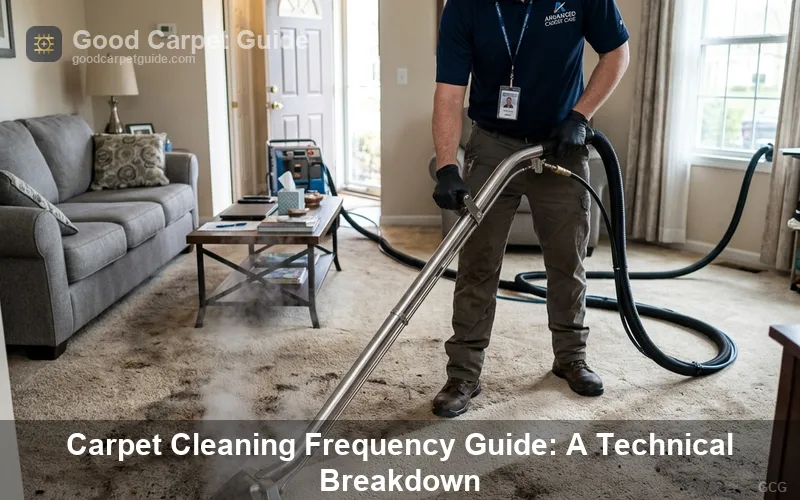
Steam cleaning frequency depends on occupancy, pets, allergies, and traffic volume. For a complete evaluation of drying times and moisture risk across extraction techniques, review our guide to carpet cleaning methods compared . Refer to our carpet cleaning frequency guide to determine the optimal interval for your specific household composition. Hot water extraction also reduces allergen accumulation by removing dust mite debris embedded inside carpet fibers.
The maintenance schedule below reflects common residential conditions.
| Household type | Recommended hot water extraction |
|---|---|
| Low traffic without pets | Every 18 months |
| Average family home | Every 12 months |
| Home with pets | Every 6–12 months |
| Allergy-sensitive occupants | Every 6 months |
Professional extraction temperatures exceed the thermal threshold required to eliminate dust mites during cleaning while simultaneously removing biological debris through vacuum recovery.
Carpet manufacturer warranty documentation frequently specifies periodic professional hot water extraction as a maintenance requirement.
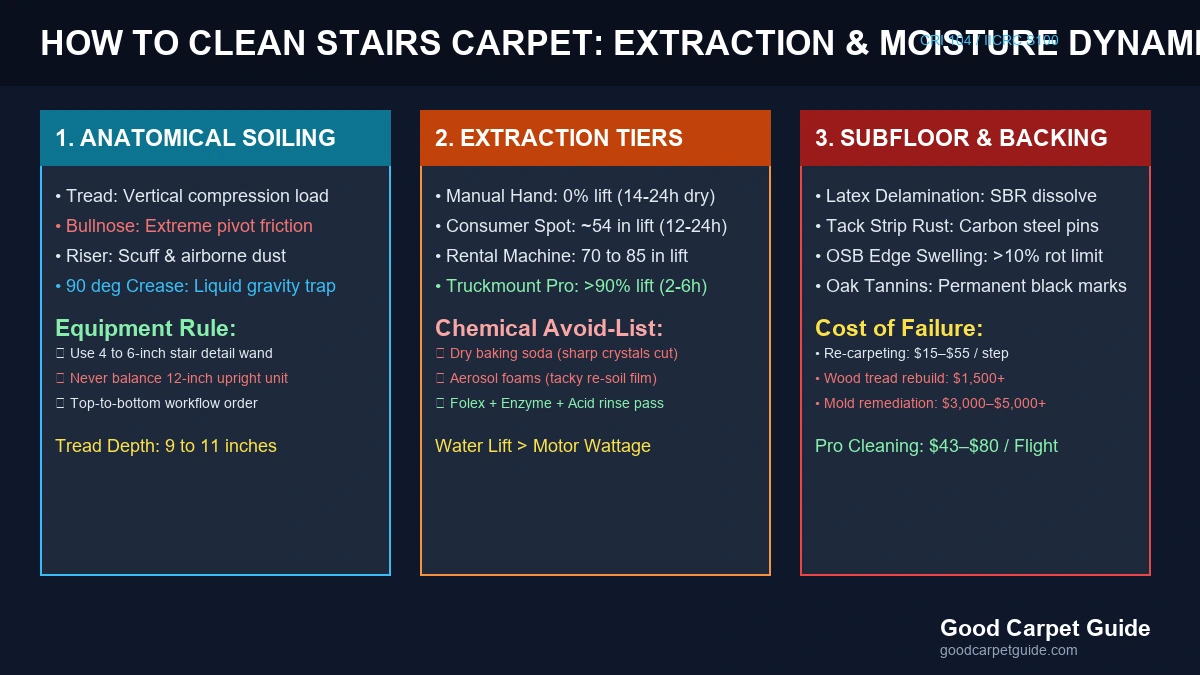
how to steam clean carpet on stairs
Steam cleaning carpeted stairs requires controlled moisture application and stable equipment placement because stair treads create uneven working positions.
Headword — Carpeted stair cleaning: A sectional extraction process performed one tread at a time while maintaining operator balance and preventing excessive water accumulation.
Follow this sequence:
- Vacuum every tread individually.
- Remove embedded hair using a metal lint scraper.
- Pre-treat visible stains.
- Clean from the highest stair downward.
- Extract moisture using multiple vacuum-only passes.
- Allow unrestricted airflow until completely dry.
The sectional method limits slip hazards and improves moisture recovery.
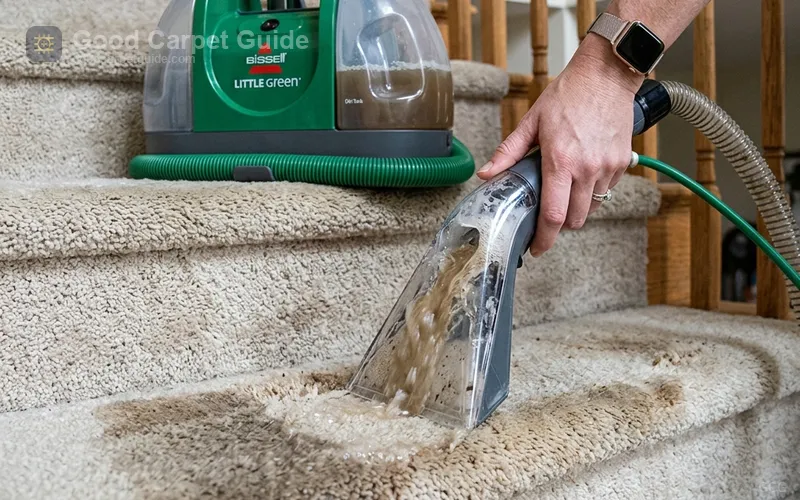
A portable extraction unit cleans one stair tread at a time before controlled drying restores pile alignment and minimizes residual moisture.
Homeowners evaluating replacement instead of cleaning should compare construction options in the detailed best carpet for stairs guide , especially for high-traffic staircase.
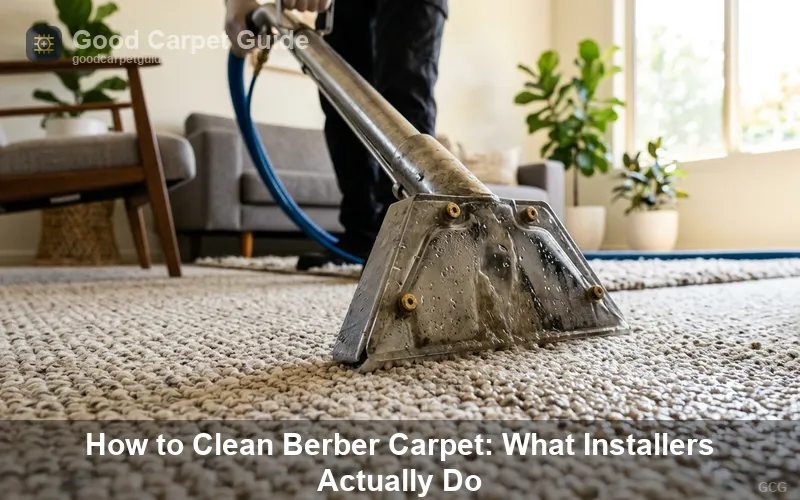
how to steam clean berber carpet
Berber carpet requires reduced moisture and gentle agitation because loop construction behaves differently than cut-pile carpet.
Headword — Berber carpet: A loop-pile carpet construction manufactured from nylon, olefin, wool, or blended fibers using continuous loops instead of cut tufts.
Proper Berber cleaning includes:
- Vacuuming before extraction.
- Using approved low-residue detergent.
- Limiting aggressive brushing.
- Performing additional vacuum recovery passes.
- Drying rapidly with air movement.
Aggressive scrubbing distorts loop orientation and increases snag risk.
how to steam clean carpet in car
Automotive carpet cleaning combines vacuuming, spot treatment, extraction, and rapid drying because enclosed vehicle interiors retain moisture longer than residential rooms.
The recommended workflow follows these steps:
- Remove floor mats.
- Vacuum loose debris thoroughly.
- Apply spot cleaner to localized stains.
- Extract using a portable upholstery machine.
- Dry using open doors and airflow.
Vehicle carpet backing contains adhesives that deteriorate under prolonged moisture exposure.
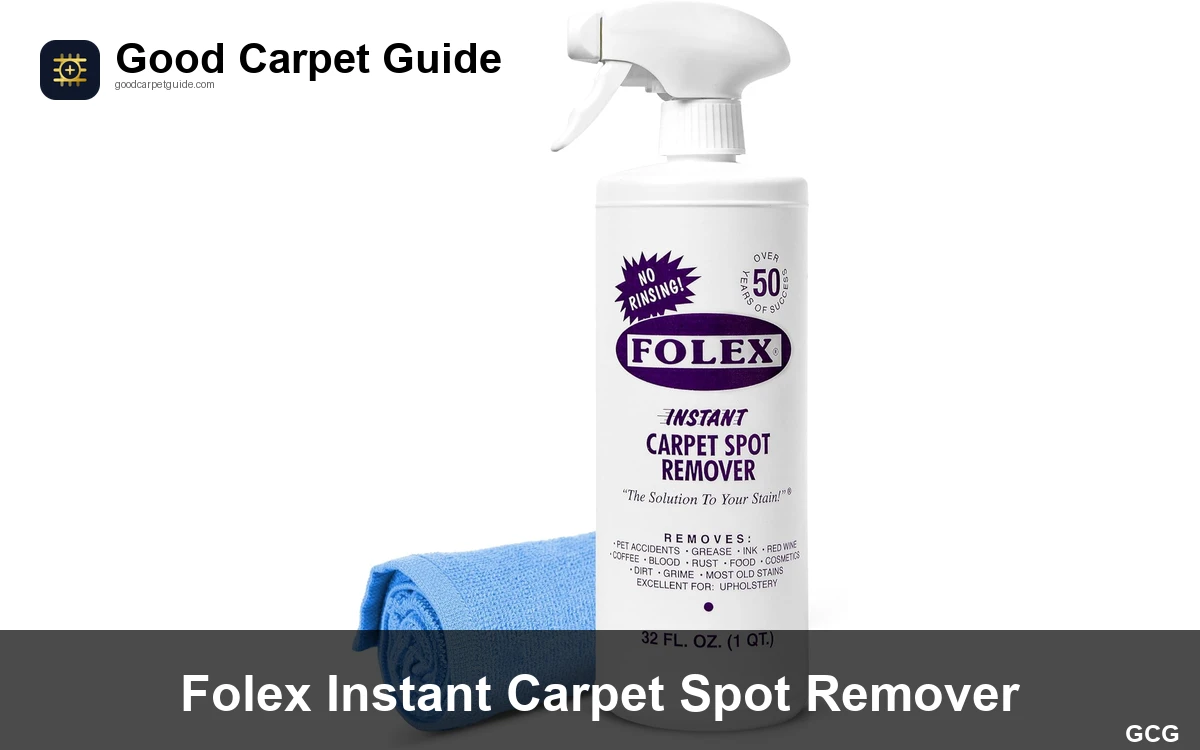
Folex Instant Carpet Spot Remover
Effective localized stain treatment before hot water extraction on residential and automotive carpet.
Check Price on Amazonhow do real homeowners describe steam cleaning results
Composite homeowner reports reveal recurring technical patterns rather than isolated anecdotes.
The most frequently reported field observations include:
- Report sticky residue after excessive detergent use.
- Report rapid re-soiling after incomplete rinsing.
- Report improved results after vacuuming dried carpet.
- Report frustration with repeated water tank refills on portable stair machines.
- Report higher satisfaction after switching from rental units to dedicated extraction equipment.
The common engineering factor across these observations involves moisture recovery rather than water application. Extraction performance determines long-term cleanliness more than spray volume.
One recurring homeowner observation describes carpets becoming tacky after drying. Installers consistently attribute that condition to detergent residue remaining inside fibers instead of complete solution recovery.
why do carpet warranties specify professional hot water extraction
Major carpet manufacturers include maintenance clauses because embedded soil accelerates abrasive wear and pile distortion.
Headword — Maintenance warranty requirement: A documented obligation requiring scheduled cleaning procedures to preserve warranty eligibility.
Many manufacturer documents specify professional hot water extraction every 12 to 18 months by an IICRC-certified technician.
The table below summarizes the relationship between maintenance and warranty preservation.
| Maintenance practice | Warranty impact |
|---|---|
| Professional hot water extraction at required intervals | Supports compliance documentation |
| Failure to maintain cleaning records | Risks warranty disputes |
| Excessive residue from improper DIY cleaning | Accelerates appearance loss |
| Chronic over-wetting | Increases backing deterioration risk |
Maintenance receipts provide objective documentation if texture retention or manufacturing claims require future evaluation.
Homes located below grade deserve separate consideration because moisture migration through concrete slabs affects carpet systems differently. The technical discussion in the best carpet for basement guide explains why vapor management influences long-term performance.
how much does it cost to have carpet steam cleaned
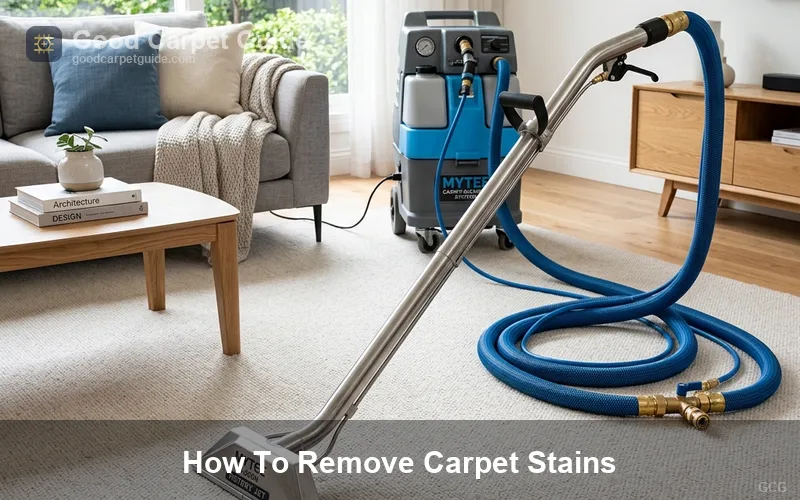
Steam cleaning costs vary by provider, equipment type, and project scope. The research data also highlights the economic trade-off between rental equipment and ownership.
| Cleaning option | Reported cost |
|---|---|
| Rug Doctor rental | $25–$35 per day |
| Consumer extraction machine purchase | $130–$300 |
| Professional labor for a single 10×10 carpet installation reference | Approximately $600 |
The economic comparison extends beyond direct pricing. Equipment pickup, transportation, scheduling, and cleaning time represent indirect costs that many homeowners overlook when comparing rental and ownership models.
Bedrooms with dense cut-pile constructions particularly benefit from scheduled extraction because body oils accumulate gradually in sleeping environments. Material selection guidance appears in the detailed best carpet for bedrooms resource .
frequently asked questions
Homeowners frequently ask specific questions about manual methods, pet households, and equipment operation.
how to steam clean your own carpet
Steam cleaning your own carpet requires a consumer hot water extraction machine, thorough pre-vacuuming, controlled detergent use, overlapping extraction passes, and complete drying before foot traffic resumes.
Successful DIY extraction follows five core actions:
- Vacuum dry debris first.
- Pre-treat localized stains.
- Extract slowly using overlapping passes.
- Recover additional moisture using vacuum-only passes.
- Vacuum again after complete drying.
The final vacuuming stage removes grit that rises as compressed fibers recover.
how to steam clean my carpet if pets live in the home
Pet households require additional dry soil removal before extraction because hair blocks suction and reduces cleaning efficiency.
Use the following sequence:
- Remove pet hair with a lint scraper.
- Vacuum repeatedly in multiple directions.
- Treat urine spots separately before extraction.
- Rinse detergent completely from fibers.
- Dry rapidly using fans.
Complete residue removal prevents accelerated re-soiling caused by detergent remaining inside the pile.
how to use steam cleaner to clean carpet safely
Safe carpet cleaning depends on matching equipment to carpet construction.
Operate extraction equipment according to manufacturer guidance while avoiding excessive moisture application. Excessive saturation increases drying time and places additional stress on secondary backing adhesives.
True vapor steam devices intended for tile floors should not replace extraction equipment for wall-to-wall carpet maintenance.
how to steam clean the carpet without leaving residue
Residue remains inside carpet when detergent concentration exceeds extraction capacity.
Reduce residue by following these practices:
- Measure detergent precisely.
- Perform multiple extraction passes.
- Perform additional suction-only passes.
- Avoid oversaturating traffic lanes.
- Dry carpet completely before use.
Composite installer observations consistently identify detergent residue as the technical cause behind sticky carpets that attract dirt shortly after cleaning.
how much does professional steam cleaning cost compared with buying equipment
Professional pricing varies by region and project size, while ownership requires upfront investment.
The simplified comparison below summarizes research values.
| Option | Typical reported cost |
|---|---|
| Rug Doctor rental | $25–$35/day |
| Consumer extraction purchase | $130–$300 |
| Commercial-grade ownership | Higher initial investment with repeated long-term use |
Households cleaning multiple times per year frequently recover purchase costs over repeated maintenance cycles, while occasional users may prefer rental or professional services.
key installer recommendations for long-term carpet performance
Field experience identifies maintenance habits as the primary determinant of appearance retention. Field experience also demonstrates that cleaning technique matters more than detergent branding.
The highest-impact recommendations include:
- Vacuum before every extraction session.
- Remove embedded pet hair before introducing moisture.
- Use low-residue carpet detergent.
- Perform additional vacuum-only extraction passes.
- Dry carpet using active airflow.
- Vacuum again after drying.
- Keep professional cleaning records for warranty purposes.
These maintenance practices reduce abrasive soil accumulation, improve fiber recovery, preserve backing integrity, and align with common manufacturer maintenance expectations.
final summary
How to steam clean carpet correctly means performing hot water extraction rather than applying literal steam. Hot water extraction combines heated solution injection with immediate vacuum recovery, limiting residue while removing embedded soil and allergens.
Composite installer reports repeatedly highlight three avoidable mistakes: excessive detergent use, inadequate moisture recovery, and skipping the final post-drying vacuuming stage. Homeowners who follow a structured process, maintain airflow during drying, and document periodic professional cleaning preserve carpet appearance longer and remain better positioned to satisfy manufacturer warranty maintenance requirements.