A flooring contractor in suburban Chicago learned the true cost of misapplying a carpet protector during an extensive home renovation. To protect a first-floor broadloom installation from drywall dust and paint splatters, the crew rolled out a standard pressure-sensitive adhesive plastic film. Due to construction delays during a hot summer, the film remained on the carpet for nine weeks. When workers finally attempted to peel the film, the acrylic adhesive had cross-linked with the synthetic nylon fibers under ambient heat. The film shredded into jagged strips, tearing face tufts clean out of the primary backing and leaving a gummy residue that attracted every grain of tracked-in soil. Restoring the floor required replacing 1,200 square feet of carpet at a cost of 6,800, turning a60 protective roll into a total flooring loss.
Carpet protection is not a generic precaution. True carpet protection is an engineered match between hazard type, fiber chemistry, deployment duration, and anchor physics. Applying the wrong physical barrier causes more permanent destruction to carpet backing, latex adhesives, and yarn tufts than the traffic hazards it was intended to guard against.
four Primary Physical Carpet Protector Categories
Physical carpet protectors function through either chemical adhesion (temporary adhesive films) or mechanical grip (vinyl gripper teeth, friction foam backings, or fasteners). Selecting the correct protector depends on whether your project demands short-term renovation defense, daily high-traffic soil reduction, or heavy furniture load distribution.
The table below defines the four primary physical carpet protector categories by deployment window, anchoring mechanism, cost per square foot, and primary failure risk.
| Protector Category | Safe Deployment Window | Anchoring Mechanism | Material Cost ($/sq ft) | Primary Failure Risk | Ideal Application |
|---|---|---|---|---|---|
| Self-Adhesive Plastic Film (LDPE) | 30 – 45 days maximum | Pressure-sensitive acrylic adhesive | 0.10 –0.25 | Adhesive cross-linking and fiber pull | Painting, remodeling, moving days |
| Rigid Clear Vinyl Runners | Indefinite (permanent) | 0.100" – 0.150" PVC gripper teeth | 0.90 –1.15 | Pile crushing under long-term teeth weight | High-traffic hallways, office paths |
| Breathable Fabric / Foam Runners | 12 – 24 months (washable) | Non-slip textured foam friction | 0.40 –0.75 | Creep migration on steep stair slopes | Daily pet traffic, entryway slush |
| Mechanical Barriers (Ram Board / Luan) | Project duration | Staples or screws through riser wood | 0.15 –0.35 | Puncture if fasteners hit subfloor wiring | Heavy demolition, appliance transit |
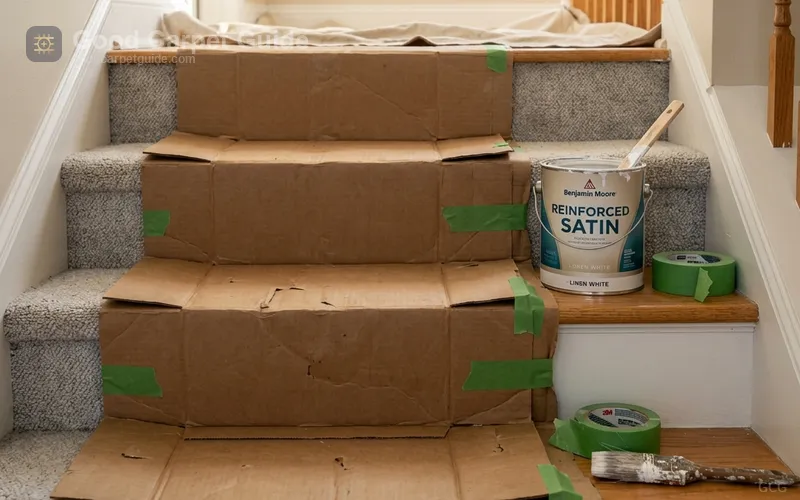
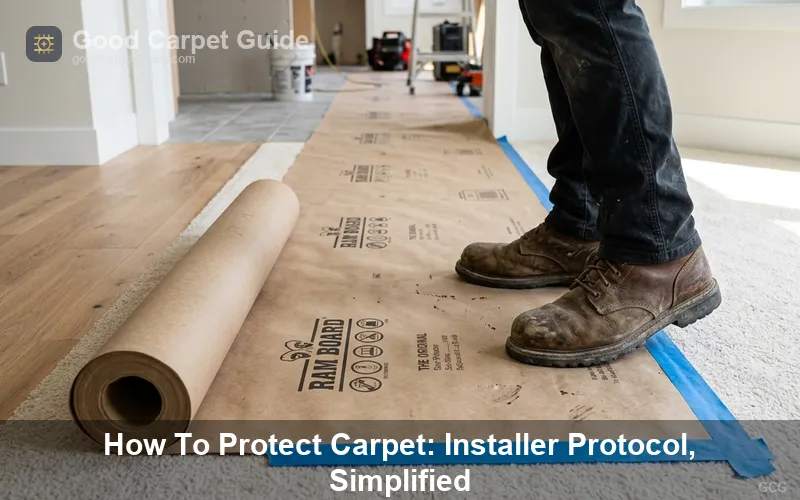
A mechanical cardboard barrier covers both the tread surface and vertical riser face during interior painting, eliminating adhesive contact while absorbing paint splatters and heavy workboot impacts.
adhesive Protection Films: Chemistry, Limits, and Application Rules
Temporary self-adhesive carpet films constructed from linear low-density polyethylene (LDPE) are industry standards on active job sites. When used correctly, they form an impervious waterproof shield against paint drips, tracked-in mud, and drywall dust. When misused, they destroy broadloom carpet.
The 30-Day vs 45-Day Hard Limit
Adhesive carpet films rely on pressure-sensitive acrylic adhesive coatings. Unlike painter's tape, which uses mild rubber adhesives, carpet film adhesive must grip flexible, uneven carpet fibers under heavy foot traffic. Over time, exposure to oxygen, UV light, and heat causes acrylic polymer chains to cross-link, chemically fusing the adhesive into synthetic face fibers.
- Standard commercial films (such as Surface Shields Carpet Shield) carry a strict 30-day maximum deployment limit.
- Premium films (such as TapeManBlue) are rated for up to 45 days.
- Never leave adhesive films in place beyond the manufacturer's stated window. If your project extends past 30 days, pull up the existing film, vacuum the pile thoroughly, and lay down fresh film.
The Summer Heat Accelerator
Ambient temperature directly dictates adhesive stability. If a home renovation takes place during summer weather where indoor temperatures exceed 85°F, or if direct sunlight beats down through south-facing windows, the rate of acrylic cross-linking doubles. Under high heat conditions, cut your safe deployment window in half: pull and replace 30-day films after 15 days to eliminate adhesive transfer risk.
Three Critical Installation Prohibitions
To avoid voiding your carpet warranties and ruining your flooring foundation, obey these three installer rules:
- Never apply adhesive film to wool or natural fiber carpet: Adhesive film manufacturer documentation explicitly bans use on wool, sisal, jute, and oriental rugs. The aggressive acrylic adhesive pulls the natural protein fibers out of the spun yarn structure during removal, causing permanent fuzzing and bald patches.
- Never apply film over damp or freshly steam-cleaned carpet: Trapping moisture beneath non-breathable polyethylene raises relative humidity inside the backing above 18%, triggering active mold and mildew colonization within 48 to 72 hours. Furthermore, moisture dissolves the water-based tackifiers in the film, leaving a gummy white residue across the floor.
- Never apply film within 72 hours of new carpet installation: Freshly installed carpet and adhesives require at least 72 hours to off-gas volatile organic compounds (VOCs) and allow SBR latex adhesives to cure. Sealing new carpet under plastic traps off-gassing solvents, liquefying both the carpet backing and the film adhesive.
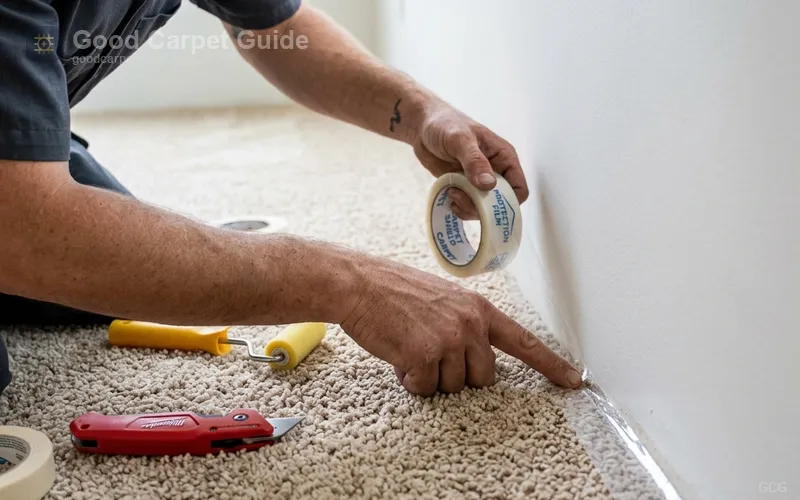
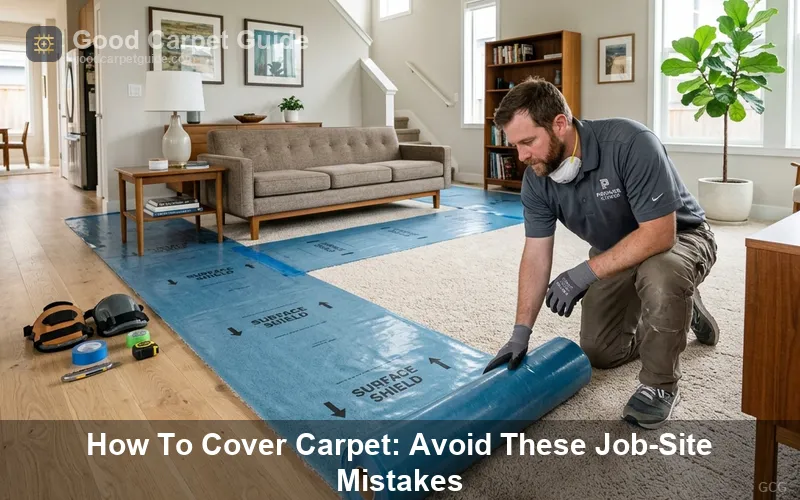
Professional reverse-wound carpet protection film unrolls with the adhesive facing downward, allowing installers to kick the roll forward while maintaining smooth, tensioned surface adhesion.
Reverse-Wound Roll Mechanics
Always purchase reverse-wound carpet film. On reverse-wound rolls, the tacky adhesive side faces the outside of the roll. This allows a single worker to place the roll on the floor and simply kick it forward with their foot. Standard-wound rolls require two workers: one to hold the roll in the air while the other stretches and hand-presses the film downward.
high-Traffic Surface Runners: Rigid Vinyl vs Breathable Fabric
For long-term daily residential protection against muddy paws, wet shoes, and hallway wear corridors, temporary films are inappropriate. Homeowners must deploy durable surface runners designed for multi-year traffic resistance.
Rigid Vinyl Runners with Gripper Teeth
Clear vinyl runners protect high-wear transit corridors between kitchens, entryways, and living rooms without hiding carpet color.
- The Pile Depth Rule: Flat-backed plastic runners slide and bunch dangerously on plush or textured carpets because flexible tufts deflect sideways under foot shear. Safe vinyl runners feature molded PVC gripper teeth measuring 0.100 to 0.150 inches in length.
- These small teeth seat down between individual yarn tufts, anchoring into the backing structure to prevent horizontal slip without puncturing the primary backing.
- On high-pile carpets exceeding 1/2-inch thickness, choose extra-long gripper teeth to ensure stable footing.
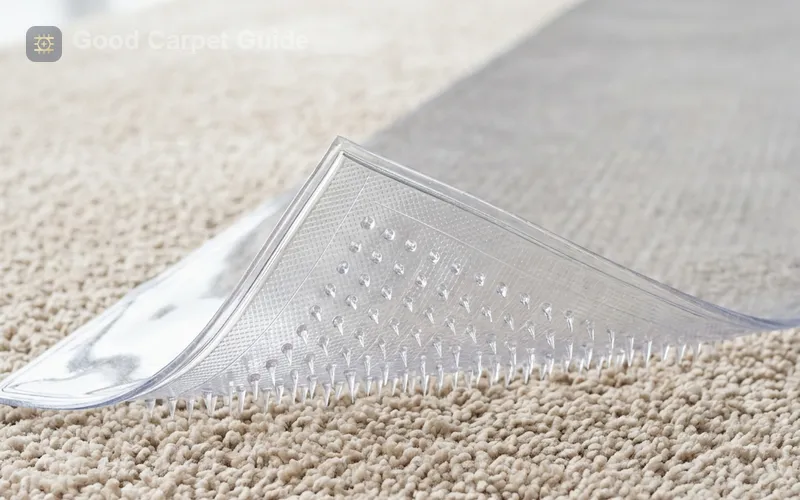
Resilia Clear Vinyl Carpet Protector Runner
Heavy-duty clear vinyl runner with 0.150-inch gripper teeth engineered to anchor into deep-pile broadloom without sliding under heavy traffic.
Check Price on AmazonBreathable Cotton-Polyester Fabric Runners
While vinyl runners excel in dry hallways, they create condensation hazards in snowy or wet climates. When tracked-in slush and melting snow sit on non-breathable vinyl, water seeps past the runner edges and pools underneath, staining carpet pile and rotting cushion foam.
- Breathable fabric runners (such as CarpetSaver) combine an absorbent cotton-polyester face with a flexible non-skid foam backing.
- Moisture evaporates naturally through the fabric weave instead of remaining trapped in the carpet pile.
- The entire runner is machine-washable at standard wash temperatures up to 104°F, making it ideal for winter entryways and muddy dog corridors.
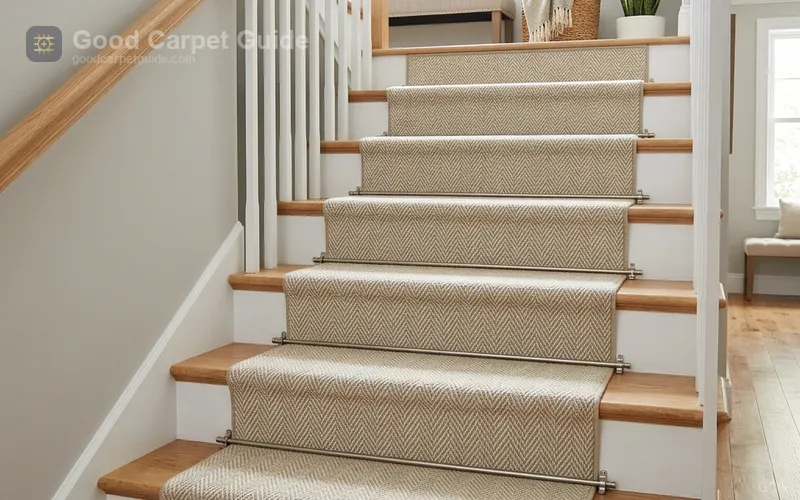
CarpetSaver Non-Slip Carpet Protector Runner
Breathable cotton-polyester fabric runner with slip-resistant foam backing, fully machine-washable for active pets and high-soil entryways.
Check Price on Amazonfurniture Indentation Defense and Movement Sliders
Heavy furniture constitutes a severe, permanent mechanical threat to residential carpet systems. Sofas, bookcases, pianos, and bedframes exert localized point loads exceeding 200 pounds per square inch (psi) on narrow furniture legs.
The Physics of Pile Crushing and Backing Delamination
When a 250-pound sectional rests on four 1-inch wooden feet, that continuous mechanical pressure compresses carpet pile beyond its elastic yield point. The SBR latex adhesive bonding the primary tufting cloth to the secondary polypropylene backing gets pulverized into crumbly white powder, a permanent failure mode known as backing delamination. Review our comprehensive forensic analysis on carpet delamination causes to see how backing structural failures develop.
Point Load Compression vs Weight Distribution:
Narrow Furniture Leg (1" x 1"):
   [ 250 lbs Load ]
          ||
          \/
      [ 1 sq in ]  --> Pressure = 250 PSI (Crushes latex adhesive, cuts backing fibers)
===================================================

Caster Cup / Coaster (4" x 4"):
   [ 250 lbs Load ]
      /        \
     /          \
   [  16 sq in  ]  --> Pressure = 15.6 PSI (Preserves tuft rebound & cushion integrity)
===================================================
Furniture Caster Cups and Coasters
To safeguard carpet from permanent divots:
- Install wide rubber or rigid plastic caster cups under all heavy furniture feet. A 4-inch round cup increases surface contact area sixteen-fold, reducing localized downward pressure from 250 psi to under 16 psi.
- Choose cups with spiked undersides for carpeted surfaces; smooth-bottom cups slide across deep pile, creating tip hazards for tall dressers and bookshelves.
Moving Sliders: Felt vs Smooth PTFE Plastic
Dragging heavy furniture across broadloom carpet without sliders rips seam tape welds and pulls stretched carpet off perimeter tack strips.
- For moving across carpet: Use hard, smooth PTFE plastic sliders. The low-friction plastic glides effortlessly over carpet yarn loops without snagging fibers or straining seams.
- Avoid felt pads on carpet: Felt pads are engineered strictly for hardwood, laminate, and vinyl. On carpet, felt creates high friction that drags and rolls off furniture feet.
job-Site, Moving, and Paint Protection Protocols
During home remodeling, appliance delivery, or whole-house repaints, standard homeowner precautions often cause catastrophic falls or floor damage.
The Fall Hazard of Canvas Drop Cloths
Traditional canvas and polythene drop cloths are treacherous on carpeted stairs and hallways. Canvas lacks grip against slick synthetic pile. When workers carrying heavy toolboxes or furniture step onto loose drop cloths, the fabric slides out from underfoot like a sled.
- Always use self-adhering reverse-wound plastic film or fitted corrugated board on stairs.
- For heavy appliance transit (refrigerators, washers, safes), lay down 1/4-inch luan plywood sheets along the rolling path. Plywood prevents appliance dolly wheels from crushing underlayment foam or tearing broadloom seams.
Ram Board Stair Armor for Heavy Renovation
For projects involving heavy demolition, scaffolding, or daily workboot traffic on stairs, thin plastic films provide zero impact protection against dropped hammers or falling scrap wood.
- Ram Board Stair Armor utilizes dense, recycled corrugated fiberboard pre-creased to cover the horizontal tread, the vertical riser, and the rounded bullnose nose in a single continuous piece.
- It features integrated Spill Guard technology that prevents paint spills and tracked-in chemicals from penetrating through to the carpet below.
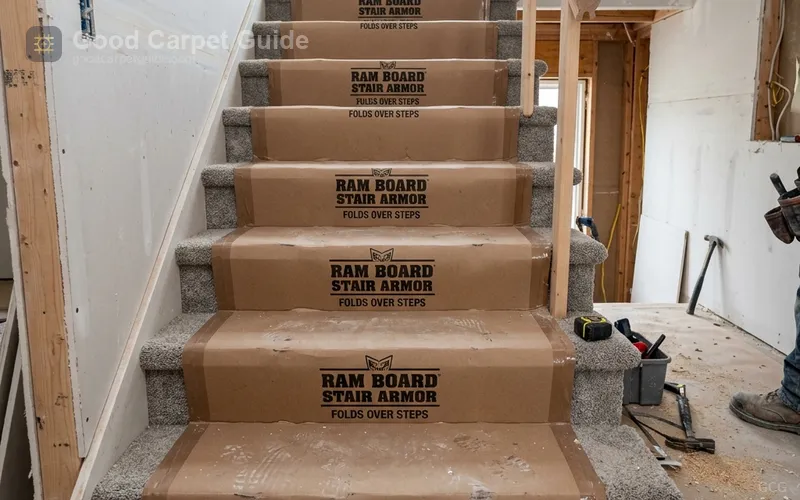
Ram Board Stair Armor Heavy Duty Stair Protection
Heavy-duty corrugated fiberboard with Spill Guard technology designed to protect treads, risers, and bullnoses during construction.
Check Price on Amazonstair Defense and Pet Scratching Solutions
Stairways represent the most vulnerable architectural feature in any carpeted residence. Stairs concentrate foot strike forces onto a narrow 4-inch path, while domestic cats routinely exploit stair edges as natural scratching posts.
The Bullnose and Riser Scratching Problem
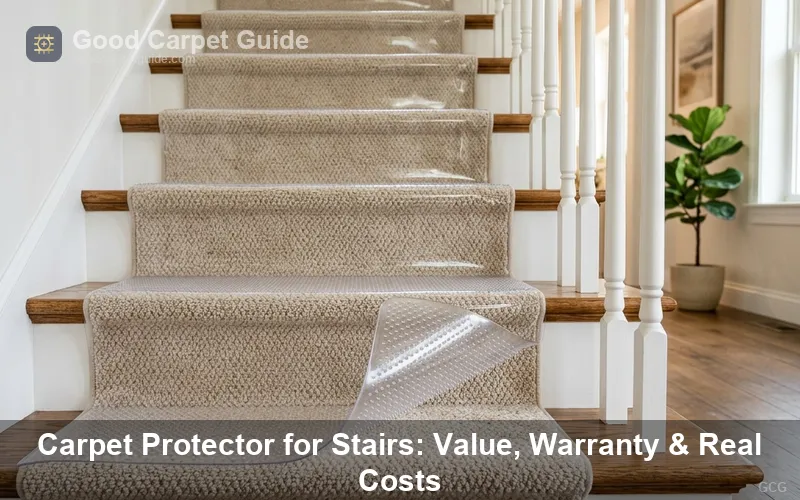
Standard tread mats only protect the flat horizontal tread surface. Domestic cats do not scratch the flat tread; they hook their claws into the rounded bullnose and pull downward along the vertical riser. Standard vinyl tread protectors leave both of these critical areas completely exposed.
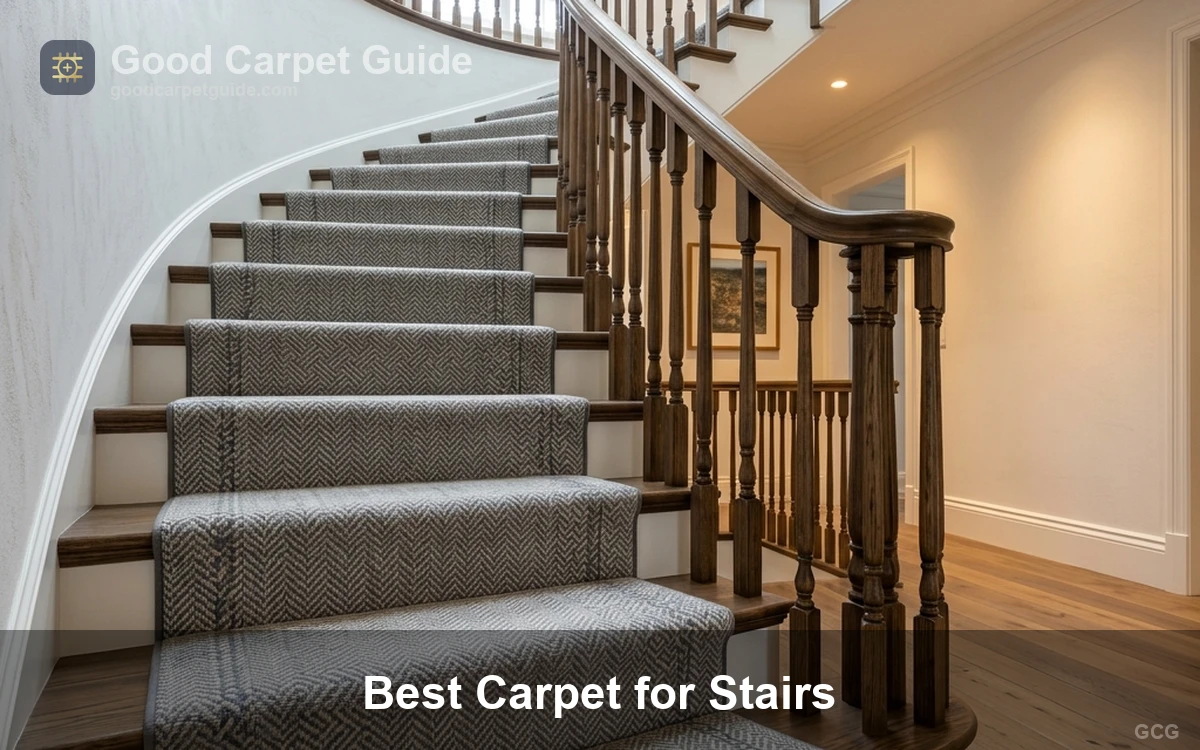
For detailed stair fiber durability ratings and wrapping mechanics, consult our authoritative guide on best carpet for stairs .
Pet Ingestion Hazards of Loose Film Edges
Never use temporary plastic film on stairs in households with curious pets. When claws puncture adhesive film, the plastic shreds into thin ribbons. Cats and puppies chew and ingest these loose plastic strips, creating severe gastrointestinal blockage risks. For stairs with active pets, rely on rigid vinyl runners fastened with mechanical stair rods or fitted Ram Board barriers during remodeling.
installer vs Manufacturer Warranty Pitfalls
Carpet manufacturers impose strict limitations on protective products and cleaning protocols. Violating these terms forfeits your 10-to-25 year wear and texture retention coverage.
Carpet Protection Decision Tree:
                What is your primary protection goal?
                                  |
         +------------------------+------------------------+
         |                                                 |
[ Renovation / Painting ]                       [ Daily Residential Traffic ]
         |                                                 |
Deployment length?                              Location & hazard?
  • < 30 Days: Reverse-Wound LDPE Film            • Hallway / Pets: Breathable Fabric Runner
  • > 30 Days: Ram Board / Cardboard Barrier      • High-Wear Stairs: Rigid Vinyl (Gripper Teeth)
  • Natural Fibers: Cardboard Only (NO FILM!)     • Heavy Furniture: Spiked Caster Cups (No Divots)
The Consumer Steam Cleaner Trap
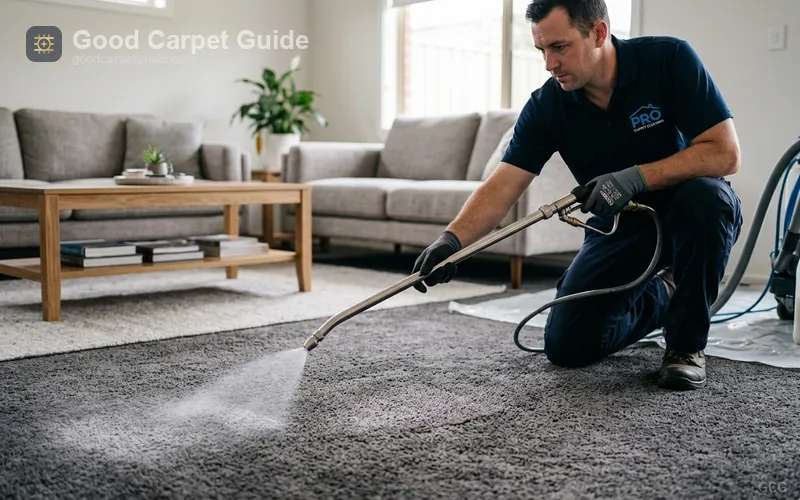
Many homeowners believe steam cleaning removes adhesive film residue or heavy hallway traffic grime. However, consumer rental machines (such as grocery store rentals) flood the carpet with excessively hot water and lack adequate vacuum airflow to extract the solution. This heat cooks residual film adhesives into the backing and dissolves factory fluorochemical stain treatments. Major carpet mills require professional Hot Water Extraction (HWE) performed by an IICRC-certified professional every 12 to 18 months. Compare chemical and mechanical cleaning methods in our comprehensive review of carpet protector vs scotchgard .
Underlayment Density Thresholds
Protective runners cannot compensate for inadequate underlayment beneath the carpet. Installing low-density foam cushion causes carpet backing to flex excessively under foot traffic, accelerating fiber fatigue. Quality residential installations require an underlayment with a minimum density of 8 pounds per cubic foot. Review our master reference on carpet padding options to ensure your foundation supports long-term surface protection.
frequently Asked Questions
Review these contractor-verified answers to resolve common budgeting, measuring, and installation questions before requesting formal contractor bids.
How long can adhesive carpet protector film stay down safely?
Adhesive carpet protector film can safely remain on synthetic broadloom carpet for a maximum of 30 days for standard commercial products and 45 days for premium films like TapeManBlue. Leaving film in place longer causes the acrylic adhesive to cross-link with synthetic carpet fibers, leaving an impossible-to-remove sticky residue. In temperatures exceeding 85°F or in direct sunlight, replace film every 14 to 15 days.
Can I put plastic carpet protection film on wool carpet?
Never apply adhesive plastic protection film to wool, sisal, or natural fiber carpet. The acrylic adhesive chemically bonds to delicate natural protein fibers and tears the pile during removal, causing permanent damage and voiding the carpet manufacturer's warranty. For wool carpets, use breathable canvas drop cloths, heavy cardboard, or Ram Board without adhesive backings.
How do I prevent heavy furniture from leaving permanent carpet dents?
Prevent permanent furniture dents by placing wide, rigid caster cups with spiked undersides beneath all furniture legs. A 3-to-4-inch coaster distributes downward point loads across 10 to 16 square inches of carpet surface, keeping localized pressure under 20 psi and preventing permanent latex adhesive pulverization.
What is the safest way to protect carpeted stairs during painting?
The safest way to protect carpeted stairs during painting is by installing pre-formed corrugated fiberboard protectors, such as Ram Board Stair Armor, secured with painter's tape along the riser wood. Corrugated board covers the tread, bullnose, and riser without using adhesives on the carpet pile, eliminating adhesive residue risks while providing heavy-duty paint drip protection.
How do I remove sticky adhesive residue left by old carpet film?
To remove sticky adhesive residue left by carpet film, apply a citrus-based solvent adhesive remover or mineral spirits lightly onto a clean white microfiber cloth, never directly onto the carpet. Gently blot the affected fibers from the base upward. After the adhesive softens, extract the area with warm water and a portable carpet spot cleaner, and groom the pile with a carpet rake.
conclusion: Engineering Your Flooring Defense
Physical carpet protectors are essential tools for preserving broadloom investments, but their deployment must adhere to strict engineering constraints:
- Match the protector to the timeline: deploy reverse-wound LDPE films for under 30 days, mechanical board barriers for extended renovations, and washable fabric runners for daily pet traffic.
- Never apply adhesive films to wool broadloom, damp pile, or newly installed carpet within 72 hours of installation.
- Anchor high-traffic vinyl runners with 0.150-inch PVC gripper teeth to prevent dangerous slip hazards on pile deeper than 3/8 inch.
- Distribute heavy furniture point loads using spiked caster cups to shield SBR latex adhesives from permanent crushing and backing delamination.