Best carpet for allergies selection depends on fiber type, backing construction, and padding density rather than marketing claims alone. Savaş Ateş has inspected carpet installations across hundreds of allergy-sensitive households, and the pattern repeats: the best carpet for allergies traps particulate matter in its pile instead of releasing it into the breathing zone. This guide covers fiber selection, padding chemistry, real installer conflicts with manufacturer marketing, and the cost data behind hypoallergenic flooring decisions.
TL;DR Recommendation Matrix
| Scenario | Recommended Fiber | Recommended Backing/Pad | Avoid |
|---|---|---|---|
| Dust mite-prone households | Solution-dyed BCF Nylon 6,6, low pile loop | Sealed synthetic backing + 10 lb. moisture-resistant pad | Deep plush "silk" polyester |
| Asthma with pet dander | Wool or nylon, tight twist, low pile | Latex-free fused backing (e.g., Mohawk Air.o) | Rebond padding with recycled foam scraps |
| Budget-limited allergy households | PET polyester (EverStrand-type) | Healthier Choice-type high-density foam pad | Cheap multi-color rebond pad |
| Basement or slab-on-grade installs | Wool or nylon with moisture-tolerant backing | Breathable moisture-barrier pad, not sealed foil pad | Non-breathable vapor-trapping pad |
| Rental or high-turnover units | Solution-dyed nylon Berber loop | Firm 6-8 lb. density pad | Ultra-soft high pile that mats within a year |
Verified against Carpet and Rug Institute (CRI) 105 residential installation standards and IICRC S100 cleaning guidelines.
what carpet is best for dust allergies
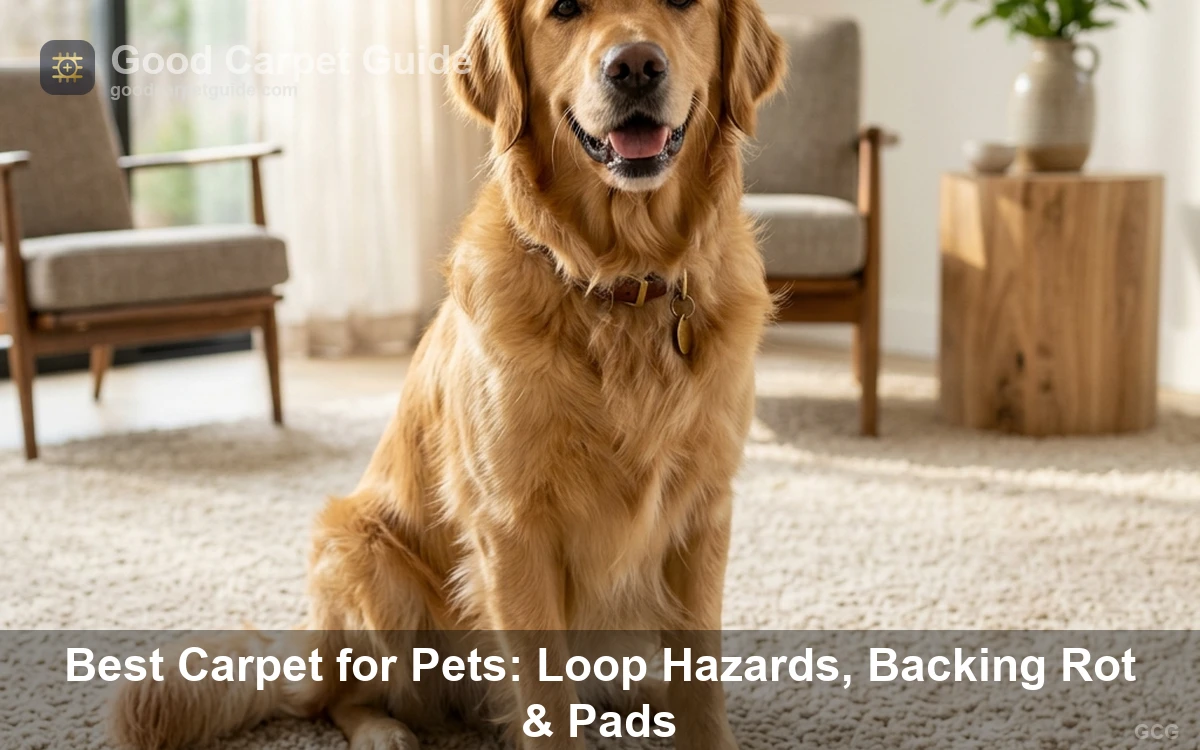
Low-pile, tightly twisted nylon loop carpet performs best for dust allergies because dense fiber packing limits the depth dust penetrates into the pile bed. Dust mite fecal matter and skin flakes settle into open, high-pile fibers more readily than into a compact loop construction. Savaş Ateş has inspected homes where switching from a 1-inch plush pile to a Berber-style loop reduced visible dust recirculation after vacuuming within the first month.
Standard upright vacuums remove only surface-level debris in a single pass, leaving an estimated 30% reservoir of embedded dust and dander lodged in the backing structure, according to field data from IICRC-certified cleaning technicians. Walking across the floor re-suspends this reservoir into the breathing zone. Low-pile nylon minimizes this reservoir effect because the fiber has less depth to hold particulate.
Dust allergy management also depends on vacuum equipment matched to the pile type. Dense, fine-fiber "silk" polyester carpets seal against high-suction vacuum heads, choking airflow and preventing the brush roll from rotating properly, which leaves embedded dust behind despite repeated passes.
Dust-Reduction Checklist for Existing Carpet:
- Vacuum in slow, overlapping passes at least twice weekly using a beater-bar vacuum rated for the pile height.
- Schedule hot water extraction cleaning every 12 to 18 months through an IICRC-certified technician.
- Replace HVAC filters on a 60- to 90-day cycle to reduce redeposited airborne dust.
- Inspect padding for compaction annually, since flattened pad reduces the carpet's filtering depth.
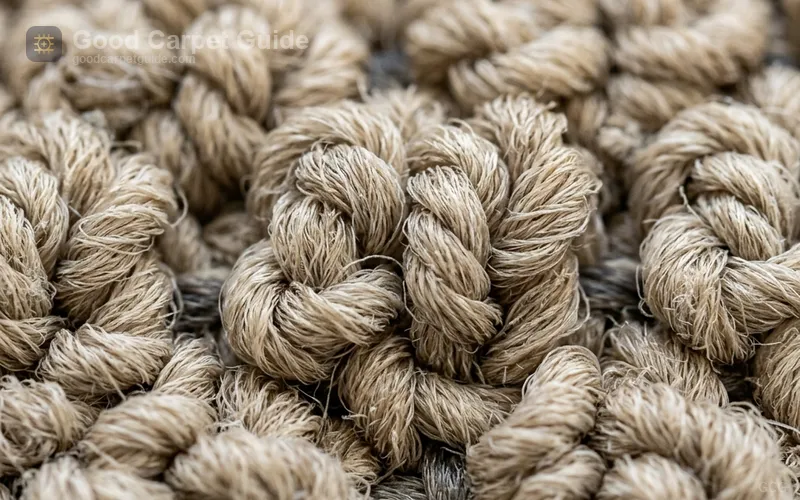
Tightly twisted nylon loop fibers hold less embedded dust than open plush pile, reducing what standard vacuums must extract.
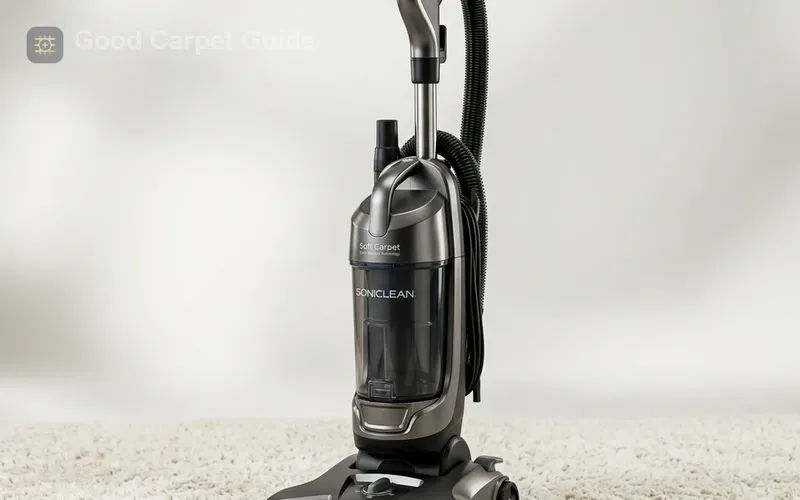
Soniclean Soft Carpet Upright Vacuum Cleaner
Recommended for dense, fine-fiber carpet because it maintains brush roll rotation and suction depth that standard vacuums lose on tightly woven pile.
Check Price on Amazonwhat carpet is best for allergies and asthma
Wool and solution-dyed nylon rank highest for households managing asthma alongside dust or pet allergies, based on fiber density and off-gassing profile. Wool fiber contains a naturally occurring wax coating that resists moisture absorption, limiting the mold and mildew growth associated with asthma flare triggers. Nylon 6,6 offers comparable durability with a lower material cost than premium wool.
| Fiber | Allergen Retention Behavior | VOC Off-Gassing | CRI-Referenced Durability |
|---|---|---|---|
| Wool | Low; natural fiber resists static dust attraction | Minimal; naturally flame-retardant, low chemical treatment | High; documented 20+ year field lifespans |
| Solution-Dyed Nylon 6,6 | Low-moderate; dense twist limits penetration | Low with water-based backing systems | High; Shaw Anso-type fiber commonly cleaned at 30 years old |
| Triexta (PTT) | Moderate; softer fiber allows deeper penetration | Low for stain treatment chemicals | Moderate; mats in high-traffic zones within 2 years |
| PET Polyester | Moderate-high; fiber flattens and traps soil | Low | Moderate; visible wear reported within 6 to 12 months in high-traffic areas |
The table shows that fiber density and twist level matter more for asthma-sensitive households than stain-resistance marketing claims. Triexta and polyester carry lower material costs but retain allergen-trapping soil faster once the fiber begins to flatten, a wear pattern that reduces the carpet's filtering effectiveness over time.
Asthma-focused installations also benefit from backing systems that eliminate latex adhesive off-gassing. Mohawk's Air.o system fuses polyester face fiber directly to a polyester felt backing, removing the latex layer that some sensitive occupants associate with chemical odor complaints during the first weeks after installation.
what's the best carpet for allergies
The best carpet for allergies combines a low-pile, densely twisted fiber with a sealed or breathable backing and a high-density padding layer rated for moisture resistance. No single fiber wins every scenario; the correct choice depends on traffic level, pet presence, subfloor moisture conditions, and cleaning frequency. Savaş Ateş frames this as a three-layer system: fiber, backing, and pad, each contributing separately to allergen control.
Allergy Carpet Selection Warning:
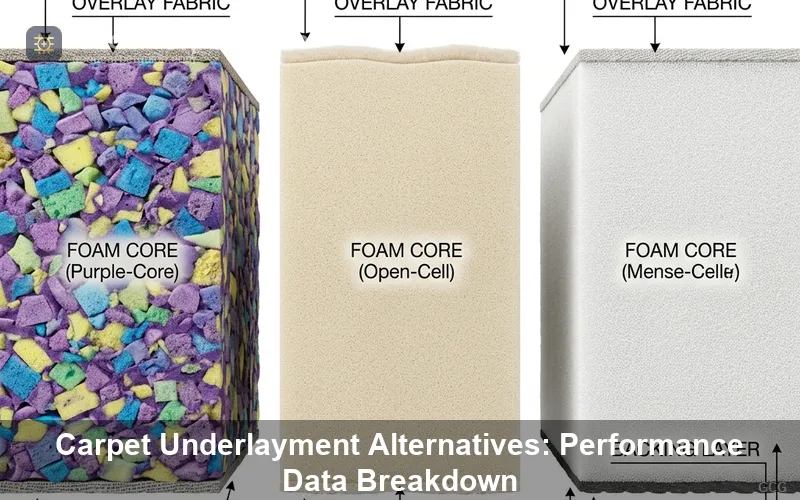
Carpet marketed as "hypoallergenic" does not carry a standardized industry certification in the same way CRI Green Label testing certifies indoor air quality for emissions. Verify specific claims against CRI Green Label Plus documentation or a manufacturer's published VOC emission data sheet rather than accepting the term at face value. Rebond padding made from recycled foam scraps has been documented to contain banned flame retardants including polybrominated diphenyl ethers (PBDEs) in some batches, a risk that a "hypoallergenic" fiber label does not address.
Homeowners frequently ask whether removing carpet entirely improves allergy symptoms. Peer-reviewed research from Airmid Healthgroup indicates uncleaned hard-surface floors can register double the airborne allergen levels of properly maintained carpet, because carpet fiber traps particulate that would otherwise stay suspended in the air on tile or wood. Carpet functions as a passive filter when maintained on a consistent cleaning schedule; it functions as a reservoir when neglected.
is wool carpet better for allergies than synthetic fiber
Wool carpet performs comparably to solution-dyed nylon for allergy control, with wool offering a natural moisture-resistant wax coating and nylon offering a lower cost per square foot at similar durability. Wool fiber resists static buildup better than most synthetic fibers, which reduces the tendency to attract airborne dust particles through electrostatic charge. Nylon fiber, when solution-dyed and tightly twisted, matches wool's resistance to allergen embedding at roughly half the material cost.
Berber-style loop carpet, whether constructed in wool or nylon, adds an additional allergy advantage through its low pile height and dense loop structure. Is berber carpet good for allergies is a common question among buyers comparing loop styles to cut pile; Berber loop carpet holds less embedded dust than cut pile of equivalent fiber because the looped construction leaves less open fiber surface area exposed. Buyers should confirm loop density using the manufacturer's stitches-per-inch specification rather than visual appearance alone, since low-quality Berber loop can still trap allergens if the loop spacing is wide.
how does carpet padding affect allergy symptoms
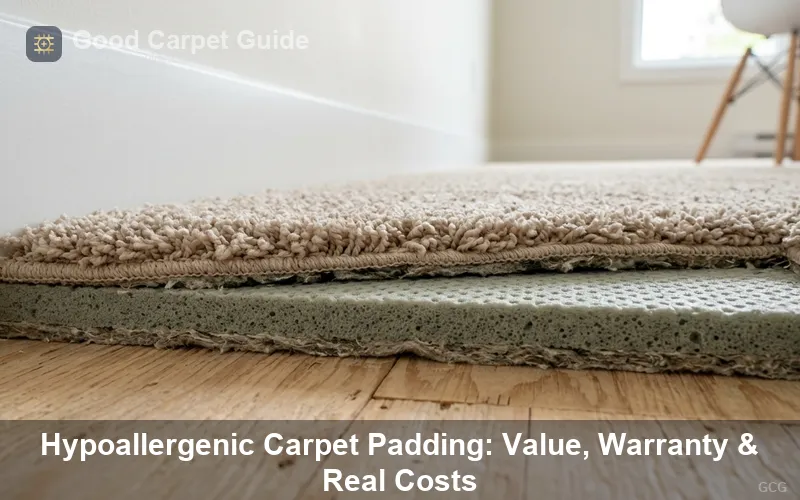
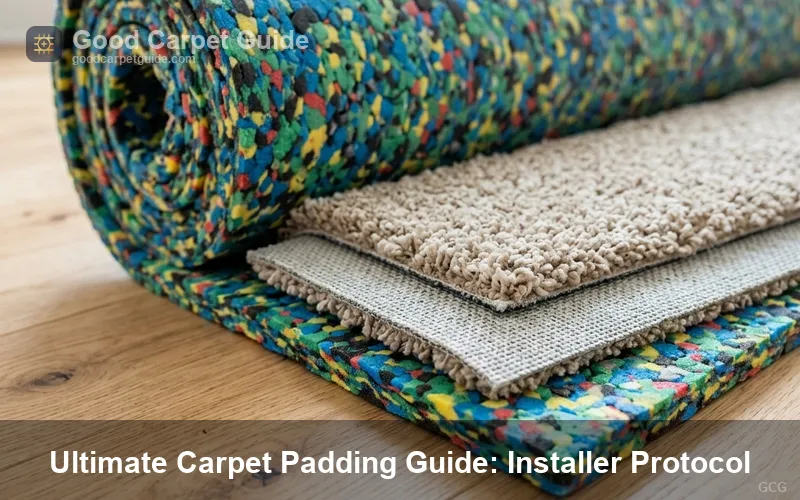
Carpet padding density and chemical composition directly determine whether the cushion layer traps moisture, off-gasses volatile compounds, or crumbles into airborne dust over time. High-density padding rated at 8 to 10 lb. per cubic foot, such as Healthier Choice-type virgin polyurethane foam, resists compaction and maintains a breathable moisture skin that blocks liquid penetration from above while allowing subfloor vapor to escape upward. Low-density rebond pad, by contrast, compacts within 2 to 3 years under standard residential foot traffic and can release degraded foam particulate into the carpet backing.
Padding Installation Workflow (Allergy-Focused):
- Test the concrete subfloor for moisture using a calcium chloride test kit before selecting a moisture-barrier pad.
- Select a breathable moisture-skin pad for slab-on-grade rooms to avoid trapping rising vapor beneath a sealed barrier.
- Install padding with the moisture-skin side facing up, per manufacturer specification, using a stapled or taped seam along pad edges.
- Verify pad thickness does not exceed 7/16 inch under Berber or low-pile carpet, since excess pad thickness causes seam peaking and delamination at doorways.
- Confirm tackless strip pin height clears the finished pad and carpet combination without exposing sharp pins at the perimeter.
Sealed, non-breathable moisture-barrier pads installed over concrete slabs create a separate risk. Vapor rising through the slab becomes trapped beneath the seal, generating a mold and mildew breeding environment directly under the pad. Breathable moisture-skin technology, used in Healthier Choice and comparable premium pads, addresses this by blocking liquid intrusion from spills while permitting vapor transmission from below.
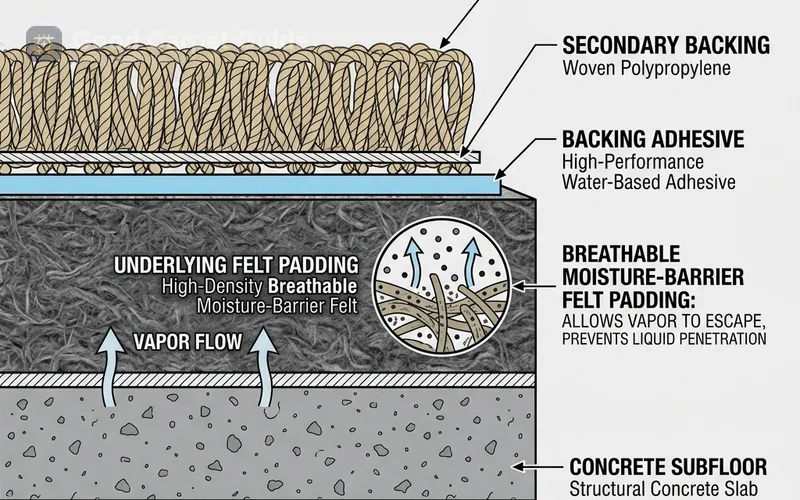
A breathable moisture skin blocks surface spills while releasing subfloor vapor, preventing the trapped-moisture mold risk common to sealed rebond pads.
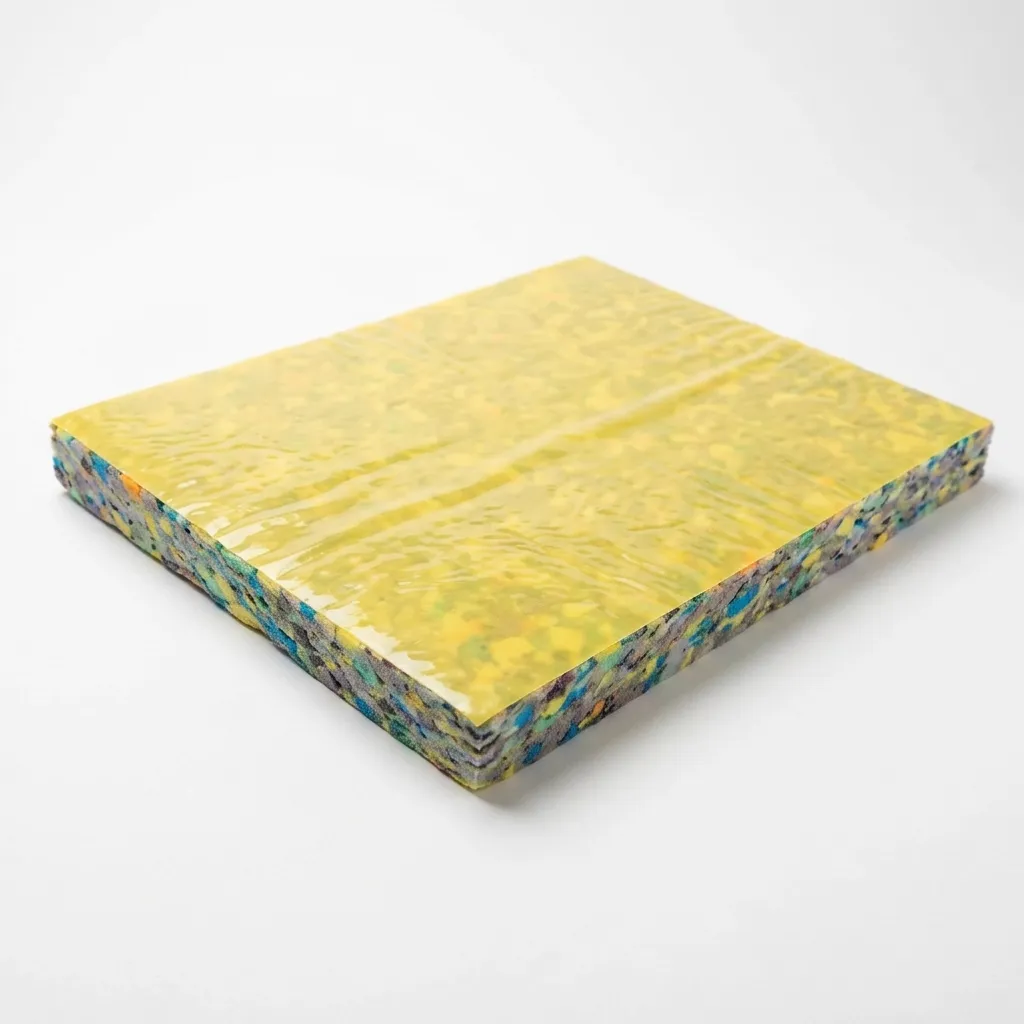
Mohawk SmartCushion Premium Carpet Padding
Recommended for allergy-sensitive installs needing a high-density pad that resists compaction and limits the airborne particulate associated with degraded rebond foam.
Check Price on Amazonwhat do real carpet buyers say about allergy symptoms after installation
Homeowner forum reports consistently describe a gap between marketed durability and field performance for allergy-relevant carpet lines. One buyer reported that Dreamweaver polyester carpet looked worn after six months, while a separate buyer described nylon carpet from the same household still holding its texture after six years. These accounts align with the fiber durability data in the comparison table above, where PET polyester loses structural resilience faster than nylon under equivalent traffic.
Stain and moisture complaints appear frequently in the same threads. Multiple homeowners describe spills or pet accidents penetrating cheap carpet backing, saturating the pad below, and later wicking back to the surface after cleaning attempts. This pattern points directly to backing quality; sealed backing systems such as Shaw's LifeGuard technology are designed specifically to prevent liquid from reaching the pad layer at all, addressing the root cause behind these recurring complaints.
Ultra-soft "silk" fiber carpet draws a distinct set of complaints related to durability rather than allergen control. Multiple pet-owning buyers report that fine, silky fiber pulls out and frays at the edges under nail contact, a wear pattern separate from allergen retention but relevant to households weighing softness against longevity.
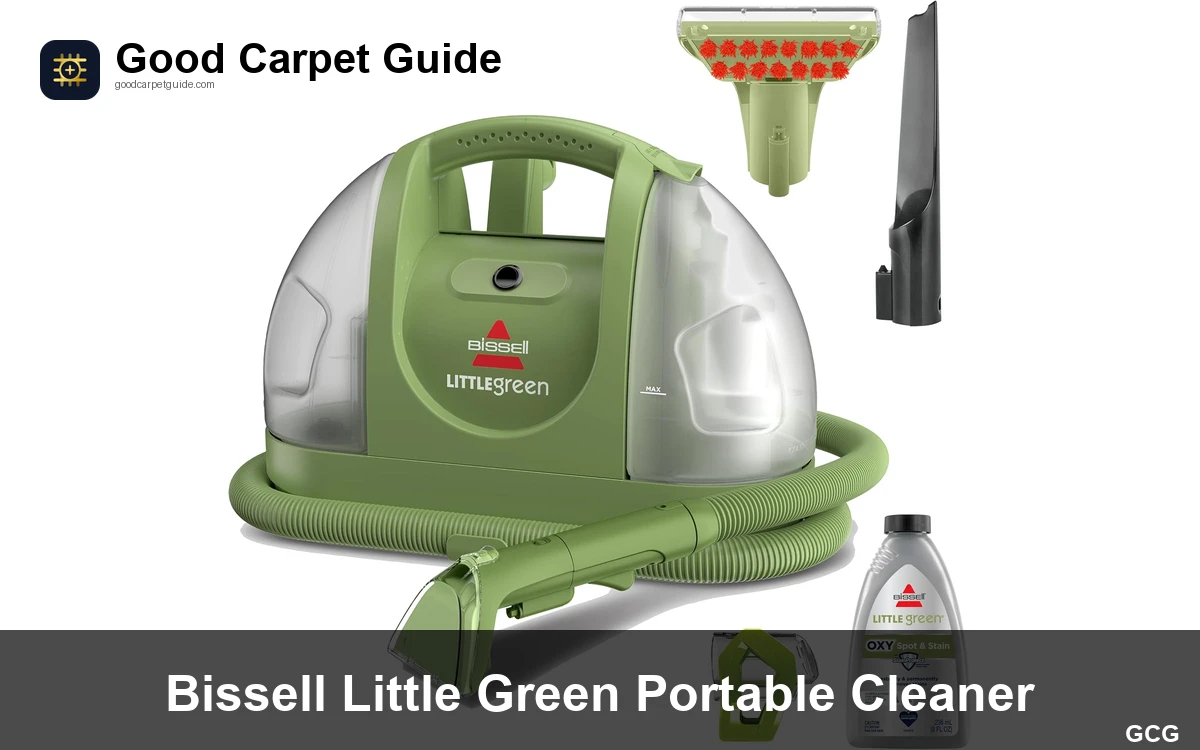
Bissell Little Green Portable Carpet Cleaner
Recommended for spot-treating pet accidents and spills before they penetrate the backing and pad layer, addressing the wicking complaint reported by homeowners on cheaper carpet systems.
Check Price on Amazondo carpet manufacturers and installers agree on the best fiber for allergies
Carpet manufacturers and independent installers frequently disagree on which fiber performs best long-term, with manufacturers favoring chemical-free stain resistance marketing and installers favoring mechanical durability data gathered from field inspections. Manufacturers promote triexta (marketed as SmartStrand) for its ability to release spills using only water, without added chemical stain treatments. Installers counter that triexta lacks the mechanical resilience of nylon and tends to mat down in high-traffic corridors within roughly two years, a wear pattern typically excluded from stain warranty coverage.
Field-experienced installers report cleaning nylon carpet that remains structurally sound at 30 years old, a service life installers describe as uncommon for triexta installations. This conflict matters for allergy-focused buyers because matted, crushed fiber holds allergens closer to the surface than fiber that retains its original loft and twist structure. A carpet that mats within two years reaches its allergen-trapping decline far sooner than a fiber warrantied for stain performance alone would suggest.
Installer-Reported Conflict Summary:
| Marketing Claim | Field Installer Observation |
|---|---|
| Triexta resists all stains without chemical treatment | Triexta absorbs oil-based soil (oil tracking) and mats in high-traffic zones within 2 years |
| Plush "silk" fiber offers premium comfort | Dense, fine fiber chokes standard vacuum brush rolls, leaving embedded dust behind |
| Big-box "free installation" reduces total project cost | Marked-up material pricing and low-bid subcontractor labor often equal or exceed local dealer quotes |
| Lifetime stain warranty covers spills | Warranty typically requires certified steam cleaning every 12–18 months with retained receipts, and excludes pet urine, wine, and stair installations |
how much does hypoallergenic carpet cost to install
Hypoallergenic-oriented carpet, when accounting for fiber, padding, and installation labor, ranges from roughly $3.00 to $15.00 or more per square foot depending on fiber selection and pad quality. PET polyester installs at the lower end of the range, while premium wool sits at the upper end. Nylon and triexta fall in the middle tier, with nylon generally costing more per square foot than triexta at comparable face weight due to its longer documented service life.
| Material | Installed Cost (per sq. ft., USD) |
|---|---|
| PET Polyester | $3.00–$5.00 |
| Triexta (SmartStrand) | $5.00–$8.00 |
| Nylon (Type 6,6) | $5.00–$9.00 |
| Premium Wool | $10.00–$15.00+ |
| Healthier Choice-type Pad (10 lb.) | $1.50–$2.50 |
| Standard Solid Foam Pad | $1.00–$1.85 |
Labor and subfloor preparation add separately to these material figures. Standard installation labor runs approximately $2.50 per square foot, old carpet tear-up and disposal averages $0.40 per square foot, and subfloor leveling or squeak repair typically adds around $500.00 for a 1,000-square-foot space. Skipping subfloor prep to save this cost is a common source of the premature seam and pad failures installers report during warranty inspections.
Big-box retailers frequently advertise free basic installation tied to a minimum purchase threshold, but installers report this promotion is offset through marked-up material and padding pricing. Local specialty dealers often quote 15% to 25% higher on paper, a premium that typically covers vetted in-house installation crews and included subfloor preparation rather than low-bid subcontracted labor.
which carpet brand performs best for allergy sufferers according to installers
Installers most frequently recommend the following brands and product lines for allergy-sensitive households, based on fiber durability, backing chemistry, and padding compatibility:
- Shaw Anso Nylon with R2X treatment: Delivers high texture retention in high-traffic zones, supported by field reports of nylon carpet cleaned successfully at 30 years of age.
- Shaw LifeGuard Backing: Seals the carpet surface against liquid penetration, preventing spills and pet urine from reaching the pad layer where mold risk originates.
- Mohawk Air.o: Eliminates latex adhesive from the backing system, reducing the off-gassing complaints reported during the initial weeks after installation.
- Earth Weave and Unique Carpets wool lines: Provide naturally flame-retardant, low-chemical-treatment wool fiber for households prioritizing minimal synthetic input.
- Healthier Choice padding: Maintains a UL GREENGUARD Gold certification for low chemical emissions alongside a documented resistance to long-term compaction.
The list above reflects field-tested performance rather than marketing claims alone, and installers weigh backing and padding compatibility as heavily as fiber selection when making a recommendation for allergy-sensitive households.
how long does hypoallergenic carpet actually last before allergen control declines
Fiber degradation, not visible dirt, marks the point where carpet stops functioning as an effective allergen filter and starts functioning as a reservoir. Savaş Ateş tracks this decline through pile recovery testing during routine inspections, checking whether fiber springs back after finger-pressure indentation. Fiber that fails to recover within a few seconds has begun the matting process that traps allergens closer to the surface.
Typical Field-Reported Durability Timeline:
| Fiber Type | Visible Wear Onset (High-Traffic Areas) | Allergen-Control Decline Point |
|---|---|---|
| PET Polyester | 6–12 months | 1–2 years |
| Triexta (SmartStrand) | 18–24 months | 2–3 years |
| Solution-Dyed Nylon 6,6 | 4–6 years | 8–10 years |
| Wool | 5–8 years | 10–15 years |
Regional climate conditions shift this timeline in either direction. Homes in high-humidity coastal regions of the US report faster pad compaction and a higher incidence of trapped-moisture odor complaints than homes in dry, low-humidity climates, even when the same fiber and pad combination is installed. Savaş Ateş recommends factoring regional moisture exposure into pad selection rather than relying on national average lifespan figures alone.
does buying from a big box store or a local dealer change allergy-related outcomes
Retailer choice affects allergy outcomes indirectly, through installation quality and subfloor preparation rather than through the carpet material itself. Big-box retailers and local specialty dealers frequently sell the same manufacturer fiber under a private-label rebrand, which strips the technical data sheet from the consumer and makes fiber comparison difficult. A buyer working directly with a manufacturer, by contrast, typically retains access to face weight, density, and twist specifications needed to evaluate allergen-retention performance before purchase.
Installation crew quality carries direct allergy relevance because skipped subfloor preparation leaves gaps, uneven seams, and inadequate tack strip anchoring that collect dust and debris beneath the finished carpet edge. Low-bid subcontractors working high-volume big-box installation schedules have less incentive to perform calcium chloride moisture testing or address squeaky subfloor boards, both of which affect long-term moisture and allergen management beneath the carpet. Local dealers charging a 15% to 25% premium generally include this preparation work as a standard line item rather than an optional upsell.
frequently asked questions
What is the best carpet for allergies?
Low-pile, solution-dyed nylon or wool with a sealed or breathable backing and a high-density pad performs best across most allergy scenarios, based on installer field data and CRI-referenced durability standards.
What carpet fiber is best for allergies?
Nylon 6,6 and wool rank highest for allergy control due to dense fiber structure and low allergen-embedding behavior compared to polyester or triexta.
Is carpet good for allergies?
Carpet functions as a passive allergen filter when cleaned on a consistent 12- to 18-month professional schedule, trapping particulate that would otherwise remain airborne on hard-surface flooring.
Is carpet bad for allergies?
Carpet becomes a liability for allergy sufferers only when cleaning is neglected, since embedded dust, dander, and rebond pad particulate accumulate without regular hot water extraction cleaning.
Is nylon carpet good for allergies?
Nylon carpet, particularly solution-dyed BCF Nylon 6,6 with a tight twist, resists allergen embedding and maintains its fiber structure longer than polyester or triexta under equivalent traffic.
What is the best rug material for allergies?
Wool and nylon rugs perform comparably to full carpet installations for allergy control, provided the rug backing does not trap moisture against hard flooring underneath.
Which brand makes the best carpet for allergies?
Shaw's Anso Nylon and LifeGuard backing system, along with Mohawk's Air.o latex-free construction, receive the most consistent installer endorsement for allergy-sensitive installations.
Savaş Ateş recommends solution-dyed nylon or wool with sealed backing and a high-density pad for households managing dust or pet-related allergies, PET polyester paired with a premium pad for budget-limited allergy households, and a breathable moisture-barrier pad rather than a sealed rebond pad for any installation over a concrete slab. Matching fiber, backing, and pad to the specific traffic and moisture conditions of the room determines whether carpet reduces allergy symptoms or worsens them over its service life.
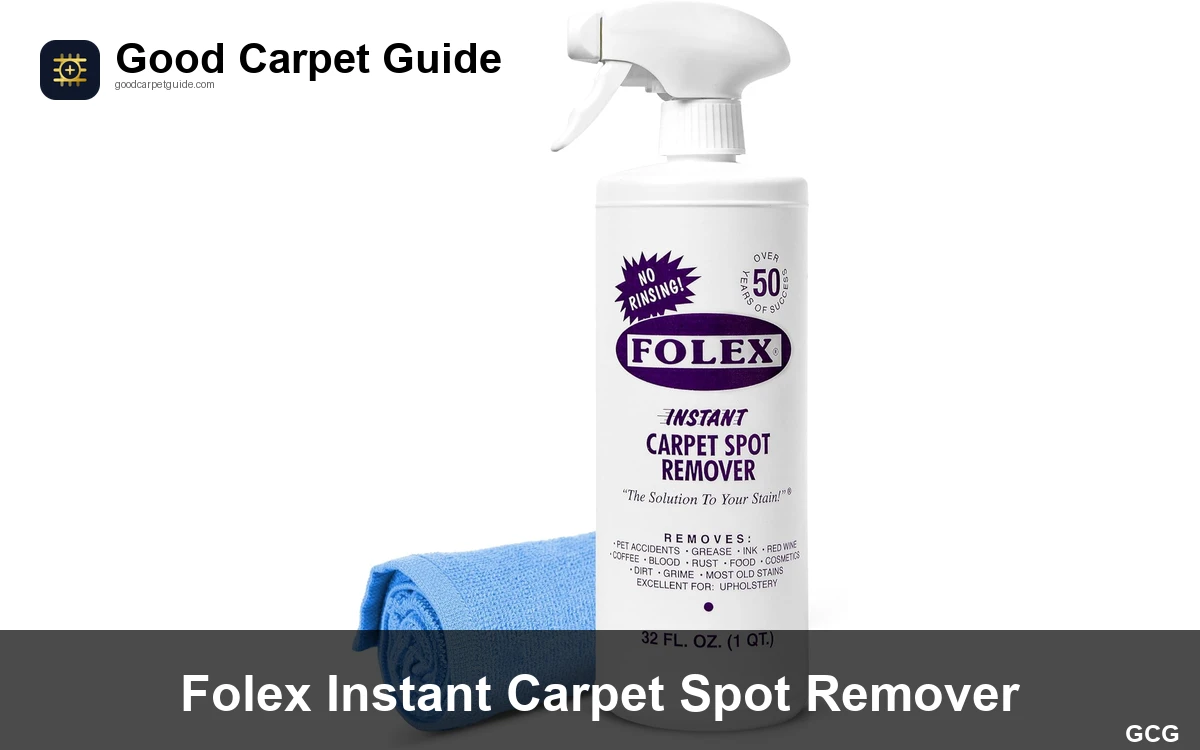
Folex Instant Carpet Spot Remover
Recommended for immediate spot treatment on nylon and wool carpet to prevent spills from reaching the pad layer, where mold and bacterial growth create secondary allergy triggers.
Check Price on Amazon