TL;DR recommendation matrix
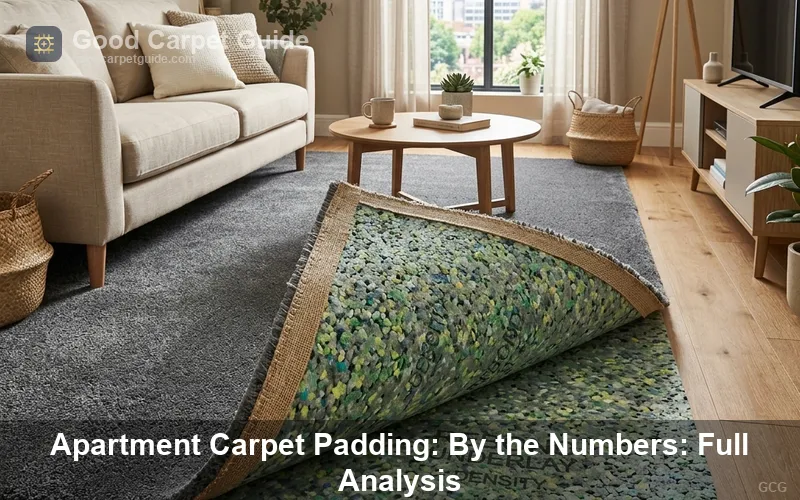
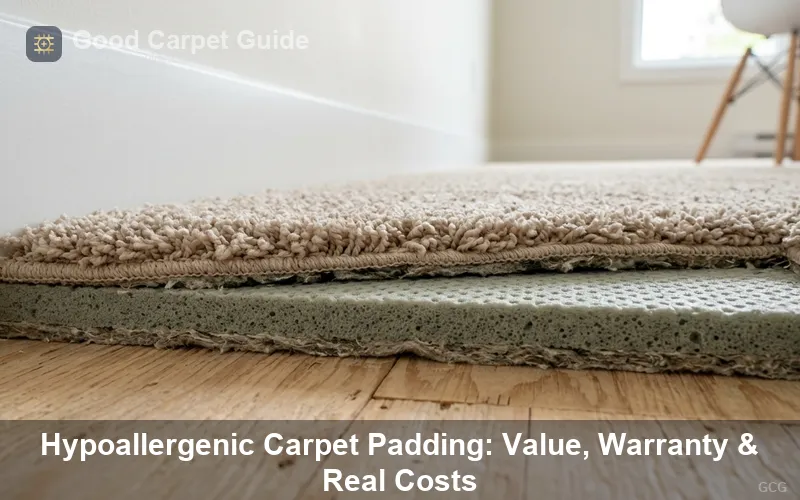
Hypoallergenic carpet padding is underlayment certified to low chemical emission standards, most commonly UL GREENGUARD Gold or CRI Green Label Plus, and built from closed-cell or antimicrobial-treated material that resists dust, mold, and moisture retention. The best pick depends on subfloor type, density needs, and warranty requirements.
| Situation | Recommended pad | Density | Approx. installed cost/sq ft | Skip if |
|---|---|---|---|---|
| Wood subfloor, bedroom or living room | Healthier Choice HC Gold/Green | 10 lb frothed polyurethane | $1.50-$2.50 | You want a soft, springy feel underfoot |
| Basement, concrete slab | QuietWalk QWCP180 | 8 lb equivalent synthetic fiber | $1.10-$1.60 | The slab has active moisture intrusion (mitigate first) |
| High-traffic hallway or stairs | Carpenter Spillguard SG12-811, capped at 3/8 in | 8 lb visco-elastic foam | $1.25-$1.75 | Pad exceeds 1/2 in under a stretched nylon backing |
| Budget rental unit refresh | Future Foam Contractor 8 with SpillSafe | 8 lb rebond | $1.00-$1.50 | Carpet manufacturer warranty requires certified fiber content |
| Big-box "free with purchase" upgrade | Avoid Lifeproof Premium (low-density prime foam) | Low-density prime foam | $0.98-$1.16 | You need texture-retention warranty coverage |
What is hypoallergenic carpet padding
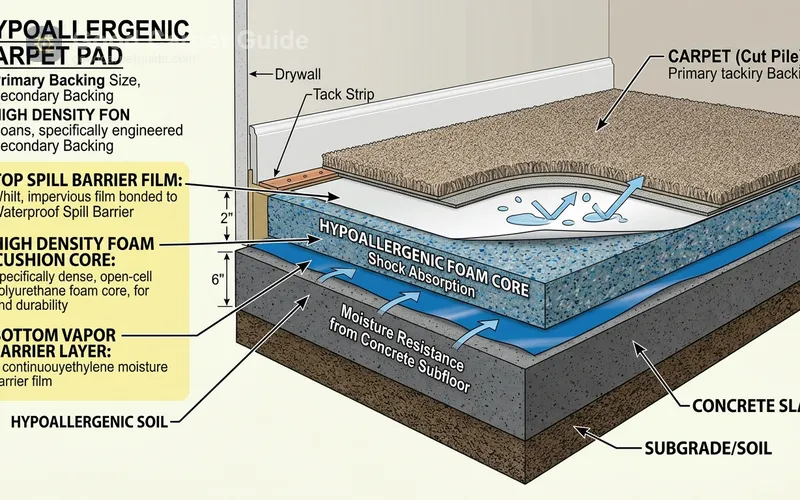
Hypoallergenic carpet padding is cushioning material manufactured and certified to limit volatile organic compound (VOC) off-gassing and resist the buildup of dust, mold, and bacterial growth under a carpet's face fiber. The certifying bodies that matter in the US residential market are UL GREENGUARD Gold, which caps total VOC emissions, and the Carpet and Rug Institute's Green Label Plus program. A pad carrying both labels, such as Healthier Choice's Gold and Green lines, has been screened against a documented chemical panel. "Hypoallergenic" by itself is not a regulated term in flooring, so the certification behind the label is what carries verifiable weight.
What is the difference between carpet padding types
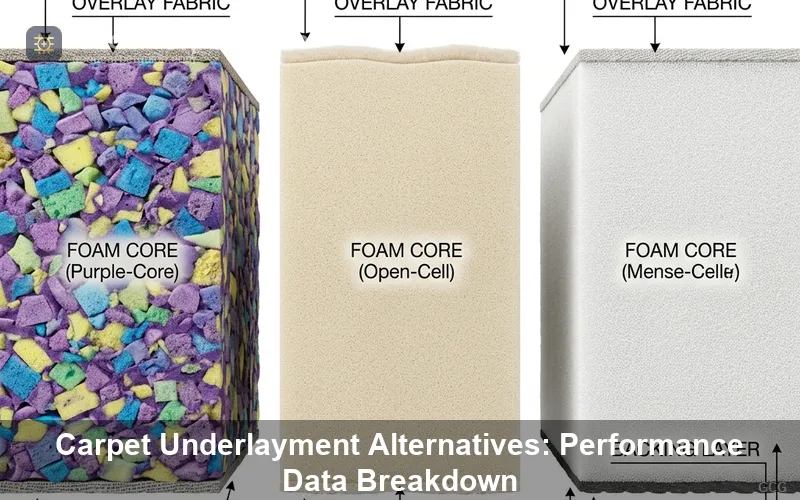
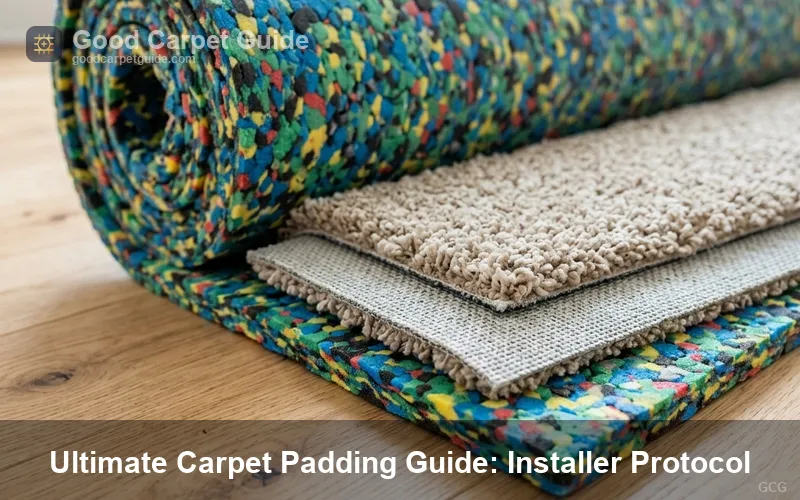
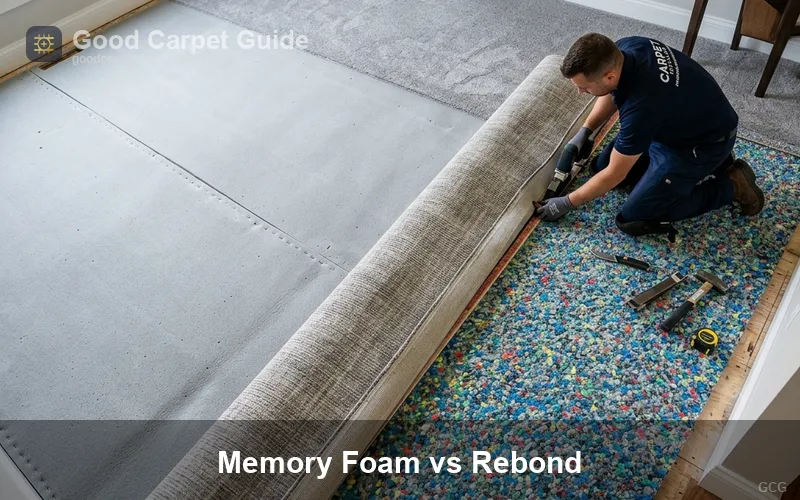
Three cushion categories dominate the residential hypoallergenic segment: rebond foam, frothed or visco-elastic (memory) foam, and synthetic fiber pads. Rebond foam is made from shredded recycled foam scraps bonded under heat and pressure, typically sold at 6 lb to 8 lb density, and priced from $0.30 to $0.65 per square foot in material cost. Frothed polyurethane and memory foam pads, such as Healthier Choice's HC Gold line , are poured as a single dense mass. Unlike scrap bonded under pressure, a poured mass produces the "Never Crush" resilience Healthier Choice documents in its product literature. Synthetic fiber pads, exemplified by MP Global's QuietWalk, use 94 to 100 percent recycled polyester fiber pressed into a mat. The mat has no foam cell structure, so it resists compression differently from either foam category, and installers specify it for concrete slabs.
How much does carpet padding cost
Material-only pricing runs from roughly $0.30 to $3.00 per square foot depending on density, material, and certification tier, based on current market pricing. Most certified hypoallergenic-grade pads fall between about $0.45 and $1.69 per square foot in material cost. Installed package pricing, which bundles labor, runs higher across every tier:
| Grade | Material only (per sq ft) | Installed (per sq ft) |
|---|---|---|
| Value-grade 6 lb rebond | $0.30-$0.50 | $0.75-$1.25 |
| Preferred-grade 8 lb rebond | $0.45-$0.65 | $1.00-$1.50 |
| Premium memory foam, 8-10 lb | $0.56-$1.06 | $1.25-$1.75 |
| Advanced hydrophobic fiber (QuietWalk) | $0.58-$0.63 | $1.10-$1.60 |
| Frothed polyurethane (Healthier Choice) | $0.92-$1.69 | $1.50-$2.50 |
| Flat synthetic rubber (Leggett & Platt Coronado) | $1.50-$3.00 | $2.00-$3.75 |
Several line items rarely appear on a basic big-box quote and change the total meaningfully. Tear-out and disposal of old carpet and pad runs $0.25 to $0.50 per square foot. A calcium chloride or relative humidity moisture test on a concrete slab, which a contractor should run before installing any moisture-barrier pad in a basement, costs $80 to $150 per sample location. Rotted plywood subfloor repair runs $3.00 to $7.00 per square foot, and stair installation labor adds $3.00 to $10.00 per step because of the extra cutting and wrapping involved.
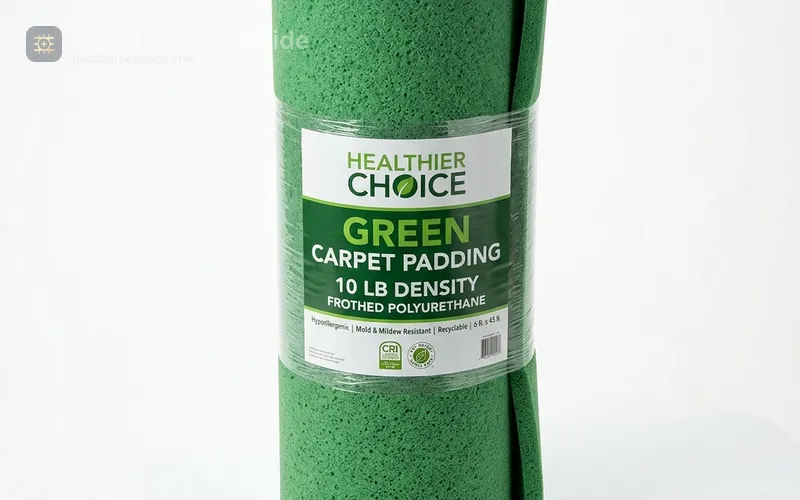
Healthier Choice Green Carpet Pad 7/16 Inch
10 lb density frothed polyurethane pad with GREENGUARD Gold certification, sold in roll form for DIY installation over wood subfloors.
Check Price on AmazonWhat is the best carpet padding
The most-recommended hypoallergenic pad specification is 8 lb density cushion between 3/8 and 7/16 inch thick, because that combination stays within the Carpet and Rug Institute's recommended maximum residential cushion thickness of 7/16 inch. Pads that exceed that thickness let the carpet backing flex too far under foot pressure, which stresses the latex bond between primary and secondary backing layers and leads to premature delamination. Density outperforms thickness as a durability predictor: a thin, dense pad holds its shape under repeated compression cycles, while a thick, low-density pad collapses. For this reason, installers steer buyers away from the "thicker feels more luxurious" pitch common on big-box showroom floors.
Which brand makes the best carpet padding
Four brands cover most of the hypoallergenic padding used in residential jobs: Healthier Choice, MP Global's QuietWalk, Leggett & Platt's Napa ACS, and Carpenter's Spillguard series.
Healthier Choice HC Gold and HC Green
Healthier Choice HC Gold and HC Green are manufactured in Dalton, Georgia from 100 percent virgin frothed polyurethane at 10 lb density. The line carries UL GREENGUARD Gold and CRI Green Label Plus certification and is screened against a documented panel exceeding 10,000 chemical compounds. Its top skin is micro-porous rather than fully sealed, which lets concrete vapor evaporate through the pad instead of condensing underneath it. The trade-off is a firm, dense feel underfoot that lacks the springy compression some buyers expect from a "premium" pad.
QuietWalk QWCP180
QuietWalk QWCP180 is built from 94 to 100 percent recycled synthetic fiber, is GREENGUARD Gold certified, and carries a manufacturer-rated Impact Insulation Class (IIC) of 73 and an R-value of 2.3. Its DriWick fiber structure spreads slab moisture laterally across the mat, so it does not hold moisture vertically against the carpet backing, which is why installers specify it for basement and below-grade concrete work. The fiber mat is dense enough that standard utility blades dull quickly, so installers budget for sharper, heavier-duty blades on QuietWalk jobs.
Leggett & Platt Napa ACS
Leggett & Platt Napa ACS uses "Microblend" densified urethane particles bonded into a uniform high-density pad, is CRI Green Label Plus certified, and is treated with Fresh Dimension antimicrobial protection. It is supplied to Lowe's under the Stainmaster Premium name. Its laminated Block-Out moisture barrier can delaminate from the foam core after three to five years of foot traffic, producing the crinkling sound covered in the next section.
Carpenter Spillguard SG12-811
Carpenter Spillguard SG12-811 is a visco-elastic memory foam pad with a DuPont Active Layer RS spill barrier film made from 20 percent renewable material. Its typical 1/2-inch thickness exceeds the recommended residential thickness ceiling, and installers report wrinkling in high-tension nylon carpet installed over it in active hallways.
What carpet padding do professionals recommend
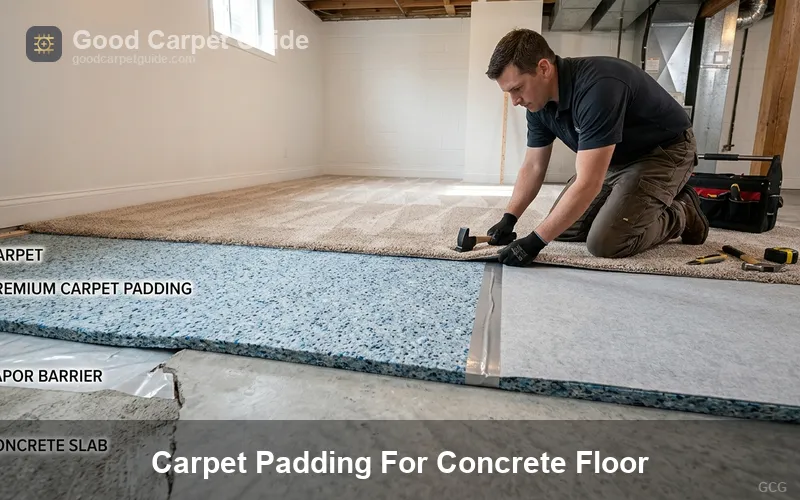
The professional approach is to match the barrier type to the subfloor. Defaulting to the thickest or most heavily marketed pad is the common mistake. Over plywood or OSB wood subfloors, a top-only moisture barrier such as Carpenter Spillguard or Healthier Choice Green protects against surface spills without trapping structural moisture that isn't present in a wood subfloor to begin with. Over concrete slabs, installers steer away from double-sided impermeable barrier pads. A double barrier blocks spills from above and simultaneously seals in rising slab vapor from below, and that trapped vapor condenses into liquid water directly beneath the cushion. The mechanism is straightforward: the plastic layer on some carpet padding cannot stop moisture seeping up through concrete, so water vapor collects under that layer and soaks the padding, which creates conditions for mold growth. The fix is a paint-on moisture-mitigation epoxy such as Wakol PU-280 rolled directly onto the raw slab, paired with a breathable synthetic fiber pad like QuietWalk instead of a sealed double barrier.
Real homeowner and installer experiences
Post-installation complaints cluster into three recurring issues that standard buying guides tend to skip.
Crinkling or crunching underfoot
A recurring complaint is a loud crunching noise that develops after a new carpet installation, even when the installer described the pad as premium. The mechanism is delamination: the thin plastic spill-barrier film separates from the foam core over two to five years of walking, and dust trapped in the gap creates friction noise. Laminated spill-barrier pads across several brands have been named in these reports.
Hard lumps under the carpet
During rebond foam curing, the outer edge of each foam block develops a denser "skin" layer. In lower-grade 6 lb or budget 8 lb rebond, that skin isn't fully ground down before slicing, leaving hard spots that feel like marbles underfoot. Owners who find these spots often assume the pad is defective. Installers cut out the hard sections and patch them with soft scrap before laying carpet.
Old padding staining new carpet
Installers call unreplaced padding "memory foam for stains" because a porous foam pad absorbs pet urine and spills over years, and reinstalling new carpet over that same old pad lets foot pressure wick the old contamination up into new face fibers. Stains that reappear in the same spots after a full carpet replacement trace back to skipping pad replacement during that job.
Comfort, acoustics and thermal properties
| Pad type | Underfoot feel | Acoustic (IIC rating) | Thermal (R-value) |
|---|---|---|---|
| Frothed foam, 10 lb (Healthier Choice) | Firm, dense, minimal sink | Moderate, no published IIC | Moderate |
| Synthetic fiber (QuietWalk) | Firm, mat-like | 73 | 2.3 |
| Visco-elastic memory foam (Spillguard) | Soft, deep compression | Moderate | Moderate-high |
| Value rebond, 6-8 lb | Springy, variable | Low-moderate | Low |
Room-by-room suitability
Selecting carpet padding requires tailoring density, moisture resistance, and cushion material to the specific functional demands of each room in the house.
Bedrooms
A wood subfloor bedroom benefits from frothed foam or memory foam padding at 8 to 10 lb density, since sound dampening and joint pressure relief matter more here than moisture handling, and there is no slab vapor concern to design around.
Living room
Living rooms combine moderate foot traffic with a preference for comfort, which points toward 8 lb memory foam capped at 7/16 inch thickness. The 1/2-inch Spillguard variant risks backing stretch in this kind of daily-use space.
Hallways and stairs
High-traffic hallways and stairs need density over softness. An 8 lb pad at 3/8 inch thickness resists the compression cycling that thicker, softer pads suffer under repeated footfall, and thinner pad on stairs also simplifies the wrap-and-staple installation labor.
Kitchen and dining
Carpet is uncommon in kitchens, but a dining room adjoining one benefits from a top-laminated spill barrier pad such as Carpenter Spillguard or Future Foam SpillSafe, since surface liquid exposure is the dominant risk rather than slab moisture.
Bathroom and laundry
Carpet padding is not recommended in bathrooms or laundry rooms regardless of certification level; sustained humidity and direct water exposure defeat both spill-barrier and vapor-barrier designs over time.
Basement
Basements need the QuietWalk or equivalent breathable synthetic fiber approach paired with a slab-applied moisture epoxy, never a double-sided impermeable barrier pad, per the mechanism covered above.
Rental properties
Rental turnover favors 8 lb rebond with SpillSafe-type lamination, such as Future Foam Contractor 8, because its $1.00-$1.50 installed cost balances replacement-cycle economics against a landlord's shorter hold period per tenant.
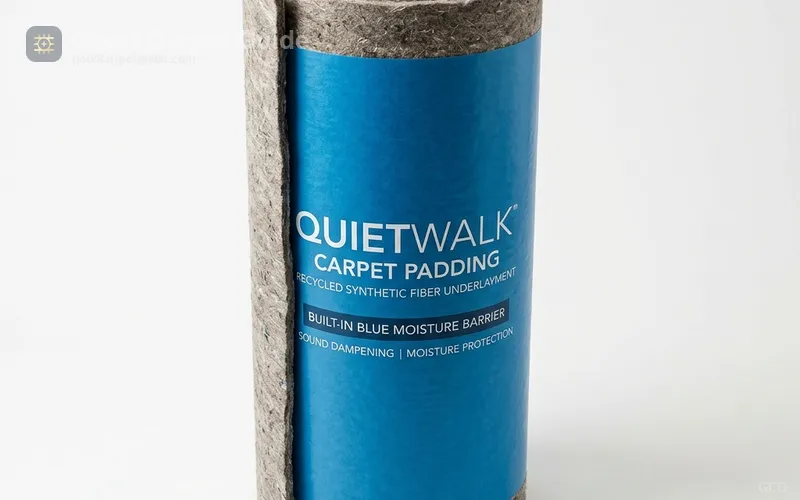
QuietWalk Carpet Cushion Underlayment
GREENGUARD Gold certified recycled synthetic fiber pad with DriWick moisture-wicking construction, sized for basement and below-grade installations.
Check Price on AmazonHow long does carpet padding last
Pile-retention testing shows carpet installed without any pad loses substantially more pile thickness under repeated compression than carpet installed over a high-density pad. Translated to years, an 8 to 10 lb density pad typically supports 15 to 20 years of carpet life without bottoming out, while a low-density prime foam pad, the grade the Home Depot Lifeproof Premium line ships at despite its premium positioning, tends to collapse within three to four years under regular foot traffic.
When should you replace carpet padding
Replace carpet padding at the same time as carpet replacement in every case, and never reuse it, because a compressed or contaminated pad both shortens new carpet life and, per the staining mechanism covered above, can wick old contamination into new face fiber. Between full carpet replacements, replace padding sooner if a moisture event occurs, such as a pet accident that penetrates to the pad layer or a plumbing leak, since foam cushion does not clean the way carpet fiber does.
Is carpet padding worth it
Carpet padding is worth the added material cost in nearly every residential scenario. The pile-loss comparison above shows why: the pad typically represents 15 to 25 percent of a full installed carpet package while extending usable carpet life by a factor of two or more. The exception is a rental unit facing near-term full-floor replacement, where a value-grade 6 lb rebond pad may be the economically rational choice over a premium tier the landlord won't recoup before the next turnover.
Is carpet padding toxic
Carpet padding without GREENGUARD Gold or CRI Green Label Plus certification can off-gas volatile organic compounds during the first weeks after installation, at levels that vary by manufacturer and are not consistently disclosed on budget or "free with purchase" pad lines. Certified pads, including Healthier Choice's Gold and Green lines and QuietWalk, are tested against documented chemical panels and must meet the emission limits set under the GREENGUARD Gold protocol. That is the standard chemically sensitive households should confirm on the product spec sheet; the marketing word "hypoallergenic" alone does not guarantee it.
Can you install carpet padding yourself
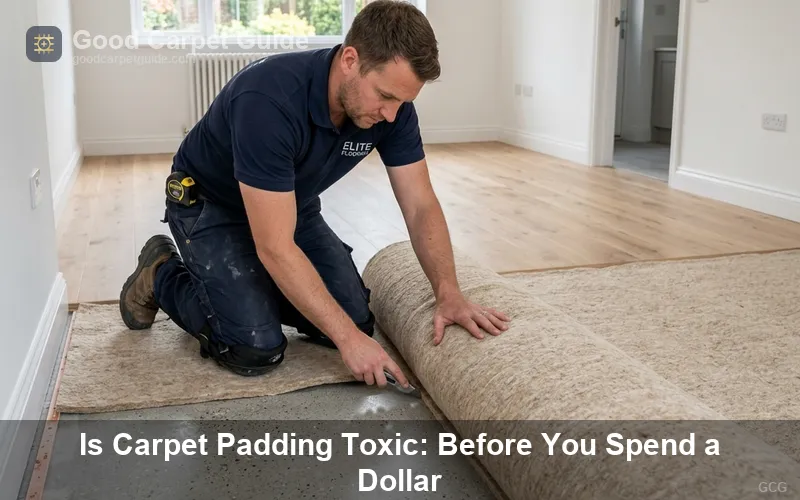
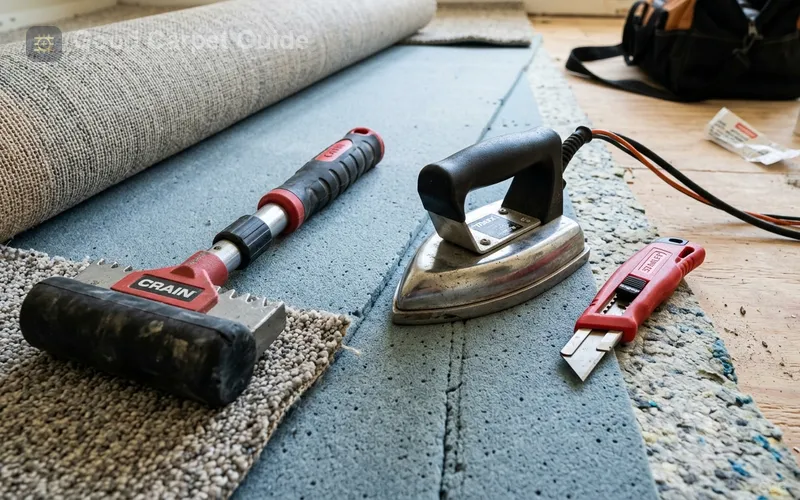
DIY installation is possible for carpet padding specifically, separate from the carpet itself, using a utility knife, staple gun, and moisture-resistant seam tape.
- Remove old carpet and pad completely, and dispose of both; do not reuse old pad under new carpet.
- Vacuum and inspect the subfloor. On concrete, run a moisture check before proceeding; on wood, check for soft or rotted panel sections.
- Roll out the new pad with the moisture-barrier or spill-barrier side facing up, per the manufacturer's printed orientation.
- Staple the pad along the room perimeter and at seams, spacing staples every 6 to 8 inches per Healthier Choice's published installation guidance.
- Seal every seam and staple line with 2-inch moisture-resistant tape, which prevents both dust migration and the crinkling noise covered earlier in this guide.
- Trim excess pad flush to the tack strip using a fresh utility blade, leaving a small gap instead of overlapping the strip.
Installing the carpet itself over the pad, including power-stretching and seam work, is the step most DIYers hand off to a professional, since a knee kicker and power stretcher require practiced technique to avoid wrinkling.
How to choose carpet padding
Choose carpet padding by working through subfloor type, then density, then certification, in that order. Confirm whether the subfloor is wood or concrete first, since that decision eliminates entire pad categories, such as double-sided barrier pads on concrete. Next, select density based on room traffic: 8 lb minimum for any room with daily foot traffic, 10 lb for stairs or heavy-use hallways. Last, confirm GREENGUARD Gold or CRI Green Label Plus certification if chemical sensitivity or a new carpet's manufacturer warranty is a factor, since most major carpet warranties specify a minimum pad density and will void coverage if an installer used an uncertified or underweight pad like a low-density prime foam upgrade (for example, the Lifeproof Premium line).
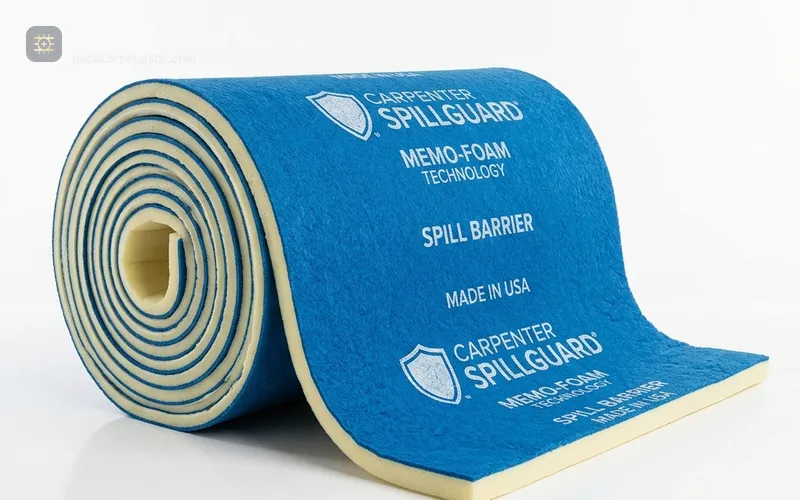
Carpenter Spillguard Memory Foam Carpet Pad
Visco-elastic memory foam pad with DuPont Active Layer RS spill barrier film, recommended at 3/8 inch thickness for living rooms and bedrooms over wood subfloors.
Check Price on AmazonAvoiding the showroom trap
Big-box retailers profit on padding upgrades more than on the carpet itself, since "free installation" promotions are recovered through padding markup. Home Depot prices its Lifeproof Premium pad at about $1.16 per square foot, a rate that would be reasonable for a true 8 lb rebond pad but is a substantial markup for a low-density prime foam. The same pattern shows up on the labor side: big-box retailers sell the homeowner pad in the same square footage as the carpet order, then pass the installer only the net amount actually needed, keeping the difference. A local independent flooring dealer sourcing Healthier Choice or QuietWalk directly from Georgia mills can frequently beat a big-box upgrade price while delivering a certified, correctly-rated pad. Comparing the carpet padding guide pricing table against a specific big-box quote line by line is the fastest way to catch this markup before signing a contract.
Before signing any installation contract, cross-reference the chosen carpet's texture-retention warranty against the padding's density and thickness spec sheet. A pad under the manufacturer's minimum density, or one exceeding the recommended residential thickness ceiling, can void that warranty entirely regardless of how the padding was marketed at point of sale. On stairs specifically, pad selection for stairs follows a tighter thickness rule than open-floor rooms because of the wrap-and-staple installation method, and the crinkling and delamination issues covered in this guide compound faster on stair nosings than on flat runs; see the carpet delamination guide for how that failure progresses over time.