INSTALLER'S SAFETY ALERT BOX
• Never install standard rebond foam directly over hydronic or electric radiant heating without confirming the combined R-value against the system manufacturer's ceiling (1.0 for electric foil mats, 2.5 for hydronic loops).
• Never double up two pads to compensate for a soft subfloor. Doubled padding prevents tack strip engagement, causes buckling, and creates a documented trip hazard for walkers and wheeled furniture.
• Never assume a top-side moisture barrier protects the subfloor from a structural leak. Water from a failed HVAC line or wet bar can travel under the seams and rot the subfloor while the carpet face stays dry.
• Always verify carpet backing type (hessian versus synthetic) before pairing with radiant heat. Confirm adhesive tolerance with the carpet manufacturer before installation.
• Always connect a floor sensor to the thermostat on any radiant system. Carpet backing temperature above 80°F to 85°F degrades latex and accelerates delamination.
A carpet padding r value guide exists to answer one question with precision: how much thermal resistance does a given pad add to a floor assembly, and does that number help or harm the room it sits in. This carpet padding r value guide treats R-value as a variable that changes by subfloor type, not as a single "higher is better" spec. Over a cold basement slab, a higher R-value pad reduces heat loss into the ground. Over a radiant heating system, the same high R-value pad traps heat at the subfloor and can burn out the heating element. The sections below cover the R = L/k calculation, exact R-values by padding type and thickness, the CRI density and thickness limits, radiant heat thresholds by system type, named product lines with published specifications, and cost data drawn from installed pricing surveys.
what is r-value and how is it calculated for carpet padding
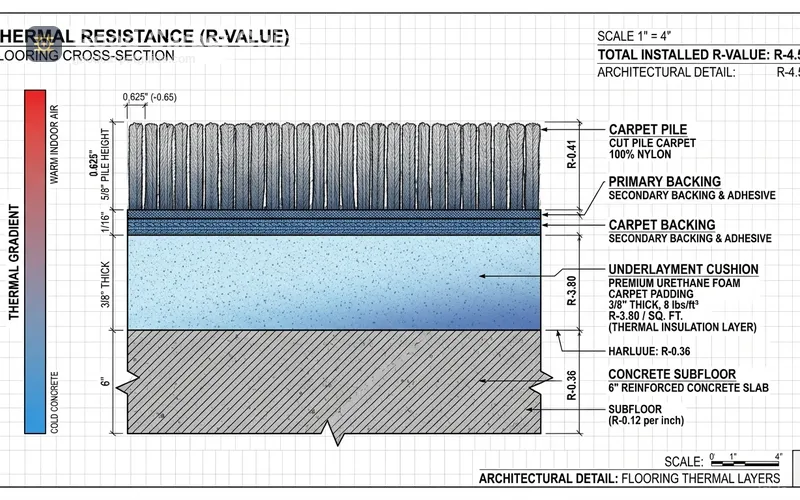
R-value measures a material's resistance to conductive heat flow, expressed as R = L/k, where L is thickness in inches and k is the material's thermal conductivity. Padding manufacturers publish R-values per thickness tier because the relationship between thickness and resistance is not linear across foam densities. A 6 lb rebond foam does not scale its R-value at the same rate as an 8 lb rebond foam of the same thickness, because higher-density foam has smaller, more numerous air cells that behave differently under compression. When a carpet's exact R-value rating is unavailable, the Georgia Institute of Technology's published method multiplies total carpet thickness in inches by a factor of 2.6 to approximate the carpet layer's contribution. R-value is additive across the floor assembly. The subfloor, the pad, and the carpet each contribute a separate R figure, and the installer sums them to get the total system value that matters for both energy retention and radiant heat compatibility.
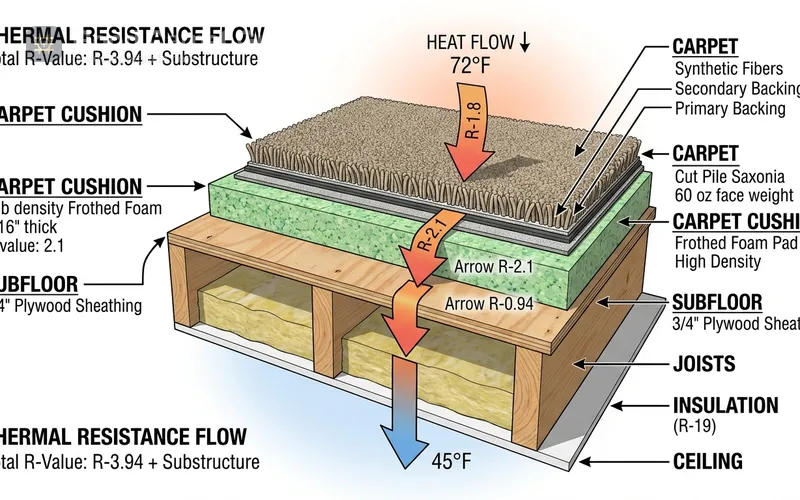
The R = L/k formula applies separately to each layer in a carpet floor assembly, and the total system R-value is the sum of the pad and carpet contributions.
exact r-values by padding type and thickness
The table below compiles published R-values for the padding types most commonly specified in residential installs. Values are drawn from manufacturer thermal data sheets and industry-vetted testing databases.
| Padding type & weight class | 1/4" thickness | 3/8" thickness | 7/16" thickness | 1/2" thickness |
|---|---|---|---|---|
| Standard 8 lb rebond foam | 0.91 | 1.37 | 1.60 | 1.82 |
| Standard 6 lb rebond foam | — | 1.40 | 1.37 | 1.60 |
| Prime polyurethane (2.2 lb/ft³) | 1.00 (nominal) | 1.50 (nominal) | 1.61 (at 0.40") | 2.00 (nominal) |
| Frothed polyurethane (10 lb/ft³) | 0.90 | 1.30 | 1.50 | 1.70 |
| Frothed polyurethane (15 lb/ft³) | 0.70 | 1.10 | 1.30 | 1.50 |
| Rippled waffle sponge rubber | 0.70 | 1.10 | 1.20 | 1.40 (0.43" = R-0.78) |
| Textured flat rubber (21-24 lb/ft³) | 0.40 | 0.60 | 0.70 (0.415" = R-0.70) | 0.90 (0.425" = R-0.80) |
| Felt / recycled synthetic fiber | 0.90 | 1.30 (0.38" = R-2.22) | 1.50 (0.21" = R-1.96) | 1.80 |
Two patterns stand out in this data. Rubber padding holds the lowest R-values across every thickness tier, which is why installers route it toward radiant heat jobs. Frothed polyurethane and felt hold the highest values at comparable thickness, which is why those categories dominate basement specifications. The carpet padding guide guide covers how these categories map to broader selection criteria beyond thermal performance alone.
why prime foam fails the longevity test that rebond foam passes
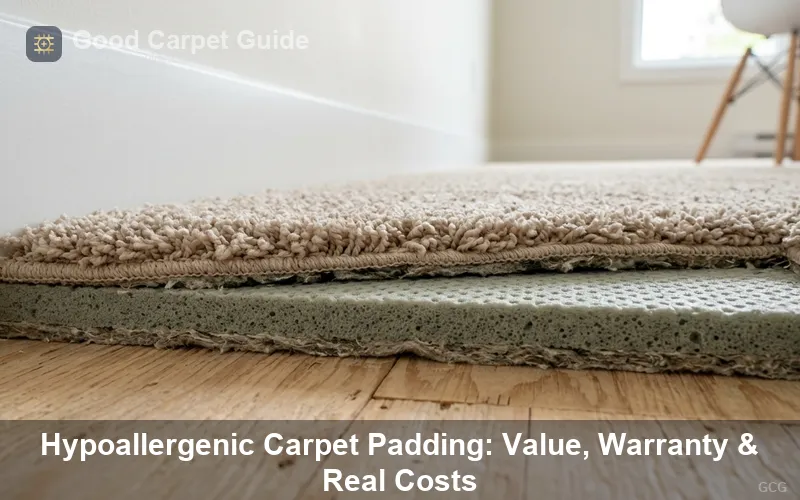
Prime polyurethane foam is frequently sold as a premium, soft-feel upgrade at the point of sale. Field teardown reports from veteran installers describe a different outcome: solid prime foam pads pulled from 20-plus-year-old carpet jobs have typically degraded into loose crumb and dust, while recycled rebond pads from comparable jobs roll up intact. Prime foam's air pocket structure, which gives it its initial soft feel, is also the structural weakness that collapses under sustained foot traffic. Rebond foam is manufactured from shredded and compressed recycled foam scraps bonded under heat and pressure, and that bonded, mixed-density structure resists the same collapse. This teardown pattern is a documented field observation rather than a laboratory-controlled study, so buyers pairing thermal performance with expected service life should weight it alongside CRI-published density minimums, not as a substitute for them.
density and thickness limits under cri residential guidelines
The Carpet and Rug Institute's residential guidelines specify a minimum padding density of 6 lb/ft³ and a maximum thickness of 7/16" for standard cut-pile carpet, with a tighter 3/8" maximum for Berber and other loop-pile constructions. Density, not thickness, is the variable that determines whether a pad holds its R-value and cushioning function over years of foot traffic. A thick, low-density pad compresses and flattens within months of installation, and a compressed pad loses both its R-value and its ability to protect the carpet backing from flexing damage at the seams. Loop-pile carpets carry the tighter 3/8" ceiling because excess pad thickness under a Berber weave allows the loops to flex further with each step, which accelerates snagging and seam separation. Any padding r value guide that recommends thickness without a paired density figure omits the variable installers actually rely on.
protocol a: maximizing r-value over a cold basement slab
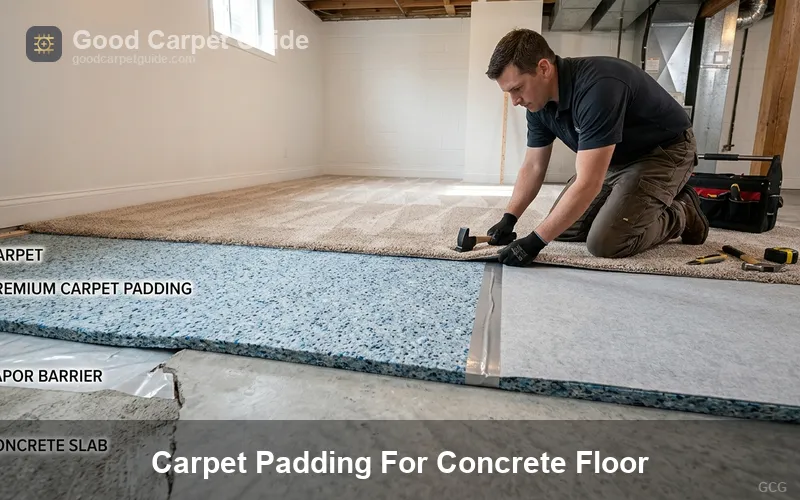
A cold basement slab requires the opposite thermal strategy from a radiant-heated floor, because uninsulated concrete is a continuous heat sink drawing warmth into the 50°F to 60°F ground below it. This heat loss can account for 10 percent to 20 percent of a home's total heat loss through an uninsulated slab, and it produces the specific "ice rink in socks" sensation homeowners report when standing on basement concrete in winter. The target total floor system R-value for a basement installation is 2.5 to 3.0. To reach that target, specify a premium 1/2-inch frothed polyurethane or memory foam pad rated between R-1.61 and R-2.22, or a dense felt/synthetic fiber pad rated up to R-2.39, which avoids the spongy compression feel some homeowners dislike in thick foam. A non-porous vapor barrier is a required companion spec on this protocol, not an optional upgrade. Basement slabs are prone to rising moisture from the soil beneath them, and a pad with top and bottom moisture-resistant barriers (marketed under names such as SpillSafe or Block-Out) blocks that dampness before it reaches the carpet backing and creates conditions for mold growth.
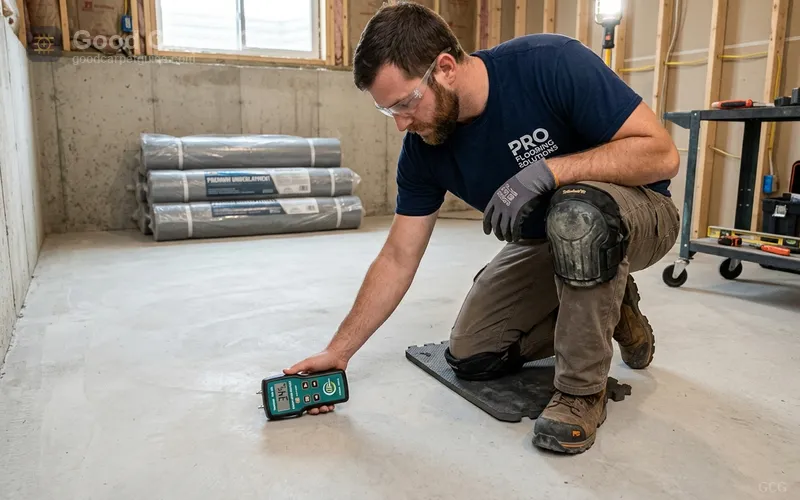
Moisture testing the slab before selecting a vapor-barrier pad confirms whether Protocol A's basement thermal targets can be met without trapping condensation.
protocol b: minimizing r-value over radiant in-floor heating
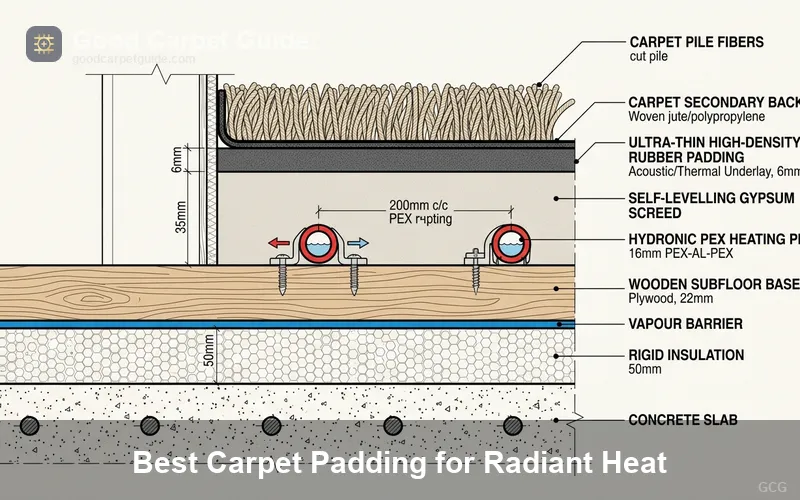
Radiant in-floor heating requires the carpet and pad assembly to conduct heat upward into the room rather than trap it at the subfloor. Electric foil mat systems, such as those sold under the Warmup or WarmlyYours Environ product lines, require the combined carpet and underlayment R-value to stay at or below 1.0. Hydronic water-based systems allow a higher manufacturer ceiling of R-4.0, but professionals recommend keeping the combined figure under R-2.5 so the boiler does not need to run at excessively high water temperatures, a condition that shortens boiler lifespan. Meeting either threshold means specifying thin, ultra-dense textured flat rubber or crumb rubber padding in the R-0.40 to R-0.70 range. Frothed foam, heavy wool cushions, and thick memory foam pads are excluded from this protocol entirely, because their higher R-values choke heat transfer at the subfloor and can cause the radiant elements to overheat. Felt underlayment carries the same exclusion over electric foil heaters specifically, since felt's fiber structure creates a thermal block similar to foam. Backing compatibility matters as much as pad selection: hessian-backed carpet promotes heat transfer more effectively than synthetic-backed carpet, and the adhesive system needs separate verification from the carpet manufacturer for tolerance to continuous low heat. Every radiant installation, regardless of system type, requires a floor sensor wired to the thermostat so the carpet backing temperature never exceeds 80°F to 85°F.
named product lines and their published r-values
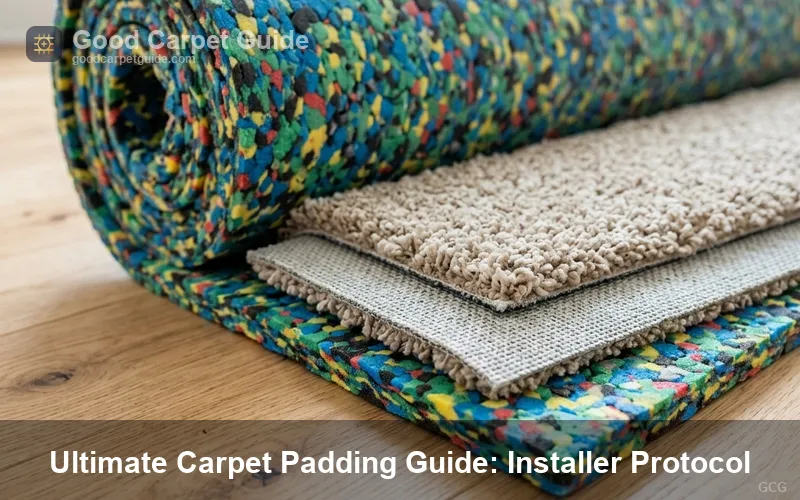
Leggett & Platt's Napa line uses DuraPlush frothed foam technology and reaches an R-value of 2.22 at 0.500" thickness, positioning it as a basement-grade specification under Protocol A. The company's Defender line is a midgrade 8.0 lb/ft³ bonded foam with a blue moisture barrier and Fresh Dimension antimicrobial treatment, ranging from R-1.37 at 3/8" to R-1.82 at 1/2". For radiant applications, Leggett & Platt's Rubber XD Perfect Choice series includes three named products: Arcadia at 0.425" and 24 lb/ft³ density rated R-0.80, Valencia at 0.415" and 21 lb/ft³ density rated R-0.70, and Laguna at 0.425" and 23 lb/ft³ textured rubber rated R-0.70. Future Foam's Prime Comfort is a premium frothed polyurethane pad at 1/2" thickness with double-sided SpillSafe barriers and HyPURguard treatment, rated R-2.0. Future Foam's Tempur Material pad, an 8 lb/ft³ frothed polyurethane cushion at 7/16" with a SpillSafe barrier, is rated R-1.70. Mohawk's SmartCushion is a memory foam pad with an integrated moisture barrier commonly specified for households with pets and children. Healthier Choice White is a high-density 20 lb/ft³ frothed polyurethane pad at only 0.085" thickness, carrying GREENGUARD Gold certification and a lifetime warranty, and its low R-0.36 rating makes it a radiant-floor-compatible option. Stainmaster's Premium Rubber pad, manufactured by Leggett & Platt at 21 lb/ft³ density and 0.360" thickness, is rated R-0.70 and is specifically recommended for hydronic in-floor heat installations.
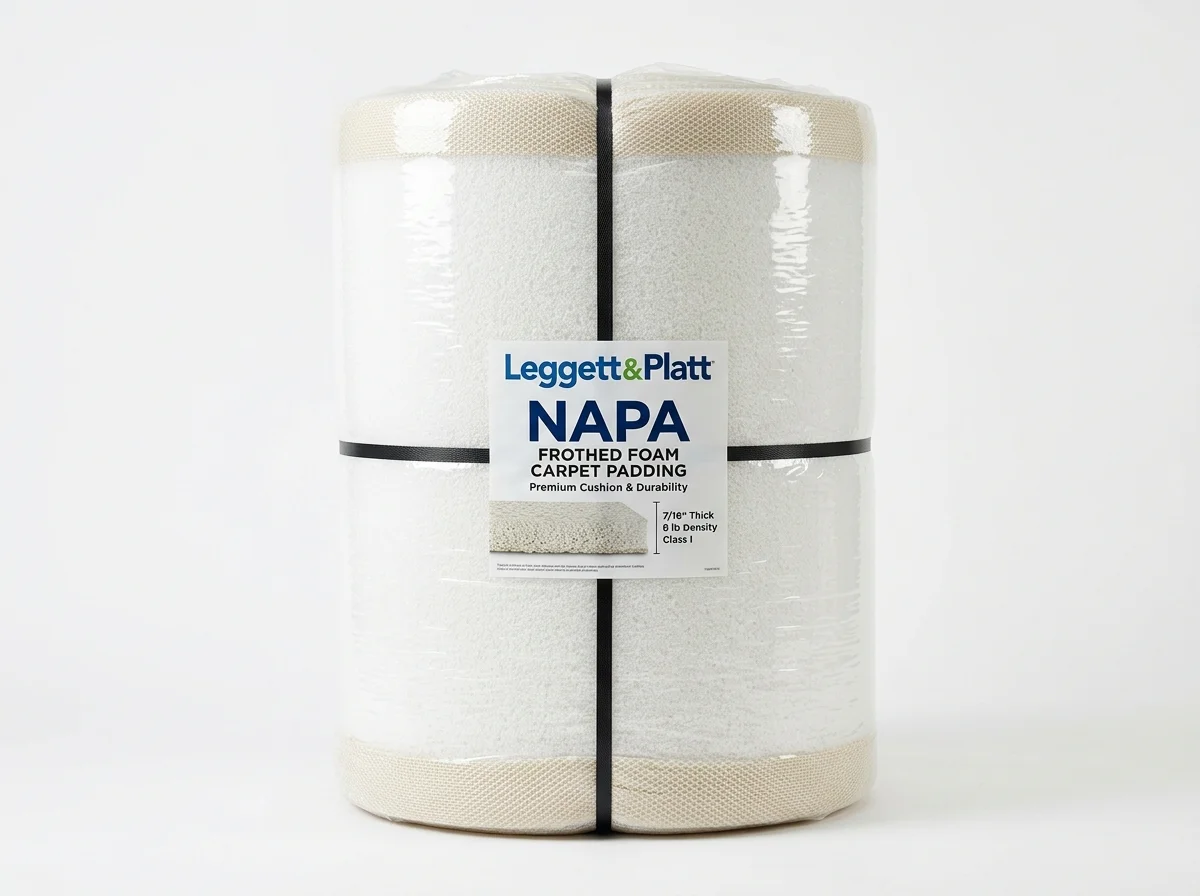
Leggett & Platt Napa Frothed Foam Carpet Padding
Basement-grade frothed polyurethane pad rated R-2.22 at 0.500 inch thickness with DuraPlush technology.
Check Price on Amazonwhat value guide types differ by, and which one professionals recommend
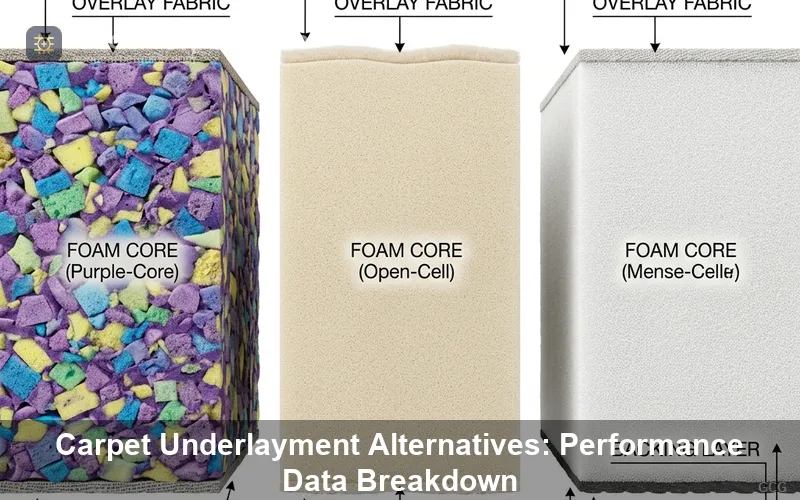
Padding types differ primarily by three specs: density (lb/ft³), thermal resistance (R-value), and moisture barrier configuration, not by marketing terms like "plush" or "premium." Installers working basement or ground-floor jobs generally recommend frothed polyurethane or felt in the 8 lb to 15 lb density range paired with a top-and-bottom moisture barrier. Installers working radiant heat jobs recommend flat or textured rubber in the 21 lb to 24 lb density range specifically because its low R-value clears the electric or hydronic thermal ceiling. No single product line is universally "best"; the CRI density minimum of 6 lb/ft³ is the baseline floor for either scenario, and the subfloor condition determines which direction to move from there.
thickness and size selection for standard carpet installs
The best thickness for carpet padding under standard cut-pile carpet tops out at 7/16" per CRI guidelines, with 3/8" as the ceiling for Berber and loop-pile constructions. Padding is sold in roll widths matching standard carpet broadloom widths (12 feet is most common), and installers cut sheets to room dimensions on site rather than ordering pre-sized pieces. Exceeding the 7/16" thickness ceiling on cut-pile carpet increases backing flex at the seams, which shortens seam life regardless of the pad's density rating.
can you install carpet padding yourself, and what tools are required
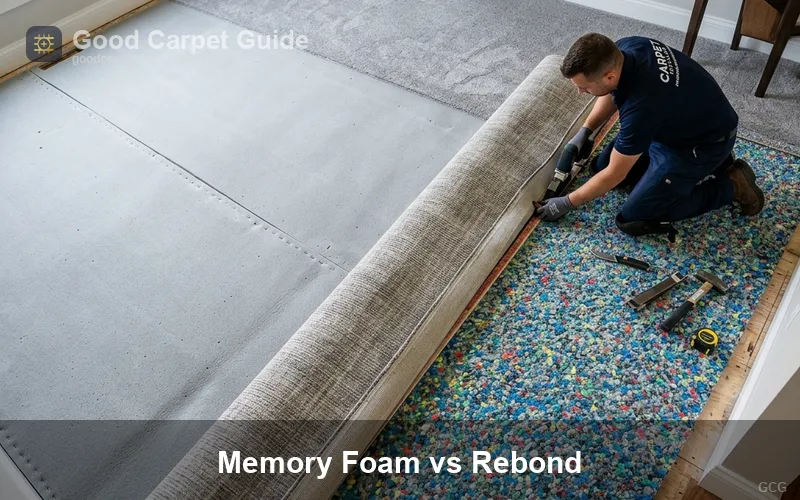
DIY installation is achievable for a single room with basic tools, though seam work and stretch-in installs typically justify a professional call. A standard install requires tackless strip fastened around the room perimeter with pins sized to the subfloor material (concrete versus plywood pins differ), a pad stapled or glued down inside the tack strip line, and the carpet itself stretched onto the tack strip using a knee kicker for edges and a power stretcher for the field of the room. Seams between carpet widths require a seam iron and hot-melt seam tape, or a latex seam sealer for cut edges prone to fraying. A row runner assists in keeping cut lines straight on patterned carpet. Radiant heat installs and basement moisture-barrier installs both carry a higher error cost than a standard bedroom install, and both benefit from a licensed installer who can verify combined R-value math before the pad goes down.
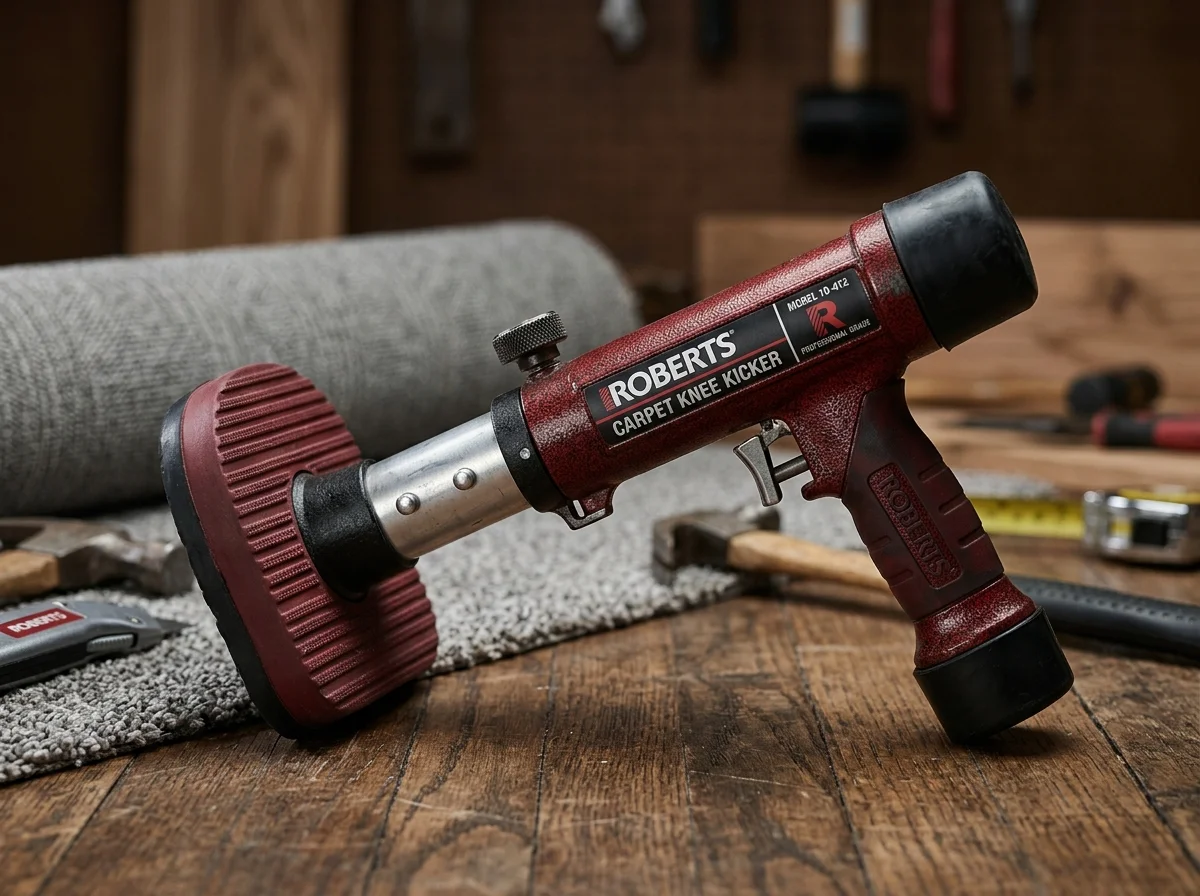
Roberts Knee Kicker Carpet Installation Tool
Standard knee kicker used to stretch carpet edges onto tackless strip during DIY or professional installs.
Check Price on Amazonhow long carpet padding lasts and when to replace it
Installed pricing surveys group padding into three lifespan tiers tied to density and material. Budget 6 lb rebond foam, priced at $0.75 to $1.25 per square foot installed, lasts 3 to 5 years before compression flattens its cushioning and R-value contribution. Mid-range 8 lb rebond foam, priced at $1.25 to $1.55 per square foot installed, lasts 7 to 10 years. Premium memory foam, priced at $1.50 to $1.75 per square foot installed, lasts 10 to 15 years. Independent textile testing using rolling-chair abrasion cycling (20,000 cycles at 150 lbs) shows carpet installed with no separate cushion loses an average 19.3 percent of pile height, while carpet installed over a quality separate cushion loses only 5 percent to 10 percent of thickness under the same test. A pad approaching the end of its density-based lifespan is the practical trigger for replacement, independent of whether the carpet surface itself still looks serviceable.
is a high-r-value pad worth the upgrade cost
The answer depends entirely on subfloor type, and marketing claims of "up to 15 percent" heating bill savings do not hold across every installation. Second-story bedrooms installed over already-heated living space see negligible energy savings from a higher R-value pad, because there is no meaningful temperature gradient driving heat loss through that floor. Basement slabs are the scenario where the upgrade pays back in measurable terms. Insulating basement walls to R-10 can save $250 to $400 annually, and a basement pad rated R-2.22 contributes roughly 20 percent of that R-10 target, translating to approximately $50 to $80 per year in direct energy savings in cold climates. The larger economic return across both scenarios is carpet longevity rather than energy cost. A high-density cushion absorbing walking impact extends carpet service life by roughly double compared to a thin or degraded pad, which offsets premature replacement cost more reliably than the thermal savings alone.
cost comparison: standard rebond versus premium frothed polyurethane
Material cost alone for standard 8 lb rebond foam runs approximately $0.45 per square foot, totaling $1,575 across a 3,500 square foot home. Premium 10 lb frothed polyurethane material costs approximately $1.11 per square foot, totaling $3,885 across the same home, a $2,310 premium delta before installation labor. That delta buys a longer service life tier and, on a basement slab, a measurable thermal contribution that the budget rebond option does not provide. The 8lb vs 10lb carpet padding guide breaks down this specific comparison at the density level rather than the price tier level.
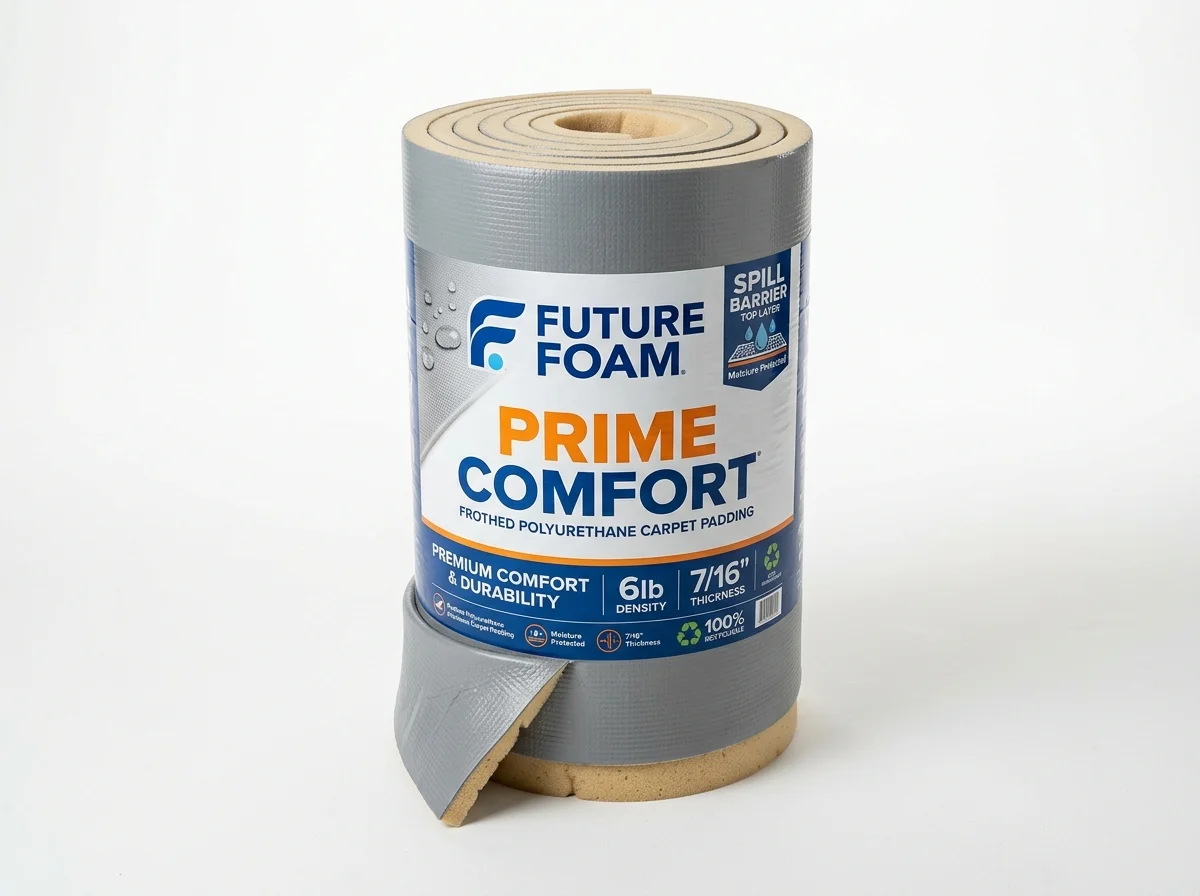
Future Foam Prime Comfort Frothed Polyurethane Carpet Pad
Premium 1/2 inch frothed polyurethane pad with double-sided SpillSafe barriers rated R-2.0.
Check Price on Amazonfailure modes: doubled padding, trapped moisture, and heat choke
Three failure patterns recur across installer reports and warrant separate treatment because each has a distinct root cause. Doubled padding, applied by homeowners trying to add extra cushion or warmth, prevents walker wheels from rolling smoothly, causes visible carpet buckling, and interferes with tack strip engagement, producing wrinkles that create trip hazards. Trapped moisture occurs when a top-side barrier stops surface spills but a structural leak, such as a failed HVAC closet line or a wet bar supply line, sends water around the pad's seams instead of through the top barrier. That water saturates the wood subfloor beneath the barrier and can rot it undetected for months, because the carpet surface stays dry to the touch throughout the process. Heat choke occurs specifically on radiant systems when the combined carpet and pad R-value exceeds the system's thermal ceiling, trapping heat at the subfloor level. The room fails to warm as expected, the heating element runs hotter to compensate, and sustained overheating can burn out electric elements or degrade the carpet's latex backing. Each of these failure modes traces back to a spec that was skipped during pad selection, not to a defective product. The carpet delamination guide covers the backing degradation pathway that heat choke and prolonged moisture exposure both accelerate.
regional and retail sourcing differences
Padding specifications sold at big box retailers typically cluster around the budget and mid-range density tiers (6 lb to 8 lb rebond), while named product lines like Leggett & Platt's Napa or Rubber XD series are more commonly stocked or special-ordered through local flooring dealers who install radiant or basement jobs regularly. Regional climate also shifts which protocol applies more often. Homes in northern cold-climate regions see more basement-slab installations where Protocol A's higher R-value targets apply, while homes with radiant floor systems, more common in newer construction and renovation projects, apply Protocol B regardless of regional climate. Buyers should confirm published R-value and density figures directly against a data sheet rather than a retail display card, since display cards do not always list the specific thickness tier a given R-value applies to.
carpet padding r value guide: final recommendations
Basement and ground-floor installs over cold concrete should specify a frothed polyurethane or dense felt pad rated between R-1.61 and R-2.22, paired with a top-and-bottom moisture barrier, to reach the 2.5 to 3.0 total system R-value target. Radiant heat installs, electric or hydronic, should specify textured or flat rubber padding in the R-0.40 to R-0.70 range, verified against the specific system's published R-value ceiling and confirmed with a floor sensor wired to the thermostat. Standard installs with no thermal complications should prioritize the CRI 6 lb/ft³ density minimum over thickness, and should stay within the 7/16" (cut pile) or 3/8" (loop pile) thickness ceiling regardless of marketed softness. In every scenario, the R-value figure is only useful when it is matched to the subfloor it sits on, not selected in isolation.
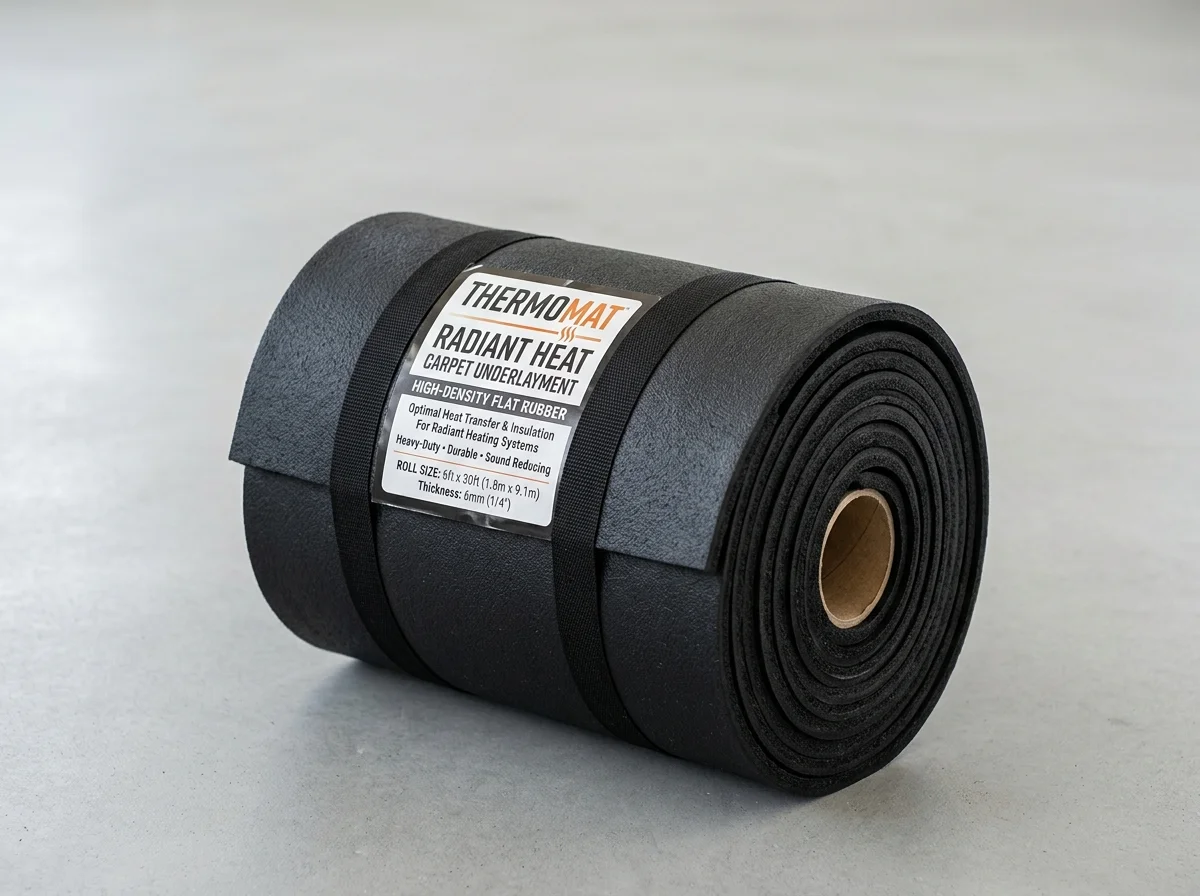
Leggett & Platt Rubber XD Arcadia Radiant Heat Carpet Pad
Flat rubber pad at 0.425 inch and 24 lb/ft3 density rated R-0.80, built for radiant heat and high-traffic installs.
Check Price on Amazon