Stainmaster Carpet Review
The WingWrong1756 Disaster: An Installer's Open Letter on Big Box Subcontracting
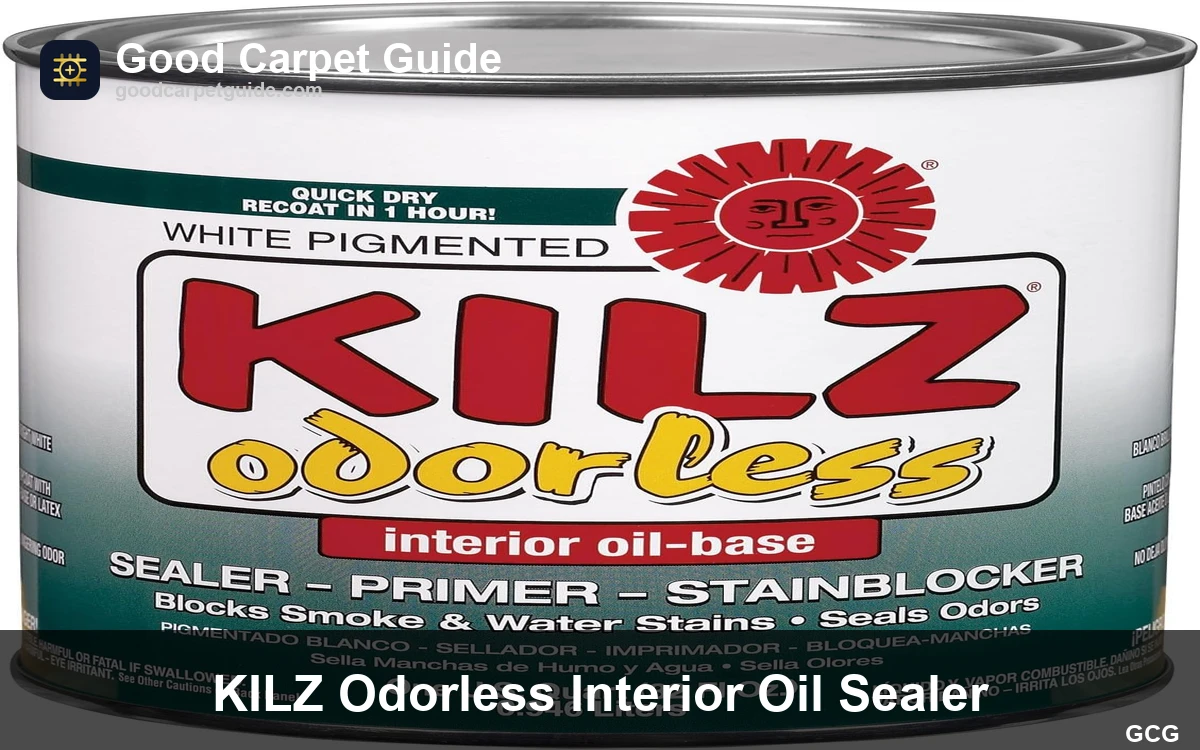
KILZ Complete LGM Oil-Based Primer & Sealer
A professional-grade oil-based primer designed to block subfloor moisture, prevent concrete chemical bleed-through, and isolate odors. Essential preparation work to prevent the $17,000 concrete and subfloor disaster mentioned above.
Check Price on AmazonA basement in Ohio looked like a cement waterfall exploded through the ceiling. Lowe’s subcontractors poured self-leveling concrete over an unsealed subfloor during a Stainmaster carpet installation job. Self-leveling compound leaked through every floor gap, soaked insulation, ruined stored belongings, and hardened directly into the basement carpet pile. WingWrong1756 documented roughly $17,000 in total damage after the installation crew ignored basic moisture-barrier and floor-prep standards. Subfloor repairs alone reached $9,400, while Lowe’s reportedly offered only $2,000 in compensation.
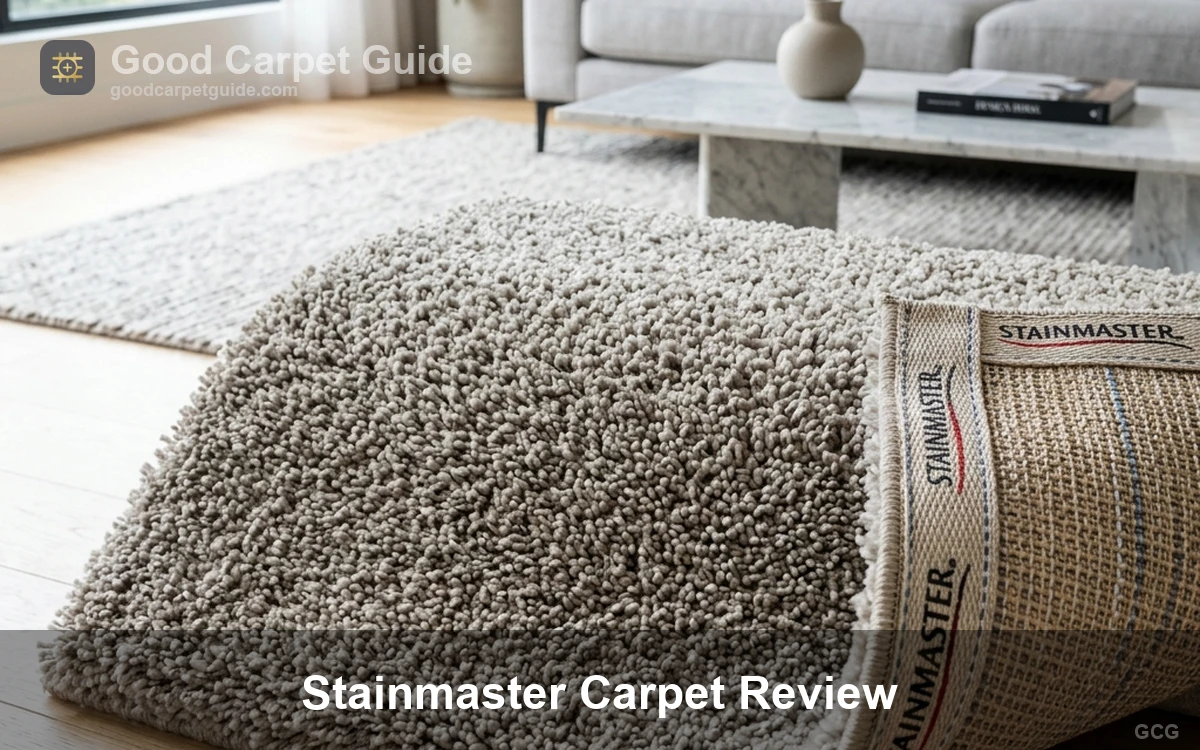
Stainmaster carpet review discussions rarely begin with subfloor moisture migration, seam peaking, or concrete bleed-through. Stainmaster carpet review discussions usually start with showroom softness and pet-friendly marketing displays under bright retail lighting. Real job sites tell a different story. Real job sites expose subcontractor quality, seam construction, latex integrity, cushion density, and installation accountability.
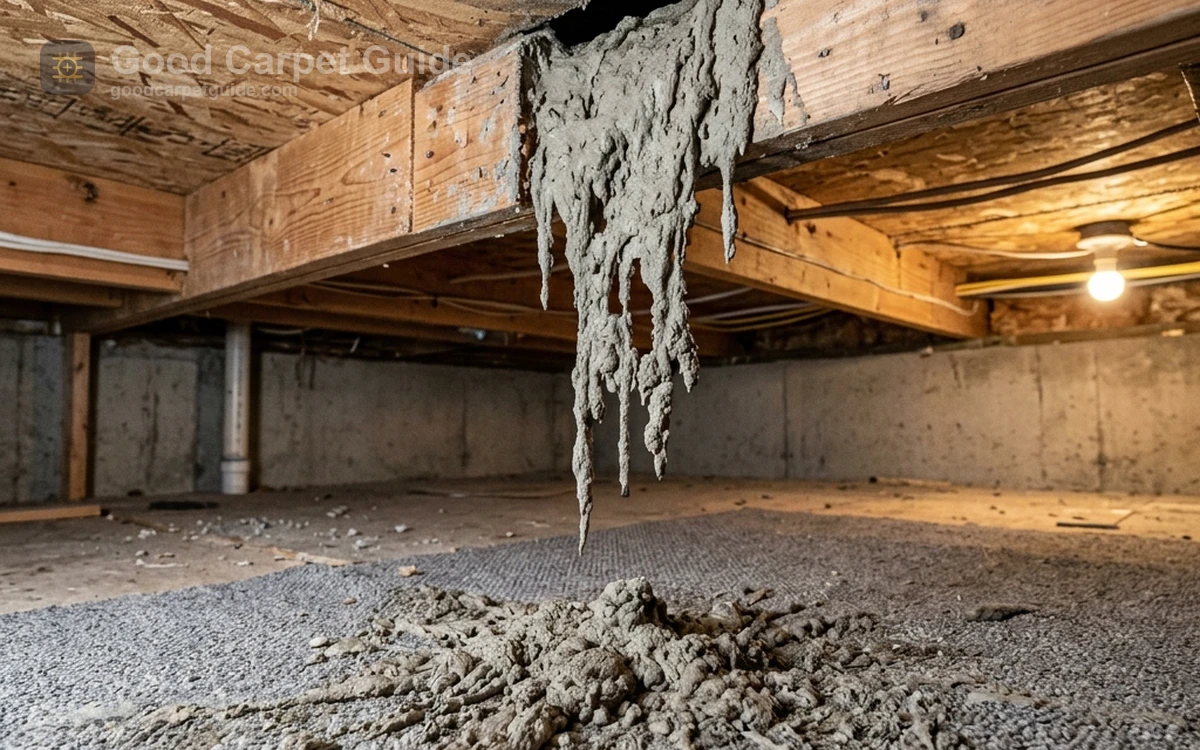
Concrete leakage through an unsealed subfloor demonstrates why carpet installation failures frequently originate below the carpet backing instead of inside the carpet pile itself.
A carpet is a textile floor covering consisting of an upper pile layer attached to primary and secondary backing materials. Carpet performance depends on fiber chemistry, stitch density, backing stability, seam construction, cushion compression resistance, and subfloor preparation. Carpet failure rarely originates from a single issue. Carpet failure develops from combined installation shortcuts, low-density padding, moisture intrusion, or weak secondary backing adhesion.
I have stretched thousands of yards of nylon, polyester, triexta, and olefin carpet over concrete slabs, plywood decks, and basement vapor barriers. Big-box flooring jobs consistently produce the highest callback rates. Big-box flooring jobs rely on rotating subcontract crews chasing volume instead of long-term installer reputation.
The current Stainmaster brand sits directly inside that big-box retail ecosystem after Lowe’s acquired the Stainmaster name in 2021. The acquisition fundamentally changed the relationship between fiber quality, retail positioning, and product labeling.
What is Stainmaster: Carpet Brand or Chemical Coating?
Stainmaster is a carpet brand originally associated with premium Nylon 6,6 carpet fiber technology developed and licensed by Invista. Invista operated as an American integrated fiber, resin, and intermediates company headquartered in Wichita, Kansas. Invista inherited the DuPont textile legacy and became famous inside the flooring industry for durable Nylon 6,6 carpet systems.
Many homeowners incorrectly define Stainmaster as a chemical coating sprayed onto carpet fibers. Stainmaster historically referred to a branded fiber system combining Nylon 6,6 polymer construction, stain-resistance treatments, and performance testing standards.
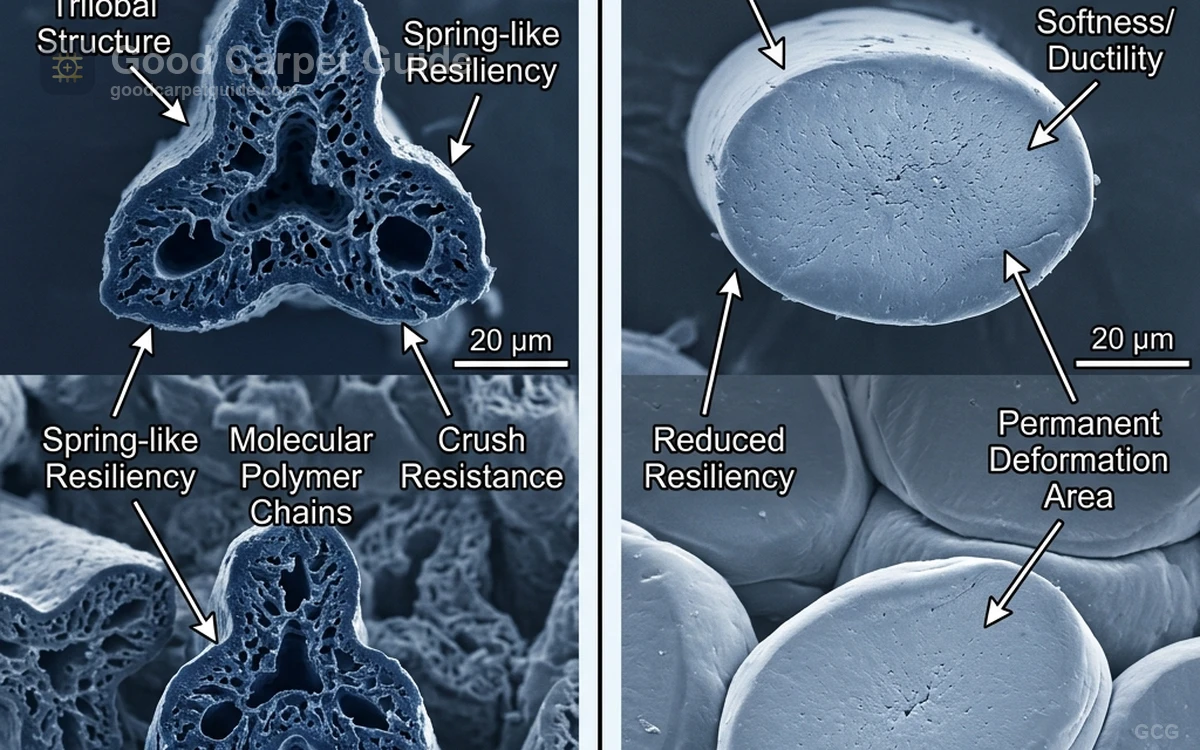
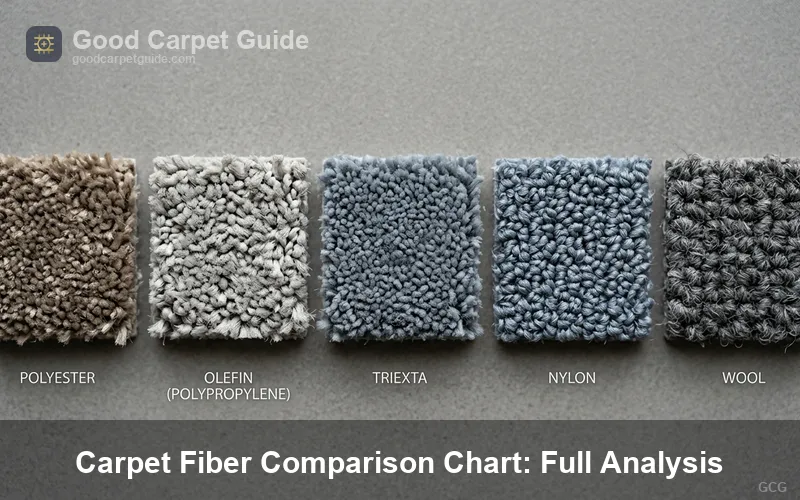
Nylon fiber resilience and polyester fiber softness create dramatically different long-term wear patterns inside high-traffic residential carpet installations.
Stainmaster carpet originally built a strong installer reputation because Nylon 6,6 fiber resists crushing, matting, abrasion, and traffic lane gray-out better than low-density polyester. Nylon fibers spring back after compression. Polyester fibers flatten faster under repeated foot traffic and furniture pressure.
The confusion started after Lowe’s purchased the Stainmaster brand name. Lowe’s shifted major portions of the Stainmaster lineup toward solution-dyed polyester products carrying premium Stainmaster labeling. Products such as “SOS Effortless Appeal II” and “Pup Passage III” illustrate that transition toward lower-cost PET polyester constructions.
Invista exited the carpet fiber business entirely in 2022. The exit closed a major chapter in the original Stainmaster Nylon 6,6 manufacturing legacy.
Is Stainmaster Carpet Good?
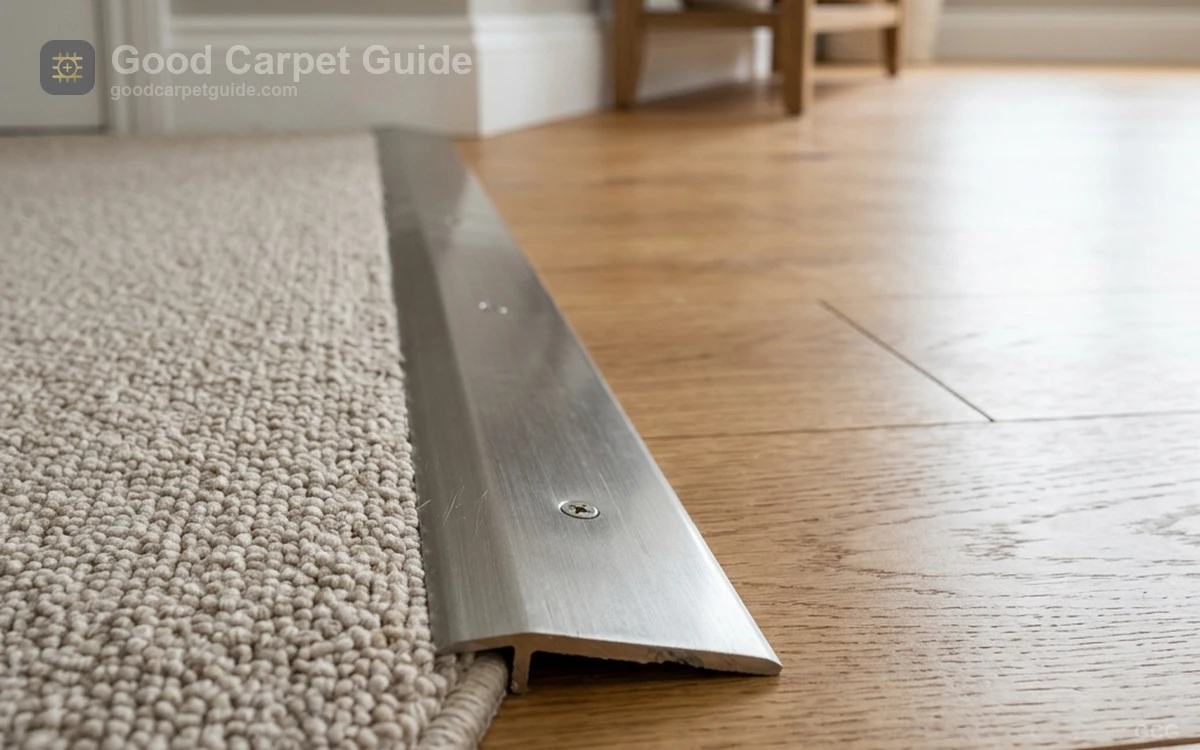
M-D Building Products Carpet-to-Wood Z-Bar Transition Gripper
Heavy-duty metal transition strip with structural teeth that physically anchors and clamps down carpet edges at hardwood floor thresholds. Prevents the exact unraveling and edge seam tearing Renee Rivera experienced.
Check Price on AmazonStainmaster carpet quality depends entirely on the fiber category underneath the Stainmaster label.
Older Stainmaster Nylon 6,6 products delivered strong long-term performance inside active households. Current-generation Stainmaster polyester collections prioritize showroom softness and lower retail pricing over compression resistance and long-term texture retention.
Homeowner complaints consistently target seam failure, fiber unraveling, and delamination issues in lower-tier polyester collections. Renee Rivera reported that Stainmaster PetProtect carpet purchased through Lowe’s began “falling apart” within three months. Renee Rivera specifically described seam separation where the carpet transitioned into hardwood flooring.
Rebecca Jones reported another major failure involving unraveling seams and denied warranty coverage. Lowe’s and Stainmaster rejected Rebecca Jones’ warranty claim because pet urine allegedly contaminated the carpet. Rebecca Jones purchased a PetProtect-branded carpet specifically marketed around pet resistance.
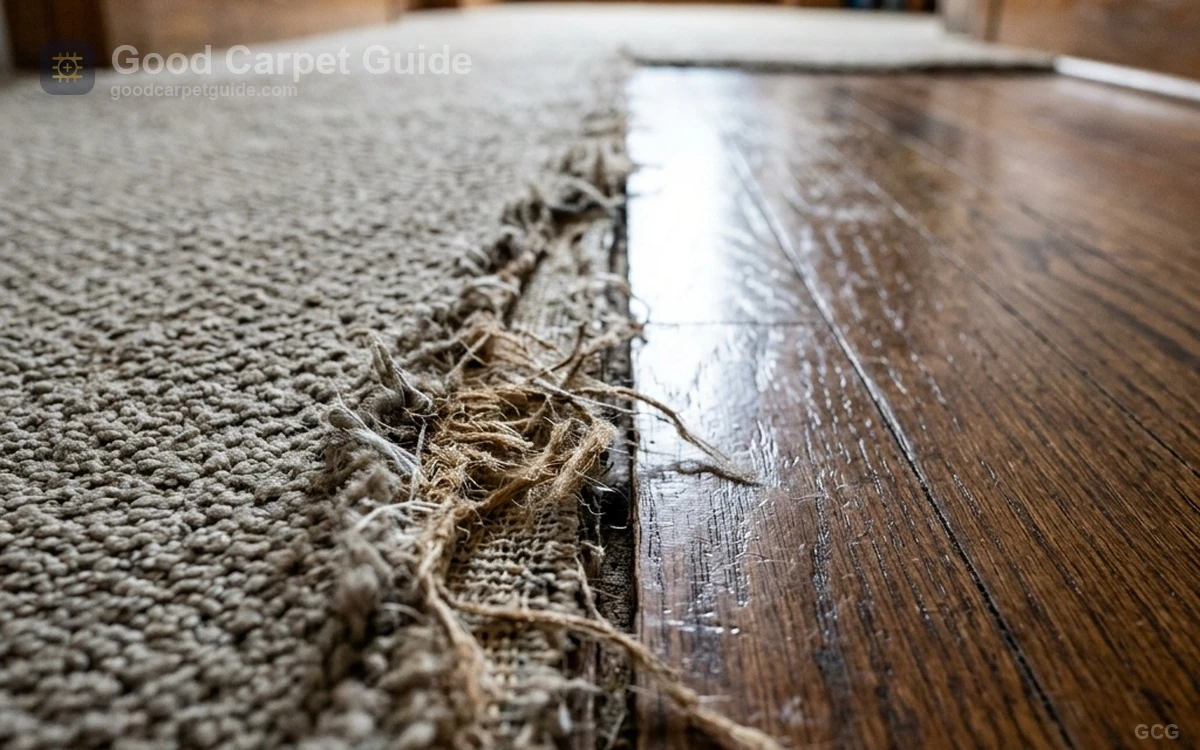
Carpet seam separation near hardwood transitions frequently indicates weak seam sealing, backing instability, or poor stretch tension during installation.
Stainmaster carpet performs acceptably under three conditions:
- Choose nylon-based Stainmaster collections instead of entry-level polyester.
- Install high-density cushion with minimum 8-pound rebond density.
- Use experienced local installers instead of volume-driven subcontract crews.
Stainmaster carpet fails prematurely under three conditions:
- Install low-face-weight polyester inside hallways or stair traffic lanes.
- Stretch carpet over soft low-density padding that collapses under furniture loads.
- Ignore subfloor moisture testing before installation over basement slabs.
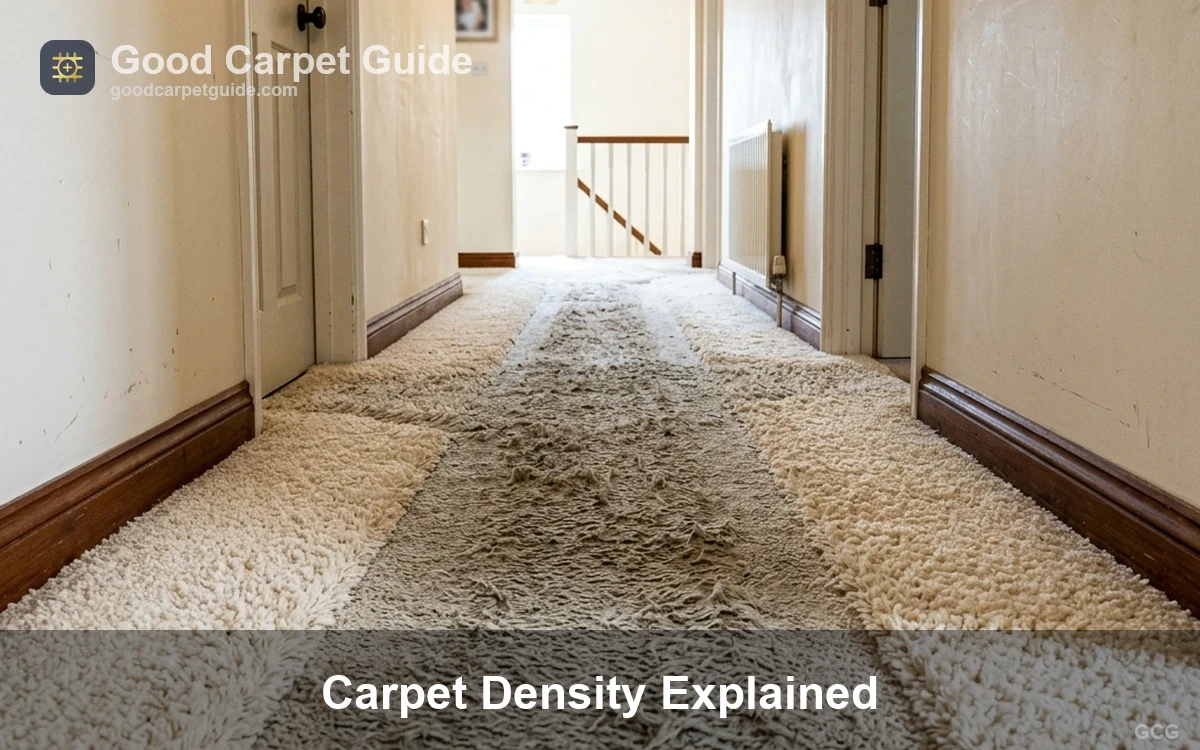
Homeowners researching carpet delamination problems should understand that weak secondary backing adhesion creates bubbling, seam peaking, and edge unraveling over time. Polyester carpets with lighter backing systems experience higher rates of delamination under rolling loads and humidity fluctuations.
The Lowe's Acquisition and the Great Polyester Shift
Lowe’s transformed Stainmaster from a fiber-performance brand into a retail-controlled house label.
Independent flooring retailers reacted aggressively after Lowe’s acquired Stainmaster. Jeff Macco, Vice President with Macco Floors, stated: “We will be dropping this brand like a wedding dress on a honeymoon night! There is no way that we would continue to promote a brand that is owned by a competing retailer.”
That quote spread rapidly across flooring dealer networks because Stainmaster previously operated as a neutral premium fiber brand distributed across independent retailers. Lowe’s ownership created direct channel conflict.
The more important shift involved fiber economics. Nylon 6,6 costs significantly more than PET polyester. Polyester provides softer hand-feel inside showroom samples, lower manufacturing costs, and higher retail margin potential.
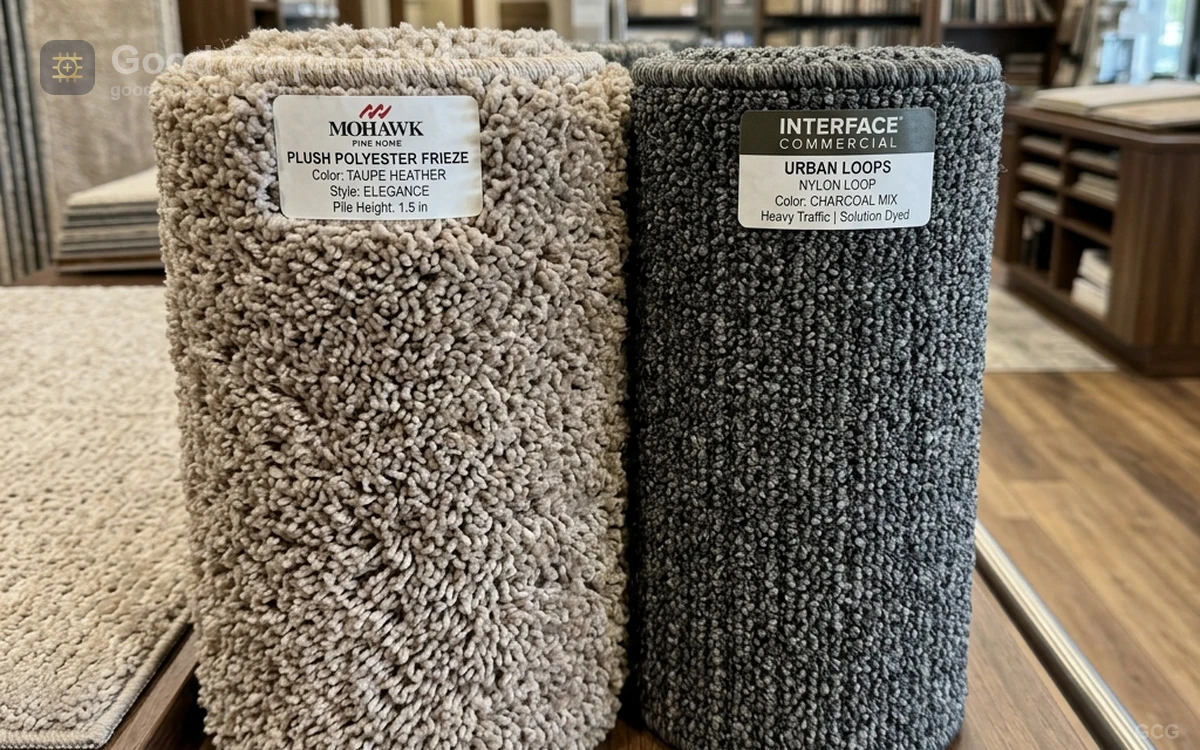
Polyester carpet samples frequently feel softer under retail lighting while nylon carpet constructions retain texture longer under real traffic conditions.
The polyester transition changed three critical performance characteristics:
- Reduces long-term texture retention inside traffic lanes.
- Reduces manufacturing cost per square foot.
- Reduces resilience under rolling furniture and stair impact loads.
The shift particularly affects stairs, hallways, and family-room installations. Polyester pile crushes faster on stair noses because stair traffic concentrates body weight onto narrow tread edges. Homeowners comparing products for stair applications should review best carpet for stairs before purchasing soft polyester plush styles.
Stainmaster PetProtect vs Active Family Performance
Stainmaster PetProtect prioritizes stain resistance and moisture resistance. Stainmaster Active Family collections prioritize general residential traffic durability.
PetProtect products typically use solution-dyed fibers combined with moisture-resistant backing systems designed to slow liquid penetration into the cushion pad. Solution-dyed fibers lock color pigment inside the fiber itself instead of applying topical dye afterward.
Pet accidents expose a major contradiction inside the PetProtect marketing strategy. Rebecca Jones reportedly lost warranty protection because warranty inspectors identified pet urine contamination. The denial directly conflicted with the PetProtect branding message.
Real-world pet households create four major carpet stressors:
- Create acid-based contamination from urine residue.
- Create abrasion wear from claws across transition points.
- Create odor saturation inside carpet cushion layers.
- Create repeated cleaning cycles that weaken backing adhesives.
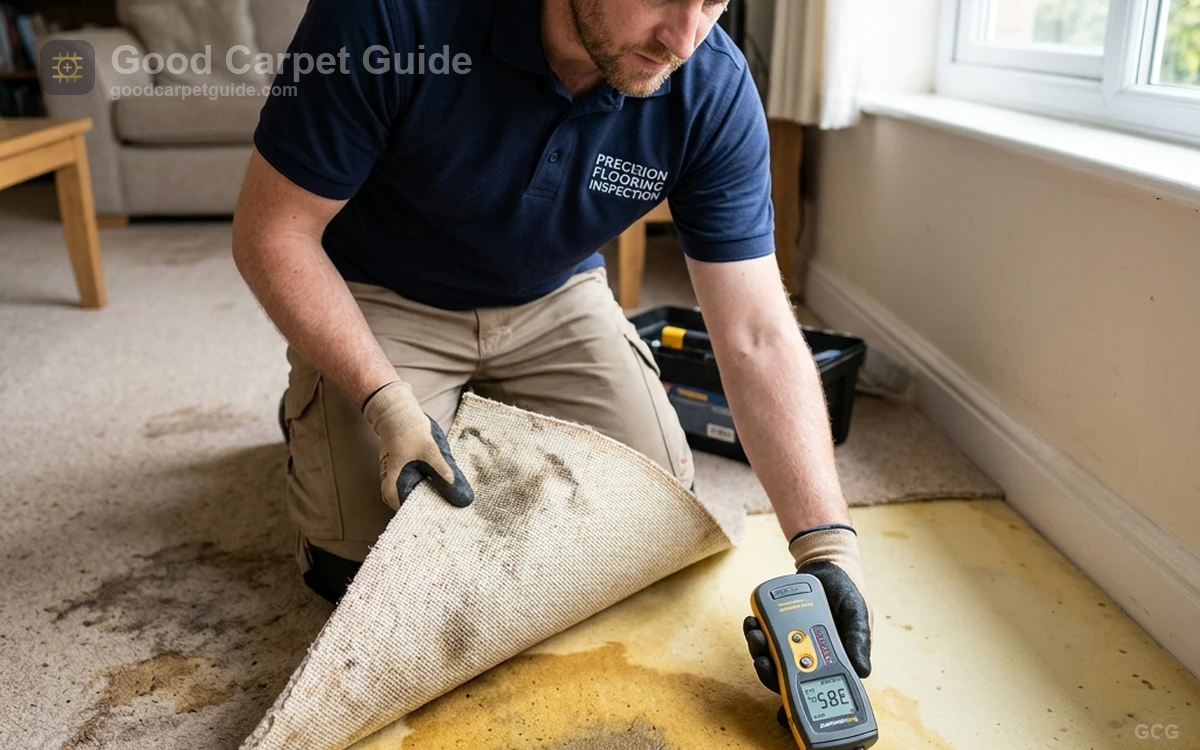
Pet contamination usually penetrates beyond carpet fibers into carpet cushion and subfloor layers below the visible pile surface.
Pet owners should focus more on moisture barriers and cushion systems than branded marketing labels. Dense attached cushion systems outperform standard rebond pads in many pet-heavy households because attached cushion systems reduce liquid migration.
Basement pet installations require even stricter moisture control. Concrete slabs constantly emit vapor pressure through microscopic pores. Homeowners evaluating carpet over slabs should review best carpet for basements for moisture-barrier recommendations and vapor-retarder standards.
The Lowe's "Free Installation" Trap (Big Box vs. Local Dealer)
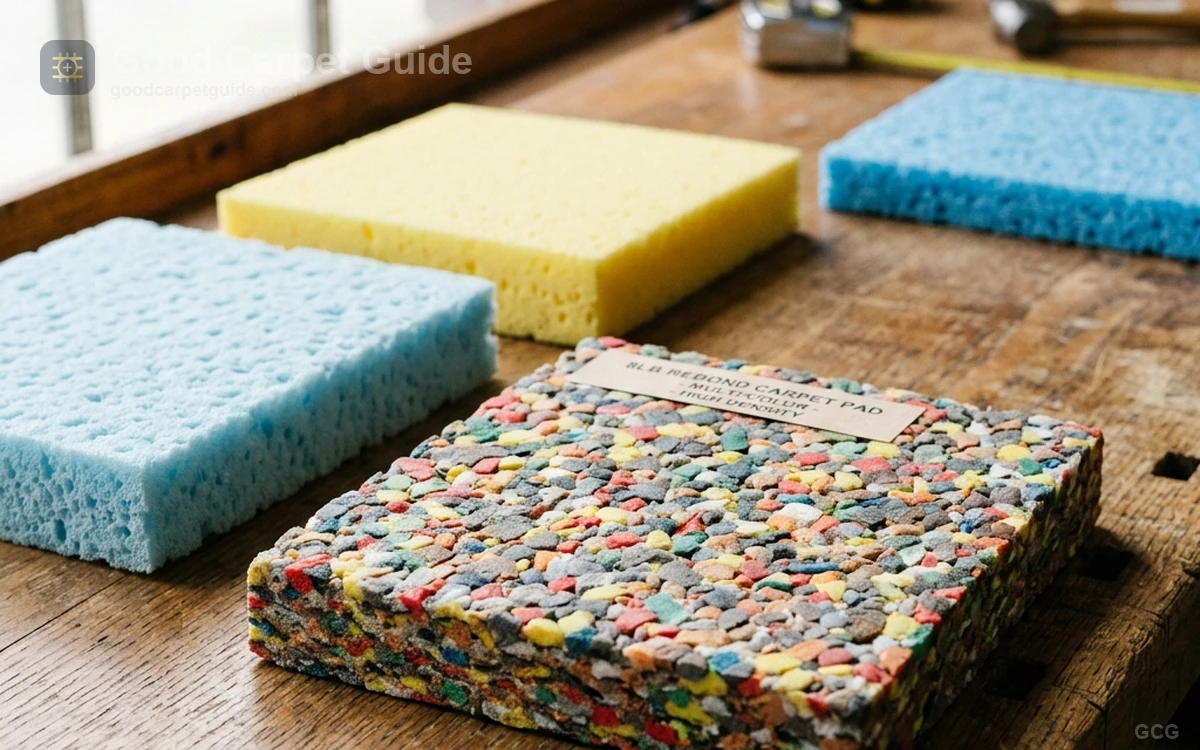
Premium 8lb Density Rebond Carpet Pad with Moisture Barrier (1/2 Inch)
Professional-grade 8lb high-density rebond carpet padding with attached moisture barrier. Bypass the big-box upcharges and protect your soft polyester Stainmaster carpet from early matting.
Check Price on AmazonLowe’s “free installation” pricing model shifts profit into padding upgrades and inflated material calculations.
Most homeowners focus only on carpet square footage pricing. Flooring contracts hide profit inside carpet cushion upgrades, stair labor, furniture moving fees, and waste-factor inflation.
The standard Lowe’s pattern works like this:
- Advertises free carpet installation.
- Charges roughly $15 per square yard for premium 8-pound carpet padding.
- Orders 15% to 30% excess carpet material to minimize seam placement.
- Raises total installed project cost through accessory charges.
Local flooring dealers commonly charge around $7.50 per square yard for comparable 8-pound rebond cushion. Local dealers also template rooms manually instead of relying exclusively on automated measurement algorithms.
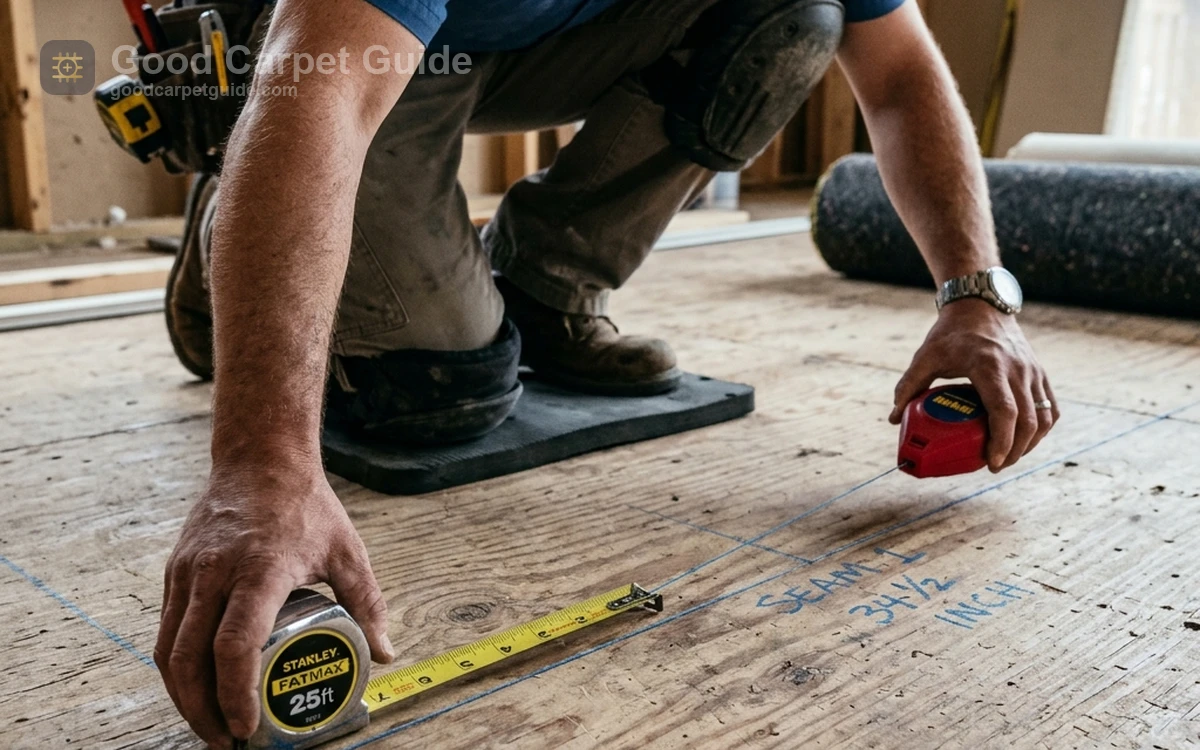
Manual carpet templating frequently reduces unnecessary material waste compared with automated big-box measurement algorithms.
Big-box installation crews rotate constantly. Local flooring dealers protect long-term referral networks and callback reputation. Local flooring dealers usually maintain tighter installer oversight because the same crews represent the store every week.
I consistently see better seam construction from independent flooring retailers. Proper seam construction requires latex seam sealer, seam iron temperature control, correct nap alignment, and power stretching using a carpet tractor. Volume crews skip steps when daily install schedules stack too tightly.
Stainmaster Carpet Warranty: Fine Print and Loopholes
Stainmaster carpet warranties contain aggressive maintenance requirements that void coverage quickly.
The biggest loophole involves mandatory professional hot-water extraction cleaning every 12 to 18 months. Homeowners must keep every receipt documenting professional service intervals. DIY rental steam cleaners void many Stainmaster warranty provisions.
Stainmaster carpet warranties also exclude stairs from wear coverage. Stair exclusions matter because stair noses experience the highest compression loads inside residential flooring systems.
The fine print typically requires homeowners to:
- Schedule professional hot-water extraction at fixed intervals.
- Maintain written documentation and cleaning receipts.
- Address spills immediately after contamination occurs.
- Prevent moisture intrusion from pet accidents or flooding.
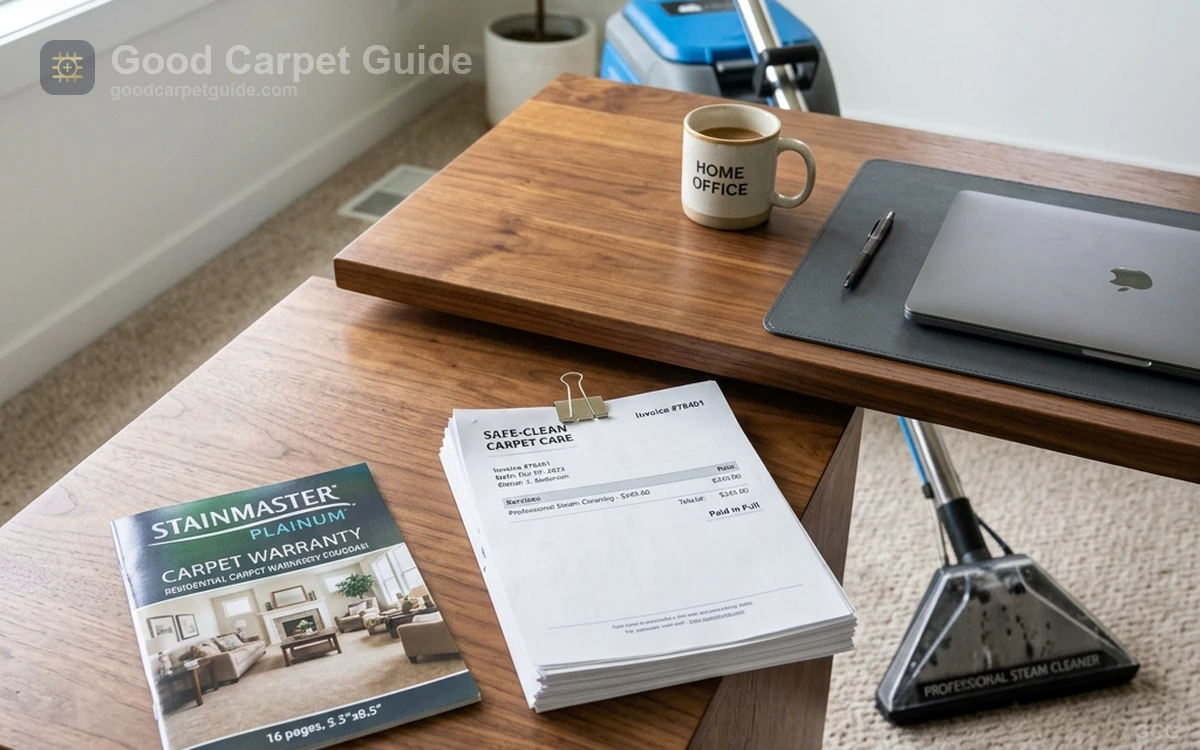
Carpet warranty enforcement frequently depends more on maintenance documentation than visible fiber failure patterns.
Most homeowners never read the exclusion sections. Most homeowners assume “lifetime warranty” means unconditional replacement protection. Flooring manufacturers structure warranties around strict maintenance compliance standards.
Professional installers treat carpet warranties cautiously because inspectors frequently classify fiber failure as maintenance-related instead of manufacturing-related.
Is Stainmaster Carpet Toxic?
Modern Stainmaster carpet products meet current indoor air quality standards for residential flooring products.
Carpet itself is not inherently toxic. Carpet contains synthetic fibers, latex backing compounds, adhesives, stain treatments, and volatile organic compounds released during initial installation. Most VOC off-gassing declines substantially within 48 to 72 hours after installation.
Polyester carpet and nylon carpet both contain petroleum-derived synthetic polymers. Carpet cushion frequently releases stronger odor than carpet fiber itself because rebond padding uses recycled foam fragments bonded with adhesive compounds.
![New carpet installation airing out beside open windows and active ventilation fans.]
Caption: Proper ventilation during the first 72 hours after carpet installation reduces temporary VOC concentration from adhesives and backing compounds.
Homeowners sensitive to indoor air contaminants should:
- Choose CRI Green Label Plus certified carpet systems.
- Ventilate installation areas continuously for 72 hours.
- Avoid solvent-heavy adhesive systems during installation.
- Replace water-damaged carpet immediately after flooding events.
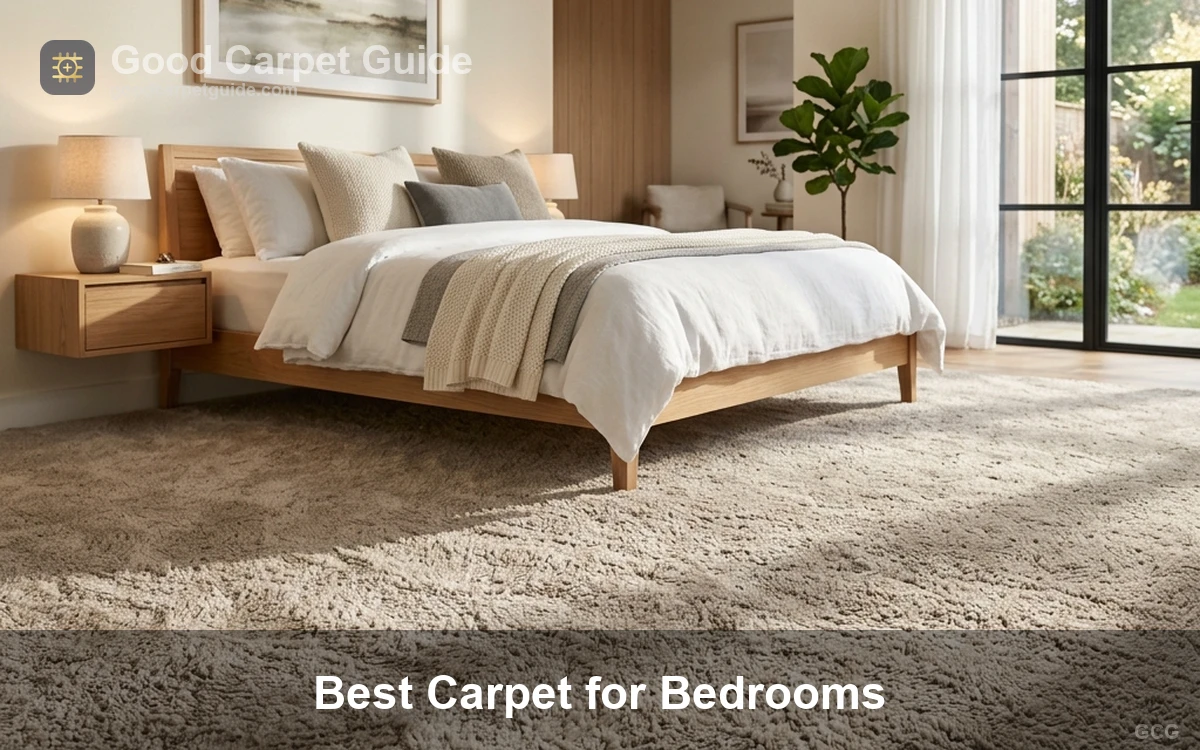
Bedrooms and senior living spaces require especially careful cushion selection because soft low-density padding increases trip risk and mobility instability. Homeowners evaluating comfort-focused installations should compare best carpet for bedrooms and best carpet for seniors before selecting ultra-soft plush constructions.
Stainmaster Carpet Cost: Is It Worth It?
Stainmaster carpet pricing sits inside the middle residential flooring tier, but current polyester-heavy collections compete directly against stronger nylon products sold through local flooring dealers.
The biggest issue involves value retention over time. Polyester carpet delivers lower upfront pricing but shorter texture retention lifespan under heavy traffic.
| Carpet Product | Fiber Type | Installed Cost | Notes |
|---|---|---|---|
| Stainmaster SOS Effortless Appeal II | Polyester (PET) | ~$4,000 installed | Entry-level soft polyester |
| Stainmaster Pup Passage III | Premium Polyester | ~$7,700 installed | Pet-focused soft pile |
| Average Lowe’s Stainmaster + Elite Pad | Mixed lineup | ~$5.59/sq ft installed | Includes inflated pad pricing |
| Shaw Anso Abilene II | Nylon | ~$8.40/sq ft installed | Better texture retention |
| Karastan Echoes of Time | Nylon blend | ~$8.50/sq ft installed | Higher-density construction |
The pricing trend shows a narrowing gap between premium polyester and true nylon systems. Premium polyester Stainmaster products approach the installed pricing of higher-performing nylon carpets from Shaw and Karastan.
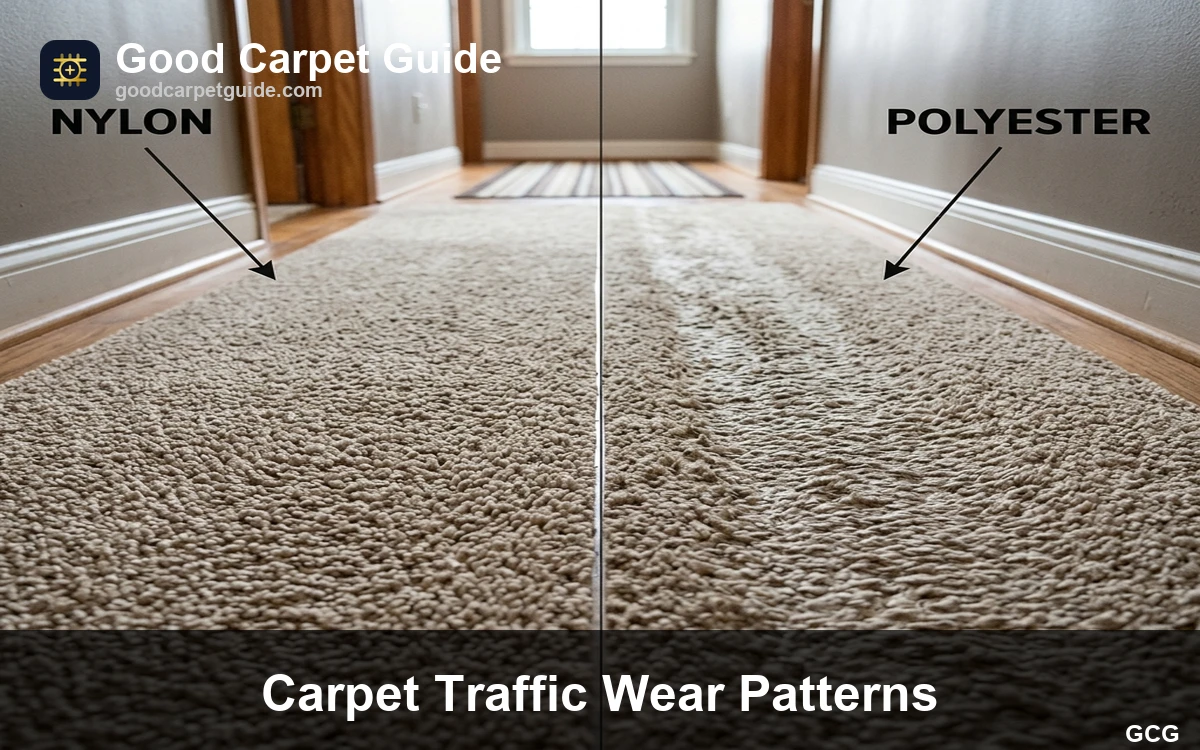
Polyester traffic lanes flatten permanently faster than nylon pile under repeated residential foot traffic.
Polyester makes financial sense inside low-traffic guest bedrooms, staged homes, or short-term ownership situations. Nylon delivers stronger lifecycle value inside family rooms, hallways, and stair systems where compression resistance matters more than showroom softness.
What Carpet Do Professionals Recommend?
Professional installers recommend solution-dyed nylon carpet for most active residential households.
Professional installers prioritize resilience, seam stability, density, and long-term texture retention over retail softness demonstrations. Carpet that feels extremely soft inside a showroom sample frequently crushes faster under traffic loads.
Most independent installers recommend:
- Choose nylon fiber for hallways, stairs, and active family rooms.
- Choose dense low-profile pile for wheelchairs and walkers.
- Choose attached moisture barriers for basement installations.
- Choose 8-pound rebond cushion minimum for residential comfort.
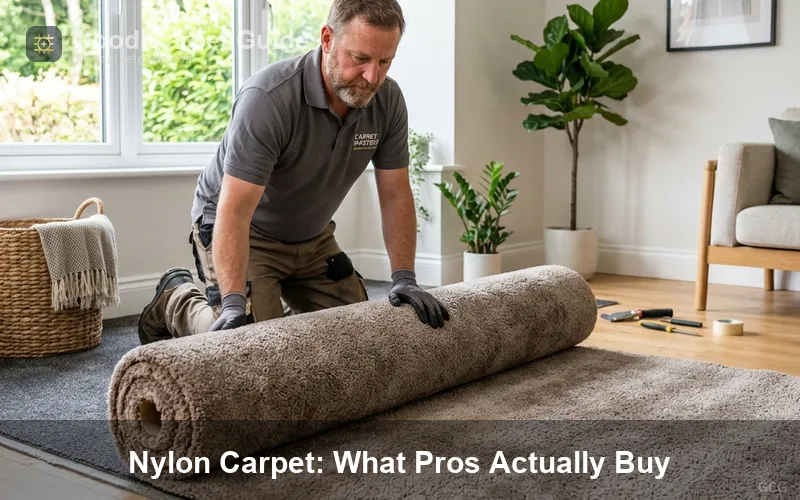
Shaw Anso nylon, Mohawk SmartStrand, and Karastan nylon blends consistently produce lower callback rates than entry-level polyester collections. Commercial-grade loop pile also performs exceptionally well inside active households with pets and children.
I rarely recommend ultra-soft polyester plush carpet for stairs. I frequently replace flattened polyester stair carpet within five years of installation.
Frequently Asked Questions (FAQ Page Schema)
Is Stainmaster carpet good?
Stainmaster carpet quality depends on fiber type. Older Nylon 6,6 Stainmaster products earned strong installer respect for durability and texture retention. Current polyester-heavy Stainmaster collections prioritize softness and lower pricing over long-term resilience.
Is Stainmaster carpet toxic?
Modern Stainmaster carpet products meet current indoor air quality standards. Temporary VOC odor occurs during the first 48 to 72 hours after installation because carpet backing, adhesive systems, and cushion materials release gases during curing.
Is Stainmaster carpet worth the price?
Stainmaster carpet provides acceptable value inside low-traffic bedrooms and short-term ownership situations. Higher-density nylon carpet from independent flooring dealers provides stronger long-term value inside heavy-traffic households.
Why do installers criticize big-box carpet installation?
Installers criticize big-box carpet installation because subcontract crews work under tight production schedules with inconsistent oversight. Poor seam sealing, weak stretching practices, and rushed subfloor preparation create higher callback rates.
Does Stainmaster carpet warranty cover stairs?
Stainmaster carpet warranties typically exclude stairs from wear coverage. Stair traffic creates concentrated compression loads that accelerate pile crushing and seam stress.
Does professional carpet cleaning matter for warranty coverage?
Professional hot-water extraction cleaning directly affects warranty validity. DIY rental machines void many Stainmaster warranty protections if homeowners fail to maintain documented professional cleaning records.
Stainmaster carpet no longer represents a guaranteed premium nylon flooring system. Lowe’s ownership changed the brand from a fiber-performance benchmark into a broad retail label covering both nylon and polyester constructions. Homeowners selecting Stainmaster carpet should evaluate fiber type, face weight, cushion density, installer reputation, and warranty exclusions before focusing on the brand name alone.
For low-traffic bedrooms, Stainmaster polyester products provide soft underfoot comfort at moderate installation cost. For stairs, hallways, senior mobility spaces, and active family rooms, dense nylon carpet from independent flooring dealers remains the stronger long-term flooring decision.