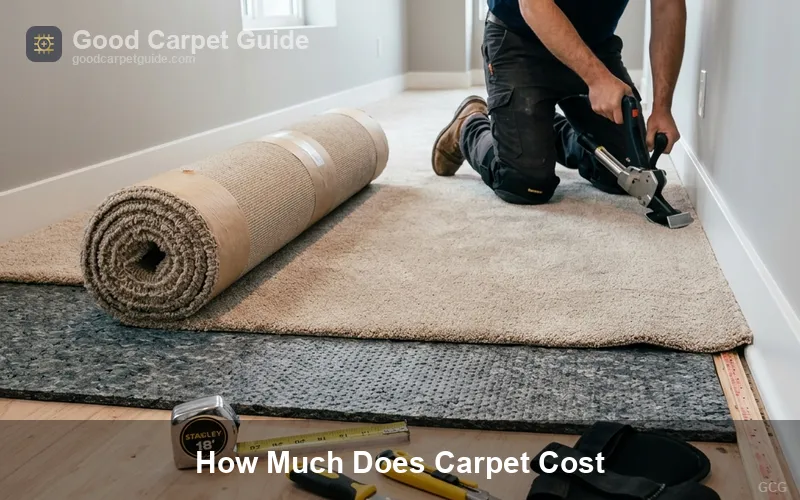
TL;DR recommendation matrix
Carpet installation cost depends on fiber grade, padding density, and the surcharges that most estimates leave off the page. The table below compiles the field-verified numbers a homeowner needs before signing a contract.
| Scenario | Realistic Installed Cost | Best For | Watch-Out |
|---|---|---|---|
| Builder-grade polyester, single bedroom | $2.00 – $3.50 / sq ft | Rental turnover, resale flip | Pile crushes in 24-36 months per field reports |
| Mid-grade nylon or triexta, whole floor | $3.50 – $6.00 / sq ft | Families, pet owners | Padding upgrade is mandatory, not optional |
| Premium wool or high-face-weight nylon | $7.00 – $12.00 / sq ft | Long-term owners, high-traffic living rooms | Requires 8 lb+ rebond pad to protect the investment |
| Big-box "free installation" promo | $4.50 – $7.90 / sq ft effective | Buyers who need speed | Stairs, tack strips, and haul-away billed separately |
| Local independent dealer, all-inclusive quote | $3.60 – $5.90 / sq ft | Buyers who want one accountable crew | Requires vetting the actual installer, not just the salesperson |
Carpet installation cost is never a single number pulled from a flyer. Total carpet installation cost is the sum of the material, the padding, the base labor rate, and a stack of site-specific surcharges that a veteran inspector checks for before a homeowner signs anything. This guide walks through the per-square-foot math, the padding decision that determines whether the carpet survives its own warranty period, the Home Depot promo structure specifically, real installer and Reddit field reports on brand performance, the fine print inside a typical wear warranty, and a full surcharge table for stairs, subfloor repair, and furniture moving.
how much does carpet installation cost per square foot
Carpet installation cost per square foot ranges from $2.00 to $12.00, split across three tiers defined by fiber type and padding grade. Builder-grade polyester (PET) fiber runs $2.00 to $3.50 per sq ft installed, mid-grade nylon or triexta runs $3.50 to $6.00, and premium wool or high-ounce nylon runs $7.00 to $12.00. These ranges include material, a standard 7/16-inch 8 lb padding, and base labor, but exclude surcharges covered later in this guide.
| Quality Tier | Material (Per Sq. Ft.) | Padding (Per Sq. Ft.) | Base Labor (Per Sq. Ft.) | Total Installed | Field Lifespan |
|---|---|---|---|---|---|
| Builder / Economy | $0.50 – $1.50 | $0.25 – $0.50 | $0.50 – $1.50 | $2.00 – $3.50 | 3 – 5 years |
| Mid-Grade (Nylon/Triexta) | $1.50 – $6.00 | $0.50 – $0.75 | $0.75 – $1.75 | $3.50 – $6.00 | 6 – 12 years |
| Premium (Wool / High-Ounce) | $6.00 – $21.00 | $0.75 – $1.20 | $1.00 – $2.25 | $7.00 – $12.00 | 12 – 20+ years |
This table separates material cost from padding cost because the two line items get bundled together on most retail estimates, hiding where the money actually goes. Regional wage indexes shift the labor column further: installers in Seattle, New York, or Boston bill $35 to $44 per hour, while installers in Georgia, Tennessee, or Ohio bill $15 to $24 per hour, which pushes a whole-house job $1,000 to $2,000 higher on the coasts.
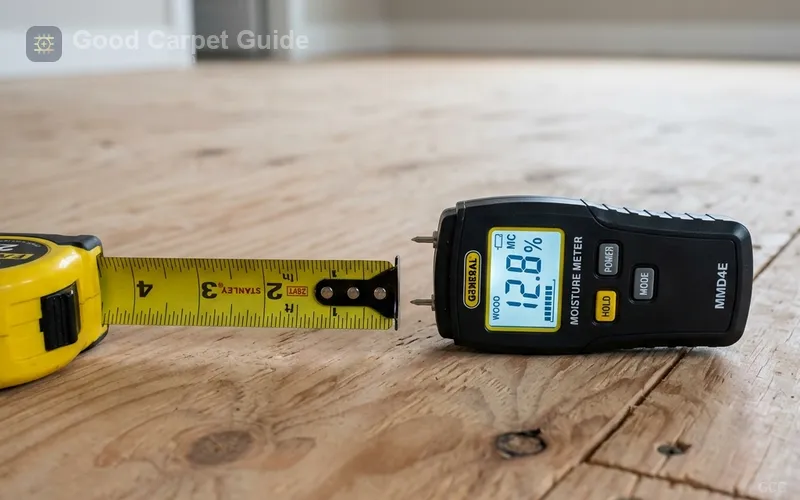
A tape measure and moisture meter on a bare subfloor set the true per-square-foot baseline before padding or fiber grade enters the carpet installation cost equation.
what does carpet installation cost
Carpet installation cost covers four separate line items: the carpet roll itself, the padding underneath it, the base labor to stretch and seam the material, and a set of surcharges triggered by the specific condition of the room. Homeowners who request "the price of carpet" from a big-box associate typically receive only the material and base labor figure, with padding and surcharges quoted afterward once the crew has already been scheduled.
A veteran inspector checks the following before treating any quote as final:
- Confirms the padding density and thickness are itemized separately, not folded into a vague "installation fee."
- Requests a written figure for old carpet and pad removal, since haul-away runs $0.70 to $1.60 per sq ft.
- Verifies whether stairs, closets, and transitions are priced per unit or excluded entirely.
- Checks whether subfloor repair or self-leveling compound is a contingency line item or a flat exclusion.
- Asks whether furniture moving is included or billed at $25 to $75 per room.
This checklist closes the gap between a marketing number and an actual invoice. Every one of these five items shows up on a real job site, and skipping the question at quote time is the single most common source of a final bill that runs 20% to 40% over the original estimate.
how much does carpet installation cost at home depot
Home Depot's advertised carpet installation cost is built around a "free installation" promo tied to a minimum purchase, usually $499 to $600 in carpet. The promo covers base labor for a standard room only, and it excludes stairs, transition strips, tack strip replacement, floor prep, third-floor hauling, and baseboard removal. Home Depot recovers the labor cost by marking up in-stock carpet roughly 30% and pricing padding at a premium relative to independent suppliers.
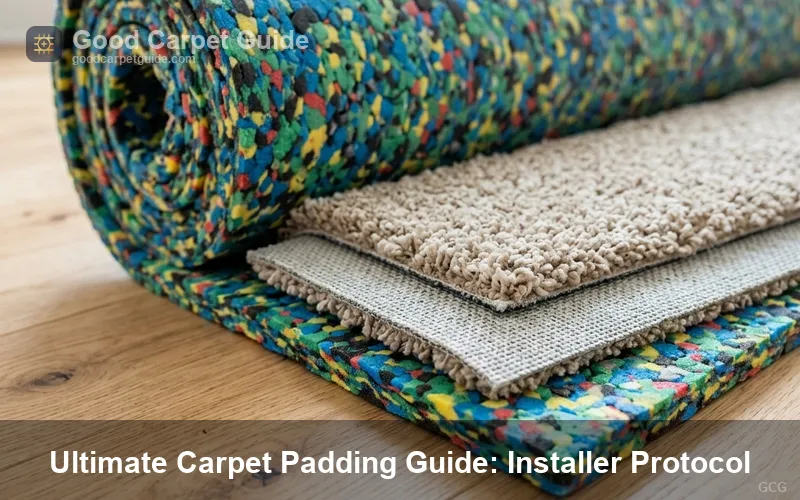
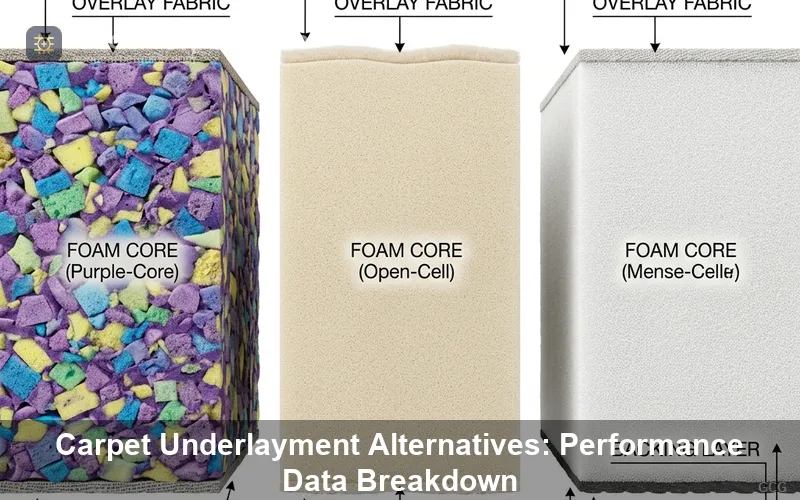
Installer warning box: Home Depot's LifeProof 1/2-inch padding is rated at 3.8 lb density but is marketed as performance-equivalent to an 8 lb pad. A 3.8 lb prime foam pad compresses and flattens under standard residential foot traffic within a shorter window than a true 8 lb rebond pad, according to padding manufacturers including Leggett & Platt and Carpenter. Homeowners upgrading from the promo default should request the actual density rating in writing, not the marketing equivalency claim.
Once stairs, haul-away, and a genuine 8 lb pad are added back into a Home Depot quote, the effective carpet installation cost typically lands between $4.50 and $7.90 per sq ft, which frequently exceeds the all-inclusive quote of $3.60 to $5.90 per sq ft offered by a local independent dealer running a W-2 crew.
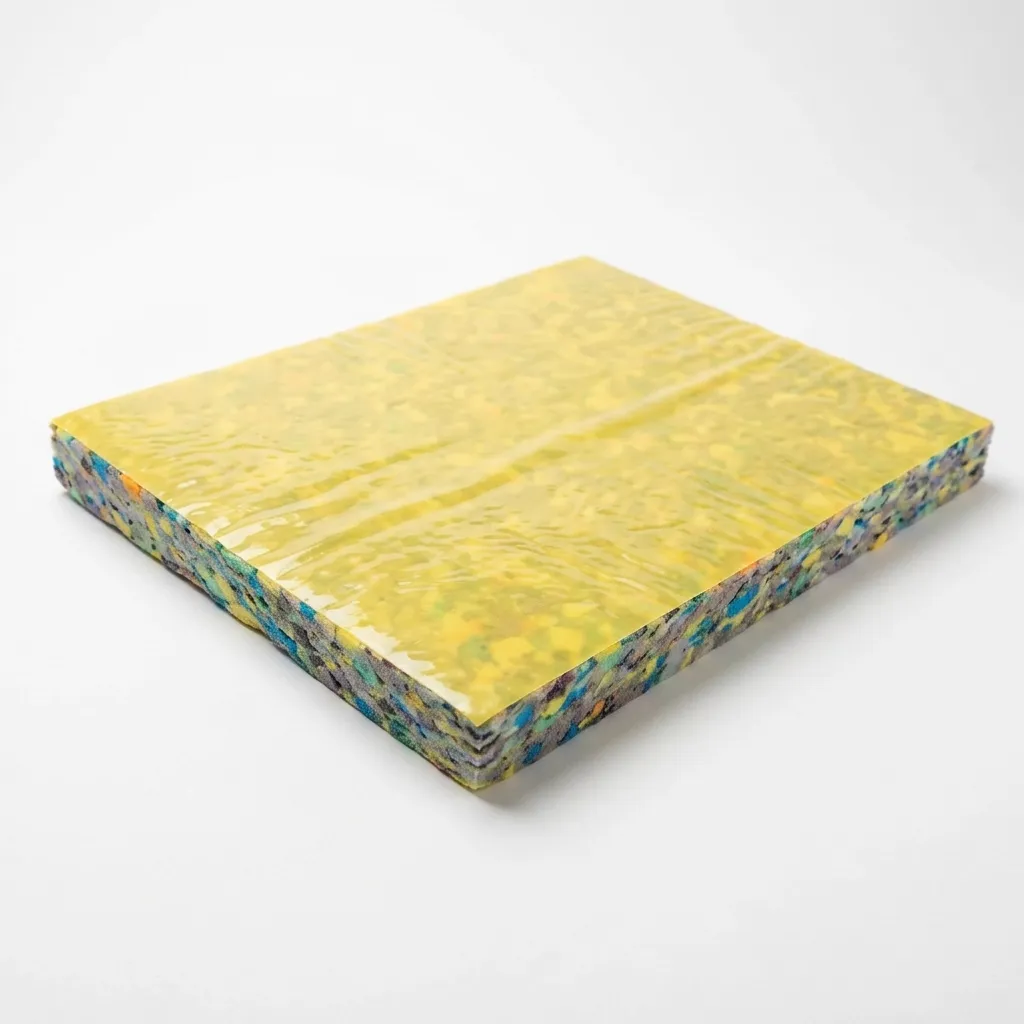
Mohawk SmartCushion Premium Carpet Padding
A homeowner comparing padding density against a big-box promo pad can use this listing to check actual lb-density ratings before approving an upgrade line item.
Check Price on Amazonhow carpet installation cost problems show up in real homeowner reports
Field reports and installer forums surface a consistent pattern: carpet installation cost disputes rarely start with the fiber itself, they start with the padding or the subcontractor. On r/HomeImprovement, one homeowner described big-box-installed polyester carpet looking "years old" in high-traffic areas after only two years, a direct result of PET fiber lacking the molecular memory to recover from compression. A separate buyer of an Anderson Tuftex / Shaw Pet Perfection loop-pile product reported the carpet looked "constantly dirty and worn" from day one under foot traffic, and the manufacturer's own inspector classified the flattening as within normal tolerance rather than a defect.
Subcontracting failures compound the cost picture. One reported case involved $3,500 in drywall damage after a big-box subcontractor installed flooring over an unmarked water heater drain, followed by three months of disputes across multiple subcontracting tiers before resolution. This class of failure connects directly to carpet delamination issues , since rushed crews frequently skip the subfloor inspection step that would have caught the drain hazard in the first place.
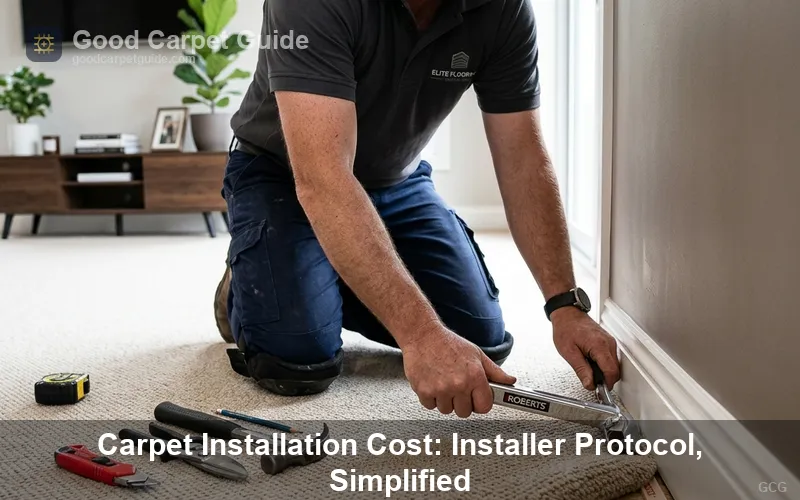
Installers attribute a large share of these failures to a single shortcut: using a knee kicker instead of a mechanical power stretcher. A carpet stretched with a knee kicker alone develops loose ripples and buckling within 3 to 5 years, and that failure mode voids most manufacturer warranties outright. Retired union installer field consensus places nylon fiber ahead of polyester specifically because nylon's fiber structure resists this compression pattern under identical traffic loads.
warranty fine print analysis for carpet installation cost claims
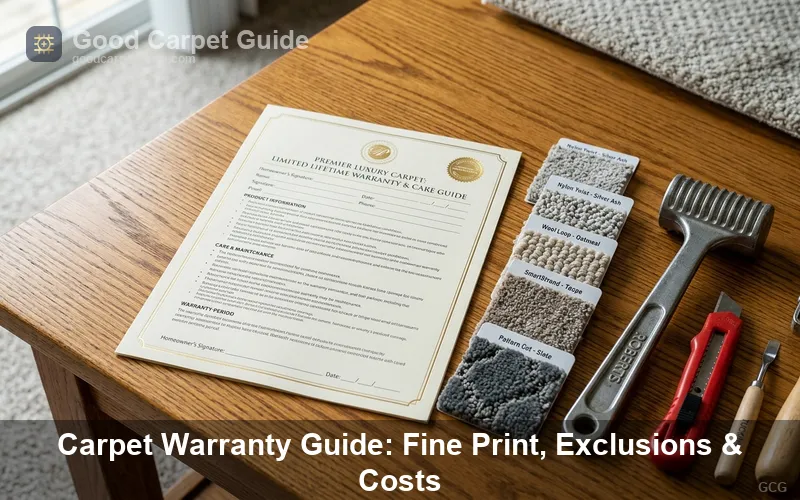
A standard 10-to-20-year wear warranty does not cover matting, crushing, flattening, or soiling. The warranty covers abrasive wear only, defined by manufacturers as a measurable loss of pile fiber mass, typically requiring more than 10% pile height loss before a claim qualifies. A hallway that has visibly flattened into a traffic lane, without any fiber physically detaching, does not meet this threshold and gets denied.
| Warranty Type | What It Actually Covers | What It Excludes | Maintenance Requirement |
|---|---|---|---|
| Standard Wear Warranty | Fiber loss exceeding ~10% pile height | Matting, crushing, flattening, soiling | Annual vacuuming record (rarely enforced) |
| Stain Warranty | Named stain categories from an approved list | Bleach damage, pet urine (on most policies) | Cleaning within a specified window of the spill |
| Texture Retention / Appearance Retention | Visible flattening and pile distortion | Damage from improper padding or moisture | IICRC-certified hot water extraction on a fixed schedule |
| Delamination Warranty | Backing separation from the primary fiber | Delamination caused by over-thick padding | Padding thickness compliance (typically capped near 1/2 inch) |
This table clarifies why the rare Texture Retention or Appearance Retention warranty, not the standard wear warranty, is the only policy that actually addresses the flattening complaint most homeowners file. Every warranty tier in this table also carries a maintenance clause: manufacturers require professional hot water extraction every 12 to 18 months by an IICRC-certified technician under IICRC S100 cleaning standards, and a claim filed without a matching paper trail of cleaning receipts is denied regardless of the underlying defect.
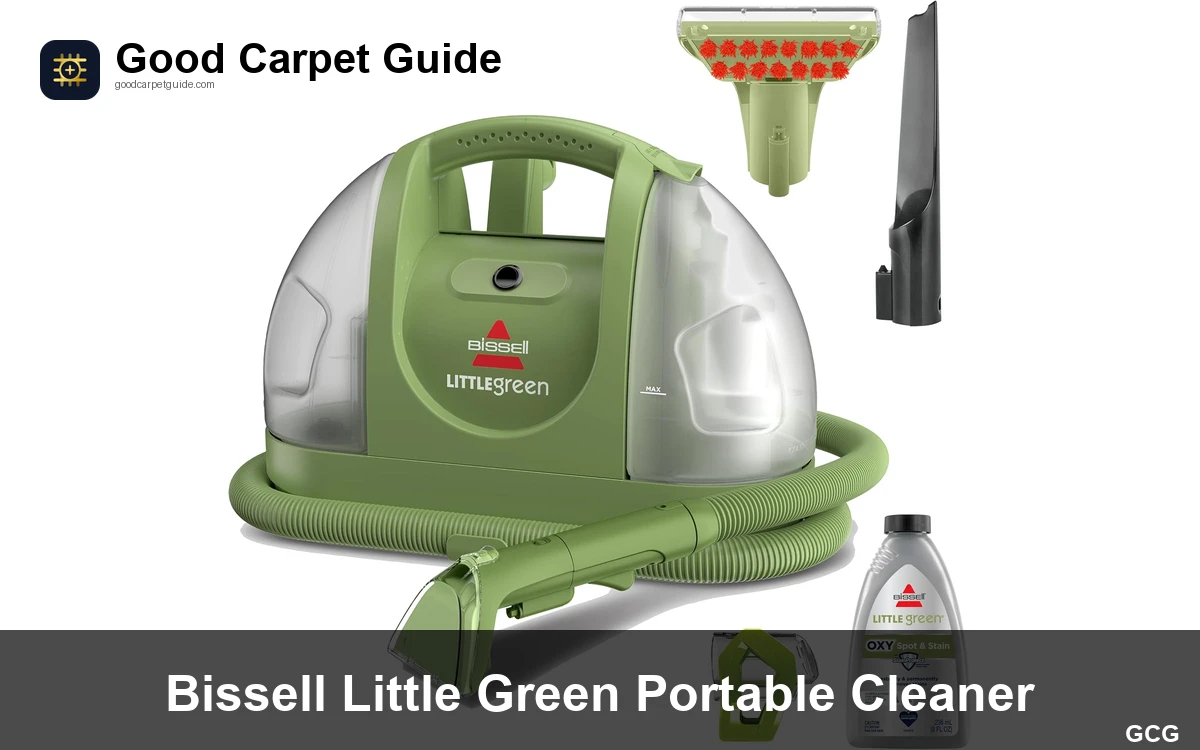
Bissell Little Green Portable Carpet Cleaner
Spot extraction between the required 12-to-18-month professional cleanings helps homeowners keep stains from setting into the fiber, though it does not substitute for the certified hot water extraction that most wear warranties require.
Check Price on Amazoncost & budget considerations: the surcharge stack
Base labor to roll out carpet runs $0.50 to $1.50 per sq ft, but the surcharge stack below is what turns a quoted estimate into an actual invoice. A veteran inspector walks a job site using the following sequence before pricing is finalized:
- Measure total square footage including a 10% to 15% waste factor for pattern matching and seam placement.
- Inspect the subfloor for moisture, unevenness, and prior adhesive residue using a calcium chloride or electronic moisture meter.
- Quote old carpet and pad removal separately at $0.70 to $1.60 per sq ft.
- Price stairs at $11 to $26 per step, or $150 to $600 total for a standard 13-step run, adding 10% to 20% for pattern-matched carpet.
- Add subfloor wood repair at $1.75 to $4.70 per sq ft, or full subfloor replacement at $3.00 to $10.00 per sq ft where damage is extensive.
- Include self-leveling compound at $1.00 to $2.00 per sq ft for basements with uneven concrete.
- List doorway transition strips at $25 to $100 each and baseboard removal/reinstallation at $1.85 to $4.15 per linear foot.
- Confirm furniture moving at $25 to $75 per room for heavy items.
This sequence matters because skipping any single step shifts cost discovery to installation day, when change orders carry a premium. Basement projects deserve particular scrutiny, since concrete slab alkaline moisture emissions accelerate padding breakdown; homeowners planning a below-grade room should review a best carpet for basement guide before locking in a padding spec. Stair runs carry their own risk profile too, covered in more detail in a best carpet for stairs guide , and bedroom-specific padding tradeoffs are addressed in a best carpet for bedrooms guide .
Seam quality is the line item most likely to fail inspection on a rushed job. A seam iron paired with a hot-melt seam tape, or a liquid seam sealer applied to the cut edge, prevents the seam from opening under foot traffic and furniture load.
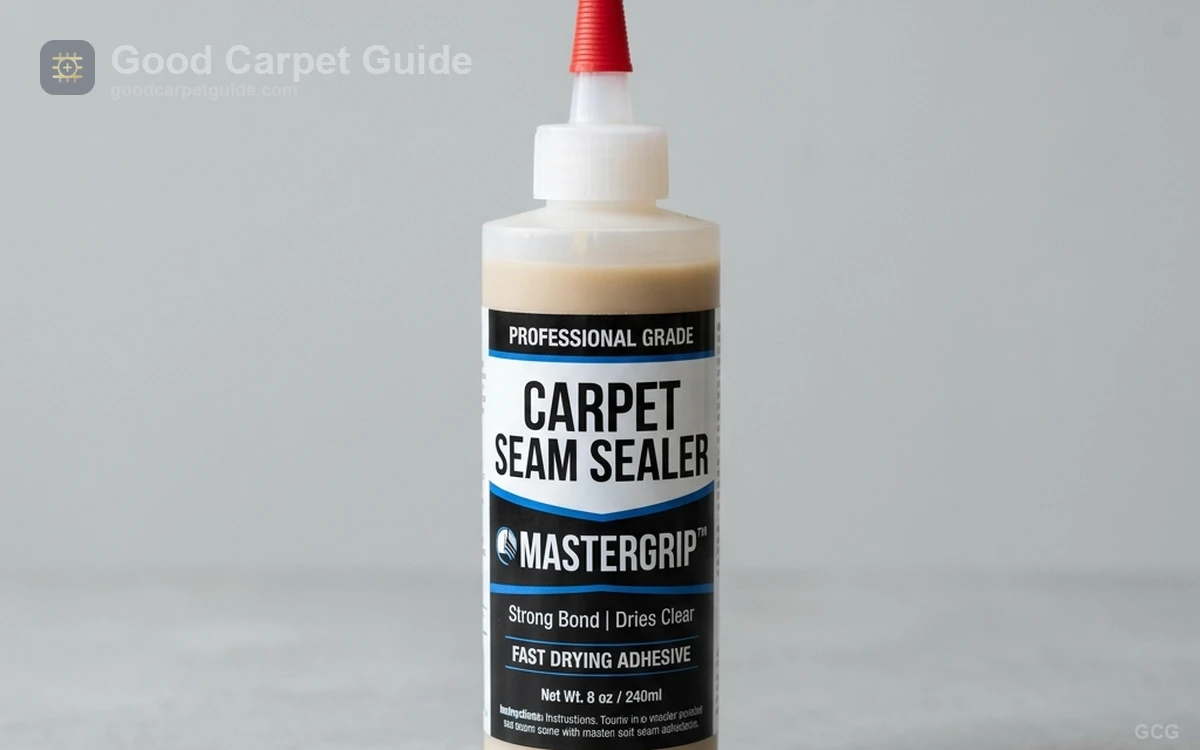
Roberts 8015 Universal Carpet Seam Sealer
Applied to the cut edge of the carpet backing before seaming, this sealer keeps fibers from unraveling at the seam line, a common cause of visible gaps installers get called back to fix.
Check Price on Amazon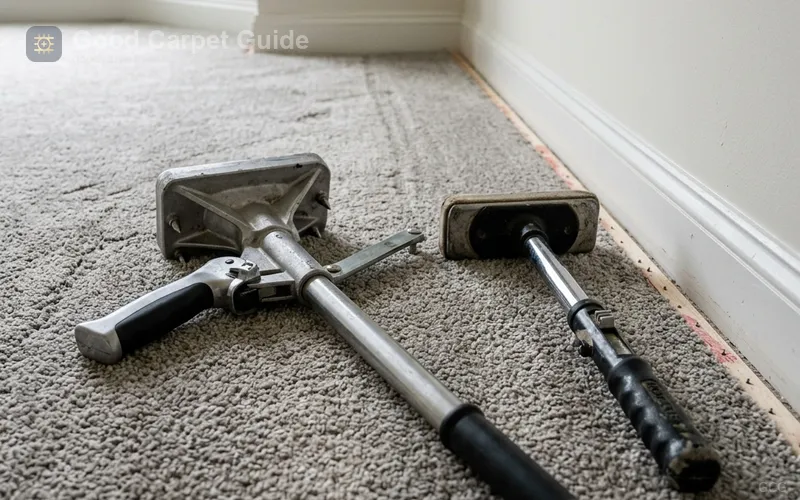
A power stretcher next to a knee kicker on the job site illustrates the tool choice that determines whether the seam holds tight or ripples within a few years of foot traffic.
frequently asked questions
How much should carpet installation cost for one room?
A single 12' x 12' bedroom (144 sq ft) runs $240 to $504 at builder grade, $396 to $864 at mid-grade nylon or triexta, and $1,116 to $1,728 at premium wool or high-ounce nylon, based on standard room dimensions and a 10% to 15% waste factor.
How much does carpet installation cost for stairs specifically?
A standard 13-step staircase costs $150 to $600 total, or $11 to $26 per step, with an additional 10% to 20% labor premium where the carpet pattern requires precise alignment across each step and riser.
How do I calculate carpet installation cost for my own space?
Multiply the room's square footage by the total installed rate for the chosen tier (Section 1's table), then add the specific surcharges from the surcharge stack that apply to the room's condition, including removal, subfloor repair, and transitions.
What is a typical carpet installation cost in the UK?
UK pricing structures and VAT treatment differ from the US model in this guide, and homeowners outside the US should request a UK-specific regional quote rather than applying these dollar-based ranges directly.
Should I prioritize the carpet or the padding on a fixed budget?
Field data from installers consistently shows that upgrading padding while keeping economy-grade carpet extends the floor's functional life further than the reverse strategy, since a high-density 8 lb rebond pad can extend usable carpet lifespan by up to 50% compared to a thin economy pad under the same carpet.
According to the Good Carpet Guide team, the surcharge items in this guide are the single biggest predictor of quote accuracy, and any estimate missing a removal, subfloor, or transition line item should be treated as incomplete rather than final.