INSTALLER'S DANGER ALERT BOX
• Knee-kicker-only installation voids structural stretch coverage under most manufacturer terms tied to CRI-105 stretching requirements. A power stretcher is not optional on any warrantied job.
• Stair runs are excluded from wear, texture retention, and stain coverage on nearly every standard residential line unless the warranty document names stairs specifically.
• Missing hot-water extraction (HWE) invoices at claim time is the single most common documented reason for automatic claim denial. Retain every cleaning receipt for the life of the carpet.
• Underlayment outside the density and thickness range specified by the mill voids the primary carpet warranty before a single foot has crossed the floor.
A carpet warranty guide is only useful if it tells a homeowner what a mill will actually pay, not what the sales floor implies. This carpet warranty guide is built from manufacturer fine print, Carpet and Rug Institute (CRI) installation standards, and field-verified inspection practices, because the gap between advertised coverage and approved claims is where most homeowners lose money. The sections below cover what gets covered, what voids coverage, what installation compliance requires, and what the payout math looks like once a claim is actually filed.
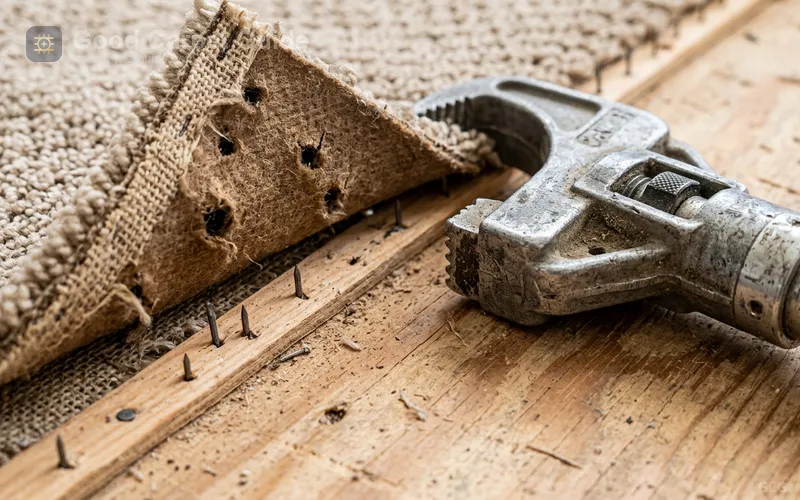
Tack strip pinhole spacing is one of the first things a forensic inspector checks before validating a structural stretch claim.
What does a carpet warranty cover
A standard residential carpet warranty covers manufacturing defects in three categories: fiber wear (loss of pile face weight past a defined threshold), texture retention (loss of twist in the yarn), and stain resistance (permanent discoloration from a defined list of common household substances). Coverage is fiber-specific. Nylon lines built on Shaw's Anso fiber system carry wear warranties tested against abrasion resistance, while Mohawk's SmartStrand Triexta carries a separate stain and soil warranty structure built around the fiber's inherent (not topically applied) stain resistance.
None of these categories cover matting or crushing from foot traffic. Mills classify pile flattening under normal use as a maintenance condition, not a manufacturing defect, which is why two carpets from the same production run can produce opposite claim outcomes depending on documented cleaning history. Coverage duration also splits by category: stain warranties commonly run shorter than wear warranties on the same product line, and texture retention warranties are frequently the shortest of the three.
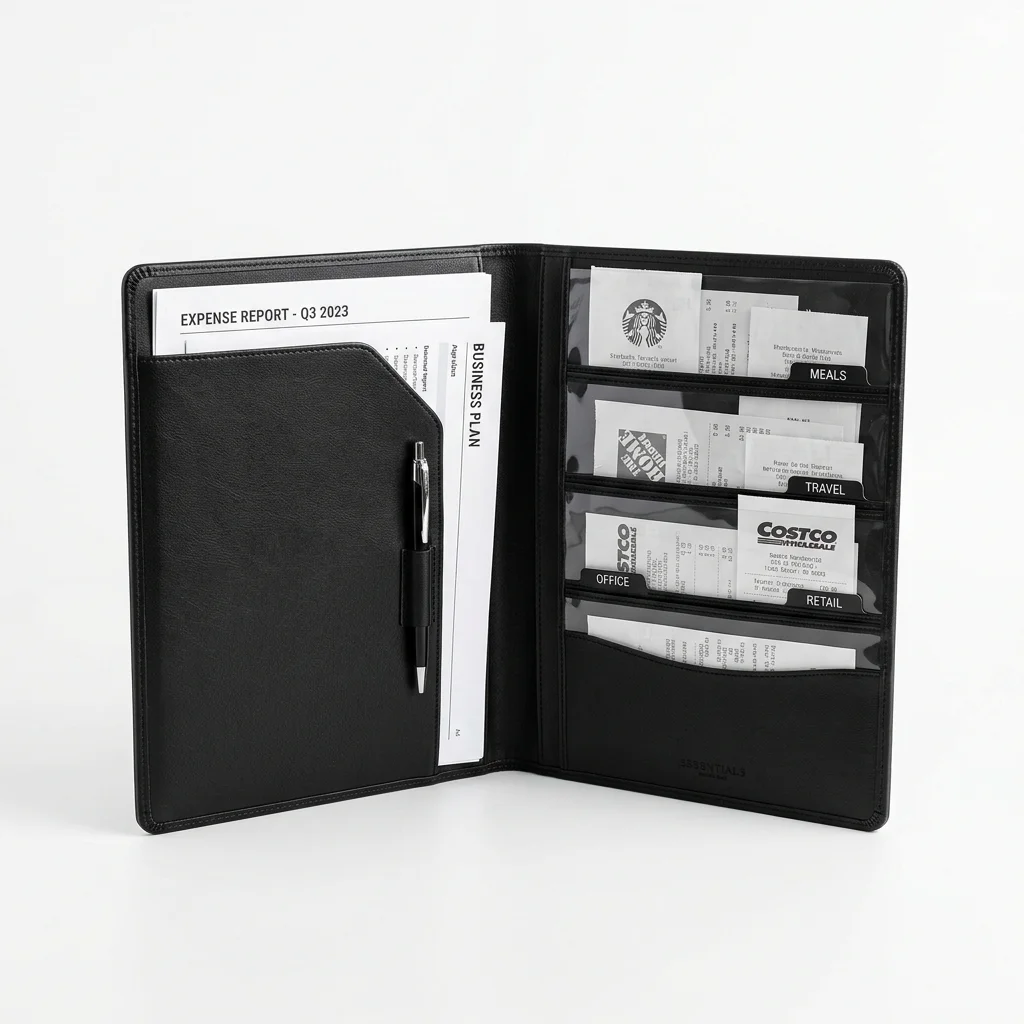
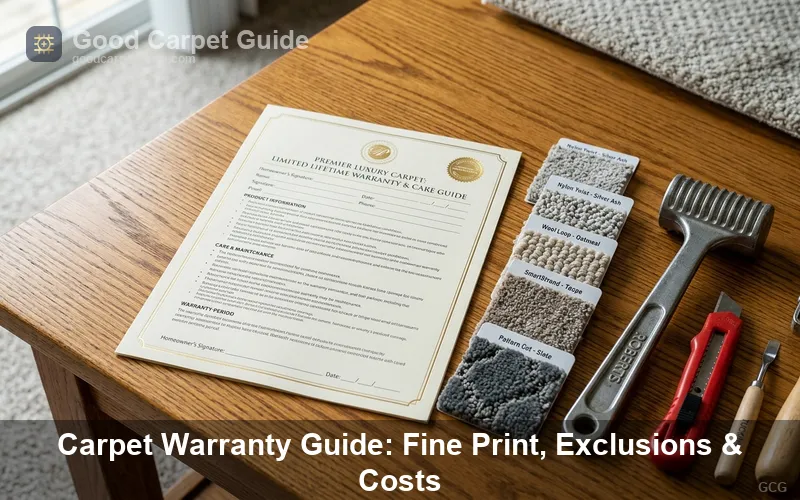
Carpet Warranty Document Folder & Receipt Organizer
A dedicated folder for HWE invoices, installation contracts, and manufacturer warranty cards keeps claim documentation intact for the full coverage period.
Check Price on AmazonWhat laboratory standards sit behind a carpet warranty
Wear and texture retention claims trace back to ASTM D5252, the standard practice governing the hexapod tumble drum tester. A carpet sample is fastened inside a rotating drum with a 3.8-kilogram, six-footed hexapod weight and run in 2,000-cycle increments, with the specimen removed and vacuumed between each increment. The resulting appearance change is scored against CRI's TM-101 photographic reference scale, and that score is what a mill's texture retention warranty language is ultimately built on. A carpet rated for heavier accumulated cycles under this test is the same carpet a mill is willing to back with a longer texture retention term.
Flammability compliance runs through a separate standard, ASTM D2859, known in the trade as the methenamine pill test. A methenamine tablet is ignited at the center of a carpet sample and the resulting burn is measured against the flattening frame edge; a burn extending past one inch from that edge counts as a failure on that specimen. Seven of eight specimens must pass for the carpet to be sold legally in the United States, under the Consumer Product Safety Commission's FF 1-70 standard. This test has no bearing on wear or stain coverage and is unrelated to any warranty claim outcome. It governs whether the carpet can legally reach the showroom floor at all.
Maintenance compliance sits under a third standard, IICRC S100, the Institute of Inspection, Cleaning and Restoration Certification's reference for professional cleaning of textile floor coverings. A CRI Seal of Approval technician working to IICRC S100 procedure is what most mill warranty documents mean when they specify a "certified" or "qualified" cleaning technician, distinct from a general carpet cleaning service without that certification on file.
What voids a carpet warranty
Three fine-print conditions account for most denied claims documented across mill warranty language: stair exclusions, chemical dye alteration, and underlayment noncompliance.
Stairs concentrate foot pressure into a narrow contact zone with a tighter turning radius than any flat run of carpet. Unless a warranty document names stair installations explicitly, or the homeowner has purchased a specialized stair warranty rider, wear and texture coverage does not extend to a staircase even when the same roll of carpet is installed continuously from the hallway.
Chemical dye oxidation is a separate and less understood trap. Household cleaners containing bleach or benzoyl peroxide alter carpet dye at the molecular level. Mills classify this as chemical damage caused by the homeowner, not a stain failure, even when the visible result looks identical to a permanent stain. Once oxidative bleaching has occurred, no stain warranty applies to that section of carpet.
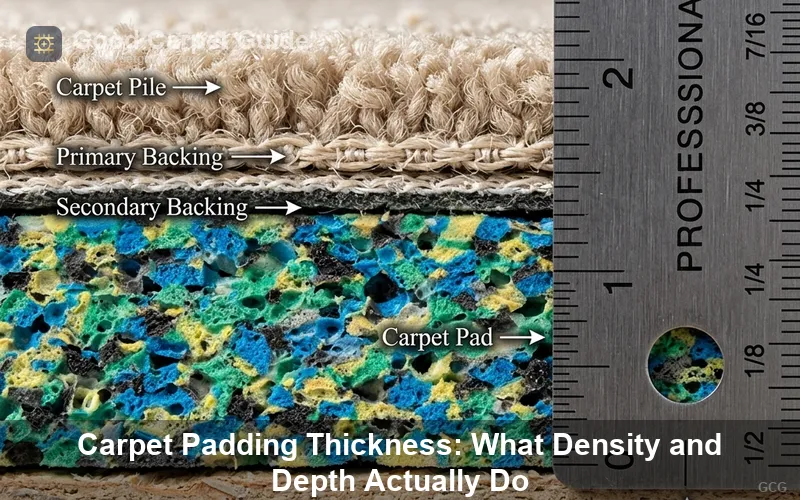
Underlayment specification is the third trap, and the one installers see most often at the estimate stage. Shaw's own warranty documentation names a minimum 6 lb density and a pad thickness of 1/2 inch or less, using an FHA-approved pad, as the condition for full coverage under its residential lines. CRI's residential cushion selection guidance sets the same 6 lb per cubic foot density floor and recommends a cushion no thicker than 7/16 inch for most residential applications. Installers commonly step up to 8 lb density on stairs and other high-traffic runs even where the mill's printed minimum is lower, since the tighter contact zone accelerates cushion breakdown; homeowners should confirm the exact figure against their specific mill's document rather than treat 8 lb as a universal requirement.
| Voiding condition | Common trigger | Coverage affected |
|---|---|---|
| Stair installation | No stair rider purchased | Wear, texture, stain |
| Chemical dye oxidation | Bleach or benzoyl peroxide cleaners | Stain warranty only |
| Underlayment noncompliance | Density under 6 lb/cu ft or wrong thickness | Full primary warranty |
| Missed HWE cleaning | No professional invoice on file | Wear and stain warranty |
Can you install carpet yourself and keep CRI-105 compliance
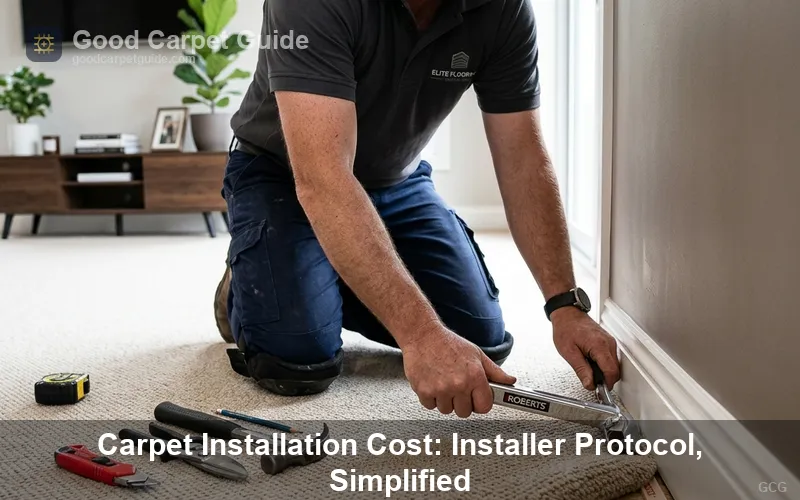
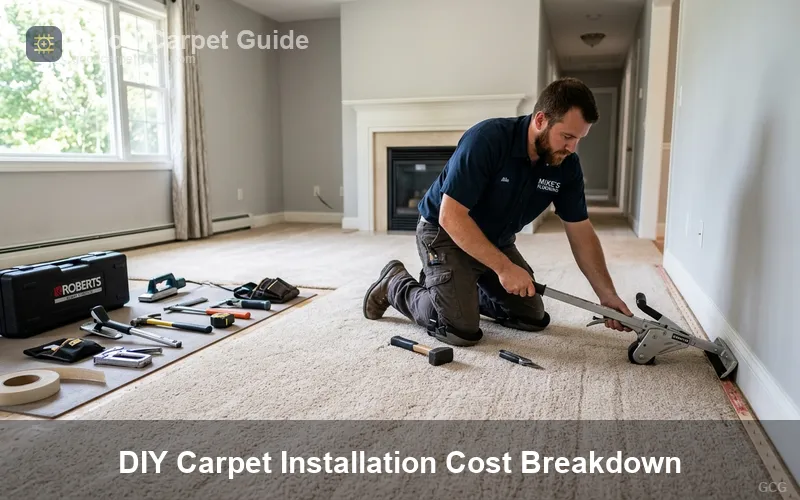
Self-installation is possible, but it does not meet CRI-105 compliance on any job requiring warranty-backed stretch coverage. CRI-105 specifies mechanical power stretching across the full width of a room. A knee kicker alone introduces uneven tension and localized slack that a power stretcher's leverage and gauge control avoid. Most homeowner-grade knee kickers cannot replicate the sustained, even tension a power stretcher applies across a 12-foot or wider room.
Forensic inspectors verify stretch compliance after the fact by examining tack strip pinhole spacing, wall line compression marks, and pattern alignment under magnification. Even, consistent pinhole spacing along the tack strip indicates power-stretched installation. Irregular spacing, or visible slack rippling under diagonal light, indicates a knee-kicker-only job, and that finding alone is grounds for a mill to deny a structural claim.
Tools referenced in a CRI-105 compliant installation include the power stretcher itself, a row runner for seam alignment, a seam iron for hot-melt tape seams, and latex seam sealer as a secondary bond at butted edges. Tackless strip pin length is matched to carpet backing thickness; undersized pins pull free under tension and produce the same slack signature inspectors look for.
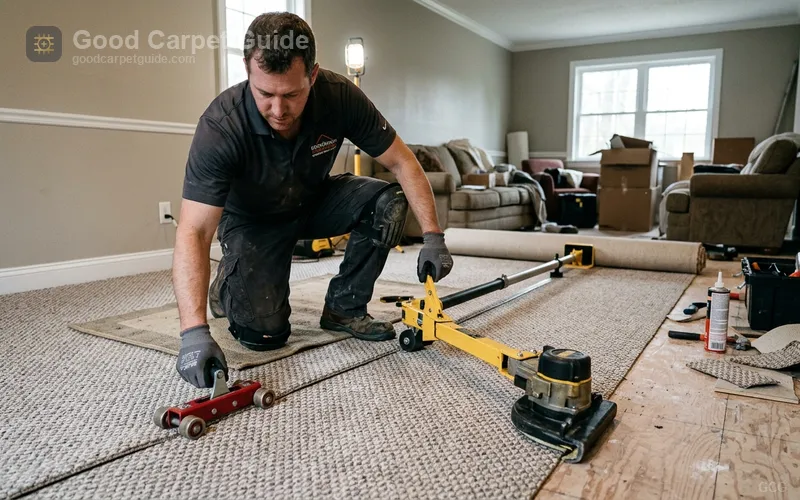
Power stretcher leverage produces the even tack strip pinhole spacing that later satisfies CRI-105 inspection standards during a claim review.
How long does a carpet warranty last
Warranty terms on residential carpet typically range from 5 years on entry-level polyester lines to 20-plus years or lifetime on premium nylon and Triexta lines, though the number printed on the sample tag rarely applies uniformly. Wear warranties usually run the longest stated term. Texture retention and stain warranties frequently run shorter, and the printed "20-year" or "lifetime" figure on the point-of-sale tag typically refers only to the wear category. A homeowner reading "lifetime warranty" without checking the category breakdown assumes broader coverage than the document provides.
The wear threshold itself is defined in fiber-loss terms rather than a visual judgment call. Manufacturer wear warranties commonly guarantee no more than 10 percent loss of surface pile fiber within a 10-year window, with some premium lines extending that ceiling to 20 percent. An inspector measuring a wear claim weighs a pile sample against the original face weight on record for that style, not against how worn the carpet looks underfoot, which is why two carpets with similar visual wear can produce different claim outcomes depending on their original face weight specification.
Is a carpet warranty worth it: the mathematical breakdown
Prorated payout structure is where the advertised warranty value and the actual claim value diverge most sharply. A 15-year prorated warranty on a $3,000 carpet installation, claimed after year 10, pays out at roughly 20 to 30 percent of original material value, or $600 to $900. Over that same 10-year period, mandatory HWE cleanings performed every 12 to 18 months at CRI Seal of Approval standard cost an estimated $1,500 to $2,000 in cumulative invoices.
The arithmetic: $1,500 to $2,000 spent on required maintenance against a $600 to $900 maximum payout produces a net negative return before the claim is even filed, independent of whether the claim itself is approved. This is the core reason field inspectors and installers describe extended-term warranties as a marketing tool rather than a financial instrument. One flooring industry executive, writing anonymously in an interior-design trade Q&A, went further and said that in three decades in the business, he had never seen a warranty actually paid out. That account is a single anecdotal source, not an industry-wide payout statistic, and no independently audited claim-approval rate could be verified for this article. [VERIFY: an audited, publicly cited claim-approval percentage should replace this anecdotal reference if one becomes available.]
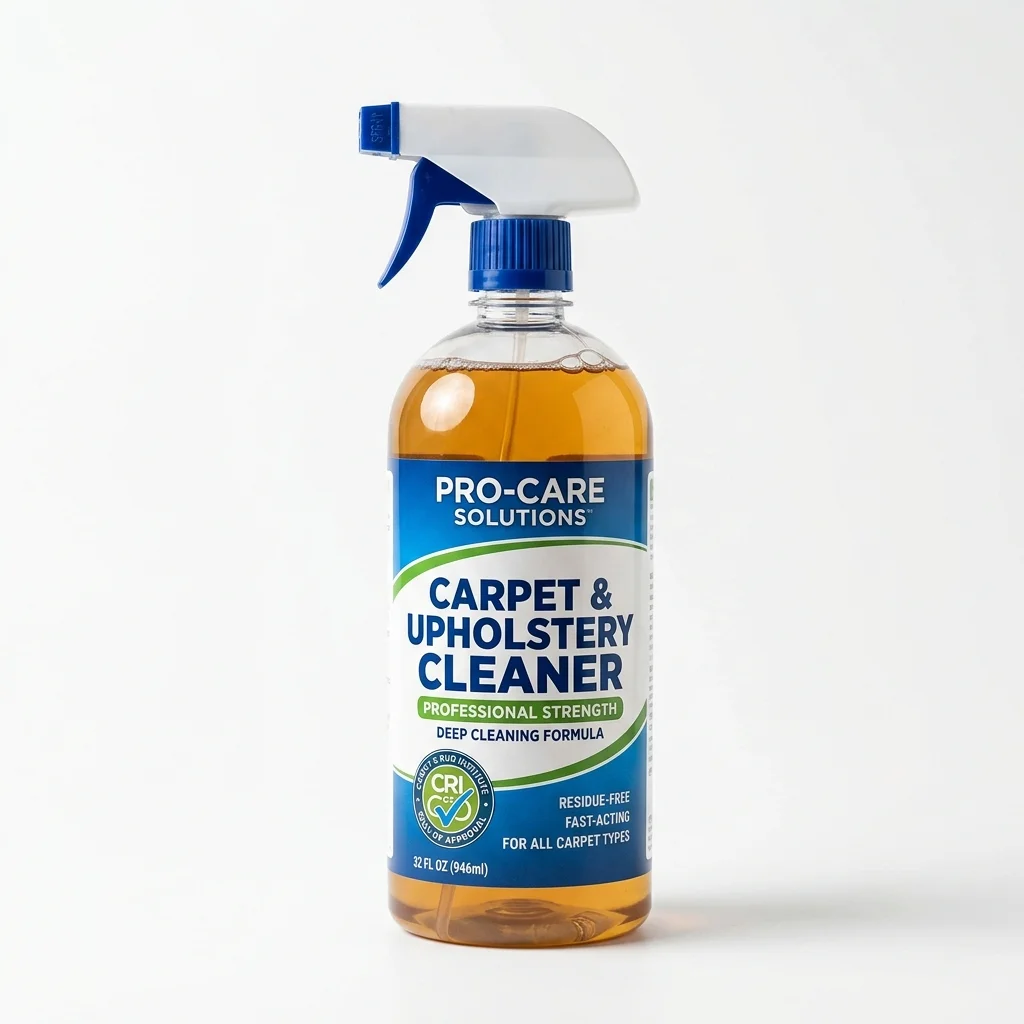
CRI Seal of Approval Carpet Cleaning Solution
Between professional HWE appointments, a CRI-certified cleaning solution helps maintain the documented care standard mills reference during claim review.
Check Price on AmazonWhat voids the labor portion: the labor loophole
Material replacement and labor replacement are covered under separate clauses, and the labor clause expires far earlier. Manufacturers typically cover installation labor only during the first 1 to 2 years of the warranty term. After that window closes, the homeowner absorbs furniture moving, old carpet tear-out, disposal, subfloor preparation, and re-installation labor even on an approved material claim. On a full-room replacement, labor and disposal costs commonly represent up to 80 percent of total project cost once the material-only credit is applied.
How much does a carpet warranty cost
Warranty coverage is bundled into the retail price of the carpet rather than sold as a standalone line item on most residential purchases, with the exception of stair riders and extended labor protection plans, which mills and retailers price separately. Premium nylon and Triexta lines with broader exclusion lists, such as Mohawk's pet-specific "no exclusion" coverage, carry a higher per-square-foot price that reflects the wider claim scope. Baseline polyester lines carry the lowest per-square-foot cost and the narrowest warranty scope, with no stair coverage and strict texture retention exclusions built into the base terms.
What is the best carpet warranty and what do professionals recommend
| Brand / line | Stair coverage | Notable exclusion terms | Field notes |
|---|---|---|---|
| Shaw Anso Nylon | Yes, on premium lines with prorated labor options | Standard matting/crushing exclusion applies | Comprehensive documentation cited across premium product lines |
| Mohawk SmartStrand Triexta | Varies by line | Pet urine, feces, and vomit covered without fiber degradation clause | Broadest pet-related stain scope among compared lines |
| Baseline polyester | No | Zero stair coverage, labor and removal excluded from retail guarantee | Highest incidence of denied claims tied to fine-print exclusions |
Professionals evaluating warranty value weigh fiber type, stair coverage, and documented claim-approval patterns over the printed term length. A shorter warranty with named stair coverage and a clear HWE compliance path is treated as more reliable than a longer term built on broad exclusion language.
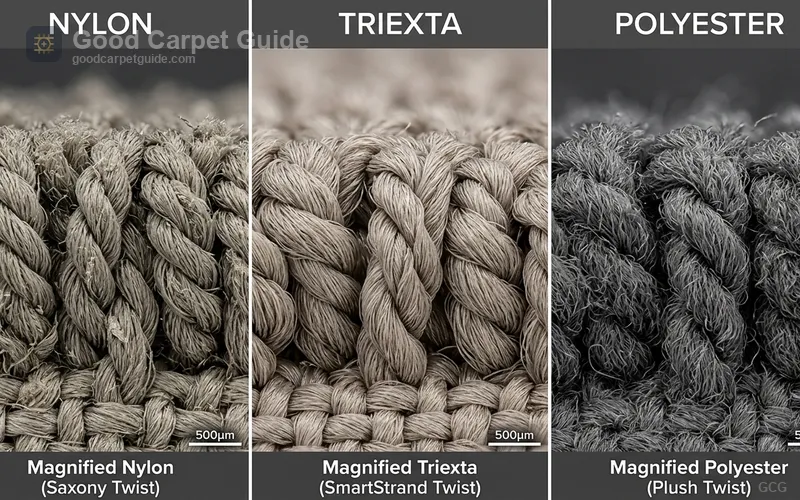
Fiber type determines warranty scope more than the printed term length, with nylon and Triexta lines carrying the broadest stain and wear coverage in this comparison.
How to choose a carpet warranty
Selection comes down to four checkpoints applied before purchase, not after installation:
- Stair coverage. Confirm in writing whether stairs are named in the wear, texture, and stain clauses individually, not assumed from the flat-run coverage.
- Underlayment specification. Match cushion density and thickness to the exact figures printed in the warranty document, not a generic padding recommendation from the retail floor.
- HWE documentation requirements. Confirm the required cleaning interval and whether a pre-claim cleaning window (such as a 30-day prior-cleaning rule) applies before a claim can be filed. CRI does not publish a single mandatory temperature or pressure figure; its Seal of Approval program instead rates extractors by soil removal, water removal, and texture retention performance, awarding Silver, Gold, or Platinum tiers. General industry practice for hot-water extraction runs a water temperature of roughly 150°F to 180°F and a pump pressure commonly in the 100 to 500 PSI range, with most technicians treating around 700 PSI as a practical ceiling for carpet safety. A CRI-certified technician confirms the correct settings for the specific fiber before cleaning.
- Labor coverage window. Confirm how many years installation labor remains covered separately from the material warranty.

8 lb Density High-Traffic Carpet Padding
Padding at or above the density threshold named in most mill warranty documents helps keep primary carpet coverage intact on high-traffic runs and stairs.
Check Price on AmazonConclusion
A homeowner installing carpet on a single flat-run living room with moderate traffic gets the most practical value from a mid-tier nylon line with a documented HWE compliance schedule kept on file from day one. A homeowner with stairs in the installation path should treat stair coverage as a separate line-item decision, confirmed in writing, rather than an assumption carried over from the flat-run warranty. A homeowner comparing a 20-year polyester warranty against a 10-year nylon warranty should run the prorated payout math against expected maintenance cost before treating the longer term as the better value, since the shorter nylon term frequently produces a more favorable cost-to-coverage ratio once mandatory cleaning costs are included.