TL;DR recommendation matrix
| Buyer situation | Sample priority | Padding to request | Cost trap to check first |
|---|---|---|---|
| Pets and kids in the house | Stain-treated BCF nylon or Triexta swatch under LED light | 8-lb density, spill-barrier top film | "Stain proof" language from a salesperson |
| Basement or below-grade room | Sample tested against a slab moisture card | Ventilated membrane, not double-sided barrier pad | Rebond pad marketed for concrete slabs |
| Luxury plush or cut-pile buyer | Swatch checked for footprint and vacuum-track visibility | 7/16-inch max, CRI-compliant thickness | Backing that blocks vacuum airflow |
| Budget-conscious buyer | PET polyester sample checked against nylon in the same price tier | 6-lb minimum rebond, not the cheapest roll | Big-box bundle discount math |
Homeowners who order carpet samples before buying save themselves from two separate categories of regret: the wrong fiber and the wrong color. To order carpet samples correctly, request full-size swatches (not paint-chip-sized cuts), view them under the room's actual lighting at three times of day, and price the pad alongside the carpet. This applies whether the room is carpet for stairs, carpet for basement, or a living room where the real decision is carpet vs vinyl or carpet vs hardwood. The sample stage is where a buyer avoids a $5,000 mistake for the price of a $2 swatch.
Why physical carpet samples matter more than a showroom floor
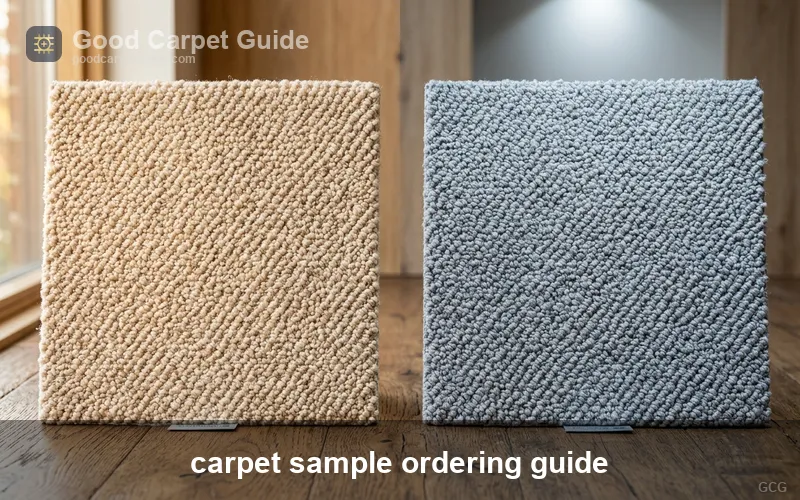
A showroom floor is lit with fluorescent tubes calibrated to flatter every product on it. Homeowners' actual rooms are not. Northern-exposure daylight and modern residential LED fixtures shift a warm, neutral beige swatch toward a cold, clinical gray or a yellowed off-white once it is installed. This is a documented color-rendering problem, not a one-off complaint. A physical sample costing $1.00 to $4.99 is the only reliable way to catch the shift before a multi-thousand-dollar install goes in. Order at least two samples of any color under consideration, and view both against a wall in the room, not on a countertop under store light.
How to order carpet samples the right way
- Pull the SKU and mill name from the retailer's product page before requesting a sample, not just the marketing name printed on the swatch card.
- Request full-size cuttings (roughly 12 by 18 inches minimum) rather than the small paint-chip format some online retailers default to.
- Ask the retailer directly whether the sample matches the current dye lot. Dye lots shift between production runs, and a sample photographed six months ago may not match what ships.
- Place each sample flat on the floor in the target room, not propped against a wall, since carpet reflects light differently lying flat.
- Check the sample against furniture, trim, and any adjoining flooring, particularly where a hallway will transition from carpet to tile or hardwood.
The white-labeling problem competitors don't explain
Carpet mills run the same physical product under multiple brand names to protect dealer exclusivity. Mohawk's "Lucky Star" style at Lowe's is the identical mill run sold to independent specialty dealers under the name "Intelligent Style." Different SKU, different color names, same backing, same face weight. This practice blocks direct price comparison between a big-box listing and a specialty dealer quote for what is functionally the same carpet. The workaround is to stop comparing brand names and instead compare raw fiber specifications printed on the sample tag: face weight in ounces per square yard, twist count, density, and pile height. Two carpets with matching numbers on those four specs will perform the same regardless of what either retailer calls them.
Fiber comparison: what the sample tag actually tells you
| Fiber type | Typical wear pattern reported by owners | Price tier | Best matched use case |
|---|---|---|---|
| PET polyester | Visible matting and traffic-lane crushing within 6 to 24 months on inadequate padding | Lowest | Low-traffic guest rooms only |
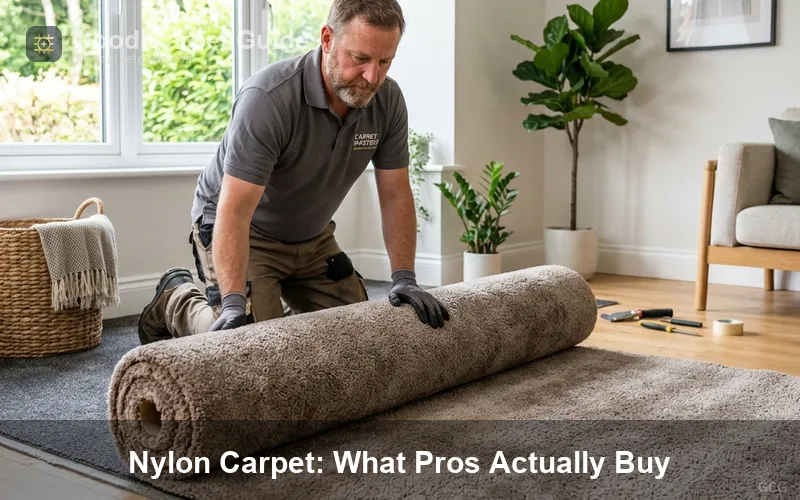
| BCF nylon | Retains texture for 6+ years in owner reports; some footprint visibility on plush cuts | Mid to high | High-traffic living areas, stairs |
| Triexta (SmartStrand) | Strong stain resistance; some owners report vacuum compatibility issues on dense weaves | Mid to high | Households with pets, spills |
| Wool (Earth Weave) | Natural fiber, recommended for households managing fiber sensitivities | Highest | Low-VOC priority buyers |
A Dreamweaver polyester owner reported the carpet looked worn after six months. A separate owner comparing the same room type reported polyester wear appearing after one month, with a nylon carpet in an adjoining room still looking new after six years. Polyester and olefin carpets installed over undersized padding crush and mat within 6 to 24 months regardless of the surface quality of the carpet itself. Nylon and Triexta cost more per square foot at the sample stage. The wear-life difference is the reason nylon vs polyester carpet comparisons consistently favor nylon for any room with regular foot traffic. See how much does carpet cost for full fiber pricing by tier.
The padding thickness trap most sample orders skip
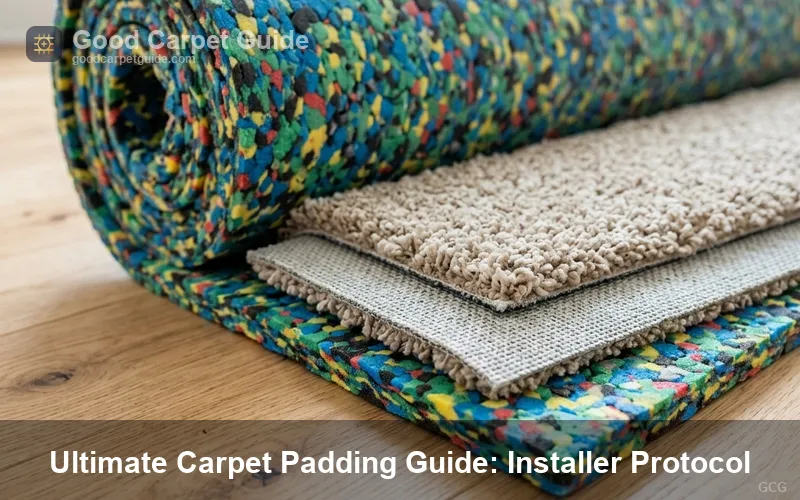
Homeowners order a carpet sample and assume the pad is a secondary decision. It is not. The Carpet and Rug Institute (CRI) sets 7/16-inch as the maximum pad thickness for standard installations, and exceeding it voids the manufacturer warranty on the carpet itself. A pad over half an inch tall creates excessive vertical movement, which pulls at carpet seams over time and can eventually separate the material from the tack strips along the wall. Phenix Flooring requires a minimum cushion density of 6 lbs per cubic foot at a thickness between 3/8 and 1/2 inch for standard cut pile, and an 8-lb density at 1/4 to 3/8 inch for Berber. A thicker pad is not a more comfortable pad by manufacturer standard. It is a warranty violation.
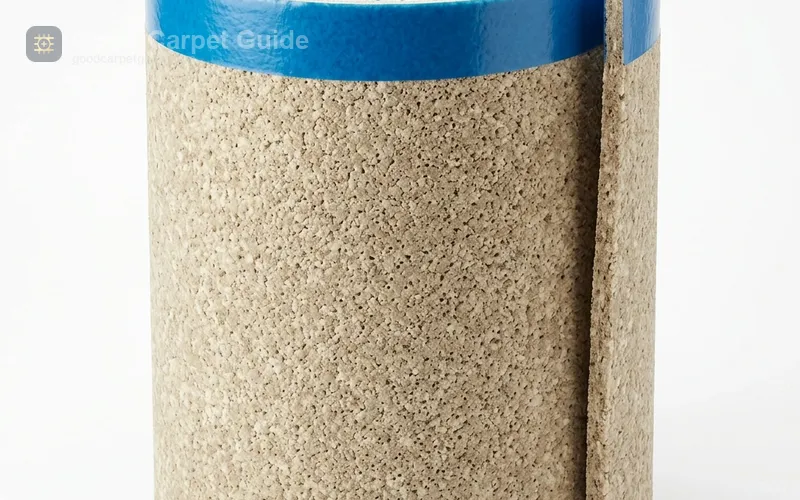
Future Foam StepAhead 8-lb Density Carpet Pad
7/16-inch, 8-lb density rebond pad with SpillSafe top moisture barrier, priced around $1.06 per square foot
Check Price on AmazonBasement and below-grade installations: the moisture trap
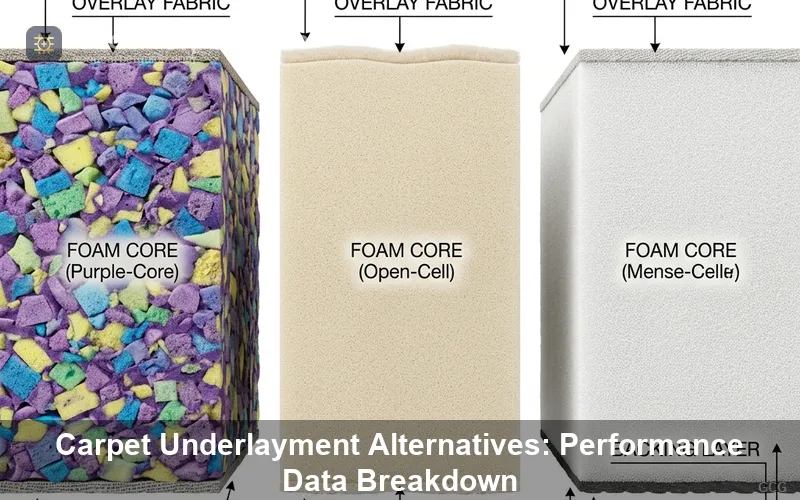
Concrete slabs below grade hold and transmit moisture regardless of how dry a basement appears on the day of installation. A double-sided moisture barrier pad, such as Future Foam Prime Comfort, traps that moisture underneath the pad instead of letting it escape. Traditional rebond padding behaves like a sponge in this setting, absorbing vapor and setting up conditions for mold, mildew, and musty odors. The correct approach for a below-grade slab is either an epoxy concrete sealer applied before installation or a ventilated, dimpled plastic membrane such as DMX 1-Step, which allows the subfloor to breathe instead of sealing moisture against the carpet backing. Anyone ordering samples for a basement for carpet for basement use should ask the retailer directly which underlayment category the sample is rated for, since the same face fiber can be paired with either a safe or an unsafe pad system.
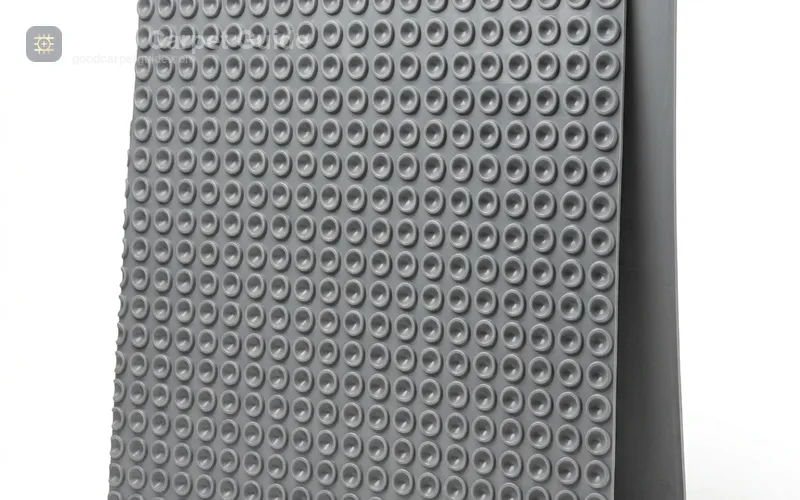
DMX 1-Step Subfloor Membrane
High-density dimpled plastic membrane for ventilated underlayment over basement concrete slabs, priced around $1.44 per square foot
Check Price on AmazonRadiant heat floors and thermal choking
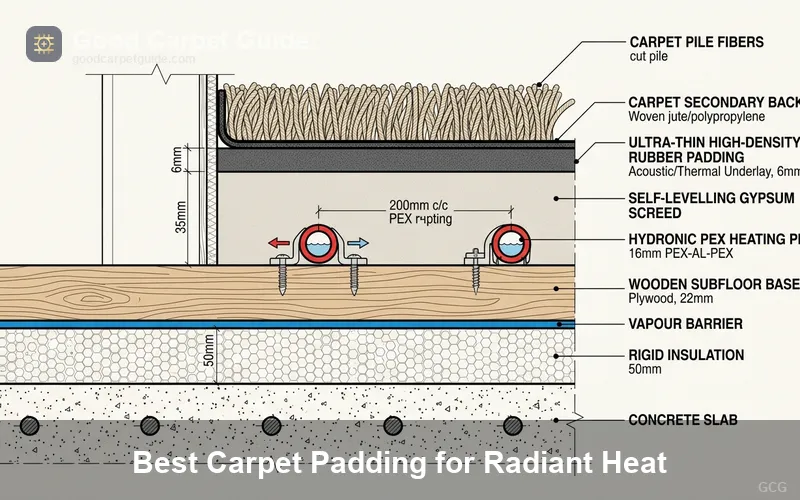
Homeowners installing carpet over radiant heating rarely receive a warning at the sample stage. Thick carpets and dense underpads act as insulators that choke radiant heat output, which forces the heating system to run hotter to reach the same room temperature. The combined R-value of the carpet and pad needs to stay within the threshold specified by the radiant system manufacturer. This is a spec to confirm before ordering samples, not after installation, since the fix at that point means tearing out flooring that has already been paid for.
The "stainproof" claim: a warranty red flag
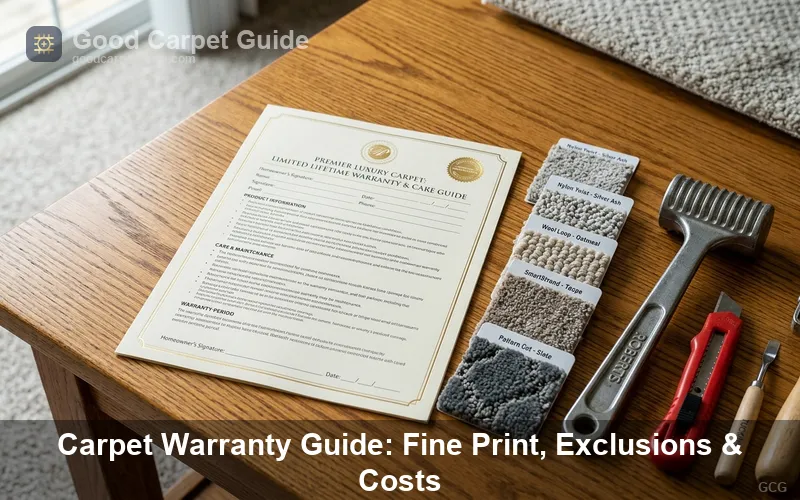
A salesperson who describes a carpet as stain proof is making a claim no manufacturer warranty supports. Every major manufacturer warranty uses the term stain resistant, not stain proof, because no residential carpet fiber is fully impervious to staining under real household conditions. A dealer who tells a customer a product is stain proof is either misinformed about the product they sell or misrepresenting it. Confirm the exact warranty language on the manufacturer's printed document before the order goes in, not the verbal claim made on the showroom floor.
Vacuum compatibility: the SmartStrand Silk problem
Ultra-soft, high-density carpets like Mohawk SmartStrand Silk pair with impermeable backings, such as Shaw LifeGuard, that block airflow through the carpet. One owner described spending two weeks searching for a vacuum that would work with the new carpet, followed by 2.5 hours testing units in a Sears showroom with no success. The mechanism is straightforward: a regular vacuum needs airflow to move across the surface, and a plastic backing designed to block liquid spills also blocks that airflow, producing a vacuum-lock effect. Before ordering a sample of any ultra-plush, spill-barrier-backed carpet, confirm with the retailer which vacuum types are rated compatible with that specific backing.
Footprint and traffic-mark visibility on plush cuts
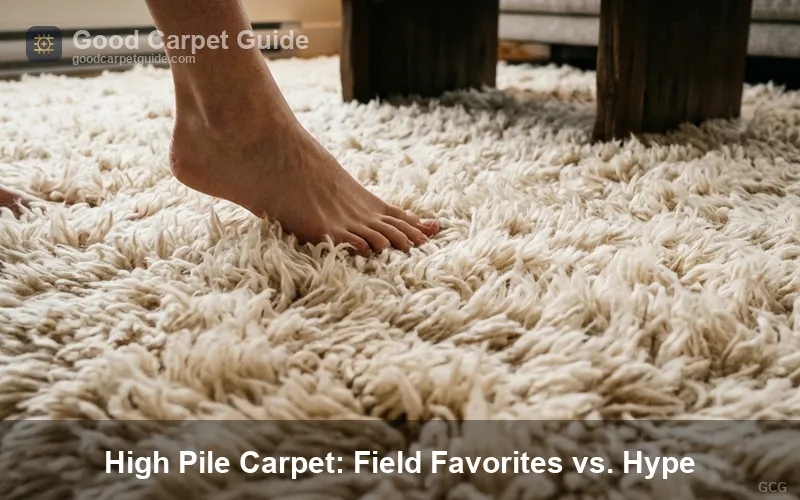
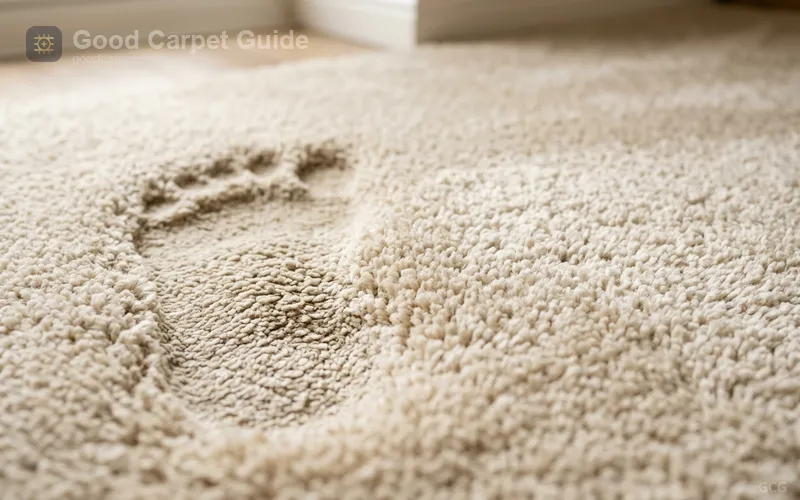
An owner of Fabrica's Cotton Club nylon, a premium plush cut-pile, reported that the carpet shows a small amount of wear because every footprint and even cat paw print shows on the smooth surface until the next vacuuming. Phenix Flooring states directly in its warranty documentation that footprints and vacuum tracks on cut-pile carpets and some loop products are not covered under warranty and are considered normal. This is not a manufacturing defect. It is a physical property of smooth, dense cut-pile construction, and any sample of this carpet type should be pressed with a finger to check how visibly the pile shows a mark before the order is placed.
Big-box versus specialty dealer: what the bid actually includes
Home Depot and Lowe's frequently advertise free installation bundled with a carpet purchase over $600, alongside seasonal discounts as steep as 45% off. The underlying math often works differently than the advertisement implies. Big-box retailers commonly overcharge on carpet cushion while inflating the listed carpet price first, which is what allows the deep percentage discount to be advertised in the first place. Independent specialty dealers price higher up front but typically include furniture moving, carpet tear-out, premium underlayment, and master-certified local labor with no add-on surcharges.
For a 150-square-yard (1,350 square foot) premium cut-pile installation:
- Big-box retailers: $5,200 to $5,400 total, with third-party subcontracted labor and separate upcharges for stairs, furniture moving, custom cuts, and floor prep.
- Independent specialty dealers: $6,400 to $7,400 total, all-inclusive with no hidden line items.
A homeowner comparing these two numbers should request an itemized big-box quote before assuming the lower headline price holds after add-ons. Real disputes back this up: one owner paid nearly $16,000 at a big-box retailer for top-tier carpet and padding and received installation with visible seams, poor tacking, and missed closets, eventually recovering the full amount plus damages through court action.
Installation warranty traps buyers discover too late
Two installation requirements determine whether a manufacturer warranty stays valid, and neither shows up on a sample tag.
Power stretching is required. Manufacturers mandate that broadloom carpet be installed using a wall-to-wall power stretcher. A knee kicker used as the primary stretching tool can invalidate the manufacturer's wear warranty, and this detail belongs in the installation quote conversation before a sample is even ordered.
Maintenance documentation is required. To keep texture retention and wear warranties active, most manufacturers require professional cleaning using hot water extraction, commonly called steam cleaning, performed by a CRI-certified technician at least once every 12 to 18 months. Phenix Flooring specifies this requirement directly and requires the homeowner to retain receipts as proof. Skipping this step, or hiring an uncertified cleaner, is grounds for a manufacturer to deny a warranty claim later.
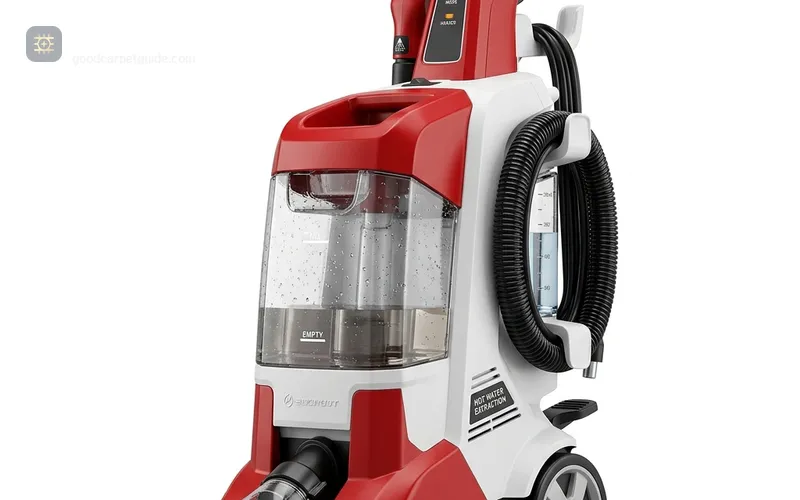
Rug Doctor Hot Water Extraction Carpet Cleaner
Hot water extraction unit suited for the CRI-recommended cleaning cycle required to keep texture-retention warranties active
Check Price on AmazonSubfloor prep and the squeak repair line item
Homeowners who skip subfloor prep at the sample-ordering stage often add it back in later as an unplanned charge. Pulling loose nails and securing the subfloor with screws before the pad goes down runs a standard $500 specialty surcharge, and buyers who pay it upfront report higher satisfaction with the finished install than those who discover a squeak after the carpet is already down. This single line item is worth asking about in the same conversation as the sample order, since it affects total budget more than most fiber upgrades do.
Cost reference table: pad and carpet material pricing
| Product category | Reference product | Cost per sq. ft. | Roll cost |
|---|---|---|---|
| Mid-range carpet fiber | SmartStrand Triexta or BCF nylon | $2.50-$3.00 | - |
| High-end carpet fiber | Lifeproof Premium lines | $5.49 | - |
| Basic rebond pad | TrafficMaster 6-lb/8-lb rebond | $0.37-$0.38 | $101.97 (270 sq. ft.) |
| Premium rebond pad | Future Foam StepAhead | $1.06 | $287.00 (270 sq. ft.) |
| Antimicrobial frothed foam pad | Future Foam Prime Comfort | $1.16 | $166.32 (144 sq. ft.) |
| Memory foam pad | Lifeproof Premium Comfort Foam | $1.35 | $365.00 (270 sq. ft.) |
| Ventilated concrete membrane | DMX 1-Step | $1.44 | $144.24 (100 sq. ft.) |
One pricing detail worth flagging directly: viscoelastic memory foam pads marketed as premium, including Prime Comfort and Lifeproof Premium Comfort Foam, carry a density of only 3.8 lbs per cubic foot. Standard rebond pads at 8 to 10 lbs density outperform them structurally over the life of the carpet, despite costing less per square foot in some cases. A higher price tag on a pad does not guarantee higher density, and density is the number that predicts how long the carpet on top of it stays flat.
For fiber and padding side by side against alternative flooring categories, compare nylon vs polyester carpet specs and review full labor pricing in the carpet installation cost breakdown. A brand-by-brand breakdown is at best carpet brands.
Final recommendations by buyer type
Pets and kids household: Order samples of BCF nylon or Triexta with a spill-barrier backing such as Shaw LifeGuard or STAINMASTER LeakDefense, and pair it with an 8-lb density pad. Confirm in writing that "stain resistant" is the exact warranty term, not "stain proof."
Basement installation: Order samples rated for below-grade use and pair them with either an epoxy concrete sealer or a ventilated membrane like DMX 1-Step. Skip any double-sided moisture barrier pad on a concrete slab.
Luxury plush buyer: Press a finger into the sample before ordering to check footprint visibility, and confirm vacuum compatibility with the specific backing in writing before the carpet ships.
Budget-conscious buyer: Compare a PET polyester sample against a nylon sample in the same price tier under the room's actual lighting, and price an 8-lb pad instead of the cheapest available rebond. The pad upgrade costs less over ten years than replacing a crushed carpet at month eighteen.