This DIY carpet installation cost breakdown walks through every line item a homeowner actually pays for, from fiber and padding to tool rental and subfloor patching. I have pulled tack strips out of two hundred square feet of rotten plywood and re-stretched carpet that a well-meaning homeowner installed with a knee kicker alone, so the numbers below come from a job-site notebook, not a spreadsheet.
Installer's Safety & Cost Warning Box
• Rental clock: Most counters run a 24-hour clock from pickup, not from when you start work, so a Saturday morning pickup with a Monday return often bills two full days.
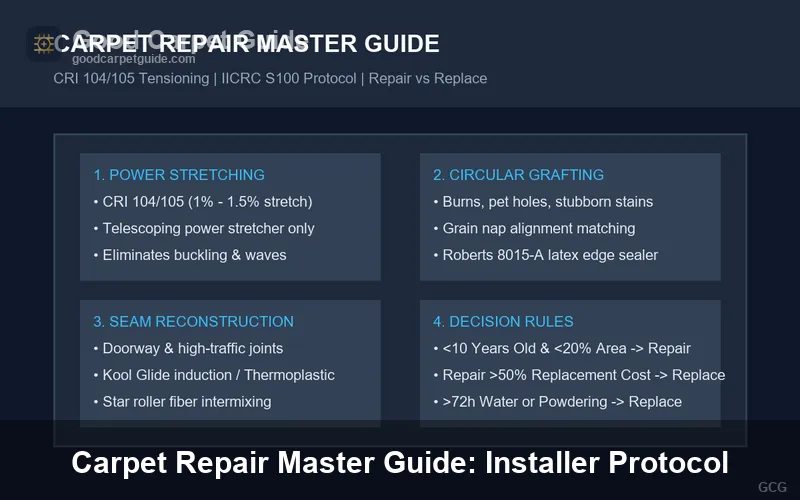
• Power stretching: CRI-105, the Carpet and Rug Institute's residential installation standard, requires power stretching on stretch-in jobs; a knee kicker alone leaves slack that ripples within 12 to 24 months.
• Stretching devices: Phenix Flooring and Dobbs Mills both name stinger-style stretching devices as automatic warranty voids in their installation literature.
• Glue-down carpet: Dobbs Mills and Phenix both require stretch-in installation over cushion for residential broadloom; direct glue-down is excluded from warranty on these lines.
How much does DIY carpet installation cost
A DIY carpet installation typically runs $2.50 to $9.00 per square foot in materials alone, before tool rental, subfloor repair, or disposal fees enter the math. That range covers fiber, padding, tack strip, seam tape, and fasteners for a stretch-in job over an existing wood or concrete subfloor in serviceable condition. Add $50 to $150 in tool rental per weekend and $75 to $400 in floor prep if the old surface needs patching, and a typical 12x12 bedroom lands between $450 and $1,400 depending on fiber choice.
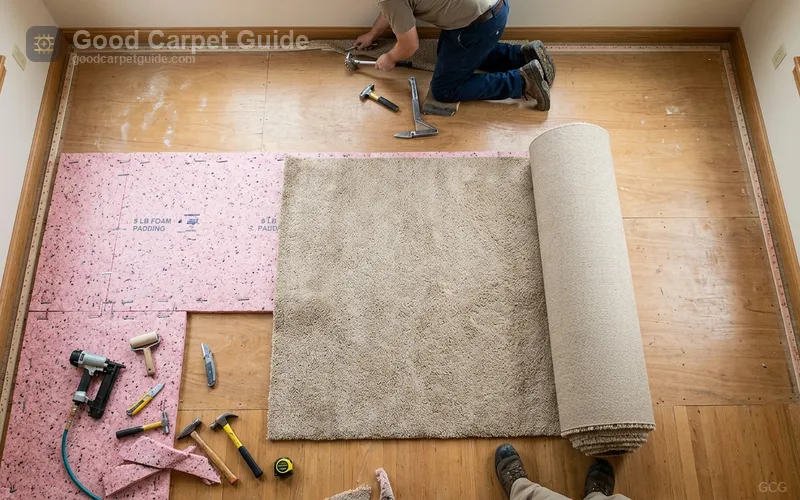
DIY carpet installation cost breakdown by item
Fiber choice drives the largest swing in your total. Here is the material-only range per square foot, independent of labor or tools.
- Olefin / polypropylene: $0.50 to $2.00 per sq. ft. Common in low-traffic basements and rental units.
- Polyester / PET: $1.00 to $3.50 per sq. ft. Soft underfoot, less resilient under heavy furniture.
- Triexta (SmartStrand): $1.50 to $7.00 per sq. ft. Built-in stain resistance from the fiber itself rather than a topical treatment.
- Nylon: $0.75 to $9.00+ per sq. ft. The widest range on the shelf because it spans builder-grade to premium branded lines.
- Wool: $3.00 to $21.00+ per sq. ft. Priced closer to a specialty material than a commodity floor covering.
A 12x12 room is 144 square feet, and because carpet typically sells in 12-foot-wide rolls, a room this size and shape can often be covered without a seam at all, since the roll width matches the room width directly. Rooms that are wider than 12 feet, irregularly shaped, or interrupted by closets and hallways lose that advantage and need seam placement built into the cut plan. Budget 10 to 15 percent extra material for pattern matching and trim loss on anything but a perfectly square room that matches the roll width.
Padding and cushion cost breakdown
Padding is not an area to trim from the DIY carpet installation cost breakdown, because CRI-105 and most manufacturer warranties specify a minimum density and thickness for the cushion layer.
- Basic 6-lb rebond padding: $0.30 to $0.50 per sq. ft.
- Standard 8-lb rebond padding (CRI Class 1): $0.50 to $0.80 per sq. ft.
- Premium 10-lb rebond padding: $0.70 to $1.00 per sq. ft.
- Moisture-barrier padding: $0.80 to $1.50 per sq. ft., worth the premium over concrete slabs and basement floors.
Our carpet installation cost guide breaks out padding density requirements by fiber type if you want the manufacturer-specific minimums before you buy.
Tack strips, adhesives, and fasteners cost breakdown
This is the line item most first-time installers underbudget, and it is where a job stalls out on a Saturday afternoon because the hardware store closed at six.
| Item | Model | Price |
|---|---|---|
| Halex poplar tack strip, 3-pack | HD-161-P-8 | $4.97 |
| Halex wood subfloor tack strip, 100-pack | HD-320-P-8 | $39.97 |
| Halex concrete anchor tack strip, 100-pack | HD-340-P-8 | $39.97 |
| ROBERTS peel-and-stick smooth edge, 3-pack | 20-1450 | $4.57 - $5.97 |
| ROBERTS Power-Loc heat bond seaming tape | 50-375 | $18.97/roll |
| Orcon Professional seaming tape | PSX-4500 | $17.97/roll |
| ROBERTS universal seam sealer, 8 oz | 8015-A | $7.98 |
| Powernail 5000 series staples, 5,000-box | PS5010D | $11.28 |
| DeWalt 20-gauge carpet staples, 5,000-box | DWCS20056 | $14.97 |
| Everbilt carpet tacks, 17-pack | 801184 | $2.87 |
Concrete subfloors need the anchor-style tack strip from the list above, not the wood variety. Nailing standard wood tack strip into a slab wastes an afternoon and a box of masonry nails.
What tools do you need to install carpet yourself
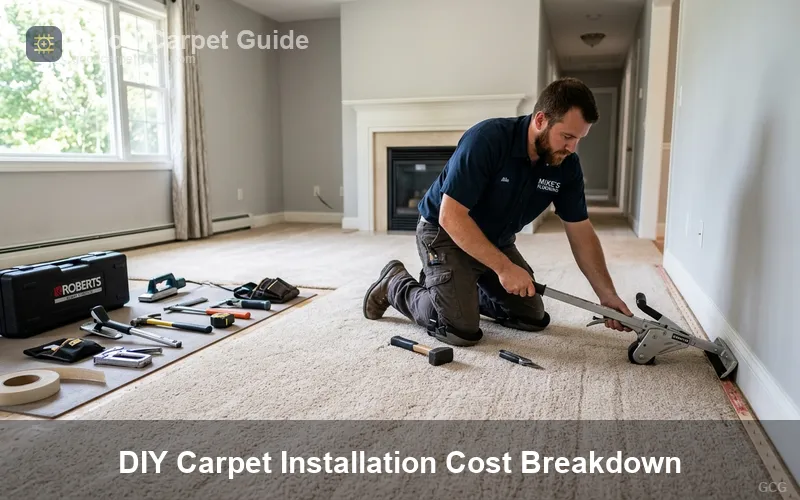
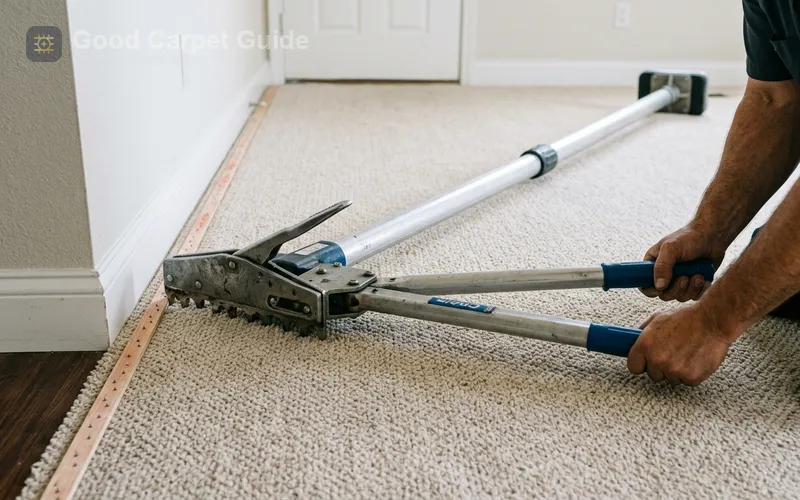
A DIY carpet installation needs a power stretcher, a knee kicker, a seaming iron or seam tape, a carpet trimmer, a stapler for the padding, a seam cutter, and a stair tool, at minimum. Here is what each does on the job:
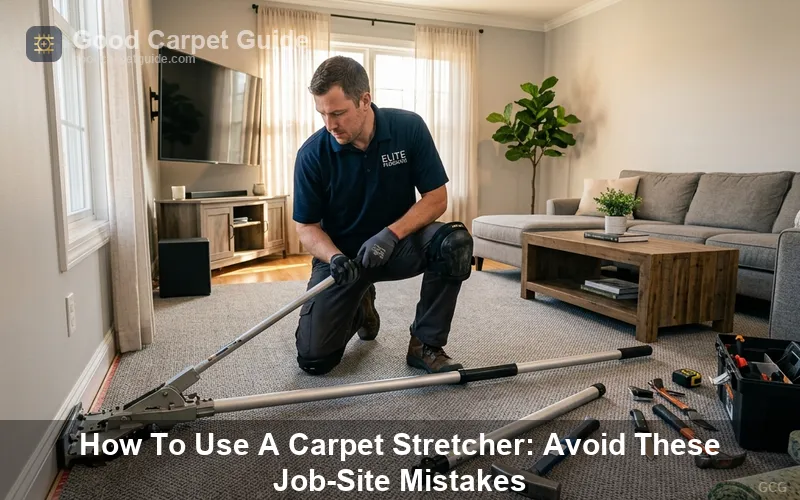
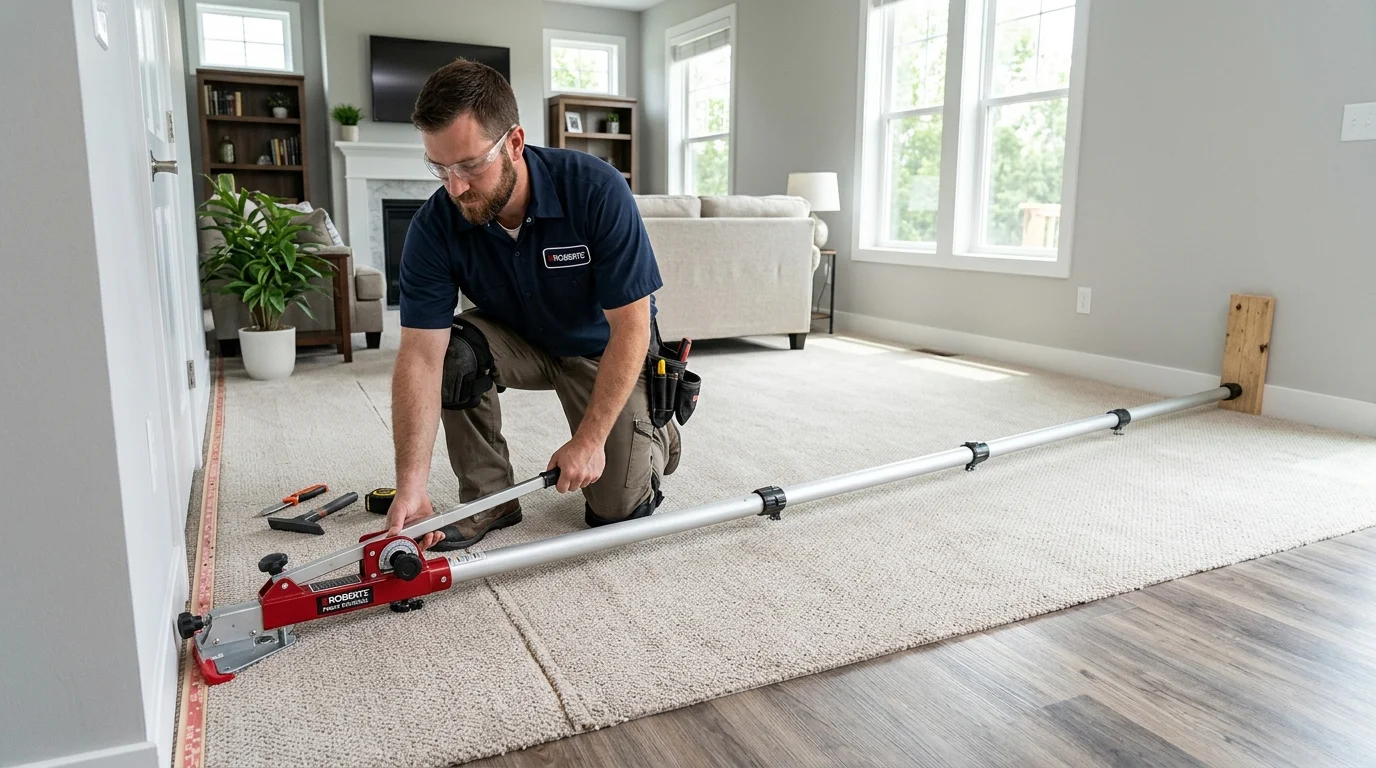
- Power stretcher: Anchors against the opposite wall and stretches carpet with leverage a knee kicker cannot generate. Required by CRI-105 for stretch-in work.
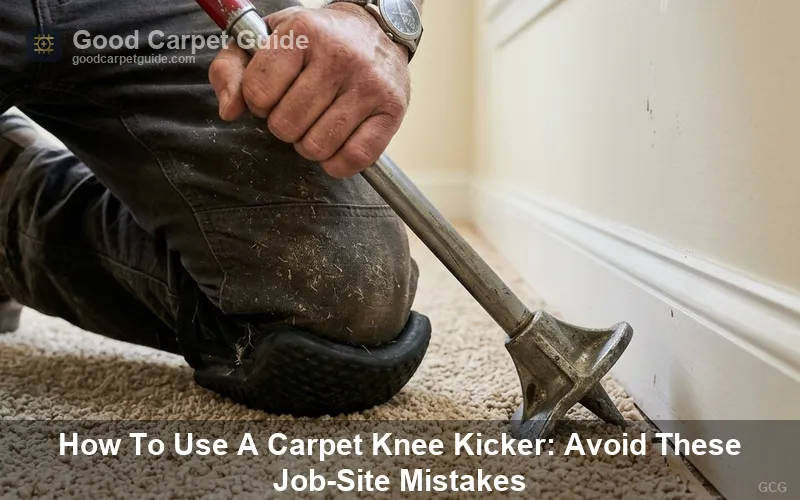
- Knee kicker: Positions carpet along edges and into corners. A positioning tool, not a stretching tool, despite how often it gets used as one.
- Seaming iron or seam tape: Bonds two carpet edges at a seam using heat-activated adhesive tape.
- Carpet trimmer: Trims excess carpet flush against the wall after stretching.
- Electric or manual stapler: Secures padding to the subfloor before carpet goes down.
- Seam cutter: Cuts a straight, fresh edge for seaming; never cut along the backing weave as a guide.
- Carpet tucker / stair tool: Tucks trimmed edges into the gap between tack strip and baseboard.
How much does it cost to rent carpet installation tools
Rental rates run $3 to $45 per tool for a 24-hour period, and purchase prices run $10 to nearly $1,000 depending on whether you buy a light-duty or extended-reach model.
| Tool | 24-hr rental | Purchase |
|---|---|---|
| Power carpet stretcher kit (ROBERTS 10-254 / Junior 10-237) | $37.00 - $38.00 | $612.67 - $683.39 |
| Heavy-duty extended power stretcher (ROBERTS Falcon 44 10-284) | $45.00 | $891.95 - $997.95 |
| Adjustable knee kicker (ROBERTS Deluxe 10-412-2) | $12.00 - $15.00 | $110.67 - $119.00 |
| Economy knee kicker (ROBERTS Economy 10-408) | $12.00 | $45.47 |
| Thermoplastic seaming iron (ROBERTS Cool Shield 10-482G) | $15.00 | $129.00 - $149.00 |
| Conventional carpet trimmer (ROBERTS 10-146-3) | $8.00 | $31.77 - $59.97 |
| Electric carpet stapler (ROBERTS 10-600 / Powernail PTACK54E) | $15.00 | $95.48 - $253.04 |
| Universal seam cutter (ROBERTS 10-154-3) | $5.00 | $19.97 |
| Carpet tucker / stair tool (ROBERTS 10-521) | $3.00 | $9.97 - $22.97 |
Rental counters add fees that never show up on the sign out front. Expect a 10 to 15 percent damage waiver, a $25 to $75 seaming iron cleaning charge if you return it with adhesive residue, a $45 to $95 delivery or pickup fee for the heavy-duty extended stretcher, and a $35 to $150 charge if a pole or tail block does not make it back in the truck. Read the full carpet stretcher guide before your rental window opens, since the counter clock starts the moment you sign, whether you have moved furniture yet or not.
Can you install carpet yourself without a power stretcher
You can lay carpet with a knee kicker alone, but doing so on warranty-registered carpet voids coverage for premature wear, delamination, and wrinkling under most manufacturer terms, and the seams will loosen within a season or two regardless of brand. Knee-kicker-only jobs also carry a physical cost: repeated impact against the knee joint causes friction burns and joint trauma over a full room, which is why every installer I've trained insists on the power stretcher for anything larger than a closet. If the carpet ripples after a knee-kicker-only install, re-stretching later runs $75 to $100 per room, on top of whatever the rental would have cost the first time.
Subfloor prep and hidden cost traps
The subfloor is where a clean DIY carpet installation cost breakdown turns into a surprise. Contractors patch damaged subfloor at $1.75 to $4.70 per square foot; doing it yourself with materials alone runs $1.00 to $3.00 per square foot for plywood repair or $2.00 to $5.00 per square foot for self-leveling concrete.
- Henry 547 Skimcoat: $36.97 per 25-lb bag
- Henry 549 Feather Finish: $25.97 per 7-lb bag
- Henry 555 Level Pro: $39.97 per 40-lb bag
- Henry moisture vapor barrier: $179.00 per gallon
Old carpet tear-out and disposal adds another line most first-timers forget. Professional removal costs $0.50 to $1.60 per square foot, and local dump fees add $25 to $50 on top of that if you haul it yourself. A fresh 100-pack carton of tack strip runs $39.97 if the old strip comes up damaged during tear-out, and furniture moving, whether you hire it out or rent a dolly, typically costs $25 to $75 per room.
Thermal acclimation is a hidden timeline cost rather than a dollar one. Carpet needs a minimum of 65°F for 24 hours before installation to lie flat and seam properly, which matters if you are working in an unheated basement in winter.
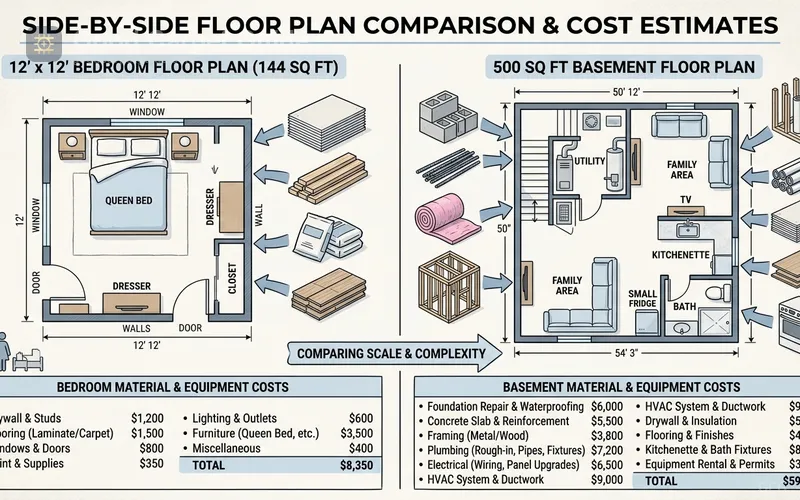
12x12 bedroom vs 500 sq ft basement: itemized cost comparison
| Line item | 12x12 bedroom (144 sq ft) | 500 sq ft basement |
|---|---|---|
| Carpet (mid-range nylon, $2.50/sq ft) | $360 | $1,250 |
| Padding (8-lb rebond, $0.65/sq ft) | $94 | $325 |
| Tack strip + fasteners | $45 | $120 |
| Seam tape / sealer | $27 | $54 |
| Power stretcher rental (1 day) | $38 | $38 |
| Knee kicker rental (1 day) | $13 | $13 |
| Stapler + trimmer rental | $23 | $23 |
| Moisture-barrier padding upgrade | — | +$375 (recommended over slab) |
| Old carpet tear-out & disposal | $75 | $260 |
| Subfloor patch (spot repair) | $60 | $150 |
| Estimated total | $735 | $2,608 |
The basement column assumes a moisture-barrier padding upgrade, which most installers treat as close to mandatory over a concrete slab rather than a true option. Skip it and the total drops by roughly $375, but so does your protection against slab moisture wicking into the pad.
DIY carpet installation vs professional carpet installation cost
Professional installation typically adds $1.00 to $2.00 per square foot in labor on top of material cost, which puts a 144-square-foot bedroom at roughly $150 to $290 in labor alone. Against the $735 all-in DIY total above, professional installation on that same room often lands within a few hundred dollars once you account for tool rental, and it comes with a warranty-compliant power stretch and a crew that has cut a thousand seams before yours. Standard industry pricing guides reflect these regional labor rates if you are pricing quotes against your own DIY math.
Is DIY carpet installation worth it
DIY carpet installation is worth it on small, simple rooms with straightforward layouts and no seams, where the labor savings clearly outweigh the tool rental and the physical toll of a weekend of kneeling and stretching. It gets harder to justify on rooms with seams, stairs, or closets, because a botched seam or an under-stretched section costs more to fix later than a professional installer would have charged up front. Over-trimming is the single most expensive DIY mistake I see on inspection calls: cutting the carpet edge too short for a proper seam bond leaves a gap that seam tape cannot hold, since the tape needs 4 to 6 inches of carpet backing on each side under tension to bond. A professional fix for an over-trimmed seam runs $150 to $200 per area, more than the tool rental for the entire original job.
If you are considering carpet tile instead of broadloom for a basement or a room with awkward angles, our how to lay carpet tiles guide covers a lower-tool-cost alternative that skips the power stretcher entirely.
Warranty risks and manufacturer fine print
Manufacturer warranties carry more restrictions than most homeowners read before cutting the shrink wrap off a roll.
- CRI-105 compliance: Power stretching is required on stretch-in installations; knee-kicker-only work falls outside the standard.
- Stinger device prohibition: Phenix Flooring and Dobbs Mills name stinger-style devices as an automatic warranty void.
- Glue-down restriction: Dobbs Mills and Phenix require stretch-in over pad for residential broadloom; unauthorized glue-down voids coverage.
- Cutting standard: Cuts must use a fresh straight edge, never the backing weave as a guide.
- Maintenance proof: Most manufacturers require professional hot-water extraction receipts every 12 to 24 months to keep a stain or wear warranty active, which catches homeowners who rent a consumer carpet cleaner instead.
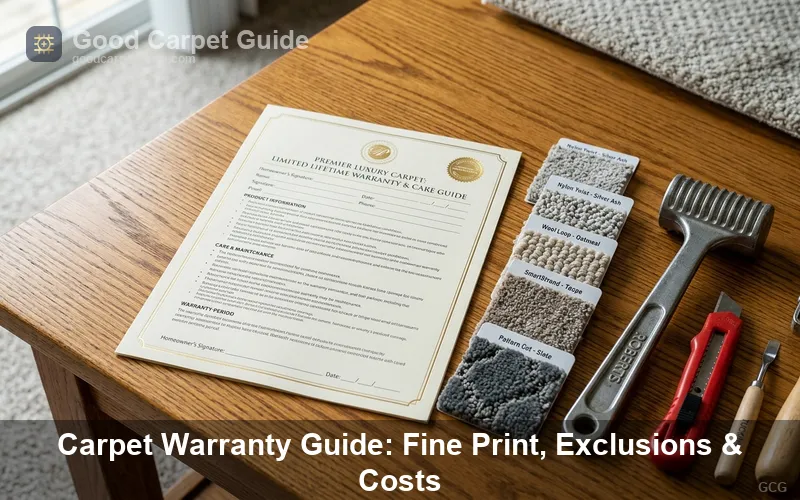
Read the specific warranty document for your carpet brand before you touch a staple gun. Shaw, Mohawk, Phenix, and Dobbs Mills each publish their own installation requirements, and the fine print differs enough between them that assuming one brand's rules apply to another is how a warranty claim gets denied.
Field notes before you start
Rent the power stretcher for a full day even on a single room, because setup, stretching, and trimming eat more clock time than most first-timers expect. Buy the tack strip that matches your subfloor material, wood or concrete, before pickup day. Check the carpet tack strip guide for placement spacing if this is your first stretch-in job. Keep the seam sealer bottle open on the job site, since a dry, unsealed seam is the fastest way to turn a clean DIY carpet installation cost breakdown into a callback to the carpet store for a repair kit.
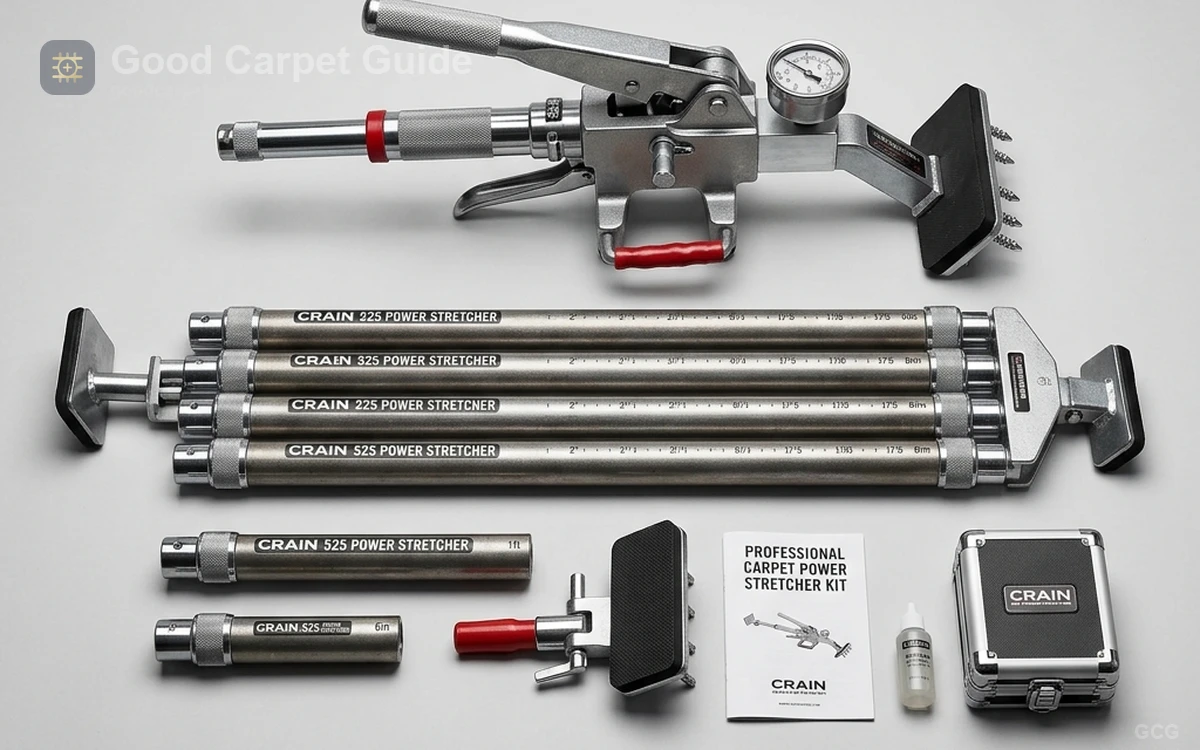
ROBERTS Power Stretcher Kit
Full-size power stretcher kit with extension tubes and tail block for stretch-in installations.
Check Price on Amazon
ROBERTS Deluxe Adjustable Knee Kicker
Adjustable knee kicker for positioning carpet along edges and corners before final stretch.
Check Price on Amazon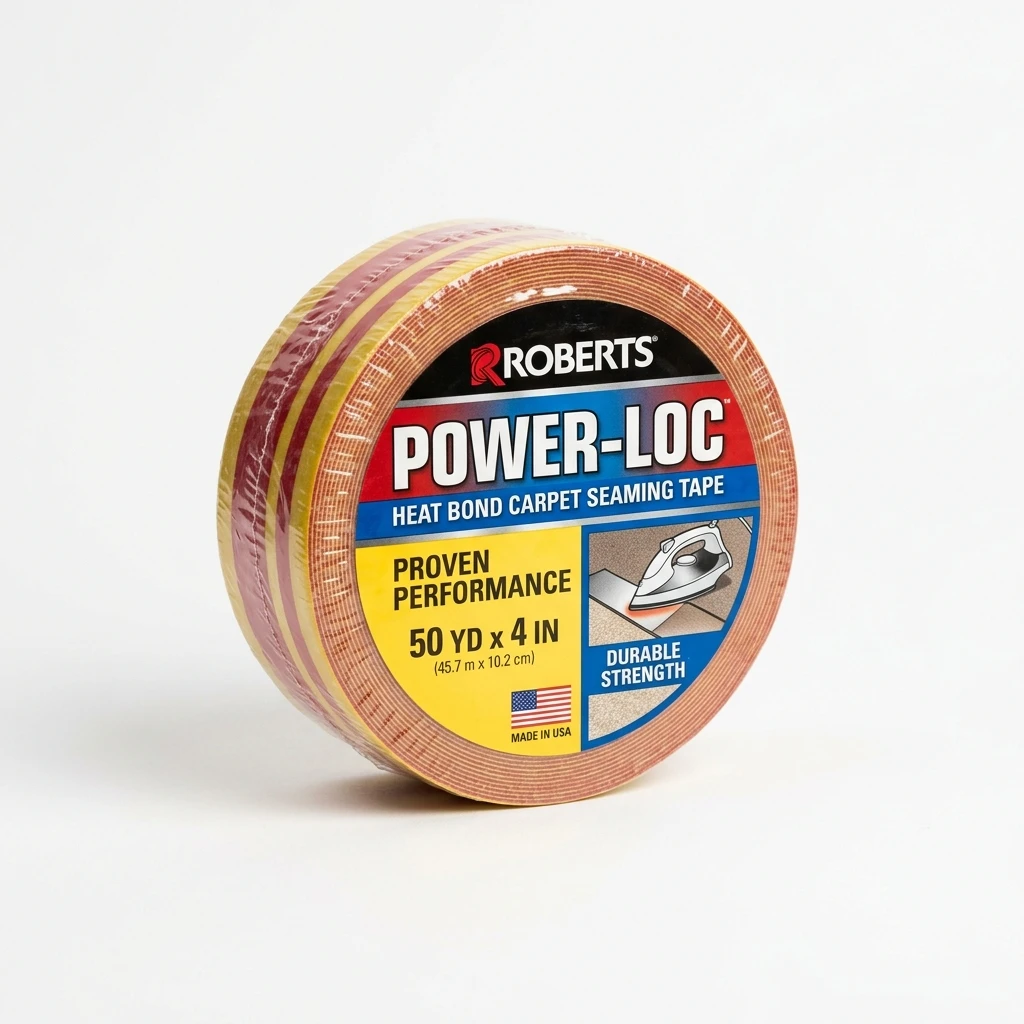
ROBERTS Power-Loc Heat Bond Seaming Tape
Heat-activated seaming tape roll for bonding carpet seams without a full seaming iron kit.
Check Price on Amazon