Eco friendly carpet options differ substantially in fiber chemistry, backing construction, moisture tolerance, VOC emissions, durability, and end-of-life recyclability. For a US homeowner prioritizing indoor air quality, 100% natural wool with natural fiber backing is the strongest material choice; wool can bind formaldehyde, NO₂, and SO₂, while high-quality carpet systems can target total VOC emissions below 0.5 mg/m²·hr under CRI Green Label Plus criteria.
Eco friendly carpet options also include sisal, jute, seagrass, bio-based Triexta, and recycled PET polyester, but their environmental advantages have different lifespans and failure modes. Wool can remain serviceable for decades and biodegrade under appropriate conditions within years after disposal, while recycled PET may contain post-consumer plastic yet develop visible traffic compression within roughly 24–36 months in demanding residential areas.
the four categories of eco friendly carpet
Eco friendly carpet is a material category rather than a single fiber specification. The four practical categories are natural protein fiber, natural plant fiber, bio-based synthetic fiber, and recycled synthetic fiber. Their environmental profiles change according to polymer chemistry, backing, adhesive, maintenance requirements, service life, and disposal pathway.
| Carpet category | Primary chemistry | Typical material cost | Main environmental advantage | Main field limitation |
|---|---|---|---|---|
| 100% natural wool | Keratin protein | 3.00–21.00/sq. ft. | Renewable, durable, biodegradable | Moisture sensitivity and higher cost |
| Sisal, jute, seagrass | Cellulosic lignocellulose | 1.50–9.00/sq. ft. | Rapidly renewable plant fibers | Water can cause browning and dimensional damage |
| Bio-based Triexta | PTT polymer, 37% bio-based | 1.50–7.00/sq. ft. | 37% polymer feedstock from fermented corn glucose | Oil attraction and pile crushing |
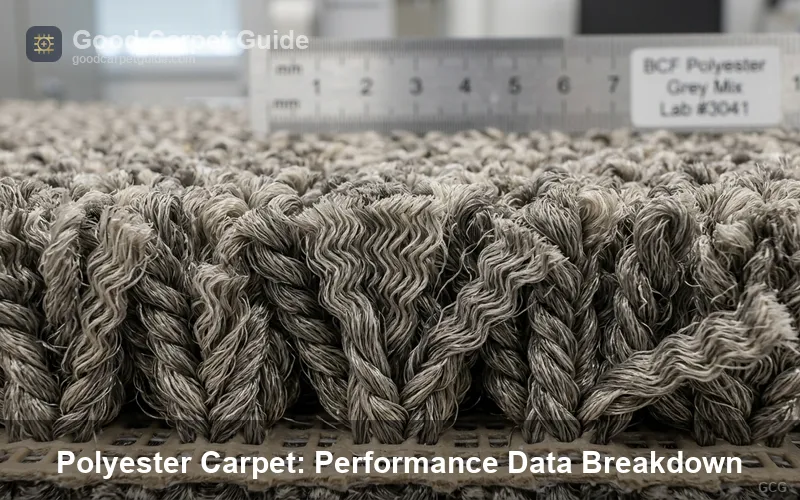
| Recycled PET | Recycled polyethylene terephthalate | 0.50–3.50/sq. ft. | Uses post-consumer plastic bottles | Weak elastic recovery and poor end-of-life economics |
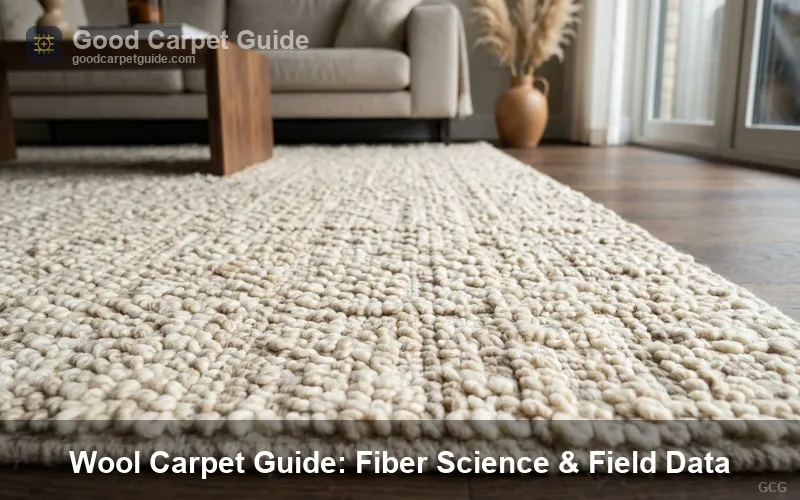
100% natural wool
Wool consists primarily of keratin, the sulfur-containing protein that forms the structure of sheep fleece. Carpet manufacturers can combine wool with hemp or cotton primary backing, woven jute secondary backing, and natural rubber latex.
A natural wool carpet system has the clearest material pathway for homeowners seeking renewable and biodegradable flooring. Earth Weave's Bio-Floor line and Nature's Carpet products illustrate this construction approach. Karastan also manufactures wool carpet products, although individual products must be checked for their backing and adhesive composition.
The environmental claim depends on the entire assembly. A wool face fiber attached to a conventional synthetic-latex backing does not have the same chemistry as a wool carpet built with natural backing and natural adhesive systems.
For the fiber structure, durability is tied to keratin's elastic behavior. Wool bends, compresses, and recovers differently from PET polyester. A properly maintained wool installation can remain in service for decades.
A detailed breakdown of wool chemistry, elasticity, backing, and biodegradability is covered in the natural wool carpet guide .
natural plant fibers
Sisal, jute, and seagrass consist predominantly of cellulose, hemicellulose, lignin, and related plant compounds. These fibers grow from renewable agricultural sources and have relatively low petroleum content.
Cellulosic fibers are hygroscopic. They absorb and release water according to ambient relative humidity and liquid exposure. A wet extraction process can move moisture deep into the fiber and backing system.
That moisture changes the dimensions of the carpet. Drying can produce shrinkage, rippling, edge tension changes, and visible cellulosic browning. In severe cases, prolonged moisture exposure creates conditions favorable to microbial growth. Plant-fiber carpet therefore requires a different maintenance protocol from synthetic wall-to-wall carpet.
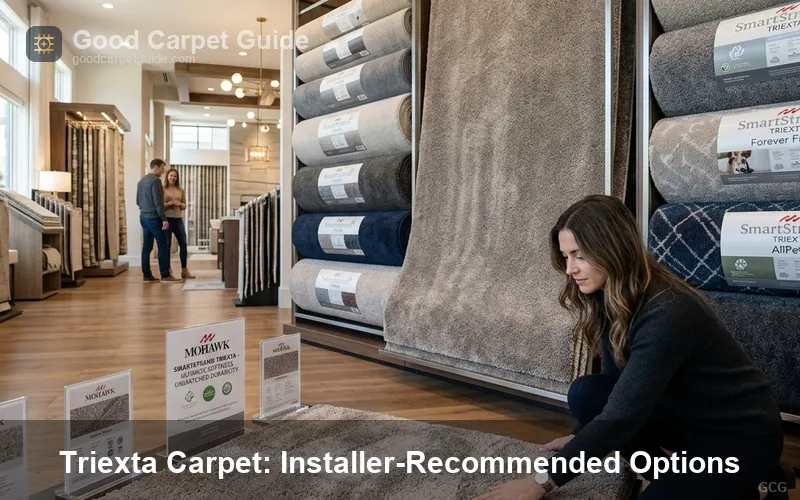
bio-based PTT Triexta
Triexta is based on polytrimethylene terephthalate, or PTT. DuPont Sorona uses a polymer in which 37% of the material is derived from plant-based feedstock associated with fermented corn glucose, while the remaining 63% is petroleum-derived.
The polymer is still synthetic. Its environmental advantage comes from partial bio-based feedstock rather than complete biological origin.
The stain-resistance mechanism differs from topical chemical treatments. Hydrophobic properties are incorporated into the fiber polymer itself, so ordinary staining liquids have difficulty penetrating the fiber.
PTT is oleophilic enough to attract oily contaminants from skin, cooking residues, cosmetics, and petroleum-based substances. Fine-denier products can also develop crushing and matting in heavily trafficked zones. The chemistry and performance differences are examined in the Triexta carpet guide.
recycled PET polyester
Recycled PET carpet uses polyethylene terephthalate recovered from post-consumer plastic, commonly beverage bottles. Mohawk EverStrand is a prominent example of this material strategy, while Dreamweaver also manufactures PET carpet products.
The environmental accounting is straightforward at the manufacturing stage: existing plastic enters the carpet supply chain rather than becoming immediate waste.
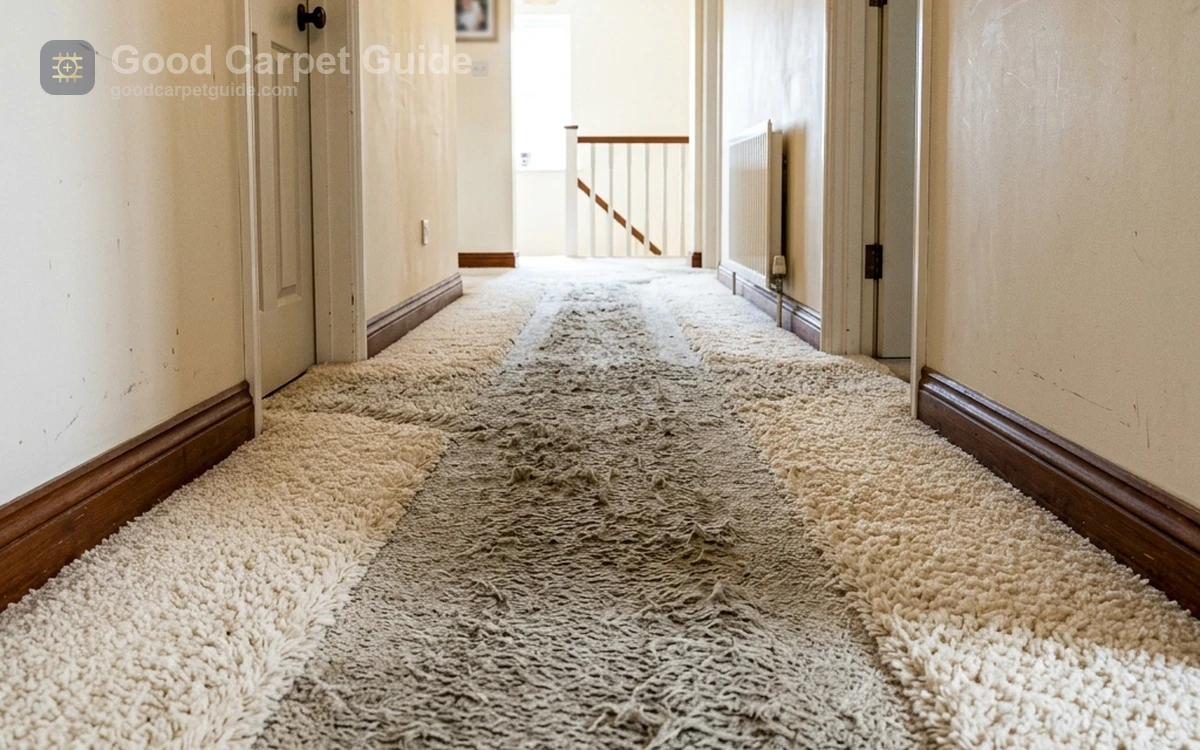
The service-life calculation is less favorable in high-traffic conditions. PET has weaker elastic recovery than nylon 6,6. Carpet fibers need molecular spring-back after compression from footsteps and furniture. When recovery is poor, traffic lanes become permanently visible.
The Carpet America Recovery Effort (CARE) has also documented major structural changes in the US carpet market. Nylon's residential share has fallen dramatically while PET has become dominant. Low-value PET creates a difficult recycling economics problem because recovered carpet often has insufficient commodity value to support collection, separation, and processing.
wool carpet as a passive air purification system
Natural wool has a chemically active keratin surface that can bind selected indoor air contaminants. Laboratory testing has reported reduction of 300 ppm formaldehyde to near-zero concentration within approximately four hours, with bound formaldehyde retained within the fiber for periods reported up to 30 years without re-emission.
Wool's behavior differs from a conventional passive filter. The keratin protein contains reactive chemical groups that can interact with aldehydes and other atmospheric compounds.

The relevant indoor contaminants include formaldehyde, nitrogen dioxide (NO₂), and sulfur dioxide (SO₂). Wool can adsorb and chemically bind these compounds at its large internal and external fiber surface.
The phrase "air purification" needs a material-science qualification. A wool carpet does not replace mechanical ventilation, source control, or HEPA filtration. Its contribution is passive chemical sorption.
Fiber geometry increases the available surface area. Carpet contains millions of individual fibers standing vertically above the backing. Air moves through the pile as occupants walk across it and as the HVAC system changes pressure within the room. The result is a large reactive surface distributed across the floor.
Un-dyed wool combined with natural backing provides the cleanest chemical configuration for a low-emission carpet. Dye chemistry, finishing agents, backing adhesives, and installation products must still be evaluated individually.
Moth protection is another material tradeoff. Wool can attract clothes moth larvae because keratin is a usable protein source. Borate treatments can reduce this risk, but homeowners seeking a minimal-chemical assembly should examine the treatment specification before purchasing.
Wool also costs more. A realistic installed range is approximately 8.00–21.00/sq. ft. for higher-end natural wool systems, although market pricing varies by construction, region, labor, and product line.
the plant fiber trap: why sisal and jute ruin with water
Sisal and jute carpet have hygroscopic cellulosic fibers that change dimension after liquid exposure. Water can produce browning, shrinkage, rippling, and backing deformation because cellulose absorbs moisture and can transport dissolved soil through the carpet structure.
Cellulosic browning is one of the most important maintenance distinctions between natural plant fiber carpet and synthetic carpet.
During wet cleaning, dissolved soil and browning compounds can migrate toward the fiber surface as the carpet dries. Alkaline residues, excess moisture, slow drying, and backing contamination increase the risk. The discoloration can become permanent.
Shrinkage creates a separate mechanical problem. The plant fibers swell during wetting and contract during drying. If the carpet construction cannot accommodate that dimensional change, the installation may ripple or pull away from edges.
Moisture also changes the backing. Adhesives can soften, seams can move, and trapped moisture can remain between the carpet and subfloor. For this reason, sisal, jute, and many seagrass carpets require controlled dry-compound cleaning rather than conventional steam extraction.
The HOST dry-cleaning method uses an absorbent compound that is mechanically worked into the carpet and then vacuumed away. It minimizes liquid water exposure.
A professional technician should inspect the fiber, backing, dye stability, and existing stains before selecting a cleaning process. Natural fiber is a material constraint rather than a generic cleaning label.
recycled pet vs bio-based triexta: marketing claims vs reality
Recycled PET and bio-based Triexta represent two different approaches to reducing petroleum dependence. PET uses recycled material already in circulation, while PTT incorporates 37% bio-based polymer feedstock.
The environmental comparison changes when service life enters the calculation.
PET has relatively low material pricing, typically 0.50–3.50/sq. ft. Its major technical weakness is elastic recovery. Fibers subjected to repeated compression may remain flattened.
In residential hallways, stairs, living rooms, and routes between kitchens and bedrooms, visible compression can develop within approximately 24–36 months on susceptible products.
PET is also oleophilic. Body oils can accumulate on the pile and oxidize, producing dark traffic lanes that ordinary dry soil removal may not fully reverse.
Triexta has stronger built-in stain resistance and better resilience characteristics than many PET constructions. Its 37% bio-based polymer content reduces reliance on fossil feedstock for part of the polymer.
A homeowner should therefore separate three evaluation points:
- What percentage of the polymer is bio-based?
- How long will the carpet remain visually acceptable?
- What happens to the carpet when the installation is removed?
A carpet that contains recycled plastic but requires replacement after a short service interval can have a weaker lifecycle profile than a more expensive carpet that remains functional for decades.
For a direct durability comparison with nylon, see recycled PET polyester vs nylon .
CARE's recycling economics provide another warning. PET carpet can contain substantial recycled content at manufacture while still having weak end-of-life recovery economics. Recycling infrastructure requires sufficient material value to pay for collection, transportation, sorting, and reprocessing.
The word recycled therefore describes feedstock. It does not guarantee recyclability after the carpet has been installed.
voc off-gassing, 4-pch emissions, and carpet backing chemistry
Carpet VOC emissions are strongly influenced by the backing and adhesive system rather than the face fiber alone. Traditional synthetic carpet commonly uses styrene-butadiene rubber (SBR) latex, whose manufacturing chemistry can produce 4-phenylcyclohexene (4-PCH) as a volatile byproduct.
4-PCH became strongly associated with the characteristic odor reported after installation of some synthetic carpets. Odor and irritation are not interchangeable measurements, but volatile compounds can produce sensory and mucosal irritation at sufficiently raised concentrations.
SBR latex is synthetic petroleum rubber. It contains no Hevea brasiliensis proteins, so SBR is chemically distinct from natural rubber latex and does not create the same IgE-mediated natural latex allergy mechanism.
The backing specification matters. Mohawk Air.o uses a unified polyester backing system that eliminates conventional SBR latex backing construction. The system is marketed around low emissions and hypoallergenic characteristics.
Installation chemistry can undermine that advantage. A carpet with a low-emission backing can still introduce substantial VOCs when installers apply a high-VOC multipurpose adhesive beneath it. A mechanically tensioned installation using the manufacturer's specified dry dual-sided tension-tape system changes the chemical load because the installation does not depend on wet adhesive application.
why bake-out can make indoor air worse
The bake-out approach heats the house after installation to accelerate VOC release.
That strategy can increase indoor contaminant concentration during the heating period. Vermont Department of Health guidance has specifically cautioned against treating heat as a universal solution for indoor chemical emissions.
Temperature affects vapor pressure. Heating can increase the rate at which volatile compounds leave materials and enter room air.
Ventilation is the more controlled variable. After installation, maintain strong outdoor-air ventilation when weather and HVAC design permit. Keep occupants away from the strongest emissions during the initial period when practical.
what CRI Green Label Plus actually tells you
CRI Green Label Plus is a carpet emissions certification program with a total VOC emission limit below 0.5 mg/m²·hr under its criteria.
That metric is useful because it measures emissions rather than relying on the vague claim non-toxic.
Other relevant certifications include FloorScore, GOTS, and Cradle to Cradle (C2C). They address different portions of material chemistry, manufacturing, textile content, or lifecycle performance.
A certification should be checked against the exact product and construction. A manufacturer-level sustainability statement does not automatically apply to every carpet in the product catalog.
eco friendly carpet padding: why standard rebond ruins green flooring
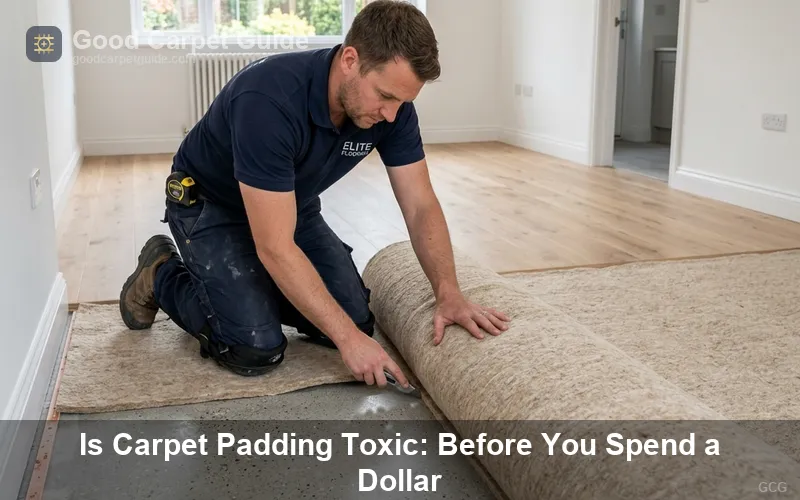
Carpet padding determines the mechanical and moisture environment beneath the face fiber. A sustainable carpet can experience premature failure when installed over low-quality porous rebond that retains moisture, breaks down, or lacks the density required by the carpet manufacturer.
Three underlay systems are particularly useful for sustainable carpet installations.
| Padding type | Typical specification | Main benefit | Main concern |
|---|---|---|---|
| Virgin natural sponge rubber | Dense rubber cushion | Low-emission, resilient support | Higher purchase cost |
| Recycled post-industrial felt | 32–40 oz/sq. yd. minimum | Dense fiber support and recycled content | Must be dry and structurally stable |
| High-density virgin foam | About 8 lb/cu. ft. | Resilience and controlled cushioning | Verify emissions and spill-barrier construction |
Standard low-density rebond can contain porous foam particles bonded together. The structure can hold moisture and gradually deteriorate under repeated compression.
A high-density pad with an integrated spill barrier changes the moisture pathway. Liquid spills remain closer to the carpet surface instead of immediately penetrating the cushion and subfloor.
Natural rubber sponge is another option. It has a different polymer chemistry from SBR carpet latex and should be evaluated according to the specific manufacturer's emissions and allergen documentation.
The relationship between cushion density, emissions, and material selection is covered in the hypoallergenic carpet padding guide.
Padding thickness must follow the carpet manufacturer's specification. Excessively soft or thick padding can produce excessive carpet movement, seam stress, wrinkling, and premature wear.
Installation tension is equally important. A professional installation should use a power stretcher or equivalent mechanical stretching equipment. A knee kicker is a positioning tool, not a substitute for whole-room power stretching.
Insufficient tension leaves the carpet vulnerable to wrinkles and seam movement. The technician should follow the carpet manufacturer's installation specification and the applicable industry requirements.
full cost breakdown: material, padding, and labor pricing
Eco carpet installation cost in the US varies primarily by fiber, carpet construction, padding density, room geometry, removal requirements, and regional labor. The planning ranges below provide a working budget rather than a single contractor quote.
| Cost component | Typical market range |
|---|---|
| Recycled PET carpet | 0.50–3.50/sq. ft. |
| Bio-based Triexta | 1.50–7.00/sq. ft. |
| Sisal/jute | 1.50–9.00/sq. ft. |
| 100% wool | 3.00–21.00/sq. ft. |
| Eco padding | 0.75–2.50/sq. ft. |
| Flat-room installation | 0.50–1.50/sq. ft. |
| Stair installation | 15–60 per step |
| Carpet tear-out | 0.50–1.60/sq. ft. |
| Budget eco installation | 3.00–5.00/sq. ft. |
| High-performance natural/bio installation | 6.00–18.00+/sq. ft. |
A 1,000 sq. ft. installation illustrates the difference between material and project cost. A budget PET system at 3.00/sq. ft. installed would imply approximately3,000 before unusual subfloor preparation. A premium natural or bio-based system at 18.00/sq. ft. could reach18,000.
Stairs change the calculation because every tread and riser creates additional cutting, fitting, fastening, and labor.
Tear-out also produces a separate waste stream. The removal cost of 0.50–1.60/sq. ft. can become significant on large projects.
Homeowners should request separate line items for carpet, cushion, installation, furniture moving, tear-out, disposal, seam work, and subfloor preparation. This makes material comparisons more accurate.
The lowest purchase price is not automatically the lowest lifecycle cost. A carpet that requires replacement after 3–5 years can create higher cumulative material and disposal costs than a more expensive system that remains functional for decades.
professional maintenance rules for sustainable carpets
Sustainable carpet maintenance depends on controlling dry soil, moisture, mechanical agitation, and chemical exposure. Wool and plant fibers require more conservative moisture management than ordinary synthetic carpet.
Vacuuming is the first line of maintenance because abrasive dry soil damages carpet fibers mechanically. Use a vacuum with effective filtration. Natural wool and fine-denier fibers require careful adjustment because aggressive brush action can damage or distort the pile.
For wool, use the manufacturer's recommended vacuum settings. Soft wool pile may require reduced agitation.
Plant-fiber carpet needs a stricter moisture limit. Routine liquid extraction should not be treated as the default maintenance method. A dry compound system removes soil while keeping liquid exposure low. That distinction matters because the primary failure mechanism of sisal and jute is moisture-related.
Wool can tolerate controlled professional low-moisture cleaning, but technicians should avoid saturation. Dry extraction and carefully controlled low-moisture systems are preferable where the carpet manufacturer specifies them.
Spills should be addressed quickly. Blotting removes liquid from the pile without forcing contaminants deeper into the backing.
Avoid household detergents with unknown pH, optical brighteners, or excessive surfactant residue. Cleaning chemistry should match the fiber.