Installer's safety alert box
• Do not trust "waterproof" labeling on engineered hardwood as a substitute for a moisture barrier. Water intrudes through perimeter expansion gaps and seam joints regardless of the factory topcoat.
• Verify subfloor relative humidity with a calibrated moisture meter before installation. Manufacturer warranties on engineered hardwood are void outside a 35 percent to 55 percent relative humidity range.
• Never install click-lock flooring from a single box. Rack planks from at least three boxes to prevent visible H-pattern joint clustering.
• Confirm wear layer thickness before purchase. A 0.6mm to 1.2mm veneer cannot be sanded or refinished; a 3mm to 4mm veneer can be refinished multiple times.
• Do not place polypropylene-backed rugs on engineered hardwood. The rubberized backing reacts chemically with factory finish and leaves a permanent cloudy film.
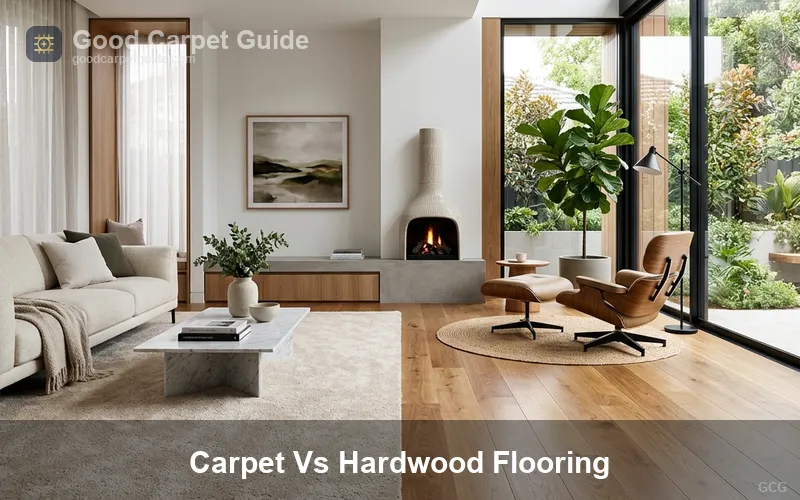
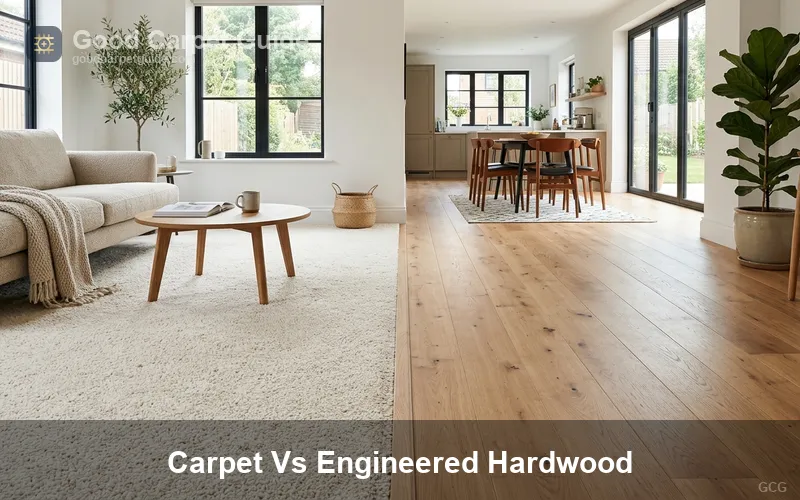
Carpet vs engineered hardwood is a decision between soft, warm flooring that traps moisture and debris versus a harder, moisture-resistant surface with a finite number of refinishing cycles. Carpet costs less per square foot on average and performs better acoustically, while engineered hardwood costs more upfront but resists staining, allergen buildup, and pet accidents more effectively over a comparable service life. The choice generally comes down to traffic load, humidity exposure, household pets, and how the room is used.
carpet vs engineered hardwood: quick verdict
Carpet suits bedrooms, low-traffic secondary rooms, and stairs where sound dampening and softness matter more than moisture resistance. Engineered hardwood suits entryways, kitchens, and living rooms where spills, foot traffic, and long-term resale value carry more weight than underfoot comfort. Homeowners who mix both, hard surfaces downstairs and carpet upstairs, report the fewest regrets according to forum-reported satisfaction patterns across multiple flooring communities.
comfort, acoustics, and thermal performance
| Attribute | Carpet | Engineered hardwood |
|---|---|---|
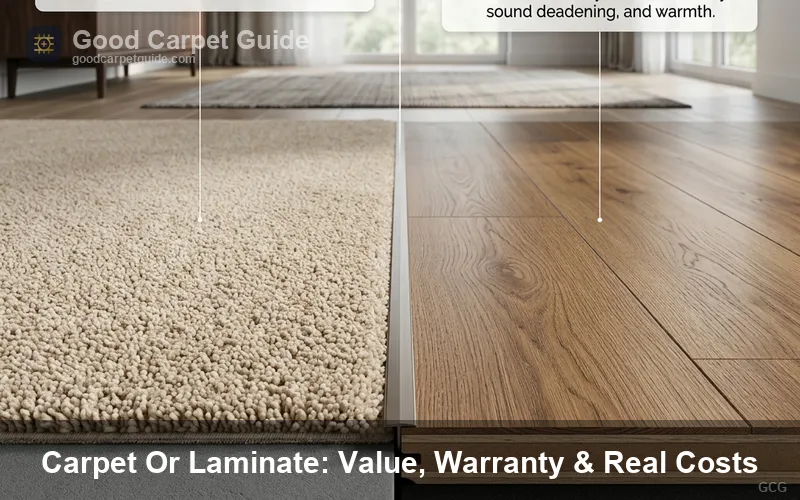
| Surface temperature (bare feet) | Warmer; insulates against subfloor cold | Cooler; conducts subfloor temperature |
| Impact sound (footsteps) | Absorbs impact noise | Transmits and amplifies impact noise |
| Airborne sound transmission | Reduces room-to-room noise | Reflects sound, increases echo |
| Cushioning underfoot | High, dependent on pad density | Minimal; rigid surface over subfloor |
| Slip resistance | High traction | Lower traction, especially when wet |
A carpet's acoustic performance depends heavily on the cushion beneath it rather than the face fiber alone. The Carpet and Rug Institute (CRI) links sound absorption performance to pad density and pile height rather than fiber brand. Engineered hardwood installed over a concrete or plywood subfloor without an acoustic underlayment transmits impact noise between floors, which is why multi-unit buildings frequently mandate an underlayment with a documented Impact Insulation Class (IIC) rating.
material and installation cost breakdown
Cost data reflects recent national material and labor rates and varies by region, subfloor condition, and product tier.
| Flooring type | Material (per sq ft) | Labor (per sq ft) | Total (per sq ft) |
|---|---|---|---|
| Budget/standard carpet | $1.00 - $2.50 | $1.00 - $2.00 | $2.00 - $4.50 |
| Premium/designer carpet | $3.00 - $6.00 | $2.00 - $3.50 | $5.00 - $9.50 |
| Basic engineered hardwood | $4.00 - $6.00 | $3.00 - $5.00 | $7.00 - $11.00 |
| Mid-grade engineered hardwood | $6.00 - $10.00 | $4.00 - $7.00 | $10.00 - $17.00 |
| Premium engineered hardwood | $12.00 - $18.00 | $6.00 - $10.00 | $18.00 - $28.00 |
| Traditional solid hardwood | $5.00 - $14.00 | $4.00 - $8.00 | $9.00 - $22.00+ |
is carpet or engineered hardwood cheaper
Carpet is cheaper at every comparable quality tier. Budget carpet installs for $2.00 to $4.50 per square foot, while the least expensive engineered hardwood option starts near $7.00 per square foot. This answers several related questions homeowners ask in different phrasing: whether engineered hardwood is cheaper than carpet (it is not, at any tier), which of the two is more expensive (engineered hardwood, in all cases), and what the cost of carpet vs engineered hardwood looks like across a full room (carpet typically runs 40 to 60 percent less for a comparable-quality installation).
how much does it cost to replace carpet with engineered hardwood
Removing existing carpet and replacing it with engineered hardwood adds hidden costs beyond the base material and labor figures above. Tack strips and staples left behind by old carpet installations frequently damage the subfloor. Correcting that damage and leveling the subfloor with compound before laying engineered wood can add $1.50 to $4.00 per square foot in prep labor, a cost line that budget-focused homeowners often miss when comparing quotes.
durability, scratching, and wear layer thickness
Engineered hardwood durability depends on wear layer thickness, not on brand reputation alone. Budget lines use a 0.6mm to 1.2mm wear layer, a thickness too thin to sand without exposing the plywood or HDF core underneath. Premium lines from Kährs (sold through the retailer Stuga), Mirage, and Lauzon use 3mm to 4mm wear layers that installers can refinish multiple times over the product's service life.
Scratch and dent resistance is tested industry-wide using the ASTM D5252 Hexapod tumbling test and the ASTM D2859 Pill Test for flammability resistance, both of which manufacturers cite on technical spec sheets rather than marketing pages. Anderson Tuftex lines such as Bernina Hickory and Camrena carry a strong visual reputation but a comparatively thin 1.2mm wear layer on several collections, a specification gap that has generated repeated homeowner complaints on flooring forums about scratching and denting within the first year of use.
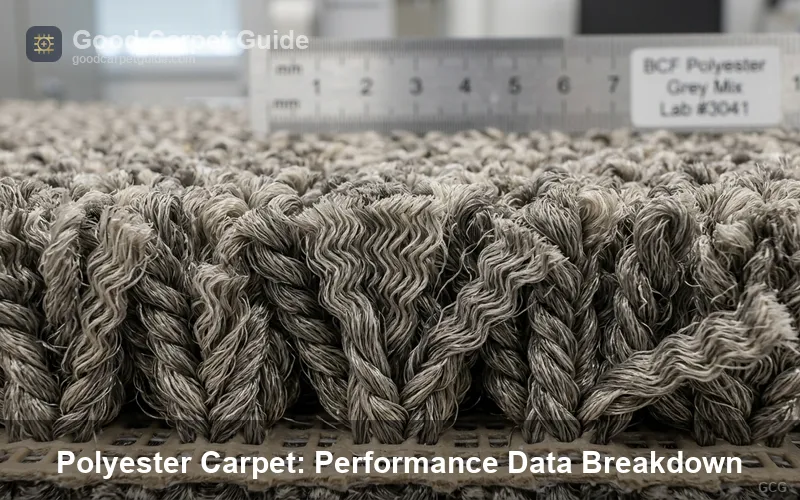
Carpet durability follows a different failure pattern. High-traffic zones develop matted, crushed "traffic paths" as pile fibers lose their vertical recovery. Independent laboratory pile-crush recovery data suggests recovery rate correlates more strongly with pad density than with fiber type.
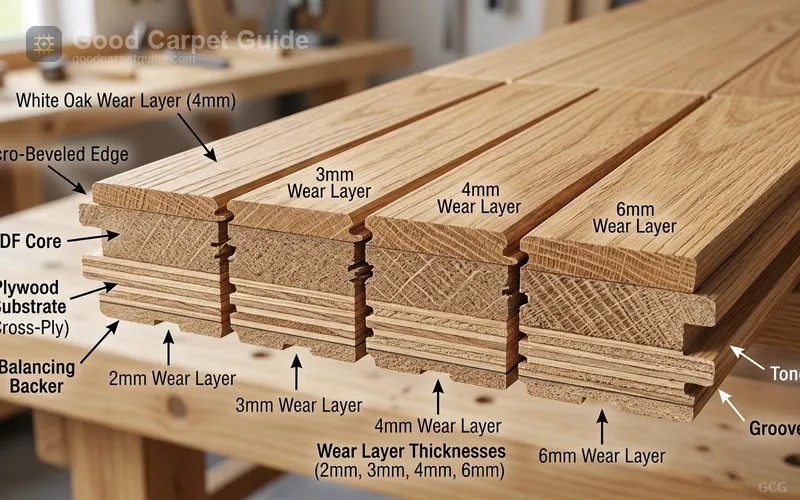
Wear layer thickness, not brand name, determines whether an engineered hardwood floor can survive one sanding cycle or several.
the carpet padding factor: what actually decides lifespan
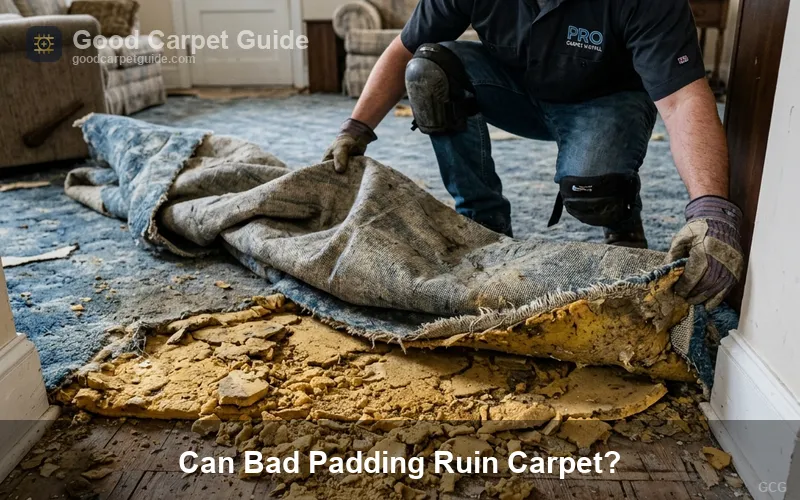
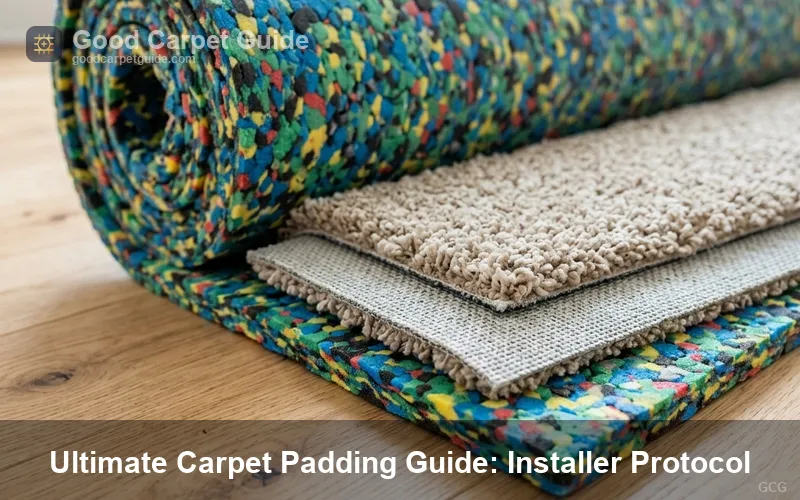
A carpet's face fiber gets the marketing attention, but the cushion underneath determines how long the carpet looks new. Low-density re-bond pad causes visible flattening within 2 to 3 years even under premium carpet like Shaw Devon Classic III. Installers who work with premium carpet lines generally specify a minimum 8-pound density pad to preserve pile recovery and delay matting in high-traffic zones. Pairing a durable face fiber with an undersized pad produces the same "premature flattening" complaint that homeowners commonly report regardless of how much the carpet itself cost.

Leggett & Platt Napa Carpet Pad
High-density 8-pound carpet cushion with breathable moisture barrier that protects against spills and prevents premature pile crushing.
Check Price on Amazonmoisture, humidity, and the waterproof marketing gap
"Waterproof engineered hardwood" describes finish-level water resistance, not floor-system water immunity. Brands including Shaw Floorté Exquisite and Mohawk UltraWood with WetProtect technology market water resistance at the surface coating level. [INSERT NAMED SOURCE] standing water still penetrates through perimeter expansion gaps, stair nosing joints, and seam lines regardless of topcoat rating. A manufacturer representative with a decade of field experience has described wood floors as moisture-absorbing by nature at the core level, meaning sustained exposure eventually reaches and swells the plywood or HDF substrate.
Relative humidity control matters as much as spill cleanup speed. Manufacturer warranties on engineered hardwood specify a 35 percent to 55 percent relative humidity range as a condition of coverage. Humidity swings outside that band, common in regions with strong seasonal shifts, can cause gapping, cupping, or crowning that most warranties explicitly exclude from coverage.
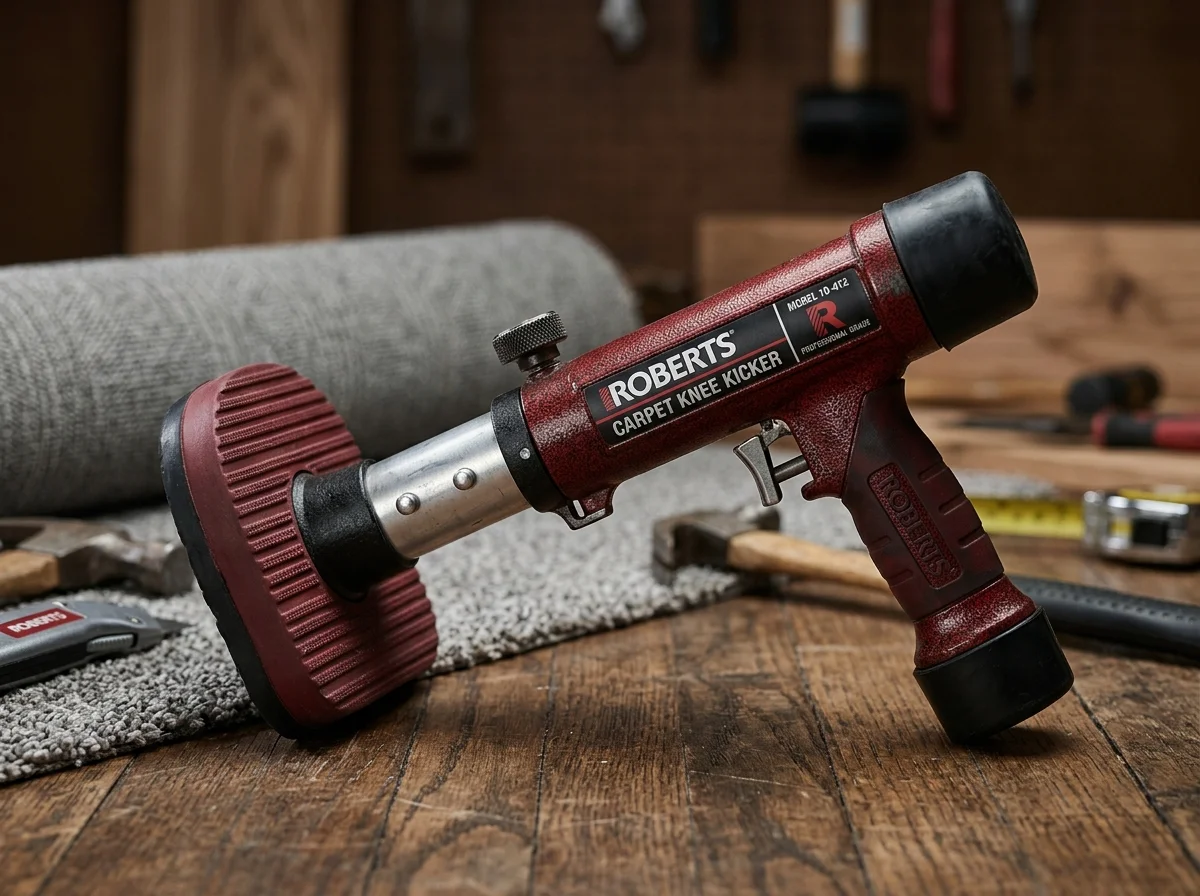
ROBERTS 10-504 Power-Grip Carpet Knee Kicker
Professional-grade adjustable knee kicker with foam-padded handle for precision carpet stretching and seam positioning.
Check Price on Amazoncore construction: plywood vs hdf
Engineered hardwood performance relies on core stability and dimensional strength under load.
what is the difference between engineered hardwood types
Engineered hardwood splits into two core categories that behave differently under load and moisture. Plywood-core products use 7 to 11 cross-grain layers, and installers favor this construction for wide planks over 5 inches because the alternating grain pattern resists seasonal expansion and contraction. High-Density Fiberboard (HDF) core products compress wood fibers into a denser, more dent-resistant board, but [INSERT NAMED SOURCE] HDF click-lock profiles can feel brittle during installation and are more prone to snapping over subfloor variations as small as a few millimeters.
Choosing between the two core types depends on plank width, subfloor flatness, and expected humidity swings rather than on price alone. A wide-plank product installed with an HDF core in a region with strong seasonal humidity variation carries a higher risk of joint failure than the same plank profile built on a plywood core.
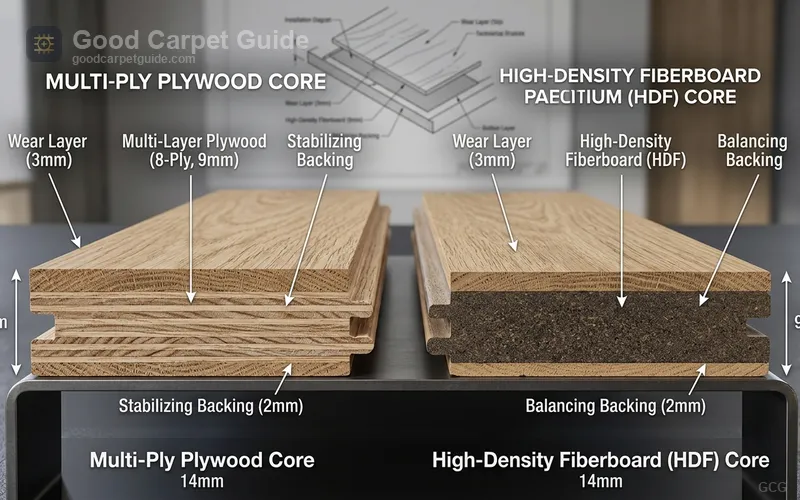
Core construction, plywood or HDF, determines how a plank responds to subfloor irregularities and seasonal humidity shifts described above.
maintenance and hygiene differences
Carpet fiber traps allergens, dust, and organic residue in ways that hard flooring does not. IICRC S100 cleaning standards recommend hot water extraction cleaning on a 12 to 18 month cycle for residential carpet to remove embedded soil that daily vacuuming cannot reach. Homeowners with pets report a recurring problem: liquid pet accidents penetrate through the carpet backing into the pad, where odor and bacteria remain even after surface cleaning.
Engineered hardwood requires pH-neutral cleaners and avoids standing water entirely. Sloppy cleanup practices, including strong paint thinners used to remove adhesive residue during installation, can permanently haze or dull a factory finish. A cloudy film that develops after cleaning frequently traces back to either the wrong cleaning chemical or a polypropylene-backed rug reacting with the finish rather than a manufacturing defect.
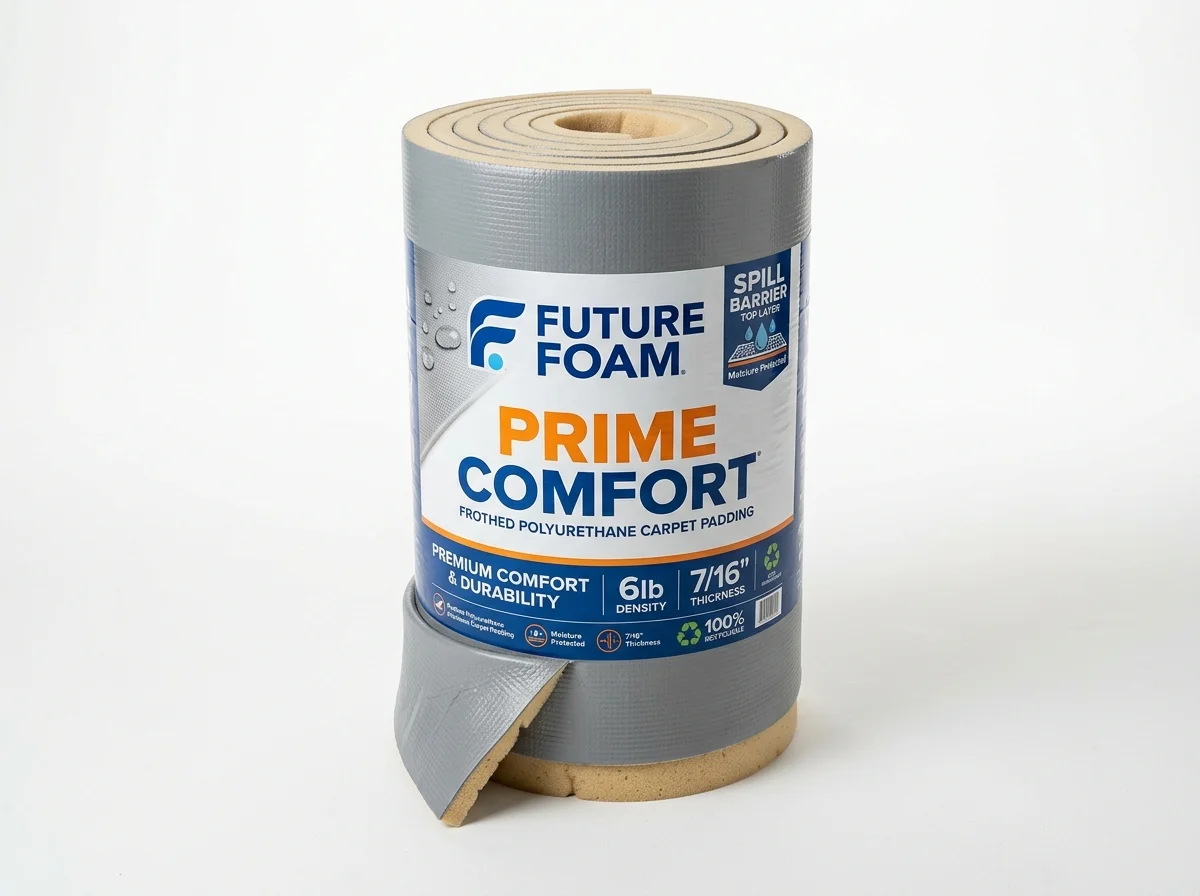
Future Foam Prime Carpet Cushion
Heavy-duty 8lb density rebound foam padding designed for high-traffic corridors and residential bedroom installations.
Check Price on Amazonwarranty fine print: what "50-year" actually covers
A "50-year residential warranty" on engineered hardwood covers manufacturing defects only. It does not cover daily scratches, pet-related damage, improper acclimation before installation, or humidity swings outside the 35 percent to 55 percent range specified in the warranty terms. Homeowners who file a claim for wear-related damage after several years of normal use frequently find the claim denied on the basis of one of these standard exclusions. Reading the exclusions section before purchase, not the headline warranty length, determines what protection a homeowner actually has.
real homeowner and installer experiences
Homeowner reports on engineered hardwood cluster around two failure patterns: early scratching and veneer cracking. Multiple forum posters have described visible wear appearing within 6 months to a year of installation, with dropped household objects like a game controller or a bottle of sunscreen leaving permanent marks. Other reports describe thin veneers developing surface cracks and holes within roughly a year, particularly on hand-scraped textured finishes where the wear layer sits closer to the surface texture. A subset of reports describe an unpleasant walking sensation on textured or matte finishes, comparing the feel underfoot to paper glued over a hard surface.
Carpet complaints cluster around pets and hygiene. Owners of dogs and cats describe carpet as difficult to fully sanitize after an accident, since liquid reaches the pad and subfloor before surface cleaning can intervene. Several pet owners specifically credit switching to hard flooring for eliminating the anxiety of finding fresh accidents on carpet overnight. High-traffic common areas generate the most consistent regret pattern for carpet owners, who report visible matting and crushed pile within 2 to 3 years regardless of stated fiber durability.
room-by-room suitability
Evaluating flooring suitability across home zones depends on foot traffic levels, moisture exposure, and acoustic requirements.
bedrooms
Carpet is the more common choice in bedrooms for its warmth and sound dampening, particularly in homes with multiple stories where footstep noise between rooms matters. Engineered hardwood works in bedrooms for buyers prioritizing allergen control, provided a rug is added for warmth and softness.
living room
Living rooms see mixed foot traffic and occasional spills, which favors engineered hardwood in open-concept homes connected to kitchens or entryways. A large area rug over engineered hardwood recovers some of the acoustic and thermal comfort carpet would otherwise provide.
hallways & stairs
Hardwood stairs present a documented slip hazard and amplify footstep sound throughout a home, functioning as a natural sound conduit between floors. A carpet runner secured over hardwood stairs combines the visual appeal of exposed wood edges with the slip resistance and sound dampening of a textile surface.
kitchen & dining
Engineered hardwood tolerates incidental spills better than carpet in kitchen and dining zones, provided spills are wiped promptly rather than left to sit near seams or expansion gaps. Carpet is not recommended in kitchens due to grease absorption and staining risk.
bathroom & laundry
Neither carpet nor standard engineered hardwood performs well in bathrooms or laundry rooms given sustained moisture exposure. Engineered hardwood risks core swelling near tubs, sinks, and washing machines, while carpet in these rooms traps moisture against the subfloor and creates mold risk.
basement
Basements carry raised humidity risk that falls outside the 35 percent to 55 percent range most engineered hardwood warranties require. Carpet in a below-grade basement needs a moisture-resistant pad and a documented vapor barrier to avoid mold growth from slab moisture.
rental properties
Landlords generally favor engineered hardwood in rental units for its resistance to tenant-caused staining and its lower replacement frequency between tenancies, despite the higher upfront material cost shown in the cost table above.
how to choose engineered hardwood
- Confirm wear layer thickness in millimeters before purchase; 3mm or thicker allows refinishing, under 1.2mm does not.
- Match core type to plank width: plywood core for planks wider than 5 inches, HDF only on flat, well-prepared subfloors.
- Verify the humidity range stated in the warranty against typical indoor conditions for the region.
- Ask the installer whether racking from multiple boxes is included in the installation plan to avoid H-pattern joint clustering.
- Request the manufacturer's ASTM D5252 Hexapod test rating or equivalent scratch resistance data rather than relying on marketing language alone.
is engineered hardwood worth it
Engineered hardwood is worth the added cost for households prioritizing allergen control, resale value, and long-term appearance in moderate-traffic zones with controlled humidity. It is a weaker choice for households with large dogs, high humidity basements, or budget constraints where the $7.00 to $28.00 per square foot range exceeds available renovation funds. The carpet vs hardwood flooring comparison covers how engineered hardwood stacks up against solid hardwood specifically, a distinction that affects refinishing potential and long-term cost.
conclusion
Choose carpet for bedrooms, stairs, and any room where sound dampening and softness outweigh moisture resistance, and budget $2.00 to $9.50 per square foot depending on fiber tier. Pair carpet with a minimum 8-pound density pad regardless of face fiber to delay matting in high-traffic paths. Choose engineered hardwood for entryways, kitchens, and living rooms where spill resistance and resale value matter more than underfoot warmth, and verify wear layer thickness above 3mm if refinishing potential matters for the household's timeline. Review the carpet cost guide and carpet installation cost pages for a full regional cost breakdown, and see nylon vs polyester carpet for fiber-level durability comparisons before selecting a specific carpet product.