TL;DR Recommendation Matrix
| Scenario | Recommended Flooring | Why |
|---|---|---|
| Bedrooms, low-traffic retreats | Carpet | Higher thermal insulation, acoustic absorption, softer underfoot |
| Homes with pets, kids, rolling office chairs | Laminate (AC4+) | Resists surface staining, avoids pile crushing from wheeled traffic |
| Selling within 5 years | Laminate in main areas, new carpet in bedrooms | Maximizes buyer appeal without full-home renovation cost |
| Long-term "forever home" ownership | Laminate throughout, area rugs in bedrooms | Avoids the 8-12 year mandatory carpet replacement cycle |
| Below-grade basements | Neither without moisture testing | Concrete slab moisture emissions degrade laminate cores and carpet backing differently |
| Tight renovation budget | Value-tier laminate (6-8mm) or basic polyester carpet | Lowest installed cost per square foot |
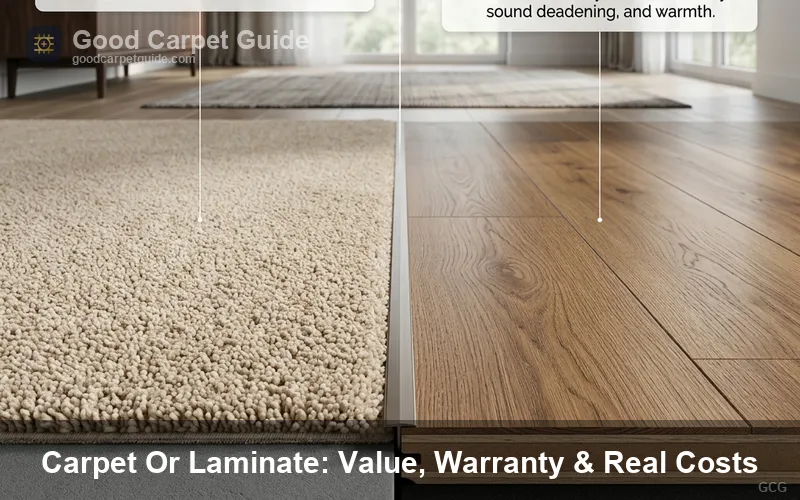
Quick Verdict: Carpet remains the stronger choice for bedrooms and low-traffic sanctuary spaces where thermal comfort and noise dampening outweigh long-term durability concerns. Laminate performs better in pet zones, home offices with rolling chairs, and rooms exposed to spills, provided the subfloor meets manufacturer flatness tolerances before installation.
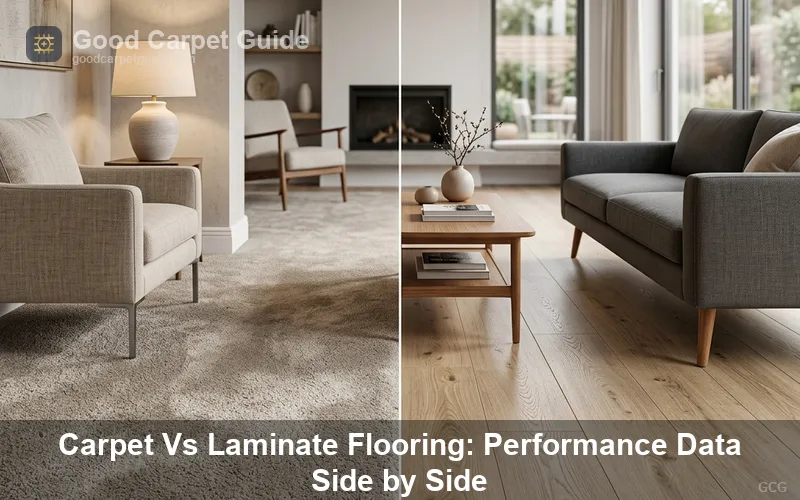
Carpet and laminate solve two different problems in a home, and the choice between carpet or laminate depends on which problem matters more in a specific room. Carpet is a textile floor covering built from tufted or woven fiber attached to a primary and secondary backing, while laminate is a floating floor product made from a high-density fiberboard (HDF) core wrapped in a printed decorative layer and a wear-resistant overlay. This guide breaks the carpet or laminate decision into cost, comfort, warranty fine print, and documented failure patterns collected from installer trade reports and homeowner forums, so the decision reflects installed reality rather than showroom marketing.
is carpet or laminate more expensive
Laminate costs less upfront in its value tier, but carpet costs less in its basic tier, so the answer depends on which grade of each material is being compared. Basic polyester carpet installs for $2.50 to $5.50 per square foot, combining $1.50-$3.00 in material with $1.00-$2.50 in professional labor. Value-tier laminate (6-8mm core) installs for $2.20 to $4.80 per square foot, making it marginally cheaper than basic carpet at the entry level.
The gap widens at the premium tier. High-end nylon or wool carpet runs $6.50 to $18.50 per square foot installed, while premium waterproof laminate (12mm core, AC4-AC5 rated) runs $6.00 to $11.00 per square foot installed. Premium laminate therefore undercuts premium carpet on upfront cost in most regional markets, though the material choice still depends on room function rather than price alone.
| Flooring Type | Material Cost/sq.ft | Labor Cost/sq.ft | Total Installed |
|---|---|---|---|
| Basic Polyester Carpet | $1.50 – $3.00 | $1.00 – $2.50 | $2.50 – $5.50 |
| High-End Nylon/Wool Carpet | $5.00 – $15.00 | $1.50 – $3.50 | $6.50 – $18.50 |
| Value-Tier Laminate (6-8mm) | $0.70 – $1.80 | $1.50 – $3.00 | $2.20 – $4.80 |
| Premium Waterproof Laminate (12mm) | $3.50 – $6.50 | $2.50 – $4.50 | $6.00 – $11.00 |
These figures exclude underlayment. Carpet pad adds $0.50 to $1.25 per square foot, while laminate underlayment adds $0.30 to $0.75 per square foot, or roughly $30-$60 per 100-square-foot roll. Carpet padding cost typically runs higher because it functions as a structural cushioning layer rather than a thin moisture and sound barrier.
what is better carpet or laminate flooring
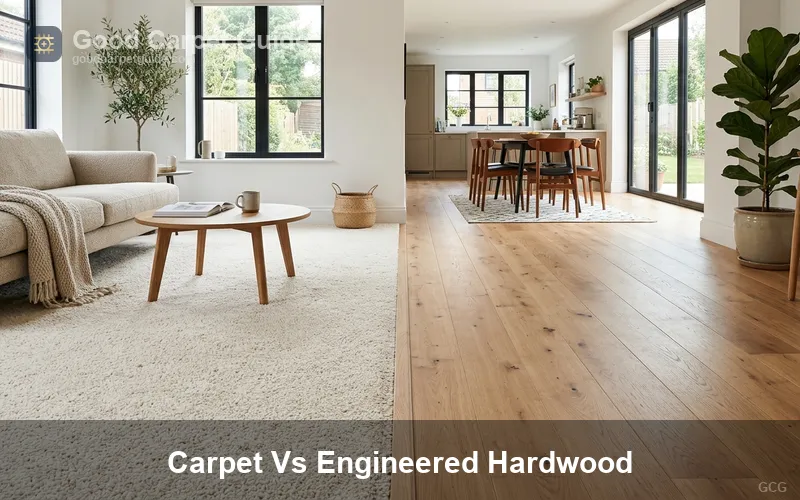
Neither material qualifies as universally better, since carpet outperforms laminate on comfort metrics while laminate outperforms carpet on moisture resistance and wear visibility. The correct comparison isolates specific performance categories rather than treating "better" as a single score.
is carpet or laminate better for soundproofing
Carpet absorbs up to 35% of ambient noise in a room, functioning as a soft acoustic panel that reduces footstep sound and echo. Laminate, by contrast, reflects sound off its hard wear layer, which increases perceived noise in open-plan homes and multi-story buildings. Underlayment density affects laminate's acoustic performance more than the plank's core thickness does — a 12mm laminate installed over thin, low-density foam frequently tests louder than a 6mm vinyl product installed over high-density rubber backing, because the underlayment governs impact sound transmission, not the surface material's rated thickness.
is carpet or laminate warmer
Carpet functions as a thermal insulator due to millions of trapped air pockets within the pile structure, which keeps surface temperature closer to room temperature. Laminate's HDF core and hard wear layer conduct heat away from bare feet, producing the "cold floor" sensation homeowners commonly report during the first cold-weather months after installation — installers refer to this effect informally as the "morning test." In colder US climates, this thermal gap becomes a meaningful comfort factor in bedrooms and bathrooms where bare feet contact the floor directly.
room-by-room suitability
Living Room: Laminate handles moderate foot traffic and furniture weight without matting, provided felt furniture pads prevent surface scratching from chair and table legs.
Hallways & Stairs: Laminate resists the traffic-lane flattening that affects lower-density polyester carpet within 18 to 24 months in high-traffic corridors, though stair nosing installation requires specialized trim pieces not needed on flat runs.
Kitchen & Dining: Laminate tolerates incidental spills when a complete perimeter seal is installed, while carpet in kitchens accumulates food residue and moisture inside the pile that standard vacuuming does not remove.
Bathroom & Laundry: Neither material suits standing water exposure well. Laminate cores swell when water penetrates an unsealed joint, and carpet backing supports mold growth under sustained moisture, making both materials conditional choices dependent on ventilation and drainage quality.
Basement: Carpet allows some moisture vapor to pass through the pile without trapping it against the slab, while laminate and hardwood trap concrete slab moisture emissions against the core, according to documented flooring failure patterns tied to below-grade installations.
Rental Properties: Laminate's scratch-resistant wear layer holds up across multiple tenant turnovers better than carpet, which typically requires replacement or deep restoration between tenancies due to staining and odor absorption.
does carpet or laminate increase home value
Laminate in main living areas supports resale value more consistently than aging carpet, because modern buyers frequently treat worn carpet as an immediate renovation cost they subtract from an offer. New, neutral-toned carpet in bedrooms still reads as a value-neutral or mildly positive feature, provided the carpet shows no visible traffic patterns, staining, or odor at the time of listing.
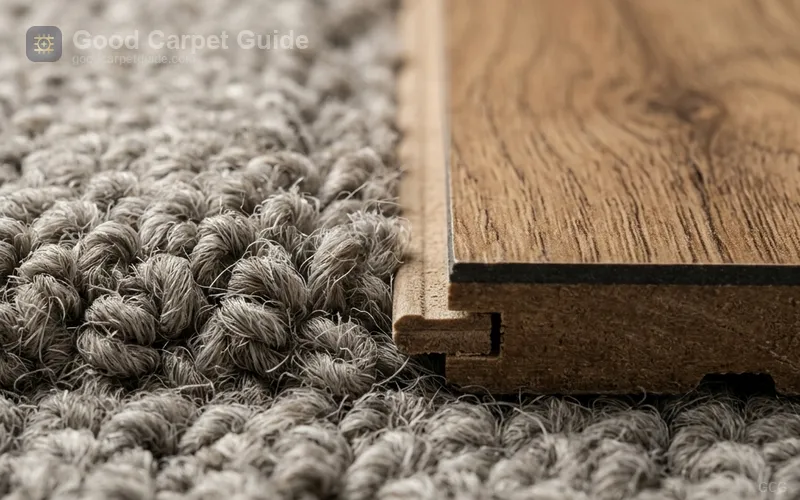
Carpet fiber density and laminate core thickness both influence long-term wear resistance, but the underlying subfloor condition determines whether either material reaches its rated lifespan.
what do real homeowners and installers say about carpet or laminate
Homeowner forum activity on platforms like Reddit's flooring communities documents recurring failure patterns that rarely appear in manufacturer marketing. These reports cluster around premature wear, joint failure, and installation shortcuts rather than material defects alone.
Builder-grade polyester carpet frequently shows visible flattening within eight months of installation, even in homes without children or pets, a pattern installers attribute to low face weight and heat-set fiber density rather than foot traffic volume alone. Pet owners report a related but distinct frustration: cats and dogs disproportionately target carpeted rooms for accidents, embedding odor and bacteria deep in the pile and backing layers that standard extraction cleaning does not fully remove.
Laminate owners document a different failure category. Planks installed roughly 18 months prior have been reported splitting and rising in high-traffic zones despite careful maintenance, a pattern consistent with subfloor deflection exceeding manufacturer flatness tolerances. Gapping at plank ends — sometimes called "joint drift" — develops when uneven subfloors allow vertical movement under foot traffic or rolling chairs, gradually separating click-lock seams that were correctly installed at the outset.
Installer trade discussions identify the root cause behind many of these complaints: stair-stepping, a rushed installation technique where planks are locked at an angle rather than laid flat and slid into place. This technique flexes the locking mechanism beyond its designed tolerance, causing the interlocking edge to fracture from repeated foot traffic. The following diagnostic checklist reflects patterns documented across installer trade reports:
- Inspect subfloor flatness before installation using a 10-foot straightedge, checking against the 3/16" over 10 feet tolerance most laminate manufacturers specify.
- Confirm acclimation time — laminate planks require 48-72 hours in the installation room before fitting, per most manufacturer instructions, to equalize moisture content.
- Check perimeter expansion gaps of 1/4" to 3/8" along all walls, cabinets, and transitions, since laminate planks expand and contract seasonally.
- Verify carpet stretch tension using a power stretcher rather than a knee kicker alone, since knee-kicker-only installations loosen and ripple within the first year in rooms wider than 12 feet.
- Test seam placement on carpet installations to confirm seams fall outside primary traffic lanes, reducing visible fraying at the seam edge.
Documented complaint patterns across both materials point back to installation execution as often as material selection, which shifts part of the "carpet or laminate" decision toward contractor vetting rather than product choice alone.
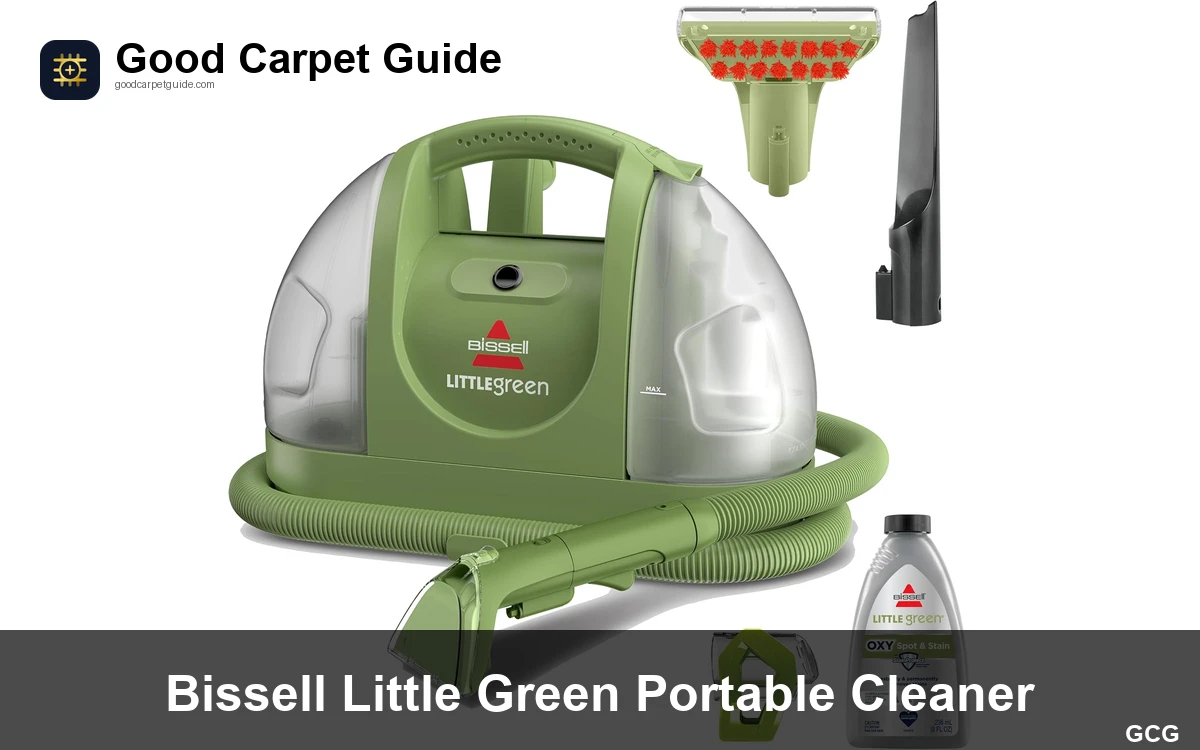
Bissell Little Green Portable Carpet Cleaner
Recommended for spot-treating pet accidents and localized staining before odor and bacteria penetrate the carpet backing layer.
Check Price on Amazonhow do carpet and laminate warranties actually work
Manufacturer warranty language for both materials contains exclusions that installers describe as routinely misunderstood by homeowners at the point of purchase. The gap between advertised warranty coverage and actual claim approval centers on installation conditions the homeowner rarely controls directly.
"Waterproof" laminate warranties from brands including Pergo WetProtect and Mohawk RevWood Plus require a complete perimeter seal as a condition of coverage. Every edge, expansion gap, baseboard, toilet flange, and cabinet transition needs silicone sealant applied during installation; a single uncaulked gap allows water to reach the HDF core, and warranty departments frequently deny delamination claims once core swelling occurs. Subfloor flatness requirements compound this risk — most laminate manufacturers specify tolerances of 3/16 inch over 10 feet or 1/8 inch over 6 feet, and third-party warranty inspectors commonly cite substrate unevenness as grounds for claim denial rather than treating joint failure as a manufacturing defect.
Carpet warranties carry a parallel loophole. Manufacturer "wear" warranties, often advertised as covering 30 years or the product's lifetime, apply specifically to loss of fiber mass exceeding roughly 10%, not to matting, crushing, or shading. A carpet that looks visibly flat and worn in a hallway after three years typically falls outside this coverage, since the fiber itself has not been lost — it has only been mechanically compressed, which most manufacturers classify as expected aging rather than a warrantable defect.
Installation Warning: Installing kitchen cabinets or built-ins directly on top of floating laminate flooring voids the manufacturer warranty in most product lines. Correct installation requires either cutting the laminate around cabinet footprints with a D-shaped relief cut or installing cabinets before laying the floating floor, preserving the expansion gap the flooring needs to move seasonally without buckling.
Carpet padding warranty questions follow a similar pattern of hidden conditions. Padding manufacturers like Leggett & Platt offer dual moisture barrier pads marketed as pet-accident protection, but installer trade documentation notes that a bottom moisture barrier can trap moisture beneath the pad and compromise the adhesive bond in rebond-style padding, providing limited benefit relative to a single top-layer barrier in most residential settings.
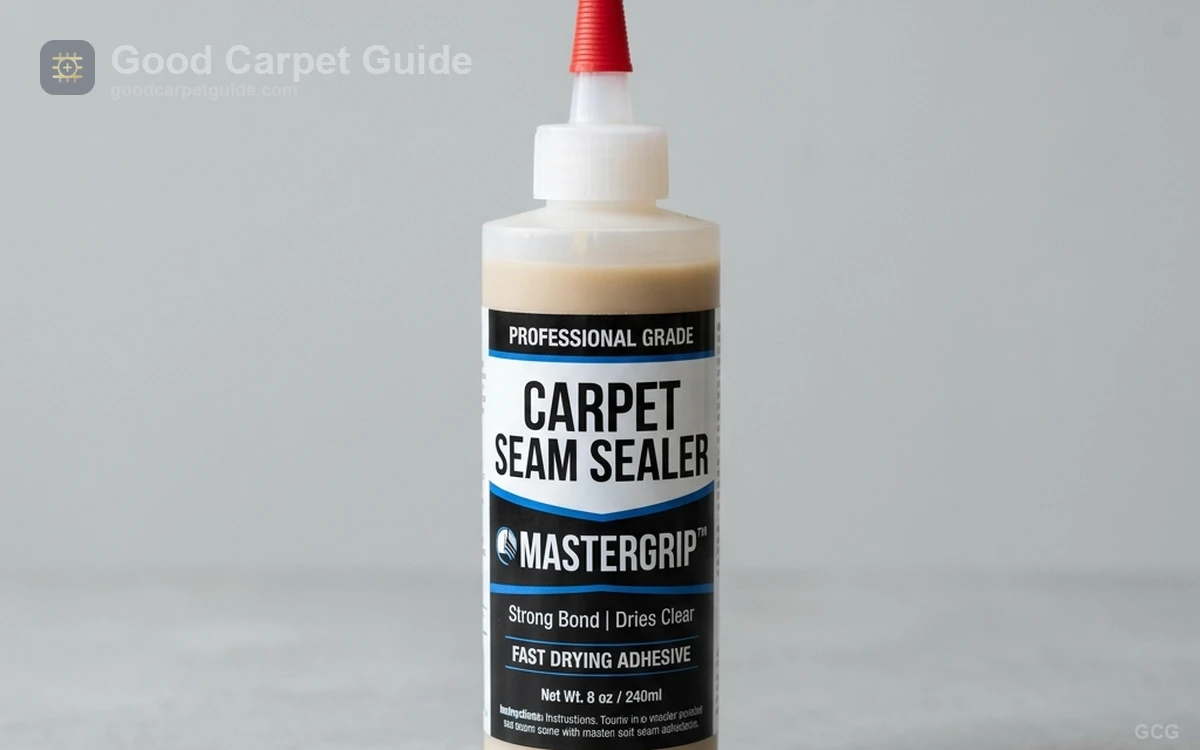
Roberts 8015 Universal Carpet Seam Sealer
Used by installers to reinforce seam bonds and reduce fraying in high-traffic transition zones, directly addressing one of the documented seam-failure patterns above.
Check Price on Amazonwhat does carpet or laminate really cost over time
Upfront installed cost tells only part of the carpet or laminate cost story, since carpet requires recurring professional cleaning and a shorter replacement cycle that laminate largely avoids under normal residential conditions.
Over a 10-year ownership period across 1,000 square feet, mid-grade carpet accumulates $4,500 in initial capital outlay, roughly $2,500 in annual professional steam cleaning at $250 per session, and a mandatory $4,500 replacement near year 10, totaling $11,500. Premium laminate over the same period totals closer to $7,000, combining a higher $7,000 initial outlay with no annual deep-cleaning requirement and no scheduled full replacement within the 10-year window, assuming subfloor preparation and perimeter sealing were correctly executed at installation.
| Cost Component | Mid-Grade Carpet | Premium Laminate |
|---|---|---|
| Initial Capital Outlay | $4,500 | $7,000 |
| Annual Pro Steam Cleaning | $2,500 (10-yr total) | $0 |
| Year-10 Replacement | $4,500 | $0 |
| 10-Year Total | $11,500 | $7,000 |
This lifecycle advantage assumes standard installation conditions. Laminate's 10-year cost advantage collapses quickly when subfloor preparation is skipped, since joint failure, delamination, and warranty denial shift replacement costs back onto the homeowner outside the manufacturer coverage window. Big-box retailers commonly outsource installation labor to high-volume subcontractor networks paid flat per-square-foot rates, and documented trade reports indicate these crews more frequently skip subfloor leveling, omit perimeter expansion gaps, and use stair-stepping shortcuts than in-house crews at local specialty flooring stores. Local dealers typically quote higher upfront labor costs but include subfloor moisture testing and board acclimation as standard practice, which protects the manufacturer warranty from being voided during installation.
Regional pricing also shifts these totals. Coastal and high-humidity US markets see higher demand for moisture-tested laminate installation, which adds inspection cost but reduces the probability of early core swelling claims.
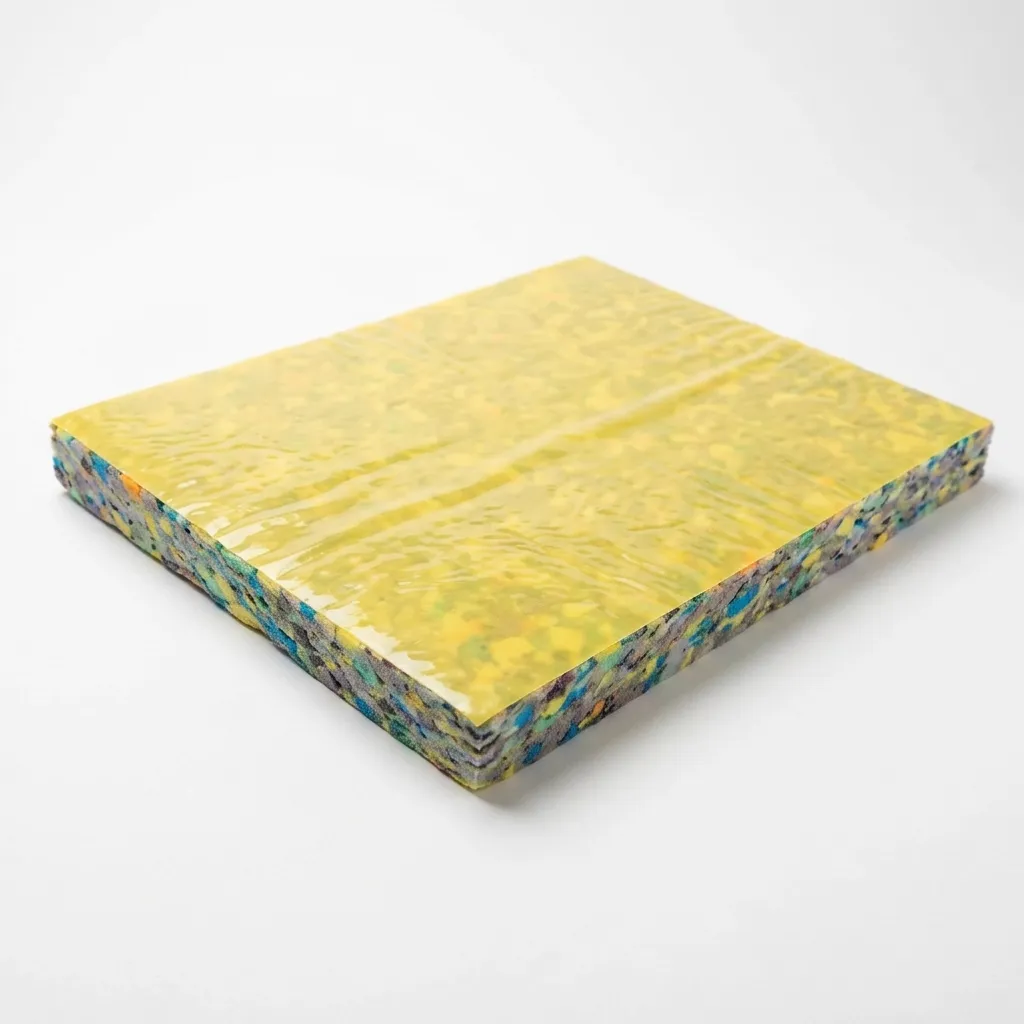
Mohawk SmartCushion Premium Carpet Padding
A higher-density padding option that extends carpet wear life by reducing pile crush in moderate-traffic rooms, directly offsetting part of the 10-year replacement cost shown above.
Check Price on Amazonfrequently asked questions
Is carpet more expensive than laminate?
Premium carpet is more expensive than premium laminate at the installed cost level, though basic polyester carpet and value-tier laminate fall within a similar $2.20-$5.50 per square foot range.
What lasts longer, carpet or laminate?
Laminate with an AC4 or higher wear rating commonly lasts longer than carpet under standard residential foot traffic, since laminate does not lose fiber mass or develop traffic-lane matting the way carpet pile does over time.
Should I get carpet or laminate flooring?
Choose carpet for bedrooms and low-traffic rooms where thermal comfort and acoustic absorption matter most, and choose laminate for living areas, home offices, and pet-heavy zones where moisture resistance and wear visibility matter more than softness.
Which is best, carpet or laminate flooring, for resale?
Laminate in main living areas typically supports resale value more consistently than aging carpet, since worn carpet is frequently treated as a renovation cost by current buyers during offer negotiations.
Is carpet or laminate cheaper in general markets outside the US?
Regional material availability and labor rates shift these figures outside the US, though the relative cost relationship — basic carpet and value-tier laminate priced similarly, premium laminate undercutting premium carpet — tends to hold across comparable markets with similar labor cost structures.