| Scenario | Recommended Flooring | Core Reason |
|---|---|---|
| Selling within 12 months, budget-limited | Refinish existing hardwood | Refinishing returns roughly 147% ROI according to National Association of Realtors cost-value data |
| Full renovation before listing | Solid or engineered hardwood | Appraisers treat hardwood as a permanent asset; buyers rarely discount for it |
| Upstairs bedrooms, resale not urgent | Carpet with 8 lb. density pad | Sound dampening and thermal comfort outweigh resale penalty in private rooms |
| Household with pets or young children | Hardwood plus washable area rugs | Hardwood resists staining and odor absorption; rugs are replaceable |
| Rental property between tenants | Luxury vinyl plank (LVP) | Near-hardwood resale perception at a fraction of installed cost |
Carpet or hardwood for resale value is not a single answer — it depends on room function, buyer expectations in the local market, and how much of the existing subfloor already qualifies as hardwood. Carpet or hardwood for resale value decisions typically favor hardwood in main living areas and favor carpet only in bedrooms or basements where comfort outweighs appraisal impact. The sections below walk through appraiser standards, real homeowner outcomes, the gap between manufacturer marketing and real-world wear, and the full cost breakdown a seller needs before committing to either material.
what is better for resale carpet or hardwood
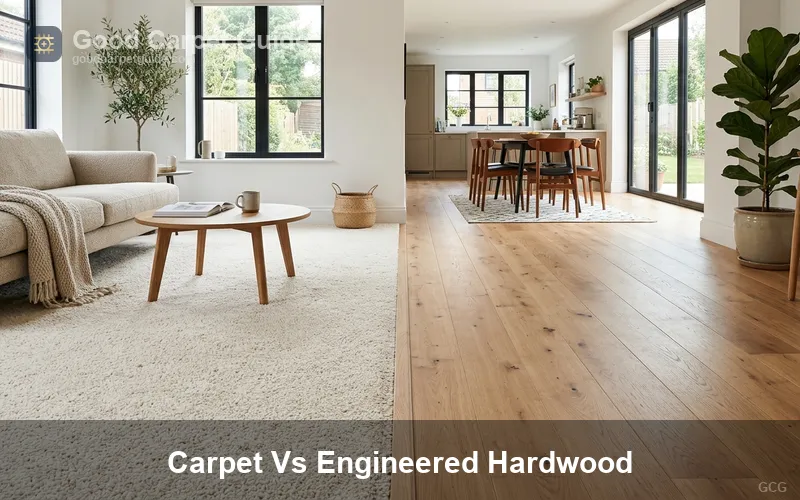
Hardwood performs better than carpet for resale value in the majority of documented real estate appraisals, because hardwood functions as a permanent structural finish rather than a replaceable surface material. Hardwood flooring is manufactured from solid wood planks or engineered wood veneers that can be sanded and refinished, typically four to six times over the material's service life. Carpet, by contrast, is a textile floor covering built from face fiber, primary backing, and secondary backing layers that degrade progressively with foot traffic and cannot be restored once the pile crushes.
Real estate appraisers commonly treat hardwood as a fixed asset that raises comparable-sale value, while wall-to-wall carpet is frequently categorized as a depreciating personal-property item similar to appliances. New solid hardwood installation returns an average 70% to 80% of its installed cost at resale, according to National Association of Realtors cost-value survey data. Refinishing existing hardwood performs even better: homeowners who spend an average of $5,500 refinishing worn hardwood recover approximately $8,000 at resale, a net gain of roughly $2,500 and a documented 147% return.
- Hardwood: retains structural value across multiple owners and can be refinished rather than replaced.
- Carpet: requires full replacement roughly every 5 to 15 years in active households.
- Engineered hardwood: offers similar resale perception to solid hardwood at a lower installed cost range.
- Luxury vinyl plank: mimics hardwood appearance and is frequently accepted by buyers as a comparable upgrade in kitchens and bathrooms where solid wood is discouraged.
This pattern holds most consistently in primary living spaces — entryways, kitchens, hallways, and living rooms — where buyers walk through during a showing and form an immediate impression of the home's condition.

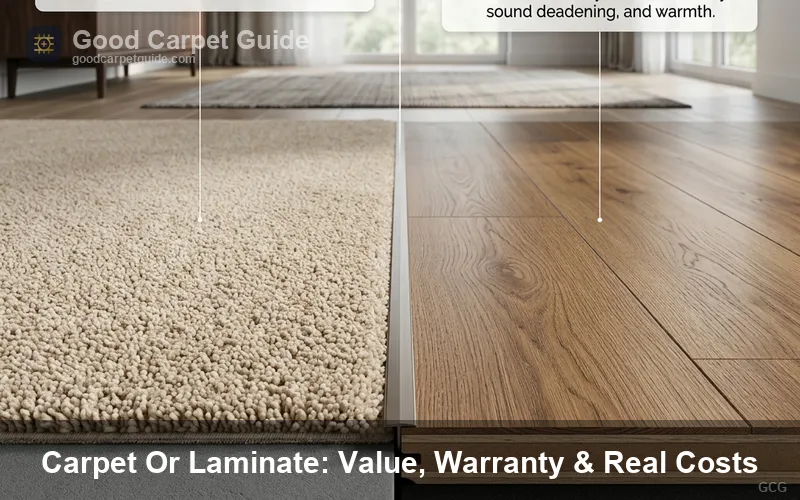
Refinished solid hardwood planks retain resale value across ownership cycles, while worn wall-to-wall carpet is treated by most appraisers as a depreciating surface material.
what is better for resale carpet or hardwood in bedrooms
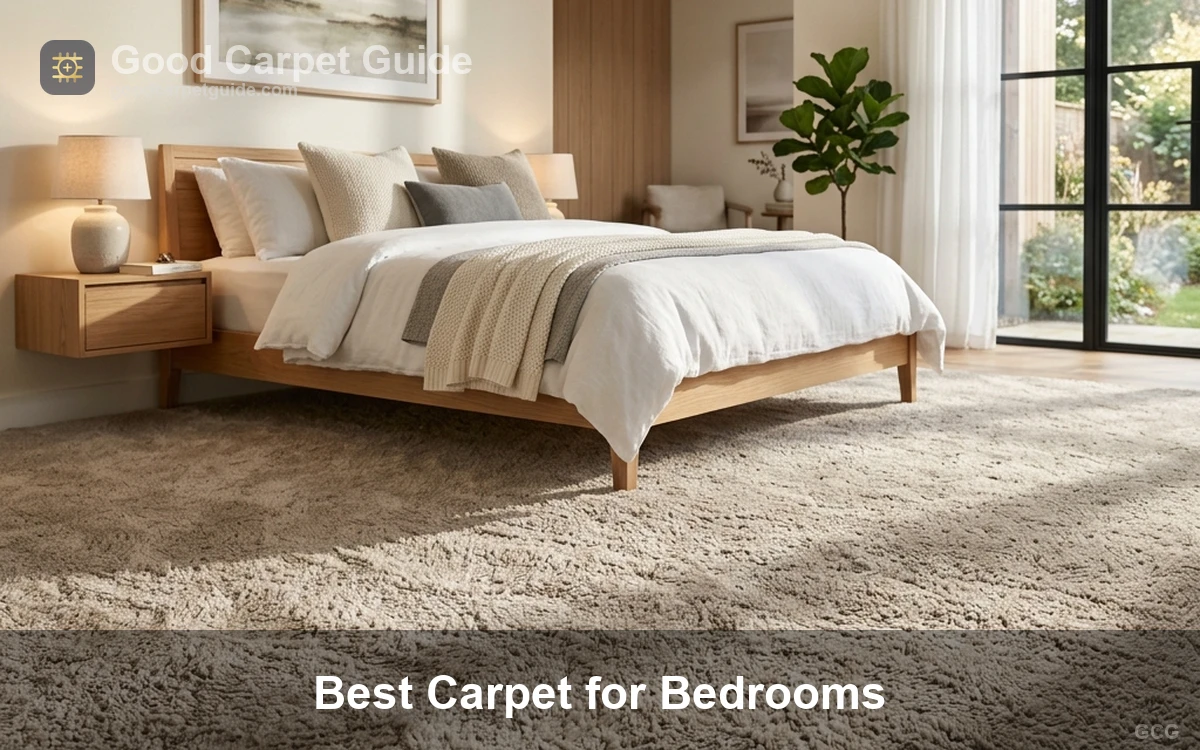
Carpet performs competitively with hardwood in bedrooms because bedroom flooring is judged primarily on comfort and acoustic performance rather than surface durability during a resale walkthrough. Bedrooms carry lighter foot traffic than hallways or living rooms, which extends carpet pile life and reduces the wear-pattern visibility that drives buyer objections elsewhere in the home.
| Factor | Carpet in Bedrooms | Hardwood in Bedrooms |
|---|---|---|
| Barefoot warmth | Higher; fiber traps air and insulates against subfloor temperature | Lower; requires area rugs for comparable warmth |
| Acoustic dampening (upper floors) | Reduces impact noise transmission to rooms below | Transmits footstep noise unless underlayment is added |
| Buyer resale perception | Neutral to slightly negative in primary bedrooms of higher-priced homes | Neutral to positive; some buyers specifically request hardwood in primary suites |
| Allergen and dust accumulation | Higher; carpet fiber retains dust mites and pet dander | Lower; smooth surface allows full removal during cleaning |
| Typical pad specification | 8 lb. to 10 lb. density, 3/8 inch to 1/2 inch thickness | Not applicable; underlayment used only for engineered floating installations |
Local buyer expectations shift this comparison. In colder climates and in mid-range price brackets, carpet in secondary bedrooms is commonly viewed as an acceptable, even preferred, finish. In higher-priced listings and in warmer regions of the US, primary suites increasingly list hardwood or engineered wood as a stated buyer preference, which shifts the resale calculation toward hardwood even in a room where comfort would otherwise favor carpet.
does replacing carpet with hardwood increase value
Replacing carpet with hardwood increases resale value in most main-floor living spaces, though the magnitude of that increase depends directly on the condition of the subfloor beneath the existing carpet. Homes built before the 1970s frequently have solid hardwood subfloor concealed beneath later carpet installations, which lowers the cost of the upgrade to sanding and refinishing rather than new material purchase and full installation.
Homeowners preparing to sell face a specific diagnostic question before budgeting for this upgrade: whether solid hardwood already exists under the carpet. Field reports document several reliable indicators.
- Check the transition height at doorways; a carpet-to-tile transition strip set unusually high above the subfloor often indicates hardwood underneath rather than plywood.
- Inspect a closet corner by pulling back a small carpet section; closets are frequently left unfinished during original hardwood installation and reveal the material without damaging visible flooring.
- Look for nail patterns through the carpet pad in older homes; visible nail rows in a straight grid pattern indicate tongue-and-groove solid hardwood strip flooring beneath.
- Confirm the home's construction date against local building records; solid hardwood subfloor was standard practice in most US residential construction prior to widespread subfloor-and-carpet-pad assemblies becoming common in later decades.
Homes without existing hardwood face a higher-cost decision between engineered hardwood, which typically installs at $7.50 to $19.00 per square foot, and luxury vinyl plank, which offers a lower-cost path to a comparable resale appearance. Replacing carpet with hardwood in this scenario still increases value in most documented cases, though the net return depends heavily on avoiding the hidden ancillary fees covered later in this guide.
how real homeowners describe the carpet removal experience
Homeowner forums document a consistent pattern once wall-to-wall carpet is removed during a renovation or pre-listing preparation: buyers and sellers alike report significant surprise at the condition of the underlying pad and subfloor, regardless of how frequently the carpet had been vacuumed. One frequently cited r/HomeImprovement thread describes hard flooring as the preferred choice specifically because previous carpet removal revealed conditions the poster had not anticipated from surface appearance alone.
Pet ownership drives a large share of these reports. Forum users with cats describe repeated vomiting incidents concentrated specifically on carpeted rooms rather than hard-surface areas, with one owner detailing an expensive area rug damaged within the first week of ownership and subjected to dozens of additional incidents over several years. Parents of young children report similar frustration, noting that hard flooring surfaces allow immediate cleanup of reflux or spill incidents while carpet fiber traps the same material far below the visible pile.
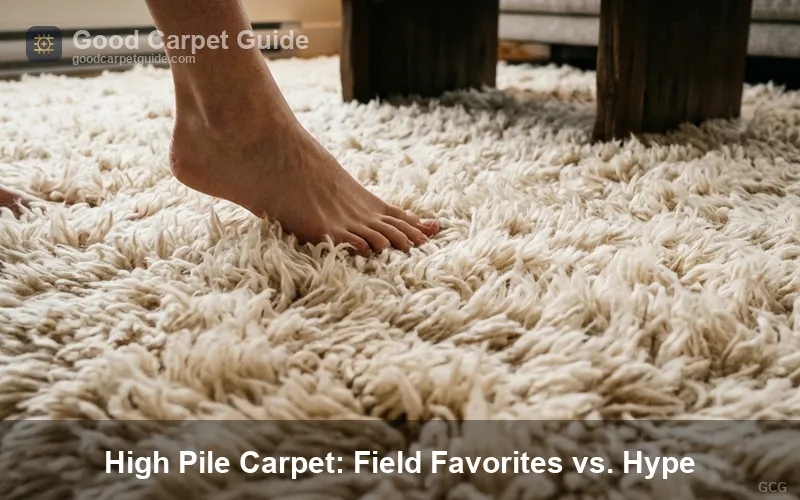
A separate, recurring complaint centers on premature wear rather than hygiene. Homeowners who select thick, plush carpet marketed for comfort frequently report visible flattening in traffic lanes within roughly 24 months, well short of the 10-to-20-year lifespan claimed on manufacturer packaging.
Warning: A carpet that appears clean on the surface does not indicate a clean pad or subfloor. Homeowners preparing a home for sale should assume that carpet older than 5 years requires pad replacement even where the visible fiber shows no obvious staining, particularly in homes with any documented pet history.
do carpet manufacturers and installers agree on lifespan
Carpet manufacturers and field installers do not consistently agree on realistic carpet lifespan, and this disconnect creates one of the largest gaps between marketing claims and actual resale-readiness planning. Manufacturer packaging and retail marketing commonly advertise carpet lifespans of 10 to 20 years under normal residential use.
Installers who service high-traffic households report a narrower and more conditional range. Soft-surface carpet in active households, defined by installers as homes with children, pets, or foot traffic exceeding standard residential estimates, typically requires full replacement within 5 to 15 years, with many active households reporting replacement closer to the 5-to-10-year mark. This gap matters directly for resale timing: a seller relying on manufacturer lifespan estimates may list a home with carpet the seller believes has years of remaining service life, while a buyer's inspector or the buyer's own visual assessment applies the shorter, traffic-adjusted timeline.
Q: Why does carpet padding affect this disagreement more than the carpet fiber itself?
A: Padding density, not carpet face weight, is the specification installers identify as the primary driver of long-term wear. Padding exceeding 1/2 inch in thickness or falling below 8 lb. density allows excessive flex under foot traffic, which transfers mechanical stress directly into the carpet backing and accelerates fiber matting, wrinkling, and seam separation.
Standard residential carpet pad is frequently specified at a 6 lb. rebond minimum, which meets code minimums without meeting the density threshold installers recommend for extending carpet life toward the upper end of the manufacturer-advertised range. Installers commonly recommend 8 lb. to 10 lb. density padding, such as Leggett & Platt's Napa cushion line for bedrooms or Mohawk SmartCushion for households managing pet moisture, specifically to close the gap between advertised and actual lifespan.
does subcontracting affect resale-focused installation quality
Big box retailers market flooring installation as a seamless, single-invoice service, but the labor behind that invoice typically passes through multiple subcontracting layers before reaching the homeowner's home. Major chains do not employ in-house installation crews in most markets; instead, the retailer sells the project to a regional installation hub, which subcontracts the physical labor to local crews compensated on a per-job basis.
This structure creates a documented incentive conflict relevant to resale-focused installations, where long-term durability matters more than short-term appearance. Subcontracted crews working on tight daily quotas face pressure to prioritize completion speed over meticulous subfloor preparation, tack strip placement, and seam finishing — the details that determine whether flooring holds its appearance through a multi-year period before a future resale.
- Local specialty dealers typically employ direct-hire or long-term contracted crews with accountability tied to the dealer's own reputation.
- Big box installation hubs route jobs through regional subcontractor networks with variable, job-by-job crew assignment.
- Warranty structure differs accordingly: many big box installations carry a 1-year limited labor warranty, while specialty dealers more frequently offer lifetime installation warranties on the same project scope.
This distinction becomes financially relevant once the full ancillary fee structure is compared against the advertised material rate, covered in the next section.
how much does carpet or hardwood cost including hidden fees
Total project cost for carpet or hardwood for resale value depends heavily on ancillary fees that rarely appear in the advertised per-square-foot material rate. A direct comparison of a 1,200 square foot engineered hardwood installation illustrates the gap between advertised and final pricing.
| Project Line Item | Big Box Store (À La Carte) | Local Specialty Store (All-Inclusive) |
|---|---|---|
| Advertised material rate | $3.99/sq. ft. ($4,788) | $8.50/sq. ft. (all-inclusive) |
| Installation labor | $2.50/sq. ft. ($3,000) | Included in rate above |
| Moisture barrier/pad | $0.40/sq. ft. ($480) | Included in rate above |
| Tear-out and disposal | $1.00/sq. ft. ($1,200) | Included in rate above |
| Furniture and toilet reset | $600.00 flat upcharge | Included in rate above |
| In-home measure fee | $50.00 | Free of charge |
| Labor warranty | 1-year limited | Lifetime installation warranty |
| Total project cost | $10,118.00 | $10,200.00 |
The $3.99 advertised material rate ultimately lands within $82 of the local dealer's all-inclusive quote once every ancillary fee is added. Base material and installed pricing across flooring types follows a wide range depending on material grade and regional labor rates:
- Standard carpet: $2.50 to $11.00 per square foot installed, including $0.50 to $1.50 per square foot for pad.
- Solid hardwood: $8.00 to $25.00-plus per square foot installed.
- Engineered hardwood: $7.50 to $19.00 per square foot installed.
- Luxury vinyl plank: $3.00 to $13.00 per square foot installed, with labor averaging $1.75 to $2.50 per square foot.
- Stair conversions from carpet to wood: $100 to $250 per step, priced individually due to hand-cutting and finishing requirements.
Sellers budgeting for a pre-listing flooring upgrade should request an itemized quote covering carpet removal and disposal ($0.70 to $1.60 per square foot), tack-strip cleanup ($0.10 to $0.40 per square foot), and subfloor leveling ($0.50 to $5.00 per square foot where deviation exceeds 3/16 inch over 10 feet), rather than relying on the headline material rate alone.
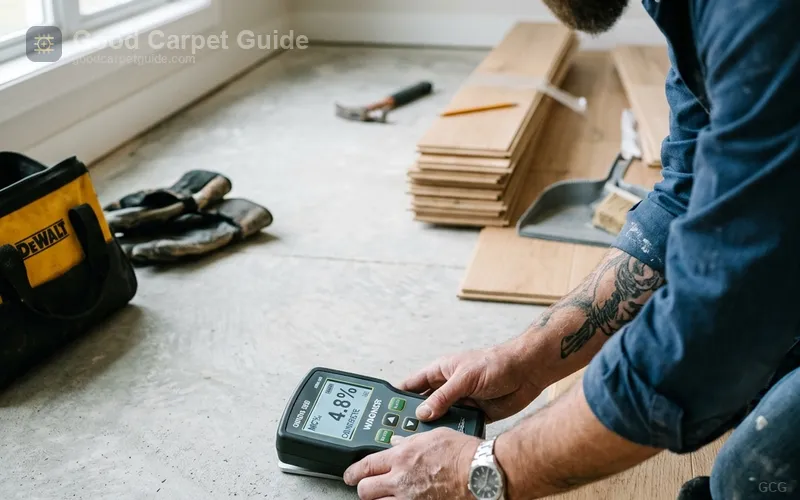
Subfloor leveling and moisture testing, priced separately from the headline material rate, account for a substantial share of the total ancillary fees sellers encounter when converting carpeted rooms to hardwood.
how to protect resale value once flooring is installed
Maintaining flooring condition between installation and listing date protects the resale value calculated above, regardless of which material was chosen. Carpet and Rug Institute cleaning guidance (CRI 105 for residential carpet) recommends professional hot-water extraction cleaning on a schedule tied to household traffic and pet presence, rather than a fixed annual interval, to prevent soil accumulation that permanently dulls fiber appearance ahead of a listing photo shoot or showing.
- Vacuum high-traffic carpeted rooms at a frequency matched to household activity, using a vacuum rated for the specific pile type to avoid fiber distortion.
- Address spills immediately using a spot-cleaning product formulated for the fiber type, avoiding excess water that can migrate to the pad and cause delamination.
- Schedule hardwood refinishing before listing rather than after an inspection flags visible wear, since pre-listing refinishing captures the documented 147% ROI figure more reliably than a post-inspection concession.
- Inspect carpet seams and tack strips for lifting or separation, particularly in homes older than 8 to 10 years, since visible seam failure is a common buyer objection during final walkthroughs.
Following a consistent maintenance schedule for either material narrows the gap between the manufacturer-advertised lifespan and the installer-observed real-world lifespan discussed earlier in this guide, which directly affects how much resale value either flooring type retains at the point of sale.
frequently asked questions
Is resale value worth prioritizing over personal comfort when choosing flooring?
Resale value is worth prioritizing in main living areas and kitchens, where buyer perception during a showing has an outsized effect on offer price, while personal comfort factors such as carpet warmth remain reasonable priorities in bedrooms that buyers weigh less heavily.
How long does hardwood flooring last compared to carpet for resale purposes?
Solid hardwood routinely lasts 50 to 100-plus years across multiple refinishing cycles, while soft-surface carpet in active households typically requires replacement within 5 to 15 years.
Can homeowners install hardwood or carpet themselves to save on resale prep costs?
Carpet installation involves specialized tools including knee kickers, power stretchers, and seam irons that require trained technique to avoid visible seams or wrinkling; DIY installation carries a higher risk of the exact wear-pattern and seam-failure issues that reduce buyer confidence during a resale walkthrough.
Which brand offers the best combination of durability and resale-relevant warranty terms?
Shaw Floors' Courage Pad extends manufacturer carpet warranty coverage by an additional 10 years when paired with Shaw carpet, while Mohawk's SmartStrand with Pur-Ease carries an Asthma & Allergy Friendly certification relevant to buyers with allergy sensitivities during a showing.
What voids a carpet warranty in ways that affect resale disclosures?
Warranty documentation frequently excludes normal moisture exposure, including bodily perspiration, from coverage, and requires a visually measurable sag of roughly 3/4 inch to 1.5 inches with zero pressure applied before a sag claim qualifies, leaving many real-world wear patterns technically uncovered.