| Priority | Recommended Choice | Why It Fits Senior Living | Approx. Installed Cost |
|---|---|---|---|
| Safety-first budget pick | Dreamweaver Gold Standard II (PET, low-pile) | PAR rating 4.5/5, firm low-pile surface reduces walker-wheel sink | $3.00–$4.50/sq ft |
| Best overall value | Mohawk SmartStrand Forever Clean + SmartCushion pad | Stain resistance plus abrasive-wear warranty extended to stairs | $4.50–$6.00/sq ft |
| Allergy-sensitive households | Mohawk SmartStrand with Pur-Ease | Certified allergen reduction built into fiber, not a spray-on treatment | $5.00–$7.00/sq ft |
| Premium / long-hold properties | Shaw Anso Nylon with LifeGuard backing | Moisture barrier backing resists subfloor wicking | $6.00–$9.00/sq ft |
| Avoid | Builder-grade FHA-minimum polyester | Traffic lanes and matting documented within 2 years of installation | $0.80–$2.00/sq ft |
Senior living carpet decisions carry more weight than a standard flooring purchase because pile height, density, and backing directly affect fall risk, not just appearance. This guide separates manufacturer marketing from the documented performance data, warranty exclusions, and real installation outcomes that determine whether senior living carpet holds up under walkers, wheelchairs, and repeated steam cleaning. The sections below cover financing assisted living costs, realistic lifespan expectations, brand-by-brand comparisons, unfiltered user complaints, warranty fine print, and full installed cost breakdowns.
how do seniors pay for assisted living
Seniors typically cover assisted living and in-home flooring upgrades through a combination of personal savings, long-term care insurance, veterans' benefits, and, in qualifying cases, Medicaid waiver programs. Long-term care insurance policies purchased before a diagnosis of chronic illness generally reimburse a fixed daily rate toward facility fees, though most policies exclude cosmetic renovations such as flooring replacement. Veterans and surviving spouses may qualify for the Aid and Attendance benefit through the Department of Veterans Affairs, which can offset facility costs but does not typically fund private home modifications.
Families financing an in-home aging-in-place renovation, including carpet replacement, commonly draw from three sources:
- Uses home equity lines of credit to spread the cost of flooring, grab bars, and bathroom modifications over time.
- Applies for state-level Medicaid Home and Community-Based Services (HCBS) waivers, which in some states cover fall-prevention flooring for qualifying low-income seniors.
- Combines a reverse mortgage disbursement with cash savings to fund a full-floor replacement rather than patching sections piecemeal.
Flooring cost is a small fraction of total assisted living expenditure, but it is one of the few one-time capital costs a family controls directly, which is why cost-per-square-foot accuracy matters more here than in a typical remodel.
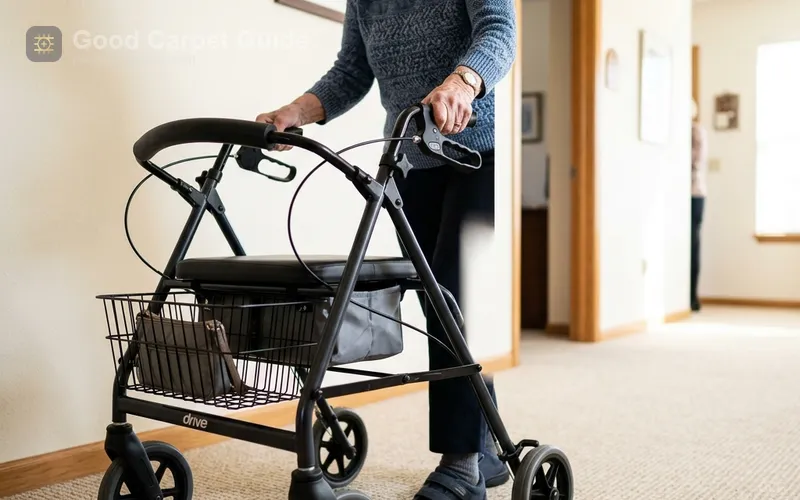
Low-pile senior living carpet supports stable walker-wheel contact, a factor covered in detail in the lifespan section below.
how long does senior living carpet last
Senior living carpet typically lasts 8 to 12 years under standard residential traffic when built from solution-dyed nylon 6,6 with a density above 40 ounces per square yard face weight, though visual degradation from matting can appear years before the fiber itself fails structurally. Fiber lifespan and visual lifespan are separate metrics, and manufacturers measure each differently. The Carpet and Rug Institute's CRI 105 residential installation standard ties warranty validity to installation method, while abrasive wear itself is measured using the Hexapod Tumble Drum Test (ASTM D5252).
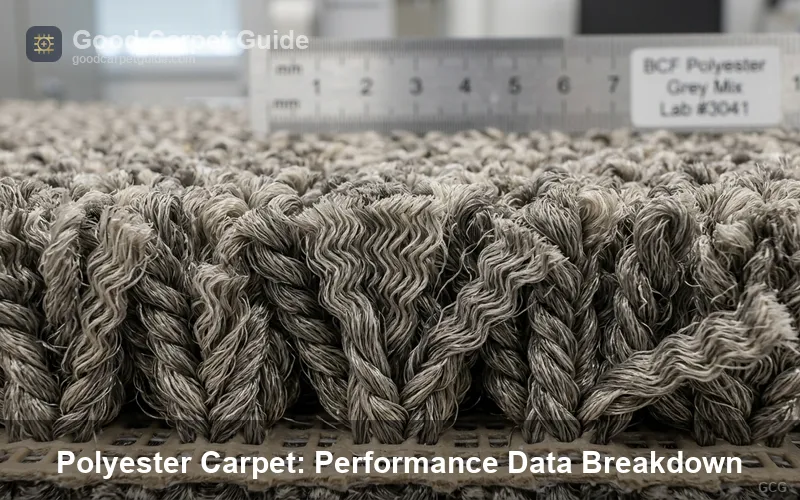
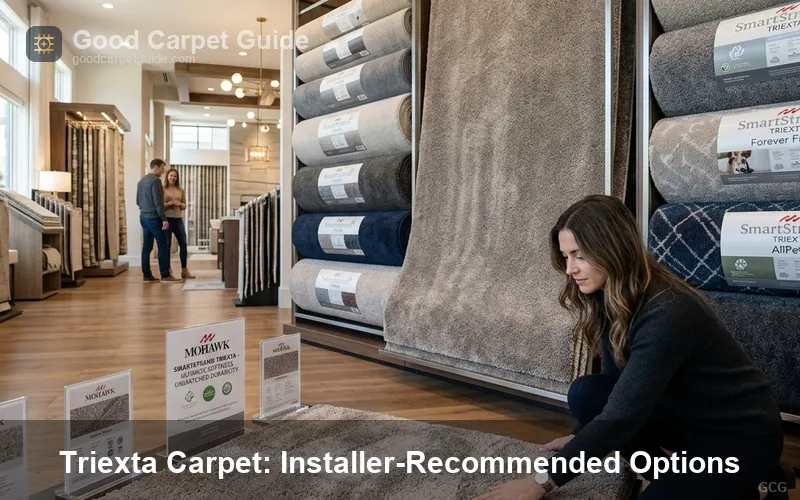
Nylon 6,6 carpet is engineered with a molecular structure that allows compressed fibers to spring back after foot or wheelchair traffic, a property installers refer to as "resilience recovery." Polyester (PET) carpet lacks this recovery mechanism at the molecular level, so PET fibers typically show measurable matting and flattened traffic lanes within 18 to 24 months under conditions exceeding manufacturer traffic ratings. Triexta fiber, marketed under names like SmartStrand, sits between the two: it resists staining aggressively but shows wear patterns closer to polyester than to nylon under repeated wheelchair loading.
Traffic lane collapse: a visible flattening pattern that forms along frequently walked paths, most pronounced in budget-grade polyester within 2 years of installation.
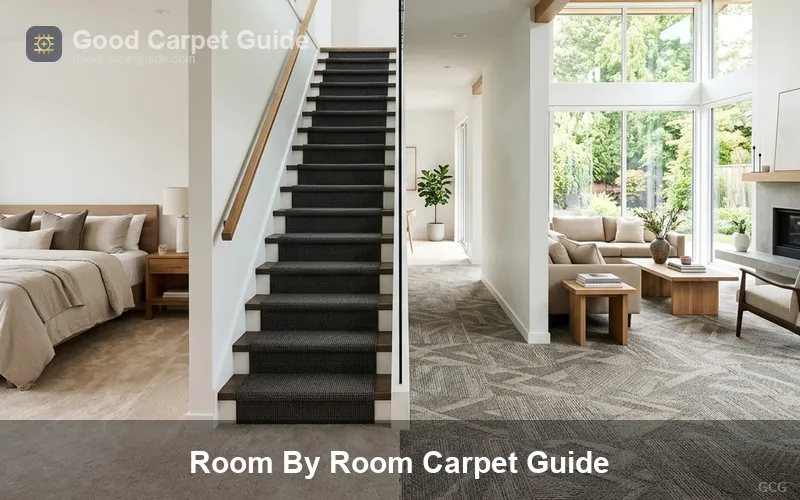
Pile height and pad thickness also govern how long a senior living carpet remains safe to walk on, independent of fiber wear. A carpet can retain 90% of its fiber integrity and still become a fall hazard if the underlying pad has compressed unevenly. This is why replacement timing should be tied to a firmness inspection rather than to visible fiber wear alone. Best carpet for stairs guide covers a related failure mode specific to staircase traffic, where fiber crush concentrates on the nose of each step.
what is the best carpet for senior living
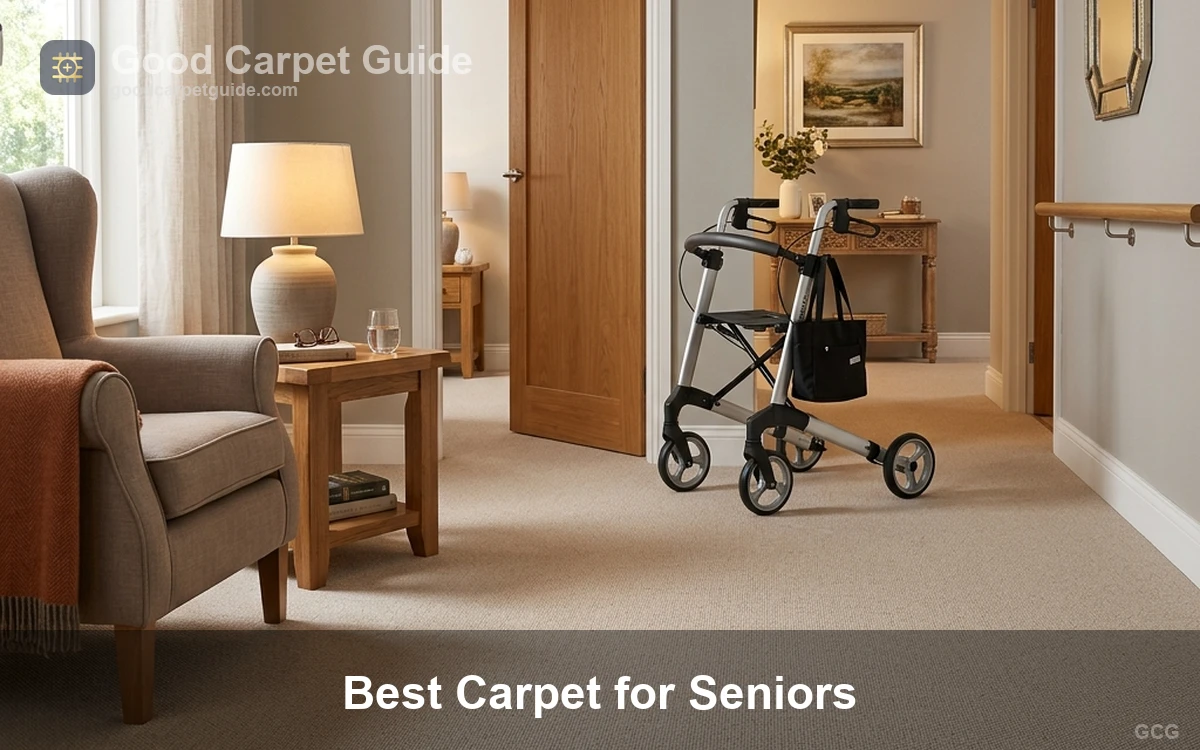
The best carpet for senior living combines a low-pile height of no more than 3/8 inch, a face weight above 40 ounces per square yard, and a thin, dense pad rated 8 pounds or higher, based on fall-prevention criteria published by the Facility Guidelines Institute (FGI). Solution-dyed nylon 6,6 meets this profile more consistently than polyester or standard Triexta because its fiber recovery reduces the flattening that creates uneven walking surfaces over time.
| Fiber Type | Recovery After Compression | Typical Stain Resistance | Suitability for Wheelchairs/Walkers |
|---|---|---|---|
| Nylon 6,6 (solution-dyed) | High, molecular memory restores pile | Good with treatment | Strong under CRI 105 installation standards |
| Triexta (SmartStrand) | Moderate | Very high, built into fiber | Moderate, matting risk in high-traffic zones |
| Polyester (PET) | Low | High initially, degrades with cleaning | Weak beyond 2 years of daily wheeled traffic |
| Olefin (Polypropylene) | Low | Moderate | Not commonly specified for senior environments |
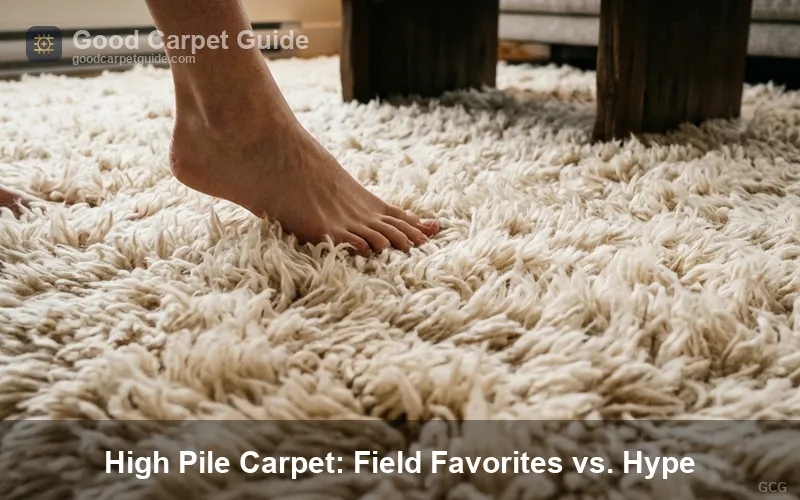
Face weight and pile height interact directly with fall risk, which is the variable that separates a senior living carpet recommendation from a general residential one. A plush, high-pile carpet marketed as "luxury" is not appropriate here regardless of fiber quality, because walker wheels and shuffling feet sink into deep pile and destabilize gait. The Leggett & Platt Tempur-Pedic carpet cushion is frequently specified in senior environments for its viscoelastic pressure relief, but installers pair it exclusively with low-pile, dense face carpet rather than plush styles, since pad softness and pile height compound each other's instability if both are excessive.
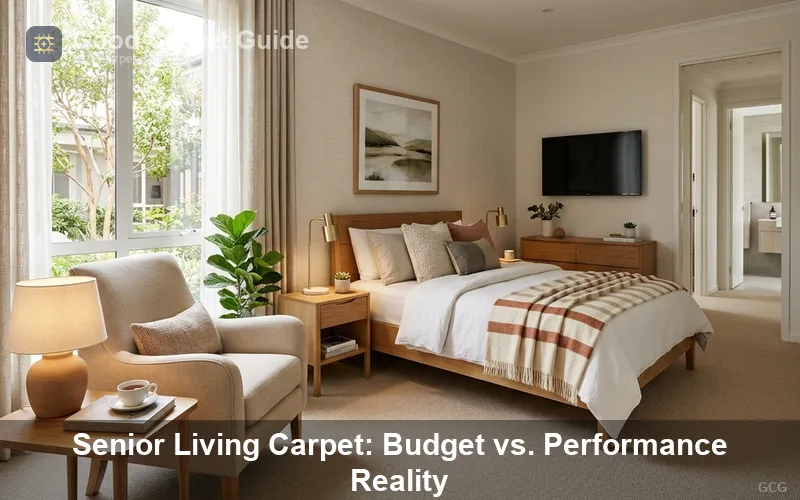
Color and pattern selection carry equal weight to fiber selection in senior environments. High-contrast geometric patterns can visually register as raised objects or holes to a senior with reduced depth perception, a phenomenon documented by the FGI in its guidance on healthcare and senior-living interior finishes. Solid, low-contrast shades in medium beige, gray, or taupe families are specified more frequently in assisted living construction documents for this reason, independent of fiber type.
what do real users say about senior living carpet
Forum threads and online reviews reveal a consistent gap between marketed durability and lived experience with aging carpet. One recurring theme is the difficulty of fully cleaning carpet that has absorbed years of skin flakes, spills, and odor at the sub-layer, with one user describing older carpet as effectively unwashable at the surface level alone. A separate DIY carpet removal account documented paper-thin padding and a surprising volume of trapped dust beneath decades-old carpet and foam, reinforcing that surface steam cleaning does not resolve what accumulates below the backing.
Odor retention shows up repeatedly in real estate and rental contexts, where a homeowner preparing a condo for sale reported a lingering smell in a carpet only four years old, despite steam cleaning and repainting the room. A renter separately described inheriting the residue of a previous tenant's carpet use, noting that no amount of cleaning fully resolved the dinginess. These accounts point to the same underlying mechanism: odor and soil compounds bind to backing fibers below the pile, a depth that hot water extraction reaches inconsistently depending on dwell time and extraction pressure.
Shading complaints target premium solid-color carpet specifically. A customer identified by the name Sharon Ramsey reported removing a Karastan gray carpet after the pile developed visible shading (a watermark-like sheen shift caused by pile direction changing under foot traffic) that persisted regardless of vacuuming direction. This complaint aligns with a broader pattern among installers who caution against solid, dark, or gray carpet in high-traffic senior settings for aesthetic rather than structural reasons.
- Reports the "sock you can never take off" sensation tied to trapped moisture and skin cell buildup in aging carpet backing.
- Documents traffic lane flattening in budget polyester carpet within roughly 2 years of installation, consistent with the fiber's low recovery rate.
- Notes persistent odor in carpet as young as 4 years old despite professional steam cleaning.
- Flags shading on solid-color premium nylon as a cosmetic, not structural, defect.
These four complaint categories map to distinct causes: fiber recovery rate, backing porosity, cleaning method limitations, and pile-direction shading. Treating them as a single "carpet wears out" complaint obscures which purchasing decision actually addresses each one, which is the gap this guide is written to close.
what does the warranty fine print really cover
Standard manufacturer warranties on senior living carpet, including the Shaw 5-Year Limited Residential Warranty, explicitly exclude "matting and crushing" by classifying pile flattening as normal wear rather than a manufacturing defect. This distinction matters because matting is the primary visual failure mode reported by senior living carpet owners, meaning the complaint driving most replacement decisions typically falls outside warranty coverage entirely.
Premium warranties from Mohawk, Shaw, and Karastan carry a maintenance mandate requiring professional hot water extraction cleaning, performed by a certified technician, at intervals no longer than 18 months, with receipts retained as proof of compliance. Personal or rental cleaning equipment, including consumer steam cleaners, does not satisfy this requirement under most manufacturer terms, and a missed cleaning interval can void an otherwise valid claim. This maintenance clause functions as the most commonly overlooked exclusion in senior living carpet purchases, since families budgeting for flooring rarely account for a recurring professional cleaning line item.
Warranty Warning: A carpet installed by a subcontractor using a knee-kicker instead of a power stretcher can develop bubbling or rippling within 12 to 18 months. This installation-method failure is typically excluded from manufacturer materials warranties because it is classified as an installation defect, not a product defect, shifting liability to the installer rather than the carpet brand.
Big box retailers commonly subcontract installation labor to third-party crews paid per job rather than per hour, which documented installer trade reports associate with a higher rate of knee-kicker use over power-stretching. Local specialty dealers employing in-house certified installers show a lower incidence of this specific complaint in trade forums, though pricing transparency and total project cost vary independently of installer employment structure. Buyers evaluating carpet delamination issues driven by improper seam sealing should apply the same installer-verification logic before signing a contract.
Triexta carpet warranty claims carry an additional documented friction point: Mohawk, the primary manufacturer of SmartStrand Triexta, has a reputation among trade forums for difficult claims processing relative to Shaw's nylon warranty terms. This is a claims-process observation rather than a fiber-performance claim, and it applies specifically to the administrative side of warranty enforcement rather than to Triexta's stain resistance, which remains strong under normal residential conditions.
how much does senior living carpet cost
Installed senior living carpet costs range from $3.00 per square foot for basic or rental-grade material to $9.00 per square foot for luxury nylon, with the national all-inclusive range spanning $2.00 to $9.00 per square foot across all grades. These figures include material, padding, professional labor, old carpet removal, disposal, and applicable taxes, based on aggregated current U.S. flooring contractor pricing data.
| Grade | Installed Cost (per sq ft) | Typical Fiber | Suitable for Senior Living? |
|---|---|---|---|
| Basic / rental grade | $3.00 | Polyester | Not recommended for primary living areas |
| Mid-grade | $4.50 | Triexta or budget nylon | Acceptable for low-traffic bedrooms |
| Luxury / high-end nylon | $6.00–$9.00 | Solution-dyed nylon 6,6 | Recommended for hallways and common areas |
Room-level budgeting shows the practical range families work within: a standard 10x12 bedroom (120 square feet) runs $625 to $1,075 installed, while a standard 300-square-foot living room runs $1,000 to $1,900. Staircases cost disproportionately more, typically $300 to $1,000, because the French Cap finishing method required for a clean stair-nose wrap takes substantially longer than the simpler Waterfall method and is billed at a higher labor rate per step.
Hidden fees change total project cost more than the headline material price does. Padding adds $0.25 to $1.50 per square foot, old carpet removal and haul-away adds $0.50 to $1.60 per square foot, and subfloor repair, when needed, adds $1.75 to $4.70 per square foot or a flat average of roughly $600 per room in older homes with structural subfloor issues. Big box retailers commonly advertise material-only pricing at $1.00 to $3.00 per square foot, a figure that frequently doubles once padding, labor, tack strip installation, and taxes are added at the final quote stage. Local specialty dealers more often quote all-inclusive pricing upfront, which reduces the risk of budget overruns during a senior living renovation timeline.
- Estimates padding separately, since senior-appropriate pads (1/4" to 3/8" thick, 8-pound density) cost more per square foot than standard 1/2" residential pads despite being thinner.
For detailed tenant rules, acoustic soundproofing requirements, and concrete slab vapor retarder guidelines in multi-family units, read our apartment carpet padding analysis.
- Confirms whether the quote includes disposal of the old carpet, a fee some big box quotes exclude by default.
- Requests a written subfloor inspection before finalizing price, particularly in homes over 20 years old.
- Verifies whether the installer uses a power stretcher as standard practice, not an optional upgrade.
Families budgeting for best carpet for bedrooms guide alongside a full senior living renovation should price bedrooms and common areas separately, since traffic load, and therefore the fiber grade that makes financial sense, differs meaningfully between the two.
frequently asked questions
Can you install senior living carpet yourself?
Self-installation is possible for modular carpet tile products like Foss, which are designed for direct placement over existing hard-surface subfloors without tack strips or a power stretcher. Broadloom (wall-to-wall) carpet installation is not commonly recommended as a self-install project in senior living contexts because improper stretching creates the bubbling and rippling hazard described in the warranty section above.
Is senior living carpet worth it compared to hard flooring?
Carpet reduces ambient sound by a documented margin compared to hard surfaces, with matte carpet absorbing sound roughly ten times more efficiently, which lowers background noise linked to agitation in dementia care settings. Carpet also eliminates the glare that hard, glossy flooring produces under overhead lighting, a factor associated with eye fatigue and confusion in aging eyes. These acoustic and visual factors are specific to senior environments and do not apply equally to general residential flooring decisions.
What is the difference between senior living carpet types?
Nylon 6,6, Triexta, and polyester differ primarily in fiber recovery after compression, which governs how quickly a carpet develops traffic lanes under wheelchair or walker loading. Nylon 6,6 recovers pile shape most consistently, Triexta resists staining most aggressively, and polyester offers the lowest upfront cost but the shortest visual lifespan under heavy foot traffic.
When should senior living carpet be replaced?
Replacement timing should be based on a firmness and pad-compression inspection rather than visible fiber wear alone, since an uneven or compressed pad can create a fall hazard before the carpet fiber itself shows significant matting. A pad exceeding 1/2 inch in thickness is generally considered a hazard indicator in senior environments regardless of the carpet's remaining fiber life.
Which brand makes the best senior living carpet?
Shaw, Mohawk, and Karastan each address different priorities: Shaw's Anso nylon paired with LifeGuard backing targets moisture resistance, Mohawk's SmartStrand with Pur-Ease targets allergen reduction, and Karastan's Kashmere nylon targets premium softness, though buyers should avoid solid gray Karastan styles due to documented shading complaints.
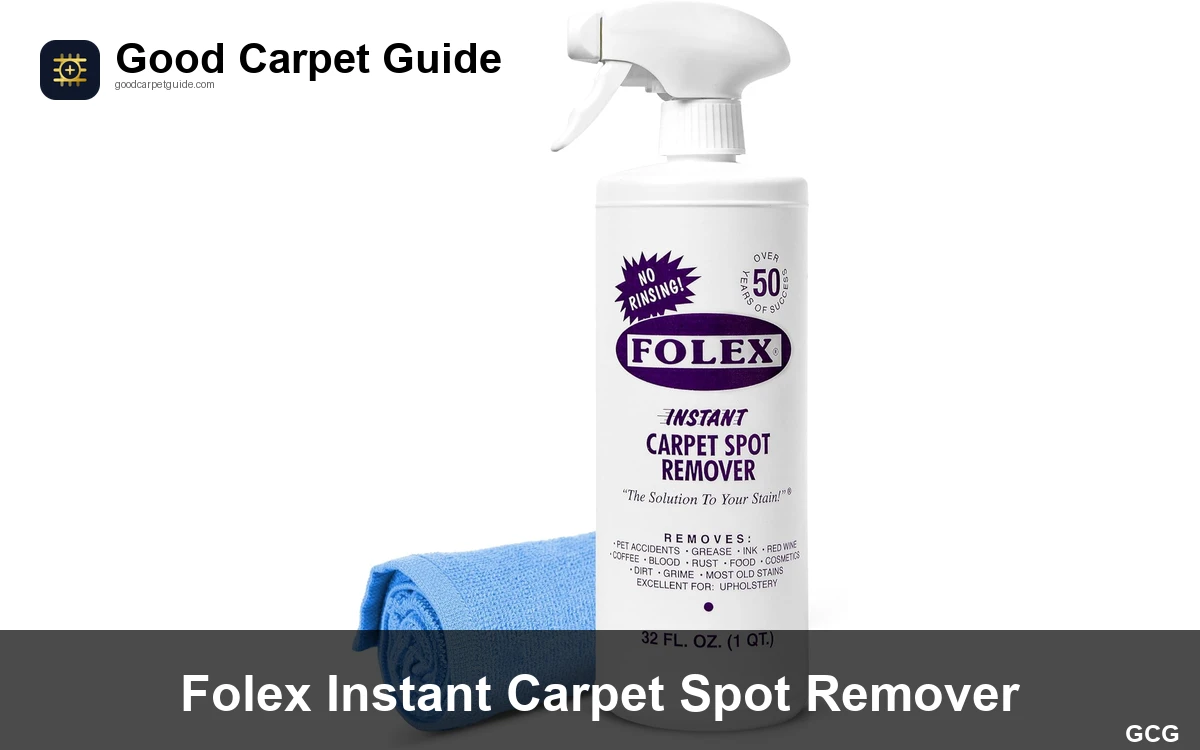
Folex Instant Carpet Spot Remover
Highly effective low-residue surfactant cleaner. Unlike foaming retail sprays, Folex leaves zero sticky residue, preventing recurring wicking spots.
Check Price on Amazon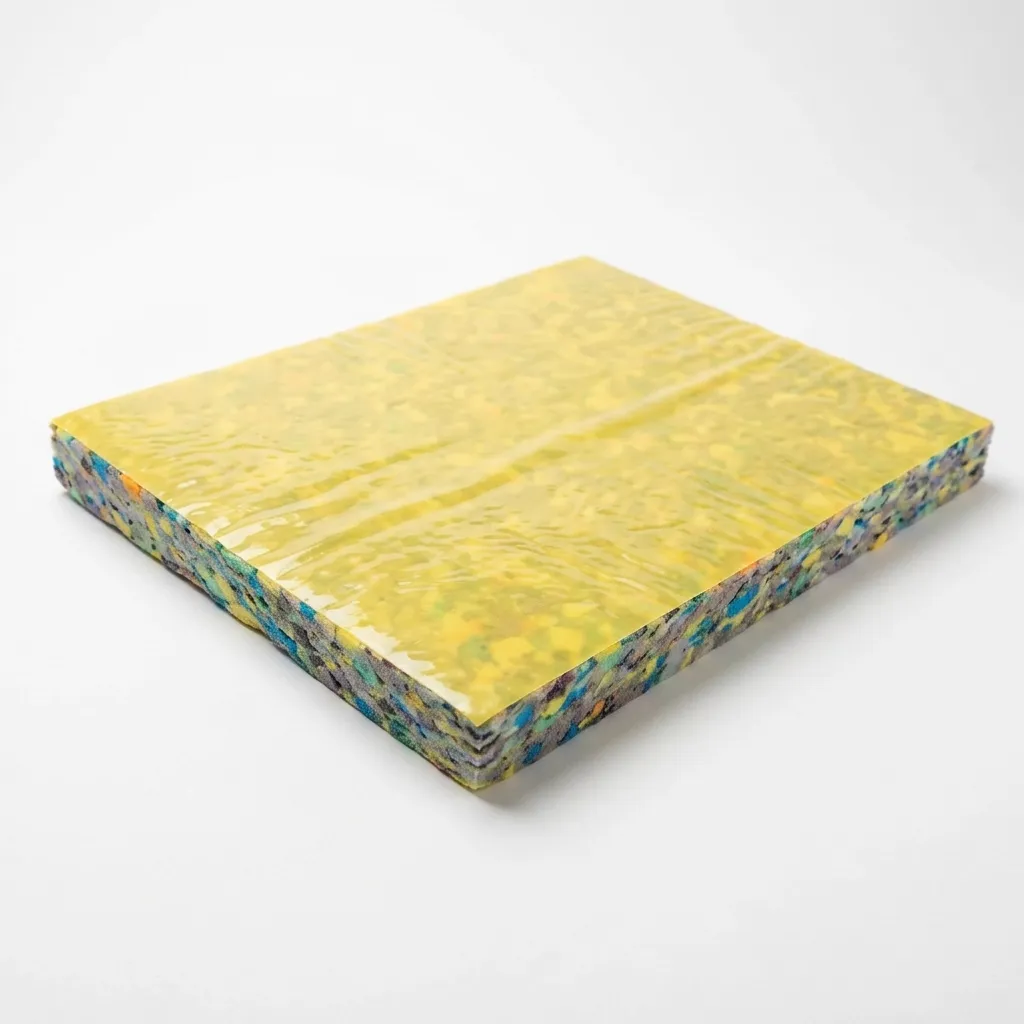
Mohawk SmartCushion Premium Carpet Padding
An 8-lb density underlayment featuring an integrated moisture guard. Provides structural support beneath the backing to minimize cushion flex stress, preventing wrinkles and backing delamination.
Check Price on AmazonSenior living carpet selection ultimately balances four variables that interact rather than operate independently: fiber recovery rate, pad density, installation method, and warranty maintenance requirements. A high-cost nylon carpet installed with a knee-kicker instead of a power stretcher can underperform a mid-grade product installed correctly, which is why the installer's methodology carries as much weight in this decision as the fiber label on the product sample.