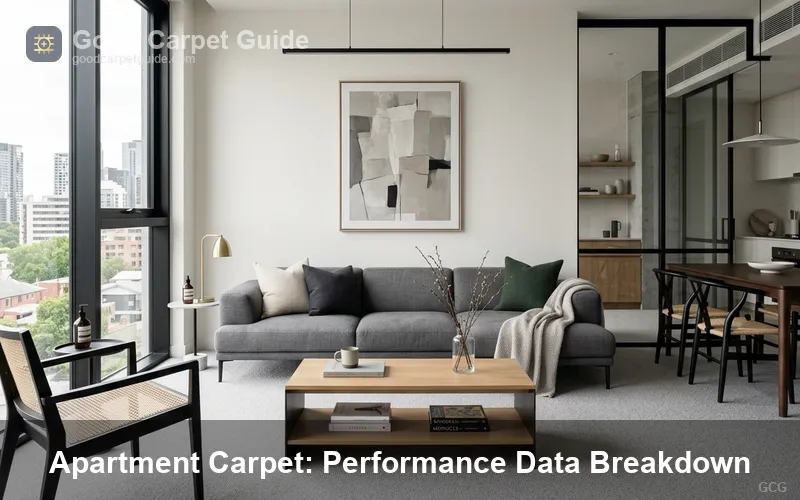
quick verdict: apartment carpet padding recommendation matrix
Apartment carpet padding determines whether an installed carpet system meets building acoustic codes, survives its manufacturer warranty term, and resists moisture damage from concrete slab construction. Apartment carpet padding selection depends on three variables that most retail showrooms do not disclose upfront: density (measured in pounds per cubic foot), thickness (measured in inches), and the presence or absence of a moisture barrier layer.
| Scenario | Recommended Padding Type | Density | Thickness | Why |
|---|---|---|---|---|
| Standard apartment, no pets | 8-lb rebond foam | 8 lb/cu ft | 7/16 in | Meets most manufacturer warranty minimums and CRI 104 commercial-grade wear expectations |
| Apartment with pets | Bonded foam with top moisture barrier | 8 lb/cu ft | 3/8–7/16 in | Top-laminated film blocks surface liquid before it reaches the subfloor barrier |
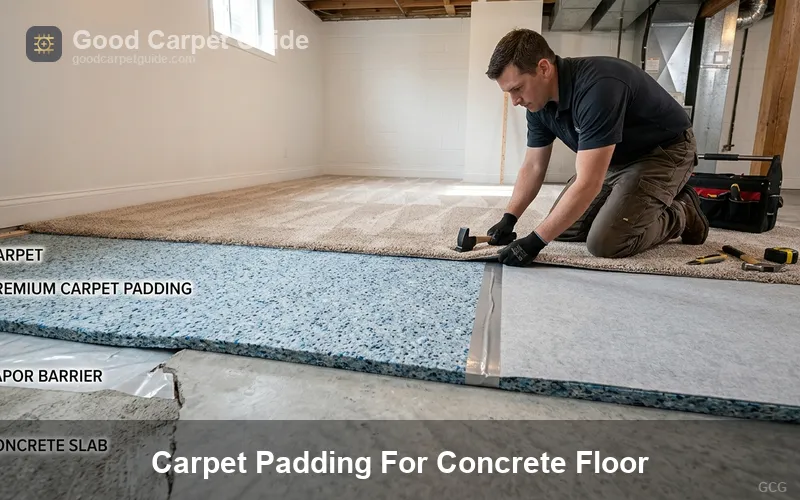
| Concrete slab / ground-floor unit | Rebond foam with vapor-retarding bottom film | 6–8 lb/cu ft | 3/8 in | Blocks alkaline moisture vapor emission from the slab, reducing mold risk |
| Multi-family building (noise-sensitive) | Dense flat rubber or frothed polyurethane | 8–10 lb/cu ft | 3/8 in | Raises Impact Insulation Class (IIC) rating toward code-compliant acoustic performance |
| Stairs and high-traffic hallways | Firm 8-lb rebond, low profile | 8 lb/cu ft | 3/8 in | Reduces backing flex on stair noses, limiting seam and edge failure |
Dense, thin padding consistently outperforms thick, soft padding in apartment settings, based on Carpet and Rug Institute (CRI) residential installation standards. Apartment carpet padding rated below 6 lb/cu ft compresses faster under sustained foot traffic, regardless of its initial showroom softness.
frequently asked questions (quick reference)
Does carpet padding matter as much as the carpet itself? Carpet padding affects wear rate, sound transmission, and moisture exposure independently of the carpet fiber selected. What density should apartment padding be? Most carpet manufacturers, including Shaw and Mohawk, specify a 6-lb to 8-lb minimum density for standard residential broadloom warranties. Can renters replace padding without landlord approval? Padding replacement in a rental unit typically requires property manager authorization, since padding is fixed to the subfloor with staples or tackless strip.
These three answers cover the baseline decision points. The sections below expand each variable with density data, ASTM-referenced wear testing, and documented field patterns from carpet installers.
what is the difference between carpet padding types
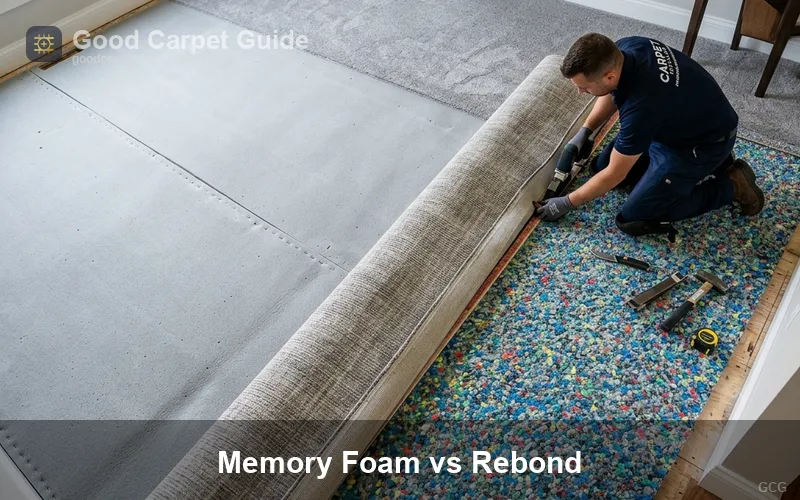
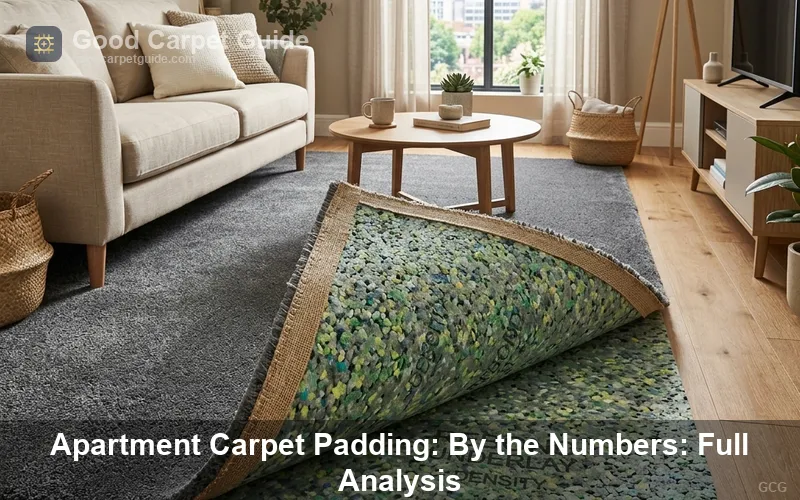
Carpet padding types differ primarily in raw material composition, density rating, and moisture handling capability. Rebonded foam is manufactured from shredded, recycled polyurethane foam scraps bonded together under heat and pressure, producing a mottled, multicolor pad sold in 5-lb to 10-lb density grades. Prime foam is a single-pour, low-density polyurethane foam that costs less per square foot but compresses within 3 to 4 years under standard residential traffic.
Memory foam padding layers a viscoelastic foam top onto a firmer base layer, creating a slow-recovery cushioning effect marketed for comfort. Field reports document that memory foam padding compresses permanently in funneled traffic zones, such as hallway centers and stair landings, within 5 years of installation. Frothed polyurethane foam uses a chemically frothed, closed-cell structure that resists moisture absorption better than open-cell rebond foam, extending service life to 15–20 years under residential use.
Flat synthetic rubber padding is manufactured as a dense, non-cellular rubber sheet, typically rated between 20-lb and 30-lb density. Flat rubber padding is engineered for radiant-heated floors and high-traffic commercial-residential hybrid spaces because it does not compress under sustained point loads. Waffle rubber, an older cellular rubber format with a raised grid pattern, has declined in market share as flat rubber and frothed polyurethane formulations have improved.
| Padding Type | Density Range | Typical Lifespan | Best-Suited Application |
|---|---|---|---|
| Rebonded foam | 5–10 lb/cu ft | 10–15 years | General residential use, apartments |
| Prime foam | 1.5–2.5 lb/cu ft | 3–4 years | Budget installations only |
| Memory foam | 5–8 lb/cu ft | 8–12 years | Low-traffic bedrooms |
| Frothed polyurethane | 6–10 lb/cu ft | 15–20 years | Stairs, high-traffic corridors |
| Flat synthetic rubber | 20–30 lb/cu ft | 20–25 years | Radiant floors, heavy-use zones |
| Synthetic fiber/felt | 6–10 lb/cu ft | 10–15 years | Berber and loop-pile carpet |
Rebonded foam remains the most commonly installed apartment carpet padding type due to its balance of cost, density availability, and manufacturer warranty compliance. Density, not thickness, determines how a given padding type resists long-term compression, a distinction the general carpet padding selection guide covers in greater technical depth.
is carpet padding worth it
Carpet padding is worth the added material and labor cost in the majority of residential installations, based on documented thickness-loss testing. Under controlled load testing, carpet installed directly onto a subfloor without padding lost 19.3% of pile thickness after a 150-lb weight was rolled over it 20,000 times, compared to a 5% to 10% thickness loss when the same carpet was paired with a rated cushion. This differential directly affects warranty eligibility, since most manufacturers require a compliant pad as a condition of coverage.
Carpet padding worth also extends to acoustic performance in multi-family apartment buildings. A bare, uninsulated 6-inch concrete slab registers an Impact Insulation Class (IIC) of 25 to 35 under International Building Code testing methodology, failing the code-mandated minimum IIC of 50. Installing carpet over an 8-lb density pad raises that same system to an IIC of 65 to 75, a acoustic improvement documented within building code compliance testing for multi-family construction.
Skipping padding entirely produces documented failures independent of carpet fiber quality. Field reports describe a case in which a homeowner glued high-end residential carpet directly to a subfloor without padding; the carpet showed visible crushing within six months and the manufacturer voided the warranty. Carpet padding worth is conditional on correct density and thickness selection, since an oversized or overly soft pad introduces its own set of stretching and buckling failures, covered in the following section.
what is the best padding to put under carpet
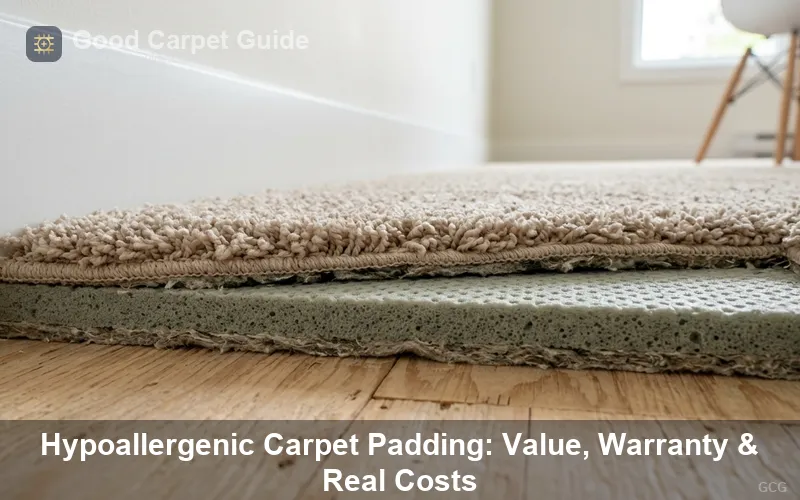
The best padding to put under carpet in a standard apartment is an 8-lb density rebonded foam pad between 3/8 inch and 7/16 inch thick, based on manufacturer warranty specifications from Shaw and Mohawk. Density, expressed in pounds per cubic foot, measures how tightly the foam cells are packed, and higher-density padding resists matting and crushing more effectively than thicker, lower-density padding at an equivalent price point.
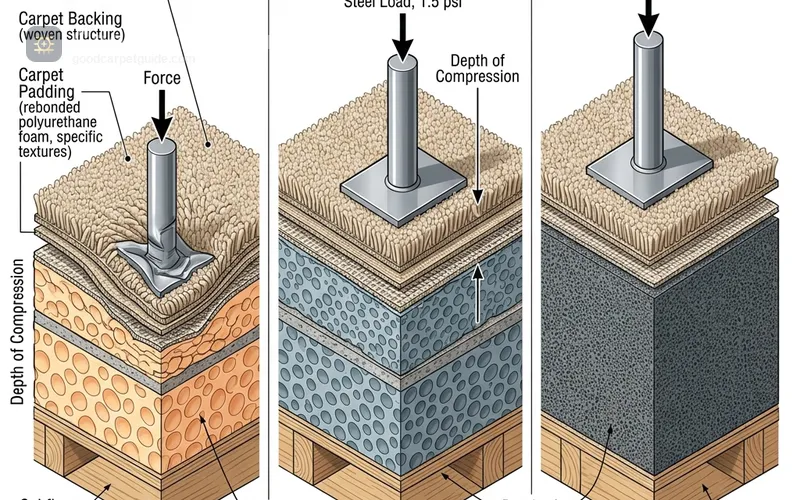
Density rating, not thickness, governs how carpet padding resists long-term compression under apartment foot traffic.
Manufacturer specifications commonly cap padding thickness at 1/2 inch for cut-pile carpet and 3/8 inch for Berber and loop-pile construction. Padding that exceeds these thickness limits allows the carpet backing to flex excessively during normal use, and that repeated flexing stretches the secondary backing away from the tack strip over time. Documented cases show carpets developing visible waviness within 18 months when installed over padding thicker than manufacturer specifications allow, requiring a professional re-stretch costing $300 or more.
Selection checklist for apartment carpet padding:
- Confirm the manufacturer's minimum density requirement, typically 6-lb to 8-lb, before purchasing any pad.
- Measure existing door clearance, since padding thicker than 7/16 inch frequently interferes with interior door swing.
- Request a bottom moisture barrier for any installation over a concrete slab, regardless of building floor level.
- Request a top-laminated moisture barrier for units with pets, separate from the bottom vapor barrier.
- Reject padding softer than 6-lb density for stairs, hallways, and any room exceeding standard residential foot traffic.
For apartments seeking extended manufacturer coverage, proprietary padding lines such as Mohawk's SmartCushion extend the base carpet warranty by as much as 20 years, and Shaw's Courage pad extends Shaw carpet warranties by 10 years.
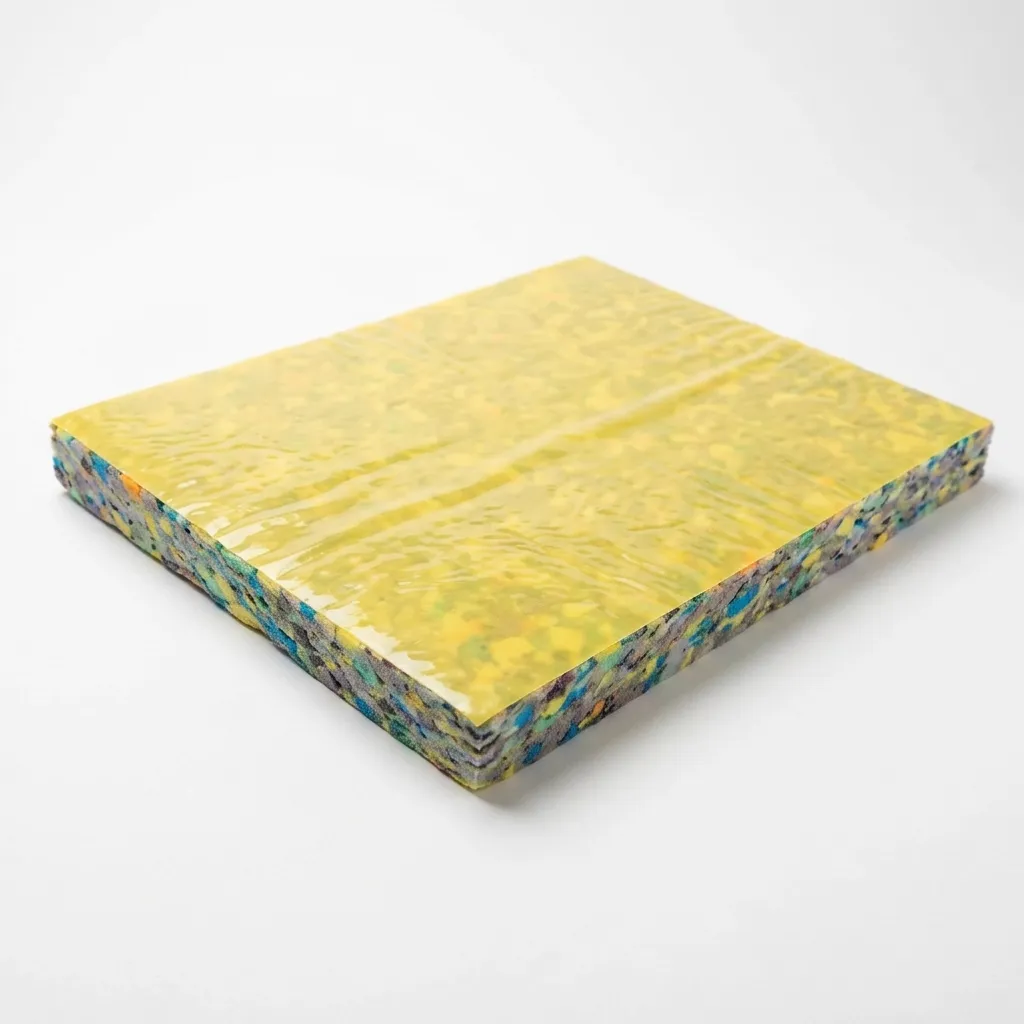
Mohawk SmartCushion Premium Carpet Padding
Recommended for apartment installations seeking manufacturer warranty extension alongside 8-lb rated density and moisture resistance.
Check Price on AmazonStairs and hallways carry distinct padding requirements compared to open living areas, since backing flex on a stair nose concentrates stress at a single fold point. The best carpet padding for stairs and hallways guide addresses tread-wrapping technique and pin-length selection for tackless strip on stair applications in further detail.
what do real apartment renters and installers report about carpet padding
Reddit's r/Flooring community documents a consistent pattern of padding-related complaints that diverge from manufacturer marketing claims. A recurring theme involves the gap between showroom softness and long-term structural performance. One user reported their carpet became "wavy after about a year and a half," tracing the cause to an installer who used a knee-kicker instead of a power stretcher during installation.
Moisture-related complaints form a second cluster of documented user reports. Homeowners installing standard rebond pad directly over concrete basement floors describe pressure bubbles resembling "small speed bumps in the room," a symptom consistent with trapped vapor emission from the slab reacting against a bottom moisture barrier. Installers responding to these threads confirm that a bottom-barrier pad without a vapor-retarding subfloor treatment traps rather than blocks concrete moisture.
A third pattern involves vacuum incompatibility with ultra-soft padding and fiber combinations. Owners of premium triexta carpet, such as Mohawk SmartStrand Silk, paired with soft memory foam padding report that standard high-suction vacuums stall on contact, with one user describing the carpet surface as behaving "like marshmallow" under the vacuum head. This complaint pattern is largely absent from manufacturer product literature, representing a documented gap between showroom demonstration and daily-use experience.
A fourth, safety-related pattern appears across installer accounts rather than homeowner posts. Installers report finding old utility knife blades left under carpet padding during tear-out on a majority of demolition jobs, with several accounts describing lacerated hands during pad removal. This finding is consistent across multiple independent installer reports and points to a documented gap in demolition safety practice rather than a padding material defect.
Documented complaint categories and their technical cause:
- Wavy or rippled carpet surface — caused by insufficient stretching tension during installation, typically from knee-kicker-only technique instead of power-stretcher use.
- Musty odor or visible pressure bubbles — caused by moisture vapor trapped between a concrete slab and a bottom-barrier pad without adequate slab-side vapor treatment.
- Recurring stains after cleaning — caused by liquid wicking back up through absorbent foam padding after extraction cleaning, a phenomenon distinct from a fiber-level stain.
- Vacuum stalling on carpet surface — caused by excessive pile-and-pad softness exceeding the suction-head clearance tolerance of standard upright vacuums.
Recurring wicking stains represent one of the more common post-cleaning complaints tied directly to padding absorbency rather than carpet fiber quality.
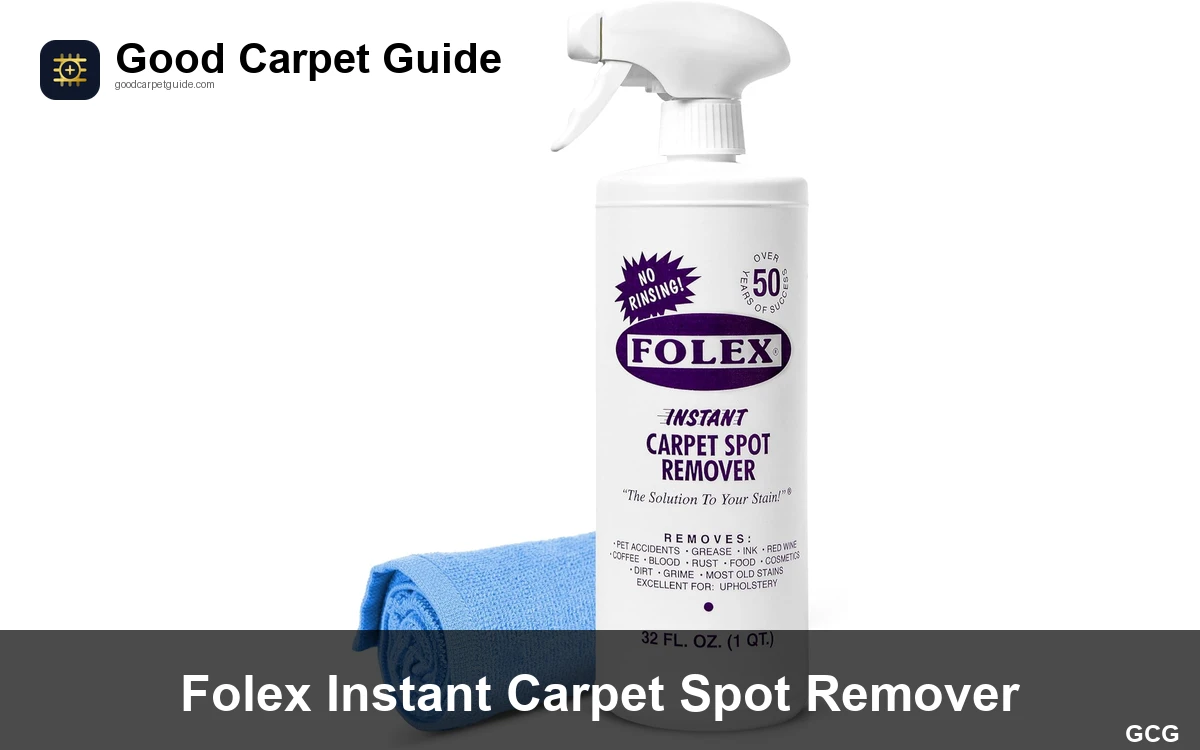
Folex Instant Carpet Spot Remover
Suited for surface-level extraction on wicking stains before moisture reaches the padding layer beneath the carpet backing.
Check Price on Amazonhow does buying padding through a big box store compare to a local dealer
Big box retailers and independent local dealers source, price, and install carpet padding through structurally different business models, and that difference shows up in installation quality more than in the padding material itself. Home Depot's subcontractor installation program, operating under names such as Crew2, pays installers roughly $4.50 per square yard, a rate documented across multiple installer forum posts as insufficient to support power-stretching equipment, helper wages, and material handling on a typical job.
| Factor | Big Box Retailer | Local Independent Dealer |
|---|---|---|
| Typical labor rate paid to installer | ~$4.50 per sq. yd. | $8.00–$15.00 per sq. yd. |
| Padding markup over wholesale | 30%–50% | Variable, often transparent |
| Power stretcher use | Inconsistent | Standard practice |
| Installer crew relationship | Subcontracted, rotating | Directly employed or long-term contracted |
| Warranty service path | Retailer call center | Direct dealer contact |
| Upfront promotional hook | "Free installation" bundling | Itemized quote |
The padding markup embedded in big-box "free installation" promotions functions as a cost-recovery mechanism, since the retailer absorbs labor losses by pricing padding materials 30% to 50% above wholesale rates. Local dealers typically itemize padding cost separately, producing a higher visible price that nonetheless reflects a more direct relationship between price paid and labor quality delivered.
The practical consequence of the big-box subcontractor model surfaces most visibly at carpet-to-tile transitions and stair wraps, tasks that require additional time and precision that low per-yard rates discourage. Documented forum complaints from apartment renters and condo owners cite frayed transition edges and loose seams following big-box installations, patterns that installers attribute to time pressure rather than to a specific padding product defect.
how much does apartment carpet padding cost
Apartment carpet padding cost varies by material type, density rating, and regional labor rates, with rebonded foam representing the most common mid-range choice for apartment installations. Material-only pricing for standard rebonded foam ranges from $0.25 to $0.80 per square foot, while fully installed pricing including labor ranges from $0.75 to $1.55 per square foot.
| Padding Material | Material Cost (per sq. ft.) | Installed Cost (per sq. ft.) |
|---|---|---|
| Rebonded foam (6–8 lb) | $0.25 – $0.80 | $0.75 – $1.55 |
| Prime foam (low density) | $0.25 – $1.50 | $1.00 – $2.25 |
| Synthetic fiber, jute, or felt | $0.35 – $1.25 | $0.85 – $2.00 |
| Waffle rubber | $0.50 – $1.00 | $1.00 – $1.75 |
| Memory foam | $0.50 – $1.00 | $1.00 – $1.75 |
| Frothed polyurethane foam | $0.50 – $2.00 | $1.00 – $2.75 |
| Flat synthetic rubber | $0.75 – $3.00 | $1.25 – $3.75 |
Total carpet project cost, combining materials, padding, and labor, ranges from $3.00 to $11.00 per square foot, translating to $2,700 to $9,900 for a 900-square-foot apartment. Padding installation labor alone typically adds $0.50 to $1.00 per square foot, separate from the carpet installation itself.
Additional cost factors specific to apartment and multi-unit installations:
- Old carpet and pad removal and disposal adds $0.50 to $5.00 per square foot to the project total.
- Stair installation carries a flat surcharge of $300 to $600, or $15 to $35 per step, due to hand-wrapping labor at tread noses.
- Furniture moving is billed separately at $1.50 to $3.00 per yard in most independent dealer quotes.
- Initial measuring visits from big-box retailers commonly carry a $35 to $50 upfront fee, credited only against a subsequent purchase.
Homeowners upgrading padding density from 6-lb to 8-lb typically absorb a modest per-yard cost increase, and retail flooring professionals consistently describe this upgrade as delivering more perceptible comfort and durability improvement than an equivalent dollar amount spent upgrading carpet face weight. Reviewing the 8-lb vs 10-lb carpet padding density comparison provides a closer breakdown of where that spending threshold produces diminishing returns.
Seam integrity plays a direct role in whether a padding upgrade delivers its expected lifespan, since a poorly sealed seam allows moisture and foot-traffic stress to concentrate at a single failure point.
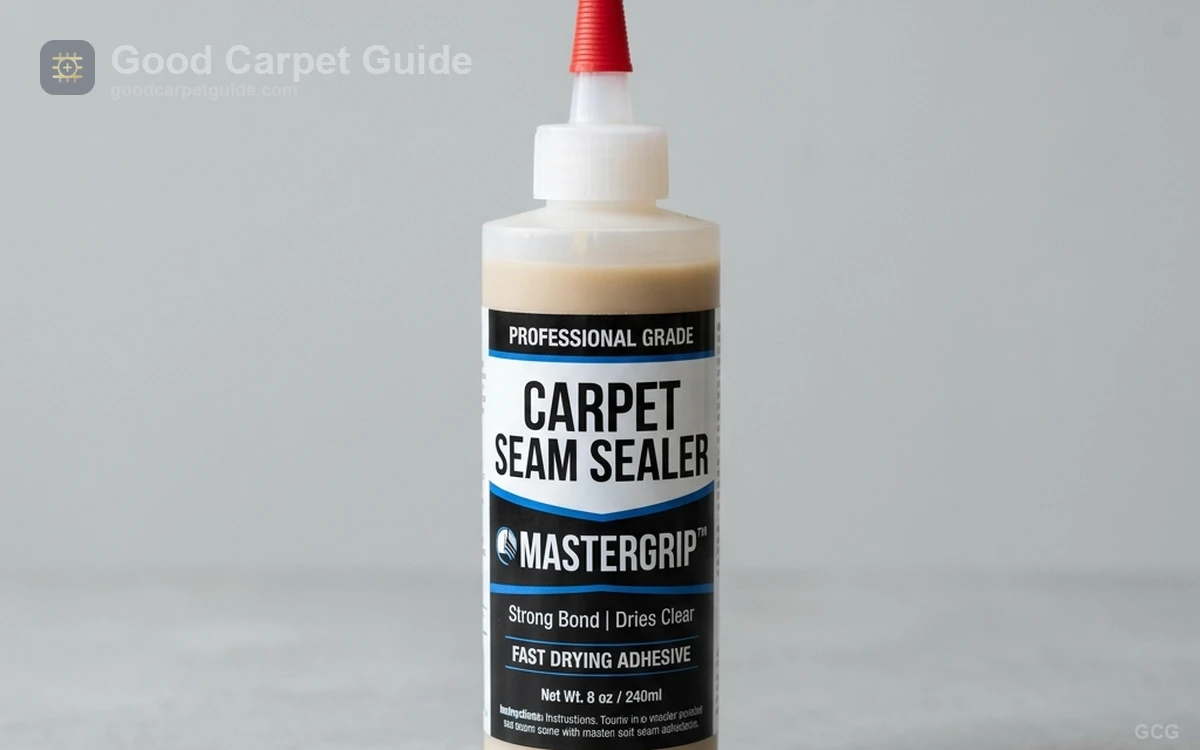
Roberts 8015 Universal Carpet Seam Sealer
Applied along padding and carpet seams during installation to reduce the moisture-wicking and separation failures documented in apartment concrete-slab installs.
Check Price on Amazonfrequently asked questions
How long does carpet padding last? Rebonded foam padding rated at 6-lb to 8-lb density typically lasts 10 to 15 years under standard residential foot traffic, while prime foam padding degrades within 3 to 4 years due to its lower cell density.
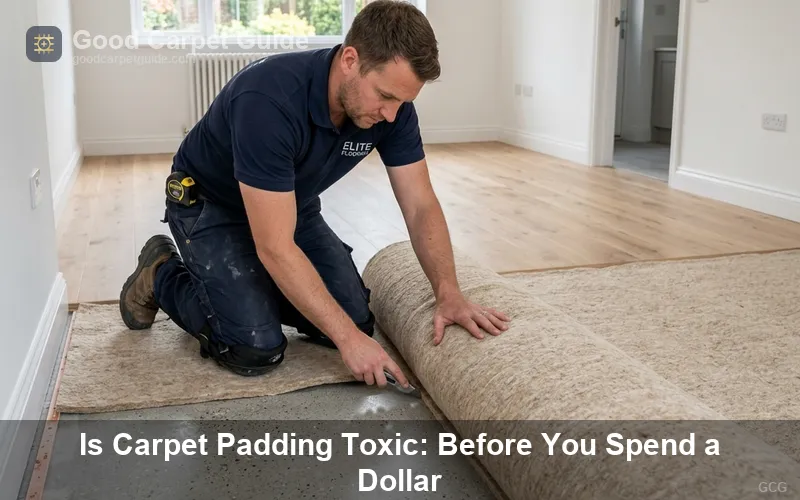
Can you install carpet padding yourself? Carpet padding installation is achievable for a DIY installer working with standard rebonded foam, tackless strip, and a utility knife, though power-stretching the finished carpet over the pad typically requires rented or professional-grade equipment to avoid the wrinkling failures documented in the sections above.
What carpet padding do professionals recommend? Installers on trade forums consistently recommend Carpenter-manufactured rebond pad, citing its uniform density and workability compared to unbranded budget pads, which several installers describe as tearing and balling up during cutting.
When should you replace carpet padding? Carpet padding warrants replacement when it shows visible compression exceeding 25% of original thickness, develops a musty odor indicating moisture saturation, or has exceeded 10 to 15 years of service under the manufacturer's original rebonded-foam density rating.
Which brand makes the best carpet padding? Carpenter, Leggett & Platt, and Shaw's proprietary lines (Courage, Victorious Plus) each hold documented reputations among installers, with Carpenter's SpillGuard line specifically recognized for moisture protection and cutting workability.
Does carpet padding make a measurable difference? Carpet padding measurably affects thickness retention, with padded carpet losing 5% to 10% of pile thickness under standardized rolling-load testing compared to 19.3% thickness loss for unpadded carpet under identical test conditions.
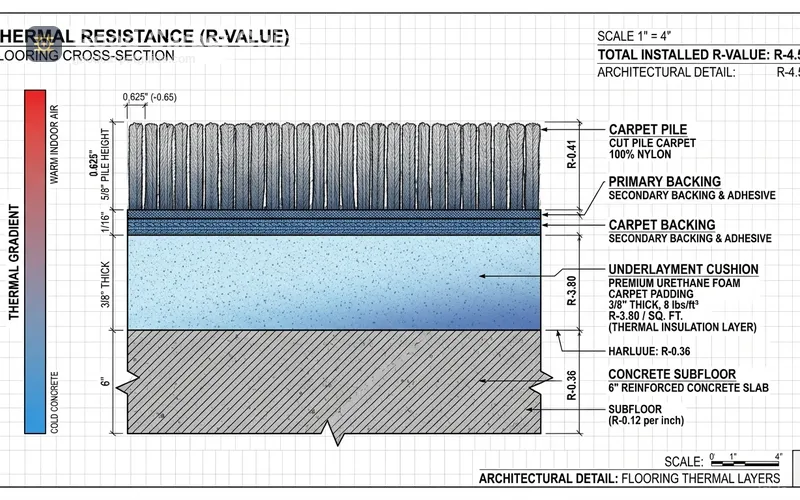
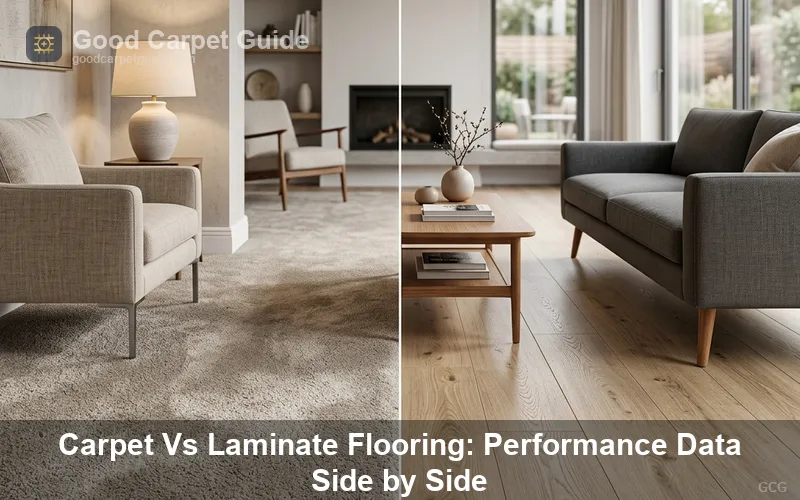
How does carpet compare to laminate or vinyl for apartment flooring? Carpet paired with rated padding provides acoustic and thermal insulation that laminate and vinyl flooring do not replicate without a separate underlayment layer, though laminate and vinyl generally outperform carpet in moisture exposure areas such as kitchens and bathrooms.
What padding works best for stairs and hallways? Stairs and hallways perform best with firm, low-profile 8-lb density padding no thicker than 3/8 inch, since thinner padding reduces backing flex at the stair nose fold point compared to standard-room-thickness padding.
Selecting apartment carpet padding requires balancing density, moisture handling, and manufacturer warranty terms against the specific conditions of the unit, including subfloor type and building floor level. Documented failure patterns, from wavy seams to trapped concrete moisture, trace consistently back to density and moisture-barrier mismatches rather than to the carpet fiber layered on top, reinforcing padding selection as a foundational rather than secondary decision in any apartment flooring project.